Connect with us

Technology

Agrivoltaics Market to Grow by USD 1.99 Billion (2024-2028) as Agrivoltaic Benefits Drive Growth; AI-Redefined Market Landscape Report – Technavio

Published

on

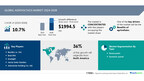
NEW YORK, Oct. 30, 2024 /PRNewswire/ — Report with market evolution powered by AI – The global agrivoltaics market size is estimated to grow by USD 1.99 billion from 2024-2028, according to Technavio. The market is estimated to grow at a CAGR of 10.7% during the forecast period. Benefits of agrivoltaics is driving market growth, with a trend towards rising opportunities for agrivoltaics energy projects. However, limited commercial reach of agrivoltaics poses a challenge. Key market players include BayWa r.e. AG, Enel SPA, Insolight, Jacks Solar Garden, JinkoSolar Holding Co. Ltd., Mackin Energy Japan Co. Ltd., Mirai Solar, Next2Sun, Ombrea SAS, REM TEC srl, sandbox solar llc, SunAgri, Svea Solar, Tse Energy Ltd, and ZIMMERMANN PV-Agri.

Key insights into market evolution with AI-powered analysis. Explore trends, segmentation, and growth drivers- View the snapshot of this report

Agrivoltaics Market Scope

Report Coverage

Details

Base year

2023

Historic period

2018 – 2022

Forecast period

2024-2028

Growth momentum & CAGR

Accelerate at a CAGR of 10.7%

Market growth 2024-2028

USD 1994.5 million

Market structure

Concentrated

YoY growth 2022-2023 (%)

8.3

Regional analysis

North America, Europe, APAC, Middle East and Africa, and South America

Performing market contribution

North America at 36%

Key countries

US, Germany, China, France, and Japan

Key companies profiled

BayWa r.e. AG, Enel SPA, Insolight, Jacks Solar Garden, JinkoSolar Holding Co. Ltd., Mackin Energy Japan Co. Ltd., Mirai Solar, Next2Sun, Ombrea SAS, REM TEC srl, sandbox solar llc, SunAgri, Svea Solar, Tse Energy Ltd, and ZIMMERMANN PV-Agri

Market Driver

The agrivoltaics market is experiencing significant growth due to progressive policies and substantial investments in various countries. France leads the way, implementing the Act APER in March 2023, which supports solar power projects on farmlands while maintaining agricultural production. By 2050, France aims to reach 100 gigawatts of solar energy, with agrivoltaics playing a crucial role. The legal framework has already generated a market turnover of USD121 million and is instrumental in France’s goal of 40% renewable energy by 2030. Turkey is also advancing in agrivoltaics, with a new project under the ODTU-GUNAM Center for Solar Energy Research and Applications. This initiative focuses on developing crop-specific tracker systems, enhancing efficiency and productivity. The first agrivoltaics research project in Turkey was inaugurated in December 2023. These developments underscore the expanding opportunities in the global agrivoltaics market, driven by innovative policies, investments, and the dual benefits of solar energy and agriculture production. As more countries adopt similar frameworks, the agrivoltaics sector is set for substantial growth, contributing to sustainable energy and agricultural practices worldwide. This trend is expected to positively impact the market during the forecast period. 

Agrivoltaics, the fusion of agriculture and photovoltaics, is gaining momentum in the global market. This innovative approach allows for the co-location of solar panels and crop production, maximizing land use efficiency. Dual-use solar, also known as agrophotovoltaics, benefits various crop types, including vegetables, fruits, and even livestock grazing. Data analytics plays a crucial role in optimizing crop production and solar energy output. Soil moisture and water retention are enhanced through rainwater harvesting and the use of organic and chemical fertilizers. Agrivoltaics addresses soil degradation, food crisis, and power crisis concerns. Fixed solar panels and dynamic agrivoltaics, featuring microcrystalline, polycrystalline, and monocrystalline PVs, are utilized in diverse agricultural landscapes. Translucent photovoltaic technology supports grassland farming and horticulture. The energy transition towards sustainable farming practices increases crop efficiency, food demand satisfaction, and biodiversity preservation. Utility-scale solar farms and ground-mounted PV plants employ array configurations like fixed and single-axis tracking, monofacial and bifacial solar panels. Agrivoltaics: a sustainable solution for the future of agriculture and solar energy. 

Request Sample of our comprehensive report now to stay ahead in the AI-driven market evolution!

 Market Challenges

The global agrivoltaics market is currently facing challenges in achieving widespread commercial adoption due to the limited variety of crops and agricultural settings tested in pilot projects. In India, for instance, agrivoltaics pilots primarily focus on a narrow range of crops and specific farming conditions. A major concern among farmers is the potential reduction in crop yield due to shading from solar panels. While some pilot projects have reported increased yields for certain crops like medicinal crops and leafy vegetables, the overall acceptance of agrivoltaics remains cautious. Crops such as pepper, coffee, cardamom, brinjal, cabbage, tomato, potato, beans, lentils, geranium, spices, medicinal plants like chili, cumin, aloe vera, lemon grass, and coriander have been tested in India. However, the commercial scalability of these projects is constrained by the specific requirements of different crops. To overcome these challenges, it is essential to expand the scope of agrivoltaics research to include a broader range of crops and diverse agricultural settings. This will help in identifying optimal conditions for various crops and enhance the commercial viability of agrivoltaics systems. Addressing these limitations is crucial for the global agrivoltaics market to achieve its full potential and contribute to sustainable agricultural and energy solutions. The limited commercial reach of agrivoltaics will negatively impact the market during the forecast period.Agrivoltaics, the fusion of solar energy and agricultural practices, presents exciting opportunities for renewable energy production and agricultural output. However, implementing this innovative solution comes with challenges. Utility-scale solar farms and ground-mounted PV plants require careful array configuration, with options between fixed and single-axis tracking systems. Monofacial solar panels versus bifacial or translucent photovoltaic technology impact crop yields and land efficiency. For farmers, integrating Agrivoltaics into grassland farming, horticulture, and indoor farming can provide dual-revenue streams. Yet, challenges include pollinator habitat, carbon sequestration, and greenhouse gas emissions. Solar panels can influence microclimate, affecting crop types like root crops. Dynamic panels versus fixed panels impact solar energy generation and agricultural productivity. Irrigation solutions, energy demand, transmission losses, cold storage, and market challenges related to renewable capacity and agricultural output also need consideration. Tracking equipment and soil sensors are essential for optimizing Agrivoltaics, addressing climate change, and ensuring sustainable farming practices. By overcoming these challenges, Agrivoltaics can contribute to a more sustainable future, balancing energy production and agricultural productivity while minimizing environmental impact.

Discover how AI is revolutionizing market trends- Get your access now!

Segment Overview

This agrivoltaics market report extensively covers market segmentation by

Type 1.1 Fixed panel1.2 Dynamic panelApplication 2.1 Outdoor farming2.2 Indoor farming2.3 OthersGeography 3.1 North America3.2 Europe3.3 APAC3.4 Middle East and Africa3.5 South America

1.1 Fixed panel- Fixed panel agrivoltaics is a growing segment in the agrivoltaics market, where solar panels are installed at a fixed angle above agricultural land to optimize solar energy capture. These systems are elevated above the ground, enabling farmers to continue their agricultural activities below. Fixed panel installations are common in large-scale projects exceeding 5 MW due to their simplicity in design and installation, as well as their cost-effectiveness. The integration of solar panels with agriculture provides shade, improving animal welfare and supporting the growth of permanent flora and grassland, which can be used for grazing. Fixed panel systems also offer economic benefits by providing farmers with an additional revenue stream from energy production. Their ability to protect crops from harsh weather conditions and maximize land use efficiency makes them a popular choice for regions with limited arable land. The ongoing development and optimization of fixed panel agrivoltaics systems are expected to drive further adoption, contributing to sustainable energy production and agricultural resilience. In summary, fixed panel agrivoltaics systems offer practical and efficient solutions for integrating solar energy production with agriculture, enhancing land use efficiency, supporting agricultural productivity, and providing economic benefits. These factors will continue to drive the growth of the fixed panel agrivoltaics segment and the agrivoltaics market as a whole.

Download a Sample of our comprehensive report today to discover how AI-driven innovations are reshaping competitive dynamics

Research Analysis

Agrivoltaics, also known as agricultural photovoltaics, is an innovative approach that combines solar energy production with agricultural practices. This system allows the co-location of ground-mounted PV plants and crops, maximizing land efficiency. The array configuration can be fixed or use single-axis tracking to optimize solar energy production. Monofacial solar panels are commonly used in agrivoltaics. Crop yields can benefit from the shade provided by solar panels, particularly for root crops and other temperature-sensitive plants. Agrivoltaics also offers advantages in water management, with potential for rainwater harvesting and soil moisture retention. Organic fertilizers can replace chemical fertilizers, reducing greenhouse gas emissions and mitigating soil degradation. In agro-based economies, agrivoltaics can contribute to climate change mitigation and renewable energy production. The microclimate created by the solar panels can help protect crops from extreme temperatures and droughts. Overall, agrivoltaics is a promising solution for increasing energy production while maintaining crop production and addressing food security concerns.

Market Research Overview

Agrivoltaics, the integration of solar energy production and agricultural practices, is revolutionizing the renewable energy landscape. By installing solar panels on agricultural land, farmers can generate electricity while maintaining crop yields and even enhancing land efficiency. Utility-scale solar farms and ground-mounted PV plants are common configurations for agrivoltaics, with array configurations including fixed and single-axis tracking. Monofacial and bifacial solar panels, translucent photovoltaic technology, and dynamic panels are used. Agrivoltaics benefits various agricultural practices such as grassland farming, horticulture, and indoor farming, while providing pollinator habitats and contributing to carbon sequestration and environmental conservation. Dual-revenue streams from energy production and agricultural output make agrivoltaics an attractive option for agro-based economies facing climate change. Agrivoltaics also addresses challenges like droughts, irrigation solutions, and energy demand, while reducing greenhouse gas emissions and transmission losses. Crop types and agricultural landscapes vary, with photovoltaics (PVs) used for dual-use solar, crop production, and soil moisture management. Organic and chemical fertilizers, soil sensors, data analytics, and crop types are all important considerations in agrivoltaics. The market faces challenges like renewable capacity expansion, agricultural output, tracking equipment, and soil degradation, but the potential benefits for food and power crises make it a promising solution for the energy transition and sustainable farming.

Table of Contents:

1 Executive Summary
2 Market Landscape
3 Market Sizing
4 Historic Market Size
5 Five Forces Analysis
6 Market Segmentation

TypeFixed PanelDynamic PanelApplicationOutdoor FarmingIndoor FarmingOthersGeographyNorth AmericaEuropeAPACMiddle East And AfricaSouth America

7 Customer Landscape
8 Geographic Landscape
9 Drivers, Challenges, and Trends
10 Company Landscape
11 Company Analysis
12 Appendix

About Technavio

Technavio is a leading global technology research and advisory company. Their research and analysis focuses on emerging market trends and provides actionable insights to help businesses identify market opportunities and develop effective strategies to optimize their market positions.

With over 500 specialized analysts, Technavio’s report library consists of more than 17,000 reports and counting, covering 800 technologies, spanning across 50 countries. Their client base consists of enterprises of all sizes, including more than 100 Fortune 500 companies. This growing client base relies on Technavio’s comprehensive coverage, extensive research, and actionable market insights to identify opportunities in existing and potential markets and assess their competitive positions within changing market scenarios.

Contacts

Technavio Research
Jesse Maida
Media & Marketing Executive
US: +1 844 364 1100
UK: +44 203 893 3200
Email: media@technavio.com
Website: www.technavio.com/

View original content to download multimedia:https://www.prnewswire.com/news-releases/agrivoltaics-market-to-grow-by-usd-1-99-billion-2024-2028-as-agrivoltaic-benefits-drive-growth-ai-redefined-market-landscape-report—technavio-302290368.html

SOURCE Technavio

Continue Reading

Technology

Cboe Global Markets Announces Increase in Share Repurchase Authorization; Declares Fourth-Quarter 2026 Dividend

Published

on

By

Increases share repurchase authorization by $550 millionQuarterly cash dividend of $0.86 per share

CHICAGO, Oct. 22, 2026 /PRNewswire/ — Cboe Global Markets, Inc. (Cboe: CBOE), a leading global markets operator and pioneer in equity and index derivatives, today announced its Board of Directors has authorized the company to repurchase up to an additional $550 million of its outstanding common stock and declared a quarterly cash dividend of $0.86 per share of common stock for the fourth quarter of 2026.

The fourth-quarter 2026 dividend is payable on December 15, 2026, to stockholders of record as of November 30, 2026. 

As of June 30, 2026, the Company had $536.8 million of availability remaining under its existing share repurchase authorizations.

“Cboe’s strong cash flow and robust balance sheet give us the flexibility to continue investing in our growth priorities while returning capital to shareholders,” said Craig Donohue, Chief Executive Officer of Cboe Global Markets. “Today’s increase to our share repurchase authorization, together with our dividend announcement, reflect the Board’s confidence in our business and our commitment to delivering long-term value.”

The share repurchase program has no expiration date. The repurchase program permits the company to purchase shares through a variety of methods, including in the open market, through established trading plans, or through privately negotiated transactions, in accordance with applicable securities laws. It does not obligate the company to make any repurchases at any specific time or situation. The timing and extent to which the company repurchases its shares will depend upon, among other things, market conditions, share price, liquidity targets, regulatory requirements and other factors. Share repurchases may be commenced or suspended at any time or from time to time without prior notice.

About Cboe Global Markets
Cboe Global Markets (Cboe: CBOE) is a leading global markets operator with a long history of innovation in equity and index derivatives. Since launching the world’s first listed options exchange in 1973, Cboe has pioneered landmark products, including the introduction of S&P 500® index options and the creation of the VIX® Index, the world’s leading gauge of market volatility, reshaping how investors manage risk and access opportunity. Today, Cboe operates derivatives, equities, and FX markets, providing trading, clearing, and investment solutions for customers worldwide. To learn more, visit www.cboe.com.

Cboe Media Contacts

Cboe Analyst Contact

Angela Tu

Tim Cave

Kenneth Hill, CFA

+1-646-856-8734

+44 (0) 7593-506-719

+1-312-786-7559

atu@cboe.com 

tcave@cboe.com

khill@cboe.com 

CBOE-C
CBOE-OE

Cboe®, Cboe Global Markets®, and VIX ® are registered trademarks or service marks of Cboe Exchange, Inc and S&P 500® is a registered trademark of Standard & Poor’s Financial Services LLC. All other trademarks and service marks are the property of their respective owners. 

Cautionary Statements Regarding Forward-Looking Information

This press release contains forward-looking statements within the meaning of the Private Securities Litigation Reform Act of 1995 that involve a number of risks and uncertainties. You can identify these statements by forward-looking words such as “may,” “might,” “should,” “expect,” “plan,” “anticipate,” “believe,” “estimate,” “predict,” “potential” or “continue,” and the negative of these terms and other comparable terminology. All statements that reflect our expectations, assumptions or projections about the future other than statements of historical fact are forward-looking statements. These forward-looking statements, which are subject to known and unknown risks, uncertainties and assumptions about us, may include projections of our future financial performance based on our growth strategies and anticipated trends in our business. These statements are only predictions based on our current expectations and projections about future events. There are important factors that could cause our actual results, level of activity, performance or achievements to differ materially from those expressed or implied by the forward-looking statements.

We operate in a very competitive and rapidly changing environment. New risks and uncertainties emerge from time to time, and it is not possible to predict all risks and uncertainties, nor can we assess the impact of all factors on our business or the extent to which any factor, or combination of factors, may cause actual results to differ materially from those contained in any forward-looking statements.

Some factors that could cause actual results to differ include: the loss of our right to exclusively list and trade certain index options and futures products; economic, political and market conditions; compliance with legal and regulatory obligations; price and new products and services competition and consolidation in our industry; decreases in trading or clearing volumes, market data fees or a shift in the mix of products traded on our exchanges; legislative or regulatory changes or changes in tax regimes; our ability to protect our systems and communication networks from security vulnerabilities and breaches; our ability to attract and retain skilled management and other personnel; increasing competition by foreign and domestic entities; our business and operational dependence on and exposure to risk from third parties; factors that impact the quality and integrity of our and other applicable indices; our ability to manage our global operations, growth, and strategic acquisitions, wind downs, divestitures, or alliances effectively; increases in the cost of the products and services we use; our ability to operate our business without violating the intellectual property rights of others and the costs associated with protecting our intellectual property rights; our ability to minimize the risks, including our credit, liquidity, market, investment, counterparty, and default risks, associated with operating our clearinghouses; our ability to accommodate trading and clearing volume and transaction traffic, including significant increases, without failure or degradation of performance of our systems; misconduct by those who use our markets or our products or for whom we clear transactions; challenges to our use of open source software code; our ability to meet our compliance obligations, including managing our business interests and our regulatory responsibilities; the loss of key customers or a significant reduction in trading or clearing volumes by key customers; damage to our reputation; the ability of our compliance and risk management methods to effectively monitor and manage our risks; restrictions imposed by our debt obligations and our ability to make payments on or refinance our debt obligations; our ability to maintain an investment grade credit rating; impairment of our goodwill, long-lived assets, investments or intangible assets; the accuracy of our estimates and expectations; and litigation risks and other liabilities. More detailed information about factors that may affect our actual results to differ may be found in our filings with the SEC, including in our Annual Report on Form 10-K for the year ended December 31, 2025 and other filings made from time to time with the SEC.

We do not undertake, and we expressly disclaim, any duty to update any forward-looking statement whether as a result of new information, future events or otherwise, except as required by law. Readers are cautioned not to place undue reliance on these forward-looking statements, which speak only as of the date hereof.

View original content to download multimedia:https://www.prnewswire.com/news-releases/cboe-global-markets-announces-increase-in-share-repurchase-authorization-declares-fourth-quarter-2026-dividend-302917368.html

SOURCE Cboe Global Markets, Inc.

Continue Reading

Technology

Community Heritage Financial, Inc. Announces Adoption of Stock Repurchase Program

Published

on

By

MIDDLETOWN, Md., Oct. 22, 2026 /PRNewswire/ — Community Heritage Financial, Inc. (the “Company”) (OTCID: CMHF), the parent company of Middletown Valley Bank, today announced that its Board of Directors has adopted a stock repurchase program. Under the repurchase program, the Company may repurchase up to 147 thousand shares of its common stock. This amount represents approximately 5.0% of the Company’s 2.95 million shares of common stock outstanding.

The repurchase program permits shares to be repurchased from time to time on the open market, in private-negotiated transactions or otherwise. Repurchases will be made at management’s discretion at prices management considers to be attractive and in the best interests of the Company and its stockholders, subject to general market conditions, the trading price of the Company’s common stock, regulatory requirements and limitations, alternative uses for capital, the Company’s financial performance, and other factors deemed appropriate.

The repurchase program expires August 21, 2027.  The repurchase program may be suspended, terminated or modified at any time for any reason and does not obligate the Company to purchase any particular number of shares.

About Community Heritage Financial, Inc.

Community Heritage Financial, Inc. is the parent company of Middletown Valley Bank (the “Bank” or “MVB”). Middletown Valley Bank offers a full suite of personal and business banking solutions, along with residential mortgage lending through its MVB Home Loans division. At the heart of the MVB brand is a commitment to delivering Absolutely Exceptional Experiences – one customer, one community, one experience at a time. Founded in 1908 in Middletown, Maryland, MVB has grown to serve customers across Frederick, Washington, and Garrett counties in Maryland, as well as Franklin County, Pennsylvania. For more information, visit www.communityheritageinc.com or www.mvbbank.com.

Forward-Looking Statements

This press release contains forward-looking statements within the meaning of applicable securities laws.  Forward-looking statements can generally be identified by the use of forward- looking terminology such as “believes,” “expects,” “intends,” “may,” “will,” “should,” “anticipates” or similar terminology.  Such statements are subject to risks and uncertainties that could cause actual results to differ materially from future results expressed or implied by such forward-looking statements.  Potential risks and uncertainties include, but are not limited to, changes in interest rates, stock market liquidity, deposit flows, loan demand and real estate values, as well as changes in economic, competitive, governmental, regulatory, technological and other factors which may affect the Company specifically, its existing and target market areas or the banking industry in general.  The realization or occurrence of these risks or uncertainties could cause actual results to differ materially from those addressed in the forward-looking statements.  The statements in this press release are made as of the date of this release.  The Company undertakes no obligation to update or revise any forward-looking statement, whether as a result of new information, future events or results or otherwise, except as required by law.

Community Heritage Financial, Inc. 

Robert E. Goetz, Jr. (“BJ”)
President & Chief Executive Officer
301-371-3055

John A. Scaldara, Jr.
Executive Vice President and Chief Financial Officer
301-371-3070

View original content to download multimedia:https://www.prnewswire.com/news-releases/community-heritage-financial-inc-announces-adoption-of-stock-repurchase-program-302917441.html

SOURCE Community Heritage Financial, Inc.

Continue Reading

Technology

Insurance Professional Paula Miller Shares Questions to Ask Before Choosing Life Insurance in HelloNation

Published

on

By

The article explains how coverage needs, policy terms, premiums, exclusions, and beneficiaries can help families compare their options.

SIMI VALLEY, Calif., Oct. 22, 2026 /PRNewswire/ — What questions should you ask before choosing life insurance?

HelloNation has published an article featuring insights from Insurance Professional Paula Miller of Simi Valley, CA. The article explains how asking about coverage, costs, policy terms, and family needs can help households make informed comparisons before selecting a policy.

The HelloNation article explains that choosing life insurance begins with determining which type of policy fits a household’s goals. Term life insurance generally provides protection for a set period, while permanent policies may provide longer coverage when policy requirements are met. Understanding these differences can help narrow the available choices.

The amount of life insurance coverage is another important consideration. Income, debts, housing expenses, education plans, and dependent needs may all influence how much protection a household requires. The article notes that life insurance coverage should reflect what the policy would need to provide if the insured person died.

Coverage length should also match the household’s expected financial timeline. Term life insurance may be appropriate when protection is needed while children remain dependent, a mortgage is being paid, or retirement savings are still growing. Buyers should understand what happens when the initial term ends before selecting a policy.

The article also recommends examining life insurance premiums carefully. Age, health, coverage amount, policy type, and underwriting factors can influence cost. An insurance agent should be able to explain how these factors affect pricing and whether life insurance premiums remain level or may change over time.

Price alone, however, does not provide a complete basis for comparison. The article explains that policy exclusions, benefit terms, and coverage duration can affect the protection a policy provides. Reviewing policy exclusions before purchasing can help households understand circumstances that may limit coverage.

Beneficiaries are another important part of policy planning. Policyholders should understand how beneficiaries are named and how those selections can be changed. Marriage, divorce, births, deaths, and other significant life events may create reasons to review those decisions.

Optional policy features also deserve careful attention. Some policies include riders or other provisions designed for specific circumstances. The article recommends asking what each feature provides, what it costs, and whether it addresses a financial need relevant to the household.

The application process can affect both eligibility and final pricing. Depending on the policy, an insurer may review health information and other underwriting factors before making a final offer. An insurance agent can explain unfamiliar provisions and help applicants understand why an initial estimate may differ from final policy terms.

The article emphasizes that several factors should be evaluated together when comparing policies. Coverage amount, duration, benefits, costs, and contract terms can all affect the protection provided. Understanding these details can help families evaluate policies based on their financial responsibilities rather than monthly price alone.

Insurance needs can also change over time. Buying a home, growing a family, changing careers, or reducing debt may affect the amount or duration of protection needed. Periodically reviewing life insurance can help determine whether existing protection still reflects a household’s circumstances.

What Questions Should You Ask Before Choosing Life Insurance? features insights from Paula Miller, Insurance Professional of Simi Valley, CA, in HelloNation.

About HelloNation
HelloNation is America’s Good News Network, a premier media platform built on the idea that good news travels faster when real people tell real stories. Through its community-focused publications and innovative “edvertising” approach, HelloNation delivers content that informs, inspires, and spotlights the leaders making a meaningful impact in their communities.

View original content to download multimedia:https://www.prnewswire.com/news-releases/insurance-professional-paula-miller-shares-questions-to-ask-before-choosing-life-insurance-in-hellonation-302917444.html

SOURCE HelloNation

Continue Reading

Trending