Connect with us

Technology

Global Times: GCI spreads seeds of harmonious world by connecting cultures

Published

on

BEIJING, Oct. 31, 2024 /PRNewswire/ — In an era marked by unprecedented global transformations, the world stands at a critical crossroads, grappling with deepening deficits in peace, development, security, and governance. As humanity faces unparalleled challenges during this tumultuous period, Xi Jinping, general secretary of the Communist Party of China (CPC) Central Committee and Chinese president, has put forth a solemn call to action through the Global Development Initiative (GDI), the Global Security Initiative (GSI), and the Global Civilization Initiative (GCI).

The three pivotal initiatives address the pressing issues of our time, offering viable pathways and robust support for the building of a global community of shared future. Rooted in the rich historical experiences of the CPC’s century-long struggle and infused with the wisdom of China’s traditional culture, these initiatives are expected to unite the world in the pursuit of common progress and stability.

To offer a deeper understanding of the GDI, the GSI, and the GCI, and elaborate on their significance on a global scale, the Global Times is launching a new article series featuring engaging stories and in-depth interviews to provide our readers with a comprehensive insight into the three initiatives.

When Tang Yunpeng took his usual drive to an archaeological site in Uzbekistan with local archaeologists one afternoon in 2019, a terrace, rising several dozen meters in height, subtly discernible on the horizon, grabbed his attention.

Tang and his colleagues surmised that this place had likely been chosen by ancient people as a settlement site. Ancient pottery fragments found scattered on the terrace proved their conjecture. The Chinortepa ruins site, offering precious first-hand materials for research on the Kushan Empire along the Silk Road, was rediscovered after around 2,000 years.

For thousands of years, people of China and Uzbekistan have maintained communication, trade, and cultural exchanges. Nowadays, they are now growing even closer through various exchanges that benefit both sides. From cultural events to tourism, the two peoples are continuing the close tie along the Silk Road. In 2020, the Chinese-Uzbek center for traditional medicine opened in the Uzbek capital Tashkent to promote traditional Chinese medicine in the Central Asian nation.

From ancient to modern times, China has been on the Silk Road for goods trade and people-to-people exchanges and cooperation.

The stories along the Silk Road have been seen as a vivid reflection of cooperation and mutual appreciation, resonating with the spirit of the Global Civilization Initiative (GCI), which was proposed by Chinese President Xi Jinping. The initiative, inspired by Chinese wisdom and principles of peaceful coexistence, focuses on respect for diversity, mutual learning, innovation, and people-to-people exchanges.

“The Chinese civilization has made significant contributions to the cause of human progress,” Somsa Ath Ounsida, a member of the Provincial Committee of the Lao People’s Revolutionary Party and vice governor of Khammouan Province, told the Global Times at a dialogue on traditional Chinese culture and cultural exchanges in Beijing in June 2024. “While inheriting China’s fine traditional culture, China promotes cultural innovation, providing new ideas for the development of human civilization and the better promotion of dialogue and exchanges between Eastern and Western cultures.”

“In today’s era of globalization, all countries should uphold the concept of equality, respect each other, and coexist harmoniously. The culture of each country and nation is unique and independent, and together constitute the diversity of world culture. Strengthening cultural exchanges is important and crucial in promoting the prosperity of world culture,” he said, while commenting on China’s efforts in promoting exchanges.

As today’s world grapples with threats and challenges, people with good intentions “must ensure that culture powers cooperation. The world must choose cooperation instead of tension and confrontation,” former French prime minister Jean-Pierre Raffarin  said in his video speech at the 2024 Beijing Culture Forum in October.

Boosting cultural vitality

People living in present-day Central Asia have gained a deeper understanding of their own civilizations and the significance of cultural exchanges, thanks to the work of Chinese archaeologists.

The Collaborative Research Center for Archaeology of the Silk Roads, where Tang works, brings together a team of the most experienced archaeologists in Shaanxi Province – the starting point of the Silk Road. Together, they have undertaken a series of archaeological projects in collaboration with local research institutes across Central Asia.

Liang Yun, a professor at the Academy of Cultural Heritage at Northwest University and a member of the archaeological team at the research center, told the Global Times that one of the most significant turning points and breakthroughs of research on ancient Silk Road was the discovery of Rabat Cemetery in Boysun City, Uzbekistan.

The excavation of the cemetery, led by Chinese archaeologists and assisted by Uzbek experts, sheds a light on the connotations of ancient culture in the region. The discovery of cultural relics showcasing a blend of diverse civilizations – featuring Chinese patterns and Mediterranean amulets – significantly demonstrates how cultural exchanges have contributed to the flourishing of local civilization, according to Liang.

“When local residents are reminded of the significance of their civilization through these ancient ruins and cultural relics, a deep sense of cultural pride and understanding of the significance of cultural exchanges wells up within them,” said Tang, reflecting on his interactions with Uzbek locals.

“This realization serves as powerful evidence that our joint archaeological projects under the guidance of the core spirits of the GCI are revitalizing local culture,” Tang observed.

Cultural diversity, mutual respect

The GCI, proposed by Xi when he delivered a keynote speech at the opening ceremony of the CPC in Dialogue with World Political Parties High-Level Meeting in March 2023, is another major public product provided to the world by China after the GDI and the GSI, both put forward by Xi, in 2021 and 2022, respectively, as Xinhua reported.

The initiative has been seen as a gift to the world that will inject fresh and strong energy into the common development and progress of human society in a world fraught with multiple challenges and crises, as confirmed by international scholars.

An increasing number of practices and cultural products are now being embraced within the gift box known as the GCI, shared by the world including China.

United under the theme of exchanges and dialogues, the world has tasted the fruits of cultural diversity and mutual respect, important components of the GCI, through concerts, exhibitions, movies, meetings, and more.

Since the proposal from the Chinese leader, China and other countries have intensified efforts to promote cultural understanding and exchanges. Initiatives include collaborative heritage conservation measures utilizing digital technologies between China and Greece, as well as an exhibition at the Paris 2024 Olympic Games highlighting the beauty of diverse civilizations through artworks, including China’s esteemed Ru porcelain.

“Such healthy and positive interactions between civilizations offer opportunities for different cultures to grow and flourish through learning from each other. These civilizational interactive processes require expanded people-to-people exchanges aside from respect for cultural diversity,” Zafar Uddin Mahmood, the former special envoy for the China-Pakistan Economic Corridor, told the Global Times, expressing his appreciation of the values espoused by the GCI that contribute to the healthy and positive development of the whole world.

The Pakistani scholar noted that the GCI demonstrates that China is a civilizational state which has a deep understanding of the importance of connectivity and interaction among different living civilizations. “China has undertaken arduous efforts to create networks for civilizational connectivity.”

Ronnie Lins, director of the China-Brazil Center for Research and Business, visited Chinese cities such as Beijing, Kashi, and Urumqi. Through his observation, he noted that China manages to create a harmonious scenario where the preservation of its rich history complements the acceptance of technological innovations, allowing the old and the new to strengthen and enhance each other. The philosophy behind such harmony could benefit other civilizations too.

“The GCI offers an ‘open-source platform’ for civilizations to connect, where each culture represents a unique line of code that adds value to the global system, without one line of code being more important than another,” he told the Global Times.

Global consensus

Over seven centuries ago, the young Venetian merchant and explorer Marco Polo embarked on a trailblazing journey along the ancient Silk Road that led him through Central Asia to China.

Amid the commemoration of the 700th anniversary of Marco Polo’s death and the 20th anniversary of the ChinaItaly comprehensive strategic partnership, a grand exhibition titled A Journey of Knowledge: The Travels of Marco Polo and its Legacy between East and West, was launched at the China Millennium Monument in Beijing earlier this year.

Guicciardo Sassoli de Bianchi, an art historian and project curator with the Italian Institute of Culture in Beijing, described the Sino-Italian cooperation as “a symbolic way to explain how the exchange of civilizations happened.”

Robert Walker, a fellow at the Academy of Social Sciences in the UK, told the Global Times that the world “is experiencing enormous tensions. We have to work together to solve common problems” as well as hosting events like the Beijing Culture Forum, a platform for people to share and communicate.

In contrast to the Western claims of the “superiority of certain civilizations and a clash of civilizations,” China has called for the upholding of the principles of equality, mutual learning, dialogue, and inclusiveness among civilizations. It emphasizes the importance of cultural exchanges transcending estrangement, mutual learning transcending clashes, and coexistence transcending feelings of superiority.

Voices from all corners of the world resonate with the wisdom of the ancient Chinese about human civilization, encapsulated in the saying, “Yue Yin Wan Chuan” (literally, the moon shines on multiple rivers). This phrase reflects how the moon takes on countless forms on the surface of the water, just as human civilizations do around the globe.

With their unique histories, cultures, and customs, various civilizations have flourished. This rich diversity leads to exchange; exchange fosters integration, and integration drives progress. In this ongoing journey, the GCI acts as a powerful force for advancing the common growth of all human civilizations.


View original content:https://www.prnewswire.com/news-releases/global-times-gci-spreads-seeds-of-harmonious-world-by-connecting-cultures-302292655.html

SOURCE Global Times

Continue Reading
Click to comment

Leave a Reply

Your email address will not be published. Required fields are marked *

Technology

AI-Powered Connectivity: APAC Charts a Path to a Smarter Digital Future

Published

on

By

Asia-Pacific’s first Broadband Development Summit brings regulators and operators to Bangkok to set the agenda

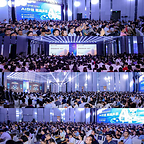
BANGKOK, July 19, 2026 /PRNewswire/ — Government officials, standards bodies and telecom operators gathered in Bangkok on 14 July for the inaugural Broadband Development Summit APAC 2026, convened by the World Broadband Association (WBBA) to build consensus on AI-era networks.

Participants included the ITU, Thailand’s National Board of the Digital Economy and Society, WBBA, IAB, FNCAP, WAA, NIDA and the IPv6 Council, alongside operators Telkomsel, XLSmart, Surge, Globe, AIS, CMI and HKT and Huawei.

Denny Deng, President of Huawei Asia Pacific Carrier Business, envisions a “faster, smarter, greener” Asia-Pacific.

VOICES FROM THE SUMMIT

“To seize the opportunities of the AI era, we call on the industry to accelerate broadband evolution, advance computing-network synergy, and strengthen the cross-border connectivity. Together, let us build faster, smarter, and greener digital infrastructure for Asia-Pacific.”
— Denny Deng, President of Asia Pacific Carrier Business, Huawei

“High-speed broadband is no longer just about ‘getting online’ — it is the vital infrastructure upon which the entire AI revolution is being built. We view AI not merely as a tool, but as a primary engine for national competitiveness and a catalyst for improving the quality of life for all.”
— Wetang Phuangsup, Ph.D., Secretary-General, the National Board of the Digital Economy and Society, Thailand

“Three initiatives define the road to 2030. We must close the quality divide so the value of broadband reaches everyone. We must build AI-ready networks — 10G access, 800GE cores, intelligence end to end. And we must do it together, through shared standards.”
— Martin Creaner, Director General of WBBA

“Moving towards next-generation networks, network architectures must continue to evolve to deliver broader connectivity, superior quality, enhanced security, and greater intelligence. This evolution is essential for Net5.5G, positioning the network not simply as infrastructure, but as the foundation that enables AI, strengthens resilience and efficiency, and supports digital transformation across industries.”
— Dhruv Dhody, Industry Standardization Expert at Huawei, Chair of the IAB, IETF

“Across Asia-Pacific, fibre is extending beyond homes and offices into rooms, devices, and machines. By working together, we can accelerate fibre innovation and adoption to build truly AI-ready infrastructure.”
— Ilham Nandana, Chair of the Market Intelligence Committee, Fiber Network Council APAC (FNCAP)

“We fixed it before you feel it!  AIS is redefining premium home broadband by combining ultra-fast connectivity with AI-driven network intelligence and smart home ecosystem — delivering proactive, invisible service excellence that transforms connectivity into differentiated customer value and sustainable ARPU growth.”
— Thanit Chaiyaboonthanit, Head of Technology Department, Broadband Business, AIS

“Connecting the Unconnected: Affordable Broadband at Scale. Create equal access to global information and empower Indonesia’s digital society.”
— Shannedy Ong, CTO of Surge Indonesia

“Beyond Connectivity: Telkomsel is transforming into a true value creator. By leveraging our FBB market-leading footprint, we power growth through service excellence, customer loyalty, and a next-generation home ecosystem.”
— Stanislaus Susatyo, Director of Sales, Telkomsel Indonesia

“We stopped treating AI as an add-on feature. Instead, our approach at Globe starts with architecture, embedding intelligence into the very core of how we build, how we sell, and how we operate.
AI continuously monitors network health, customer behavior and service quality. Rather than waiting for failures, the system predicts degradation and initiates corrective actions. By maintaining minute-level awareness of network health, our systems automatically resolve 30% of all Wi-Fi issues without any human intervention.”
— Danny Theseira, Head of Broadband Business Group at Globe Telecom

“Huawei is driving the Optics-AI Synergy to foster their collaborative growth. Through AI-ON, operators could build an AI-centric all-optical target network and establish 1-5-20ms latency circles across the Asia Pacific region. AI-ON also supports efficient computing access and usage while delivering an ultimate network experience through gigabit/ultra-gigabit home broadband, accelerating the widespread adoption of AI services.”
— Kim Jin, Vice President & Chief Marketing Officer Optical Business Product Line, Huawei

“Connectivity is not just about technology. It is a lifeline, a platform for opportunity, and a driver of sustainable development. I believe the intersection of connectivity and artificial intelligence will shape the future of smarter, more resilient networks.”
— Dr. Cosmas Zavazava, Director of the Telecommunication Development Bureau, ITU

“Performance and user experience are the essential path to the next-generation WLAN. Based on standards and AI-driven innovation, let’s jointly explore the path to the future autonomous WLAN with all the stakeholders.”
— Dr. Crane H. Yang, Secretary-General, World WLAN Application Alliance (WAA)

“At the summit, NIDA and WBBA signed an MOU to accelerate next-generation network evolution and establish pioneering smart city benchmarks through the co-development of industry standards, the harmonization of global regulations, and the sharing of vertical industry insights.
NIDA focuses on advancing network architecture standards, while WBBA drives global consensus on broadband evolution. This natural strategic complementarity creates vast opportunities for future collaboration.”
— Joey Deng, Secretary-General of NIDA

“ION-2030 develops the global standard for next generation optical networks in the AI era. It provides exceptional AI application and service experience. The WBBA and ITU will jointly accelerate its development, and this is a unique opportunity for Asia-Pacific stakeholders to actively influence the future of optical broadband networks.”
— Dr. Marcus Brunner, Chief Expert Standardization, WBBA WG1 Chair and Vice-Chair of ETSI ISG F5G

“The transition into the AI era demands a high-quality, deterministic digital foundation. By releasing Net5.5G policy guidelines, Malaysia is accelerating the evolution of next-generation network standards based on IPv6, establishing an innovative infrastructure to unleash AI’s value and drive a prosperous digital economy for 2030.”
— Prof. Sureswaran Ramadass, Chair of APAC at IPv6 Council, Industry Partner of WBBA

“The digital economy is thriving across the Asia-Pacific region, with AI emerging as a core catalyst for intelligent transformation. China Mobile International (CMI) is driving regional growth by integrating China’s advanced AI capabilities with comprehensive communications, computing, and AI services. Moving forward, CMI will collaborate closely with industry partners to foster a shared, AI-driven future for the region.”
— Paul Lin, Managing Director of Commercial and Technology, Asia Pacific, China Mobile International

“Next-generation network infrastructure is the oxygen of the intelligent economy. By integrating cutting-edge 800G connectivity with quantum-safe security, HKT is laying the essential foundations to keep Hong Kong’s enterprises highly competitive, secure, and ready for the computing paradigm shifts of tomorrow.”
— Wilson Cheung, Vice President, Broadband Design & Cyber Security, HKT

“The evolution toward Net5.5G AI WAN is an important step in strengthening XLSMART’s transport network for the future. By progressively adopting AI-assisted operations, SRv6, SDN, service differentiation, and higher-capacity transport infrastructure, we are enhancing network intelligence, operational efficiency, and service resilience while supporting long-term sustainability. This transformation is a continuous journey that aligns with the industry’s vision of AI-native broadband networks. Through collaboration with our technology partners and the broader ecosystem, we will continue to develop capabilities that deliver better network performance and support Indonesia’s growing digital connectivity needs.”
— Regie Ginanjar, Head of Transport Autonomy & Orchestration, Transport Network Transformation, XLSMART

“For the AI era, Huawei upgrades the IP bearer network via security resilience, multi-dimensional awareness, and network autonomy. This empowers carriers to guarantee service experience, accelerate monetization, and enhance efficiency, ushering in a new chapter of intelligent connectivity.”
— Arthur Wang, Vice President of Data Communication Product Line, Huawei

A CONVERGING VIEW

Speakers agreed AI is shifting networks from connectivity to intelligent connectivity, as broadband, IP, computing and cross-border infrastructure converge to support innovation and coordination.

WBBA launched the AI-Net Certification, a global benchmark for national policy, industrial ecosystems and network intelligence. XLSmart was named first AI-Net Champion, and Indonesia was among the first with a certified operator, backed by its Net5.5G roadmap.

In another high-profile segment, WBBA Director General Martin Creaner presented the Gigacity Certification to KOMDIGI, SURGE, Telkomsel, AIS, TRUE, HKT and Globe, recognizing regional broadband pioneers.


View original content to download multimedia:https://www.prnewswire.com/apac/news-releases/ai-powered-connectivity-apac-charts-a-path-to-a-smarter-digital-future-302829032.html

SOURCE HUAWEI

Continue Reading

Technology

Laifen Expands U.S. Retail Footprint with Costco Launch of Best-Selling SE Hair Dryer

Published

on

By

Starting July 18, Costco Members Can Shop Laifen’s Award-Winning Hair Dryer in Select Warehouse Locations Across the U.S.

NEW YORK, July 18, 2026 /PRNewswire/ — Laifen, ranked the world’s No.1 high-speed hair dryer brand, today announced the launch of its best-selling SE High-Speed Hair Dryer at select Costco warehouse locations, marking the brand’s largest U.S. retail expansion to date and bringing its award-winning haircare technology to Costco members across select U.S. markets.

The launch brings Laifen’s award-winning haircare technology to Costco, making it easier for consumers to experience the brand through one of the nation’s leading membership retailers. Laifen joins Costco’s growing portfolio of premium beauty and personal care brands. The initial rollout includes select Costco warehouse locations across the United States, with a strong presence across the Western U.S., including California, the Pacific Northwest and the Southwest.

Costco’s reputation for quality and its highly selective merchandising approach make this partnership especially meaningful. The Costco launch reflects Laifen’s continued expansion beyond direct-to-consumer channels as the brand accelerates its U.S. omnichannel retail strategy. “Costco represents an important milestone in our U.S. retail strategy,” said Romeo, General Manager of International Business of Laifen. “As more consumers seek salon-quality performance at an accessible price, we’re excited to make Laifen available through one of America’s most trusted retailers.”

Engineered to deliver professional-level performance in a sleek, lightweight design, the Laifen SE is powered by the brand’s proprietary high-speed brushless motor, delivering fast drying, reduced heat damage and smoother styling. An intelligent temperature control system continuously monitors airflow to help minimize frizz while protecting hair from excessive heat.

The Costco launch represents the next phase of Laifen’s U.S. retail expansion as the brand continues to grow beyond its direct-to-consumer and online channels. By expanding into one of the nation’s most trusted retailers, Laifen aims to broaden access to its category-disrupting haircare solutions while advancing its mission to bring more thoughtful design and everyday excellence into more homes.

The Laifen SE High-Speed Hair Dryer in White will be available at select Costco locations, while Costco.com shoppers will have access to additional color options including Purple and Pink, alongside the White model.

For more information on Laifen, please visit LaifenTech.com.

About Laifen: 

Founded in 2019, Laifen is a global personal care technology brand combining high-performance engineering with modern design across hair care, oral care, and grooming categories. Ranked the world’s No. 1 high-speed hair dryer brand by Euromonitor International, Laifen first gained recognition for its self-developed 110,000 RPM high-speed brushless motor, the proprietary technology behind its award-winning hair dryers.

Building on this innovation, Laifen has expanded its portfolio to include electric toothbrushes and shavers, delivering premium technology and elevated everyday experiences to consumers worldwide. Today, Laifen products and accessories are used by over 22 million households across more than 60 countries, supported by more than 600 patents and recognized with over 50 international design and innovation awards. Driven by continuous technological breakthroughs, Laifen is committed to making cutting-edge personal care technology more accessible to consumers around the world.

View original content to download multimedia:https://www.prnewswire.com/news-releases/laifen-expands-us-retail-footprint-with-costco-launch-of-best-selling-se-hair-dryer-302828573.html

SOURCE Laifen

Continue Reading

Technology

Pillsbury Notice of Data Breach

Published

on

By

NEW YORK, July 18, 2026 /PRNewswire/ — Pillsbury Winthrop Shaw Pittman LLP (“Pillsbury”) was among many law firms targeted by sophisticated social engineering attempts in an incident last year. While the firm quickly detected and blocked the activity, an unauthorized actor was able to access some of the firm’s documents during a short window of time. Pillsbury notified any impacted clients last year and undertook a detailed process to review the accessed documents for personal information. Pillsbury then began notifying individuals whose personal information was affected. That process is now complete, and today, Pillsbury is publishing substitute notice as a final step.

For more information, please visit the substitute notice on our website at https://www.pillsburylaw.com/en/breach-notice.html

View original content to download multimedia:https://www.prnewswire.com/news-releases/pillsbury-notice-of-data-breach-302828892.html

SOURCE Pillsbury Winthrop Shaw Pittman LLP

Continue Reading

Trending