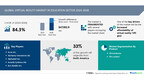
NEW YORK, Nov. 5, 2024 /PRNewswire/ — Report with the AI impact on market trends – The global virtual reality market in education sector size is estimated to grow by USD 47.28 billion from 2024-2028, according to Technavio. The market is estimated to grow at a CAGR of over 84.3% during the forecast period. Increased affordability of virtual reality (VR) gear is driving market growth, with a trend towards increasing number of social VR spaces. However, lack of content poses a challenge. Key market players include Acer Inc., Alchemy Ltd., Alphabet Inc., Avantis Systems Ltd., Eon Reality Inc., HP Inc., HTC Corp., Lenovo Group Ltd., Magic Leap Inc., Meta Platforms Inc., Microsoft Corp., Samsung Electronics Co. Ltd., Sony Group Corp., Unimersiv, Virtalis Holdings Ltd., and zSpace Inc..
AI-Powered Market Evolution Insights. Our comprehensive market report ready with the latest trends, growth opportunities, and strategic analysis- View your snapshot now
Forecast period
2024-2028
Base Year
2023
Historic Data
2018 – 2022
Segment Covered
Product (VR hardware and VR content), End-user (Higher education and K-12), and Geography (North America, Europe, APAC, South America, and Middle East and Africa)
Region Covered
North America, Europe, APAC, South America, and Middle East and Africa
Key companies profiled
Acer Inc., Alchemy Ltd., Alphabet Inc., Avantis Systems Ltd., Eon Reality Inc., HP Inc., HTC Corp., Lenovo Group Ltd., Magic Leap Inc., Meta Platforms Inc., Microsoft Corp., Samsung Electronics Co. Ltd., Sony Group Corp., Unimersiv, Virtalis Holdings Ltd., and zSpace Inc.
Key Market Trends Fueling Growth
In the education sector, Virtual Reality (VR) technology offers a unique learning experience by immersing users in a virtual environment. However, the isolation of users in VR can hinder collaborative learning, an essential component of effective education. To address this challenge, VR vendors are developing platforms that enable social interaction in virtual spaces. Microsoft and Facebook are major players in this market, with Microsoft’s AltspaceVR providing avatars and multiplayer sessions for students to socialize and interact. The platform also offers a front-row feature for attending events or being part of small groups. The increasing popularity of social VR spaces is expected to fuel the growth of the global virtual reality market in education during the forecast period.
The Virtual Reality (VR) market in education is experiencing significant growth, with trends including the use of VR headsets and head-mounted displays in defense and academic institutions. Cloud and on-premises solutions are being adopted for residential and corporate training in the K-12, e-learning, and higher education sectors. Personalized learning experiences and virtual environments are replacing physical learning materials. VR technology is also being used for vocational training, 3D simulations, and generative AI in universities. XR technology, artificial intelligence, and machine learning are enhancing learning experiences for students with Attention Deficit Disorders. The market is expanding to include IT and telecommunication, retail and e-commerce, healthcare, and 5G technology sectors. Software companies are developing innovative solutions for VR in education, making it an exciting space to watch.
Insights on how AI is driving innovation, efficiency, and market growth- Request Sample!
Market Challenges
The Virtual Reality (VR) market in the education sector faces challenges in content creation due to the scarcity of VR developers and the high cost of VR content production. Educators and teachers, who are the primary consumers of this content, lack the necessary technology expertise to create effective VR content. Additionally, the conversion of curriculum-based content into digital formats is a significant challenge for many institutions, especially in the Asia Pacific region, due to low technology literacy and budget constraints. These factors increase the pressure on content creators to produce and diverse VR content for mass consumption. Despite the increasing affordability of VR headsets, the high cost of VR content creation and the lack of technologically equipped educators pose significant barriers to the growth of the VR education market.The Virtual Reality (VR) market in education is expanding rapidly, offering innovative solutions for various sectors. Challenges include providing services like training, consulting, and managed services for K-12 learning, colleges, schools, enterprises, and corporations. VR technologies bring experiences for learners in the virtual world, enhancing practical learning through excursions, lab experiments, group activities, projects, and learning. Digital information and real-life experiences are merged, making learning more engaging and effective. VR headsets and web-based portals enable remote and online education with flexible schedules and individual accountability. Logistics, customer service, and personalized learning experiences are essential for successful implementation. VR also offers training simulators, augmented reality, and gamification elements to make learning more interactive and fun. The integration of IT, telecom, e-commerce, and the 5G network further enhances the potential of VR in education. However, the illusion of VR and entertainment aspects should be balanced with academic rigor to ensure effective learning.
Insights into how AI is reshaping industries and driving growth- Download a Sample Report
Segment Overview
This virtual reality market in education sector report extensively covers market segmentation by
Product 1.1 VR hardware1.2 VR contentEnd-user 2.1 Higher education2.2 K-12Geography 3.1 North America3.2 Europe3.3 APAC3.4 South America3.5 Middle East and Africa
1.1 VR hardware- The global virtual reality market in the education sector is experiencing significant growth, particularly in the VR hardware segment. This segment’s expansion is driven by the decreasing cost of VR hardware, making it more accessible to educational institutions. Initially, VR headsets were primarily used for content development and gaming. However, the increasing adoption of VR for commercial purposes has led vendors to introduce VR devices tailored for educational applications. The VR hardware segment offers a wide range of options for educators, catering to both budget and high-end requirements. Despite the market’s promising growth, challenges remain, including the complexities of developing VR hardware for the education sector on a global scale. These challenges create opportunities for small-scale regional VR hardware manufacturers to collaborate with educational institutions, leading to the development of feasible VR solutions. Overall, the VR hardware segment of the global virtual reality market in education is poised for continued growth, addressing the demand for affordable, high-quality learning experiences.
Download complimentary Sample Report to gain insights into AI’s impact on market dynamics, emerging trends, and future opportunities- including forecast (2024-2028) and historic data (2018 – 2022)
Research Analysis
The Virtual Reality (VR) market in the education sector is experiencing rapid growth, with 3D simulations and XR technology at its core. These learning tools offer personalized experiences for students, making education more engaging and effective. Generative AI and machine learning algorithms are being integrated into VR software to cater to students with Attention Deficit Disorders, providing customized learning paths. Corporate training is also leveraging VR for more effective and interactive sessions. VR technology is available in various forms, including head-mounted displays, VR headsets, projectors, cloud, and on-premises solutions. The education sector, including K-12 learning, telecom, training institutions, universities, and colleges, is adopting VR for virtual learning environments. VR services, consulting, and managed services are also gaining traction in the market.
Market Research Overview
The Virtual Reality (VR) market in the education sector is revolutionizing the way learners acquire knowledge. With 3D simulations and generative AI, XR technology merges the digital and physical worlds, offering experiences for academic institutions and enterprises alike. VR technologies, including VR headsets and head-mounted displays, provide learners with practical learning opportunities, excursions, lab experiments, and group activities. VR technologies are not just limited to academic institutions but are also being adopted by K-12, higher education, IT and telecommunication, retail and e-commerce, healthcare, and various other industries for services training, consulting, managed services, and more. VR’s ability to offer personalized learning experiences, flexible schedules, and individual accountability makes it an attractive option for learners. VR technologies offer learners a chance to experience real-life situations in a safe and controlled environment, making it an effective tool for addressing Attention Deficit Disorders and other learning challenges. The integration of augmented reality, training simulators, and web-based portals further enhances the learning experience. The VR market in the education sector is expected to grow significantly with the advent of 5G technology, which will provide faster connectivity and smoother VR experiences. The use of VR technologies in remote and online education, as well as in various industries, is expected to increase, making it an essential tool for the future of education. VR technologies offer a range of benefits, including the ability to provide learners with illusion-based learning experiences, entertainment, and even applications in defense. The future of education lies in the integration of VR technologies, offering learners a flexible, personalized, and learning experience.
Table of Contents:
1 Executive Summary
2 Market Landscape
3 Market Sizing
4 Historic Market Size
5 Five Forces Analysis
6 Market Segmentation
ProductVR HardwareVR ContentEnd-userHigher EducationK-12GeographyNorth AmericaEuropeAPACSouth AmericaMiddle East And Africa
7 Customer Landscape
8 Geographic Landscape
9 Drivers, Challenges, and Trends
10 Company Landscape
11 Company Analysis
12 Appendix
About Technavio
Technavio is a leading global technology research and advisory company. Their research and analysis focuses on emerging market trends and provides actionable insights to help businesses identify market opportunities and develop effective strategies to optimize their market positions.
With over 500 specialized analysts, Technavio’s report library consists of more than 17,000 reports and counting, covering 800 technologies, spanning across 50 countries. Their client base consists of enterprises of all sizes, including more than 100 Fortune 500 companies. This growing client base relies on Technavio’s comprehensive coverage, extensive research, and actionable market insights to identify opportunities in existing and potential markets and assess their competitive positions within changing market scenarios.
Contacts
Technavio Research
Jesse Maida
Media & Marketing Executive
US: +1 844 364 1100
UK: +44 203 893 3200
Email: media@technavio.com
Website: www.technavio.com/
View original content to download multimedia:https://www.prnewswire.com/news-releases/virtual-reality-market-in-education-to-grow-by-usd-47-28-billion-from-2024-2028–driven-by-affordable-vr-gear-and-ai-driven-market-transformation—technavio-302295545.html
SOURCE Technavio








 Technology5 days ago
 Coin Market5 days ago
 Technology5 days ago


 Technology4 days ago
 Technology4 days ago
 Technology5 days ago