Technology
E-Commerce Logistics Market to Grow by USD 802.3 Billion (2024-2028), Driven by Rising Cross-Border E-Commerce, AI-Powered Report Highlights Market Transformation – Technavio
Published
2 years agoon
By
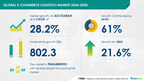
NEW YORK, Nov. 12, 2024 /PRNewswire/ — Report with market evolution powered by AI – The global e-commerce logistics market size is estimated to grow by USD 802.3 billion from 2024-2028, according to Technavio. The market is estimated to grow at a CAGR of 28.2% during the forecast period. Increase in cross-border e-commerce activities is driving market growth, with a trend towards emergence of supermarket mini distribution centers. However, high logistics cost poses a challenge.Key market players include Agility Public Warehousing Co. K.S.C.P, Aramex International LLC, C H Robinson Worldwide Inc., CMA CGM SA Group, DB Schenker, Deutsche Post AG, dotdigital Group Plc, DSV AS, eStore Logistics, FedEx Corp., Gati Ltd, GXO Logistics Inc., Kenco Group Inc., Kuehne Nagel Management AG, Nippon Express Holdings Inc., Rhenus SE and Co. KG, SF Express Co. Ltd., Sinotrans Ltd, United Parcel Service Inc., and XPO Inc..
Key insights into market evolution with AI-powered analysis. Explore trends, segmentation, and growth drivers- View Free Sample PDF
E-Commerce Logistics Market Scope
Report Coverage
Details
Base year
2023
Historic period
2018 – 2022
Forecast period
2024-2028
Growth momentum & CAGR
Accelerate at a CAGR of 28.2%
Market growth 2024-2028
USD 802.3 billion
Market structure
Fragmented
YoY growth 2022-2023 (%)
21.6
Regional analysis
APAC, North America, Europe, Middle East and Africa, and South America
Performing market contribution
APAC at 61%
Key countries
China, Japan, US, Germany, and India
Key companies profiled
Agility Public Warehousing Co. K.S.C.P, Aramex International LLC, C H Robinson Worldwide Inc., CMA CGM SA Group, DB Schenker, Deutsche Post AG, dotdigital Group Plc, DSV AS, eStore Logistics, FedEx Corp., Gati Ltd, GXO Logistics Inc., Kenco Group Inc., Kuehne Nagel Management AG, Nippon Express Holdings Inc., Rhenus SE and Co. KG, SF Express Co. Ltd., Sinotrans Ltd, United Parcel Service Inc., and XPO Inc.
Market Driver
E-commerce logistics is a booming market, driven by the rise of C2C and B2C sales. Suppliers are integrating with supply chain solutions to ensure timely delivery of goods. Technology plays a key role, with business analytics, logistics professionals, and transportation management software streamlining operations. Digital technology, including barcode systems and portable data terminals, enhances efficiency. Cross-border e-commerce activities are surging, fueled by internet penetration and increasing online purchases of everyday essentials, electronics, personal care items, furniture, fashion, and more. SMEs are leveraging e-commerce logistics services to expand their operational areas. Last-mile delivery, drone delivery services, and digital payment methods are transforming the transportation and retailing industries. Logistics companies are investing in hardware technologies like Geographic Information Systems and Global Positioning Systems to optimize routes and reduce fuel prices. Venture capitalists are funding innovation, from mega centers and returns processing centers to third-party logistics providers using a multi-client fulfillment model. The transportation service industry continues to evolve, with rail, road, and air transport adapting to the needs of e-commerce companies. Commodity transport, from wheat to smartphones, is being revolutionized by digitalization and the Internet of Things.
E-commerce logistics is a critical aspect for retailers and online businesses, as providing efficient and accurate order fulfillment is essential for customer satisfaction and retention. Warehouse picking errors can lead to increased costs due to returns, repackaging, and re-shipping, as well as lost sales and poor customer reviews. The demand for faster delivery times has driven shippers to move storage and manufacturing closer to consumers, transforming brick-and-mortar stores into mini distribution centers. This strategy allows for quicker order processing and reduces the risk of picking errors, ultimately benefiting both the retailer and the customer.
Request Sample of our comprehensive report now to stay ahead in the AI-driven market evolution!
Market Challenges
E-commerce logistics faces several challenges in today’s business landscape. Supplier management is crucial for timely delivery of cargo, requiring effective supply chain solutions. Technology plays a significant role, with business analytics and logistics professionals utilizing digital technology for inventory management, transportation, and warehousing. C2C and B2C e-commerce activities increase the operational area, necessitating freight or rail, maritime, and air transport. Cross-border e-commerce activities are boosted by internet penetration, impacting transportation management software, packaging solutions, and returns processing. SMEs face inventory challenges with shelf life, requiring cloud deployment and workforce management strategies. The transportation service industry is evolving with drone delivery services, digital payment methods, and hardware technologies like IoT, barcode systems, and portable data terminals. Logistics companies seek funding from venture capitalists to navigate challenges like fuel prices and competition from third-party logistics providers. Last-mile delivery, retail order fulfillment, and commodity transport remain key areas of focus for e-commerce companies, with DHL leading the way in online shopping.E-commerce logistics involves direct costs such as transportation, warehousing, and value-added services, and indirect costs including inventory-carrying costs, theft, damages, and losses in transit. Factors like labor shortages and rising fuel prices increase shipping costs. Volatility in crude oil prices significantly impacts transportation expenses, challenging profitability. Meanwhile, customers demand lower rates, creating pricing pressure. Balancing these pressures requires strategic cost management and efficient operations in e-commerce logistics.
Discover how AI is revolutionizing market trends- Get your access now!
Segment Overview
This e-commerce logistics market report extensively covers market segmentation by
Usage 1.1 Domestic1.2 InternationalService 2.1 Transportation2.2 Warehousing2.3 OthersGeography 3.1 APAC3.2 North America3.3 Europe3.4 Middle East and Africa3.5 South America
1.1 Domestic- The domestic segment of the e-commerce logistics market holds the largest market share and is projected to experience substantial growth in terms of revenue compared to the international segment. This growth is attributed to the economic expansion and advancements in e-commerce logistics and inventory management, compelling businesses to invest heavily in this sector to maintain growth and enhance productivity. Additionally, the shift towards digital transformation, cloud deployment, and modernization in workforce management among Small and Medium-sized Enterprises (SMEs) globally, contribute significantly to market expansion. Major players in the e-commerce logistics market are prioritizing operational improvements and overall efficiency to stay competitive, thereby fueling the growth of the domestic segment in the global e-commerce logistics market.
Download a Sample of our comprehensive report today to discover how AI-driven innovations are reshaping competitive dynamics
Research Analysis
The E-Commerce Logistics Market is a critical segment of the supply chain solutions industry, catering to the unique demands of C2C and B2C e-commerce businesses. Leveraging digital technology, this market offers various services such as warehousing, transportation, packaging solutions, and returns processing, ensuring seamless delivery of goods to online buyers. The market is driven by internet penetration and the increasing number of internet users, leading to a boom in e-commerce activities. Everyday essentials, groceries, and cross-border trade are some of the major categories driving the growth of this market. E-commerce logistics services have become essential for online businesses to meet customer expectations for fast and reliable delivery. Rail transportation plays a significant role in the logistics network, offering cost-effective and efficient solutions for moving large volumes of goods. Business analytics and technology are key enablers, providing valuable insights into inventory management, demand forecasting, and supply chain optimization. Logistics professionals are the backbone of the industry, ensuring the smooth flow of goods from suppliers to end customers.
Market Research Overview
The E-Commerce Logistics Market is a dynamic and rapidly growing industry that caters to the supply chain needs of C2C and B2C e-commerce businesses. Technology plays a pivotal role in this sector, with digital technology and business analytics driving operational efficiency and effectiveness. Logistics professionals manage the transportation and warehousing of cargo, ensuring timely delivery and optimal inventory management. E-commerce logistics services encompass cross-border activities, with internet penetration and increasing online businesses fueling growth. Transportation management software, packaging solutions, and digital technologies such as barcode systems, portable data terminals, and Geographic Information Systems are essential tools. SMEs and retailers rely on logistics companies for warehousing, transportation via freight or rail, maritime, and air transport. The market is witnessing innovation with the advent of drone delivery services, digital payment methods, and the Internet of Things. Venture capitalists and funding are driving the digitalization of logistics, with a focus on last-mile delivery and the multi-client fulfillment model. The market includes key segments such as everyday essentials, electronics, personal care items, furniture, fashion, smartphones, and commodity transport. Logistics companies are investing in mega centers and returns processing centers to cater to the growing demand for retail order fulfillment. Fuel prices and geopolitical factors can impact the industry, making it a complex and exciting space to watch.
Table of Contents:
1 Executive Summary
2 Market Landscape
3 Market Sizing
4 Historic Market Size
5 Five Forces Analysis
6 Market Segmentation
UsageDomesticInternationalServiceTransportationWarehousingOthersGeographyAPACNorth AmericaEuropeMiddle East And AfricaSouth America
7 Customer Landscape
8 Geographic Landscape
9 Drivers, Challenges, and Trends
10 Company Landscape
11 Company Analysis
12 Appendix
About Technavio
Technavio is a leading global technology research and advisory company. Their research and analysis focuses on emerging market trends and provides actionable insights to help businesses identify market opportunities and develop effective strategies to optimize their market positions.
With over 500 specialized analysts, Technavio’s report library consists of more than 17,000 reports and counting, covering 800 technologies, spanning across 50 countries. Their client base consists of enterprises of all sizes, including more than 100 Fortune 500 companies. This growing client base relies on Technavio’s comprehensive coverage, extensive research, and actionable market insights to identify opportunities in existing and potential markets and assess their competitive positions within changing market scenarios.
Contacts
Technavio Research
Jesse Maida
Media & Marketing Executive
US: +1 844 364 1100
UK: +44 203 893 3200
Email: media@technavio.com
Website: www.technavio.com/
View original content to download multimedia:https://www.prnewswire.com/news-releases/e-commerce-logistics-market-to-grow-by-usd-802-3-billion-2024-2028-driven-by-rising-cross-border-e-commerce-ai-powered-report-highlights-market-transformation—technavio-302302315.html
SOURCE Technavio
You may like
Technology
Quebecor welcomes CRTC decision to end prohibited fees on wireless services
Published
46 minutes agoon
November 27, 2026By
MONTRÉAL, Nov. 27, 2026 /CNW/ — Quebecor welcomes today’s decision by the Canadian Radio-television and Telecommunications Commission (CRTC) regarding certain fees charged to consumers by Bell, Rogers and TELUS. The decision is in line with Quebecor’s view of competition. The company has long denounced the three incumbents’ practices aimed at circumventing the rules set by the regulator and hindering free and fair competition.
“Since entering the wireless market, Quebecor has set clear goals: to offer Canadians high-quality services at fair prices by championing true competition. With Videotron, Freedom Mobile and Fizz, we have shown that it is possible to do things differently by lowering prices, innovating and investing in better services. With our proposed strategic combination with TELUS, we want to build on this momentum and bring to even more Canadians the pro-competitive DNA that is Quebecor’s strength,” said Pierre Karl Péladeau, President and Chief Executive Officer of Quebecor.
Back in July, Freedom Mobile, through its national What the Fees?! campaign, called out incumbents for replacing fees prohibited by the CRTC with new charges under different names. While Videotron, Freedom Mobile and Fizz complied with the new regulatory requirements, the three incumbents chose instead to continue practices that financially penalize consumers who want to switch providers or plans. Quebecor therefore reiterates the importance of a regulatory framework that not only fosters real, lasting and fair competition, but whose rules are followed by all industry players.
Quebecor’s track record on competition speaks for itself. After making Quebec the province where, for many years, telecommunications prices were among the lowest in Canada, the company, with its acquisition of Freedom Mobile in April 2023, played a major role in the 35.4% drop in wireless service prices reported by Statistics Canada.
Building on these results, Quebecor intends to pursue its national ambitions by offering more choice, better prices and innovative, high-quality services, while investing in next-generation networks. This is the thinking behind the proposed strategic combination with TELUS, which aims to build a strong, pan-Canadian competitor driven by Quebecor’s pro-competitive culture: a customer-focused, market-disrupting approach that has always been its hallmark.
About Quebecor
Quebecor, a Canadian leader in telecommunications, entertainment, news media and culture, is one of the best-performing integrated communications companies in the industry. Driven by their determination to deliver the best possible customer experience, all of Quebecor’s subsidiaries and brands are differentiated by their high-quality, multiplatform, convergent products and services.
Quebecor (TSX: QBR.A, QBR.B) is headquartered in Québec and employs more than 11,000 people in Canada.
A family business founded in 1950, Quebecor is strongly committed to the community. Every year, it actively supports more than 400 organizations in the vital fields of culture, health, education, the environment and entrepreneurship.
SOURCE Québecor
Technology
From national energy planning to industrial practice: Huawei and partners unite for an inclusive energy vision in Africa
Published
46 minutes agoon
November 27, 2026By
The Huawei Northern Africa Inclusive Energy Summit 2026, held in Rabat, brought together more than 400 policymakers, institutional and industrial representatives from several African countries to discuss the challenges of energy transition, technological innovation and regional cooperation.
RABAT, Morocco, Nov. 28, 2026 /PRNewswire/ — On November 23 and 24, Rabat hosted the Huawei Northern Africa Inclusive Energy Summit 2026, a high-level event dedicated to the prospects for developing the energy sector in Africa. The event brought together more than 400 representatives from governments, power companies, business organizations and ecosystem partners from several African countries.
Against the backdrop of a shifting global energy landscape and the accelerating transition towards more sustainable development models, the summit provided a platform for dialogue on the opportunities and challenges facing Africa. Discussions focused on the connections between national energy strategies, technological advancements, and the needs of industrial ecosystems, with the aim of expanding access to reliable, affordable, and sustainable energy.
Strengthening Cooperation on National Energy Strategies and Accelerating the Transition to Inclusive Energy
The summit highlighted the importance of aligning national energy development policies, technological innovation, and industrial cooperation. Discussions focused on ways to strengthen energy security, expand access to electricity, and fully harness Africa’s renewable energy potential to drive economic and social development.
On this occasion, Mr. Philippe Wang, President of Digital Power, Huawei Northern Africa (North, West and Central Africa), stressed: “Africa’s economic growth and abundant renewable energy resources are creating new opportunities for energy transformation. Inclusive Energy is not just about electricity access, but about making clean, reliable, and affordable power available to all. By integrating digital and power electronics technologies, Huawei aims to secure, stabilize, and optimize power supply, working with governments and ecosystem partners to turn Africa’s energy potential into lasting economic and social value.”
For her part, Ms. Charafat Afailal, Minister of Energy, Mines and Sustainable Development of Morocco, said: “Renewable energy is a key driver of energy sovereignty and security, while supporting sustainable development goals. Modernizing energy infrastructure, mobilizing investment, and strengthening regional integration are all essential to unlocking Africa’s renewable energy potential. The goal is to transform these abundant resources into reliable and accessible energy that strengthens industrial competitiveness and improves people’s living conditions.”
Building on these challenges, speakers also addressed inclusive energy from the point of view of its concrete impact on people and economic activities. In this context, Mr. César Augusto Hinestrosa Gómez, Vice-Minister in Charge of Electricity at the Ministry of Hydrocarbons, Mines and Electricity of Equatorial Guinea, stressed: “Energy inclusion must be measured by the opportunities electricity creates. For a health center, it means keeping vaccines safe and responding to emergencies. For a small business, it means operating without disruption. For young people, it opens doors to learning and employment. Reliable power must make a real difference in everyday life.”
Finally, stressing the need for a collective approach to the energy challenges facing the continent, Mr. Moussa Koulibaly, Secretary General of the Ministry of Energy of Guinea, called for strengthening regional cooperation: “Let us turn our power interconnections into bridges between our economies, our energy resources into instruments of solidarity, and our partnerships into engines of development. Guinea is open, committed, and ready to build a new energy future with its partners.”
From national strategies to practical implementation: integrated solutions for inclusive energy.
In response to the diverse energy needs of African countries, Huawei proposes a framework for digital and intelligent transformation designed to support the development of more inclusive and efficient energy systems.
By integrating digital technologies, power electronics, and renewable energy technologies, Huawei develops end-to-end solutions across the power system. These solutions focus on three complementary pillars: securing power supply through microgrids, stabilizing power supply through coordination between distribution networks and microgrids, and optimizing the overall power system through coordinated management of the main grid, distribution networks, and microgrids.
This approach aims to support countries in implementing their national energy transition strategies by offering solutions tailored to local conditions and the needs of different economic sectors.
On the ground, these solutions bring tangible economic, operational and social benefits:
Secure Supply: Microgrid Self-Consumption. In remote or underserved areas, community microgrids help significantly reduce energy costs and dependence on conventional diesel generation and imported energy, thereby saving foreign exchange and strengthening national energy sovereignty. Unified monitoring and management at the national level also improve operational efficiency and returns on investment. Meanwhile, microgrids serving critical areas and mining operations help ensure continuous power supply to critical infrastructure and key industrial and mining enterprises, thereby strengthening national energy security.
Stable Supply: Distribution-Microgrid Coordination. Through the digital and intelligent modernization of distribution networks, these solutions help significantly improve power quality at the grid edge and enhance overall grid stability. They also help substantially reduce the average duration and frequency of power interruptions, measured by the System Average Interruption Duration Index (SAIDI) and the System Average Interruption Frequency Index (SAIFI), respectively, while improving end-user satisfaction. By reducing distribution line losses, these solutions further enable power utilities to lower operating costs, improve operational efficiency, and increase revenues.Optimized Supply: Main-Distribution-Microgrid Coordination. Through coordinated dispatch across different levels of the power system, these solutions help strengthen the stability and resilience of the main grid. They also facilitate the large-scale integration and efficient utilization of renewable energy, while supporting the diversification of national energy mixes and sustainable energy development.
Mobilizing expertise and industry partners to accelerate inclusive energy development:
From national energy strategies to on-the-ground project implementation, a successful energy transition requires collective action. Beyond technological innovation, it depends on close cooperation among governments, power utilities, financial institutions, engineering and construction companies, and local industry partners.
Against this backdrop, Huawei reaffirms its commitment to the vision of “Digital and intelligent transformation for inclusive and shared prosperity.” By working with governments, power utilities, and ecosystem partners, Huawei aims to accelerate the deployment of innovative energy solutions, strengthen power infrastructure, and support clean energy development. These efforts also seek to build local industrial capabilities and foster ecosystems that create lasting value, contributing to the economic and social development of African countries.
Beyond the discussions and solutions presented, the Huawei Northern Africa Inclusive Energy Summit 2026 reaffirmed the importance of a shared vision for Africa’s energy future, built on regional cooperation, innovation, and the engagement of both public and private stakeholders. By bringing together national priorities, technological expertise, and industrial capabilities, the summit helped open up new opportunities to accelerate Africa’s energy transition and make access to reliable, affordable, and sustainable energy a driver of economic development, competitiveness, and shared prosperity across the continent.
About Huawei:
Founded in 1987, Huawei is a leading global provider of information and communications technology (ICT) infrastructure and smart devices. We have 207,000 employees and we operate in more than 170 countries and regions, serving more than three billion people around the world.
Our vision and mission is to bring digital to every person, home and organization for a fully connected, intelligent world. To this end, we will work towards ubiquitous connectivity and inclusive network access, laying the foundation for an intelligent world; provide diversified computing power where you need it, when you need it, to bring cloud and intelligence to all four corners of the earth; build digital platforms to help all industries and organizations become more agile, efficient, and dynamic; and redefine user experience with AI, making it smarter and more personalized for people in all aspects of their life, whether they’re at home, on the go, in the office, having fun, or working out. For more information, please visit Huawei online at www.huawei.com , or follow us on:
http://www.linkedin.com/company/Huawei
http://www.twitter.com/Huawei
http://www.facebook.com/Huawei
http://www.youtube.com/Huawei
View original content to download multimedia:https://www.prnewswire.co.uk/news-releases/from-national-energy-planning-to-industrial-practice-huawei-and-partners-unite-for-an-inclusive-energy-vision-in-africa-302951939.html
Technology
Parliamentary Secretary Claude Guay highlights Canada’s first-ever federal forest sector strategy in Quebec
Published
2 hours agoon
November 27, 2026By
GATINEAU, QC, Nov. 27, 2026 /CNW/ — In Canada, the forest sector supports nearly 200,000 jobs, 300 communities and contributed nearly $30 billion to our GDP in 2025 alone. In Quebec, it employs nearly 60,000 people, represents nearly nine percent of provincial exports by value and contributed more than $6.6 billion to the province’s GDP in 2025.
To support the sector’s long-term growth and prosperity, the federal government is taking bold action under Canada’s first-ever federal Forest Sector Strategy. Today, Claude Guay, Parliamentary Secretary to the Minister of Energy and Natural Resources, highlighted that Quebec will play a key role in building a stronger future for forest sector workers, communities and businesses.
Supported by a proposed historic investment of $6.5 billion through Budget 2026 — which would mark the federal government’s largest-ever investment in the sector — the Forest Sector Strategy for Canada provides a 25-year roadmap to modernize our industry, diversify our forest product exports, create new demand for Canadian wood and forest products at home, and position the sector for long-term growth, resilience and sustainability. The Strategy is built around four pillars:
Pivot to transform the sector through investments, partnership and innovation in new and enhanced facilities and products;Secure competitive fibre supply that will catalyze new projects and create investment certainty for industry;Pursue new markets at home and abroad, including infrastructure and affordable housing initiatives in Canada; andSupporting communities and workers.
Parliamentary Secretary Guay also highlighted that the federal government is working with Les Chantiers de Chibougamau ltée in Chibougamau, Quebec, on a project to expand production of large-format, cross-laminated timber (CLT) panels and modular mass timber buildings. The project would help meet growing demand for more efficient, affordable home construction while increasing domestic value-added wood processing through expanded production of large-dimension structural wood panels, which can accelerate construction timelines and enable larger, more complex wood buildings than conventional wood-frame construction. The project would also support implementation of the Forest Sector Strategy for Canada by advancing domestic innovation, producing higher-value wood products and increasing the use of wood in construction.
Turning the Strategy’s vision into action will require continued collaboration and co-ordination across federal, provincial and territorial governments, Indigenous partners and industry. The forest sector is one of Quebec’s most important industries, and by building on the province’s leadership, we can ensure Quebec’s forest sector remains a source of good jobs, economic growth and prosperity for generations to come.
Quotes
“At this pivotal moment, business as usual is no longer an option for Quebec’s forest sector. For the first time, our Forest Sector Strategy sets a clear, comprehensive path forward to help the sector navigate today’s challenges while securing its future for generations to come. Through a historic investment and co-ordinated, strategic policy action, we are going to improve fibre supply certainty, accelerate innovation and modernization in the sector, advance Indigenous partnership, drive domestic demand for Canadian wood and continue diversifying markets. Because a strong forest sector means a strong Canada.”
The Honourable Tim Hodgson
Minister of Energy and Natural Resources
“Quebec’s forest sector is a source of pride and opportunity for communities across the province. Through the Forest Sector Strategy for Canada, our government is making historic investments to support innovation, strengthen competitiveness, expand market opportunities and help ensure the sector continues to create good jobs and economic prosperity for generations to come.”
Claude Guay
Parliament Secretary to the Minister of Energy and Natural Resources
“Exactly 366 days ago, Prime Minister Mark Carney announced the formation of a task force, stating his intention to work with enthusiasm and determination to transform Canada’s forestry sector. In January, Minister Hodgson announced that the Working Group was beginning its work. Today, the government is putting in place the tools needed to provide historic momentum to a sector that is more relevant than ever to the country and particularly strategic for Quebec. The past year has been intense, but the real work begins now.”
Frédéric Verreault
Co-Chair of the Canadian Forest Sector Transformation Task Force, and Vice President of Corporate Affairs, Les Chantiers de Chibougamau
“The federal strategy comes at just the right time for Quebec, as the provincial government prepares to undertake a major review of its forestry regime. In particular, the federal strategy recognizes the importance of a stable and predictable supply to support major investments in the sector — a view fully shared by Quebec’s forestry companies.”
Michel Vincent,
President, Quebec Forest Industry Council
Quick Facts
The Forest Sector Strategy for Canada builds on the work done by the Canadian Forest Sector Transformation Task Force, whose recommendations were published in June 2026.Budget 2026 proposes a historic investment of $6.5 billion to support implementation of the Forest Sector Strategy for Canada, including:$4 billion over six years through a new Forest Sector Accelerator to support large-scale transformational projects, including biorefineries, biofuel facilities and other facilities producing innovative and higher-value forest products;$2 billion over six years to help businesses modernize facilities and equipment, improve productivity, expand production of higher-value products and support research, development and demonstration; and$500 million over six years to strengthen fibre supply chains and support forest management and stewardship.
Related Products
News release: Minister Hodgson unveils first-ever federal strategy for Canada’s forest sectorBackgrounder: Minister Hodgson unveils first-ever federal strategy for Canada’s forest sector
Associated Links
A Forest Sector Strategy for CanadaBudget 2026: Masters of our destinySupport for Canada’s Forest Sector Employers and WorkersCanadian Forest Sector Transformation Task ForceCanada’s softwood lumber industry
Follow Natural Resources Canada on LinkedIn
SOURCE Natural Resources Canada
Quebecor welcomes CRTC decision to end prohibited fees on wireless services
From national energy planning to industrial practice: Huawei and partners unite for an inclusive energy vision in Africa
Parliamentary Secretary Claude Guay highlights Canada’s first-ever federal forest sector strategy in Quebec
Send Rakhi to UK swiftly with UK Gifts Portal
Whiteboard Series with NEAR | Ep: 45 Joel Thorstensson from ceramic.network
Nullmax and Renesas Forge Strategic Partnership to Deliver Competitive ADAS Solutions for the Global Market
Why You Should Build on #NEAR – Co-founder Illia Polosukhin at CV Labs
Whiteboard Series with NEAR | Ep: 45 Joel Thorstensson from ceramic.network
NEAR End of Year Town Hall 2021: The Open Web World, MetaBUILD 2 Hackathon and 2021 recap
Trending
-
Technology4 days agoMonday’s Rebound Reaches Rocket, Satellite and AI Cloud Stocks
-
Technology4 days agoMemTensor Releases and Open-Sources MemT-1.0-Pro, a 554B Memory-Native Model
-
Coin Market5 days agoHalf of wallets on Trump’s dinner list got tokens from non-US exchanges
-
Technology5 days agoLG ELECTRONICS’ ULTRAVIEW WINDSHIELD DISPLAY WINS 2026 AUTOMOTIVE NEWS PACE PILOT AWARD
-
Technology5 days agoModelBest opening up access to AI technology on an international scale
-
Near Videos4 days agoIllia Polosukhin on why Bitcoin needs to update its cryptography | Solana Breakpoint 2026
-
Coin Market3 days agoUSDT buyers face 22% VAT when Moscow Exchange opens crypto trading
-
Coin Market3 days agoGrayscale calls Bitcoin ‘oversold’ at $62K but warns of AI risks