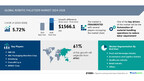
NEW YORK, Nov. 13, 2024 /PRNewswire/ — Report with the AI impact on market trends – The global robotic palletizer market size is estimated to grow by USD 1.57 billion from 2024-2028, according to Technavio. The market is estimated to grow at a CAGR of 5.72% during the forecast period. Automation of material handling operations to reduce labor requirement is driving market growth, with a trend towards rise in adoption of industrial internet of things (IIOT) technology in robotics. However, high cost of deploying and maintaining automation systems poses a challenge.Key market players include ABB Ltd., ABC Packaging Machine Corp, Armstrong, Concetti S.p.a, DENSO Corp., Duravant LLC, FANUC Corp., Fuji Yusoki Kogyo Co. Ltd, Illinois Tool Works Inc., Kawasaki Heavy Industries Ltd., Krones AG, KUKA AG, MMCI Automation, Okura Yusoki Co. Ltd., Premier Tech Digital Ltd., Schneider Packaging Equipment Co Inc, Serpa Packaging Solutions LLC, Staubli International AG, Universal Robots AS, and Yaskawa Electric Corp..
AI-Powered Market Evolution Insights. Our comprehensive market report ready with the latest trends, growth opportunities, and strategic analysis- View Free Sample Report PDF
Forecast period
2024-2028
Base Year
2023
Historic Data
2018 – 2022
Segment Covered
End-user (Food and beverage industry, Ecommerce and logistics industry, Healthcare industry, Retail industry, and Others), Type (Articulated robots and Collaborative robots), and Geography (APAC, Europe, North America, South America, and Middle East and Africa)
Region Covered
APAC, Europe, North America, South America, and Middle East and Africa
Key companies profiled
ABB Ltd., ABC Packaging Machine Corp, Armstrong, Concetti S.p.a, DENSO Corp., Duravant LLC, FANUC Corp., Fuji Yusoki Kogyo Co. Ltd, Illinois Tool Works Inc., Kawasaki Heavy Industries Ltd., Krones AG, KUKA AG, MMCI Automation, Okura Yusoki Co. Ltd., Premier Tech Digital Ltd., Schneider Packaging Equipment Co Inc, Serpa Packaging Solutions LLC, Staubli International AG, Universal Robots AS, and Yaskawa Electric Corp.
Key Market Trends Fueling Growth
Robotic palletizers in industrial settings are integrating smart sensors and communication devices, or IIoT devices, to enhance productivity and efficiency. IIoT systems consist of intelligent devices, data collection and exchange infrastructure, and cloud-based applications for analytics. Data from IoT systems and sensors in production, including robotic palletizers, enables operators to analyze manufacturing performance. This drives asset reliability, cost-efficiency, and predictive maintenance, reducing downtime and maximizing output quality. IIoT and cloud-driven big data analytics will fuel the global robotic palletizer market growth.
The Robotic Palletizer market is experiencing significant growth, particularly in industries like food and beverage, logistics, and industrial packaging. Traditional palletizers are being replaced by robotic palletizers due to their ability to increase precision, efficiency, and reduce work-related injuries. Robotic de-palletizers are also gaining popularity for their role in automating warehouse operations. Articulated robots are a key component of robotic palletizing and de-palletizing systems. These systems use sensor systems, vision recognition, and motion control algorithms to ensure accuracy and consistency. Conveyor systems, infeed conveyors, bag palletizers, and bag flatteners are essential components of the robotics ecosystem. Industries such as consumer electronics, healthcare, and personal care are increasingly investing in automated palletizing systems to meet the demands of e-commerce and industrialization. However, the financial barrier to implementing these technologies can be a challenge for some businesses. Automation in the form of robotics is transforming the way warehouses manage order volume, inventory, and quality control. With advancements in technology, the future of palletizers looks bright, with innovations in data management systems and vision recognition set to revolutionize the industry.
Insights on how AI is driving innovation, efficiency, and market growth- Request Sample!
Market Challenges
Robotic palletizers offer significant benefits such as increased productivity and efficiency in material handling. However, the initial investment for installing a robotic palletizer includes expenses on fixtures, tooling, and accessories, including special end-effectors like vacuum pickers and enclosures. The cost of these implementations can range from USD50,000 to USD100,000. Additionally, ongoing costs for preventative maintenance, safety, operator training, and complementary peripheral equipment add to the overall expense. Long-term service contracts with vendors limit the ability to switch between automation systems, creating high switching costs. Malfunctions or breakdowns in robots can potentially shut down entire production lines, adding risk to the investment. These factors may hinder the growth of the global robotic palletizer market during the forecast period.The Robotic Palletizer Market is experiencing significant growth due to increasing automation in various industries, including consumer electronics, healthcare, and warehouse automation. However, challenges persist in implementing these systems, such as work-related injuries from manual palletizing and the financial barrier for smaller businesses. Robotic palletizers use sensor systems, vision recognition, and motion control algorithms to improve precision, quality control, and labor efficiency. These systems include components like conveyor systems, infeed conveyors, bag palletizers, layer forming stations, and pallet dispensers. Implementing robotic palletizing systems requires integration with data management systems and logistics technologies. Despite these challenges, the benefits of increased order volume, inventory management, and reduced material handling procedures make robotic palletizers a valuable investment for industries undergoing industrialization and e-commerce growth. The shift from conventional palletizers to automated systems continues to drive market growth.
Insights into how AI is reshaping industries and driving growth- Download a Sample Report
Segment Overview
This robotic palletizer market report extensively covers market segmentation by
End-user 1.1 Food and beverage industry1.2 Ecommerce and logistics industry1.3 Healthcare industry1.4 Retail industry1.5 OthersType 2.1 Articulated robots2.2 Collaborative robotsGeography 3.1 APAC3.2 Europe3.3 North America3.4 South America3.5 Middle East and Africa
1.1 Food and beverage industry- In the global robotic palletizers market, the food and beverage industry holds a significant share due to the high demand for automation in material handling processes. With increasing daily output and frequent changes in product SKUs and batch sizes, conventional inline palletizers are no longer sufficient. Robotic palletizers, such as SCARA and six-axis articulated robots, are gaining popularity due to their ability to handle multiple SKUs and short runs. These technologies offer better return on investment (RoI) than fixed automation equipment and require less floor space. SMEs in the food and beverage industry are also adopting robotic palletizers for their flexibility and ease of reconfiguration. Integration of feeding devices and advanced vision systems further enhances the efficiency and product safety of these robots, making them a valuable investment for end-users.
Download complimentary Sample Report to gain insights into AI’s impact on market dynamics, emerging trends, and future opportunities- including forecast (2024-2028) and historic data (2018 – 2022)
Research Analysis
Robotic palletizers are automated systems designed to handle and stack pallets in warehouses and logistics centers. They offer several advantages over traditional palletizers, including increased efficiency, improved product quality, and reduced work-related injuries. Robotic palletizing and de-palletizing systems utilize sensors, vision recognition, and motion control algorithms to accurately handle various types of products, including food and beverage, personal care industry, consumer electronics, healthcare, and industrial packaging. These systems consist of articulated robots, conveyor systems, infeed conveyors, bag palletizers, layer forming stations, and pallet dispensers. The integration of automation, data management systems, and robotics in the robotics ecosystem has led to the development of advanced palletizing solutions that cater to the needs of various industries, including logistics, e-commerce, and industrialization. The automation of palletizing and de-palletizing processes has significantly improved warehouse operations by increasing order volume and inventory management capabilities.
Market Research Overview
Robotic palletizers are automated systems designed to handle and stack pallets in warehouses, replacing traditional manual palletizing methods. Robotic palletizing and de-palletizing systems use articulated robots, sensor systems, vision recognition, and motion control algorithms to efficiently load and unload pallets. Industries such as food and beverage, logistics, industrial packaging, personal care, consumer electronics, healthcare, and e-commerce are increasingly adopting these systems for their warehousing needs. Robotic palletizers offer numerous benefits, including increased precision, quality control, labor efficiency, and inventory management. However, the financial barrier to implementation can be a deterrent for some companies. Automation in material handling procedures through robotics is a key trend in warehouse operations, driven by the need for higher order volume, reduced work-related injuries, and logistics technologies. The robotics ecosystem includes various components such as conveyor systems, infeed conveyors, bag palletizers, layer forming stations, and pallet dispensers. In the future, advancements in technology, such as data management systems and vision recognition, will further enhance the capabilities of robotic palletizers and de-palletizers. The integration of these systems with conveyor systems and other warehouse automation technologies will create a seamless logistics process. Overall, the adoption of robotic palletizing and de-palletizing systems is a crucial step towards industrialization and the optimization of warehouse operations.
Table of Contents:
1 Executive Summary
2 Market Landscape
3 Market Sizing
4 Historic Market Size
5 Five Forces Analysis
6 Market Segmentation
End-userFood And Beverage IndustryEcommerce And Logistics IndustryHealthcare IndustryRetail IndustryOthersTypeArticulated RobotsCollaborative RobotsGeographyAPACEuropeNorth AmericaSouth AmericaMiddle East And Africa
7 Customer Landscape
8 Geographic Landscape
9 Drivers, Challenges, and Trends
10 Company Landscape
11 Company Analysis
12 Appendix
About Technavio
Technavio is a leading global technology research and advisory company. Their research and analysis focuses on emerging market trends and provides actionable insights to help businesses identify market opportunities and develop effective strategies to optimize their market positions.
With over 500 specialized analysts, Technavio’s report library consists of more than 17,000 reports and counting, covering 800 technologies, spanning across 50 countries. Their client base consists of enterprises of all sizes, including more than 100 Fortune 500 companies. This growing client base relies on Technavio’s comprehensive coverage, extensive research, and actionable market insights to identify opportunities in existing and potential markets and assess their competitive positions within changing market scenarios.
Contacts
Technavio Research
Jesse Maida
Media & Marketing Executive
US: +1 844 364 1100
UK: +44 203 893 3200
Email: media@technavio.com
Website: www.technavio.com/
View original content to download multimedia:https://www.prnewswire.com/news-releases/robotic-palletizer-market-to-grow-by-usd-1-57-billion-2024-2028-driven-by-automation-in-material-handling-ai-powered-report-highlights-market-transformation—technavio-302304156.html
SOURCE Technavio









 Technology5 days ago

 Coin Market5 days ago
 Technology5 days ago
 Near Videos4 days ago
 Technology5 days ago
 Technology5 days ago
 Technology4 days ago