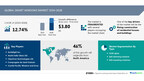
NEW YORK, Nov. 19, 2024 /PRNewswire/ — Report with market evolution powered by AI – The global smart windows market size is estimated to grow by USD 3.80 billion from 2024-2028, according to Technavio. The market is estimated to grow at a CAGR of 12.74% during the forecast period. Rising construction of residential houses and buildings is driving market growth, with a trend towards growing number of strategic alliances and partnerships. However, technological limitations with smart windows poses a challenge.Key market players include Ambilight Inc., Asahi India Glass Ltd., ClearVue Technologies Ltd., Compagnie de Saint Gobain, Crystal Pacific Window and Door Systems, Diamond Glass, Gauzy Ltd., Gentex Corp., Halio Inc., Innovative Glass Corp., Nodis, Polytronix Inc., PPG Industries Inc., RavenWindow, Smart Glass India, Smart Window, Smart Windows Colorado, SmartGlass International, Stellaris Corp., and View Inc.
Key insights into market evolution with AI-powered analysis. Explore trends, segmentation, and growth drivers- View Free Sample PDF
Smart Windows Market Scope
Report Coverage
Details
Base year
2023
Historic period
2018 – 2022
Forecast period
2024-2028
Growth momentum & CAGR
Accelerate at a CAGR of 12.74%
Market growth 2024-2028
USD 3.80 billion
Market structure
Fragmented
YoY growth 2022-2023 (%)
12.04
Regional analysis
North America, APAC, Europe, South America, and Middle East and Africa
Performing market contribution
North America at 46%
Key countries
US, Canada, China, Japan, and UK
Key companies profiled
Ambilight Inc., Asahi India Glass Ltd., ClearVue Technologies Ltd., Compagnie de Saint Gobain, Crystal Pacific Window and Door Systems, Diamond Glass, Gauzy Ltd., Gentex Corp., Halio Inc., Innovative Glass Corp., Nodis, Polytronix Inc., PPG Industries Inc., RavenWindow, Smart Glass India, Smart Window, Smart Windows Colorado, SmartGlass International, Stellaris Corp., and View Inc
Market Driver
Smart windows, also known as glass products with advanced light and heat control, are trending in the construction sector. These translucent and transparent windows adjust to ambient conditions, saving energy costs on heating, cooling, and lighting. Motorized light screens, blinds, and curtains are popular alternatives to traditional window coverings. Energy-saving heating and lateral lighting are key benefits, reducing air conditioning usage. The automobile sector is embracing smart windows for luxury vehicles, while the industrial-scale production capacity increases. Partnership announcements and extensive marketing endeavors boost recognition and operational efficiency. Advanced materials, such as electrochromic, lower prices and offer privacy control in various sectors like conference rooms, intensive-care areas, and bathrooms. Self-dimming windows and OLED glass are the latest advancements. The transportation sector, including commercial vehicles, trains, and passenger vehicles, also benefits from smart windows. Despite market restraints like lack of awareness and high investment levels, the long-term benefits are significant. Technological advancements, such as electrochromism, vibrant applicability, and self-repairing properties, continue to drive growth.
The global smart windows market experiences significant competition among vendors, driven by the market’s moderate fragmentation and rapidly advancing technologies. This intense competition has led to an increase in strategic partnerships. The construction industry’s growing demand for glass curtain walls further motivates market participants to form alliances, expanding their market reach and customer base. Notable mergers and acquisitions in the smart windows market include [mention specific M&A deals here]. To maintain a competitive edge, established vendors are expected to strengthen their market presence through strategic collaborations.
Request Sample of our comprehensive report now to stay ahead in the AI-driven market evolution!
Market Challenges
The Smart Windows Market encompasses advanced glass products with light transmission properties that respond to electricity, providing light and heat control. Buildings, particularly business, residential, and commercial, are major consumers, utilizing climate-adaptive shells to reduce energy costs. Motorized light screens, blinds, and curtains are alternatives, but smart windows offer energy-saving heating, lateral lighting, and air conditioning. The automobile sector also benefits from smart windows, with blackout smart glass and low-emissivity coatings blocking UV rays. The construction sector faces challenges like market restraints due to lack of awareness and high investment levels. However, the long-term benefits, including privacy control, operational efficiency, and cost efficiency, outweigh these hurdles. Advanced materials like electrochromic and polymer-dispersed liquid crystals are driving innovation, with vibrant applicability in various sectors. Partnership announcements and industrial-scale production capacity are increasing recognition, while lowering prices make these technologies more accessible. The transportation sector, including automotive and aerospace, is a significant market, with self-dimming windows and OLED glass leading the way. Smart windows adapt to ambient conditions, offering manual controls for energy efficiency. Technological advancements include self-repairing and thinner display panels, making them increasingly cost-effective and desirable. Despite challenges, the future of smart windows is bright, with extensive marketing endeavors and stable performance ensuring their continued usage and recognition.The smart windows market faces challenges related to the reliability and effectiveness of current technology. According to a report by the National Renewable Energy Laboratory (NREL), concerns include durability issues, material constraints, and the need for advanced control systems. The report highlights that the performance and longevity of existing smart window materials are suboptimal, potentially reducing the product’s overall lifespan. This limitation may hinder market growth and hinder widespread adoption. Additionally, the need for improved control systems adds another layer of complexity for smart window manufacturers.
Discover how AI is revolutionizing market trends- Get your access now!
Segment Overview
This smart windows market report extensively covers market segmentation by
Type 1.1 OLED glass1.2 Self-dimming window1.3 Self-repairing windowsApplication 2.1 Transportation2.2 Commercial and industrial2.3 ResidentialGeography 3.1 North America3.2 APAC3.3 Europe3.4 South America3.5 Middle East and Africa
1.1 OLED glass- The OLED segment of the smart windows market has experienced notable growth in the last decade. OLED, or organic light emitting diode, is a type of glass that generates light when an electric current is passed through it. Smart windows incorporate OLED glass to manage the quantity of light and heat entering buildings. This technology offers enhanced control over natural light in a room, enabling adjustable transparency and opacity levels. The OLED glass segment’s popularity stems from its allure and energy efficiency, leading to substantial expansion during the forecast period. Additionally, OLED glass’s thin, adaptable, and size-versatile properties make it suitable for various applications in both residential and commercial structures. The trend towards sustainable and eco-friendly construction practices further fuels the demand for OLED glass. Consumers seeking environmentally-friendly options find smart windows appealing due to their energy savings and reduced greenhouse gas emissions. These factors are expected to boost the demand for the OLED glass segment, consequently driving the growth of the smart windows market.
Download a Sample of our comprehensive report today to discover how AI-driven innovations are reshaping competitive dynamics
Research Analysis
Smart windows, also known as intelligent glass or dynamic glass, are advanced glass products that offer exceptional light transmission properties while providing control over heat application. These translucent and transparent glass solutions utilize electricity to adjust their light wavelengths, allowing them to regulate the amount of light and heat that enters buildings. Smart windows are increasingly popular in various sectors, including buildings with exterior walls, climate-adaptive shells, and personal property buildings. They help reduce energy costs by managing heating, cooling, lighting, and air conditioning requirements. Motorized light screens, blinds, and curtains are alternative solutions that can also provide energy savings. Smart windows are not limited to buildings; they also find applications in the automobile sector. These glass products offer benefits such as energy-saving heating, lateral lighting, and protection against UV rays. In the construction sector, they address issues like dynamic glare and light control, making them an essential component of modern, sustainable architecture.
Market Research Overview
Smart windows, also known as intelligent glass or electrochromic glass, are revolutionizing the building and automobile sectors with their unique light transmission properties. These innovative glass products offer the ability to control light and heat application through electricity, making them translucent or transparent based on ambient conditions. This technology is applicable to buildings, both exterior walls and climate-adaptive shells, and offers significant energy savings through energy-saving heating, lateral lighting, and air conditioning. The market for smart windows is vast, spanning business, residential, commercial, personal property buildings, and even the automobile sector. Advanced materials, such as electrochromic and polymer-dispersed liquid crystals, are used to create these windows, with vibrant applicability in various sectors. The use of smart windows offers numerous benefits, including privacy control, operational efficiency, and cost efficiency. However, the initial investment levels can be high, and market restraints include a lack of awareness and long-term benefits recognition. Despite this, extensive marketing endeavors and advancements in technology, such as self-dimming and self-repairing windows, are driving usage and recognition. The transportation sector, including the automobile and aerospace industries, is also adopting smart window technology, with applications ranging from luxury automobiles to commercial vehicles, trains, and passenger vehicles. The construction sector is also investing in industrial-scale production capacity to meet the growing demand for these energy-efficient and advanced materials. Smart windows offer significant control over light wavelengths, including UV rays, and can be used in various applications, such as blackout smart glass, low-emissivity coatings, and motorized light screens. They can also be used in conjunction with other energy-saving technologies, such as energy-efficient lighting and HVAC systems, to further reduce energy costs. The technology behind smart windows is based on the scientific principle of electrochromism, which involves the application of an electrical voltage to change the color of the window from clear to dark or bluish. This decrease in price and advancements in electrochromic materials have made these windows increasingly accessible to a wider audience. In conclusion, smart windows offer numerous benefits, including energy savings, privacy control, operational efficiency, and cost savings, making them a valuable investment for both commercial and residential buildings, as well as the transportation sector. With ongoing advancements in technology and increasing awareness, the market for smart windows is poised for significant growth.
Table of Contents:
1 Executive Summary
2 Market Landscape
3 Market Sizing
4 Historic Market Size
5 Five Forces Analysis
6 Market Segmentation
TypeOLED GlassSelf-dimming WindowSelf-repairing WindowsApplicationTransportationCommercial And IndustrialResidentialGeographyNorth AmericaAPACEuropeSouth AmericaMiddle East And Africa
7 Customer Landscape
8 Geographic Landscape
9 Drivers, Challenges, and Trends
10 Company Landscape
11 Company Analysis
12 Appendix
About Technavio
Technavio is a leading global technology research and advisory company. Their research and analysis focuses on emerging market trends and provides actionable insights to help businesses identify market opportunities and develop effective strategies to optimize their market positions.
With over 500 specialized analysts, Technavio’s report library consists of more than 17,000 reports and counting, covering 800 technologies, spanning across 50 countries. Their client base consists of enterprises of all sizes, including more than 100 Fortune 500 companies. This growing client base relies on Technavio’s comprehensive coverage, extensive research, and actionable market insights to identify opportunities in existing and potential markets and assess their competitive positions within changing market scenarios.
Contacts
Technavio Research
Jesse Maida
Media & Marketing Executive
US: +1 844 364 1100
UK: +44 203 893 3200
Email: media@technavio.com
Website: www.technavio.com/
View original content to download multimedia:https://www.prnewswire.com/news-releases/smart-windows-market-to-grow-by-usd-3-80-billion-2024-2028-driven-by-rising-residential-construction-with-ai-redefining-market-landscape—technavio-302308812.html
SOURCE Technavio









 Technology5 days ago
 Technology4 days ago

 Coin Market4 days ago

 Technology4 days ago

 Technology4 days ago

 Technology5 days ago

 Technology5 days ago

 Coin Market4 days ago