Connect with us

Technology

Humanoid Robot Market to Grow by USD 16.99 Billion (2024-2028), Driven by Demand for Enhanced Industrial Visibility and Flexibility, with AI Driving Market Transformation – Technavio

Published

on

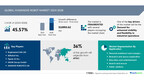
NEW YORK, Nov. 19, 2024 /PRNewswire/ — Report with the AI impact on market trends – The global humanoid robot market size is estimated to grow by USD 16.99 billion from 2024-2028, according to Technavio. The market is estimated to grow at a CAGR of  45.57% during the forecast period. Demand for enhanced visibility and flexibility in industrial operations is driving market growth, with a trend towards growing demand of humanoid robot owing to emergence of smart manufacturing. However, ethical issues with humanoid robots  poses a challenge.Key market players include Engineered Arts Ltd., EZRobot Inc., Figure AI Inc., HAHN Group GmbH, HANSON ROBOTICS Ltd., Hasbro Inc., Honda Motor Co. Ltd., Hyundai Motor Co., Invento Research Inc., Kawada Robotics Co. Ltd., Macco Robotics, PAL Robotics, Promobot LLC, ROBO GARAGE CO. LTD., Robosen Technologies Ltd, ROBOTIS Co. Ltd, Toyota Motor Corp., Trossen Robotics, UBTECH Robotics Inc., and United Robotics Group GmbH.

Key insights into market evolution with AI-powered analysis. Explore trends, segmentation, and growth drivers- View Free Sample PDF

Humanoid Robot Market Scope

Report Coverage

Details

Base year

2023

Historic period

2018 – 2022

Forecast period

2024-2028

Growth momentum & CAGR

Accelerate at a CAGR of 45.57%

Market growth 2024-2028

USD 16993.62 million

Market structure

Fragmented

YoY growth 2022-2023 (%)

44.15

Regional analysis

North America, APAC, Europe, Middle East and Africa, and South America

Performing market contribution

APAC at 36%

Key countries

US, Japan, China, South Korea, and Germany

Key companies profiled

Engineered Arts Ltd., EZRobot Inc., Figure AI Inc., HAHN Group GmbH, HANSON ROBOTICS Ltd., Hasbro Inc., Honda Motor Co. Ltd., Hyundai Motor Co., Invento Research Inc., Kawada Robotics Co. Ltd., Macco Robotics, PAL Robotics, Promobot LLC, ROBO GARAGE CO. LTD., Robosen Technologies Ltd, ROBOTIS Co. Ltd, Toyota Motor Corp., Trossen Robotics, UBTECH Robotics Inc., and United Robotics Group GmbH

Market Driver

The humanoid robot market is experiencing significant growth, driven by trends in AI for good, aerospace, and assisted living. Companies like Ameca in Jalisco are leading the charge with autonomous robots for elder care and exploration. In the aerospace industry, humanoid robots are being used for astronaut assistance and autonomous exploration. In the amusement park sector, humanoid robots offer customer engagement and satisfaction through interactive experiences. Investment in humanoid robot technology is on the rise, with startups and established companies alike seeking to capitalize on its potential. Ansys simulation software and cognitive science are key areas of focus for innovation. Behavioral sciences, consciousness, and neuroscience are also important fields of study for creating more human-like robots. The marketplace for humanoid robots is diverse, with applications in grocery stores, hospitality, and even isolation wards. Robots are used for customer engagement, medication dispensing, and even surveillance. In the future, humanoid robots may be used for language translation, learning, and even music performance. Strategic management and policy are crucial for the successful implementation of humanoid robots in various industries. Subsidies and investment opportunities are available for companies in this field. Humanoid robots are being used in various industries such as healthcare, education, and manufacturing for tasks ranging from ultraviolet disinfection to autonomous elevator operation. Invention and training are ongoing processes in the humanoid robot market. Robots are being used for research in mathematics, science, and even rock music. Autonomous robots are being used in the aerospace industry for exploration, while humanoid robots are being used in assisted living for elderly care and motivation. The humanoid robot market is constantly evolving, with new applications and innovations emerging all the time. From autonomous elevators to cognitive science research, the potential for humanoid robots is vast. Whether it’s in the aerospace industry, a grocery store, or an isolation ward, humanoid robots are making a difference. 

Smart manufacturing is a modern industrial approach that leverages advanced computing, analytics, and IoT-integrated technology to optimize production processes. Key objectives include flow optimization, customization, asset tracking, predictive maintenance, and real-time inventory management. The growth of automation, electrification, data integration, human-machine interaction, and connectivity have driven the adoption of smart manufacturing. In the automotive industry, sensors are used extensively in manufacturing, assembly lines, and warehouses to enable automation and improve efficiency. Industrial machines and robots are equipped with IoT-integrated microprocessors, microcontrollers, sensors, and switches to facilitate smart manufacturing. 

Request Sample of our comprehensive report now to stay ahead in the AI-driven market evolution!

 Market Challenges

The humanoid robot market is experiencing significant growth as these advanced machines find applications in various industries. AI for Good initiatives, aerospace, and Ameca Robotics in Jalisco lead the charge in exploration and autonomous robotics. In the entertainment sector, amusement parks use humanoids for customer engagement and satisfaction. Ansys simulation software and cognitive science help develop robots capable of cognition and consciousness. Assisted living, elderly care, and hospitals utilize humanoids for duty in isolation wards and patient care. The future of humanoids includes investment in startups, autonomy in grocery stores and elevators, and even autonomous payment kiosks. Challenges include policy-making, language barriers, and ensuring relevance in areas like mathematics, medicine, and neuroscience. Humanoids are also being used for motivation in areas like music and art, and for strategic management in client computing and investment. Invention in areas like autonomous elevator systems and ultraviolet disinfection robots continue to push the boundaries of this exciting market.The humanoid robot market faces significant challenges due to ethical concerns. Unemployment is a major issue as humanoid robots can perform tasks previously done by laborers, leading to potential job losses. Ethical dilemmas also include privacy concerns, inaccurate data usage, and control and liability issues. These challenges may hinder the growth of the global humanoid robot market during the forecast period. It is crucial for businesses to address these ethical concerns to ensure the responsible adoption and integration of humanoid robots into various industries.

Discover how AI is revolutionizing market trends- Get your access now!

Segment Overview 

This humanoid robot market report extensively covers market segmentation by  

Application 1.1 Personal assistance and caregiving1.2 Research and space exploration1.3 Education and entertainment1.4 Search and rescue1.5 Public relationsComponent 2.1 Hardware2.2 SoftwareGeography 3.1 North America3.2 APAC3.3 Europe3.4 Middle East and Africa3.5 South America

1.1 Personal assistance and caregiving-  The personal assistance and caregiving segment of the global humanoid robot market is experiencing notable growth due to the increasing demand for robots that can help people with daily living tasks and provide companionship and mental health support. Key players, such as HANSON ROBOTICS, Toyota, and PAL Robotics, are developing humanoid robots with diverse capabilities, from basic tasks to advanced functions like conversing and emotion recognition. The aging population, rising home care demands, and technological advancements fuel market expansion. Startups and smaller companies also contribute, offering specialized humanoid robots for specific applications, like autism therapy or mobility assistance. Overall, the personal assistance and caregiving segment’s growth will continue to drive the global humanoid robot market, as robots become increasingly capable and the need for caregiving services increases.

Download a Sample of our comprehensive report today to discover how AI-driven innovations are reshaping competitive dynamics

Research Analysis

The Humanoid Robot Market is experiencing rapid growth as advancements in AI, autonomy, and cognitive science drive innovation in various industries. Robots are being integrated into sectors such as aerospace for exploration and astronaut assistance, amusement parks for customer engagement, and assisted living for elderly care. In the future, humanoid robots are expected to revolutionize industries like grocery stores and hospitality, providing improved customer satisfaction and efficiency. Applications in fields like art, consciousness, and behavioral sciences are also emerging, broadening the scope of humanoid robotics. Companies are leveraging Ansys for simulation and design, while autonomous robots are being used in duty roles like elevators and electric generators. Foreign language capabilities add to their versatility, making humanoid robots an essential part of our future.

Market Research Overview

The Humanoid Robot Market is experiencing rapid growth as AI technology advances and robots become increasingly integrated into various industries. From ‘AI for Good’ projects to aerospace and amusement parks, humanoid robots are making waves in exploration, assisted living, and customer engagement. In the realm of art and behavioral sciences, robots are pushing boundaries in cognitive science, consciousness, and neuroscience. The marketplace also includes applications in manufacturing, such as autonomous robots for assembly lines and electric generators. In the future, humanoid robots will be found in grocery stores, hospitals, and even isolation wards, providing essential services with motivation and relevance. The market is driven by investment and policy, with startups and subsidies playing a significant role in innovation. Robots are also being used for payment systems, language translation, and even music composition. The possibilities are endless, from simulation software for strategic management to robots that can learn and adapt to their environment. The humanoid robot market is shaping the future of various industries and our daily lives.

Table of Contents:

1 Executive Summary
2 Market Landscape
3 Market Sizing
4 Historic Market Size
5 Five Forces Analysis
6 Market Segmentation

ApplicationPersonal Assistance And CaregivingResearch And Space ExplorationEducation And EntertainmentSearch And RescuePublic RelationsComponentHardwareSoftwareGeographyNorth AmericaAPACEuropeMiddle East And AfricaSouth America

7 Customer Landscape
8 Geographic Landscape
9 Drivers, Challenges, and Trends
10 Company Landscape
11 Company Analysis
12 Appendix

About Technavio

Technavio is a leading global technology research and advisory company. Their research and analysis focuses on emerging market trends and provides actionable insights to help businesses identify market opportunities and develop effective strategies to optimize their market positions.

With over 500 specialized analysts, Technavio’s report library consists of more than 17,000 reports and counting, covering 800 technologies, spanning across 50 countries. Their client base consists of enterprises of all sizes, including more than 100 Fortune 500 companies. This growing client base relies on Technavio’s comprehensive coverage, extensive research, and actionable market insights to identify opportunities in existing and potential markets and assess their competitive positions within changing market scenarios.

Contacts

Technavio Research
Jesse Maida
Media & Marketing Executive
US: +1 844 364 1100
UK: +44 203 893 3200
Email: media@technavio.com
Website: www.technavio.com/

View original content to download multimedia:https://www.prnewswire.com/news-releases/humanoid-robot-market-to-grow-by-usd-16-99-billion-2024-2028-driven-by-demand-for-enhanced-industrial-visibility-and-flexibility-with-ai-driving-market-transformation—technavio-302309660.html

SOURCE Technavio

Continue Reading

Technology

SuperIT AI Agents Launch in North America With Free Tier To Fix IT Incidents Without Runbooks

Published

on

By

Australian startup brings its self-service platform to North American MSPs ahead of IT Nation Connect. MSPs can have an AI agent working on real tickets within an hour of sign-up, with paid plans starting at US$99 a month.

ORLANDO, Fla., Nov. 2, 2026 /PRNewswire-PRWeb/ — SuperIT, an Australian AI startup whose AI agents investigate and fix end-user IT issues directly on managed devices, today launched its platform for North American managed service providers (MSPs) and IT teams on a self-service basis, as part of global availability. A new free tier with no expiry includes unlimited AI ticket triage and monthly credits for other AI features, and paid plans start at US$99 a month. MSPs and IT teams can sign up at https://superit.ai, connect their ticketing system and have an AI agent working real tickets within the first hour, with no sales call or contract.

“SuperIT investigates problems it hasn’t seen before and fixes them on the device, within limits each MSP sets.” (Sale)

The launch, ahead of IT Nation Connect in Orlando (Nov. 4–6), moves SuperIT from early access with MSPs in Australia, New Zealand and the U.S. to general availability worldwide, with North America the company’s focus market.

“This is a new era for IT and MSP software, where products win on technical merit, not contract lock-in. The days of signing a one- to three-year contract just to try a product are over,” said Christopher Sale, CEO and co-founder of SuperIT. “We believe SuperIT is the best AI agent in its class, so we’re making it free to use with no time limit and letting MSPs judge it on their own tickets. Most AI in IT support stops at triage or a pre-written script. SuperIT investigates problems it hasn’t seen before and fixes them on the device, within limits each MSP sets.”

Fixing, not just triage and suggestions

Many AI tools for MSPs classify and assign tickets, suggest knowledge articles or run predefined scripts. SuperIT does those things, and is built to go further: to diagnose and resolve unfamiliar issues without a pre-written workflow. Two proprietary technologies make that possible:

– Digital Twin. An evolving model of each customer’s IT environment, built from managed-device telemetry and third-party integrations. Each new issue is investigated with that context rather than from scratch.

– SuperIT Endpoint Agent. Runs on managed devices to gather diagnostics, analyze configuration and system behavior, run commands through controlled PowerShell execution, apply fixes and verify the issue is resolved.

Each MSP decides how independently SuperIT works. Within those limits it resolves issues on its own. Outside them, it works with an engineer to plan, approve and carry out the fix. Early customers use SuperIT for triage and first response, routine service desk workflows, technical investigation, and unfamiliar L1–L3 incidents. SuperIT helps with recurring tasks like new user onboarding and offboarding, all the way to the most complex once-off server performance troubleshooting or network incidents, and everything in between.

Early results

In early evaluations across the technician conversations reviewed with SuperIT’s early MSP partners, the technician’s goal was fully or partly achieved in 91.1%, and 74.1% were assessed as clearly useful or decisive, such as finding key information, running diagnostics or performing the fix. Fields written by SuperIT’s AI triage were still unchanged at review in 99% of cases for ticket type, 96% for subtype, 93% for priority and 91% for item.

Usage grew quickly ahead of the launch. Between July and September 2026, the number of customers MSPs have deployed SuperIT to grew 71%, tickets synced more than doubled, and monthly autonomous agent runs more than doubled, including a nearly tenfold increase in ticket investigations. Monthly recurring revenue grew more than sixfold from August to September.

“We’ve tested many ticket remediation solutions, and only SuperIT passed our accuracy tests. It’s also very easy to use,” said Sam Gridley, CEO of Hawaii-based MSP Intech Hawaii.

Availability and pricing

SuperIT’s free tier has no trial expiry. It includes unlimited AI ticket triage, with fair-use limits, and monthly credits (enough for light AI usage), with access to all platform features. Paid plans run from US$99 to US$9,900 a month, month to month contracts, with more credits on larger plans. Tiers are available for IT teams of all sizes, including custom plans for larger MSPs and IT departments with enterprise requirements. Guided onboarding and assisted proofs of concept remain available.

“MSPs shouldn’t have to sit through sales demos, sign long contracts or commit to big minimums just to find out whether an AI tool like SuperIT works in their environment,” said Sale. “Start free, prove it on real tickets and scale when you’re ready.”

Integrations and security

SuperIT integrates natively with ConnectWise PSA, Autotask, HaloPSA and Accelo, with more to come. Its workflow actions feature lets MSPs connect any platform with a public API as a tool the AI agent can use. Every command passes a security pipeline and a three-tier policy (allowed, needs approval, blocked) and runs as the signed-in user, never with system-level rights. Every action is recorded in an append-only audit trail, and MSPs can require engineer approval for any command or category of action.

Growing without hiring at the same rate

MSP growth has traditionally meant hiring more engineers as client numbers rise. SuperIT is designed to break that link, so MSPs can support more clients with their existing teams, cut engineering time per ticket and improve gross margins.

SuperIT also expects the platform to let MSPs offer new AI-first managed services, priced lower because AI agents do much of the technical work and engineers step in when needed. That makes smaller, price-sensitive businesses profitable to serve, an opportunity that also suits office technology dealers building managed IT practices without large engineering teams.

North America

The expansion follows demand from North American MSPs that saw SuperIT’s early results. North American customers will initially be supported by SuperIT’s existing team and global platform, and the company plans to open a dedicated U.S. team in the first quarter of 2027.

SuperIT raised a US$1.7 million (AU$2.5 million) pre-seed round in December 2025 from Hustle Fund, Antler, CoVentures, Top Down Ventures, angel investors, and MSP owners and industry experts.

IT Nation Connect attendees can see SuperIT in the Solutions Hall, Nov. 4–6. MSPs can sign up free at https://superit.ai

About SuperIT

SuperIT builds AI agents that investigate, troubleshoot and resolve end-user IT incidents and service requests, so MSPs and internal IT teams can scale support without adding headcount at the same rate. Its platform combines a Digital Twin of each customer’s IT environment with an endpoint agent that acts directly on managed devices, within limits each MSP sets. Founded in 2025 in Adelaide, Australia, and now operating globally, SuperIT is backed by Top Down Ventures, Hustle Fund, Antler and CoVentures. Learn more and sign up free at https://superit.ai

Media Contact

Christopher Sale, SuperIT, 1 650 466 9762, press@superit.ai, www.superit.ai

View original content to download multimedia:https://www.prweb.com/releases/superit-ai-agents-launch-in-north-america-with-free-tier-to-fix-it-incidents-without-runbooks-302926969.html

SOURCE SuperIT

Continue Reading

Technology

New TELUS collective agreement ratified by the United Steelworkers membership

Published

on

By

Agreement reached ahead of current contract’s expiry provides stability for more than 3,000 team members across Canada

VANCOUVER, BC, Nov. 2, 2026 /CNW/ — TELUS today announced that team members represented by the Telecommunications Workers Union, United Steelworkers Local 1944 (USW) bargaining unit have ratified the new agreement reached by the parties earlier this month. This new agreement, which has a term of April 1, 2027 to December 31, 2031, will apply to more than 3,000 TELUS team members nationally.

“Thank you to our team members for supporting this agreement and to both bargaining teams for their constructive work,” said Victor Dodig, President and CEO of TELUS. “Reaching an agreement well ahead of the current contract’s expiry provides stability for our team members and our business, allowing us to focus together on delivering the reliable service and outstanding experiences our customers count on.”

About TELUS
TELUS (TSX: T, NYSE: TU) is a leading Canadian communications technology company operating in more than 45 countries and generating over $20 billion in annual revenue with more than 17 million customer connections through our advanced suite of broadband services for consumers, businesses and the public sector. TELUS is passionate about putting our customers and communities first, leading the way globally in client service excellence and social capitalism. The TELUS PureFibre and 5G networks connect Canadians at home, at work and in the communities where they live.

TELUS Health is enhancing approximately 159 million lives across 200 countries and territories through innovative preventive medicine and well-being technologies. TELUS Agriculture & Consumer Goods utilizes digital technologies and data insights to optimize the connection between producers and consumers. TELUS Digital specializes in digital customer experiences and future-focused digital transformations that deliver value for their global clients.

Since 2000, TELUS and our team members have contributed more than $1.85 billion in cash, in-kind contributions, time and programs to communities across Canada and around the world.

For more information, visit telus.com.

For more information, please contact:
Chelsey Higdon
TELUS Public Relations
chelsey.higdon@telus.com 

SOURCE TELUS Communications Inc.

Continue Reading

Technology

USI Unveils Wi-Fi 8 SiP Module for Enhanced AI Device Connectivity

Published

on

By

SHANGHAI, Nov. 3, 2026 /PRNewswire/ — USI today announced its Wi-Fi 8 (IEEE 802.11bn) roadmap, with product launch planned for the first quarter of 2027. Building on its Wi-Fi 6E and Wi-Fi 7 with System-in-Package (SiP) technology, USI is positioning itself to help customers capture the next wave of wireless innovation.

Wi-Fi 8 shifts focus from peak data rates to Ultra-High Reliability (UHR), efficiency, and consistent user experience. This matters as devices shrink, from smartphones and AI laptops to smart glasses, smart rings, and TWS earbuds, and must maintain stable connections despite limited antenna space, constrained battery capacity, and complex RF environments.

Key Wi-Fi 8 technologies include:

Multi-AP Coordination: Coordinated Beamforming (Co-BF) and Coordinated Spatial Reuse (Co-SR)Dynamic Spectrum Optimization: Dynamic Sub-channel Operation (DSO)PHY enhancements: Distributed Resource Unit (DRU), Enhanced Long Range (ELR), and Unequal Modulation (UEQM)

Together, these advances enable smarter, more coordinated wireless networks and extend advanced connectivity to wearables and next-generation robotics.

Shrinking form factors bring tighter space, battery, thermal, and power demands. USI draws on deep expertise in SiP design, RF engineering, wireless module integration, advanced packaging, and high-volume manufacturing to help customers reduce product size, optimize power consumption, and simplify system design. Its Wi-Fi 6E and Wi-Fi 7 SiP miniaturization, combined with advanced RF and shielding technologies, provides a strong base for the Wi-Fi 8 transition.

Wi-Fi 8 is also expected to drive deeper system-level integration across wireless ICs, RF front-end components, antennas, power management, and advanced packaging, so that wireless performance and miniaturization evolve together in wearable, mobile, and IoT products.

“Wi-Fi 8 is about more than faster speeds. It is about enabling devices to maintain reliable, consistent, and predictable connections in complex wireless environments. USI will combine its capabilities in wireless connectivity, RF design, SiP integration, and advanced process technology to help customers overcome the challenges of product miniaturization and rising system complexity, accelerating the time to market for next-generation smart devices.” said Jessica Yu, Associate Vice President of Wireless & Wearable Miniaturization Solutions at USI.

Wi-Fi 6 and 6E improved network efficiency and expanded available spectrum, and Wi-Fi 7 significantly raised throughput, bandwidth, and responsiveness. Wi-Fi 8 goes further, delivering greater reliability, predictability, and efficiency in increasingly complex wireless environments.

About USI (601231.SH)

USI, Universal Scientific Industrial (Shanghai) Co., Ltd., is a global leader in electronic design and manufacturing as well as a leader in the field of SiP (System-in-Package) technology. Our production and service locations span four continents: Asia, Europe, the Americas, and Africa, offering customer diversified electronic products with D(MS)2 services: Design, Manufacturing, Miniaturization, Industrial software, and hardware Solutions, as well as material procurement, logistics and maintenance Services. USI is a subsidiary of ASE Technology Holding Co., Ltd. (TWSE: 3711, NYSE: ASX). To learn more, please visit www.usiglobal.com and engage with us on LinkedIn and YouTube.

View original content:https://www.prnewswire.com/apac/news-releases/usi-unveils-wi-fi-8-sip-module-for-enhanced-ai-device-connectivity-302924735.html

SOURCE USI

Continue Reading

Trending