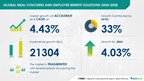
NEW YORK, Nov. 20, 2024 /PRNewswire/ — Report on how AI is driving market transformation – The global meal vouchers and employee benefit solutions market size is estimated to grow by USD 21.3 billion from 2024-2028, according to Technavio. The market is estimated to grow at a CAGR of 4.43% during the forecast period. Tax benefits of meal vouchers is driving market growth, with a trend towards shift toward digital meal vouchers and employee benefit solutions. However, data privacy and security issues poses a challenge.Key market players include Alelo, Alera Group Inc., Axis Bank Ltd., Certify Inc., Circula GmbH, CIRFOOD s.c., Edenred SE, Electrum Fintech Solutions Pvt. Ltd., Empyrean Benefits Solutions Inc., Hrmony GmbH, ICICI Bank Ltd., Monizze NV SA, PayPal Holdings Inc., PIB Group Ltd., Set Corporate Services Inc., Sodexo SA, SPENDIT AG, SWILE, The Up Group Ltd., UniCredit SpA, Unum Group, VA Tech Ventures Pvt. Ltd., and Zaggle Prepaid Ocean Services Pvt. Ltd..
Key insights into market evolution with AI-powered analysis. Explore trends, segmentation, and growth drivers- View Free Sample PDF
Meal Vouchers And Employee Benefit Solutions Market Scope
Report Coverage
Details
Base year
2023
Historic period
2018 – 2022
Forecast period
2024-2028
Growth momentum & CAGR
Accelerate at a CAGR of 4.43%
Market growth 2024-2028
USD 21304 million
Market structure
Fragmented
YoY growth 2022-2023 (%)
4.03
Regional analysis
Europe, South America, APAC, North America, and Middle East and Africa
Performing market contribution
APAC at 33%
Key countries
Brazil, France, Italy, Spain, and Japan
Key companies profiled
Alelo, Alera Group Inc., Axis Bank Ltd., Certify Inc., Circula GmbH, CIRFOOD s.c., Edenred SE, Electrum Fintech Solutions Pvt. Ltd., Empyrean Benefits Solutions Inc., Hrmony GmbH, ICICI Bank Ltd., Monizze NV SA, PayPal Holdings Inc., PIB Group Ltd., Set Corporate Services Inc., Sodexo SA, SPENDIT AG, SWILE, The Up Group Ltd., UniCredit SpA, Unum Group, VA Tech Ventures Pvt. Ltd., and Zaggle Prepaid Ocean Services Pvt. Ltd.
Market Driver
Meal vouchers and employee benefit solutions continue to trend in the business world, with offerings expanding beyond traditional meal coupons to include travel vouchers, gift coupons, and financial wellness programs. These solutions promote workplace productivity, team engagement, and positive work culture by addressing employee financial and health concerns. Trending areas include cooperation with partner restaurants and food delivery services, digital meal vouchers, and mobile applications. Advanced analytics and reporting capabilities enable businesses to understand consumption patterns and adjust production accordingly. Geopolitical influences, natural disasters, climate change, economic impact, trade policies, and social concerns also impact the market. Employee satisfaction, retention, and morale are key benefits, along with competitive advantages, supportive government policies, and corporate social responsibility. Financial benefits, such as retirement plans and flexible work arrangements, are also important. Digital technologies, employee wellness, and dietary preferences are driving innovation. Integrated benefit platforms offer budgeting tools, healthcare coverage, paid time off, and insurance options. Marketing activities, such as social media campaigns and content marketing, increase brand visibility. Tax incentives further encourage adoption.
The digital shift in payment methods, driven by the expanding internet penetration and mobile Internet usage in developing economies, has significantly impacted the Meal Vouchers and Employee Benefit Solutions market. Key players, such as Sodexo Group and Edenred, are responding by automating and digitizing their processes. Government initiatives, like the European Commission’s investment in ultra-fast networks and innovative technology development under the €7.5 billion Digital Europe program, further support this transformation. Companies are focusing on personalized services to meet the evolving needs of their clients and employees.
Request Sample of our comprehensive report now to stay ahead in the AI-driven market evolution!
Market Challenges
• Meal vouchers and employee benefit solutions have become essential tools for businesses to enhance their employees’ financial and health well-being. Challenges such as Cooper Card, production and consumption patterns, geopolitical influence, and demographic changes impact the market. Meal vouchers, meal coupons, travel vouchers, and gift coupons contribute to workplace productivity, team engagement, and employee satisfaction. Employers offer meal vouchers to support financial benefits, including retirement plans and flexible work arrangements. Human resource professionals and professional services leverage these solutions to boost employee morale, retention, and positive work culture. Marketing activities, such as social media campaigns and content marketing, increase brand visibility. Digital technologies, like meal delivery services and mobile applications, offer convenience and flexibility. Integrated benefit platforms with advanced analytics and reporting capabilities streamline financial wellness, budgeting tools, healthcare coverage, and insurance options. Employers must address social concerns, such as health and wellness, dietary preferences, and partner restaurants. MNCs, educational institutions, government agencies, and enterprises can gain competitive advantages through supportive government policies, corporate social responsibility, and digital meal vouchers. The economic impact of trade policies, natural disasters, climate change, and supplier power influence the market. Employees value meal vouchers as part of their compensation packages and expect them to accommodate their dietary preferences and work-life balance. Employers must adapt to these trends to maintain a productive and engaged workforce.
• In the Meal Vouchers and Employee Benefit Solutions market, businesses have experienced significant growth due to technological innovations and digitization. Vendors offer mobile apps and cards for managing employee benefits, which collect and store personal information. While commercially available security technologies are used to safeguard this data, vulnerabilities in servers or mobile apps could pose privacy risks and negatively impact market players. Data plays a crucial role in modern business operations, with solutions like Edenred enabling online payments through Apple Pay, Google Pay, SAMSUNG Pay, or proprietary systems. Ensuring data security is essential to maintain trust and protect businesses in this digital age.
Discover how AI is revolutionizing market trends- Get your access now!
Segment Overview
This meal vouchers and employee benefit solutions market report extensively covers market segmentation by
Type 1.1 Meal vouchers1.2 Employee benefitsProduct 2.1 Non-cash voucher2.2 Cash voucherGeography 3.1 Europe3.2 South America3.3 APAC3.4 North America3.5 Middle East and Africa
1.1 Meal vouchers- The meal vouchers segment holds the largest market share in the global meal vouchers and employee benefit solutions market in 2023. Employers issue meal vouchers to their employees, which can be used to purchase food products from foodservice outlets or grocery stores. The growth of this segment is primarily driven by tax exemption benefits under various tax regimes. For instance, meal vouchers worth USD0.6 (INR 50) or less are exempted from tax in India. Meal vouchers form part of an employee’s compensation structure, and tax benefits are applied according to the country’s tax laws. Meal vouchers are provided by vendors such as Sodexo, Edenred, and others, who charge employers for printing and distributing these vouchers. Employees can save on taxes as many countries offer tax exemptions on meal vouchers. Vendors are expanding their offerings by launching digital meal vouchers and partnering with food delivery service providers, such as Swiggy, Zomato, Burger King, Pizza Hut, and KFC. These developments are expected to boost the demand for meal vouchers during the forecast period.
Download a Sample of our comprehensive report today to discover how AI-driven innovations are reshaping competitive dynamics
Research Analysis
Meal vouchers and employee benefit solutions have become essential components of modern workplace culture. These programs promote financial well-being and health and wellness among employees. Meal vouchers, meal coupons, travel vouchers, and gift coupons are popular types of benefits that boost employee morale and productivity. Workforce demographics, including age, gender, and socio-economic status, influence the demand for such benefits. Health and wellness initiatives, retirement plans, flexible work arrangements, and financial benefits are crucial elements of comprehensive employee benefit solutions. Businesses, enterprises, government agencies, educational institutions, and other organizations offer these benefits to enhance employee satisfaction, productivity, retention, and positive work culture. Supportive government policies, tax incentives, and corporate social responsibility further fuel the growth of this market. Employee benefits solutions offer competitive advantages to organizations, contributing to a healthy and motivated workforce.
Market Research Overview
Meal vouchers and employee benefit solutions have become essential components of modern business strategies, focusing on financial and health well-being. These programs include meal coupons, travel vouchers, and gift coupons, enhancing workplace productivity, team engagement, and employee satisfaction. Factors influencing the market include production and consumption patterns, human resource management, professional services, and geopolitical influences. Natural disasters, climate change, economic impact, trade policies, social concerns, and demographic changes also play a role. Supplier power and buyer power, workforce demographics, health and wellness, retirement plans, and flexible work arrangements are significant considerations. Digital technologies, such as mobile applications and online platforms, have transformed meal voucher systems into integrated benefit platforms with advanced analytics and reporting capabilities. Financial wellness offerings, including budgeting tools and insurance options, are increasingly popular. Marketing activities, such as social media campaigns and content marketing, boost brand visibility and employee engagement. Tax incentives further encourage businesses, enterprises, government agencies, educational institutions, and multinational companies (MNCs) to adopt these solutions.
Table of Contents:
1 Executive Summary
2 Market Landscape
3 Market Sizing
4 Historic Market Size
5 Five Forces Analysis
6 Market Segmentation
TypeMeal VouchersEmployee BenefitsProductNon-cash VoucherCash VoucherGeographyEuropeSouth AmericaAPACNorth AmericaMiddle East And Africa
7 Customer Landscape
8 Geographic Landscape
9 Drivers, Challenges, and Trends
10 Company Landscape
11 Company Analysis
12 Appendix
About Technavio
Technavio is a leading global technology research and advisory company. Their research and analysis focuses on emerging market trends and provides actionable insights to help businesses identify market opportunities and develop effective strategies to optimize their market positions.
With over 500 specialized analysts, Technavio’s report library consists of more than 17,000 reports and counting, covering 800 technologies, spanning across 50 countries. Their client base consists of enterprises of all sizes, including more than 100 Fortune 500 companies. This growing client base relies on Technavio’s comprehensive coverage, extensive research, and actionable market insights to identify opportunities in existing and potential markets and assess their competitive positions within changing market scenarios.
Contacts
Technavio Research
Jesse Maida
Media & Marketing Executive
US: +1 844 364 1100
UK: +44 203 893 3200
Email: media@technavio.com
Website: www.technavio.com/
View original content to download multimedia:https://www.prnewswire.com/news-releases/meal-vouchers-and-employee-benefit-solutions-market-to-grow-by-usd-21-3-billion-2024-2028-driven-by-tax-benefits-with-ai-powering-market-evolution—technavio-302311060.html
SOURCE Technavio









 Technology4 days ago
 Coin Market5 days ago
 Coin Market4 days ago
 Technology4 days ago
 Technology4 days ago
 Technology4 days ago