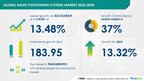
NEW YORK, Nov. 20, 2024 /PRNewswire/ — Report on how AI is driving market transformation – The global nano positioning systems market size is estimated to grow by USD 183.95 million from 2024-2028, according to Technavio. The market is estimated to grow at a CAGR of 13.48% during the forecast period. Wide application of nanotechnology is driving market growth, with a trend towards growing focus on development of hybrid nano positioning systems. However, high sensitivity of nano positioning systems to environmental conditions poses a challenge.Key market players include Aerotech Inc., Allied Motion Technologies Inc., CEDRAT TECHNOLOGIES SA, Dynamic Structures and Materials LLC, Grayfield Optical Inc., Harbin Core Tomorrow Science and Technology Co. Ltd., ISP System, Mad City Labs Inc., MICRONIX USA, MKS Instruments Inc., Novanta Inc., OME Technology Co. Ltd., OWIS GmbH, Physik Instrumente GmbH and Co. KG, Piezosystem Jena GmbH, Prior Scientific Instruments Ltd., Pro Lite Technology Ltd., SmarAct GmbH, Thorlabs Inc., and WITTENSTEIN SE.
AI-Powered Market Evolution Insights. Our comprehensive market report ready with the latest trends, growth opportunities, and strategic analysis- View Free Sample Report PDF
Forecast period
2024-2028
Base Year
2023
Historic Data
2018 – 2022
Segment Covered
Application (Optics, Automotive, Industrial, and Others), Type (Capacitive sensor, Piezoresistive sensor, and Piezoelectric sensor), and Geography (North America, Europe, APAC, Middle East and Africa, and South America)
Region Covered
North America, Europe, APAC, Middle East and Africa, and South America
Key companies profiled
Aerotech Inc., Allied Motion Technologies Inc., CEDRAT TECHNOLOGIES SA, Dynamic Structures and Materials LLC, Grayfield Optical Inc., Harbin Core Tomorrow Science and Technology Co. Ltd., ISP System, Mad City Labs Inc., MICRONIX USA, MKS Instruments Inc., Novanta Inc., OME Technology Co. Ltd., OWIS GmbH, Physik Instrumente GmbH and Co. KG, Piezosystem Jena GmbH, Prior Scientific Instruments Ltd., Pro Lite Technology Ltd., SmarAct GmbH, Thorlabs Inc., and WITTENSTEIN SE
Key Market Trends Fueling Growth
The nanopositioning systems industry is experiencing significant growth due to increasing demands for devices with higher accuracy and speed. Optics, microscopy, semiconductor manufacturing, and photonics packaging are key applications driving this trend. Unique sensor arrangements offer error-free measurement in three coordinate axes, providing nano-metric precision. Advanced positioning systems, such as MEMS and capacitive sensors, use ceramic technology for miniaturization. Piezoelectric actuators and sensors, including strain gauge and piezoresistive, enable mechanical integration and force generation with lower energy consumption. Nanotechnology and biotechnology applications, including QUT, robot vision, service robots, autonomous vehicle systems, biomedical engineering, healthcare, quantum computing, nanoscale electronics, and tools and systems, are expanding the industry’s scope. Optical scanning, bio-nanotechnology, and optical alignment are essential in the aerospace and automotive sectors for tight tolerances in microelectronics, microchips, and optical devices. Diagnostic and therapeutic purposes, biological samples, nanometer-scale accuracy, and rapid response times are critical in imaging, communication, and sensing applications. High-tech companies and startups are investing in nanopositioning systems to meet the demands of various industries. However, trade disputes and shutting down of some manufacturers may impact the market. Sub-nanometer resolution, optical components like lenses, mirrors, prisms, and fibers, and advanced control algorithms are essential for future developments.
Nano positioning systems have long been recognized for their high accuracy in various industries. However, these traditional systems encounter limitations in terms of speed, adaptability, and versatility for diverse applications. To address these challenges, hybrid nano positioning systems have emerged as a promising solution. These systems integrate multiple positioning technologies, combining the strengths of traditional macro-positioning systems with advanced nano positioning techniques. Macro-positioning systems offer coarse positioning and general movement, while nano positioning elements provide fine-tuned control for high precision at the nanoscale. An illustrative example is the integration of piezoelectric actuators with servo motors, which enhances performance across a broader range of applications. This hybrid approach enables improved speed, adaptability, and versatility for nano positioning systems.
Insights on how AI is driving innovation, efficiency, and market growth- Request Sample!
Market Challenges
The nanopositioning systems industry faces challenges in achieving high accuracy and speed in devices using optics for microscopy, semiconductor manufacturing, photonics packaging, and biotechnology applications. Unique sensor arrangements are essential for error-free measurement along three coordinate axes, requiring nanometer-level precision. Trade disputes and shutting down of factories pose risks, but increasing application scope in advanced positioning systems drives growth. MEMS technologies using capacitive sensors, ceramic technology, and miniaturization are key trends. Piezoelectric actuators, sensors like strain gauge and piezoresistive sensors, mechanical integration, and force generation are important for nanotechnology and biotechnology applications. Lowered energy consumption is a priority. Nanopositioning systems are used in quantum computing, nanoscale electronics, tools and systems, optical scanning, bio-nanotechnology, optical alignment, aerospace, automotive, quality control, and more. Applications include diagnostic and therapeutic purposes, drug delivery, imaging agents, personalized medicine, medical devices, and more. High-tech companies and startups are investing in piezoelectric technology for sub-nanometer resolution and rapid response times. Optical technologies, imaging, communication, sensing applications, and nanometer-level accuracy are key areas of focus. Optical components like lenses, mirrors, prisms, and fibers are essential.Nano positioning systems are essential for manipulating objects at the nanometer level. These systems are highly sensitive to environmental conditions, particularly temperature and humidity. Temperature fluctuations can cause material properties and dimensions to change, impacting the stability and calibration of the system. Thermal expansion and contraction must be carefully managed to minimize errors. Similarly, humidity can affect the performance of nano positioning systems by altering their electrical properties or causing condensation. Maintaining a stable and controlled environment is crucial for ensuring the accuracy and precision of these advanced systems.
Insights into how AI is reshaping industries and driving growth- Download a Sample Report
Segment Overview
This nano positioning systems market report extensively covers market segmentation by
Application 1.1 Optics1.2 Automotive1.3 Industrial1.4 OthersType 2.1 Capacitive sensor2.2 Piezoresistive sensor2.3 Piezoelectric sensorGeography 3.1 North America3.2 Europe3.3 APAC3.4 Middle East and Africa3.5 South America
1.1 Optics- The global fiber optics market is experiencing significant growth due to the increasing number of data centers, rising Internet traffic, and growing disposable income of consumers. This trend is driving the demand for advanced fiber-optic components, leading to an increased need for precise measurement using nano positioning systems. Major players in the fiber-optics industry, such as SANWA Denki Kogyo Co., Ltd. And Cisco Systems, Inc., are expanding their presence through mergers and acquisitions (M&A), further fueling the demand for nano positioning systems. The commercialization of 5G technology and subsequent data growth, as well as substantial investments in fiber-optic infrastructure, are additional factors contributing to the market’s expansion. For instance, NTT DATA Corporation’s new data center campus in Maharashtra, India, and Peninsula Fiber Network, LLC and 123NET’s partnership for fiber-optic network investments in Michigan, USA, highlight the market’s growth potential. These developments underscore the importance of nano positioning systems in the fiber-optics industry, ensuring accurate component manufacturing and assembly for the expanding global market.
Download complimentary Sample Report to gain insights into AI’s impact on market dynamics, emerging trends, and future opportunities- including forecast (2024-2028) and historic data (2018 – 2022)
Research Analysis
Nano positioning systems are advanced technology solutions that offer precise and high-speed motion control in three coordinate axes. These systems utilize unique sensor arrangements and control algorithms to ensure error-free measurement and alignment of devices, such as microscopy systems, semiconductor manufacturing equipment, photonics packaging systems, and optical devices. The accuracy and speed of these systems are crucial in various industries, including biotechnology, robot vision, service robots, autonomous vehicle systems, biomedical engineering, and the aerospace and automotive sectors. In microelectronics, nano positioning systems enable the manufacturing of microchips and optical devices with tight tolerances, ensuring optimal optical performance for diagnostic applications. Piezo actuators and optical alignment techniques are commonly used in these systems to achieve sub-nanometer positioning accuracy.
Market Research Overview
Nano positioning systems are advanced technology devices that offer nanometer-level accuracy and rapid response times. They utilize unique sensor arrangements and error-free measurement capabilities to control movement along three coordinate axes. These systems are finding increasing application scope in various industries, including semiconductor manufacturing, photonics packaging, and microscopy. Optics play a crucial role in these systems, with applications ranging from optical scanning and alignment to optical performance enhancement in microelectronics and optical devices. The nanopositioning systems industry is witnessing significant advancements, with the development of MEMS (Micro-Electro-Mechanical Systems) technologies using capacitive sensors, piezoelectric actuators, and strain gauge sensors. Ceramic technology and miniaturization are also key trends, enabling lower energy consumption and mechanical integration. Nanotechnology and biotechnology applications, such as QUT (Quartz Ultrasonic Transducers) and robot vision, are also driving growth. Trade disputes and shutting down of factories pose challenges, but the industry is expected to continue expanding due to the growing demand for advanced positioning systems in sectors like healthcare, quantum computing, nanoscale electronics, and the aerospace and automotive industries. Nano positioning systems are essential for achieving tight tolerances and ensuring quality control in various applications, including microchips, nanoparticles, drug delivery, and imaging agents for biomedical applications. Personalized medicine and medical devices markets are also significant consumers of these systems. Piezoelectric technology offers sub-nanometer resolution and rapid response times, making it a popular choice for many applications. Optical components, such as lenses, mirrors, prisms, and fibers, are also important in these systems, as they play a crucial role in achieving optimal optical performance. High-tech companies and startups are investing heavily in research and development to push the boundaries of nanopositioning technology and create innovative solutions for various industries.
Table of Contents:
1 Executive Summary
2 Market Landscape
3 Market Sizing
4 Historic Market Size
5 Five Forces Analysis
6 Market Segmentation
ApplicationOpticsAutomotiveIndustrialOthersTypeCapacitive SensorPiezoresistive SensorPiezoelectric SensorGeographyNorth AmericaEuropeAPACMiddle East And AfricaSouth America
7 Customer Landscape
8 Geographic Landscape
9 Drivers, Challenges, and Trends
10 Company Landscape
11 Company Analysis
12 Appendix
About Technavio
Technavio is a leading global technology research and advisory company. Their research and analysis focuses on emerging market trends and provides actionable insights to help businesses identify market opportunities and develop effective strategies to optimize their market positions.
With over 500 specialized analysts, Technavio’s report library consists of more than 17,000 reports and counting, covering 800 technologies, spanning across 50 countries. Their client base consists of enterprises of all sizes, including more than 100 Fortune 500 companies. This growing client base relies on Technavio’s comprehensive coverage, extensive research, and actionable market insights to identify opportunities in existing and potential markets and assess their competitive positions within changing market scenarios.
Contacts
Technavio Research
Jesse Maida
Media & Marketing Executive
US: +1 844 364 1100
UK: +44 203 893 3200
Email: media@technavio.com
Website: www.technavio.com/
View original content to download multimedia:https://www.prnewswire.com/news-releases/nano-positioning-systems-market-to-grow-by-usd-183-95-million-2024-2028-as-ai-powers-market-evolution-nanotechnology-applications-boost-revenue—technavio-302311071.html
SOURCE Technavio










 Technology5 days ago
 Technology4 days ago
 Coin Market5 days ago
 Coin Market4 days ago
 Technology4 days ago
 Technology4 days ago
 Technology4 days ago