Connect with us

Technology

China’s inclusive approach recognized

Published

on

BEIJING, Nov. 22, 2024 /PRNewswire/ — A news report from chinadaily.com.cn:

Analysts highlight Beijing’s efforts to support developing countries in global economic order.

In a fragmented world that needs to fix deficits in peace, development and governance, China’s visions, proposed by President Xi Jinping at the 19th G20 Summit, of building a just world of common development and promoting a fair and equitable global governance system are of great relevance to making the world a better place, according to analysts.

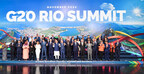
The G20 Summit, hosted by Brazil in Rio de Janeiro on Monday and Tuesday, took place amid shifting geopolitical dynamics and economic uncertainty, providing an opportunity for world leaders to get together to discuss solutions to address urgent global challenges, including economic stagnation, trade disruptions, food security, reform of multilateral institutions and climate governance.

As leader of the second-largest economy and the largest developing country in the world, Xi’s attendance and his interactions with other leaders at the summit were in the spotlight.

Addressing the summit, he outlined China’s eight actions to support global development, including pursuing high-quality Belt and Road cooperation, implementing the Global Development Initiative, supporting international cooperation on poverty reduction and food security, and supporting the G20 in carrying out practical cooperation for the benefit of the Global South.

He called for improving global economic, financial, trade, digital and ecological governance to build a world economy characterized by cooperation, stability, openness, innovation and eco-friendliness.

Evandro Menezes de Carvalho, a professor of international law at Fluminense Federal University in Brazil, said that taking a systemic view of global governance, Xi highlighted key actions in each of the main areas of global governance in his speech.

China has already given concrete demonstrations of being a country committed to the development of a more inclusive international order. In addition, it has been very active in promoting green development with significant investment in technology and environmental protection,” he said.

The professor noted that global economic development depends on a balanced, stable financial and trade system that takes into account the needs of developing countries in order to promote a more inclusive international order, highlighting the importance of Xi’s remarks on improving global digital and ecological governance with the Global South and developing countries involved.

“Global digital governance and ecological governance, which are increasingly linked to each other, if well directed towards the common good, could contribute to opening new paths for the future for humanity as they increasingly exert influence in today’s world.”

Under the Brazilian presidency, the Rio G20 Summit adopted the motto “Building a Just World and a Sustainable Planet”, focusing on three priority themes: energy transition, fair sustainable development (with an emphasis on combating hunger, poverty and inequality), and reform of multilateral institutions.

China, standing at the forefront of the Global South, has been advocating for greater representation of developing countries in global governance to promote an international order that is truly democratic, inclusive and multilateral.

From advocating the Five Principles of Peaceful Coexistence to proposing the construction of a new type of international relations featuring win-win cooperation, and building a community with a shared future for mankind, China’s consistent goal has been to build a more equal and just world, ensuring that developing countries have a greater voice in global affairs, observers said.

At the Rio G20 Summit, Xi urged the World Bank to carry out a shareholding review and the International Monetary Fund to carry out quota share realignment in line with the agreed time frame and road map in order to increase the voice and representation of developing countries.

He said that China, alongside Brazil, South Africa and the African Union, is proposing an Initiative on International Cooperation in Open Science to help the Global South gain better access to global advances in science, technology and innovation.

Anthony Moretti, an associate professor in the Communication and Organizational Leadership Department at Robert Morris University in the United States, said that Xi is spot on when he suggests that isolationism is not what the global community needs right now. This is especially true for the developing world, Moretti added.

Mehmood Ul Hassan Khan, executive director of the Center for South Asia and International Studies in Islamabad, Pakistan, said that Xi has made proposals for an open, inclusive and non-discriminatory environment for international economic cooperation through a universally beneficial and inclusive economic globalization.

His proposals support developing countries in better integrating into digital, smart and green development to bridge the North-South gap, and they constitute a holistic and comprehensive policy badly needed for economic recovery, poverty reduction and job creation, Khan said, adding they reflect the global need for complete transformation from isolation to integration, from Cold War mentality to international cooperation.

As the Ukraine crisis and Palestine-Israel conflict remain protracted, Xi highlighted at the Rio G20 Summit that “global security governance is part and parcel of global governance”. The G20 should support the UN and its Security Council in playing a greater role, and support all efforts conducive to the peaceful settlement of crises, he said.

China and Brazil, together with some other Global South countries, have launched a group of “friends for peace” on the Ukraine crisis, with the goal of bringing together more voices for peace.

Khan said that the proposal of the group of “friends for peace” is innovative and well-timed, which must be listened to and implemented for achieving peace in Ukraine and Palestine.

Marcos Cordeiro Pires, a professor of international political economy at Sao Paulo State University, said that the China-proposed Global Development Initiative, Global Security Initiative, Global Civilization Initiative and Belt and Road Initiative are becoming international public goods that offer a path to building actions that help overcome the immense challenges faced by humanity.

These initiatives are a counterpoint to selfishness and unilateralism by pointing out that development is essential to overcoming hunger and poverty, that no country can guarantee its security at the expense of others, that peaceful coexistence between civilizations presupposes respect for the uniqueness of each culture, and, above all, that building infrastructure is one of the best ways to guarantee progress and address inequalities, Pires said.

The Chinese president also urged G20 countries to “see each other’s development as opportunities rather than challenges and view each other as partners rather than rivals”, highlighting the need to observe the basic norms of international relations underpinned by the purposes and principles of the United Nations Charter and defend the international order based on international law.

Xu Feibiao, a senior researcher and the director of the Center for BRICS and G20 Studies of China Institutes of Contemporary International Relations, said that China remains committed to safeguarding a multilateral system with the UN at its core, following the path of peaceful development, and advocating for the building of a community with a shared future for mankind.

It calls for a new type of international relations and upholds the principles of “extensive consultation, joint contribution and shared benefits” in global governance, Xu said, adding these efforts and principles are gaining broader recognition and respect from countries all over the world, offering hope for the G20 to regain its relevance in global governance.

The Rio G20 Summit adopted a leaders’ declaration, with the G20 leaders reaffirming their strong commitment to multilateralism and pledging to reform the global governance system.

The leaders pledged to work for a reinvigorated and strengthened multilateral system, rooted in the purposes and principles of the UN Charter and international law, with renewed institutions and a reformed governance that is more representative and effective, according to the declaration.

They also pledged to reform the UN Security Council to align it with the realities and demands of the 21st century and make it more representative, inclusive and effective, the declaration said.

Rena Li in Los Angeles, Yifan Xu in Washington and Xu Weiwei in Hong Kong contributed to the story.

View original content to download multimedia:https://www.prnewswire.com/news-releases/chinas-inclusive-approach-recognized-302314169.html

SOURCE chinadaily.com.cn

Continue Reading
Click to comment

Leave a Reply

Your email address will not be published. Required fields are marked *

Technology

Innowise Named to 2026 CRN Tech Elite 250 List By The Channel Company

Published

on

By

WARSAW, Poland, April 26, 2026 /PRNewswire-PRWeb/ — Innowise has officially secured a position on CRN’s 2026 Tech Elite 250. This annual ranking identifies IT solution providers across the US and Canada that have achieved top-tier status within the partner programs of the industry’s leading technology vendors. The inclusion follows a period of verified growth in technical proficiency and a focus on high-impact engineering.

“Innowise concentrates on creating scalable, resilient architectures that produce measurable benefits for our clients. The honor of being recognized by CRN highlights the commitment of our experts to maintain high standards in highly competitive markets,” said Dmitry Nazarevich, CTO at Innowise.

About the Tech Elite 250

The Tech Elite 250 is a directory of companies recognized as having the highest level of partnership and certifications within the global IT ecosystem. In order to reach the final list, the provider must hold the most advanced technical credentials from vendors like AWS, Cisco, Dell, HPE, IBM, Intel, Nutanix, and Nvidia.

This directory serves as a verified ledger for enterprise clients who need to orchestrate complex hardware and software stacks without letting legacy environments rot. Holding these certifications is mandatory to stop the cash bleed caused by inefficient infrastructure and unoptimized cloud usage.

About Innowise

Founded in 2007, Innowise is a global software engineering and IT consulting center. The company is focused on developing high-value technologies, including artificial intelligence, data engineering, and cloud computing. Innowise crafts technological solutions for companies across 40+ domains in order to assist them in updating, creating, and modernizing their digital ecosystems.

Innowise specializes in using established technologies and modular approaches to enable organizations to expand or shift their operations while retaining complete control over all their physical and intangible assets.

Media Contact

Lizaveta Piaskova, Innowise, 48 48 787 027 706, lizaveta.piaskova@innowise.com, innowise.com

View original content to download multimedia:https://www.prweb.com/releases/innowise-named-to-2026-crn-tech-elite-250-list-by-the-channel-company-302751951.html

SOURCE Innowise

Continue Reading

Technology

Neusoft Showcases Full-Stack & Global Innovations at Auto China 2026

Published

on

By

BEIJING, April 26, 2026 /PRNewswire/ — At Auto China 2026, Neusoft Corporation hosted a press conference on April 25th and announced three key strategic moves: the iteration of Neusoft OneCoreGo® Global In-Vehicle Intelligent Mobility Solution 7.0, the launch of Neusoft NAGIC.AI Cockpit Software Platform, and the strategic upgrade of its subsidiary, Neusoft Smart Go. By leveraging full-stack technology and a global ecosystem to drive innovation and empowerment, Neusoft is transforming vehicles into proactive, connected and collaborative mobile intelligent spaces.

OneCoreGo® Global In-Vehicle Intelligent Mobility Solution 7.0: An Evolved AI Companion for Global Intelligent Mobility

Intelligent mobility requires proactive perception, scenario integration, and global connectivity to meet personalized user needs and complex driving scenarios. Neusoft, whose products cover over 130 countries and regions worldwide, addresses these challenges with its OneCoreGo® Global In-Vehicle Intelligent Mobility Solution 7.0 through AI-driven innovation and global ecosystem collaboration. Powered by One Mate’s cross-agent collaboration and a sub-product matrix including One Map, One Sight, One Cloud, One Pay, One Store, One Link, and One Guard, the solution delivers full-link global mobility services spanning navigation, in-cabin AR, payment, app ecosystem services, connectivity and security. By breaking down functional silos, it streamlines multi-step operations into a single “depart” command, leveraging full-stack AI technology across perception, decision-making, interaction, and execution processes.

Guan Xin, Vice President of Neusoft and General Manager of Neusoft Automotive Innovative Solutions Division, said, “Adhering to the core principles of AI and globalization, OneCoreGo® 7.0 keeps innovating, evolving into a globally intelligent mobility companion that truly understands user needs.”

To enhance driving safety and mobility efficiency, OneCoreGo® 7.0 has also comprehensively upgraded its sub-products: One Map Global Navigation newly introduces 3D city effects, 3D lane-level maps, and traffic light guidance, offering dedicated solutions for two-wheelers and commercial vehicles as well. One Sight AR For Car improves navigation display effects, reducing instances of taking wrong routes. One Pay In-Vehicle Payment achieves over 90% payment coverage for parking services across core European cities. Combined with One Cloud’s global compliance cloud monitoring platform and One Guard’s full-stack vehicle networking security services, it creates a truly comprehensive OneCoreGo® Global In-Vehicle Intelligent Mobility Solution.

Neusoft NAGIC.AI Cockpit Software Platform: Dual-track Architecture for AI Integration in Every Vehicle

Amid the AI-driven transformation of the automotive industry, the market faces two challenges: limited computing power in legacy vehicles and high adaptation difficulties for next-gen models. Neusoft’s NAGIC.AI Cockpit Software Platform adopts a flexible “distributed + centralized” dual-track architecture approach. For existing vehicle models, it introduces the AI BOX solution, rapidly boosting computing power via external AI computing units, significantly reducing upgrade costs and timelines. For new vehicle models built on next-gen central computing platforms, Neusoft provides a full-stack AI cockpit software product suite, meeting automakers’ stringent requirements for system stability, reliability, and full-domain control.

Pang Hongyan, Vice President of Neusoft and General Manager of the Automotive Intelligent Software Division, said, “Our dual-track architecture enables every vehicle to embrace AI and enjoy an intelligent future. Both existing models and new-generation vehicles can find the most suitable path to intelligentization.”

Moreover, Neusoft’s NAGIC.AI Cockpit Software Platform features scenario-based, human-centric AI Agents seamlessly integrating driving safety, occupant care services, intelligent assisted driving and in-cabin entertainment. Neusoft also collaborates with global ecosystem partners to drive intelligent upgrades of in-cabin interaction products, fostering a more open and dynamic intelligent cockpit ecosystem.

Strategic Upgrade of Neusoft Smart Go: A World-leading Provider of Full-Domain Upper-Body Electronics Solutions for Intelligent Vehicles

Aligning with the trend of E/E architecture evolution from distributed control to “central computing + zonal control”, Neusoft Smart Go, a subsidiary of Neusoft in the field of intelligent vehicle connectivity, has completed a strategic upgrade, aiming to become a global leader in full-domain upper-body electronics solutions for intelligent vehicles.

This strategic upgrade positions Neusoft Smart Go to focus on full-domain scenarios in upper-body electronics, building a product matrix covering full-category in-vehicle electronics solutions, including central computing platforms, cockpit-driving-parking integration, intelligent cockpits, intelligent communications, intelligent audio systems, and zonal control units, and pioneering the integration of large model algorithms.

Jian Guodong, Senior Vice President of Neusoft and CEO of Neusoft Smart Go, said, “This strategic upgrade represents a significant leap from partial focus to comprehensive layout. Through our dual-track strategy of high-end cutting-edge solutions and mature standardized products, we can flexibly meet the mass production needs of vehicle models across different regions and price segments worldwide.” Neusoft Smart Go will provide mass-producible, adaptable hardware-software integrated solutions, empowering global automakers in achieving intelligent transformation.

Neusoft’s President, Mr.Gai Longjia stated, “In the future, Neusoft Smart Go will create stronger synergy with Neusoft Corporation by sharing internal technologies and capabilities while responding jointly to external demands. This specialized yet collaborative model will preserve business unit’s agility and expertise while enhancing Neusoft’s full-stack technological advantages.”

As a trusted partner in a smarter world, Neusoft is committed to collaborating with global automakers and ecosystem partners to build an open and inclusive intelligent automotive community together for the future of global mobility.

For more information about Neusoft, please visit www.neusoft.com.


View original content:https://www.prnewswire.com/apac/news-releases/neusoft-showcases-full-stack–global-innovations-at-auto-china-2026-302753701.html

SOURCE Neusoft Corporation

Continue Reading

Technology

Lianlian DigiTech Returns to Money20/20 Asia to Expand Partnerships, Share Industry Trends, and Explore AI-Enabled Global Financial Infrastructure

Published

on

By

BANGKOK, April 26, 2026 /PRNewswire/ — Lianlian DigiTech, a leading global provider of digital payment services, was once again invited to participate in Money20/20 Asia, one of the world’s most influential fintech gatherings, held in Bangkok, Thailand from April 21 to 23. At the event, the company presented its latest developments in cross-border payment infrastructure, technology innovation, and ecosystem collaboration, offering a comprehensive view of its work enhancing global cross-border payment capabilities.

During the conference, Lianlian DigiTech announced a strategic partnership with UK-based fintech company USI Money to further strengthen its global cross-border payment network, delivering more efficient and reliable fund flows for merchants worldwide. Shen Enguang, Co-President of Lianlian DigiTech; Mark Ma, Head of Global Banking Partnership at LianLian Global; and Bryan Jiang, General Manager Hong Kong of LianLian Global, attended the event and engaged with representatives from international financial institutions. They shared perspectives on fintech trends and global payment innovation, offering industry insight into the continued evolution of a more integrated and interoperable cross-border payments ecosystem.

Building a Borderless Payment Network with Global Partners Including USI Money

At the event, Lianlian DigiTech formalized a strategic collaboration with London-headquartered USI Money to further develop its global payment infrastructure.

The partnership will focus on cross-border remittance and foreign exchange services, combining both companies’ technological capabilities and resources to deliver a one-stop payment and collection solution for global businesses. The offering is built to be efficient, secure, and cost-effective, improving overall fund flow efficiency and streamlining foreign exchange execution.

Syed Bukhari, Group Chief Business and Operating Officer at USI Money, said: “Our partnership with Lianlian will strengthen our remittance capabilities, creating greater value for our customers through broader network coverage and improved transaction performance.”

Bryan Jiang, General Manager Hong Kong of LianLian Global, said: “By leveraging the complementary strengths of our ecosystem partners in technology and compliance, Lianlian will continue to scale its global payment network and improve transaction efficiency. We remain committed to enhancing financial connectivity across global financial markets and delivering more efficient and reliable cross-border payment solutions for our customers.”

Founded in 2009 and listed on the Main Board of the Hong Kong Stock Exchange in 2024 (2598.HK), Lianlian DigiTech is a China-based, globally focused digital payment company with increasingly integrated AI capabilities across its platform. Guided by its mission of “Connecting the world, Empowering global commerce,” the company focuses on developing a trusted and scalable financial infrastructure. As of the end of 2025, Lianlian DigiTech has built a cross-border payment network covering more than 100 countries and regions, serving over 10.4 million customers worldwide.

USI Money is a foreign exchange and international remittance service provider offering tailored cross-border financial solutions for businesses and individuals. With competitive real-time exchange rates and efficient execution as its core strengths, the company delivers fast, secure, and reliable global fund transfers.

In addition, Lianlian DigiTech co-hosted a networking session with Unlimit during the event, providing a forum for industry dialogue. The session brought together a broad group of fintech partners to explore collaborative models and help foster a more connected ecosystem.

Industry Roundtables: Unlocking Layered Collaboration in AI-Driven Cross-Border Payments and Advancing Financial Inclusion in Emerging Markets

At the same time, Mark Ma and Bryan Jiang were invited to the themed roundtable discussions, where they shared insights drawn from industry practice and outlined new approaches to aligning fintech innovation with the global financial system.

At the roundtable on “Fintech and Banks,” Mark Ma noted that the global payment system is rapidly shifting from isolated capabilities to a layered, collaborative model. Banks continue to serve as the foundational infrastructure, responsible for clearing networks and liquidity management. Fintech firms like Lianlian, meanwhile, build on top of this foundation to deliver application-layer services for businesses, transforming complex cross-border payment channels into more accessible solutions that support a wider range of practical business scenarios. He also emphasized fintech’s growing role in compliance and value creation. By embedding risk controls and verification processes into technology workflows, fintech companies can act as compliance intermediaries, improving efficiency while filtering risk and enabling banks to operate more effectively at scale. Meanwhile, insights derived from transaction data and business flows allow for more precise evaluation of small and medium-sized businesses, shifting capital allocation from experience-based decisions to data-driven approaches and improving access to financial services.

At the roundtable titled “Different Worlds, Shared Challenges: Bridging Emerging Markets,” Bryan Jiang pointed out that the core of financial inclusion is shifting from scale of coverage to practical usability in everyday financial activity. The ability to serve underserved segments such as small and micro merchants and overseas workers in a sustained and reliable manner ultimately depends on continuous improvements in product design and operational capabilities. Using emerging markets as an example, Jiang explained that small and medium-sized businesses in these regions often face challenges such as difficult account setup, complex cross-border collections, high foreign exchange costs, and multi-layered tax requirements. Many existing solutions still follow traditional business-focused models, resulting in cumbersome KYB processes and lengthy review cycles that are misaligned with the asset-light, high-frequency, fast-turnover nature of these businesses. In response, Lianlian has lowered barriers to fund flows by offering local collection accounts, optimizing foreign exchange mechanisms, and improving settlement efficiency. The company has also restructured account architecture, streamlined review processes, and enhanced fund visibility, creating a more seamless and intuitive user experience that better aligns financial services with its clients’ business operations and day-to-day activities.

As digital technologies increasingly integrate with the real economy, innovations in AI and blockchain are reshaping the foundations of global financial services. Lianlian DigiTech has long invested in AI capabilities, global compliance, and the growth of its international service network. Its broad licensing coverage, regulatory track record, localized service capabilities, and technical reliability have earned the trust of regulators, customers, and partners worldwide.

Looking ahead, Lianlian DigiTech will continue to build on its cross-border expertise and compliance experience to further develop its AI capabilities and deepen collaboration with global partners. The company aims to extend its role beyond payment network services into more integrated financial infrastructure solutions. Lianlian DigiTech remains committed to serving as a trusted platform for global financial transactions in an increasingly digital environment, enabling businesses and individuals worldwide to access faster, more efficient, and more seamless cross-border financial services.

View original content:https://www.prnewswire.com/apac/news-releases/lianlian-digitech-returns-to-money2020-asia-to-expand-partnerships-share-industry-trends-and-explore-ai-enabled-global-financial-infrastructure-302753667.html

SOURCE LianLian Global

Continue Reading

Trending