Connect with us

Technology

Language Training Market In India size is set to grow by USD 7.55 billion from 2024-2028, growing emphasis on continuous professional development to boost the revenue- Technavio

Published

on

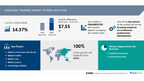
NEW YORK, Nov. 25, 2024 /PRNewswire/ — The language training market in india  size is estimated to grow by USD 7.55 billion from 2024-2028, according to Technavio. The market is estimated to grow at a CAGR of  14.37%  during the forecast period.  Growing emphasis on continuous professional development is driving market growth, with a trend towards integration of technology in learning and training, such as e-learning platforms, virtual reality (VR), and simulations. However, high cost of accessing quality training programs, educational resources, and technology infrastructure  poses a challenge. Key market players include Alliance Francaise Paris ile de France, Babbel GmbH, Berlitz Corp., British Council, Cambridge Institute, Cosmolingua, EF Education First Ltd., Georg von Holtzbrinck GmbH and Co. KG, Goethe-Institut, Henry Harvin Education Inc., IFLAC, INaWORD, inlingua International Ltd., Institute of Universal Languages and Education, ITESKUL, IXL Learning Inc., Language Services Bureau, LetsTalk Academy of English and Foreign Languages, Nile, Pearson Plc, ReSOLT EdTech LLP, and Winsome Translators Pvt. Ltd., Alliance Francaise Paris ile de France , Winsome Translators Pvt. Ltd., Apex Language Academy, Bharatiya Vidya Bhavan, Chandigarh Language Academy, Diploma in Foreign Languages, English and Foreign Languages University, Foreign Language Learning Pvt. Ltd., Language Training Institute, and India International Language Academy

AI-Powered Market Evolution Insights. Our comprehensive market report ready with the latest trends, growth opportunities, and strategic analysis- View Free Sample Report PDF

Forecast period

2024-2028

Base Year

2023

Historic Data

2018 – 2022

Segment Covered

End-user (Institutional learners and Individual learners), Learning Method (Classroom-based, Online, and Blended), Language (English, French, German, Spanish, and Others),  Business Model ( B2B, B2C, and B2G), and Geography (APAC)

Region Covered

India

Key companies profiled

Alliance Francaise Paris ile de France, Babbel GmbH, Berlitz Corp., British Council, Cambridge Institute, Cosmolingua, EF Education First Ltd., Georg von Holtzbrinck GmbH and Co. KG, Goethe-Institut, Henry Harvin Education Inc., IFLAC, INaWORD, inlingua International Ltd., Institute of Universal Languages and Education, ITESKUL, IXL Learning Inc., Language Services Bureau, LetsTalk Academy of English and Foreign Languages, Nile, Pearson Plc, ReSOLT EdTech LLP, and Winsome Translators Pvt. Ltd, Alliance Francaise Paris ile de France , Winsome Translators Pvt. Ltd., Apex Language Academy, Bharatiya Vidya Bhavan, Chandigarh Language Academy, Diploma in Foreign Languages, English and Foreign Languages University, Foreign Language Learning Pvt. Ltd., Global Language Training Institute, and India International Language Academy

Key Market Trends Fueling Growth

The language training market in India has experienced significant growth due to advanced technology integration. E-learning platforms like Babbel offer personalized learning paths and multimedia content. VR technology provides language practice experiences. Simulations offer practical learning scenarios for real-life language use. Institutions use digital language resources and language lab systems for comprehensive learning. These factors increase demand for language training, driving market growth. 

The Language Training Market in India is experiencing significant growth, with a growth in demand for proficiency in various languages. Skills like Spanish, French, German, Chinese, and Japanese are in high demand. Companies are looking for employees with multilingual skills to cater to their global clientele. E-learning platforms are playing a crucial role in making language training more accessible and affordable. Chatbots and virtual assistants are also being used to enhance the learning experience. The use of technology is transforming the way language training is delivered in India. The trend is towards more interactive and personalized learning methods. The future looks bright for the language training industry in India. 

Insights on how AI is driving innovation, efficiency, and market growth- Request Sample!

Market Challenges

The cost of accessing quality language training programs, educational resources, and technology infrastructure in India is a significant barrier to growth in the language training market. Individuals and organizations face financial constraints that limit access to valuable learning opportunities, particularly for those from economically disadvantaged backgrounds or in remote areas. Language learning course fees range from USD120 to USD421, and the high cost of online courses, study materials, and technology infrastructure can present significant financial hurdles. In rural areas, the lack of reliable internet connectivity and modern computing equipment further exacerbates the challenges of engaging in e-learning and virtual training. These factors are expected to hinder the growth of the language training market in India during the forecast period.The Language Training Market in India faces several challenges. One key challenge is the need to cater to a diverse population with various languages and dialects. Another challenge is the competition from free online resources and low-cost alternatives. Additionally, the lack of standardized curriculum and certification programs can make it difficult for institutions to differentiate themselves. Furthermore, the high cost of quality education and the need for flexible learning options can deter potential students. Lastly, the digital transformation requires language training providers to adapt to e-learning platforms and incorporate technology into their offerings.

Insights into how AI is reshaping industries and driving growth- Download a Sample Report

Segment Overview 

This language training market in India report extensively covers market segmentation by

End-user 1.1 Institutional learners1.2 Individual learnersLearning Method2.1 Classroom-based2.2 Online2.3 BlendedLanguage 3.1 English3.2 French3.3 German3.4 Spanish3.5 Others Business Model ( B2B, B2C, and B2G)Geography 4.1 APAC

1.1 Institutional learners-  The language training market in India serves a substantial group of learners in academic institutions, vocational centers, and corporations. These learners aim to boost their language abilities for academic, professional, and personal reasons. In academia, universities like JNU and EFLU provide specialized language courses for students and educators. Vocational training centers, such as NITHM, offer language programs for those entering industries like tourism and international trade. Corporate initiatives, including Wipro, Infosys, and Deloitte, provide language training for professional growth and intercultural communication. Digital language learning platforms, like Coursera for Campus and Rosetta Stone for Enterprise, cater to the unique needs of academic institutions, vocational centers, and corporations. These factors are driving the demand for language training among institutional learners in India.

Download complimentary Sample Report to gain insights into AI’s impact on market dynamics, emerging trends, and future opportunities- including forecast (2024-2028) and historic data (2018 – 2022) 

Research Analysis

The Language Training Market in India is experiencing significant growth due to the increasing demand for multilingual talent in multinational firms. Specialized courses in E-learning platforms are becoming increasingly popular, offering flexibility and affordability. Artificial Intelligence (AI) integration, through speech recognition and chatbot assistance, is revolutionizing language education. Qualified language instructors provide in-person tutoring to address linguistic gaps. Flexible pricing models cater to various budgets. AI-powered social robots are also being used to enhance language learning experiences. Language start-ups are emerging, offering innovative solutions in digital tutoring for English, Spanish, Chinese, French, German, Japanese, and Korean.

Market Research Overview

The Language Training Market in India is experiencing significant growth due to the increasing globalization and the rising demand for multilingual workforce. The market caters to various sectors such as BPOs, KPOs, IT, and education. English language training holds the largest market share, followed by other languages like French, German, Spanish, and Chinese. The market is driven by factors such as increasing foreign investments, growing tourism industry, and the need for effective communication in international business. The Indian government and several educational institutions are also promoting language training through various initiatives. The market is expected to continue its growth trajectory in the coming years.

Table of Contents:

1 Executive Summary
2 Market Landscape
3 Market Sizing
4 Historic Market Size
5 Five Forces Analysis
6 Market Segmentation

End-userInstitutional LearnersIndividual LearnersLearning MethodClassroom-basedOnlineBlendedLanguageEnglishFrenchGermanSpanishOthers Business Model ( B2B, B2C, and B2G)GeographyAPAC

7 Customer Landscape
8 Geographic Landscape
9 Drivers, Challenges, and Trends
10 Company Landscape
11 Company Analysis
12 Appendix

About Technavio

Technavio is a leading global technology research and advisory company. Their research and analysis focuses on emerging market trends and provides actionable insights to help businesses identify market opportunities and develop effective strategies to optimize their market positions.

With over 500 specialized analysts, Technavio’s report library consists of more than 17,000 reports and counting, covering 800 technologies, spanning across 50 countries. Their client base consists of enterprises of all sizes, including more than 100 Fortune 500 companies. This growing client base relies on Technavio’s comprehensive coverage, extensive research, and actionable market insights to identify opportunities in existing and potential markets and assess their competitive positions within changing market scenarios.

Contacts

Technavio Research
Jesse Maida
Media & Marketing Executive
US: +1 844 364 1100
UK: +44 203 893 3200
Email: media@technavio.com
Website: www.technavio.com/

View original content to download multimedia:https://www.prnewswire.com/news-releases/language-training-market-in-india-size-is-set-to-grow-by-usd-7-55-billion-from-2024-2028–growing-emphasis-on-continuous-professional-development-to-boost-the-revenue–technavio-302315110.html

SOURCE Technavio

Continue Reading
Click to comment

Leave a Reply

Your email address will not be published. Required fields are marked *

Technology

CHINAPLAS 2026 Media Day: Highlights from 8 Exhibitors

Published

on

By

SHANGHAI, April 24, 2026 /PRNewswire/ — On April 19–20, 2026, the global plastics and rubber industry’s top echelon gathered in Shanghai for the CHINAPLAS Media Day, co-hosted by Adsale Exhibition Services and CommNow China. As the definitive curtain-raiser to the main exhibition, this event brought together senior executives from eight industry titans. More than just a press conference, the session acted as a strategic barometer, revealing the high-tech roadmaps, sustainability breakthroughs, and “China-focused” priorities set to reshape the manufacturing landscape.

Evonik opened with a bold vision, “Shaping an Infinite Future,” unveiling material solutions for next-generation industries like NEVs, the low-altitude economy, and green hydrogen.

Chambroad Group showcased a sophisticated portfolio tailored for the rigorous demands of low-altitude economy, NEVs, medical technology, and specialized aviation, emphasizing the power of collaborative innovation in high-growth sectors.

Sustainability was the core theme for BASF, which presented its “Carbon Exploration Journey.” By focusing on the full lifecycle of materials in the footwear and textile industries, BASF proved that performance and environmental stewardship are now twin engines of value-chain growth.

On the machinery front, ENGEL Group addressed production pain points through its dual-brand strategy (ENGEL and WINTEC). Their presentation tackled the primary pain points in modified plastics injection molding, offering integrated, intelligent solutions for sectors ranging from automotive & packaging to medical, LSR and micro-foaming. ENGEL emphasized how smart production can simultaneously drive down costs and carbon footprints.

Kingfa highlighted the intersection of materials and intelligence. Their display covered an expansive range of applications, including consumer electronics, smart home systems, NEVs, low-altitude applications, and the frontier of “embodied intelligence” (robotics). Leveraging its unique “global-local” supply framework, Kingfa continues to set the pace for high-quality growth in the modified plastics sector through deep technical expertise.

Syensqo introduced specialty polymers essential for the “twin transitions”—digital and green—targeting critical nodes in the supply chains of NEVs, green hydrogen, electronics, healthcare, and semiconductors.

ARBURG chose this stage for the Asia debut of its Allrounder Trend electric series, combining high-end German engineering with optimized ownership costs for the competitive electronics and NEV markets.

In a major bio-based breakthrough, CovationBio launched Xatryx®, a non-food-based bio-PTMEG. This “drop-in” replacement for fossil-based alternatives allows manufacturers to slash carbon footprints without any process adjustments, marking a milestone for the circular economy.

Media Contact:
Skyla Feng
skyla.feng@commnow.cn 
+86-13002176919

View original content:https://www.prnewswire.com/apac/news-releases/chinaplas-2026-media-day-highlights-from-8-exhibitors-302752674.html

SOURCE Adsale Exhibition Services and CommNow China

Continue Reading

Technology

Fintech solutions, gov’t collaboration help cushion impact of oil crisis to consumers, says Mynt CEO

Published

on

By

SINGAPORE, April 24, 2026 /PRNewswire/ — As consumers in Southeast Asia face a “triple-hit” of rising fuel costs, inflation, and economic volatility, leaders from some of the region’s major financial and technology companies highlight fintech’s and government’s role to enable economic resilience in a region navigating global shocks.

Talking about the situation in the Philippines, Martha Sazon, President and CEO of Mynt, the parent company of the country’s biggest finance app GCash, shared how the platform has strengthened its role as a primary distribution channel for government relief—taking a page from its playbook on how it helped keep the local economy running and aid flowing when mobility was restricted during the COVID-19 pandemic.

“We have been helping in the distribution of government aid, especially fuel subsidies to public transport drivers and to encourage more mobility,” Sazon said.

In partnership with transport officials from the government, GCash facilitates the digital disbursement fuel subsidies to thousands of drivers and operators.

This effort is complemented by direct consumer incentives, such as a 50% fare discount for passengers of Metro Manila main rail lines, who can also pay via the GCash app.

These interventions have kept mobility accessible and domestic consumption steady. She also pointed to the role of GCash in supporting overseas Filipino workers (OFW). Until April 30, 2026, the company is waiving inbound and outbound transaction fees for Filipinos in the Middle East.

Moreover, aside from keeping fair loans accessible, the platform is fostering long-term resilience through livelihood opportunities by promoting digital micro-business tools like GCash Pera Outlet, and gig and employment platform GJobs, which provide alternative income streams for both local residents and repatriated workers. GCash has also ramped up financial literacy efforts to give customers practical knowledge on how to save more—while offering affordable and accessible investment and saving options.

Sazon shared these at the recent CNBC CONVERGE LIVE 2026 event at the Jewel in Singapore, joining other regional leaders: Hans Patuwo of GoTo Group and Huynh Thanh Phong of FWD Group. Patuwo noted Indonesia’s resilience but warned that looming subsidy cuts could trigger inflation and strain household consumption. Phong highlighted the importance of trust, stressing that insurers must help customers avoid emotional decisions that could leave them vulnerable during crises.

View original content to download multimedia:https://www.prnewswire.com/apac/news-releases/fintech-solutions-govt-collaboration-help-cushion-impact-of-oil-crisis-to-consumers-says-mynt-ceo-302752679.html

SOURCE GCash

Continue Reading

Technology

The Steadfastness of a 13-Year Veteran Exchange: Understanding the Risk Control Logic Behind HTX Earn

Published

on

By

PANAMA CITY, Fla., April 24, 2026 /PRNewswire/ — In today’s volatile and unpredictable crypto market, “where to trade” may no longer be the primary concern for investors. Instead, “where assets are truly safe” has become the ultimate deciding factor in capital allocation. According to DefiLlama data, HTX recorded over $54 million in net inflows in a single day at the end of March, ranking first among global exchanges in daily inflows. The market is making its choice with real capital: in a highly uncertain crypto cycle, funds are flowing back to platforms that are “safer, more transparent, and more sustainable.”

As various platforms compete for liquidity, how has HTX emerged as a “safe haven” for global investors? The answer may lie in its underlying security framework, which has been in operation for 13 years, and its unwavering pursuit of “zero risk incidents” for user assets.

From Yield to Trust: Reconstructing the Underlying Logic of Earn Products

From a user perspective, “Earn” is often understood as a low-risk financial management tool: deposit assets and obtain returns. However, from the platform’s perspective, this is essentially a complex exercise of capital management and risk control. The core of HTX Earn products is not a single revenue model, but a comprehensive, layered risk management system:

Simple Earn: Offers flexible and fixed products, supporting subscription and redemption at any time or over fixed terms. These products offer an APY of up to 300%, making them a popular choice for beginners and conservative investors. Among them, flagship stablecoin products offer Flexible Earn options for popular assets such as USDT, USDC, USDD, USDE, USD1, and U, with APYs of up to 15%, outpacing  those of industry peers. VIP Flexible products are tailored for HTX SVIP users at Prime Level 5 and above, offering APYs of up to 9%, reflecting the platform’s commitment to diverse user needs.Structured Products (Dual Investment/Shark Fin): These are yield enhancement tools specifically designed for advanced traders seeking to capitalize on market volatility. They are suitable for capturing gains during market fluctuations, with APYs reaching up to 380%.On-chain Earn: Staking and ETH 2.0 products are designed specifically for on-chain participants, covering a variety of mainstream digital assets with seamless operations and APYs of up to 15%.

The vision of HTX Earn is to “fuel the steady growth of every digital asset.”At present, HTX Earn covers 300+ assets and 390+ products, serving nearly 600,000 users. Its extensive product matrix meets the needs of users with different risk preferences, and the adoption rate  continues to grow. But the truly critical factor is not the scale, but rather—how this capital is managed safely.

Merkle Tree Proof of Reserves (PoR): Making Transparency the First Line of Defense for User Asset Security

A sense of security does not come from empty promises, but from the clear verifiability of every asset. HTX publishes regular public disclosures of its Merkle Tree–based Proof of Reserves (PoR), which have continued uninterrupted for 42 months to date.

The latest April Proof of Reserves report shows that HTX has maintained asset reserve ratios at or above 100% across all assets. Among them, the BTC reserve ratio is 101%, the ETH reserve ratio is 100%, and the TRX reserve ratio reaches 108%. This means every user asset deposited on the platform is backed by more than 100% in real reserves, eliminating any possibility of fund misappropriation.

Notably, a key highlight of this disclosure is the upgrade to the USDs display, offering a more “user-friendly” approach to asset presentation. By displaying all USD-pegged stablecoins (including USDT and USDC) in a unified view of USDs, HTX has further enhanced the clarity and readability of the asset structure. This persistent commitment to transparency is a core driver behind HTX attracting over $54 million in net inflows within 24 hours.

13 Years of Stable Operations: A Three-Layer Risk Control Framework

If the Merkle Tree Proof of Reserves (PoR) serves as the externally visible “ledger”, the risk control system embedded within HTX Earn functions as an “armored shield” safeguarding asset security.

Professional Risk Control and Asset Segregation: HTX Earn adopts an institutional-grade security architecture. Through asset segregation and an intelligent tiered risk control system, user assets are strictly segregated from platform operational funds.Ongoing Enhanced Security Infrastructure: Since November 2023, HTX has further strengthened its compliance and security standards, maintaining over 30 consecutive months of zero security incidents. Such long-term, high-intensity stable operations are regarded as an industry benchmark.Dual Drivers of Technology and Compliance: Relying on the platform’s advantage of 13 years of stable operation, HTX has built a comprehensive service system featuring a professional investment research team, 24/7 customer support, zero trading fees, and hourly interest calculation, delivering comprehensive protection for user asset security.

Conclusion: Security is Not a Cost, but a Growth Engine

The flow of capital is the most intuitive vote of market confidence. HTX’s top position in DefiLlama net inflows is driven not only by its diverse product offerings and competitive yields, but also by market recognition of its 13year track record in security.

At the current stage, competition among crypto platforms is returning to fundamentals: those that can manage risk more stably will be better positioned to attract long-term capital. With 13 years of operational experience, HTX has set out a clear path forward:

Making trust verifiable with Merkle Tree Proof of Reserves (PoR)Using product matrices to structure returns and risksTransforming security into brand equity via long-term track records

When “Earn” evolves from a product into an entry point for asset management, the risk control logic behind it truly becomes the platform’s deepest moat. In the marathon of crypto finance, running fast is certainly important, but running steadily is the only way to survive. HTX Earn will continue to strengthen its risk control framework through transparency, making security the strongest foundation for every investor.

About HTX

Founded in 2013, HTX (formerly Huobi) has evolved from a virtual asset exchange into a comprehensive ecosystem of blockchain businesses that span digital asset trading, financial derivatives, research, investments, incubation, and other businesses.

As a world-leading gateway to Web3, HTX harbors global capabilities that enable it to provide users with safe and reliable services. Adhering to the growth strategy of “Global Expansion, Thriving Ecosystem, Wealth Effect, Security & Compliance,” HTX is dedicated to providing quality services and values to virtual asset enthusiasts worldwide.

To learn more about HTX, please visit https://www.htx.com/ or HTX Square , and follow HTX on X, Telegram, and Discord.

View original content to download multimedia:https://www.prnewswire.com/news-releases/the-steadfastness-of-a-13-year-veteran-exchange-understanding-the-risk-control-logic-behind-htx-earn-302752681.html

SOURCE HTX DAO

Continue Reading

Trending