Technology
Quantum Computing Market to Grow by USD 17.34 Billion (2024-2028), Rising Stakeholder Investments, Report on AI-Driven Market Transformation – Technavio
Published
1 year agoon
By
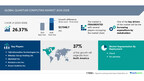
NEW YORK, Nov. 26, 2024 /PRNewswire/ — Report with the AI impact on market trends – The global quantum computing market size is estimated to grow by USD 17.34 billion from 2024-2028, according to Technavio. The market is estimated to grow at a CAGR of 26.37% during the forecast period. Increasing expenditure by stakeholders is driving market growth, with a trend towards growth of ai and machine learning. However, quantum decoherence poses a challenge.Key market players include 1QB Information Technologies Inc., Alibaba Group Holding Ltd., Alphabet Inc., Amazon.com Inc., Anyon Systems Inc., Atos SE, D-Wave Quantum Inc, Honeywell International Inc., ID Quantique SA, Intel Corp., International Business Machines Corp., IonQ Inc., Microsoft Corp., QC Ware, QRA Corp., Quantica Computacao, Quantinuum Ltd., Quantum Circuits Inc., Qubitekk Inc., and Rigetti and Co. LLC.
Key insights into market evolution with AI-powered analysis. Explore trends, segmentation, and growth drivers- View Free Sample PDF
Quantum Computing Market Scope
Report Coverage
Details
Base year
2023
Historic period
2017 – 2021
Forecast period
2024-2028
Growth momentum & CAGR
Accelerate at a CAGR of 26.37%
Market growth 2024-2028
USD 17340.7 million
Market structure
Fragmented
YoY growth 2022-2023 (%)
20.5
Regional analysis
North America, APAC, Europe, South America, and Middle East and Africa
Performing market contribution
North America at 37%
Key countries
US, China, Japan, Germany, and India
Key companies profiled
1QB Information Technologies Inc., Alibaba Group Holding Ltd., Alphabet Inc., Amazon.com Inc., Anyon Systems Inc., Atos SE, D-Wave Quantum Inc, Honeywell International Inc., ID Quantique SA, Intel Corp., International Business Machines Corp., IonQ Inc., Microsoft Corp., QC Ware, QRA Corp., Quantica Computacao, Quantinuum Ltd., Quantum Circuits Inc., Qubitekk Inc., and Rigetti and Co. LLC
Market Driver
The quantum computing market is experiencing significant growth as businesses explore the potential of this revolutionary technology. Quantum computing, based on quantum theory and mechanics, promises to solve complex problems faster than classical computers. Key trends include AI, cloud computing, and partnerships with tech giants like AMD. Patent filings indicate a focus on hardware and software development, with applications in various sectors such as biomedical simulations, optimization, and manufacturing. Quantum computing is expected to disrupt industries like electronics, telecommunications, and financial services, with potential use cases in areas like AI drug discovery, energy optimization, and logistics networks. Error mitigation and suppression techniques are crucial for quantum computing hardware, while quantum simulators and networking are driving research and development. Security concerns are being addressed through quantum-accelerated cryptography. The market is expected to grow, with tech media and IDG predicting increased customer spend on quantum computing resources. Quantum computing is poised to bring innovation to information technology, high-performance computing, and consumer technology markets, with potential applications in areas like weather forecasting, traffic optimization, and energy optimization.
Artificial Intelligence (AI) and Machine Learning (ML) are advanced technologies that mimic human intelligence to solve complex problems. AI involves computers, machines, software, and robots thinking intelligently, while ML enables computers to learn from new data. Quantum Computing is set to revolutionize these fields by providing unprecedented processing power. Quantum computers use quantum bits, or qubits, which can exist in multiple states at once, enabling them to process vast amounts of data simultaneously. This makes them ideal for complex AI and ML applications, such as pattern recognition, optimization, and predictive analytics. The integration of quantum computing into AI and ML is expected to lead to significant advancements in fields like healthcare, finance, and research.
Request Sample of our comprehensive report now to stay ahead in the AI-driven market evolution!
Market Challenges
The quantum computing market is experiencing significant growth as businesses explore the potential of this revolutionary technology. Quantum computing, based on quantum theory and mechanics, offers solutions beyond the capabilities of classical computers. Companies in various sectors, including AI, biomedical simulations, manufacturing, energy, and telecommunications, are investing in quantum computing for product innovation. Quantum computing’s potential applications range from optimization and machine learning to electronic material discovery and cryptography. However, challenges persist. Quantum hardware development requires addressing error mitigation and suppression techniques. Quantum computing resources, including quantum computers and quantum computing software, are still in development. Security concerns, particularly around data security, are a major consideration for businesses. Leading tech companies, such as AMD, are partnering to develop quantum-accelerated hybrid algorithms and quantum photonic processors. Terra Quantum, a quantum computing software company, is focusing on AI drug discovery. SaaS business models, cloud-based quantum computing, and data centers are also emerging. Macroeconomic factors, including research and development initiatives, will continue to shape the quantum computing market. The International Data Group and tech media predict a quantum computing market worth billions, with applications in high-performance computing, financial services, and logistics networks. Quantum simulators, quantum networking, and quantum algorithms are also areas of focus. Despite these opportunities, there are also risks. Error correction techniques, processor designs, and quantum information science are critical areas of research. Military affairs and strategic balance are also factors to consider. As the quantum computing market evolves, businesses must make informed technology decisions.Quantum computing firms encounter a significant challenge in the form of quantum decoherence. This process refers to the tendency of a quantum state to transition into a classical computing bit due to outside interference. Heat, internal defects, and vibrations are common sources of such interference, leading to the loss of the qubits’ stored information to the surroundings. Researchers are dedicated to preserving superposition, the foundation of quantum computing, by delaying decoherence. To achieve a state of coherence, quantum computers require a completely isolated environment to prevent any potential disturbances.
Discover how AI is revolutionizing market trends- Get your access now!
Segment Overview
This quantum computing market report extensively covers market segmentation by
Deployment 1.1 Cloud1.2 On-premiseEnd-user 2.1 Aerospace and defense2.2 Government2.3 IT and telecom2.4 OthersGeography 3.1 North America3.2 APAC3.3 Europe3.4 South America3.5 Middle East and Africa
1.1 Cloud- Quantum computing on the cloud is a cost-effective solution for firms to access advanced quantum computing systems without the need for significant hardware and software investments. Through a cloud network, users can access these systems on-demand, with broad network access, resource pooling, rapid elasticity, measured service, and self-service capabilities. Major software companies are investing in quantum computing as a service, offering subscription-based access to quantum computing systems. Commercial users, including enterprises and SMEs, are integrating quantum computing into their business activities, particularly in sectors like BFSI, for data analytics and AI capabilities. Quantum computing-as-a-service through the cloud allows for swift setup and implementation, making it an attractive option for businesses looking to adopt quantum computing technology. Technavio predicts that the trend of cloud-based quantum computing adoption will continue, particularly among SMEs, driving market growth during the forecast period.
Download a Sample of our comprehensive report today to discover how AI-driven innovations are reshaping competitive dynamics
Research Analysis
Quantum computing is a revolutionary technology in computer science that utilizes the principles of quantum mechanics to process information. Unlike classical computers that use bits with a value of 0 or 1, quantum computers use qubits, which can exist in multiple states at once, enabling them to solve complex problems much faster. Quantum computing has the potential to revolutionize industries such as finance, healthcare, and materials science. The quantum computing market is expected to grow significantly due to increasing research and development in quantum technology, patent filings, and quantum initiatives from various organizations. Macroeconomic factors, such as government funding and private investment, also play a crucial role in the market’s growth. Quantum hardware development is a key focus area, with companies investing in error mitigation and suppression techniques to overcome the challenges of quantum computing. Cloud computing platforms like Xanadu Cloud are providing access to quantum computing resources, enabling researchers and businesses to explore the potential of quantum computing without the need for expensive hardware. Generative AI and artificial intelligence applications are also expected to benefit from quantum computing’s ability to process large amounts of data faster. Overall, the quantum computing market is poised for significant growth as the technology continues to advance and find applications in various industries.
Market Research Overview
Quantum computing, a revolutionary technology rooted in quantum theory and mechanics, is poised to disrupt various industries by surpassing the capabilities of classical computers. This emerging field, intertwined with computer science, offers solutions to complex problems in areas such as Artificial Intelligence (AI), optimization, and scientific simulations. Patent filings indicate in quantum hardware and software development. Quantum computing’s potential applications span across sectors like Biomedical simulations, Manufacturing, Energy, Telecommunications, and Electronics. Companies are investing heavily in research and development to achieve quantum advantage, with quantum-accelerated AI, generative AI, and hybrid algorithms being key areas of focus. Cloud computing plays a significant role in the quantum computing market, with cloud-based quantum computing and SaaS business models gaining traction. Partnerships between tech giants and startups are driving product innovation, leading to advancements in quantum photonic processors, error mitigation and suppression techniques, and quantum computing hardware. The macroeconomic factors influencing the market include customer spend, technology decisions, and strategic balance in military affairs. The quantum computing landscape is vast, encompassing quantum simulators, quantum networking, quantum algorithms, error correction techniques, portfolio management, and quantum computing resources. Security concerns are a significant challenge, with quantum computing posing threats to traditional encryption methods. The financial services sector is exploring quantum annealing algorithms and quantum computing software for risk analysis and optimization. In summary, the quantum computing market is an evolving ecosystem, driven by scientific innovation, partnerships, and macroeconomic factors. It offers potential solutions to complex problems in various industries, from logistics networks to weather forecasting and energy optimization.
Table of Contents:
1 Executive Summary
2 Market Landscape
3 Market Sizing
4 Historic Market Size
5 Five Forces Analysis
6 Market Segmentation
DeploymentCloudOn-premiseEnd-userAerospace And DefenseGovernmentIT And TelecomOthersGeographyNorth AmericaAPACEuropeSouth AmericaMiddle East And Africa
7 Customer Landscape
8 Geographic Landscape
9 Drivers, Challenges, and Trends
10 Company Landscape
11 Company Analysis
12 Appendix
About Technavio
Technavio is a leading global technology research and advisory company. Their research and analysis focuses on emerging market trends and provides actionable insights to help businesses identify market opportunities and develop effective strategies to optimize their market positions.
With over 500 specialized analysts, Technavio’s report library consists of more than 17,000 reports and counting, covering 800 technologies, spanning across 50 countries. Their client base consists of enterprises of all sizes, including more than 100 Fortune 500 companies. This growing client base relies on Technavio’s comprehensive coverage, extensive research, and actionable market insights to identify opportunities in existing and potential markets and assess their competitive positions within changing market scenarios.
Contacts
Technavio Research
Jesse Maida
Media & Marketing Executive
US: +1 844 364 1100
UK: +44 203 893 3200
Email: media@technavio.com
Website: www.technavio.com/
View original content to download multimedia:https://www.prnewswire.com/news-releases/quantum-computing-market-to-grow-by-usd-17-34-billion-2024-2028-rising-stakeholder-investments-report-on-ai-driven-market-transformation—technavio-302315559.html
SOURCE Technavio
You may like
Technology
New Atlas Maps Carbon Storage Opportunities Across Eastern Canada — From Industrial-Scale Hubs to Local CCS Solutions
Published
12 minutes agoon
April 21, 2026By
CALGARY, AB, April 21, 2026 /CNW/ – Canadian Discovery Ltd. (CDL) is pleased to announce the upcoming release of the Geological Carbon Storage Atlas of Eastern Canada on April 28, 2026. Co-funded by Natural Resources Canada (NRCan), carbon removal project developer Deep Sky, and CDL, this project was led and delivered by CDL in collaboration with NRCan CanmetENERGY. The Atlas delivers a comprehensive regional assessment of carbon dioxide (CO₂) storage potential across Quebec and Atlantic Canada, providing detailed analysis of storage opportunities, costs, and geological risks to support the development of carbon capture and storage (CCS) projects. While previous studies have examined parts of Eastern Canada, this is the first to provide a fully integrated regional assessment of CO₂ storage in deep saline aquifers and depleted hydrocarbon reservoirs.
Effective CO₂ storage is essential to achieving Canada’s climate objectives, with the International Energy Agency estimating that up to 95% of captured CO₂ worldwide will need to be permanently stored.1 Recognizing the importance of advancing carbon storage knowledge, the Government of Canada announced more than $11 million in funding for cutting-edge, made-in-Canada carbon utilization and storage projects during the 2025 G7 Presidency. The Geological Carbon Storage Atlas of Eastern Canada was selected as one of the projects supported through this investment.
As Canada seeks solutions to reduce emissions, the research conducted in this Atlas reveals that Eastern Canada possesses meaningful and geologically credible CO₂ storage potential. Across the basins assessed, significant variability was observed in prospective CO2 storage resource size, sealing capacity, reservoir quality and estimated storage costs. These differences reflect the diverse geological settings, geographical variability and data maturity across the region. Some storage complexes are well suited to large-scale, hub-style CCS developments with substantial capacity and strong containment, while others are better aligned with smaller, bespoke projects targeting localized emitters and more modest storage volumes.
The Atlas provides project developers with geological context to scope appraisal programs, regulators with a scientific reference for evaluating proposed operations, and policymakers with the spatial intelligence needed to design effective incentive frameworks. Equally, by presenting data transparently and accessibly, this Atlas supports inclusive dialogue with Indigenous communities, municipalities, industry, and governments responsible for CCS development demands.
“Quebec and Atlantic Canada represent an enormous opportunity for carbon storage, and this Atlas is a landmark step in unlocking it. By combining comprehensive subsurface analysis with cost and economic modelling, we’re giving stakeholders across industry, government, and communities the tools they need to move from ambition to action — and positioning Eastern Canada as a serious player in the global decarbonization landscape.” said Matt Scorah, CDL’s VP of Decarbonization.
“Deep Sky was proud to support this work because rigorous, detailed subsurface data strengthens the entire carbon removal ecosystem. The Atlas provides valuable regional insight for Eastern Canada and helps inform the next phase of site-specific technical assessments required to advance safe, durable carbon storage. This comes at an important time as Québec advances the development of its carbon storage framework,” said Mathieu Bouchard, vice-president of public policy and regulatory affairs for Québec at Deep Sky.
The Atlas is publicly available and can be downloaded from the official project website. The comprehensive datasets and shapefiles compiled and produced during the Atlas’ development can be licensed through CDL upon request.
CDL brings extensive experience in CCS projects across North America and is proud to add the Geological Carbon Storage Atlas of Eastern Canada to this growing body of work. Project findings will be shared through a two-part webinar series on April 28 and May 5, followed by a presentation at GeoConvention in Calgary on May 13. Additional presentations are planned throughout the summer and fall. Details and registration are available at canadiandiscovery.com.
About Canadian Discovery Ltd.
Canadian Discovery Ltd. (CDL) is a global leader in subsurface intelligence, headquartered in Calgary, Alberta. For over 35 years, we’ve combined geoscience and engineering expertise to deliver reservoir- to basin-scale evaluations — assessing subsurface geology, pressure, fluid flow, fluid chemistry, and geomechanics for clients worldwide.
Today, CDL is at the forefront of the energy transformation, applying our deep subsurface knowledge to Carbon Capture, Utilization and Storage (CCUS), geothermal energy, critical minerals, hydrogen production, and water solutions. We don’t just understand what’s beneath the surface — we unearth the opportunities within it.
About Deep Sky
Montreal-based Deep Sky is the world’s first tech-agnostic carbon removal project developer aiming to remove gigatons of carbon from the atmosphere and permanently store it underground. As a project developer, Deep Sky brings together the most promising direct air carbon capture companies under one roof to bring the largest supply of high-quality carbon credits to the market, commercializing and catalyzing carbon removal and storage solutions like never before. With $130M in funding, Deep Sky is backed by world class investors including Investissement Québec, Brightspark Ventures, Whitecap Venture Partners, OMERS Ventures, BDC Climate Fund, BMO, National Bank of Canada, Breakthrough Energy Catalyst, and more. For more information, visit deepskyclimate.com.
1 IEA (2021). Net Zero by 2050. https://www.iea.org/reports/net-zero-by-2050
SOURCE Canadian Discovery Ltd
Technology
Convergent Research and ARIA Launch Two New UK Focused Research Organizations
Published
12 minutes agoon
April 21, 2026By
Meridial and Echo Labs aim to build new scientific infrastructure for living-brain connectivity mapping and ecological intelligence
LONDON, April 21, 2026 /PRNewswire/ — Convergent Research, a mission control for frontier technology, and the United Kingdom’s Advanced Research and Invention Agency (ARIA) today announced the launch of two new UK Focused Research Organizations, or FROs: Meridial and Echo Labs. Developed through Convergent’s UK FRO Founder Residency with ARIA, the two organisations represent a new way to build scientific institutions around specific technical bottlenecks that are too engineering-heavy, operationally complex, or long-horizon for conventional labs or startups to address effectively. Convergent’s FRO Founder residency programme was piloted through Convergent’s role as an Activation Partner to ARIA, with the aim of identifying and refining FRO-shaped projects aligned with ARIA opportunity spaces and building the capability to launch and support new FROs in the UK.
Focused Research Organizations are nonprofit, startup-like scientific organisations built to tackle clearly defined scientific or technological bottlenecks over a fixed period of time, often by creating public goods such as tools, datasets, platforms, methods, and technical infrastructure that can unlock broader downstream progress. Convergent has used this model to launch ten FROs in the US, and the UK residency with ARIA extended that playbook into a cohort-based format designed to source, incubate, launch, and support ambitious new UK organisations. The UK is Convergent’s first major expansion outside the US.
“Building the right institution can matter as much as having the right idea,” said Pippy James, Deputy CEO at ARIA. “ARIA is working to expand what’s possible for high-risk, high-reward science, and FROs are a powerful way of doing that. Meridial and Echo Labs are tackling the kinds of bottlenecks and opportunities this approach is designed to address, and we’re excited to see what new capabilities they make possible.”
Each of the two new organisations is tackling a different bottleneck, but both are built around the same core premise: that some forms of scientific progress require purpose-built organisations, not just new grants or new labs. Both organisations align with a distinct ARIA opportunity space, targeting areas where new infrastructure could unlock significant progress.
These new organisations are:
Meridial, launching with an initial £14 million award from ARIA and aligned with its Scalable Neural Interfaces opportunity space, is building a microscopy platform designed to map and track synaptic connections in living animals over time. By making it possible to observe how brain connectivity changes across development, disease, learning, and therapeutic intervention, Meridial aims to help bridge an important gap between molecular mechanisms and circuit-level function. Over its funded period, the organisation will work to develop and operate a platform capable of mapping and longitudinally tracking synaptic connections across local and long-range brain circuits over extended time periods.
“Many of the most important questions in neuroscience and brain health relate to how living circuits change over time. Today, when we seek to observe such changes with high resolution, we are often limited by scale, or must infer dynamics from static snapshots of extracted tissue. Meridial is being built to overcome these challenges with a platform for mapping and tracking synaptic connections in living animals over extended periods. We think infrastructure like this could help open up new ways of understanding development, disease, learning, and therapeutic intervention,” said Mehmet Fisek, Founder and CEO of Meridial.
“Progress in brain science and brain health has been constrained for too long by the limits of our tools. Meridial is exciting because it is building infrastructure that could let researchers observe how neural circuits change over time, rather than inferring those changes indirectly after the fact. That kind of capability could open up important new routes for understanding disease, development, and recovery,” said Jacques Carolan, Programme Director at ARIA.
Echo Labs, launching with an initial £7 million award from ARIA and aligned with its Scoping Our Planet opportunity space, is building new infrastructure to represent the natural world and make it legible enough to model, compare, and forecast. If the state of an ecosystem can be measured as a dynamic system, the implications extend beyond observation. Just as weather and human health became understandable through shared measurements and modeling, ecosystem condition could become a measurable, continuously updated layer of intelligence.
“Today, ecology generates fragmented observations but lacks the integrated representation needed to understand ecological complexity and translate it into usable signals. Ecosystems underpin our economies and societies, but we still lack the scientific infrastructure to measure and forecast ecological condition with anything like the precision we bring to other natural or engineered systems. We envision a world in which global ecosystem condition is continuously observed, modeled, and useful for science, governance, finance, and stewardship happens before collapse occurs, rather than after,” said Kaja Wasik, PhD, CEO of Echo Labs.
“Responsible stewardship requires sufficiently good understanding. Yet for most species, ecological interactions, and ecosystems, our ability to measure and forecast remains frustratingly limited. Echo Labs aims to build foundational infrastructure for ecological intelligence, enabling intentional action that complements well-established approaches to supporting nature,” said Yannick Wurm, Programme Director at ARIA.
Meridial and Echo Labs join a growing UK FRO landscape that includes Bind Research, a UK-based not-for-profit focused on making disordered proteins druggable. Together, these efforts suggest a broader institutional shift: one in which new scientific organisations are designed not around disciplines alone, but around bottlenecks, capabilities, and the shared infrastructure required to unlock downstream progress.
“Scientific progress is often slowed not by a lack of ideas, but by a lack of institutions designed to turn important ideas into shared capabilities,” said Anastasia Gamick, President and co-founder of Convergent Research. “Focused Research Organizations are built for exactly that gap. We’re excited to see this model continue to take root in the UK through organisations that are technically ambitious, tightly scoped, and built to create public goods with broad downstream value. We can’t wait to share more from these two teams and our ongoing work with ARIA.”
Meridial and Echo Labs are expanding their teams in 2026. More information about each organisation, including information about career opportunities and technology releases, will be available at meridial.org and echolabs.org.
About ARIA
The Advanced Research + Invention Agency (ARIA) is an R&D funding agency created to unlock technological breakthroughs that benefit everyone. Created by an Act of Parliament, and sponsored by the Department for Science, Innovation, and Technology, ARIA funds teams of scientists and engineers to pursue research at the edge of what is scientifically and technologically possible.
About Meridial
Meridial is a UK-based Focused Research Organization building a microscopy platform for mapping and tracking synaptic connections in living animals over time. Its mission is to develop scientific infrastructure that enables researchers to observe how neural connectivity changes across development, disease, learning, and therapeutic intervention. Meridial is supported by Convergent Research and powered by ARIA.
About Echo Labs
Echo Labs is a UK-based Focused Research Organization building scientific infrastructure for ecological monitoring and forecasting. Its mission is to make ecosystem condition more measurable and forecastable through new combinations of environmental data, models, and software. Echo Labs is supported by Convergent Research and powered by ARIA.
About Convergent Research
Convergent Research brings together scientific founders and funders to design, launch and operate Focused Research Organizations (FROs) across a range of fields. Our FROs, like Meridial and Echo Labs, build pivotal infrastructure that bridges gaps to breakthrough scientific research, proving out a new operating model for science that enables a high level of team science and systems engineering for public goods creation.
Photo – https://mma.prnewswire.com/media/2961292/Convergent_Research_Image.jpg
Photo – https://mma.prnewswire.com/media/2961293/Convergent_Research_Image.jpg
Photo – https://mma.prnewswire.com/media/2961294/Convergent_Research_Image.jpg
View original content:https://www.prnewswire.co.uk/news-releases/convergent-research-and-aria-launch-two-new-uk-focused-research-organizations-302748582.html
Technology
ECRI Spins Out Healthcare Spend Management and Recall Management Solutions
Published
12 minutes agoon
April 21, 2026By
Staritas established with growth investment from Accel-KKR to transform healthcare supply chain through data-driven intelligence
WILLOW GROVE, Pa., April 21, 2026 /PRNewswire/ — ECRI, a global healthcare quality and safety nonprofit organization, today announced that it has spun out its Spend Management and Recall Management solutions as an independent company, Staritas. Powered by investments from Accel-KKR, a global technology-focused investment firm, Staritas will continue to build on its pioneering leadership in healthcare supply chain intelligence.
“For five decades, ECRI’s award-winning Spend Management solutions have helped healthcare supply chain leaders navigate supply disruptions with resiliency, save millions of dollars, and benchmark purchasing decisions using the industry’s most comprehensive, independent datasets,” said Marcus Schabacker, CEO, MD, president of ECRI. “Now, by spinning out Staritas, powered by Accel-KKR to supercharge the power behind the data, improve the user experience, and accelerate innovation, healthcare supply chain leaders can realize even greater value from the platform.”
The healthcare supply chain of the future will no longer be driven by reactive, event-driven decisions, but proactive, continuous strategies, powered by AI and real-time intelligence. As an independent company backed by Accel-KKR, Staritas will expand on the development and delivery of AI-powered solutions and insights that empower leaders to manage the growing complexity of supply chains with greater intelligence.
“We are excited to partner with ECRI and support the launch of Staritas, a new company with a 50- year track record of pioneering work in spend and recall management,” said Park Durrett, Managing Director at Accel-KKR. “Staritas’s unmatched independent datasets and domain expertise create a strong foundation for growth and customer impact. We’re proud to build on Staritas’s legacy and remain committed to the transparency, independence, and objectivity that define its work. We look forward to partnering with the talented Staritas team to keep building on a market-leading platform that delivers greater value to healthcare organizations and stakeholders worldwide.”
Staritas: Making Every Choice Clear
In today’s healthcare environment, leaders face rising costs, margin pressure, supply chain disruptions, and increasing complexity, often making decisions with fragmented information, such as supplier pricing without benchmarks, or investments without a clear view of total cost.
Staritas solves this problem by combining the largest independent source of healthcare supply and capital datasets with deep expertise and advanced analytics to help organizations in over 70 countries understand market trends and better manage their supply chains. Trusted by nearly 90% of the top U.S. hospitals and health systems, Staritas helps customers identify up to $13 billion annually in opportunity savings. With an independent, unbiased view, supply chain leaders can see all their options, seize opportunities through actionable insights, and make confident decisions.
“Staritas is committed to providing data-driven insights and services that help healthcare organizations optimize operations, save money and strengthen decision making,” said Emmet O’Gara, CEO of Staritas. “The data, solutions and people that now make up Staritas are among the best in the field of spend and recall management. We plan to continuously raise the bar in serving healthcare supply chain leaders with next-generation platform and technology advancements that help to protect margins, deliver quality care and boost resiliency.”
Customers will maintain continuity in day-to-day operations, with additional investments planned to enhance platform capabilities and deepen the value delivered across solutions. Users of Staritas products were notified with assurances of a smooth transition and continuity in the personnel and support systems available.
ECRI: Making Healthcare Safer, Stronger, More Resilient
“This move is not a departure, it is a commitment to deepening ECRI’s focus on patient safety, clinical evidence, and system-level change across healthcare,” added ECRI CEO Dr. Schabacker. “ECRI’s services and solutions are now focused exclusively on creating resilient and safe healthcare systems and assessing technologies used in those systems – backed by new investment and commitment to effect transformative change. With this strategic shift, ECRI is investing, at an unprecedented level, in the expert teams, proprietary data assets, and advanced capabilities that allow healthcare organizations to build safety into their culture, their operations, and their systems. Not as a one-time initiative, but as a permanent, self-reinforcing foundation.”
Despite decades of effort nationwide, patient safety in the U.S. is still marked by high rates of preventable harm.
“One in four patient admissions involve an adverse event, and nearly a quarter of those are preventable. That’s tragic and unacceptable,” said Dheerendra Kommala, MD, ECRI Chief Medical Officer. “Through this strategic move, ECRI is now singularly focused on improving patient safety. We plan to expand solutions that can transform healthcare organizations, building on our legacy of advancing evidence-based medicine.”
About ECRI
ECRI is an independent, nonprofit organization improving the safety, quality, and cost-effectiveness of healthcare. With a focus on patient safety, system design and technology evaluation, ECRI is respected and trusted by healthcare leaders and agencies worldwide. For nearly 60 years, ECRI has built its reputation on integrity and disciplined rigor, with an unwavering commitment to independence and evidence-based care. ECRI is the only organization worldwide to conduct independent medical device evaluations, with labs located in North America and Asia Pacific. ECRI is designated an Evidence-based Practice Center by the U.S. Agency for Healthcare Research and Quality and a federally certified Patient Safety Organization by the U.S. Department of Health and Human Services. ECRI acquired The Institute for Safe Medication Practices (ISMP) in 2020 to address one of the most prolific causes of preventable harm in healthcare, medication errors; then acquired The Just Culture Company in 2024 to transform healthcare workplace cultures – thus creating one of the largest healthcare quality and safety entities in the world. Visit ECRI.org to learn more.
About Staritas
Staritas helps healthcare supply chain leaders around the world make more informed decisions so they can understand market trends and better manage all aspects of their supply chain. With Staritas, they can see all the options with the largest independent source of supply and capital data, seize the opportunities with access to deep industry expertise, and achieve their organizational goals. That’s why nearly 90% of the top U.S. hospitals and health systems trust our five decades of expertise for their most important supply chain and recall management decisions. And it’s how our clients find up to $13B dollars in opportunity savings every year. Staritas. Make every choice clear. Learn more at Staritas.com.
About AKKR
Accel-KKR is a technology-focused investment firm with over $23 billion in cumulative capital commitments. The firm focuses on software and tech-enabled businesses, well-positioned for topline and bottom-line growth. At the core of Accel-KKR’s investment strategy is a commitment to developing strong partnerships with the management teams of its portfolio companies and a focus on building value alongside management by leveraging the significant resources available through the Accel-KKR network. Accel-KKR focuses on middle-market companies and provides a broad range of capital solutions, including buyout capital, minority-growth investments, and credit alternatives. Accel-KKR also invests across various transaction types, including private company recapitalizations, divisional carve-outs, and going-private transactions. Accel-KKR’s headquarters is in Menlo Park, with offices in London, Atlanta and Chicago. Visit accel-kkr.com.
View original content to download multimedia:https://www.prnewswire.com/news-releases/ecri-spins-out-healthcare-spend-management-and-recall-management-solutions-302747800.html
SOURCE ECRI
New Atlas Maps Carbon Storage Opportunities Across Eastern Canada — From Industrial-Scale Hubs to Local CCS Solutions
Convergent Research and ARIA Launch Two New UK Focused Research Organizations
ECRI Spins Out Healthcare Spend Management and Recall Management Solutions
Whiteboard Series with NEAR | Ep: 45 Joel Thorstensson from ceramic.network
Send Rakhi to UK swiftly with UK Gifts Portal
New Gooseneck Omni Antennas Offer Enhanced Signals in a Durable Package
Why You Should Build on #NEAR – Co-founder Illia Polosukhin at CV Labs
Whiteboard Series with NEAR | Ep: 45 Joel Thorstensson from ceramic.network
NEAR End of Year Town Hall 2021: The Open Web World, MetaBUILD 2 Hackathon and 2021 recap
Trending
-
Technology4 days agoInterfaith America Works to Promote Free, Fair and Peaceful Elections
-
Coin Market4 days agoFrench finance minister backs euro-pegged stablecoins to compete with US
-
Technology2 days agoHarmonic Enables DIRECTV to Reimagine Nationwide DTH Service
-
Near Videos4 days agoWe Have Only Scratched The Surface Of The Agentic Future
-
Coin Market4 days agoSingapore Gulf Bank adds stablecoin mint and redeem for 24/7 settlement
-
Near Videos4 days agoAnthropic Cuts Off OpenClaw Subscribers | GPT-Image-2 Leaked | Drift $285M Hack Explained
-
Technology4 days agoDynamite Integrates Biometric Cryptography and AI into its Wallet Product
-
Coin Market3 days agoBitcoin mining difficulty falls, but projected to rise in next adjustment