Connect with us

Technology

Industrial Machine Vision Market to grow by USD 5.22 Billion from 2024-2028, driven by cost savings via process control and AI’s market impact – Technavio

Published

on

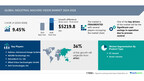
NEW YORK, Nov. 27, 2024 /PRNewswire/ — Report with market evolution powered by AI – The global industrial machine vision market size is estimated to grow by USD 5.22 billion from 2024-2028, according to Technavio. The market is estimated to grow at a CAGR of 9.45% during the forecast period. Significant cost savings in operation due to process control is driving market growth, with a trend towards rise in demand for industrial IoT. However, technical issues in deploying machine vision cameras poses a challenge.Key market players include Adimec Advanced Image Systems bv, ADLINK Technology Inc., Advantech Co. Ltd., Allied Vision Technologies GmbH, AOS Technologies AG, Basler AG, Baumer Holding AG, Cognex Corp., Datalogic SpA, Edmund Optics Inc., ifm electronic gmbh, iX Cameras Ltd, JAI AS, Keyence Corp., Nippon Electro Sensory Devices Co. Ltd., OMRON Corp., Optronis GmbH, Sony Group Corp., Teledyne Technologies Inc., and Toshiba Corp..

Key insights into market evolution with AI-powered analysis. Explore trends, segmentation, and growth drivers- View Free Sample PDF

Industrial Machine Vision Market Scope

Report Coverage

Details

Base year

2023

Historic period

2018 – 2022

Forecast period

2024-2028

Growth momentum & CAGR

Accelerate at a CAGR of 9.45%

Market growth 2024-2028

USD 5219.8 million

Market structure

Fragmented

YoY growth 2022-2023 (%)

8.42

Regional analysis

APAC, North America, Europe, Middle East and Africa, and South America

Performing market contribution

APAC at 36%

Key countries

US, Canada, China, Japan, and Germany

Key companies profiled

Adimec Advanced Image Systems bv, ADLINK Technology Inc., Advantech Co. Ltd., Allied Vision Technologies GmbH, AOS Technologies AG, Basler AG, Baumer Holding AG, Cognex Corp., Datalogic SpA, Edmund Optics Inc., ifm electronic gmbh, iX Cameras Ltd, JAI AS, Keyence Corp., Nippon Electro Sensory Devices Co. Ltd., OMRON Corp., Optronis GmbH, Sony Group Corp., Teledyne Technologies Inc., and Toshiba Corp.

Market Driver

The Industrial Machine Vision market is thriving due to the increasing trend towards automation and productivity in various industries. Machine Vision technology is essential for automating quality inspection, measurement, and control processes, reducing labor costs, and improving product quality. Smart Factories are integrating AI vision processors, robotics, and IoT to create collaborative work environments. The Automotive sector is a major adopter, using vision-guided robots for object detection, defect detection, and robot guidance. However, challenges such as cyber-attacks, integration, and training persist. Embedded Vision applications in sectors like Pharmaceuticals, Consumer Electronics, and Agriculture are growing, with high processing power, multi-camera support, and deep learning capabilities. Machine Vision solutions include PC-based and smart camera-based systems, hardware, software, and services, catering to various industrial verticals. 

The Industrial Internet of Things (IIoT) is revolutionizing the industrial machine vision market by enabling wireless integration with machine vision systems. This innovation reduces wiring costs through the use of acoustic sensors and wireless mesh networks, all connected to a software system. In the realm of Industry 4.0, an automated industrial setup is developed, which creates a connected ecosystem of devices, machines, and systems. This ecosystem facilitates communication and information exchange, resulting in smart factories with cyber-physical production systems (CPPS) consisting of interconnected machines, logistics systems, and production facilities, all utilizing ICT technologies. 

Request Sample of our comprehensive report now to stay ahead in the AI-driven market evolution!

 Market Challenges

The Industrial Machine Vision market is thriving as automation and productivity become top priorities for businesses. Machine Vision technology is revolutionizing industries like Automotive, Pharmaceutical, and Consumer Electronics by automating quality inspection and process control. However, challenges persist, such as labor costs, integration with smart factories, and cybersecurity concerns. AI Vision Processors, Robotics, and Vision-Guided Robots are driving advancements in quality control, object detection, and defect detection. The market includes various components like PC-based and smart camera-based systems, frame grabbers, LED lighting, and optics. Challenges include safety standards, real-time decision-making, and training. The market offers plug-and-play solutions, software components, and deep learning capabilities to address these challenges. Applications range from counterfeit product detection to traffic monitoring and dimensional gauging. The future of Machine Vision lies in collaboration with robotics, IoT, and autonomous vehicles.Industrial machine vision cameras integrated into industrial robots require both software and hardware to function efficiently. Image clarity is crucial for accurate analysis, and low-resolution cameras may compromise this. External factors like light sources or windows can also impact image quality. The software must analyze images effectively to extract valuable data. However, bugs and software errors can hinder this process. Ensuring clear images and eliminating software issues are essential for the successful implementation of vision-controlled industrial robots.

Discover how AI is revolutionizing market trends- Get your access now!

Segment Overview 

This industrial machine vision market report extensively covers market segmentation by

Product Type1.1 PC-based1.2 Smart cameraComponent 2.1 Hardware2.2 SoftwareGeography 3.1 APAC3.2 North America3.3 Europe3.4 Middle East and Africa3.5 South America

1.1 PC-based- PC-based industrial machine vision systems consist of an industrial computer that manages and communicates with peripheral devices such as lights and cameras. The computer processes inputs from cameras and analyzes information using machine vision software, making decisions that are then communicated to the devices. These systems offer high processing power, flexibility, and the ability to handle multiple cameras or dedicated FPGA processors. The automotive and electronics industries are major adopters of PC-based industrial machine vision systems. In automobile production, these systems are used for structure surveillance, product and quality inspection, and tracking faults or damages. In the electronics industry, PC-based machine vision is essential for functions like solder paste inspection, component placement, and post-reflow inspection. The increasing demand for active safety systems in vehicles and advanced manufacturing processes in electronics is driving the growth of the PC-based industrial machine vision market. Overall, the flexibility and versatility of PC-based systems make them an ideal choice for various applications, contributing to the market’s expansion during the forecast period.

Download a Sample of our comprehensive report today to discover how AI-driven innovations are reshaping competitive dynamics

Research Analysis

Industrial Machine Vision refers to the use of advanced image processing technology in manufacturing environments to automate inspection, measurement, and quality control processes. This technology enhances productivity, reduces labor costs, and improves product quality by minimizing errors in manual processes. Smart factories are increasingly adopting Machine Vision to enable real-time decision-making, ensuring adherence to safety standards, and enhancing the capabilities of robotics in automotive sector applications. Vision-guided robots and AI vision processors are key components of this technology, enabling automated quality inspection and process control solutions. However, challenges such as cyber-attacks and integration issues persist, requiring continuous innovation in Machine Vision Market offerings. Pharmaceutical and chemical industries are significant industrial verticals leveraging Machine Vision for product inspection and ensuring regulatory compliance.

Market Research Overview

Industrial Machine Vision is a critical component of automation and productivity in modern manufacturing, enabling real-time inspection, measurements, and quality control in various industries. Machine Vision systems are essential for smart factories, utilizing AI vision processors, robotics, and IoT to streamline production processes, reduce labor costs, and ensure product quality. These systems can detect objects, defects, and perform dimensional gauging in real-time, integrating seamlessly with collaborative robotics and plug-and-play solutions. The Machine Vision Market encompasses various sectors, including automotive, consumer electronics, pharmaceuticals, and agriculture, among others. Applications range from automated quality inspection and process control solutions to safety and security systems, such as camera surveillance and traffic monitoring. Machine Vision systems offer high processing power, multi-camera support, and deep learning capabilities, enabling real-time decision-making and improving operational efficiency. However, challenges include integration issues, cyber-attacks, and training requirements. Key components of Machine Vision systems include cameras, sensors, processors, frame grabbers, LED lighting, optics, barcode reading technology, and deep learning software. These systems are essential for industries seeking to maintain quality standards, ensure regulatory compliance, and optimize production processes.

Table of Contents:

1 Executive Summary
2 Market Landscape
3 Market Sizing
4 Historic Market Size
5 Five Forces Analysis
6 Market Segmentation

Product TypePC-basedSmart CameraComponentHardwareSoftwareGeographyAPACNorth AmericaEuropeMiddle East And AfricaSouth America

7 Customer Landscape
8 Geographic Landscape
9 Drivers, Challenges, and Trends
10 Company Landscape
11 Company Analysis
12 Appendix

About Technavio

Technavio is a leading global technology research and advisory company. Their research and analysis focuses on emerging market trends and provides actionable insights to help businesses identify market opportunities and develop effective strategies to optimize their market positions.

With over 500 specialized analysts, Technavio’s report library consists of more than 17,000 reports and counting, covering 800 technologies, spanning across 50 countries. Their client base consists of enterprises of all sizes, including more than 100 Fortune 500 companies. This growing client base relies on Technavio’s comprehensive coverage, extensive research, and actionable market insights to identify opportunities in existing and potential markets and assess their competitive positions within changing market scenarios.

Contacts

Technavio Research
Jesse Maida
Media & Marketing Executive
US: +1 844 364 1100
UK: +44 203 893 3200
Email: media@technavio.com
Website: www.technavio.com/

View original content to download multimedia:https://www.prnewswire.com/news-releases/industrial-machine-vision-market-to-grow-by-usd-5-22-billion-from-2024-2028–driven-by-cost-savings-via-process-control-and-ais-market-impact—technavio-302316664.html

SOURCE Technavio

Continue Reading
Click to comment

Leave a Reply

Your email address will not be published. Required fields are marked *

Technology

SiMa.ai Wins Edge AI + Vision Alliance 2026 Product of the Year for Modalix SoM

Published

on

By

SAN JOSE, Calif., April 20, 2026 /PRNewswire/ — SiMa.ai, a leader in Physical AI, today announced it has been named the winner of the “Best Edge AI Board” by the Edge AI + Vision Alliance’s 2026 Product of the Year Awards — recognizing breakthrough innovation where machine intelligence meets real-world applications. 

“We are moving from passive edge to Physical AI — where machines reason and act autonomously in the real world. Being recognized by the Edge AI and Vision Alliance affirms what SiMa.ai was founded to deliver: high performance without the power drain, and a true platform for this transition. Our purpose-built Modalix MLSoC, paired with Palette, our software suite, addresses the full spectrum of use cases — from computer vision to reasoning-based analytics. Combined with our deep partner collaboration, we are enabling customers across industries to get to market faster and more efficiently,” said Durga Peddireddy, Vice President of Product Management & Partnerships, SiMa.ai.

This recognition builds on the momentum of SiMa.ai’s Modalix™ MLSoC System-on-Module (SoM), launched in 2025. Modalix powers generative AI (GenAI), computer vision, and machine learning (ML) inference at the edge, combining Arm-based compute, advanced vision processing, and high-bandwidth I/O into a single, low-power module designed for power-constrained environments. 

Physical AI deployments often face significant hurdles, including high power consumption, thermal limits, and the need for expensive hardware redesigns. The Modalix platform addresses these challenges by allowing customers to modernize existing systems quickly, bringing powerful AI closer to the data source without requiring a total infrastructure overhaul.

By enabling advanced perception, multimodal reasoning, and real-time decision-making directly on-device, the platform eliminates the need for high-power GPU hardware. This efficiency unlocks scalable deployments across industrial automation, robotics, and intelligent video applications.

The Edge AI + Vision Alliance brings together leading multinational companies and emerging innovators, connecting thousands of technical professionals across the industry. As the winner of the “Best Edge AI Board” category for the 2026 Product of the Year Awards, SiMa.ai is recognized for Modalix’s ability to deliver efficient, high-performance Physical AI at the edge in under 10W.

About SiMa.ai
SiMa.ai is a leader in Physical AI, delivering a purpose-built, software-centric platform that brings best-in-class performance, power efficiency, and ease of use to Physical AI applications. Focused on scaling Physical AI across robotics, automotive, industrial automation, aerospace & defense, smart vision, and healthcare, SiMa.ai is led by seasoned technologists and backed by top-tier investors. Headquartered in San Jose, California. Learn more at www.sima.ai.

View original content to download multimedia:https://www.prnewswire.com/news-releases/simaai-wins-edge-ai–vision-alliance-2026-product-of-the-year-for-modalix-som-302746512.html

SOURCE SiMa.ai

Continue Reading

Technology

Critical Minerals Standards: ANSI Launches Initiative to Strengthen U.S. Supply Chains and Request for Information

Published

on

By

New initiative maps the standards landscape, convenes stakeholders, and builds toward a national strategy

NEW YORK, April 20, 2026 /PRNewswire/ — The American National Standards Institute (ANSI) is launching a multi-phase initiative to strengthen U.S. coordination on critical minerals standards — the shared rules and benchmarks that help ensure minerals are sourced responsibly, supply chains remain secure, and American industry stays competitive globally. This initiative moves forward thanks to the U.S. Department of Energy’s Advanced Mining and Mineral Production Technologies Office, whose partnership made it possible to act on one of the nation’s most pressing industrial priorities. It directly responds to U.S. government priorities to secure domestic supply chains and reduce dependence on foreign sources of critical minerals. 

This effort brings together U.S. stakeholders to coordinate national standards priorities, positioning American industry and government to contribute meaningfully to the success of the G7 Critical Minerals Standards Roadmap while harnessing the momentum of the current administration’s focus on supply chain resilience and domestic competitiveness.

The initiative includes a standards landscape assessment, a webinar series, a two-day hybrid workshop, and a summary report with recommended next steps. A call for webinar speakers and a request for information for the standards landscape is open.

Why This Matters

Critical minerals are foundational to national defense, clean energy, advanced electronics, manufacturing, and infrastructure. Yet as global demand rises, the U.S. faces real risks: fragmented efforts at home, supply chain vulnerabilities, and growing urgency to align on the international rules that govern how these materials are sourced, processed, and traded.

Standards bring order to that complexity. They promote transparency and traceability across supply chains, help U.S. companies access global markets, and give the public and private sectors a common framework for investment. Without a coordinated approach, the U.S. risks ceding influence to competitors who are already moving.

What the Initiative Includes

ANSI connects the organizations that develop standards with the industries that rely on them. To accelerate U.S. leadership on critical minerals, ANSI will deliver:

A standards landscape assessment that maps the current state of play: which standards exist, which organizations develop them, where work is underway, and where gaps remain. The assessment will cover the full supply chain — from extraction through processing, manufacturing, and recovery — and consolidate prior mapping efforts into a single, accessible resource. A Request for Information (RFI) is open.A webinar series to raise awareness of existing standards and regulatory activities related to critical minerals, including a dedicated session for U.S. government stakeholders. Briefings will feature standards developers working across the supply chain. Speakers invited and registration is open.A two-day hybrid workshop convening federal agencies, standards organizations, and industry to identify high-priority needs, explore challenges, and inform the development of a U.S. critical minerals standards strategy this September in the Washington, DC area. A summary report will capture key findings, gaps, and recommended next steps.

Ongoing Coordination

ANSI also convenes a quarterly U.S. ISO Critical Minerals Standards Coordination Group for members of U.S. delegations to ISO Technical Committees. The group serves as a forum to share information, coordinate engagement, and align international standards activities. The next meeting is April 24 — registration is now open.

About ANSI

The American National Standards Institute (ANSI) is a private non-profit organization whose mission is to enhance both the global competitiveness of U.S. business and the U.S. quality of life by promoting and facilitating voluntary consensus standards and conformity assessment systems, and safeguarding their integrity. Its membership is comprised of businesses, professional societies and trade associations, standards developers, government agencies, and consumer and labor organizations.

The Institute represents and serves the diverse interests of more than 270,000 companies and organizations and 30 million professionals worldwide. ANSI is the official U.S. representative to the International Organization for Standardization (ISO) and, via the U.S. National Committee, the International Electrotechnical Commission (IEC). For more information, visit www.ansi.org and access the latest news and content on LinkedIn, X, and Facebook.

View original content to download multimedia:https://www.prnewswire.com/news-releases/critical-minerals-standards-ansi-launches-initiative-to-strengthen-us-supply-chains-and-request-for-information-302747670.html

SOURCE American National Standards Institute

Continue Reading

Technology

Bobby Lehew Named commonsku’s Chief AI Officer — an Industry First in Promo

Published

on

By

TORONTO, April 20, 2026 /CNW/ – commonsku, the connected workflow platform trusted by 950+ distributors driving $1.9 billion in network volume, today announced the creation of a dedicated AI + Strategy role, promoting Bobby Lehew to Chief AI Officer to lead the company’s AI initiative for customers and the platform. The move makes commonsku the first platform in the promotional products industry to invest at the leadership level in AI strategy shaped directly by distributor needs.

The new role bridges the gap between what AI can do and what commonsku’s customers need it to solve, owning the intelligence loop between customers, product, and the AI landscape. What makes the role distinct: it combines AI landscape intelligence, product strategy influence, direct customer engagement, and industry thought leadership in a single role.

A Natural Evolution

Lehew brings more than 30 years of experience in the promotional products industry to the role. Prior to joining commonsku, he was the CEO of Robyn Promotions, a company among the first wave of distributors who architected the model of technology driven e-commerce company stores in the industry, earning three consecutive Inc. 5000 rankings. Always tech-forward in his work, his industry recognition includes multiple Gold and Silver PPAI Pyramid Awards.

The shift to AI strategy is a natural next chapter for Lehew. At commonsku, he built the company’s content engine from scratch — co-hosting the skucast (350+ episodes, the #1 promotional products podcast) while leaning heavily into AI for all his work. He is editor of The AI Promo Brief, the industry’s go-to resource for AI developments in promotional products, and speaks frequently on the future of merch and the cultural shifts transforming how we sell. At PPAI Expo 2026, his AI session packed the room to capacity and was named a must-attend session by PPAI editors. The industry has been watching Lehew move deeper into AI for over a year. This role makes it official.

Investing in AI for Customers

“The industry is at an inflection point with AI, and distributors need a partner who understands their business,” said Catherine Graham, CEO of commonsku. “commonsku has always been built ‘by promo, for promo.’ Bobby has three decades of that expertise, a passion for helping our customers, and the strategic insight to shape AI tools for future growth. This role reflects our mission: making sure our AI tools solve real problems for real distributors.”

“The companies pulling ahead are the ones leading with customer intelligence – letting what they learn from their community shape what they build and advancing with the frontier of AI development. That’s what this role is designed to do. I’ll be talking with our customers at every level about AI and making sure the features we build make work smarter, drive growth, and eliminate friction.” said Lehew.

“Bobby and I have been creative partners for years, always pushing each other to see around corners for this industry,” said Mark Graham, President of commonsku. “We’ve launched multiple projects together and helped educate and raise the standard for what the future distributor can look like. This role is a natural evolution of that passion. He deeply understands the industry and the distributor’s pain points, and he sees with us an incredible opportunity with AI. We’re thrilled to build commonsku’s AI future together.”

commonsku’s AI investments are already in motion. The skubot Mockup Generator is in beta with Advanced and Enterprise customers, a new Opportunity Agent is entering beta as an AI-powered business intelligence tool, and the company’s immediate roadmap includes a Description Rewriter, Auto-Art Configuration, and a Presentation Generator with much more to come.

About commonsku

commonsku is the workflow platform of choice for the promotional products industry. Built by industry experts, it combines CRM, order management, and social collaboration tools in one cloud-based solution. Over 950 distributors and the industry’s largest suppliers rely on commonsku to power $1.9 billion in network volume. With commonsku, teams process more orders, work more efficiently, and grow their sales faster. Learn more at www.commonsku.com.

SOURCE commonsku

Continue Reading

Trending