Connect with us

Technology

Asia’s Transformative Era: Unveiling the “Asian Dream” through New Study “Truth About Ascending Asia”

Published

on

SINGAPORE, Dec. 4, 2024 /PRNewswire/ — McCann Worldgroup has launched its latest insights study, the Truth about Ascending Asia, at an event held at Singapore’s Asian Civilisations Museum. Over 70 clients, partners and media joined the advertising network to hear from guest speakers including Google, L’Oréal and Mastercard.

This groundbreaking new report highlights how Asia is poised to enter a transformative era, characterised by the emergence of a distinct “Asian Dream.” This concept is defined by the convergence of socio-economic shifts, technological advancements, and cultural evolution, providing a compelling alternative to traditional American and European ideals.

The study encapsulates insights from over 12,000 individuals across 12 diverse markets, 44 expert interviews, and more than 100 hours of social listening, examines the attitudes, aspirations, and values of Asian consumers in an age of rapid change*.

Key Highlights:

1. Optimism Amidst Global Challenges:
The rise of Asia unfolds against a backdrop of global turmoil, including climate change, growing inequality, and geopolitical tensions. However, the study reveals an optimistic perspective among Asians:

Only 41% believe they will need to leave Asia for a better life, in stark contrast to the 85% who feel that their everyday life will be significantly better in the next decade.83% of respondents anticipate a more peaceful life in Asia compared to the West, indicating a belief in the region’s stability and potential.

2. Defining the Asian Dream:
The “Asian Dream” is described as a vision woven with principles of equity, stability, and leadership. The report identifies three pillars:

Commensurate (All-in Equity): Among respondents, economic equality between rich and poor is ranked as the most crucial element for Asia’s future, with geopolitical equality between Asia and the West considered second. Notably, 70% agree that if feminism means equal rights for all, then they identify as feminists.Composure (Equilibrium in Society and Nature): A significant 82% prioritise social stability over individual expression, and an impressive 96% believe that organisations should be legally mandated to protect the environment.Captaincy (Commercial and Thought Leadership): A striking 92% believe Asian brands will become more influential globally, while 76% feel that Asian societies are better equipped to handle the stresses of modern life than their Western counterparts.

3. The Role of Brands:
Brands are no longer passive players; they are viewed as crucial contributors to societal improvement. Key findings reflect a strong demand for brands to:

Take an active role in enhancing everyday life, with 96% of respondents agreeing brands must do more.Engage in social issues, as 86% believe brands should have a voice on important topics.

4. Catalysing Neo-Collectivism:
A fresh form of collectivism is emerging in Asia, blending traditional communal values of family and country with newer markers of identity around local, work and city communities. The study reveals opportunities for mobilizing bigger collects finding that 83% of Asians desire an ‘Asian Union’.

5. Innovating Human Technology:
With a “Tech-First” mindset, Asia is at the forefront of technological advancements in mobile technology, e-commerce, robotics, and fintech. A notable 28% of respondents choose to be governed by tech giants like Google instead of political organisations. There is widespread belief (67%) that the benefits of technology outweigh its risks, although 56% of respondents express fear about a future dominated by robots.

6. Celebrating Cultural Affluence:
Asia’s rich cultural diversity is recognised as its greatest asset, with 92% of respondents believing this diversity should be celebrated more. The report showcases cultural phenomena, such as Korean “Mukbang” eating shows, which have gained global traction, demonstrating the appetite for cross-cultural engagement. Additionally, brands drawing from Asia’s deep cultural heritage, like Alo Yoga and emerging designers blending traditional Asian styles with modern aesthetics, illustrate the impact of cultural richness in branding.

7. Honouring Conscious Practices:
Sustainability is deeply ingrained in Asian philosophies, with 37% believing companies are responsible for reversing climate change. The demand for sustainable practices ranks as the number one influencing factor in product choices among consumers, surpassing other attributes such as organic or high-tech features. Brands are called to view sustainability not as a peripheral initiative but as a fundamental value.

Shilpa Sinha, APAC Chief Strategy Officer, McCann Worldgroup, commented: “While Asian societies are still navigating the challenges of inequality, instability and insufficiencies, the study reinforces the faith of Asian people in a future that’s better and brighter. The Asian Dream founded on the tenets of equity, equilibrium and exceptionalism is not just a theoretical framework of the region’s hopes & aspirations, it is a tangible guiding map for companies and brands to create enduring impact.”

Ghassan Harfouche, President, McCann Worldgroup Asia Pacific remarked: “For over 60 years, McCann Worldgroup has been advising clients across Asia Pacific and for over 15 years we’ve been investing in macro truth studies for the region. This research on the world’s most dynamic and diverse region, shows our commitment to understanding what drives business success in Asia and in partnering with our clients to help build enduring and innovation-led brands.”

View executive summary here.

*Our Methodology 
McCann Worldgroup’s Truth Central, the company’s global intelligence unit, conducted this large-scale quantitative study surveying more than 12,000 people in 12 Asian markets- mainland China, Hong Kong, India, Indonesia, Japan, Philippines, Malaysia, Singapore, South Korea, Taiwan, Thailand, Vietnam. Additionally, 44 business leaders, futurists, academics, and culture tastemakers were interviewed across these markets. 

About McCann Worldgroup
McCann Worldgroup, part of the Interpublic Group (NYSE: IPG), is a leading global creative solutions company. The company is united across 100+ countries by a mission to build enduring brands together. McCann Worldgroup was named Network for the Year by the Andys in 2024 and Network of the Year by the EPICA Awards for the sixth time. The core McCann Worldgroup network is comprised of McCann, MRM, CRAFT, and FutureBrand, and partners with Momentum Worldwide, Weber Shandwick and UM to deliver solutions across the entire marketing spectrum.

View original content:https://www.prnewswire.com/apac/news-releases/asias-transformative-era-unveiling-the-asian-dream-through-new-study-truth-about-ascending-asia-302321401.html

SOURCE McCann Worldgroup

Continue Reading

Technology

New GASA Research: 71% of Adults Surveyed Across 13 Asian Markets Encountered Scams, with Estimated Losses of US$136.5 Billion

Published

on

By

Research highlights a gap between confidence in recognizing scams and actual outcomes ahead of the Global Anti-Scam Summit Asia 2026

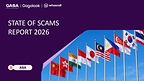
BANGKOK, Oct. 22, 2026 /PRNewswire/ — New research from the Global Anti-Scam Alliance (GASA), developed in collaboration with Gogolook, the developer of Whoscall, reveals the scale and impact of scams across Asia. Among adults surveyed in 13 Asian markets, 71% encountered a scam in the past year. The study estimates that consumers across those markets lost a combined US$136.5 billion to scams over the same period.

The State of Scams in Asia 2026 report, based on a survey of 17,460 adults, also identifies a gap between confidence and outcomes. While 66% of respondents said they were confident in their ability to recognize scams, 62% of those who encountered one interacted with it. Among respondents who interacted with a scam, 26% lost money.

The findings are being released ahead of the Global Anti-Scam Summit Asia 2026, taking place in Bangkok on 10–11 November. Following previous editions in Taiwan and Singapore, the summit will be held in Thailand for the first time, bringing together leaders from across sectors to strengthen the region’s response to evolving scams.

Phone calls and messages remain major points of exposure

Phone calls were the most common channel through which respondents encountered scams (56%), followed by text messages (50%) and instant messaging apps (40%). Shopping, investment and employment scams were the scam types respondents most commonly interacted with.

“Phone and text message scams remain a major challenge across Asia. In Thailand, Malaysia, Vietnam and Indonesia, more than six in ten respondents encountered scam calls. As scammers use AI-generated voices and increasingly convincing scripts, identifying suspicious numbers and warning users before they engage becomes even more important,” said Jeff Kuo, CEO of Gogolook. “Whoscall’s observations also suggest that scammers are adapting to tighter SIM registration and identity checks by using international and satellite numbers. That makes continued information sharing across markets essential.”

The harm extends beyond financial losses

The research estimates that consumers across the 13 markets lost US$136.5 billion to scams over the past 12 months. Among respondents who lost money, 51% said they had been scammed more than once.

The effects reached beyond the immediate financial loss. Among those who lost money, 72% reported an impact on their mental wellbeing, 77% experienced at least one emotional impact, and 58% experienced at least one financial impact affecting their everyday lives.

“One of the most striking findings is the gap between confidence and behavior. While 66% of respondents feel confident they can recognize scams, 62% of those who encountered one went on to interact with it. This shows why education is important but cannot be our only line of defense. We also need stronger safeguards that protect people throughout the scam journey.” said Brian D. Hanley, Director, Asia-Pacific Chapter, Global Anti-Scam Alliance (GASA).

Turning regional evidence into action

The findings will inform discussions at the Global Anti-Scam Summit Asia 2026, where representatives from government, law enforcement, financial services, technology, telecommunications, consumer protection and other sectors will explore ways to prevent and disrupt scams.

The research also points to public support for more proactive intervention. Across the markets surveyed, 71% supported allowing banks to block high-value transactions without a customer’s prior permission when they suspect a scam. Another 69% supported allowing telecom operators or messaging apps to block calls and messages they believe are malicious.

Reporting, however, does not always lead to recovery. While 85% of victims reported their scam experience, outcomes varied depending on where they reported it, and recovery and reimbursement remained limited.

Download the full State of Scams in Asia 2026 report here: https://gasa.org/knowledge-base/reports/state-of-scams-in-asia-2026

Registration for the Global Anti-Scam Summit Asia 2026 is open. For the programme and registration details, visit the summit website: https://gasa.org/global-anti-scam-summit-asia-2026

About the research

The State of Scams in Asia 2026 surveyed 17,460 adults across 13 Asian markets: China, Hong Kong, India, Indonesia, Japan, Malaysia, Pakistan, the Philippines, Singapore, South Korea, Taiwan, Thailand and Vietnam. Fieldwork was conducted between March 16 and April 13, 2026. The research was conducted by Opinium for the Global Anti-Scam Alliance and developed in collaboration with Gogolook, the developer of Whoscall.

About the Global Anti-Scam Alliance

The Global Anti-Scam Alliance (GASA) is a nonprofit organization bringing together policymakers, law enforcement, consumer authorities, NGOs, the financial sector, telecommunications operators, internet platforms, cybersecurity organizations and other stakeholders to share knowledge and develop solutions to protect consumers from scams.
GASA Website: https://gasa.org/

About Gogolook

Gogolook is a leading TrustTech company established in 2012. With “Build for Trust” as its core value, Gogolook has expanded its business from Asia to Europe and the Americas. As a foundation member of the Global Anti-Scam Alliance (GASA), Gogolook collaborates with law enforcement agencies and public-sector organizations, including the Taiwan National Police Agency, the Royal Thai Police, the Philippines Cybercrime Investigation and Coordinating Center, the Tokyo Metropolitan Police Department, and the Royal Malaysia Police. These partnerships support its commitment to building a scam-free environment.
Gogolook Website: https://www.gogolook.com/

About Whoscall

Whoscall, developed by Gogolook, is a caller ID and digital anti-scam app designed to protect users from scams across various channels, including phone calls, text messages, social media, and links. With over 100 million downloads globally, it features the most comprehensive database in East and Southeast Asia, covering more than 2.6 billion phone numbers.
Whoscall Website: https://web.whoscall.com/en

View original content to download multimedia:https://www.prnewswire.com/apac/news-releases/new-gasa-research-71-of-adults-surveyed-across-13-asian-markets-encountered-scams-with-estimated-losses-of-us136-5-billion-302914904.html

SOURCE Gogolook

Continue Reading

Technology

Voqalize Says Voice Is Becoming the Default Way People Use Software

Published

on

By

Voqalize is infrastructure for making software conversational. Existing applications, websites and AI agents can add a voice interface that listens, sees context, responds and acts, without being rebuilt.

BENGALURU, India, Oct. 22, 2026 /PRNewswire/ — Voqalize today said it gives existing applications, websites and AI agents a voice interface that can listen, see context, respond and act, without rebuilding the application. The company says teams can have it running in about an hour, either through Plug & Play, where Voqalize manages the AI agent and the voice experience, or through a developer integration into their own backend.

Imagine telling a clothing app: “I’ve got an outdoor wedding in Napa on the 20th. I need something under two hundred that goes with the shoes I bought in the spring.” The app pulls those shoes from your order history and lays out six options beside them. “Not the floral. Show me the second one in the navy.” It swaps the color and puts the shoes next to it. Then it adds: “You sent back a medium from this brand last time, so I picked the large. It arrives on the 17th.” You look it over and tap buy. That is the shift Voqalize is building for: voice not as input, but as an interface to software.

Fast facts

Apple’s iOS 27, released in September, lets Siri read what’s on a user’s screen and take actions inside appsGoogle reports that roughly one in five Gemini Live conversations now add a camera or screen share, with voice used in 63% of interactions across Gemini’s 1 billion-plus monthly usersA Censuswide survey of 700 business leaders and consumers for Voices, published Jan. 28, 2026, found that 55% of consumers say voice is their primary AI interface, while only 29% of companies have deployed customer-facing voice AI

Dictation Proved People Will Talk to Their Software

Dictation and notetaking apps are among the fastest-growing categories in consumer AI. Wispr, valued at $2 billion, and Granola, valued at $1.5 billion, have both built large user bases on a simple premise: people would rather talk than type, once the transcription is good enough. Wispr says the habit sticks. After six months, its average user writes 72% of their characters by voice.

The category is already moving past that original pitch. Wispr raised its most recent round on a case for going “beyond dictation.” Granola is expanding from a meeting notetaker into what it describes as a context layer for company AI. Superhuman acquired the notetaker Fathom in September. Talking to software stopped being the hard part. What people do with that voice next, and how directly it’s built into the products they already use, is where the category is headed.

“The next billion people coming online won’t type their way onto the internet. They’ll talk their way on, in whatever mix of languages they speak at home.” Sripathi Krishnan, Co-founder, Voqalize

Voice Is Moving From Typing Substitute to Default Interface

Voqalize’s argument is that voice is moving from a typing substitute into the default way people use an app: a running conversation, not a single dictated sentence, where the app listens, responds and can act on what’s on screen, with the interruptions and mid-task changes of direction that come with a real conversation. That mirrors a broader shift already underway on the phone line, where most current “voice AI” is still built around short, scripted calls that book an appointment or qualify a lead and then hang up. Apple’s iOS 27 and Google’s Gemini Live both point at the same shift: voice agents that can see a screen and act on it rather than just transcribe speech.

How Do You Add a Voice Interface to an Existing App?

An existing application or device connects through Voqalize rather than being rebuilt inside a new platform: Voqalize supplies the two-way voice channel and the ability to read and act on whatever is on screen. Businesses choose how much to hand over. With Plug & Play, Voqalize manages the AI agent and the voice experience. With a developer integration, businesses add Voqalize’s voice capabilities to their own backend while keeping control of their AI agent and workflows.

In some deployments, that voice is paired with a face on screen as well, so the person on the other end has something to talk to, not just a voice in the room. Sripathi Krishnan, the company’s co-founder, has argued that the harder part of that conversation may not be how fluently the agent talks, but how well it listens and knows when to stay quiet. Voqalize also works across Indic languages, because conversations in India often move between languages mid-sentence. A majority of Indian internet users already engage with content in Indic languages. Voice also makes software accessible across languages and across literacy and input constraints.

Building Toward Plug-and-Play Voice, Across Apps and Devices

Today, adding Voqalize to a product means connecting an existing application or device through a single interface, without rebuilding it inside a new platform. Voqalize says its near-term work is on extending that same one-connection model further, so that adding two-way voice to a new app, or to a device beyond the phone and the browser, becomes a plug-and-play step rather than a custom integration. That direction follows a broader move already visible in the industry: voice infrastructure is consolidating around shared frameworks instead of one-off builds, and AI tools are increasingly connecting to each other through standard connectors rather than custom code written for each pairing. Voqalize says it intends to be the layer that makes that same simplicity available for voice specifically, across whatever app or device a company is already building for.

“Soon people will judge an app by how well it understands them, the way you judge a shop by whether the person behind the counter gets what you mean.” Samkeet Jain, Co-founder, Voqalize

Voqalize is available today for teams adding a two-way voice interface to an existing product or AI agent. Early deployments include in-app assistants for mortgage servicing workflows, legal clause review, and authenticated banking support. Voqalize was also named one of the 30 products in YourStory’s Vibecode30 2026, a showcase of emerging AI-native builders in India.

About Voqalize Voqalize is a voice AI platform that makes it easy for businesses to add two-way voice conversations to their applications and AI agents across 60+ Global and Indic languages. With Plug & Play, Voqalize manages the AI agent and voice experience for you. With our developer integration, businesses can add Voqalize’s voice capabilities to their own backend while keeping control of their AI agent and workflows. Go ahead and build your next voice-enabled applications with us on voqalize.com.

Media Contact: Samkeet Jain / +91 8147514179 / Samkeet@voqalize.com 

View original content to download multimedia:https://www.prnewswire.com/in/news-releases/voqalize-says-voice-is-becoming-the-default-way-people-use-software-302915851.html

Continue Reading

Technology

Sungrow Advances Integrated C&I Microgrid Solution to Southeast Asia

Published

on

By

KUALA LUMPUR, Malaysia, Oct. 22, 2026 /PRNewswire/ — As Southeast Asia’s manufacturing sector expands, businesses face growing pressure from rising electricity costs, power supply disruptions and increasingly complex energy demands. Sungrow, a globally leading PV inverter and energy storage system provider, has launched the Integrated C&I Microgrid Solution for Southeast Asia, bringing together PV inverters, energy storage systems, EV chargers, microgrid controllers and cloud platforms. The solution helps businesses access more economical, reliable, and cleaner power.

End-to-End Cost Optimization, Improving Overall Benefits by 12%

For businesses seeking to reduce energy costs without compromising power reliability, system sizing and energy dispatch are critical. Sungrow’s Integrated C&I Microgrid Solution is engineered to make clean energy a more cost-competitive choice for businesses.

Optimized System Sizing: 8,760-hour simulations and intelligent algorithms evaluate tens of thousands of system configurations to optimize the capacity of PV, storage and diesel generation, helping avoid overinvestment and undersized systems.Intelligent Energy Dispatch: PV generation and load forecasts are updated every five minutes. Based on these forecasts and real-time electricity prices, AI dynamically optimizes the dispatch of multiple energy sources, including PV, energy storage and diesel generation, helping businesses meet their energy needs at a lower cost. This boosts overall economic benefits by 12% and shortens project payback periods by 1–2 years.Flexible Market Participation: Open interfaces and support for major electricity market protocols enable participation in diverse market mechanisms and unlock additional revenue streams.

Industry-First Five-Layer Protection for Reliable Power

For factories and commercial facilities, power outages can halt equipment, disrupt production and prolong recovery. Reliable power for critical loads is essential to keeping operations running.

Sungrow’s Integrated C&I Microgrid Solution features an industry-first five-layer protection framework, with tailored control strategies for different levels of grid disturbance. It can withstand three times overload for 10 seconds and severe voltage disturbances, helping protect critical loads from supply disruptions. With seamless grid-to-off-grid switching with no interruption to loads and whole-site black-start capability in just 3 minutes, the solution helps ensure a reliable power supply and rapid recovery during grid disruptions.

Support Throughout the Project Lifecycle

From system design and deployment to long-term operation, Sungrow simplifies the entire project lifecycle with full-stack in-house technologies and global service support.

Simplified Design and Deployment: One-stop system design, plug-and-play installation and one-click cloud connection streamline the journey from planning to commissioning.Smarter Operations: Coordinated PV, storage, EV charging, microgrid control and cloud management enable flexible energy dispatch, unified cloud-based management and automatic fault alerts.Global Service Support: With more than 520 service locations, 24/7 technical support and global spare parts centers, Sungrow helps keep projects running reliably over the long term.

Real-World Applications: Powering Energy Independence

“Sungrow’s Integrated C&I Microgrid Solution has been deployed across multiple locations in Southeast Asia, addressing diverse energy challenges for businesses,” said Huang Wanfeng, director of the Smart Energy Products Department at Sungrow.

In the Solomon Islands, the Solomon Resort Hotel Microgrid enables reliable off-grid hotel operations while helping reduce annual CO₂ emissions by around 1,000 tonnes and fuel costs by an estimated USD 600,000–700,000. Meanwhile, in Indonesia, Sungrow’s microgrid solution helps address power supply challenges in industrial parks, reducing reliance on diesel generation.

With proven experience across diverse applications, Sungrow is committed to helping businesses across Southeast Asia build more reliable, cost-efficient and resilient energy systems.

Contact:
Luly Wang
luly.wang@sungrow-hq.com 

View original content to download multimedia:https://www.prnewswire.com/apac/news-releases/sungrow-advances-integrated-ci-microgrid-solution-to-southeast-asia-302916312.html

SOURCE Sungrow Power

Continue Reading

Trending