Connect with us

Technology

Geospatial Analytics Market to grow by USD 127.2 Billion from 2024-2028, driven by healthcare and insurance sectors, AI’s impact on trends – Technavio

Published

on

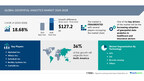
NEW YORK, Dec. 4, 2024 /PRNewswire/ — Report on how AI is redefining market landscape – The global geospatial analytics market size is estimated to grow by USD 127.2 billion from 2024-2028, according to Technavio. The market is estimated to grow at a CAGR of 18.68% during the forecast period. Increasing adoption of geospatial data analytics in healthcare and insurance sectors is driving market growth, with a trend towards emerging methods in data collection and generation. However, data privacy and security concerns poses a challenge. Key market players include Alphabet Inc., Alteryx Inc., Autodesk Inc., Bentley Systems Inc., CartoDB Inc., Development Seed, Esri Global Inc., Fugro NV, General Electric Co., Geomap Co., Hexagon AB, International Business Machines Corp., L3Harris Technologies Inc., Maxar Technologies Inc., Pitney Bowes Inc., QlikTech international AB, SAP SE, TomTom NV, Topcon Positioning Systems Inc., and Trimble Inc..

AI-Powered Market Evolution Insights. Our comprehensive market report ready with the latest trends, growth opportunities, and strategic analysis- View Free Sample Report PDF

Forecast period

2024-2028

Base Year

2023

Historic Data

2017 – 2021

Segment Covered

Technology (GPS, GIS, Remote sensing, and Others), End-user (BFSI, Government and utilities, Telecom, Manufacturing and automotive, and Others), and Geography (North America, Europe, APAC, Middle East and Africa, and South America)

Region Covered

North America, Europe, APAC, Middle East and Africa, and South America

Key companies profiled

Alphabet Inc., Alteryx Inc., Autodesk Inc., Bentley Systems Inc., CartoDB Inc., Development Seed, Esri Global Inc., Fugro NV, General Electric Co., Geomap Co., Hexagon AB, International Business Machines Corp., L3Harris Technologies Inc., Maxar Technologies Inc., Pitney Bowes Inc., QlikTech international AB, SAP SE, TomTom NV, Topcon Positioning Systems Inc., and Trimble Inc.

Key Market Trends Fueling Growth

The Geospatial Analytics market is thriving, with Medium Scale Enterprises (MSEs) increasingly adopting this technology for Disaster Risk Reduction. Hexagon, DigitalGlobe, ESRI, and others lead the way, offering 4-dimensional GIS software and Big Data analysis. AI and ML are key drivers, with IoT providing real-time data. Hexagon’s Precisely and Maxar Technologies use 5G for supply chain optimization. Yale University researches AI and ML in GIS. Web-based GIS Platforms like Esri’s ArcGIS Online, Google Maps Platform, and Mapbox are popular. Lack of standardization and a skilled workforce pose challenges. Large Enterprises dominate, but MSEs and sectors like Defense & Internal Security, Retail & Logistics, Energy & Utilities, Agriculture, Healthcare & Life Sciences, Infrastructure, and others are investing. GDPR, SPDI, and geospatial data privacy are concerns. Companies like Alteryx, Fugro, Orbital Insights, Mapidea, Geospin, Sparkgeo, Descartes Lab, Skymap Global, and Geospin provide solutions. JavaScript and WebGL enable web mapping. 

The geospatial analytics market is experiencing significant advancements due to innovative data collection methods. Real-time spatiotemporal data, enabled by real-time interactive GPS/GIS and mobile capabilities, is leading to more detailed, specific, and updated GIS features. Additionally, the smallsat revolution is transforming the remote sensing industry with cost-effective satellite technologies and new space business models. These developments are enhancing the market’s efficiency and providing valuable insights for businesses. 

Insights on how AI is driving innovation, efficiency, and market growth- Request Sample!

Market Challenges

The geospatial analytics market is growing rapidly, with Medium Scale Enterprises (MSEs) increasingly adopting this technology for various applications, including Disaster Risk Reduction. AI and ML are key drivers, with Hexagon, DigitalGlobe, ESRI, and others leading the way in Big Data analysis. However, challenges persist, such as the lack of standardization and a skilled workforce. IoT, 5G technology, and web-based GIS platforms like JavaScript and WebGL are transforming the industry. Geospatial analytics is essential for sectors like Defense & Internal Security, Retail & Logistics, Energy & Utilities, Agriculture, Healthcare & Life Sciences, Infrastructure, and more. Companies like Precisely, Maxar Technologies, and Fugro are innovating with 4-dimensional GIS software and Disaster Response Programs. GDPR, SPDI, and geospatial data privacy are important considerations. AI, ML, and GIS tools from Orbital Insights, Maplarge, Geospin, Sparkgeo, Descartes Labs, Skymap Global, Alteryx, and others are shaping the future of this dynamic market.Organizations face significant challenges in implementing geospatial analytics due to data privacy and security concerns. With the increasing interconnectivity of devices through the Internet, critical data transfer over networks becomes essential. However, this also increases the risk of cybersecurity threats and data breaches. The IoT revolution brings together physical and virtual worlds, leading to a large-scale network of interconnected devices. Ensuring data security in such an environment is crucial. Organizations must establish a highly secured network to protect their sensitive information. Interoperability issues among multiple devices may also arise, adding to the complexity. Addressing these challenges requires a cybersecurity strategy and effective network management.

Insights into how AI is reshaping industries and driving growth- Download a Sample Report

Segment Overview 

This geospatial analytics market report extensively covers market segmentation by

Technology 1.1 GPS1.2 GIS1.3 Remote sensing1.4 OthersEnd-user 2.1 BFSI2.2 Government and utilities2.3 Telecom2.4 Manufacturing and automotive2.5 OthersGeography 3.1 North America3.2 Europe3.3 APAC3.4 Middle East and Africa3.5 South America

1.1 GPS- The Global Geospatial Analytics Market was led by the GPS segment in 2023, and this trend is projected to continue throughout the forecast period. GPS, a satellite-based navigation system, is a key technology in Geospatial Analytics. Operated by the US Space Force, GPS provides geolocation and time information to receivers worldwide. Its applications include georeferencing, positioning, navigation, and time and frequency control. In the context of Geospatial Analytics, GPS functions as a crucial data input for GIS, enabling precise geospatial data location and collection in the field. Consequently, the demand for GPS technology is anticipated to drive the growth of the Global Geospatial Analytics Market during the forecast period.

Download complimentary Sample Report to gain insights into AI’s impact on market dynamics, emerging trends, and future opportunities- including forecast (2024-2028) and historic data (2017 – 2021) 

Research Analysis

The Geospatial Analytics Market is experiencing significant growth due to the increasing demand for location intelligence in various industries, particularly Medium Scale Enterprises (MSEs). Disaster Risk Reduction is a major application area, where real-time geospatial analytics can save lives and minimize damage. AI and ML technologies are revolutionizing geospatial analytics by enabling advanced data processing and pattern recognition. IoT sensors generate vast amounts of geospatial data, requiring Big Data analysis tools to extract valuable insights. Hexagon, Luciad V2019, DigitalGlobe, and Pitney Bowes are leading providers of geospatial analytics solutions. AI and ML algorithms, powered by 5G technology, are enhancing the capabilities of web-based GIS Platforms. JavaScript and HTML5 are popular programming languages for developing geospatial applications. Supply chain optimization is another key application area, leveraging geospatial analytics to improve efficiency and reduce costs.

Market Research Overview

The Geospatial Analytics Market is experiencing significant growth due to the increasing demand for location intelligence in various industries. Medium Scale Enterprises (MSEs) are leveraging geospatial analytics for Disaster Risk Reduction, Supply Chain Optimization, and Infrastructure Planning. Advanced technologies like AI and ML, IoT, and 5G are revolutionizing the market by enabling real-time data processing and analysis. Hexagon, DigitalGlobe, ESRI, and other key players offer 4-dimensional GIS software for 3D visualization and analysis. Yale University and other research institutions are exploring the use of Artificial Intelligence and Machine Learning in Geospatial Analytics. Web-based GIS Platforms like Esri’s ArcGIS Online, Google Maps Platform, and Mapbox are making geospatial analytics more accessible. However, challenges like Lack of Standardization, Skilled Workforce, and GDPR compliance persist. Industries like Defense & Internal Security, Retail & Logistics, Energy & Utilities, Agriculture, Healthcare & Life Sciences, and Infrastructure are major consumers of Geospatial Analytics. SPDI, Precisely, Maxar Technologies, Maplarge, Fugro, Orbital Insights, Mapidea, Geospin, Sparkgeo, Descartes Lab, Skymap Global, and Alteryx are some of the prominent players in the market. JavaScript and WebGL are popular programming languages for building geospatial applications.

Table of Contents:

1 Executive Summary
2 Market Landscape
3 Market Sizing
4 Historic Market Size
5 Five Forces Analysis
6 Market Segmentation

TechnologyGPSGISRemote SensingOthersEnd-userBFSIGovernment And UtilitiesTelecomManufacturing And AutomotiveOthersGeographyNorth AmericaEuropeAPACMiddle East And AfricaSouth America

7 Customer Landscape
8 Geographic Landscape
9 Drivers, Challenges, and Trends
10 Company Landscape
11 Company Analysis
12 Appendix

About Technavio

Technavio is a leading global technology research and advisory company. Their research and analysis focuses on emerging market trends and provides actionable insights to help businesses identify market opportunities and develop effective strategies to optimize their market positions.

With over 500 specialized analysts, Technavio’s report library consists of more than 17,000 reports and counting, covering 800 technologies, spanning across 50 countries. Their client base consists of enterprises of all sizes, including more than 100 Fortune 500 companies. This growing client base relies on Technavio’s comprehensive coverage, extensive research, and actionable market insights to identify opportunities in existing and potential markets and assess their competitive positions within changing market scenarios.

Contacts

Technavio Research
Jesse Maida
Media & Marketing Executive
US: +1 844 364 1100
UK: +44 203 893 3200
Email: media@technavio.com
Website: www.technavio.com/

View original content to download multimedia:https://www.prnewswire.com/news-releases/geospatial-analytics-market-to-grow-by-usd-127-2-billion-from-2024-2028–driven-by-healthcare-and-insurance-sectors-ais-impact-on-trends—technavio-302320939.html

SOURCE Technavio

Continue Reading

Technology

CyberPower Receives IEC 62443-4-1 Certification from DEKRA

Published

on

By

Strengthening cybersecurity for intelligent power management

NEW TAIPEI CITY, Oct. 20, 2026 /PRNewswire/ — Power equipment is essential to business continuity. As remote monitoring and centralized management become widespread, the cybersecurity of software and network interfaces has become a critical consideration in equipment selection. DEKRA awarded CyberPower the IEC 62443-4-1 certification for its secure product development processes following an independent assessment. The certification demonstrates CyberPower’s ability to integrate cybersecurity requirements into product development and ongoing maintenance.

CyberPower’s portfolio includes uninterruptible power systems (UPS), power distribution units (PDUs), power management software, surge protectors, power converters, network cards and environmental sensors. As power management extends from on-site operation to remote monitoring over networks, users gain more timely access to equipment status information. This connectivity also brings access controls, software updates, and potential vulnerabilities into focus. Managing these risks while improving operational efficiency is an important consideration for suppliers supporting business continuity.

IEC 62443-4-1 is part of the international IEC 62443 series of cybersecurity standards for industrial automation and control systems. It specifies requirements for a secure product development lifecycle, covering security requirements, design and implementation, security verification and validation, security issue management, patch management, and management of product end-of-life. Clearly defined responsibilities and documented procedures help manufacturers track security requirements during development and address newly identified security issues after delivery.

Hundry Chien, Assistant Vice President of CyberPower’s Data Center Development Division, said: “Data centers depend on reliable power and management equipment that can be safely operated and maintained over time. By incorporating cybersecurity into our product development processes, we give our R&D teams a consistent framework for design, testing, and subsequent updates. This certification recognizes our commitment and helps customers better understand how we manage cybersecurity risks throughout the product lifecycle.”

Maxi Tsai, General Manager of DEKRA APAC DTS and Onward Security, said: “The cybersecurity of connected power equipment is closely linked to business continuity. An effective secure development process makes risk identification, security testing, and vulnerability management part of day-to-day work, supported by traceable records. CyberPower’s successful assessment provides customers with independent evidence to assess a supplier’s cybersecurity management and long-term maintenance capabilities, alongside equipment performance and power supply reliability.”

DEKRA combines its local cybersecurity expertise in Taiwan with global testing and certification resources to provide IEC 62443 secure development process assessments, product cybersecurity testing, and certification services. For the EU Cyber Resilience Act (CRA), its services include assessing applicability, gap analysis, reviews of vulnerability management and incident reporting procedures, and technical documentation support. By assessing both development processes and product security capabilities, DEKRA helps Taiwanese manufacturers build on their existing cybersecurity practices to meet market and regulatory requirements and reduce compliance risks associated with product launches and ongoing maintenance.

About DEKRA

For more than 100 years, DEKRA has been a trusted name in safety. Founded in 1925 with the original goal of improving road safety through vehicle inspections, DEKRA has grown to become the world’s largest independent, non-listed expert organization in the field of testing, inspection, and certification. Today, as a global partner, the company supports its customers with comprehensive services and solutions to drive safety and sustainability forward. In 2025, DEKRA generated revenue of 4.4 billion euros. More than 48,000 employees are providing qualified and independent expert services in approximately 60 countries across five continents. DEKRA holds a Platinum rating from EcoVadis, placing it among the top 1% of the world’s most sustainable companies.

View original content to download multimedia:https://www.prnewswire.com/apac/news-releases/cyberpower-receives-iec-62443-4-1-certification-from-dekra-302915040.html

SOURCE DEKRA Asia Pacific

Continue Reading

Technology

SKF Q3 2026: Improved margin and selectively higher demand

Published

on

By

GOTHENBURG, Sweden, Oct. 21, 2026 /PRNewswire/ — Comments and figures in this report refer to SKF Group’s continuing operations unless otherwise stated. The Automotive segment is reported as discontinued operations and as assets/liabilities held for distribution. The income statement and cash flow statement have been updated for comparative periods, whilst the balance sheet has been updated per September only. Related key figures have been adjusted accordingly.

Q3 2026

Net sales: MSEK 17,467 (16,562)Organic growth: 4.3% (3.7%). Driven by both positive demand as well as solid price/mix contribution.Adjusted operating profit: MSEK 2,845 (2,553). Driven by strong commercial execution, especially within Specialized Industrial Solutions (SIS).Adjusted operating margin: 16.3% (15.4%).Net cash flow from operating activities: MSEK 2,076 (1,780). Mainly driven by improved operating result, partly offset by working capital build-up.

Financial overview, MSEK unless otherwise stated

Q3 2026

Q3 2025

Jan-Sep 2026

Jan-Sep 2025

Net sales

17,467

16,562

51,215

51,491

Organic growth, %

4.3

3.7

3.5

1.2

Adjusted operating profit

2,845

2,553

8,383

8,137

Adjusted operating margin, %

16.3

15.4

16.4

15.8

Operating profit

2,778

2,166

8,108

6,357

Operating margin, %

15.9

13.1

15.8

12.3

Adjusted net profit

1,844

1,674

5,806

5,707

Adjusted earnings per share, SEK

3.88

3.52

12.28

11.90

Net profit

1,777

1,287

5,531

3,927

Basic earnings per share, SEK

3.74

2.67

11.68

8.00

Net debt/Adjusted EBITDA, times

1.1

0.91)

1.1

0.91)

Adjusted ROCE, %

15.32)

14.01)

15.32)

14.01)

Net cash flow from operating activities

2,076

1,780

4,513

5,336

Net profit, SKF Group including discontinued operations

1,428

1,127

4,495

3,658

Basic earnings per share, SEK, SKF Group including discontinued operations

2.91

2.30

9.26

7.38

1) SKF Group including discontinued operations.
2) Based on the balance sheet by the end of the period and not 12 months’ rolling average.

Rickard Gustafson, President and CEO:

“We delivered 4.3% organic growth and increased adjusted operating margin by 0.9 percentage points to 16.3%, year-over-year, supported by strong commercial execution. We are also bringing forward our BSEK 2 annual savings target by six months, to mid-2027. Shareholder approval of the SKF Vertevo distribution at the EGM marked an important milestone.

Growth in selected markets supports improved margin

Ahead of the planned listing of SKF Vertevo on Nasdaq Stockholm on 1 December 2026, the Automotive business is reported as Discontinued operations from Q3. Looking at our Continuing operations, i.e. our industrial business, organic sales growth was 4.3%, driven by both volume and solid price/mix. We saw higher demand in selected OEM markets, including drives connected to data centers, infrastructure, as well as security and defence.

Bearing Solutions grew by 2.8%, with continued growth in India and Southeast Asia and further improvement in the OEM market in the Americas. Development was broadly unchanged in Europe, Middle East and Africa, as well as in China and Northeast Asia. Specialized Industrial Solutions (SIS) continued its strong performance where organic sales increased by 8.3%, growing across all business units and particularly in Aerospace and Magnetic Solutions. It’s worth noting that in Magnetic Solutions, we continue to strengthen our position by expanding production capacity and increasing automation to capture structural growth.

I’m pleased that the industrial business improved its adjusted operating margin, compared to the same quarter last year, to 16.3%, reflecting continued strong commercial execution, particularly in SIS. Rightsizing savings of approximately MSEK 350, corresponding to an annual pace of about BSEK 1.7, more than offset negative separation-related synergies. The rightsizing program is progressing well, and we now expect to reach the targeted annual run-rate savings of approximately BSEK 2 by mid-2027 compared to end-2027 as previously communicated.

We continue to actively work with our cost and commercial execution to mitigate continued cost inflation in input costs and logistics. Tariff-related costs were again largely compensated. Investments in our transformation initiatives to harmonize and modernize our IT landscape proceeded as planned. Support production to the automotive business in Q3 was non-material. Currency effects provided a minor tailwind in Q3.

Cash flow from operations increased year-over-year to BSEK 2.1, supported by the improved operating result and partly offset by an increase in inventory for components and materials, primarily within SIS to support continued growth.

Preparing for two focused companies

The approval by our shareholders of the distribution of the shares in SKF Vertevo marked an important milestone ahead of the planned listing on 1 December 2026. Another milestone will be SKF Vertevo’s Capital Markets Day (CMD) on 17 November. In Q3, they delivered a solid performance with an improved adjusted operating margin of 4.6% despite challenging market conditions where organic sales declined by –4.0%.

As the separation progresses, we have updated the classification of some items affecting comparability (IAC) between separation and footprint optimization activities. The total expected level of IAC remains unchanged from our CMD 2025 communication, and this has no impact on our path towards achieving our long-term industrial business margin target. Additional production lines transferred to the Automotive business will decrease the need for industrial footprint optimization with BSEK 0.5, while IAC related to the separation will increase by the same amount, totaling approximately BSEK 3.

Out of SKF Vertevo’s total production, a few production lines remain to be transferred into SKF Vertevo plants during 2027. This means that contract manufacturing to SKF Vertevo will start to decrease from Q2 2027. Thereafter, it is expected to decrease significantly over the medium term.

Outlook

We expect organic sales for SKF Group’s continuing operations to strengthen somewhat in Q4, year-over-year. This as we see a similar market environment as we had in Q3. However, market volatility remains high which amplifies overall uncertainty.”

Outlook and guidance

The statements below refer to SKF Group’s continuing operations unless otherwise stated.

Outlook Q4 2026

We expect organic sales for SKF Group’s continuing operations to strengthen somewhat in Q4, year-over-year. This as we see a similar market environment as we had in Q3. However, market volatility remains high which amplifies overall uncertainty.

Guidance Q4 2026

Currency impact on the operating profit: around MSEK 150, year-over-year, based on exchange rates as per 30 September 2026.

Guidance FY 2026

Tax level excluding effects related to divested businesses and separation of the Automotive business: around 27%.Additions to property, plant and equipment: around BSEK 2.5. Compared to previous guidance, this corresponds to a decrease of around BSEK 0.5 as result of optimization of SKF Group’s continuing operations’ planned investments.IAC related to the Automotive separation and footprint optimization for SKF Group including discontinued operations: BSEK –2.5 to –3. This is within the frame communicated at CMD 2025.1)

1) SKF Group including discontinued operations.

A webcast will be held on 21 October 2026 at 08:30 (CEST):
Sweden: +46 (0)8 5051 0031
UK/International: +44 (0)203 059 5863

https://www.skf.com/group/investors

Aktiebolaget SKF
      (publ)

The financial information in this press release contains inside information that AB SKF is obliged to make public pursuant to the EU Market Abuse Regulation. The information was submitted for publication through the agency of the contact persons set out below on 21 October 2026 at 07:30 CEST.

For further information, please contact:
Press Relations: Carl Bjernstam, +46 31-337 2517; +46 722 201 893; carl.bjernstam@skf.com 
Investor Relations: Sophie Arnius, +46 31-337 8072; +46 705 908 072; sophie.arnius@skf.com 

This information was brought to you by Cision http://news.cision.com

https://news.cision.com/skf/r/skf-q3-2026–improved-margin-and-selectively-higher-demand,c4412564

The following files are available for download:


View original content:https://www.prnewswire.co.uk/news-releases/skf-q3-2026-improved-margin-and-selectively-higher-demand-302915042.html

Continue Reading

Technology

Whole construction supply chain now on the hook as new right to work rules take effect

Published

on

By

LONDON, Oct. 21, 2026 /PRNewswire/ — UK construction firms can now be fined for illegal working anywhere in their supply chain, not just among their own employees. Penalties can reach £45,000 per illegal worker for a first breach and £60,000 per worker for a repeat breach. That was the warning from experts at a briefing hosted by innDex, the construction site and workforce management platform, at the House of Commons on 29 September.

Contractors heard from Kevin Barker, an immigration compliance specialist and former Home Office official, and a Home Office policy representative. The session was chaired by innDex co-founder George Smithies and Dean Tuhey, founder of right to work specialist PPAC.

What has changed

Until 1 October, a civil penalty for illegal working depended on a direct employer-employee relationship. Liability now extends to self-employed workers, gig workers, subcontractors and labour supply chains.

Where the Home Office cannot identify the direct employer, or prescribed requirements have not been met, it can impose the penalty on another business in the contractual chain.

Businesses now need a statutory excuse built on three requirements:

Contractual terms requiring subcontractors to carry out compliant right to work checks, seek consent before further subcontracting, accept audits and cooperate with the Home Office.Substitution controls, so the person on site is the person who was checked.Identity verification systems, such as access passes, facial verification, biometrics and attendance records.

Kevin Barker said: “The two things I want people to remember are that responsibility is changing, and so is liability.”

Why construction is exposed

Construction supply chains are often several tiers deep, running through subcontractors, agencies and payroll companies. A gap at any tier can come back to the businesses above it.

Contract clauses alone are not enough

The Home Office will judge how well each requirement works in practice, and audits must actually happen and be evidenced. As penalties are a civil matter, decided on the balance of probabilities, what counts as “reasonable and proportionate” will ultimately be decided by a County Court judge.

“New powers tend to be used as soon as they arrive,” said Kevin Barker. “It’s no good just having it written in your terms and conditions. You have to do it, and you must be able to show you’ve done it.”

Dean Tuhey added: “A right to work check is no longer a tick box exercise. It’s a process. Student visa hours, sponsor confirmations and workers in roles their visas don’t cover are all on sites today. There’s only one acceptable number in construction: 100%.”

The role of digital verification

Under the UK Digital Identity and Attributes Trust Framework, certified digital verification service providers (DVSPs) now play a central role in the new regime.

From 1 October, certified providers can check British passports that expired up to six months ago, and the in-person element of a check can be carried out digitally. Employers must still confirm each check matches the person they engage.

PPAC passed its certified DVSP audit on 21 September. With innDex, it links a worker’s right to work check to their site induction, a face check on arrival and daily biometric clock-in. If a visa expires, site access updates in real time.

George Smithies, co-founder of innDex, said: “We kept hearing confusion from our clients about what was changing, who’s responsible and what they need to do. Our message is simple: the law has moved from the employer to the whole chain, and the industry needs a process that can prove who is on site, every day.”


About innDex:

innDex delivers end-to-end workforce management solutions purposefully designed for the construction industry. Built by civil engineers, the platform simplifies project delivery through digital tools that enhance safety and compliance on site. Today, innDex supports more than 26,400 companies across 27 countries and five continents.

About PPAC:

Founded in 2016, PPAC provides right to work and identity verification built specifically for construction, making onboarding faster, verification more accurate and compliance simpler on site.

View original content to download multimedia:https://www.prnewswire.co.uk/news-releases/whole-construction-supply-chain-now-on-the-hook-as-new-right-to-work-rules-take-effect-302914353.html

Continue Reading

Trending