
Technology
NASA Accelerates Space Exploration, Earth Science for All in 2024

Published
2 years agoon
By
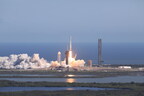
WASHINGTON, Dec. 6, 2024 /PRNewswire/ — With a look back at 2024, NASA is celebrating its many innovative and inspiring accomplishments this year including for the first time, landing new science and technology on the Moon with an American company, pushing the boundaries of exploration by launching a new mission to study Jupiter’s icy moon Europa; maintaining 24 years of continuous human exploration off the Earth aboard the International Space Station, and unveiling the first look at its supersonic quiet aircraft for the benefit of humanity.
The agency also shared the wonder of a total eclipse with millions of Americans, conducted the final flight of its Ingenuity helicopter on the Red Planet, demonstrated the first laser communications capability in deep space, tested the next generation solar sail in space, made new scientific discoveries with its James Webb Space Telescope, completed a year-long Mars simulation on Earth with crew, announced the newest class of Artemis Generation astronauts, and much more.
“In 2024, NASA made leap after giant leap to explore, discover, and inspire – all while bringing real, tangible, and substantial benefits to the American people and to all of humanity,” said NASA Administrator Bill Nelson. “We deepened the commercial and international partnerships that will help NASA lead humanity back to the Moon and then to the red sands of Mars. We launched new missions to study our solar system and our universe in captivating new ways. We observed our changing Earth through our eyes in the sky – our ever-growing fleet of satellites and instruments – and shared that data with all of humanity. And we opened the doors to new possibilities in aviation, new breakthroughs on the International Space Station, and new wonders in space travel.”
Through its Moon to Mars exploration approach, the agency continued moving forward with its Artemis campaign, including progress toward its first mission around the Moon with crew in more than 50 years and advancing plans to explore more of the Moon than ever before. So far in 2024, 15 countries signed the Artemis Accords, committing to the safe, transparent, and responsible exploration of space with the United States.
As part of efforts to monitor climate change, the agency launched multiple satellites to study our changing planet and opened its second Earth Information Center to provide data to a wider audience.
With the release of its latest Economic Impact Report, NASA underscored the agency’s $75.6 billion impact on the U.S. economy, value to society, and return on investment for taxpayers.
“To invest in NASA is to invest in American workers, American innovation, the American economy, and American economic competitiveness. Through continued investments in our workforce and our infrastructure, NASA will continue to propel American leadership on Earth, in the skies, and in the stars,” said Nelson.
Key 2024 agency highlights across its mission areas include:
Preparing for Moon, Mars
This year, NASA made strides toward the Artemis Generation of scientific discovery at the Moon while validating operations and systems to prepare for human missions to Mars. The agency advanced toward Artemis II, the first crewed flight under Artemis:
NASA announced results of its Orion heat shield investigation and updated its timelines for Artemis II and III.Teams delivered the core stage and launch vehicle stage adapter of the SLS (Space Launch System) rocket from NASA’s Michoud Assembly Facility in New Orleans to NASA’s Kennedy Space Center in Florida and began stacking the rocket’s booster segments.Engineers carried out a series of tests of the mobile launcher and systems at NASA Kennedy’s Launch Pad 39B ahead of the test flight and added an emergency egress system to keep crew and other personnel at the launch pad safe in the case of an emergency.NASA performed key integrated testing of the Orion spacecraft that will send four astronauts around the Moon and bring them home, including testing inside an altitude chamber simulating the vacuum conditions of deep space.The crew and other teams performed key training activities to prepare for flight, including practicing recovery operations at sea, as well as launch countdown and mission simulations.In February, the first Moon landing through the agency’s CLPS (Commercial Lunar Payload Services) initiative brought NASA science to the lunar surface on Intuitive Machines’ Nova-C lander successfully capturing data that will help us better understand the Moon’s environment and improve landing precision and safety.In August, NASA announced that a new set of NASA science experiments and technology demonstrations will arrive at the lunar South Pole in 2027 following the agency’s latest CLPS initiative delivery award.To return valuable samples from Mars to Earth, NASA sought innovative designs and announced a new strategy review team to assess various design studies to reduce cost, risk, and complexity.NASA’s MAVEN (Mars Atmosphere and Volatile EvolutioN) spacecraft celebrated 10 years of exploration of the Red Planet’s upper atmosphere.After three years, NASA’s Ingenuity Mars Helicopter ended its mission in January, with dozens more flights than planned.In September, the NASA Space Communications and Navigation team awarded a contract to Intuitive Machines to support the agency’s lunar relay systems as part of the Near Space Network, operated by NASA’s Goddard Space Flight Center in Greenbelt, Maryland.NASA identified an updated set of nine potential landing regions near the lunar South Pole for its Artemis III mission.Capturing the current state of the Moon to Mars architecture, NASA released the second revision of its Architecture Definition Document.NASA formalized two international agreements for key Artemis elements, including with the United Arab Emirates for the Gateway airlock module, and with Japan to provide a pressurized rover for the lunar surface.Astronauts, scientists, and engineers took part in testing key technologies and evaluating hardware needed to work at the Moon, including simulating moonwalks in geologically Moon-like areas of Arizona, practiced integration between the crew and mission controllers, participated in human factors testing for Gateway, and evaluated the developmental hardware.NASA worked collaboratively with SpaceX and Blue Origin on their human lunar landers for Artemis missions, exercising an option under existing contracts to develop cargo variants of their human landers.In August, as part of its commitment to a robust, sustainable lunar exploration program for the benefit of all, NASA announced it issued a Request for Information to seek interest from American companies and institutions in conducting a mission using the agency’s VIPER (Volatiles Investigating Polar Exploration Rover) Moon rover.The agency selected three companies to advance capabilities for a lunar terrain vehicle that Artemis astronauts will use to travel around the lunar surface.NASA completed a critical design review on the second mobile launcher, which will launch the more powerful Block 1B version of the SLS rocket.Engineers at NASA Kennedy continued outfitting the Artemis III and IV Orion crew modules and received the European-built Orion service module for Artemis III; they also received several sections of the Artemis III and IV SLS core stages, and upgraded High Bay 2 in the Vehicle Assembly Building.NASA completed its second RS-25 certification test series at NASA’s Stennis Space Center near Bay St. Louis, Mississippi, setting the stage for production of new engines to help power future Artemis missions to the Moon and beyond.The CHAPEA (Crew Health and Performance Exploration Analog) 1 crew completed a 378-day mission in a ground-based Mars habitat at NASA’s Johnson Space Center in Houston.
Observing, Learning About Earth
NASA collects data about our home planet from space and on land, helping understand how our climate on Earth is changing. Some of the agency’s key accomplishments in Earth science this year include:
After launching into space in February, NASA’s PACE (Plankton, Aerosol, Cloud, ocean Ecosystem) satellite mission is successfully transmitting first-of-their-kind measurements of ocean health, air quality, and the effects of a changing climate.Using the agency’s TEMPO (Tropospheric Emissions: Monitoring of Pollution) instrument, NASA made available new near-real time data providing air pollution observations at unprecedented resolutions – down to the scale of individual neighborhoods.Launched in May and June, NASA’s PREFIRE (Polar Radiant Energy in the Far-Infrared Experiment) CubeSats started collecting data on the amount of heat in the form of far-infrared radiation that the Arctic and Antarctic environments emit to space.NASA rolled out the Disaster Response Coordination System, a new resource that delivers up-to-date information on fires, earthquakes, landslides, floods, tornadoes, hurricanes, and other extreme events to emergency managers.The agency partnered with the Smithsonian National Museum of Natural History to open the Earth Information Center exhibit.
Exploring Our Solar System, Universe
NASA’s Europa Clipper embarked Oct. 14 on its long voyage to Jupiter, where it will investigate Europa, a moon with an enormous subsurface ocean that may have conditions to support life. NASA collaborated with multiple partners on content and social media related to the launch, including engagements with the National Hockey League, U.S. Figure Skating, 7-Eleven, e.l.f., Girl Scouts, Crayola, Library of Congress, and others. NASA’s 2024 space exploration milestones also include:
NASA’s groundbreaking James Webb Space Telescope marked more than two years in space, transforming our view of the universe as designed, by studying the most distant galaxies ever observed, while raising exciting new questions about the atmospheres of planets outside our solar system.As part of an asteroid sample exchange, NASA officially transferred to JAXA (Japan Aerospace Exploration Agency) a portion of the asteroid Bennu sample collected by the agency’s OSIRIS-Rex (Origins, Spectral Interpretation, Resource Identification, and Security-Regolith Explorer) mission in a ceremony on Aug. 22.After surviving multiple challenges this year, NASA’s Voyager mission continues to collect data on the furthest reaches of our Sun’s influences.NASA selected a new space telescope for development that will survey ultraviolet light across the entire sky, called UVEX (UltraViolet Explorer).This year, all remaining major components were delivered to NASA Goddard to begin the integration phase for the agency’s Nancy Grace Roman Space Telescope.NASA developed, tested, and launched the patch kit that astronauts will use to repair the agency’s NICER (Neutron star Interior Composition Explorer) telescope on the International Space Station.The agency continued preparing the SPHEREx (Spectro-Photometer for the History of the Universe, Epoch of Reionization and Ices Explorer) mission to launch by April 2025.To manage the maturation of technologies necessary to develop the Habitable Worlds Observatory telescope, NASA established a project office at NASA Goddard.NASA and partners declared that the Sun reached solar maximum in 2024, a period of heightened solar activity when space weather becomes more frequent.The Solar and Heliospheric Observatory, a joint mission between ESA (European Space Agency) and NASA, discovered its 5,000th comet in March.NASA’s Sounding Rocket Program provided low-cost access to space for scientific research, technology development, and educational missions. NASA launched 14 sounding rocket missions in 2024. Scientists announced findings from a sounding rocket launched in 2022 that confirmed the existence of a long-sought global electric field at Earth.The agency established a new class of astrophysics missions, called Astrophysics Probe Explorers, designed to fill a gap between NASA’s flagship and smaller-scale missions.
Living, Conducting Research in Space
In 2024, a total of 25 people lived and worked aboard the International Space Station, helping to complete science for the benefit of humanity, open access to space to more people, and support exploration to the Moon in preparation for Mars. A total of 14 spacecraft visited the microgravity laboratory in 2024, including eight commercial resupply missions from Northrop Grumman and SpaceX, as well as international partner missions, delivering more than 40,000 pounds of science investigations, tools, and critical supplies to the space station. NASA also helped safely return the uncrewed Boeing Starliner spacecraft to Earth, concluding a three-month flight test to the International Space Station. In addition:
In March, NASA welcomed its newest class of Artemis Generation astronauts in a graduation ceremony. The agency also sought new astronaut candidates, and more 8,000 people applied.NASA astronaut Jasmin Moghbeli, ESA (European Space Agency) astronaut Andreas Mogensen, and JAXA (Japan Aerospace Exploration Agency) astronaut Satoshi Furukawa returned to Earth at the conclusion of NASA’s SpaceX Crew-7 mission aboard the International Space Station. The three crew members, along with Roscosmos cosmonaut Konstantin Borisov, splashed down in March off the coast of Pensacola, Florida, completing a six-and-a-half-month mission contributing to hundreds of experiments and technology demonstrations.In June, NASA astronauts Butch Wilmore and Suni Williams safely arrived at the space station aboard Boeing’s Starliner spacecraft following launch of their flight test. With Starliner’s arrival, it was the first time in station history three different spacecraft that carried crew to station were docked at the same time. Starliner returned uncrewed in September following a decision by NASA. Wilmore and Williams, now serving as part of the agency’s Crew-9 mission, will return to Earth in February 2025.NASA astronaut Don Pettit, accompanied by Roscosmos cosmonauts Alexey Ovchinin and Ivan Vagner, arrived at the orbital laboratory in September to begin a six-month mission.Completing a six-month research mission in September, NASA astronaut Tracy C. Dyson returned to Earth with Roscosmos cosmonauts Oleg Kononenko and Nikolai Chub aboard the Soyuz MS-25 spacecraft.NASA astronaut Nick Hague and Roscosmos cosmonaut Aleksandr Gorbunov launched on the agency’s SpaceX Crew-9 mission to the space station.Concluding a nearly eight-month science mission, NASA’s SpaceX Crew-8 mission safely returned to Earth, splashing down on Oct. 25, off the coast of Pensacola, Florida.NASA and Axiom Space successfully completed the third private astronaut mission to the space station in February, following an 18-day mission, where the crew conducted 30 experiments, public outreach, and commercial activities in microgravity.The agency announced SpaceX was selected to develop and deliver the U.S. Deorbit Vehicle, which will safely move the space station out of orbit and into a remote area of an ocean at the end of its operations.NASA and SpaceX monitored operations as the company’s Dragon spacecraft performed its first demonstration of reboost capabilities for the space station.NASA concluded the final mission of its Spacecraft Fire Safety Experiment, or Saffire, putting a blazing end to an eight-year series of investigations looking at fire’s behavior in space.A robotic surgical tool aboard space station was successfully controlled remotely by surgeons on Earth. The Robotic Surgery Tech Demo tested the performance of a small robot to evaluate the effects of microgravity and time delays between space and ground.The first successful metal 3D print was conducted aboard the space station, depositing a small s-curve in liquified stainless steel for the Metal 3D Printer investigation to test additive manufacturing of small metal parts in microgravity for equipment maintenance on future long-duration missions.In 2024, 17 NASA Biological and Physical Science research payloads were delivered to the orbital laboratory, spanning quantum, plant biology, and physical sciences investigations.More than 825,000 photos of Earth were taken from the space station in 2024 so far, contributing to research tracking how our planet’s landscapes are changing over time. Expedition 71 produced more than 630,000 images, the most taken during a single mission. In total, more than 5.3 million photos have been taken from the space station, providing imagery for urban light studies, studies of lightning flashes, and 14 natural disaster events in 2024 alone.
Imagining Future Flight
NASA researchers worked to advance innovations that will transform U.S. aviation, furthering the Sustainable Flight National Partnership and other efforts to help the country reach net zero carbon emissions by 2050. NASA also unveiled its X-59 quiet supersonic aircraft, the centerpiece of its Quesst mission to make quiet overland supersonic flight a reality. NASA aeronautics initiatives also worked to bring air taxis, delivery drones, and other revolutionary technology closer to deployment to benefit the U.S. public and industry. Over the past year, the agency:
Began testing the quiet supersonic X-59’s engine ahead of its first flight.Made further progress in research areas of Quesst mission, including ground recording station testing and advancement and structural tests on the aircraft.Publicly unveiled the X-59 in January, providing the first look at this unique aircraft.Tested a wind-tunnel model of the X-66, an experimental aircraft designed to reduce the carbon footprint.Began building the X-66 simulator that will allow pilots and engineers to run real-life scenarios in a safe environment.Funded new studies looking at the future of sustainable aircraft for the 2050 timeframe and beyond.Built a new simulator to study how passengers may experience air taxi rides. The results will help designers create new aircraft types with passenger comfort in mind.Developed a computer software tool called OVERFLOW to predict aircraft noise and aerodynamic performance. This tool is now being used by several air taxi manufacturers to test how propellers or wings perform.In collaboration with Sikorsky and DARPA (Defense Advanced Research Projects Agency), flew two helicopters autonomously using NASA-designed collision avoidance software.Designed and flew a camera pod with sensors to help advance computer vision for autonomous aviation.Launched a new science, technology, engineering, and mathematics kit focused on Advanced Air Mobility so students can learn more about air taxis and drones.Continued to reduce traffic and save fuel at major U.S. airports as part of NASA’s to work to improve air travel and make it more sustainable.Worked with partners to demonstrate a first-of-its-kind air traffic management concept for aircraft to safely operate at higher altitudes.Advanced Hybrid-Electric technologies with GE Aerospace under the Hybrid Thermally Efficient Core project.Conducted new ground and flight tests for the Electrified Powertrain Flight Demonstration project, which works to create hybrid electric powertrains for regional and single-aisle aircraft, alongside GE Aerospace and magniX.Collaborated with the Federal Aviation Administration and police and fire departments to strategize on integrating public safety drones into the national airspace.Launched a new science, technology, engineering, and mathematics kit focused on Advanced Air Mobility so students can learn more about air taxis and drones.
Improving Life on Earth, in Space with Technology
NASA develops essential technologies to drive exploration and the space economy. In 2024, NASA leveraged partnerships to advance technologies and test new capabilities to help the agency develop a sustainable presence on the lunar surface and beyond, while benefiting life on our home planet and in low Earth orbit. The following are 2024 space technology advancements:
Deployed NASA’s Advanced Composite Solar Sail System in space, marking a successful test of its composite boom technology.Performed record-breaking laser communications with NASA’s Deep Space Optical Communications technology demonstration by sending a laser signal from Earth to NASA’s Psyche spacecraft about 290 million miles away.NASA’s Advanced Composite Solar Sail System and Deep Space Optical Communications were named among TIME’s Inventions of 2024, along with the agency’s Europa Clipper spacecraft.Supported 84 tests of technology payloads via 38 flights with six U.S. commercial flight providers through NASA’s Flight Opportunities Program.Enabled the first NASA-supported researcher to fly with their payload aboard a commercial suborbital rocket.Advanced critical capabilities for autonomous networks of small spacecraft with NASA’s Starling demonstration, the first satellite swarm to autonomously distribute information and operations data between spacecraft.Demonstrated space-age fuel gauge technology, known as a Radio Frequency Mass Gauge, on Intuitive Machines’ Nova-C lunar lander, to develop technology to accurately measure spacecraft fuel levels.Performed an in-space tank to tank transfer of cryogenic propellent (liquid oxygen) on the third flight test of SpaceX’s Starship.Licensed a new 3-D printed superalloy, dubbed GRX-810, to four American companies to make stronger, more durable airplane and spacecraft parts.Manufactured 3D-printed, liquid oxygen/hydrogen thrust chamber hardware as part of NASA’s Rapid Analysis and Manufacturing Propulsion Technology project, which earned the agency’s 2024 “Invention of The Year” award for its contributions to NASA and commercial industry’s deep space exploration goals.Pioneered quantum discovery using the Cold Atom Lab, including producing the first dual-species Bose-Einstein Condensates in space, the first dual-species atom interferometers in space, and demonstrating the first ultra-cool quantum sensor for the first time in space.Announced two new consortia to carry out ground-based research investigations and conduct activities for NASA’s Biological and Physical Sciences Space Biology Program, totaling $5 million.Awarded $4.25 million across the finales of three major NASA Centennial Challenges, including Break the Ice, Watts on the Moon, and Deep Space Food to support NASA’s Artemis missions and future journeys into deep space. Launched a collaborative process to capture the aerospace community’s most pervasive technical challenges, resulting in a ranked list of 187 civil space shortfalls to help guide future technology development projects, investments, and technology roadmaps.
Growing Global Partnerships
Through the Artemis Accords, almost 50 nations have joined the United States, led by NASA with the U.S. State Department, in a voluntary commitment to engage in the safe, transparent, and responsible exploration of the Moon, Mars, and beyond. The Artemis Accords represent a robust and diverse group of nation states, representing all regions of the world, working together for the safe, transparent, and responsible exploration of the Moon, Mars and beyond with NASA. More countries are expected to sign the Artemis Accords in the weeks and months ahead.
During a May workshop with Artemis Accords signatories in Montreal, Canada, NASA led a tabletop exercise for 24 countries centered on further defining and implementing key tenets, including considering views on non-interference, interoperability, and scientific data sharing among nations.A NASA delegation participated in the 75th International Astronautical Congress in Milan. During the congress, NASA co-chaired the Artemis Accords Principals’ Meeting, which brought together 42 nations furthering discussions on the safe and responsible use of space for the benefit of all.
Celebrating Total Solar Eclipse
During the total solar eclipse on April 8, NASA helped the nation enjoy the event safely and engaged millions of people with in-person events, live online coverage, and citizen science opportunities. NASA also funded scientists around North America to take advantage of this unique position of the Sun, Moon, and Earth to learn more about the Sun and its connection to our home planet. Highlights of the solar celebration include:
The space station crew were among the millions viewing the solar eclipse.NASA collaborated with the Indianapolis Motor Speedway, Google, NCAA Women’s Final Four, Peanuts Worldwide, Microsoft, Sésamo, LEGO, Barbie, Major League Baseball, Third Rock Radio, Discovery Education, and others on eclipse-inspired products and social posts to support awareness of the eclipse and the importance of safe viewing.More than 50 student teams participated in NASA’s Nationwide Eclipse Ballooning Project, with some becoming the first to measure atmospheric gravity waves caused by eclipses.
Building Low Earth Orbit Economy
In August, NASA announced the development of its low Earth orbit microgravity strategy by releasing 42 objectives for stakeholder feedback. The strategy helps to guide the next generation of human presence in low Earth orbit and advance microgravity science, technology, and exploration. NASA is refining the objectives with collected input and will finalize the strategy before the end of the year. Additional advancements include:
NASA modified agreements for two funded commercial space station partners that are on track to develop low Earth orbit destinations for the agency and other customers.A NASA-funded commercial space station, Blue Origin’s Orbital Reef, completed multiple testing milestones for its critical life support system as part of the agency’s efforts for new destinations in low Earth orbit.A full-scale ultimate burst pressure test on Sierra Space’s LIFE (Large Integrated Flexible Environment) habitat structure was conducted, an element of a NASA-funded commercial space station.The agency’s industry partners, through the second Collaborations for Commercial Space Capabilities initiative and Small Business Innovation Research Ignite initiative, completed safety milestones, successful flight tests, and major technological advancements.As NASA opens access to space by working with private industry, the agency shared its medical expertise, human system integration knowledge, utilization requirements, and commercial space food insight to aid in developing safe, reliable, innovative, and cost-effective space stations.To address a rapidly changing space operating environment and ensure its preservation for generations to come, NASA released its integrated Space Sustainability Strategy in April.The agency tested the Sierra Space Dream Chaser spaceplane for the extreme environments of space at NASA’s Neil Armstrong Test Facility in Sandusky, Ohio.NASA’s Glenn Research Center in Cleveland streamed 4K video footage from an aircraft to the space station and back for the first time using optical, or laser, communications.
Inspiring Artemis Generation of STEM Students
NASA continues to offer a wide range of science, technology, engineering, and mathematics (STEM) initiatives and activities, reaching and engaging the next generation of scientists, engineers, and explorers. The agency’s STEM engagements are enhanced through collaborations with partner organizations, the distribution of various grants, and additional strategic activities. Key 2024 STEM highlights include:
Awarded nearly $45 million to 21 higher-education institutions to help build capacity for research, and announced the recipients of grants that will support scientific and technical research projects for more than 20 universities and organizations across the United States.Planted a “Moon Tree,” a seedling that traveled around the Moon and back aboard the agency’s Artemis I mission in 2022, at the U.S. Capitol in Washington. The event highlighted a partnership with the U.S. Forest Service that invited organizations across the country to host the seedlings.Partnered with Microsoft’s Minecraft to engage students in a game-based learning platform, where players can experience NASA’s discoveries with interactive modules on star formation, planets, and galaxy types, modeled using real James Webb Space Telescope images.Collaborate with the U.S. Department of Education to bring STEM to students during after-school hours under the 21st Century Community Learning Centers program, which aims to reach thousands of students in more than 60 sites across 10 states.Launched NASA Engages, a platform to connect and serve the public by providing agency experts to share their experiences working on agency missions and programs.With more than 55,000 applications for NASA internships across the spring, summer and fall sessions, a new recruitment record, NASA helped students and early-career professionals make real contributions to space and science missions.Expanded the agency’s program to help informal educational institutions like museums, science centers, libraries, and other community organizations bring STEM content to communities, resulting in 42 active awards across 26 states and Puerto Rico.Hosted the 30th Human Exploration Rover Challenge, one of NASA’s longest-standing student challenges, with participation from more than 600 students and 72 teams from around the world.
Reaching New, Future Explorers
NASA’s future-forward outreach to current and new audiences is key to providing accessibility to the agency’s scientific discoveries and to growing the future STEM workforce. NASA’s creative and inclusive 2024 strategies to reach the public include:
NASA’s on-demand streaming service, NASA+, achieved four times the viewership of the agency’s traditional cable channel, marking a major milestone in its ongoing web modernization efforts. As part of the digital transformation, NASA said goodbye to NASA Television, its over-the-air broadcast, streamlining how it delivers the latest space, science, and technology news. NASA+ marked its first year of operation Sept. 23, and visitors have played 1,036,389 hours of programming.April 8, the day of the total solar eclipse, brought in 32 million views to NASA’s websites, more than 15 times additional views than the average this year. On average, NASA websites receive 33.4 million views every month.NASA social media accounts saw an increase of 4% in followers since 2023, from 391.2 million in 2023 to 406.8 million this year. On average, NASA accounts see close to 25 million engagements each month.Notable live social media events in 2024 included the first-ever Reddit Ask Me Anything with the platform’s 23-million member “Explain Like I’m Five” community; the first X Spaces conversation from space; and NASA’s first Instagram Live of a launch, which contributed 410,000 of the 6.6 million views of the Boeing Starliner Crew Flight Test launch.NASA Twitch launched custom emotes, issued channel points for the first time, and collaborated with an external Twitch creator, a how-to conversation with astrophotographers and NASA experts about photographing the Moon.NASA aired live broadcasts for 14 mission launches in 2024. The agency’s official broadcast of the 2024 total solar eclipse and its telescope feed are the top two most-watched livestreams this year on NASA’s YouTube.The agency’s YouTube livestreams in 2024 surpassed 84.7 million total views.NASA broadcasts often were enhanced by the presence of well-known athletes, artists, and cultural figures. The solar eclipse broadcast alone featured musician Lance Bass, actor Scarlett Johannson, NFL quarterback Josh Dobbs, and Snoopy.The agency’s podcasts surpassed 9.7 million all-time plays on Apple Podcasts and Spotify.The NASA app was installed more than 2.1 million times in 2024.The number of subscribers to NASA’s flagship and Spanish newsletters total more than 5 million.NASA celebrated the 5th anniversary of the Hidden Figures Way street renaming. The program honored the legacy of Katherine Johnson, Dorothy Vaughan, Mary Jackson, and Christine M. Darden, and others who were featured in Margot Shetterly’s book – and the subsequent movie – Hidden Figures, and their commitment to science, justice, and humanity.The agency signed Space Act agreements with the National Association for the Advancement of Colored People and the Hispanic Heritage Foundation to increase engagement and equity for underrepresented students pursuing STEM fields and reduce barriers to agency activities and opportunities.As part of its plans to reach new audiences, NASA continued to focus on developing Spanish-language content. This year, the agency:Launched its second season of the Spanish-language podcast Universo curioso de la NASA.More than doubled the number of yearly posts to its science-focused website in Spanish, Ciencia de la NASA, and grew the website’s traffic by five-fold.Produced live broadcasts for the 2024 total solar eclipse and for the launch of the Europa Clipper mission, which reached a combined audience of more than 5 million viewers around the world.Published a video about how NASA and ESA (European Space Agency) cooperate to train astronauts.Released an astrobiology graphic novel and the agency’s economic impact yearly report in Spanish, among other outreach materials.Relaunched the NASA Art Program with two space-themed murals in New York’s Hudson Square neighborhood in Manhattan. The vision of the reimagined NASA Art Program is to inspire and engage the Artemis Generation with community murals and art projects for the benefit of humanity.A DC-8 Airborne Science Laboratory Workshop documented and celebrated the important scientific work conducted aboard NASA’s legendary DC-8 and captured lessons of the past for current and future operators.The Deep Space Network beamed a Missy Elliott song to space on July 12.NASA partnered with Crayola Education to develop content for Crayola’s annual Creativity Week held in January, which reached more than 6 million kids from 100 countries.On the eve of the 55th anniversary of the Apollo 11 Moon landing, NASA Johnson named one of its central buildings the “Dorothy Vaughan Center in Honor of the Women of Apollo.” Actress Octavia Spencer narrated a video for the event.NASA’s Ames Research Center in California’s Silicon Valley hosted social media creators in space, science, and engineering for a behind-the-scenes tour of the center’s world-class facilities.Engaging largely untapped NASA audiences of more than 155,000 in Illinois, Michigan, and Minnesota, NASA’s Glenn launched NASA in the Midwest, an integrated approach to bring awareness to the agency’s connections to the region to large-scale festivals and surrounding community institutions.Reaching 500,000 in-person attendees, NASA Stennis supported the agency’s return to the ESSENCE Festival of Culture in New Orleans.NASA’s Wallops Flight Facility in Virginia developed a dance engagement program in partnership with the Eastern Shore Ballet Theatre, introducing new audiences to the agency while blending arts and science.NASA participated in more than 3,700 events planned with an estimated reach of more than 17 million worldwide. This was accomplished through in-person, hybrid, and virtual outreach activities and events.The agency’s Virtual Guest Program engaged 277,370 virtual guests across 13 events, with an average of 145 countries, regions, and territories represented per event.
There also were many notable engagements highlighting the intersection of space and sports in 2024, including the Stanley Cup visiting NASA Kennedy for photographs as part of the agency’s growing partnership with the National Hockey League. NASA Glenn also collaborated with The Ohio State University Marching Band for its halftime show during the university’s football game on Sept. 21. A video greeting from astronauts aboard the International Space Station introduced the show, which featured aerospace-themed music and numerous formations including the final formation the NASA Meatball.
For more about NASA’s missions, research, and discoveries, visit:
View original content to download multimedia:https://www.prnewswire.com/news-releases/nasa-accelerates-space-exploration-earth-science-for-all-in-2024-302325349.html
SOURCE NASA

You may like
Technology
Axon Announces Body 5: Next-Generation Camera Built for the AI Era
Published
2 hours agoon
October 24, 2026By

Axon Body 5 delivers 25x the AI processing power of earlier-generation cameras, with upgraded connectivity, audio and battery life to support real-time situational awareness in the field
SCOTTSDALE, Ariz., Oct. 24, 2026 /PRNewswire/ — Axon (Nasdaq: AXON), the global leader in public safety technology, today announced Axon Body 5, its newest body-worn camera designed to bring more powerful intelligence, connectivity and real-time support directly to officers in the field.
For years, Axon body cameras have helped agencies capture critical evidence and create greater transparency. Body 5 is built to help officers during the call, with information, assistance and backup on the spot.
“Officers shouldn’t have to choose between getting information and watching the scene. With Axon Body 5, they don’t,” said Rick Smith, Axon Founder and CEO. “They capture a license or document with the camera, keep their hands free and eyes up, and get information faster than writing it down and calling it in by radio. An officer fully engaged with the person in front of them, not down at a notepad, is a safer officer and a better-served community.”
Axon Body 5: Built for the AI Era
Built from the ground up for the AI era, Axon Body 5 delivers 25x the AI processing power than earlier generation Axon body cameras, alongside advancements in connectivity, audio, video and battery life. Together, these upgrades give the camera the physical power to run smarter AI features — both today and as new AI tools are developed in the future — while also making it more dependable for officers to use every day.
For the first time, Axon is also introducing two versions of its latest flagship camera: Axon Body 5 and Axon Body 5 Pro.
Both models feature several key advancements, including:
25x more processing power for AI: A powerful new computing architecture creates the capacity to support current and future AI features directly on the body camera.Enhanced video: Improved video captures clearer evidence across challenging environments, including better low-light performance.Improved connectivity: Seamless connectivity in urban and remote environments – and more precise location capability – helps officers, cameras and remote support teams stay connected when timely information matters most.Longer battery life: 20% more battery life than the previous generation helps keep the camera ready and connected throughout an officer’s shift.
The Axon Body 5 Pro will continue to gain new AI capabilities as they become available, growing along with the AI Era Plan. Additionally, new hardware features include:
A near-focus camera: An additional dedicated camera lens lets officers scan driver’s licenses to check status and search for wants or warrants in seconds, without returning to the patrol vehicle, with relevant information sent to Axon Fusus to support real-time operations.Front-facing speakers: Four additional speakers project even more powerful audio toward the person an officer is speaking with, helping real-time translations from Axon Assistant carry more clearly over heavy traffic or crowd noise. Additional memory: Extra space lets the camera run several AI tools at once, helping officers stay better informed and work faster.
Bringing More of Axon’s AI Era Into the Field
Axon Body 5 helps officers get more out of the Axon AI Era Plan by bringing smart tools right to the scene. Axon’s portfolio already supports public safety professionals across a growing range of tasks. For example, Draft One helps officers turn body-camera audio into high-quality report drafts and Axon Assistant provides voice-based information access and real-time translation.
Increasingly, Axon is also bringing AI into real-time operations.
Axon Guardian is a new category of AI features within the AI Era Plan that was specifically created to work with an officer’s field-based devices – starting with body cameras and in-car cameras – to improve safety. Guardian is designed to flag potential risks as situations unfold and create alerts when additional attention may be needed. Two of the first features include:
Escalation Detection: When an Axon Body 4 or Axon Body 5 camera is activated and recording, Guardian has the ability to detect potential conflicts in real time and create an alert in Axon Fusus. A human reviews the livestream and decides if additional support or action is needed.Approach Alert: When active on Axon Fleet 3, Guardian can detect if the door of a stopped vehicle opens and alert the officer through the in-car display and their body-worn camera.
Combined, Axon Body 5 and the expanding AI Era portfolio demonstrate the importance of AI as a critical resource to assist public safety professionals before, during and after an incident — reducing administrative burden, improving situational awareness and helping protect more lives.
Innovating Responsibly
Axon’s Responsible Innovation framework guides the development of all of its products. Designed with this in mind, Axon Body 5 and Guardian prioritize human oversight and maintain agency control over data. As a key part of the responsible innovation process, Axon’s independent Ethics and Equity Advisory Council was created to help responsibly develop and deploy new technologies with transparency, while aligning with community expectations.
General availability dates for Axon Body 5 and Axon Guardian will be announced soon. Product features and capabilities vary by configuration. For more information on Axon’s current products and services: Axon Product Catalog – Axon.com.
About Axon
Axon (Nasdaq: AXON) is the global leader in public safety technology supporting state, local, federal and international public safety agencies with technology designed to Protect Life. Complementing its mission, Axon’s growing Enterprise market focuses on protecting critical infrastructure and frontline workers across multiple industries including corporate security, hospitality, retail and healthcare. Founder-led since 1993, Axon builds products with transparency and responsibility. From TASER energy devices to today’s connected network of hardware – including cameras, drones, and robotics – cloud software, sensors, and AI-tools, the Axon ecosystem helps seamlessly protect people and places when it matters most. To ensure these technologies align with community expectations, Axon’s independent Ethics & Equity Advisory Council guides the ethical, inclusive, and accountable design of its products and services. Learn more about the EEAC and Axon’s Responsible Innovation framework at Axon Responsibility.
Non-Axon trademarks are the property of their respective owners. Axon, TASER and the Delta Logo are trademarks of Axon Enterprise, Inc., some of which are registered in the US and other countries. For more information, visit www.axon.com/legal. All rights reserved.
Please visit https://investor.axon.com and https://www.axon.com/newsroom for more information.
Media Contact:
Kate MacKinnon
Vice President, Communications
press@axon.com
View original content to download multimedia:https://www.prnewswire.com/news-releases/axon-announces-body-5-next-generation-camera-built-for-the-ai-era-302918553.html
SOURCE Axon
Technology
In HelloNation, Custom Fabrication Expert Mark Coyle Explains a Common Mistake in Custom Aluminum Design
Published
3 hours agoon
October 24, 2026By

The article explains why smart geometry, not thicker walls, creates stronger, more efficient aluminum components.
ROCHESTER, N.Y., Oct. 24, 2026 /PRNewswire/ — What early design choice causes many custom aluminum projects to become heavier, costlier, or harder to manufacture? That question is addressed in a HelloNation article featuring insights from Custom Fabrication Expert Mark Coyle of American Custom Metals, Inc. in Rochester, New York, that outlines how misunderstanding aluminum behavior leads designers to rely on thick walls instead of stronger geometry.
The article begins by explaining that many people assume thicker walls automatically make aluminum parts stronger. It notes that aluminum does not respond to wall thickness the way steel does. Instead, its performance is shaped by how the metal flows through the extrusion die. The article states that custom aluminum design is more effective when profiles use ribs, chambers, and flanges to create stiffness without adding unnecessary weight. This guidance helps readers understand why adding material often increases cost without improving strength.
The article also highlights that thicker walls change how aluminum moves during extrusion. When heavy areas fill more slowly, the metal cools unevenly and can develop stress that only appears later. The HelloNation piece explains that well-balanced geometry keeps extrusion smooth and predictable. This consistency makes it easier to maintain dimensional accuracy across long production runs. By focusing on geometry, custom aluminum design avoids the problems that come with slow extrusion speeds and uneven cooling.
Another insight in the article centers on how ribs and internal supports influence stability. It describes how a thin wall supported by a properly placed rib often performs better than a thick wall with no reinforcement. This happens because the rib helps distribute load, improve stiffness, and guide the aluminum as it cools. The article explains that this structural approach makes custom aluminum design more efficient and gives designers more control over how the final part behaves under pressure.
The article also shows why early collaboration between designer and fabricator prevents costly changes. It states that a fabricator familiar with extrusion can catch potential issues before a die is built. Small adjustments to corners or transitions can remove weak points or improve metal flow. The article notes that this teamwork keeps the design aligned with real-world production. By working together early, both sides reduce the risk of redesigning the die after the first test run.
Machining is another area where the article explains how wall thickness affects performance. Features such as deep pockets or sharp internal angles may require slow feed rates or special tooling. When walls are thicker than needed, those areas can become difficult to machine cleanly. The article states that thoughtful custom aluminum design makes machining more predictable. Small changes, such as adding radiused edges or sizing features to match standard tools, help shorten cycle times and prevent tool wear.
Thermal behavior receives detailed attention as well. The article explains that aluminum retains heat differently depending on the mass of each section. Thicker walls hold heat longer, which increases the chance of distortion during extrusion, machining, or finishing. When a design uses geometry to create strength, the material cools more evenly. This reduces warping and helps long profiles stay aligned. The article notes that stable cooling is important for components that require a precise fit and consistent shape throughout an entire production run.
Cost is also a key topic in the article. It states that heavier profiles increase material use, extrusion time, and tooling needs. A custom aluminum design that relies on geometry instead of mass lowers material consumption and keeps the fabrication process efficient. The article explains that lighter parts are easier to handle, ship, and assemble. This saves money across multiple stages of production and supports long-term manufacturing efficiency.
The article also notes that smart custom aluminum design creates profiles that behave predictably during extrusion and machining. Smooth transitions, balanced wall dimensions, and structural features help reduce the chance of distortion or dimensional drift. These elements also lower scrap rates and support reliable performance. By using geometry instead of excess material, designers build parts that maintain strength without compromising manufacturability.
As the article concludes, it emphasizes that avoiding thick walls is one of the best ways to improve performance and lower cost. It states that the most dependable custom aluminum components come from designs that use structural features to strengthen the profile. When designers understand how aluminum behaves at each stage of extrusion and machining, they create parts that are strong, efficient, and consistent from batch to batch. This approach turns custom aluminum design into a predictable process rather than a series of uncertain adjustments.
A Common Mistake in Custom Aluminum Design features insights from Mark Coyle, Custom Fabrication Expert of Rochester, NY, in HelloNation.
About HelloNation
HelloNation is America’s Good News Network, a premier media platform built on the idea that good news travels faster when real people tell real stories. Through its community-focused publications and innovative “edvertising” approach, HelloNation delivers content that informs, inspires, and spotlights the leaders making a meaningful impact in their communities.
View original content to download multimedia:https://www.prnewswire.com/news-releases/in-hellonation-custom-fabrication-expert-mark-coyle-explains-a-common-mistake-in-custom-aluminum-design-302918282.html
SOURCE HelloNation
Technology
World Young Scientist Summit 2026 Opens in Wenzhou, Zhejiang
Published
4 hours agoon
October 24, 2026By

WENZHOU, China, Oct. 24, 2026 /PRNewswire/ — This is a report by China Daily:
On October 24, the World Young Scientist Summit 2026 opened in Wenzhou, Zhejiang. The event is hosted by the China Association for Science and Technology (CAST), the Zhejiang Provincial People’s Government, and the World Association of Young Scientists. Nearly 800 representatives, including scientists, educators, and entrepreneurs from more than 60 countries and regions, are attending the summit.
He Junke, Vice President of CAST in charge of daily work and First Secretary of its Secretariat; Lian Yimin, Chairman and Party Group Secretary of the Zhejiang Provincial Committee of the Chinese People’s Political Consultative Conference; Marcelo Knobel, Executive Director of The World Academy of Sciences; and Zhang Zhenfeng, Member of the Standing Committee of the CPC Zhejiang Provincial Committee and Secretary of the CPC Wenzhou Municipal Committee, attended the summit and delivered remarks. Yao Gaoyuan, Vice Governor of the Zhejiang Provincial People’s Government, presided over the first segment of the plenary session.
With the theme “Gathering Talents Worldwide to Create a Better Future,” the summit’s annual agenda is “Global Youth Action in the AI Era: Building a Sustainable Future.” It aims to draw on the insights of young people around the world, deepen international sci-tech cooperation, and jointly address questions about young people, science, the world and the future.
Efim Zelmanov, Fields Medalist and Foreign Member of the Chinese Academy of Sciences; Chen Yunji, Deputy Director of the Institute of Computing Technology, CAS, and Director of the National Key Laboratory of Processor Chips; Mary Garson, President of the International Union of Pure and Applied Chemistry; and Lu Chaoyang, Member of the Standing Committee of CAST, Executive Dean of the Shanghai Institute of Advanced Study, University of Science and Technology of China, and Chairman of the Council of the World Association of Young Scientists, delivered keynote speeches respectively on education reform in the AI era, AI and processor chips, young women scientists’ participation in science, and quantum computing. They explored new opportunities for scientific research, talent cultivation, and international cooperation in the AI era.
This year’s summit placed greater emphasis on the growth needs of young scientists, with young talents under the age of 45 accounting for 88 percent of participants. It aimed to build a cluster of international journals, bring together young scientific talent, facilitate a batch of international collaborative projects and advance the application and commercialization of scientific and technological achievements. The summit released the Report on the Distribution and Mobility of Young Scientists in the Field of Embodied Intelligence, launched the World Young Scientist Summit Partner Journal Program and the 2026 World Young Scientist Innovation and Entrepreneurship Growth Support Program. It also published the “Young Scientist Pioneers 2035” list and announced the 2026 Sustainable Development Young Scientist Award. The awards were presented to four Chinese and foreign scientists.
Chen Tianrun, Founder of Hangzhou Moxin Technology Co., Ltd.; Yuan Yang, Assistant to the Dean of the Institute for Interdisciplinary Information Sciences at Tsinghua University; and two of the 2026 Sustainable Development Young Scientist Award winners, César de la Fuente and Nicola Segata, among other Chinese and foreign young scientist representatives, spoke at the flash-talk session to share their research practices and reflections.
In addition, the conference focused on fields such as future manufacturing, quantum information, embodied intelligence, brain-computer intelligence, environmental science, deep-sea resources, and life and health, and held 12 parallel forums. It also included the “Gravitation π” Future Technology and Concept Products Exhibition and Exchange, local thematic side events, and sci-tech and humanities study visits, further building an interdisciplinary, cross-regional and cross-sector platform for youth sci-tech exchange and cooperation.
View original content to download multimedia:https://www.prnewswire.com/news-releases/world-young-scientist-summit-2026-opens-in-wenzhou-zhejiang-302918664.html
SOURCE China Daily


Axon Announces Body 5: Next-Generation Camera Built for the AI Era

In HelloNation, Custom Fabrication Expert Mark Coyle Explains a Common Mistake in Custom Aluminum Design

World Young Scientist Summit 2026 Opens in Wenzhou, Zhejiang

Send Rakhi to UK swiftly with UK Gifts Portal

Whiteboard Series with NEAR | Ep: 45 Joel Thorstensson from ceramic.network

Nullmax and Renesas Forge Strategic Partnership to Deliver Competitive ADAS Solutions for the Global Market

Why You Should Build on #NEAR – Co-founder Illia Polosukhin at CV Labs
Whiteboard Series with NEAR | Ep: 45 Joel Thorstensson from ceramic.network

NEAR End of Year Town Hall 2021: The Open Web World, MetaBUILD 2 Hackathon and 2021 recap
Trending
-

 Technology4 days ago
NC AI Officially Releases VARCO Sound, the Generative AI Sound Production Service
-

 Technology4 days ago
Sophont Launches Holon-S1 to Reveal Tumor Biology from Routine Pathology Slides
-

 Technology5 days ago
OppFi Announces its Third Quarter 2026 Earnings Conference Call
-

 Technology4 days ago
Trinity Acquires Verix, Adding AI-Powered Next-Best-Action and Omnichannel Orchestration to the TrinityEDGE Platform
-

 Coin Market4 days ago
Stablecoin transfers quadruple to $891B as US banks expand adoption: Report
-

 Technology4 days ago
Workato Launches Self-Serve Platform in Singapore, Opening Enterprise AI to a Broader Community of Builders
-

 Technology1 day ago
Miami Startup BOB Raises $5.5M To Build An AI-Powered Banking Platform
-

 Technology4 days ago
Findem Takes on Candidate Fraud With Authenticity Suite Pro