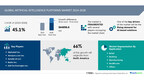
NEW YORK, Dec. 9, 2024 /PRNewswire/ — Report with market evolution powered by AI – The global artificial intelligence platforms market size is estimated to grow by USD 64.9 billion from 2024-2028, according to Technavio. The market is estimated to grow at a CAGR of 45.1% during the forecast period. Rising demand for ai-based solutions is driving market growth, with a trend towards increasing interoperability among neural networks. However, rise in data privacy issues poses a challenge. Key market players include Alphabet Inc., Amazon.com Inc., Amelia US LLC, Baidu Inc., Dell Technologies Inc., Hewlett Packard Enterprise Co., Infosys Ltd., Intel Corp., International Business Machines Corp., Microsoft Corp., Nuance Communications Inc., NVIDIA Corp., Palantir Technologies Inc., Qualcomm Inc., Salesforce Inc., SAP SE, SAS Institute Inc., ServiceNow Inc., Tata Consultancy Services Ltd., and Wipro Ltd., Google, Amazon Web Services, Ayasdi, Absolutdata..
AI-Powered Market Evolution Insights. Our comprehensive market report ready with the latest trends, growth opportunities, and strategic analysis- View Free Sample Report PDF
Forecast period
2024-2028
Base Year
2023
Historic Data
2018 – 2022
Segment Covered
Application (Retail, Banking, Manufacturing, Healthcare, and Others), Deployment (On-premises and Cloud-based), Geography (North America, APAC, Europe, South America, and Middle East and Africa), Component, Tools, Service and End-User.
Region Covered
North America, APAC, Europe, South America, and Middle East and Africa
Key companies profiled
Alphabet Inc., Amazon.com Inc., Amelia US LLC, Baidu Inc., Dell Technologies Inc., Hewlett Packard Enterprise Co., Infosys Ltd., Intel Corp., International Business Machines Corp., Microsoft Corp., Nuance Communications Inc., NVIDIA Corp., Palantir Technologies Inc., Qualcomm Inc., Salesforce Inc., SAP SE, SAS Institute Inc., ServiceNow Inc., Tata Consultancy Services Ltd., and Wipro Ltd, Google, Amazon Web Services, Ayasdi, Absolutdata.
Key Market Trends Fueling Growth
In the modern business landscape, interoperability between computer systems is essential for enterprises. The inability of different data science tools and frameworks, particularly those using neural networks, to communicate with each other is a significant barrier to the widespread adoption of Artificial Intelligence (AI). To tackle this issue, major tech companies including AWS, Facebook, and Microsoft collaborated to create the Open Neural Network Exchange (ONNX) in 2017. ONNX is a standard format designed to enable the transfer of fully trained deep learning (DL) models between various frameworks, eliminating the need for developers to build neural networks from scratch for each one. For instance, developers may prefer using PyTorch for image processing tasks but choose Apache MXNet for data collection. ONNX’s benefits include framework interoperability and shared optimization, which streamline the development and execution of neural networks’ computation graphs. The growth of the global AI platforms market is expected to be driven by the increasing importance of ONNX as the standard runtime for various industry players, from researchers to edge device manufacturers, leading to increased innovation in AI.
Artificial Intelligence (AI) is revolutionizing various industries by automating tasks, enhancing decision-making, and providing personalized experiences. In Digital Technologies, AI software powers data mining, machine learning, and pattern identification for business intelligence. Healthcare benefits from AI in medical imaging analysis, drug discovery, and patient care. AI also transforms Finance through algorithmic trading, fraud detection, and credit risk assessment. Industry adoption of AI is expanding in sectors like Food and Beverages, Banking, and Manufacturing. AIaaS (Artificial Intelligence as a Service) and Cloud Computing Platforms offer cost-effective solutions. However, challenges include complex implementation, integration, and high costs. Ethical considerations, data privacy, and security concerns are crucial. AI brings operational efficiency, product innovation, and improved customer experience. In Finance, AI powers conversational AI interactions through Intelligent Virtual Assistants and Chatbots using Natural Language Processing and Speech Recognition. AI is revolutionizing industries, but businesses must weigh the potential ROI against the uncertainty and costs.
Insights on how AI is driving innovation, efficiency, and market growth- Request Sample!
Market Challenges
Artificial Intelligence (AI) platforms have gained significant attention in business due to their ability to process large volumes of data quickly and automate tasks. However, the adoption of AI solutions comes with concerns surrounding data privacy and security. The risk of information leakage and misuse is high in AI applications, leading to potential legal and security ramifications. These issues include organizational infrastructure, access control, identity management, risk management, regulatory and legislative compliance, auditing, and logging. Data privacy is a growing concern as AI systems rely on high volumes of data for insights. The credibility and source of data are crucial to ensure the accuracy and relevance of insights. The emergence of advanced AI systems has increased the importance of data privacy. The European Union’s General Data Protection Regulation (GDPR) is an example of a regulation that requires companies to ensure the privacy and legal use of data. The increasing adoption of cloud-based solutions also poses security risks. Cyber attackers can easily access cloud-based data storage systems due to their open architecture and shared resources. Data security breaches and data loss are potential risks in public cloud architecture. Additionally, businesses outsourcing their IT functions to reduce costs have less control over data management, increasing the risk of data breaches. The reliability of data sources and trust are essential for obtaining qualitative data. Data quality and Machine Learning (ML) approaches to data processing significantly impact decision-making within companies. AI’s cognitive capabilities enable it to learn from data and implement this learning in future actions. Data quality can significantly impact AI’s learning capabilities. For instance, Microsoft’s Tay chatbot is an example of how an algorithm’s decision-making capability can be reshaped by the data provided. The COVID-19 pandemic has further increased cybersecurity and data privacy risks for businesses. With the rapid deployment of remote-working solutions, hackers are attempting to exploit the weaknesses of organizations due to reduced IT staffing. Growing data regulations and privacy concerns discourage companies from integrating AI platforms with their business operations. These factors are expected to hinder the growth of the global AI platforms market during the forecast period.Artificial Intelligence (AI) platforms are revolutionizing industries by enabling automation, process optimization, and product innovation. However, industry adoption faces challenges. In sectors like Banking, Business Intelligence, and Customer Experience, AI platforms offer significant benefits, but complexities like regulatory support, ethical considerations, data privacy, and security concerns persist. In Finance, AI solutions are transforming operations, but high implementation costs and uncertain ROI remain hurdles. In contrast, Medical Imaging Analysis, Drug Discovery, and Autonomous Systems are seeing impressive results, despite challenges in industry-specific AI solutions, complex integration, and AIaaS in Cloud Computing Platforms. Large Enterprises and AI start-ups alike are investing in AI platforms, with Google Maps, Aerospace, Security & Surveillance, and CPU industries adopting AI for competitive advantages. Challenges include automation, conversational AI interactions via Intelligent Virtual Assistants and Chatbots, and Natural Language Processing, Speech Recognition, and Conversational AI interactions. Despite these challenges, AI platforms deliver business value through AI solutions and frameworks, improving operational efficiency, enhancing customer experience, and driving product innovation.
Insights into how AI is reshaping industries and driving growth- Download a Sample Report
Segment Overview
This artificial intelligence platforms market report extensively covers market segmentation by
Application 1.1 Retail1.2 Banking1.3 Manufacturing1.4 Healthcare1.5 OthersDeployment 2.1 On-premises2.2 Cloud-basedGeography 3.1 North America3.2 APAC3.3 Europe3.4 South America3.5 Middle East and AfricaComponentToolsServiceEnd-User
1.1 Retail- Artificial Intelligence (AI) platforms enable businesses to develop, deploy, and manage intelligent applications. Major players in this market include IBM, Microsoft, Google, and Amazon Web Services. These companies offer various AI solutions such as machine learning, natural language processing, and robotics process automation. The global AI platforms market is expected to grow significantly due to increasing demand for automation and data analytics. Companies are investing in AI to enhance productivity, improve customer experience, and gain a competitive edge.
Download complimentary Sample Report to gain insights into AI’s impact on market dynamics, emerging trends, and future opportunities- including forecast (2024-2028) and historic data (2018 – 2022)
Research Analysis
Artificial Intelligence (AI) platforms are transforming various industries by enabling advanced data processing, pattern identification, and decision-making capabilities. AI technologies, including machine learning and deep learning, are being adopted across sectors such as healthcare, food and beverages, banking, and aerospace, among others. In healthcare, AI is revolutionizing diagnosis and treatment plans through data mining and analysis. In the food industry, AI is used for supply chain optimization and product innovation. Digital technologies and the internet are key enablers of AI adoption, allowing for real-time data processing and analysis. AI software is being integrated into business intelligence systems to enhance customer experience and operational efficiency. The security & surveillance industry is leveraging AI for advanced threat detection and response. The CPU market is witnessing significant growth due to the increasing demand for powerful processors to support AI applications. Overall, AI is driving innovation and productivity across multiple industries.
Market Research Overview
Artificial Intelligence (AI) platforms are transforming various industries by enabling advanced data processing, pattern identification, and decision-making capabilities. AI is making significant strides in sectors like Healthcare, where it’s used for medical imaging analysis, drug discovery, and patient care. In Food and Beverages, AI is used for supply chain optimization and product innovation. Digital technologies, the Internet, and Data mining are the backbone of AI, with Machine Learning algorithms powering AI software. Cloud platforms are increasingly being used for AI as a Service (AIaaS), providing access to advanced AI solutions and frameworks. AI is revolutionizing industries like Banking with algorithmic trading, fraud detection, and credit risk assessment. Business Intelligence is being enhanced with AI-driven insights, while Customer Experience is being personalized with Intelligent Virtual Assistants and Chatbots. However, there are challenges to AI adoption, including Ethical Considerations, Data Privacy, and Security Concerns. Complexity and Integration Challenges can make implementation costly, and there’s uncertainty around the Return on Investment. Despite these challenges, AI platforms and solutions continue to deliver business value in areas like Automation, Process Optimization, and Industry-specific AI Solutions. Finance, Aerospace, Security & Surveillance, and Autonomous Systems are other industries benefiting from AI. AI is also being used in areas like Natural Language Processing, Speech Recognition, and Conversational AI interactions. The future of AI is bright, with advancements in areas like Regulatory Support, Personalization, and Regulatory Compliance. Despite the progress, there are still challenges to overcome, such as High Implementation Costs, Uncertain ROI, and the need for CPU-intensive processing power. AI platforms and frameworks continue to evolve, with Large Enterprises and AI start-ups driving innovation. Google Maps and other everyday applications are just the tip of the iceberg for AI’s potential. The future of AI is exciting, with endless possibilities for innovation and growth.
Table of Contents:
1 Executive Summary
2 Market Landscape
3 Market Sizing
4 Historic Market Size
5 Five Forces Analysis
6 Market Segmentation
ApplicationRetailBankingManufacturingHealthcareOthersDeploymentOn-premisesCloud-basedGeographyNorth AmericaAPACEuropeSouth AmericaMiddle East And AfricaComponentToolsServiceEnd-User
7 Customer Landscape
8 Geographic Landscape
9 Drivers, Challenges, and Trends
10 Company Landscape
11 Company Analysis
12 Appendix
About Technavio
Technavio is a leading global technology research and advisory company. Their research and analysis focuses on emerging market trends and provides actionable insights to help businesses identify market opportunities and develop effective strategies to optimize their market positions.
With over 500 specialized analysts, Technavio’s report library consists of more than 17,000 reports and counting, covering 800 technologies, spanning across 50 countries. Their client base consists of enterprises of all sizes, including more than 100 Fortune 500 companies. This growing client base relies on Technavio’s comprehensive coverage, extensive research, and actionable market insights to identify opportunities in existing and potential markets and assess their competitive positions within changing market scenarios.
Contacts
Technavio Research
Jesse Maida
Media & Marketing Executive
US: +1 844 364 1100
UK: +44 203 893 3200
Email: media@technavio.com
Website: www.technavio.com/
View original content to download multimedia:https://www.prnewswire.com/news-releases/artificial-intelligence-platforms-market-to-grow-by-usd-64-9-billion-2024-2028-driven-by-rising-ai-solution-demand-report-on-ais-market-transformation—technavio-302324991.html
SOURCE Technavio









 Technology2 days ago
 Technology5 days ago

 Technology4 days ago
 Technology5 days ago

 Technology4 days ago
 Technology4 days ago