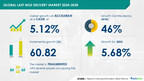
NEW YORK, Dec. 10, 2024 /PRNewswire/ — Report with market evolution powered by AI – The global last mile delivery market size is estimated to grow by USD 60.82 billion from 2024-2028, according to Technavio. The market is estimated to grow at a CAGR of 5.12% during the forecast period. Growing global e-commerce industry is driving market growth, with a trend towards strong focus on technological advances. However, operational challenges for last mile delivery companies poses a challenge. Key market players include Accenture Plc, CMA CGM SA Group, Deutsche Bahn AG, Deutsche Post AG, DSV AS, FarEye Technologies Inc., FedEx Corp., FM LOGISTIC CORP, Honeywell International Inc., Infosys Ltd., J B Hunt Transport Services Inc., Kuehne Nagel Management AG, Mara Labs Inc., Nippon Express Holdings Inc., Royal Mail Plc, Schneider Electric SE, SNCF Group, United Parcel Service Inc., Werner Enterprises Inc., and XPO Inc..
Key insights into market evolution with AI-powered analysis. Explore trends, segmentation, and growth drivers- View Free Sample PDF
Last Mile Delivery Market Scope
Report Coverage
Details
Base year
2023
Historic period
2018 – 2022
Forecast period
2024-2028
Growth momentum & CAGR
Accelerate at a CAGR of 5.12%
Market growth 2024-2028
USD 60.82 billion
Market structure
Fragmented
YoY growth 2022-2023 (%)
5.68
Regional analysis
APAC, North America, Europe, Middle East and Africa, and South America
Performing market contribution
APAC at 46%
Key countries
US, China, India, Germany, and UK
Key companies profiled
Accenture Plc, CMA CGM SA Group, Deutsche Bahn AG, Deutsche Post AG, DSV AS, FarEye Technologies Inc., FedEx Corp., FM LOGISTIC CORP, Honeywell International Inc., Infosys Ltd., J B Hunt Transport Services Inc., Kuehne Nagel Management AG, Mara Labs Inc., Nippon Express Holdings Inc., Royal Mail Plc, Schneider Electric SE, SNCF Group, United Parcel Service Inc., Werner Enterprises Inc., and XPO Inc.
Market Driver
The Last Mile Delivery market is experiencing significant trends as consumer expectations shift towards real-time tracking, on-demand services, and better customer experience. Urban congestion and sustainability considerations are driving the need for logistics process improvements, including route optimization, technology insights, and the use of autonomous vehicles and drones. E-commerce growth and the rise of peer-to-peer marketplaces are increasing the demand for efficient last mile logistics, from distribution centers to the customer’s doorstep. Brick-and-mortar retailers are also embracing omnichannel retailing and cloud kitchens, requiring seamless product delivery services. Companies are exploring various delivery options, from ground delivery vehicles and delivery robots like Scout, to shipping cost and shipping option considerations. The logistics market is evolving, with freight transportation companies and supply chain activities integrating warehousing, distribution, and fulfillment services to meet the needs of customers and retailers. Skilled workers, IT standards, and system integration are crucial for managing the complexities of last mile delivery, including the postal address system and expected delivery times. Transport costs, inventories, and financial costs are key areas of focus for companies looking to optimize their last mile delivery operations. Poor infrastructure and logistics costs remain challenges, but advancements in autonomous technology and non-autonomous technology are helping to address these issues. Overall, the last mile delivery market is a dynamic and evolving landscape, driven by consumer behavior, technology, and the ongoing growth of the e-commerce industry.
The last mile delivery market is witnessing a significant shift with the increasing use of advanced technology for real-time tracking and package management. Consumers can now easily modify their retail deliveries through user-friendly online tools, ensuring greater transparency and control. However, handling large or high-value packages poses a challenge as they cannot be delivered outside homes. To address this issue, delivery providers offer web and mobile applications for managing the delivery schedules of such packages, enabling customers to collect them at their convenience.
Request Sample of our comprehensive report now to stay ahead in the AI-driven market evolution!
Market Challenges
• Last Mile Delivery: Overcoming Challenges in E-commerce and Retail Last mile delivery refers to the final leg of a product’s journey from a distribution center or retail store to the customer’s doorstep. This critical phase presents several challenges for businesses, especially in the context of evolving consumer expectations and emerging technologies. Consumer expectations for real-time tracking, on-demand services, and quick delivery are on the rise. Urban congestion and sustainability considerations add complexity to last mile logistics. Companies must balance the use of autonomous vehicles, drones, and non-autonomous technology to optimize costs and improve customer experience. Brick-and-mortar retailers and e-commerce businesses face similar challenges in last mile delivery. Omnichannel retailing, cloud kitchens, and food delivery platforms require efficient route optimization and skilled workers to meet consumer demands. Technology insights, such as mobile applications, transportation hubs, and warehousing, play a crucial role in overcoming these challenges. However, poor infrastructure, logistics costs, and the postal address system can hinder progress. E-commerce industry growth, overseas market expansion, and trading activities add to the complexity of last mile delivery. Freight transportation companies and supply chain activities must adapt to meet the evolving needs of retailers and consumers. In conclusion, mastering last mile delivery is essential for businesses to remain competitive in today’s market. By addressing challenges related to consumer behavior, technology, logistics costs, and infrastructure, companies can provide better delivery services and enhance the overall customer experience.
• Last mile delivery operations present unique challenges for businesses, requiring transparency, efficiency, and profitability. While long-distance transportation costs are lower due to economies of scale, last mile delivery involves numerous individual deliveries within a region, leading to increased logistics costs. Major expenses include labor and fuel costs. Intense competition in the market is driven by pricing and delivery time, making cost reduction a priority for customers. Effective last mile delivery strategies focus on optimizing routes, leveraging technology, and collaborating with multiple delivery providers to minimize expenses and enhance customer satisfaction.
Discover how AI is revolutionizing market trends- Get your access now!
Segment Overview
This last mile delivery market report extensively covers market segmentation by
Service 1.1 B2C1.2 B2BApplication 2.1 FMCG2.2 E-commerce2.3 Retails2.4 OthersGeography 3.1 APAC3.2 North America3.3 Europe3.4 Middle East and Africa3.5 South America
1.1 B2C- The last mile delivery market refers to the transportation of parcels and goods from transportation hubs to consumers’ homes in a B2C context. This segment primarily deals with small and lightweight products, distinguishing it from B2B last mile delivery. With the in e-commerce sales, the significance of last mile delivery has escalated. For instance, US e-commerce sales as a percentage of total retail sales grew by 10% year-over-year from 2012 to 2021. However, the B2C last mile delivery sector poses challenges for operators due to the lack of large-volume deliveries and low-priced products, resulting in potentially low margins per delivery. Additionally, returns of goods may incur extra transportation costs. Despite these challenges, the global last mile delivery market has experienced growth in recent years, with the B2C segment leading the way. To cater to residential customers, last mile delivery services have introduced next-day, same-day delivery, and parcel return options. Real-time shipment tracking and package delivery status updates are also available to consumers. Major players in the market focus on improving the consumer experience through faster deliveries, easy returns, and data-driven strategies. DHL, for example, utilizes big data and real-time traffic information to optimize delivery routes for quicker deliveries, while others leverage historical consumer purchase data to dispatch forward inventory. These strategies enable lower fuel consumption and more efficient delivery routes, driving the growth of the B2C segment and the global last mile delivery market.
Download a Sample of our comprehensive report today to discover how AI-driven innovations are reshaping competitive dynamics
Research Analysis
Last Mile Delivery Market: Bridging the Gap between Retailers and Customers Last Mile Delivery (LMD) refers to the final leg of the supply chain, delivering goods from a transportation hub or distribution center to the customer’s doorstep. This critical phase of the logistics process faces unique challenges, including urban congestion, consumer expectations, and sustainability considerations. Consumer expectations for real-time tracking, on-demand services, and seamless experiences are shaping the LMD landscape. E-commerce and on-demand services are driving growth, with companies exploring various technologies such as autonomous vehicles, drones, and mobile applications to optimize routes and reduce costs. Urban congestion poses a significant challenge, with companies implementing route optimization and transportation hub strategies to mitigate delays. Sustainability considerations are also crucial, with companies focusing on reducing carbon emissions and adopting green logistics practices. Brick-and-mortar retailers and omnichannel retailers are leveraging cloud kitchens and food delivery platforms to streamline operations and meet customer demands. Peer-to-peer marketplaces and technology insights are disrupting traditional LMD models, while non-autonomous and autonomous technologies coexist to address various market needs. Company costs and shipping costs are critical factors influencing the LMD market, with companies constantly seeking innovative solutions to improve efficiency and reduce expenses. The LMD landscape is evolving rapidly, with a focus on enhancing the customer experience and ensuring timely, cost-effective, and sustainable delivery solutions.
Market Research Overview
The Last Mile Delivery Market refers to the final leg of the supply chain, where products are transported from a distribution center or transportation hub to the customer’s doorstep or retail store. Consumers expect fast, reliable, and cost-effective delivery, leading to the growth of on-demand services and real-time tracking. Urban congestion and sustainability considerations are driving the adoption of autonomous vehicles, drones, and non-autonomous technology like Scout delivery robots. The logistics process involves distribution centers, warehouses, and delivery vehicles, with route optimization and mobile applications streamlining the last mile delivery experience. E-commerce, food delivery platforms, and brick-and-mortar retailers are leveraging omnichannel retailing and cloud kitchens to meet customer demands. Technology insights, such as autonomous technology and IT standard system integration, are crucial for efficient last mile logistics. Company costs, shipping costs, and transport infrastructure are key factors influencing the market, with poor infrastructure and logistics costs posing challenges. The e-commerce industry’s growth, expected delivery times, and shipping options are shaping consumer behavior and trading activities, both domestically and overseas. Freight transportation companies and supply chain activities play a vital role in the last mile delivery market, with fulfillment services and skilled workers ensuring seamless product delivery services.
Table of Contents:
1 Executive Summary
2 Market Landscape
3 Market Sizing
4 Historic Market Size
5 Five Forces Analysis
6 Market Segmentation
ServiceB2CB2BApplicationFMCGE-commerceRetailsOthersGeographyAPACNorth AmericaEuropeMiddle East And AfricaSouth America
7 Customer Landscape
8 Geographic Landscape
9 Drivers, Challenges, and Trends
10 Company Landscape
11 Company Analysis
12 Appendix
About Technavio
Technavio is a leading global technology research and advisory company. Their research and analysis focuses on emerging market trends and provides actionable insights to help businesses identify market opportunities and develop effective strategies to optimize their market positions.
With over 500 specialized analysts, Technavio’s report library consists of more than 17,000 reports and counting, covering 800 technologies, spanning across 50 countries. Their client base consists of enterprises of all sizes, including more than 100 Fortune 500 companies. This growing client base relies on Technavio’s comprehensive coverage, extensive research, and actionable market insights to identify opportunities in existing and potential markets and assess their competitive positions within changing market scenarios.
Contacts
Technavio Research
Jesse Maida
Media & Marketing Executive
US: +1 844 364 1100
UK: +44 203 893 3200
Email: media@technavio.com
Website: www.technavio.com/
View original content to download multimedia:https://www.prnewswire.com/news-releases/last-mile-delivery-market-to-grow-by-usd-60-82-billion-2024-2028-driven-by-global-e-commerce-and-ai-redefined-market-landscape—technavio-302326236.html
SOURCE Technavio










 Technology3 days ago

 Technology4 days ago

 Technology4 days ago

 Coin Market4 days ago

 Technology4 days ago

 Technology4 days ago

 Coin Market3 days ago