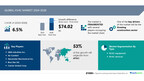
NEW YORK, Dec. 12, 2024 /PRNewswire/ — Report with the AI impact on market trends – The global HVAC market size is estimated to grow by USD 74.02 billion from 2024 to 2028, according to Technavio. The market is estimated to grow at a CAGR of almost 6.5% during the forecast period.
For comprehensive forecast and historic data on regions,market segments, customer landscape, and companies- Click for the snapshot of this report
Report Attribute
Details
Base Year
2023
Forecast period
2024-2028
Historic Data for
2018 – 2022
Segments Covered
Type (HVAC equipment and HVAC services), End-user (Non-residential and Residential), and Geography (APAC, Europe, North America, Middle East and Africa, and South America)
Key Companies Covered
ABM Industries Inc., Air Comfort, Alexander Mechanical Inc., Blue Star Ltd., Carrier Global Corp., Daikin Industries Ltd., EMCOR Group Inc., Emerson Electric Co., ENGIE SA, Ferguson plc, Fujitsu Ltd., Ingersoll Rand Inc., J and J Air Conditioning, Johnson Controls International Plc, Lennox International Inc., LG Electronics Inc., Nortek, Samsung Electronics Co. Ltd., Service Logic, Siemens AG, Carrier Corporation; Daikin Industries, Ltd.; Fujitsu; Haier Group; Havells India Ltd.; Hitachi Ltd.; Johnson Controls; LG Electronics; Lennox International Inc.; Mitsubishi Electric Corporation; Rheem Manufacturing Company; SAMSUNG; Trane
Regions Covered
APAC, Europe, North America, Middle East and Africa, and South America
Region Outlook
North AmericaEuropeAsiaRest of World
1. APAC – APAC is estimated to contribute 53%. To the growth of the global market. The HVAC Market report forecasts market growth by revenue at global, regional & country levels from 2017 to 2027.
The Asia Pacific (APAC) region is the largest market for Heating, Ventilation, and Air Conditioning (HVAC) systems, driven by factors such as population growth, unfavorable climatic conditions, and increasing urbanization. The expanding commercial construction sector, particularly in China and India, is the primary growth driver. Regulations and efficiency norms in these countries, including India and China, will further fuel market expansion during the forecast period. According to World Bank data, the population in APAC countries, including China and India, has grown significantly. For instance, China’s population increased from 1.40 billion in 2017 to 1.42 billion in 2023, and India’s population grew from 1.34 billion in 2017 to 1.38 billion in 2023.
For more insights on APAC’s significant contribution along with the market share of rest of the regions and countries – Download a FREE Sample
Segmentation Overview
Type 1.1 HVAC equipment1.2 HVAC servicesEnd-user 2.1 Non-residential2.2 ResidentialGeography 3.1 APAC3.2 Europe3.3 North America3.4 Middle East and Africa3.5 South America
Get a glance at the market contribution of rest of the segments – Download a FREE Sample Report in minutes!
1.1 Fastest growing segment:
The global HVAC market is experiencing significant growth due to various factors, including the increasing population and industrialization, rising construction expenditure, and increasing sales of commercial and residential buildings. The HVAC market can be segmented into three main categories: air conditioning, heating, and ventilation. In the air conditioning segment, heat pumps, air conditioners (ACs) for rooms, unitary ACs, and other types such as split, chillers, airside, packaged, variable refrigerant flow (VRF), window, and portable ACs are witnessing increased demand in both residential and non-residential buildings. Manufacturers are focusing on developing cost-effective and energy-efficient equipment that meets energy efficiency and green technology regulations. Additionally, there is a growing demand for eco-friendly and sustainable equipment that reduces chlorofluorocarbon (CFC) and hydrofluorocarbon (HFC) emissions. In the heating segment, heating equipment saves up to 80% more energy than fossil fuel-based systems, making it a popular choice worldwide. The extreme climatic conditions in North America and Europe are major drivers for heating equipment. The rise in construction activities and replacement demand in Europe and the Americas, along with increasing construction in developing countries such as China and India, is creating a significant demand for heating equipment. In the ventilation segment, the rise in construction activities in both residential and non-residential segments is driving the growth of the global HVAC market. Ventilation systems help maintain air quality and air temperature indoors by exchanging fresh air. The various types of ventilation equipment include different fans, heat recovery ventilation (HRV) units, and air handling units (AHUs). Fans, such as axial, centrifugal, cross-flow, domestic exhaust, and roof/attic fans, help maintain air circulation and temperature. HRV units swap the heat between inbound and outbound airflow, improving climate control and providing fresh air. AHUs help condition and circulate the air, comprising large metal boxes with blowers, heating or cooling elements, filter racks, sound attenuators, and dampers. In conclusion, the global HVAC market is experiencing growth due to the increasing demand for energy-efficient and eco-friendly equipment in both residential and non-residential sectors. The market can be segmented into air conditioning, heating, and ventilation, with each segment witnessing significant growth due to various factors. Manufacturers are focusing on developing cost-effective and energy-efficient equipment that meets energy efficiency and green technology regulations while reducing CFC and HFC emissions. The rise in construction activities, replacement demand, and extreme climatic conditions are major drivers for the growth of the global HVAC market.
Research Analysis
The HVAC system industry encompasses the design, manufacture, installation, and maintenance of heating, ventilation, and air conditioning systems for residential, commercial, and industrial buildings. HVAC systems provide climate control technologies essential for comfort and indoor air quality, addressing the challenges of climatic changes and energy consumption in the construction sector. Residential, commercial, and industrial buildings all require HVAC systems for heating, cooling, and energy-saving solutions. HVAC regulations, such as the SEER2 regulation and the phase-out of R-22 refrigerant, drive innovation in energy efficiency and the adoption of sustainable and smart HVAC systems, including A2L refrigerant, R-410 refrigerant, condensing boilers, ductless systems, and net-zero buildings. Affordable housing units and smart building solutions are increasingly adopting energy-saving HVAC technologies, reducing overall energy consumption and carbon emissions. Furnace systems, boiler systems, and smart HVAC systems are essential components of these solutions, ensuring comfort and efficiency while minimizing environmental impact. Climate control technologies continue to evolve, with a focus on energy efficiency, sustainability, and cost savings. HVAC systems play a crucial role in creating comfortable living and working environments while addressing the challenges of climatic changes and energy consumption in the construction sector.
Market Overview
The HVAC system industry encompasses the design, production, and installation of heating, ventilation, and air conditioning systems for residential, commercial, and industrial buildings. Climate control technologies have become increasingly important due to climatic changes and energy consumption concerns. The construction sector, population growth, and industrialization are major drivers of the HVAC market. Indoor air quality, energy efficiency, and thermal comfort are key considerations for both residential and commercial HVAC systems. Programmable thermostats, Internet of Things, and smart HVAC systems are gaining popularity for their energy-saving capabilities. VRF systems, heat pumps, air filters, and HEPA filters are essential components of modern HVAC systems. Green buildings and energy efficiency requirements are shaping the industry, with LEED certification and net-zero buildings leading the way. The HVAC market is also influenced by regulations such as SEER2 and the use of energy-saving products like R-410 refrigerant and A2L refrigerant. AI-based automated solutions, sustainable practices, and building codes are modern trends in the industry. The residential segment focuses on affordable housing units, while the commercial HVAC systems cater to commercial infrastructure. Energy-efficient solutions, sustainable practices, and environmental impact are crucial factors in the HVAC industry. HVAC regulations, cooling segment, ductless HVAC systems, and modern building practices are also significant areas of development. ChatGPT model can help answer queries related to HVAC systems, including AC, furnace systems, boiler systems, and ductless mini-split systems. The retrofit segment and real estate market are also influenced by the HVAC industry’s trends and innovations.
Start exploring market insights by Download a FREE Sample Report in minutes!
Key Topics Covered:
1 Executive Summary
2 Market Landscape
3 Market Sizing
4 Historic Market Size
5 Five Forces Analysis
6 Market Segmentation
7 Customer Landscape
8 Geographic Landscape
9 Drivers, Challenges, and Trends
10 Venodr Landscape
11 Vendor Analysis
11.1 Carrier Corporation
11.2 Daikin Industries, Ltd
11.3 Fujitsu
11.4 Haier Group
11.5 Havells India Ltd
11.6 Hitachi Ltd
11.7 Johnson Controls
11.8 LG Electronics
11.9 Lennox International Inc
11.10 Mitsubishi Electric Corporation
11.11 Rheem Manufacturing Company
11.12 SAMSUNG
11.13 Trane
12 Appendix
About Technavio
Technavio is a leading global technology research and advisory company. Their research and analysis focuses on emerging market trends and provides actionable insights to help businesses identify market opportunities and develop effective strategies to optimize their market positions.
With over 500 specialized analysts, Technavio’s report library consists of more than 17,000 reports and counting, covering 800 technologies, spanning across 50 countries. Their client base consists of enterprises of all sizes, including more than 100 Fortune 500 companies. This growing client base relies on Technavio’s comprehensive coverage, extensive research, and actionable market insights to identify opportunities in existing and potential markets and assess their competitive positions within changing market scenarios.
Contacts
Technavio Research
Jesse Maida
Media & Marketing Executive
US: +1 844 364 1100
UK: +44 203 893 3200
Email: media@technavio.com
Website: www.technavio.com/
View original content to download multimedia:https://www.prnewswire.com/news-releases/hvac-market-53-of-growth-to-come-from-apac-report-on-ai-driven-market-transformation—technavio-302328869.html
SOURCE Technavio







 Coin Market5 days ago

 Technology4 days ago


 Coin Market4 days ago

 Technology4 days ago

 Coin Market4 days ago

 Technology4 days ago

 Technology4 days ago