Connect with us

Technology

Semiconductor Market In Military And Aerospace Industry , 40% of Growth to Originate from North America, Technavio

Published

on

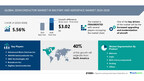
NEW YORK, Dec. 15, 2024 /PRNewswire/ — The global semiconductor market in military and aerospace industry size is estimated to grow by USD 3.02 billion from 2024 to 2028, according to Technavio. The market is estimated to grow at a CAGR of 5.56% during the forecast period.

For comprehensive forecast and historic data on regions,market segments, customer landscape, and companies- Click for the snapshot of this report

Report Attribute

Details

Base Year

2023

Forecast period

2024-2028

Historic Data for

2018 – 2022

Segments Covered

Product (Memory, Logic, MOS microcomponents, Analog, and Others), Application (Defense and Aerospace), and Geography (North America, APAC, Europe, Middle East and Africa, and South America)

Key Companies Covered

Advanced Micro Devices Inc., AKHAN Semiconductor Inc., AMS Technologies AG, Broadcom Inc., Digitron Semiconductors, GlobalFoundaries Inc., Infineon Technologies AG, Intel Corp., Microchip Technology Inc., Micron Technology Inc., Micross Inc., Northrop Grumman Corp., ON Semiconductor Corp., Qualcomm Inc., Raytheon Technologies Corp., Samsung Electronics Co. Ltd., SEMICOA, Semtech Corp., Skyworks Solutions Inc., Taiwan Semiconductor Manufacturing Co. Ltd., Teledyne Technologies Inc., Texas Instruments Inc., Toshiba Corp., and Vishay Intertechnology Inc.

Regions Covered

North America, APAC, Europe, Middle East and Africa, and South America

Region Outlook

North AmericaEuropeAsiaRest of World

1. North America – North America is estimated to contribute 40%. To the growth of the global market. The Semiconductor Market in Military and Aerospace Industry report forecasts market growth by revenue at global, regional & country levels from 2017 to 2027. 

The United States is a major player in the global semiconductor market and the North American military and aerospace industry. American semiconductor companies, with their financial positions, are at the forefront of identifying, manufacturing, and commercializing advanced technologies, such as 16 nm/14 nm Fin Field-Effect Transistors and FD-SOI. These innovations will generate significant demand for semiconductor components from industries like military and aerospace. Notably, The Taiwan Semiconductor Manufacturing Company recently secured approval to invest USD4 billion in North America, further solidifying the region’s position in the semiconductor industry.

For more insights on North America’s significant contribution along with the market share of rest of the regions and countries – Download a FREE Sample

Segmentation Overview

Product 1.1 Memory1.2 Logic1.3 MOS microcomponents1.4 Analog1.5 OthersApplication 2.1 Defense2.2 AerospaceGeography 3.1 North America3.2 APAC3.3 Europe3.4 Middle East and Africa3.5 South America

1.1 Fastest growing segment:

Semiconductor memory plays a crucial role in the military and aerospace industry due to the increasing use of processors in various devices. Random Access Memory (RAM) and Read-Only Memory (ROM) are the primary types of semiconductor memory. RAM is a volatile memory that provides temporary storage for program codes and data, while ROM is a non-volatile memory that saves data permanently. The introduction of advanced technologies, such as programmable read-only memory (PROM) and dynamic random-access memory (DRAM), has expanded the memory options. The military and aerospace industries are witnessing significant technological advancements, with global semiconductor manufacturers launching new processors for high-reliability applications. For instance, Teledyne e2v HiRel Electronics’ partnership with Integra Technologies Inc. To introduce 100V GaN/SiC RF power technology for aerospace and defense applications will further increase the demand for memory semiconductors. Additionally, the integration of technology in military weapons, such as Intelligun’s fingerprint-locking system, and the growing use of the Internet of Things (IoT) in the aviation and military sectors will propel the demand for memory chips in the industry.

Get a glance at the market contribution of rest of the segments – Download a FREE Sample Report in minutes!

Research Analysis

The semiconductor market in the military and aerospace industry is driven by the demand for advanced electronic systems in defense modernization and space exploration. Microchips and integrated circuits (ICs) made from pure elements like Silicon, Germanium, and compounds such as Gallium arsenide are essential for creating N-type and P-type semiconductors. The government sector is a significant consumer, with military expenditure fueling the demand for semiconductors in various applications. The communications sector, electronic devices sector, and consumer automotive sector also contribute to the market growth. The military and aerospace industry requires semiconductors that can withstand extreme conditions, such as those found in space. CAES (Computer Aided Engineering Systems) are used to design space-hardened microprocessors that can resist radiation effects and particle radiation in the space environment. Military applications include border security, terrorism detection, and UAV solutions, while defense budgets fund research and development of advanced technologies like Scalp missiles and the Rafale fleet’s F4 standard engines. The semiconductor industry continues to innovate to meet the unique demands of the military and aerospace sector.

Market Overview

The semiconductor market plays a crucial role in the military and aerospace industry, supplying microchips and integrated circuits (ICs) made of various elements such as silicon, germanium, compounds, gallium arsenide, and others. N-type and P-type semiconductors are essential for creating electronic systems for defense applications. The government sector, defense modernization, and military expenditure drive the demand for semiconductors in this industry. Military and aerospace applications require semiconductors that can withstand harsh environments, including space-hardened microprocessors for satellite launches and space activities. Radiation effects, including particle radiation, electromagnetic radiation, electronic noise, and signal spikes, are significant challenges for semiconductors in these applications. The military and aerospace industry’s semiconductor market caters to various sectors, including communications, electronic devices, border security, terrorism prevention, and UAV solutions. Semiconductors are used in defense systems, military aircraft like the Rafale fleet, and civilian aircraft such as Boeing 757s and 767s. They are also essential for display screens, logistics, aid packages, and museums. The semiconductor market for military and aerospace applications faces challenges such as long lead times and high acquisition costs. However, the growing need for global and information security, including protection against hacking incidents and connected devices, continues to drive demand for advanced semiconductor solutions.

Start exploring market insights by Download a FREE Sample Report in minutes!

Key Topics Covered:

 1 Executive Summary
 2 Market Landscape
 3 Market Sizing
 4 Historic Market Size
 5 Five Forces Analysis
 6 Market Segmentation
 7 Customer Landscape
 8 Geographic Landscape
 9 Drivers, Challenges, and Trends
10 Venodr Landscape
11 Vendor Analysis
12 Appendix

About Technavio

Technavio is a leading global technology research and advisory company. Their research and analysis focuses on emerging market trends and provides actionable insights to help businesses identify market opportunities and develop effective strategies to optimize their market positions.

With over 500 specialized analysts, Technavio’s report library consists of more than 17,000 reports and counting, covering 800 technologies, spanning across 50 countries. Their client base consists of enterprises of all sizes, including more than 100 Fortune 500 companies. This growing client base relies on Technavio’s comprehensive coverage, extensive research, and actionable market insights to identify opportunities in existing and potential markets and assess their competitive positions within changing market scenarios.

Contacts

Technavio Research
Jesse Maida
Media & Marketing Executive
US: +1 844 364 1100
UK: +44 203 893 3200
Email: media@technavio.com
Website: www.technavio.com/

View original content to download multimedia:https://www.prnewswire.com/news-releases/semiconductor-market-in-military-and-aerospace-industry–40-of-growth-to-originate-from-north-america-technavio-302331364.html

SOURCE Technavio

Continue Reading

Technology

IBM Unveils Its Most Advanced Quantum Computer in Chicago, Marking a Milestone for Illinois’s Quantum Future

Published

on

By

Hosted by the University of Chicago, IBM Quantum System Two is now operational at Hyde Park Labs and will be a prominent fixture of Illinois Quantum and Microelectronics Park (IQMP) upon the site’s completion.

IBM’s first quantum computer in Illinois extends the company’s industry and academic partnerships across the state, enabling the Illinois ecosystem and beyond to scale quantum algorithms and applications.

CHICAGO, Nov. 6, 2026 /PRNewswire/ — IBM (NYSE: IBM), the University of Chicago, the State of Illinois, and Illinois Quantum and Microelectronics Park (IQMP) today unveiled an IBM Quantum System Two in Chicago, IBM’s first quantum computer in Illinois and the company’s most advanced system available. Initially located at Hyde Park Labs and hosted by the University of Chicago, the system is fueled by IBM Quantum Nighthawk, the most powerful quantum chip IBM has ever built.

Today, organizations across Illinois are already working with IBM to explore how quantum computing can scale to computationally difficult challenges. The new system aims to catalyze the state’s robust ecosystem of scientists, universities, national laboratories, startups, and enterprises, many of whom are collaborating with IBM in Chicago within IQMP’s National Quantum Algorithm Center (NQAC) to develop the next generation of algorithms and applications. As the anchor system of NQAC, which was established in 2024 by Illinois Governor JB Pritzker with IBM as a leading member, the new quantum computer will ultimately be moved to IQMP, a first-of-its-kind campus in Chicago currently being built to develop and scale quantum technology and microelectronics innovation.

“IBM is proud to deploy our first quantum computer of IQMP — an IBM Quantum System Two. Today, it can deliver scientifically useful results to organizations across the state of Illinois and beyond,” said Arvind Krishna, Chairman and CEO, IBM. “As IBM’s first quantum computer in Illinois, the system’s deployment marks a milestone for Illinois’ quantum community and builds on IBM’s partnerships across the state as we expand quantum research across academia and industries.”

“I want the next generation of breakthroughs to happen in Illinois and the jobs and opportunity that come with them to benefit the people of Illinois,” said Governor JB Pritzker. “With the unveiling of IBM’s Quantum System Two in Hyde Park, we are giving researchers and businesses the tool to turn big ideas into real-world solutions. With our growing partnership with IBM, we are building an industry that will give Illinoisans more career opportunities and build a future right here at home.”

“The presence of IBM’s first quantum computer in Illinois, the company’s most advanced system available, is a testament to what’s possible when partners across government, industry and academia work together toward a shared vision,” said Harley Johnson, CEO of the IQMP. “Today reflects the unique strength of Illinois’ quantum ecosystem. We’re thrilled to see IBM Quantum System Two at Hyde Park Labs while the Park is under construction, and we’re more energized than ever to welcome it to the IQMP, where it will anchor the National Quantum Algorithm Center and further establish Illinois as the global destination for quantum innovation.”

“The deployment of IBM’s Quantum System Two represents the culmination of a years-long partnership that brought together academia, government, and private industry to usher in a new generation of discovery. I am delighted that this machine is being unveiled here in Hyde Park, where our neighbors and community will have a view into the future,” said University of Chicago President Paul Alivisatos.

“IBM Quantum System Two brings another critical capability to Illinois’ growing quantum ecosystem and showcases the collaboration that makes our state such a draw,” said Illinois Economic Development Corporation President and CEO Christy George. “For companies developing quantum technologies and applications, access to advanced computing systems, leading researchers, and industry partners in one place is a powerful advantage. This investment strengthens Illinois’ position as a destination for companies looking to innovate, grow, and help shape the future of quantum computing.”

This new IBM Quantum System Two advances IBM’s mission to bring useful quantum computing to the world and extends the company’s commitment to advancing Illinois as a global epicenter for quantum innovation.

Since NQAC’s founding, IBM has helped grow the center into a hub within Chicago where industry leaders work side-by-side with IBM researchers to build quantum applications that can scale alongside technical progress in the field. This includes NQAC Grand Challenge participants Deloitte and AbbVie, who are working with IBM and Northwestern University to build quantum molecular simulation approaches for researchers engaging in drug discovery.

Other Grand Challenges participants working with IBM include EPRI and the University of Illinois Urbana-Champaign (U. of I.) to explore how quantum optimization algorithms could lead to more efficient power grids.

Additionally, research institutions and national labs such as Fermilab are working with IBM in Illinois to accelerate high-energy physics research with quantum and advance technologies for distributed quantum computing. 

IBM is also teaming with leading universities such as the University of Chicago and U. of I. to push technological progress in quantum computing. For example, IBM and the University of Chicago recently demonstrated quantum advantage over leading classical methods using an approach with guaranteed correctness.

Now, IBM’s quantum computing technology is being brought physically into Chicago. Through NQAC, the new quantum computer will empower Illinois’ quantum community to develop new algorithms and applications that will translate to real-world impact. And it will serve as a catalyst for developing Illinois’ current and future quantum workforce. Earlier this year, IBM announced it would establish the FutureNow Chicago center at the IQMP in partnership with City Colleges of Chicago, to bring 750 jobs to the region across AI, cybersecurity, data science, quantum computing and other technologies. 

With the arrival of IBM Quantum System Two, Chicago and the State of Illinois will be cemented as a leading destination for quantum innovation, industrialization, and workforce development.

Supporting Quotes

“IBM’s continued partnership and the unveiling of IBM Quantum System Two mark an exciting moment for the industry and our state’s quantum ecosystem,” said Brad Henderson, CEO of P33. “Deepening collaboration between industry, our universities, national labs, and state government is what sets us apart and further cements Illinois as a global leader in quantum technology.”

“We are proud to contribute the University of Illinois Urbana-Champaign’s expertise and decades of leadership in supercomputing alongside our higher education and corporate partners,” said Illinois Chancellor Charles L. Isbell, Jr. “As a public-serving university, Illinois’ mission is to advance education, research, and economic opportunity across the state, and we’re excited to engage in work that translates the brilliance of Illinois faculty into tangible, real-world impact that affirms the state of Illinois and Chicago as the epicenter of the next generation of technological progress.”

“This is a significant milestone in advancing Illinois’ quantum economy and turning our state’s world-class research capabilities into real-world economic opportunity,” said Illinois Department of Commerce and Economic Opportunity Director Kristin Richards. “Through the State’s leadership and strategic investments in quantum, we are building an ecosystem for long-term industry growth, new business investment, and high-quality jobs.”

About IBM

IBM is a leading global hybrid cloud and AI, and business services provider, helping clients in more than 175 countries capitalize on insights from their data, streamline business processes, reduce costs and gain the competitive edge in their industries. Thousands of governments and corporate entities in critical infrastructure areas such as financial services, telecommunications and healthcare rely on IBM’s hybrid cloud platform and Red Hat OpenShift to affect their digital transformations quickly, efficiently and securely. IBM’s breakthrough innovations in AI, quantum computing, industry-specific cloud solutions and business services deliver open and flexible options to our clients. All of this is backed by IBM’s legendary commitment to trust, transparency, responsibility, inclusivity and service. 

For more information, visit https://research.ibm.com. 

Media contacts: 

Brittany Forgione
IBM
Brittany.forgione@ibm.com

Erin Angelini
IBM
Edlehr@us.ibm.com

View original content to download multimedia:https://www.prnewswire.com/news-releases/ibm-unveils-its-most-advanced-quantum-computer-in-chicago-marking-a-milestone-for-illinoiss-quantum-future-302932368.html

SOURCE IBM

Continue Reading

Technology

Parliamentary Secretary Rochefort to participate in a milestone event

Published

on

By

HUNTSVILLE, ON, Nov. 6, 2026 /CNW/ — Pauline Rochefort, Parliamentary Secretary to the Secretary of State for Rural Development, on behalf of the Minister of Energy and Natural Resources, the Honourable Tim Hodgson, will take part in a forestry milestone event. Media availability will follow.  

Date: Monday, November 9, 2026

Time: 9 a.m. ET

All accredited media are asked to pre-register by emailing media@nrcan-rncan.gc.ca. Details on how to participate will be provided upon registration.

Follow Natural Resources Canada on LinkedIn

SOURCE Natural Resources Canada

Continue Reading

Technology

IDP Introduces Agent-Native System of Action, Unifying Humans and AI Agents in One Enterprise Workspace

Published

on

By

Powered by proprietary Universal Agent Protocol™ (UAP), IDP unifies AI agent development, reasoning, orchestration, customer intelligence and enterprise execution. Tim Dahle and Red Rock Auto Group report 2X the appointment conversion rate of traditional BDC operations.

CAPE CORAL, Fla., Nov. 6, 2026 /PRNewswire/ — IDP (ID Privacy AI), an agentic AI technology company, today introduced its Agent-Native System of Action, a unified enterprise platform that enables human employees and AI agents to share customer intelligence, coordinate workflows and execute business tasks across existing enterprise systems.

Powered by its proprietary Universal Agent Protocol™ (UAP), IDP combines AI agent development, intelligent reasoning, multi-agent orchestration, persistent customer intelligence and enterprise execution in one operating environment. 

Through MyIDP.app, employees and AI agents collaborate within a shared workspace while existing CRM, DMS, scheduling and communication platforms remain in place.

To learn more about IDP, its platform and solutions, visit https://www.tryidp.com. 

The announcement is supported by customer-reported results from Tim Dahle and Red Rock Auto Group, where Josh Worthington, Vice President of Operations, reports a 12% appointment conversion rate compared with approximately 6% through traditional BDC operations, representing twice the reported conversion rate.

“The difference with IDP has been incredible,” said Worthington. That’s double the conversion rate, and we’re accomplishing it with technology designed to actually execute the work.”

Solving Decades of Enterprise Fragmentation

“For decades, automotive software has been fragmented, leaving dealerships with disconnected data and workflows,” says Albert Thompson, Founder and CEO of IDP. “Adding standalone AI agents to this broken infrastructure only compounds the chaos. Instead of more disjointed tools, IDP’s Agent-Native System of Action connects existing investments through a universal execution layer.”

From AI Conversations to Completed Business Outcomes

For automotive retailers, the difference between conversational AI and operational execution is particularly visible in service scheduling.

An AI agent may successfully answer a customer’s call, but completing the request requires access to customer records, dealership policies, scheduling availability and operational systems.

When those systems remain disconnected, employees must manually complete or verify the work.

“Automotive AI providers often fail to connect customer conversations with execution,” Worthington noted. “Our previous platform couldn’t schedule appointments or generate tasks, forcing employees to manually review every interaction. Instead of eliminating work, it just created another system for them to babysit.”

IDP’s approach prioritizes completed business outcomes, including confirmed appointments, coordinated follow-up, exception handling and operational visibility.

Systems of record preserve business information. IDP’s System of Action coordinates the work.

Dealer Leadership Perspective: The Future of Automotive AI

As automotive retailers evaluate AI adoption, dealer leadership is increasingly focused on technologies that connect existing investments, support employees and deliver measurable operational value.

Paul Sansone Jr., Founder, Sansone Jr Auto Group 

“My advice to operators is simple: the train is already moving, and it’s moving fast. I really believe the dealerships that figure out how to combine great people with great technology are going to have a significant competitive advantage over the next several years.”

The Technology Behind IDP’s Agent-Native System of Action

IDP’s platform combines five complementary capabilities designed to support the lifecycle of enterprise AI agents, from development and deployment through reasoning, orchestration, execution and human collaboration.

Agent Studio: AI Agent Development and Management. IDP’s Agent Studio enables businesses to configure, deploy and manage AI agents across voice, SMS, email and web channels. Reusable agent configurations support business-specific workflows, operating policies and escalation requirements.Intelligent Reasoning and Multi-Agent Orchestration. IDP’s reasoning and orchestration capabilities are designed to interpret customer intent, apply shared context, coordinate multi-step workflows and delegate supported actions between agents and employees. Business rules and human oversight help govern execution.Universal Agent Protocol™ (UAP): Enterprise Execution. UAP is IDP’s proprietary business-action abstraction, orchestration and execution framework. It is designed to translate business objectives into authorized actions across supported CRM, DMS, scheduling and enterprise applications. Unlike connectivity protocols that primarily expose tools to AI applications, UAP addresses the additional requirements of coordinating business workflows, applying permissions, managing exceptions and verifying outcomes.Context Graph: Unified Customer Intelligence. IDP’s Context Graph connects available customer identity, vehicle relationships, website signals, communication history and operational events across supported systems. By combining existing records with available real-time signals, it creates a continuously enriched customer context that employees and agents can use throughout sales, service and ownership lifecycle interactions.MyIDP.app: The Human-Agent Enterprise Workspace. MyIDP.app provides a shared working environment where employees and AI agents can review conversations, coordinate tasks, guide agent behavior and manage exceptions. Employees can direct supported agent workflows and customer engagement while maintaining visibility into operational activity, using: Teach to provide guidance to agentsTell to direct supported actionsBlasts for configured customer outreach

“The future isn’t humans versus AI,” Thompson said. “It’s humans and AI working as one team. Employees should be able to teach agents, delegate work, understand what’s happening and step in when their judgment matters.”

Built in Automotive. Designed for Enterprise.

IDP’s technology has supported more than 130,000 booked automotive appointments, providing operating experience across customer engagement, scheduling and dealership workflows.The company has developed its platform within an automotive ecosystem that includes dealership groups, enterprise software integrations and OEM certification programs involving Nissan, INFINITI and Mitsubishi.IDP’s architecture is designed to support both its own AI agents and compatible third-party agent technologies, creating opportunities for enterprises and software partners to use shared intelligence and execution capabilities without replacing existing systems of record.The company is exploring applications beyond automotive, including retail, hospitality and home services, where fragmented software, customer engagement and workforce coordination present similar challenges.

Automotive retail provides a demanding proving ground for agent-native execution, with customer interactions spanning multiple systems, departments and communication channels.

“Automotive is where we’re building and proving this model, but the problem exists in almost every industry,” Thompson said. “The next major shift in enterprise software isn’t another CRM, another dashboard or another AI assistant. It’s a System of Action where humans and AI agents share the intelligence, authority and infrastructure to actually get things done.”

To learn more about IDP and the System of Action, visit https://tryidp.com. You can see the system in action, listen to sample calls, and work with an IDP AI agent to schedule a demo.

About IDP

IDP (ID Privacy AI) is an agentic AI technology company developing an Agent-Native System of Action for automotive retail and enterprise operations.

Its platform combines AI agent development, intelligent reasoning, multi-agent orchestration, proprietary Universal Agent Protocol™ (UAP), persistent customer intelligence through Context Graph, and human-agent collaboration through MyIDP.app.

IDP connects AI-powered voice, SMS, email and web engagement with existing enterprise systems and supported business workflows.

Headquartered in Cape Coral, Florida, IDP is advancing an operating model in which humans and AI agents share intelligence, coordinate actions and complete measurable business work.

Website: https://tryidp.com 

Media Contact:
Albert Thompson
Founder & CEO, IDP
albert@idprivacy.ai
443-370-9143

View original content to download multimedia:https://www.prnewswire.com/news-releases/idp-introduces-agent-native-system-of-action-unifying-humans-and-ai-agents-in-one-enterprise-workspace-302932276.html

SOURCE ID Privacy, Inc.

Continue Reading

Trending