12 years of participation underscore the Group’s growing presence in global cosmetics science
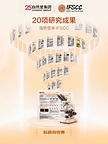
SHANGHAI and PERTH, Australia, Oct. 6, 2026 /PRNewswire/ — The 36th Congress of the International Federation of Societies of Cosmetic Chemists (IFSCC) was held in Perth, Australia, from September 28 to October 1. Building on its continued investment in skin science, ingredient science and product science, CHANDO Group participated in the global scientific gathering for the 12th consecutive year. A record 20 CHANDO Group research papers were accepted for this year’s Congress, placing the Group among the top five companies worldwide by number of accepted papers.
The IFSCC is widely regarded as the “Nobel Prize of the cosmetics industry,” with the research it recognizes reflecting the latest advances in cosmetic science and technology worldwide. Since first participating in 2015, CHANDO Group has had 79 research papers accepted by IFSCC over 12 years, helping bring Chinese beauty innovation to the forefront of the international scientific community. This track record reflects the comprehensive innovation ecosystem developed by CHANDO Group’s R&D Center over the past 25 years. The Group’s research spans three core scientific disciplines and is supported by four technology platforms, with capabilities extending from fundamental research through product development. This integrated approach helps translate scientific advances into skincare innovations with tangible consumer benefits.
Fundamental Research Driven by Real Consumer Needs
CHANDO Group believes the value of fundamental research extends beyond scientific publications: ultimately, research must translate into products that address real consumer needs. Among the 20 research papers accepted for this year’s IFSCC Congress, technologies from several studies have already been incorporated into products across multiple CHANDO Group brands. From Himalayan extremophile-derived ingredients and precision anti-fatigue aging to barrier repair, pigmentation management, scalp care, cleansing technology, fragrance and sensory science, and women’s intimate care, the Group’s research spans a broad range of skincare and personal well-being applications.
This work is supported by three core scientific disciplines. In skin science, research ranging from longitudinal cohort studies to epigenetic approaches to skin aging is deepening CHANDO Group’s understanding of Asian skin. In ingredient science, the Group is exploring distinctive Himalayan resources to develop a portfolio of proprietary core ingredients. In product science, consumer needs guide the continued evolution of product efficacy. Each research effort starts with a real consumer need, investigates it through fundamental research, and ultimately translates the findings into products, bringing cutting-edge research into the daily lives of hundreds of millions of consumers worldwide.
From Population Insights to AI-Powered R&D: Advancing Precision “Anti-Fatigue Aging”
Skin aging is a perennial focus of skincare research, but how aging occurs—and how best to address it—varies among populations. At this year’s IFSCC Congress, CHANDO Group presented its latest research conducted in collaboration with two leading Chinese institutions.
Historically, global skin-aging research has relied predominantly on Western study populations, leaving limited systematic longitudinal evidence on the characteristics, timing and contributing factors of skin aging among Chinese consumers. To help address this gap, CHANDO Group and the Shanghai Institute of Nutrition and Health of the Chinese Academy of Sciences conducted a two-year longitudinal cohort study quantifying facial skin phenotypes in a Chinese population. The study systematically compared facial-aging phenotype data collected from more than 5,000 Chinese participants over the five-year period from 2018 to 2023 and identified changes in the aging inflection points of six major types of wrinkles. The findings showed that facial wrinkle aging among Chinese women in recent years has tended to begin earlier, progress more rapidly and enter a period of accelerated aging sooner. [1]
The study also identified trends toward shorter sleep duration and earlier initiation of smoking and alcohol consumption, suggesting an increase in fatigue-related lifestyle patterns. For the first time, the researchers quantified the differing effects of insufficient sleep, smoking and alcohol consumption on specific types of wrinkles [1], finding significant associations between multiple fatigue-related lifestyle factors and the earlier appearance of facial wrinkles. These findings not only add to scientific understanding of skin aging among Chinese consumers but also support a shift from generalized anti-aging approaches toward what CHANDO Group describes as “precision anti-fatigue aging”—targeted interventions informed by specific lifestyle factors and wrinkle types.
Building on these insights into aging among Chinese consumers, CHANDO Group has applied AI to reshape its ingredient R&D process. Conventional active-ingredient discovery often relies on experience-based screening, making it time-consuming and inefficient. In collaboration with the ACRDC R&D Center at the Yangtze Delta Region Institute of Tsinghua University, CHANDO Group established an AI-driven peptide discovery platform. Using AI-powered computational biology, the platform screened and optimized candidates from more than 2.8 million yeast proteins, ultimately identifying the new ingredient HiMurchaSin™ Super Anti-Aging Peptide. By targeting PGC-1α, a key regulator of mitochondrial energy metabolism, the ingredient promotes mitochondrial biogenesis and energy production to support precision anti-fatigue aging. It has already been incorporated into the seventh generation of CHANDO’s Super Anti-Aging Little Purple Bottle, launched in April 2026.
CHANDO Group is also expanding its research in longevity science. Its latest study identified, for the first time in the skin of Chinese women, the epigenetic regulator microRNA-1290 as a key epigenetic “switch” involved in photoaging-related telomere depletion. Following UV exposure, microRNA-1290 was significantly upregulated, weakening telomere protection and accelerating skin aging. Treatment with a Himalayan-derived HiMurchaSin filtrate + lysate significantly reversed this effect, helping protect telomeres and delay photoaging. The findings provide scientific support for the underlying anti-aging activity of HiMurchaSin™ and point toward a more targeted, epigenetic approach to addressing skin aging.
Harnessing Himalayan Resources for Sustainable Skincare Innovation
At this year’s IFSCC Congress, CHANDO Group also presented its latest advances in ingredient science. The Himalayas are both the birthplace of the CHANDO brand and a foundation of its scientific research. Drawing on the region’s distinctive extremophile resources, CHANDO has developed an integrated ingredient-development process spanning ecological resource exploration and collection, green process development and scientific efficacy validation.
From yeast extracellular vesicles and yeast-derived PDRN to Saussurea laniceps callus and rose extracellular vesicles, a growing portfolio of innovative ingredients sourced from the Himalayas is continually expanding the possibilities of skincare science.
Yeast was an early focus of this research. Using distinctive microbial resources from the Himalayas, CHANDO Group developed a sustainable yeast-derived PDRN ingredient. Conventional PDRN is typically derived from salmon sperm, while the molecular structure of CHANDO Group’s yeast-derived PDRN more closely resembles human DNA and demonstrated stronger effects in promoting cell regeneration and collagen production. The ingredient has already been used in flagship products including CHANDO’s Super Anti-Aging Little Purple Bottle Essence Cream and Peptide Essence Long-Wear Cushion Foundation.
Plant callus culture technology also offers a sustainable way to harness rare high-altitude plants. CHANDO Group has developed Saussurea laniceps callus as the world’s first new skin-brightening ingredient derived from the Saussurea genus. Saussurea laniceps is a rare species native to high-altitude areas of the Himalayas and is classified in China as a nationally protected Class II endangered wild plant. With the required approval, CHANDO Group’s plant-ingredient R&D team used plant tissue culture technology to cultivate the material in the laboratory, overcoming the limitations of reliance on wild harvesting while enabling standardized, scalable production. Research showed skin-brightening activity at multiple levels, including cellular and protein levels [2], with multi-target inhibition of melanin production as well as antioxidant and skin-repair effects. The approach addresses limitations associated with conventional brightening ingredients that rely on a single target or high concentrations. Extracellular vesicles derived from high-altitude Rosa callus also exhibit multiple skincare activities, including barrier repair, anti-inflammatory and soothing effects, and protection against photoaging and loss of firmness. In addition, Nardostachys callus has demonstrated superior oil-control, hair-loss prevention and hair-follicle nourishment effects compared with wild-grown Nardostachys [3].
This approach enables consistent, scalable production of highly active ingredients without harvesting wild plants. As sustainability becomes an increasingly important priority for the global beauty industry, CHANDO Group is using callus culture technology to develop effective skincare ingredients while reducing reliance on wild plant resources.
In pigmentation management, CHANDO Group has focused on Asian consumers’ demand for safe, natural-looking skin brightening. A synergistic approach combining snow lotus callus with matsutake mushroom and niacinamide moves beyond conventional single-target brightening strategies, supporting gentler, more sustainable improvements in skin-tone evenness and radiance and providing a scientific basis for the development of safe and effective multi-ingredient brightening serums.
Beyond Facial Skincare: From Scalp Health to Fragrance and Sensory Science
CHANDO Group’s research now extends well beyond facial skincare into a broader range of personal-care and wellness applications.
At this year’s IFSCC Congress, the Group expanded its skin-science research into scalp care. Moving beyond conventional anti-hair-loss approaches based on broad-spectrum antimicrobial activity or a single probiotic, CHANDO Group proposed a new approach centered on maintaining microbial balance, using targeted modulation of the scalp microbiome to support anti-hair-loss efficacy. [4]
In women’s intimate care, CHANDO Group presented research from its recent expansion into women’s health. The Group investigated the use of probiotic extracellular vesicles to regulate the microbiome, exploring a gentle, safe and long-lasting approach to intimate care.
In facial and body cleansing, CHANDO Group addressed a familiar consumer concern: achieving effective cleansing without compromising the skin. The Group unveiled a new formulation technology combining a bicontinuous-phase system with selective cleansing to remove excess oils and impurities while preserving beneficial skin lipids. The concept positions cleansing not as the end of a skincare routine, but as its first step. The technology has already been applied across cleansing products from the CHANDO and Biorrier brands.
The research presented by CHANDO Group at this year’s IFSCC Congress also extends into the growing field of fragrance and sensory science. Working with university researchers, the Group is exploring how fragrance can move beyond sensory appeal to deliver measurable functional benefits. Addressing fatigue-related concerns including poor sleep and low energy, the Group has drawn on its Himalayan research—from Nyingchi peach blossom to Himalayan fir—to scientifically evaluate the effects of fragrance ingredients and investigate their potential contribution to physical and emotional well-being.
Advancing Chinese Beauty Innovation Through Technology
At the 2025 IFSCC Congress in Cannes, France, Chinese companies ranked second worldwide in oral presentations and first in poster presentations. That same year, China secured the right to host the 2032 IFSCC Congress, reflecting the growing international profile of Chinese cosmetics research.
As a leading Chinese beauty company with 12 years of participation in IFSCC, CHANDO Group has both witnessed and contributed to this evolution. From its first accepted paper to its 79th, and from Himalayan extremophile resources to AI-driven precision R&D, the Group has continued to bring original Chinese cosmetics research to the international scientific community through an integrated, independently developed R&D system.
CHANDO Group’s R&D Center combines independent research with global collaboration across fundamental research, ingredient development, formulation innovation and clinical validation, with a focus on three core disciplines: skin science, ingredient science and product science.
The acceptance of 20 CHANDO Group research papers at IFSCC 2026 in Perth marks another milestone in the Group’s R&D journey. Looking ahead, the Group will continue to increase its investment in research and development and pursue original scientific breakthroughs as it contributes to the evolution of China’s beauty industry from “Made in China” to “Created in China.”
[1] Findings from research jointly conducted by CHANDO Group and the Shanghai Institute of Nutrition and Health, Chinese Academy of Sciences
China National Radio report:
https://www.cnr.cn/shanghai/tt/20260424/t20260424_527598222.shtml?f_link_type=f_linkinlinenote&flow_extra=eyJpbmxpbmVfZGlzcGxheV9wb
3NpdGlvbiI6MCwiZG9jX3Bvc2l0aW9uIjowLCJkb2NfaWQiOiI0ZTZjMDZjNGE2YWNlZDQ3LTBkMTJjNWFhNDJmNDY5ZmUifQ%3D%3D&use_xbr
idge3=true&loader_name=forest&need_sec_link=1&sec_link_scene=im&theme=light
[2] SHU H, WANG L, TANG X, et al. Construction of a scalp microecological balance-oriented anti-hair loss system. International Federation of Societies of Cosmetic Chemists (IFSCC) Congress 2026, Perth, Australia. 2026. Poster No. 1067.
[3] LI H, REN H, QU Y, et al. Glacial water culture optimizes sustainable production of Saussurea laniceps callus: From phytochemical composition to in vitro/in vivo efficacy validation. International Federation of Societies of Cosmetic Chemists (IFSCC) Congress 2026, Perth, Australia. 2026. Poster No. 734.
[4] LI H, REN H, ZHOU Q, et al. Tissue culture-based sustainable development of Nardostachys jatamansi callus: Extract preparation and comprehensive evaluation of hair care potentials. International Federation of Societies of Cosmetic Chemists (IFSCC) Congress 2026, Perth, Australia. 2026. Poster No. 733.
View original content to download multimedia:https://www.prnewswire.com/apac/news-releases/chando-group-presents-20-research-papers-at-ifscc-2026-congress-in-perth-302899227.html
SOURCE CHANDO GROUP









 Technology4 days ago
 Technology3 days ago

 Technology2 days ago
 Coin Market5 days ago
 Coin Market4 days ago
 Coin Market5 days ago
 Technology3 days ago