Connect with us

Technology

ISS National Lab Enables Record-Breaking Year of Space-Based Scientific Results

Published

on

More than 50 peer-reviewed articles published in fiscal year 2024, bringing all-time number to nearly 450

KENNEDY SPACE CENTER, Fla., Jan. 9, 2025 /PRNewswire/ — The International Space Station (ISS) National Laboratory pushed scientific boundaries and set a record in scholarly output over the past year. Results from these investigations address real-world challenges and benefit Earth’s economy.

In fiscal year 2024 (October 1, 2023-September 30, 2024), more than 50 peer-reviewed articles related to ISS National Lab-sponsored research were published, bringing the all-time number to nearly 450. These findings lay a robust foundation for ongoing scientific advancements that promise significant benefits for humanity. Several groundbreaking results were featured in three new issues of Upward, official magazine of the ISS National Lab, highlighting the broad impact of research in space to improve the lives of people on Earth.

The following list details some of the most transformative investigations, underscoring their potential to drive further innovation and valuable applications.  

Top ISS National Lab-Related Scientific Results Highlighted in 2024

      1. Biomedical Advances: 3D Printing of Human Heart Tissue

Redwire Corporation utilized its BioFabrication Facility (BFF) on the ISS to 3D print live human heart tissue. This achievement moves us closer to producing complex human tissues in space to treat damaged tissue in people on Earth, potentially revolutionizing medical treatments for many conditions.

       2. Materials Science: Manufacturing Optical Fibers

Flawless Photonics produced more than 11 kilometers of ZBLAN optical fiber onboard the ISS, including a record-setting single pull that was more than a kilometer long. This production showcases the potential for creating superior optical fibers in microgravity, which could enhance telecommunications and medical technologies on Earth.

       3. Global Monitoring: Advanced Hyperspectral Imaging

Orbital Sidekick validated its cutting-edge hyperspectral imaging technology to monitor ecological changes and potential environmental disasters from space. This validation was a crucial step for the company to offer real-time global monitoring services that provide customers with a powerful tool to solve their most pressing challenges.

       4. Agricultural Innovations: Genetic Studies in Microgravity

Clemson University research into cotton genetics under microgravity conditions uncovered new methods to enhance crop resilience and productivity, with potential applications that could benefit global agricultural practices.

       5. Neurological Insights: Studying Brain Organoids

Axonis Therapeutics grew brain organoids in space to test a new therapeutic for neurological conditions like Alzheimer’s, Parkinson’s, and spinal cord injury. The ability to self-assemble brain organoids from mature cells in space in just a few days compared to months on Earth highlights the unique benefits microgravity offers for biological research.

       6. Educational Outreach: ISS Mimic by Creatorspace

ISS Mimic, an educational product developed by Creatorspace, allows students to build a 1:100 scale model of the ISS that mimics the real-time movements of the space station using actual telemetry data. This product aims to enhance science, technology, engineering, and mathematics (STEM) education in schools, libraries, and museums.

       7. Fluid Dynamics Research: Bubbles Behavior Study 

An experiment from researchers at the University of Notre Dame investigated the fluid dynamics of bubble formation in microgravity. The research sought to gain a better understanding of how bubbles form and grow to improve biosensors that could be used for early and asymptomatic cancer detection.

       8. AstroRad: A Wearable Radiation Shield 

Tested by crew members on the ISS, the AstroRad vest is designed to protect astronauts from radiation during missions to the Moon and Mars. Feedback from the tests led to design tweaks improving the vest’s fit and mobility, enhancing astronaut safety.

       9. Orbital Oncology: 3D Tumor Cell Cultures in Space

MicroQuin grew 3D cultures of breast and prostate cancer cells in microgravity to better understand cancer cell behavior. The findings provided significant insights into cancer cell survival mechanisms and could lead to a therapeutic to treat all types of cancer.

       10. Preventing Post-Traumatic Osteoarthritis: Tissue Chips Studies in Microgravity

A Massachusetts Institute of Technology (MIT) study explored the potential of utilizing tissue chips in space to better understand the underlying causes of post-traumatic osteoarthritis (PTOA). The findings provided valuable insights into the biological mechanisms of PTOA, potentially leading to innovative therapeutic strategies.

       11. Testing New Technology: Astrobee Robots on Station

NASA’s free-flying Astrobee robots on the ISS have assisted with more than 150 investigations, many of which were sponsored by the ISS National Lab. One such project tested specialized microphone technology designed to identify anomalies in equipment by interpreting changes in sound. Another tested a new method to rendezvous with tumbling objects in space for satellite recovery efforts. The Astrobees are also helping inspire the next generation of scientists through MIT’s Zero Robotics program.

Laying the Groundwork for Future Innovation 
Results from ISS National Lab-sponsored investigations reflect the value of leveraging the unique environment of space to conduct high-impact research that cannot be replicated on Earth. These efforts advance our understanding of fundamental science and drive innovations that address practical challenges across healthcare, technology development, and beyond.

For detailed information and behind-the-scenes stories on results from ISS National Lab-sponsored investigations, subscribe to Upward. 

Download a high-resolution image for this release: Nanoracks External Platform 

About the International Space Station (ISS) National Laboratory:
The International Space Station (ISS) is a one-of-a-kind laboratory that enables research and technology development not possible on Earth. As a public service enterprise, the ISS National Laboratory® allows researchers to leverage this multiuser facility to improve quality of life on Earth, mature space-based business models, advance science literacy in the future workforce, and expand a sustainable and scalable market in low Earth orbit. Through this orbiting national laboratory, research resources on the ISS are available to support non-NASA science, technology, and education initiatives from U.S. government agencies, academic institutions, and the private sector. The Center for the Advancement of Science in Space™ (CASIS®) manages the ISS National Lab, under Cooperative Agreement with NASA, facilitating access to its permanent microgravity research environment, a powerful vantage point in low Earth orbit, and the extreme and varied conditions of space. To learn more about the ISS National Lab, visit our website.

As a 501(c)(3) nonprofit organization, CASIS® accepts corporate and individual donations to help advance science in space for the benefit of humanity. For more information, visit our donations page.

Media Contact:

Patrick O’Neill 

904-806-0035

PONeill@ISSNationalLab.org  


International Space Station (ISS) National Laboratory

Managed by the Center for the Advancement of Science in Space, Inc. (CASIS)

1005 Viera Blvd., Suite 101, Rockledge, FL 32955 • 321.253.5101 • www.ISSNationalLab.org

View original content to download multimedia:https://www.prnewswire.com/news-releases/iss-national-lab-enables-record-breaking-year-of-space-based-scientific-results-302347261.html

SOURCE International Space Station National Lab

Continue Reading

Technology

Melody Party Offers Over 20,000 Songs and Adds More Than a Thousand New Tracks Monthly, Enhancing Its Online Karaoke Experience

Published

on

By

SEOUL, South Korea, Oct. 27, 2026 /PRNewswire/ — Melody Party is a music social app featuring a variety of activities, including Mic Grab, Artist Mafia, and Singing Battle. Through its online karaoke feature, SING A SONG, the app brings the traditional karaoke experience online, removing time and location constraints and offering a music experience that combines real-time singing with social interaction.

SING A SONG features an extensive library of more than 20,000 songs, with over a thousand new songs added every month. Its diverse selection includes popular K-pop tracks, classic Korean songs, and karaoke favorites. The feature offers a free-use model, allowing users to start singing their chosen songs without paying a separate fee. This helps reduce the time and cost associated with visiting traditional coin-operated karaoke venues, making it easier to enjoy singing as part of everyday life.

In terms of functionality, SING A SONG supports pitch adjustment and independent volume controls for vocals and accompaniment, allowing users to customize their singing experience according to their preferences. Users can also create online karaoke rooms, invite friends to sing together in real time, and enjoy voice chat and social interaction.

By continuously expanding its song library and offering diverse music-based interactive experiences, Melody Party continues to strengthen its music ecosystem. Through SING A SONG, the platform aims to create an accessible, highly interactive online music social space.

View original content to download multimedia:https://www.prnewswire.com/apac/news-releases/melody-party-offers-over-20-000-songs-and-adds-more-than-a-thousand-new-tracks-monthly-enhancing-its-online-karaoke-experience-302920097.html

SOURCE Melody Party

Continue Reading

Technology

Drawing new strength from 20-year legacy, IAACA calls on global counterparts to join annual conference to fortify integrity

Published

on

By

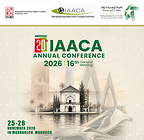
MARRAKECH, Morocco, Oct. 27, 2026 /PRNewswire/ — The International Association of Anti-Corruption Authorities (IAACA), an independent and non-political anti-corruption organisation with over 190 member anti-corruption authorities (ACAs) worldwide, will co-host IAACA Annual Conference 2026 in Marrakech, Morocco next month together with the Independent Commission Against Corruption of Hong Kong, China (ICAC) and the National Authority for Probity, Prevention and Fight Against Corruption of Morocco (INPPLC) to chart a path for the global graft fight and explore cutting-edge approaches to tackle emerging corruption challenges.

Themed “Building on 20 Years of Legacy: Drawing Strength from the Past, Guarding Global Integrity for the Future”, the international event will not only mark the 20th anniversary of the IAACA, but also provide a dynamic forum for IAACA members to exchange insights and enhance co-operation.

Calling on international counterparts to participate in the conference scheduled for November 25, IAACA President Mr Woo Ying-ming, who also serves as ICAC Commissioner, said that “As the IAACA marks its 20th anniversary, the conference will bring together global anti-corruption community at a pivotal moment for collective action. I anticipate that the valuable insights and new approaches generated through the international synergy will chart a resilient strategic path for us to navigate integrity risks and draw strength from our shared legacy to guard global integrity for generations to come.”

During the conference, renowned international experts from the United Nations Office on Drugs and Crime (UNODC), Basel Institute on Governance, the International Anti-Corruption Academy, and global anti-corruption and law enforcement agencies and institutions will shed light on harnessing artificial intelligence in the fight against corruption, safeguarding integrity within global climate and biodiversity frameworks and analysing global corruption measurement and systemic effectiveness.

Following the conference, the ICAC, the INPPLC, the IAACA and the UNODC will co-organise a training seminar on leveraging AI in combating corruption.

While the ICAC and INPPLC will share how AI and new technology can reshape the future of anti-graft enforcement and corruption prevention, the UNODC will provide a global perspective on using AI models in financial crime investigations and addressing the operational relevance, legal robustness and adaptability across jurisdictions.

For details of the conference and training, please visit:
https://www.icac.org.hk/icac/iaaca-morocco-2026/index.html

View original content to download multimedia:https://www.prnewswire.com/apac/news-releases/drawing-new-strength-from-20-year-legacy-iaaca-calls-on-global-counterparts-to-join-annual-conference-to-fortify-integrity-302920101.html

SOURCE International Association of Anti-Corruption Authorities (IAACA)

Continue Reading

Technology

Viettel moves 100 million subscribers to home-grown cloud-native charging in three months – with zero downtime

Published

on

By

HANOI, Vietnam, Oct. 27, 2026 /PRNewswire/ — Viettel High Technology Industries Corporation (Viettel High Tech), part of Viettel Group, has migrated more than 100 million subscribers and some 5,000 tariff plans at Viettel, Vietnam’s largest mobile operator, to vOCS 4.0, its in-house cloud-native charging system. The three-month cutover ran on a live national network with no service disruption.

Replacing a charging system is one of the riskiest projects an operator can undertake, which is why many stick with legacy platforms. Viettel High Tech reduced the risk through real-time data synchronization, parallel running and a phased cutover, with instant rollback at every stage.

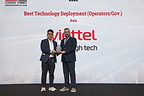
The project won the Telecom Review Excellence Awards 2026 prize for Best Technology Deployment in Asia, a first for a Vietnamese company.

What it means for operators:

Scale: more than 300,000 transactions per second at latency below 5 milliseconds, across 2G–5G and fixed services on one platformLower cost: up to 50% less hardware investment than the previous generation, by sharing infrastructure with the networkAgility: new tariff plans in hours instead of days, new features three times faster and deployments about 30% fasterResilience: two active data centers about 2,000 km apart and automatic recovery in under two minutes

Viettel High Tech developed every core layer in-house, from a telecom-grade cloud-native platform and NFV-MANO orchestration to real-time charging, subscriber and balance management.

“Passing rigorous tests of real-time self-diagnosis and self-recovery is what allows an operator to keep its promise of 24/7 service to customers,” said Luu Manh Ha, CEO of Viettel Networks, which operates the system on Viettel’s network in Vietnam. “Above all, owning the charging system means an operator is not dependent on foreign vendors – it safeguards digital sovereignty and preserves business flexibility.”

“The charging system is where an operator’s business strategy turns into revenue in real time,” said Nguyen Minh Quang, CEO of Viettel High Tech. “We believe vOCS 4.0 is ready to help operators worldwide capture the value of 5G and digital services.”

In 2017, vOCS 4.0’s predecessor, vOCS 3.0, replaced a foreign vendor’s platform for 90 million Viettel subscribers. Across both generations, vOCS serves more than 220 million subscribers in 11 countries. Viettel High Tech now offers vOCS 4.0 to operators worldwide.

View original content to download multimedia:https://www.prnewswire.com/apac/news-releases/viettel-moves-100-million-subscribers-to-home-grown-cloud-native-charging-in-three-months–with-zero-downtime-302920106.html

SOURCE Viettel Group

Continue Reading

Trending