Connect with us

Technology

Online Lottery Market in China to grow by USD 2.28 Billion (2024-2028); expanded online lottery access boosts growth, Report with AI-powered evolution – Technavio

Published

on

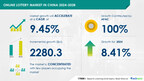
NEW YORK, Jan. 16, 2025 /PRNewswire/ — Report on how AI is driving market transformation – The online lottery market in china size is estimated to grow by USD 2.28 billion from 2024-2028, according to Technavio. The market is estimated to grow at a CAGR of  9.45%  during the forecast period. Increased reach of online lotteries is driving market growth, with a trend towards introduction of new types of lotteries. However, online scams and negative impacts  poses a challenge. Key market players include Baidu Inc., China Sports Lottery Operation and Management Co. Ltd., Gaming China, QQLotto, Shenzhen Yixun Sky Network Technology Co. Ltd., SINA Corp., and Zhaoqing Chuangwei Development Co. Ltd..

Key insights into market evolution with AI-powered analysis. Explore trends, segmentation, and growth drivers- View Free Sample PDF

Online Lottery Market In China Scope

Report Coverage

Details

Base year

2023

Historic period

2018 – 2022

Forecast period

2024-2028

Growth momentum & CAGR

Accelerate at a CAGR of 9.45%

Market growth 2024-2028

USD 2280.3 million

Market structure

Concentrated

YoY growth 2022-2023 (%)

8.41

Regional analysis

China

Performing market contribution

APAC at 100%

Key countries

China

Key companies profiled

Baidu Inc., China Sports Lottery Operation and Management Co. Ltd., Gaming China, QQLotto, Shenzhen Yixun Sky Network Technology Co. Ltd., SINA Corp., and Zhaoqing Chuangwei Development Co. Ltd.

Market Driver

The Chinese lottery market experienced significant growth in 2021, with sales reaching USD58.67 billion, a 10.8% increase from the previous year. The sports lottery segment accounted for the majority of these sales, which increased by 22% compared to 2020. AGTech Holdings’ Chinese subsidiary played a key role in this growth by supplying terminals to eight additional provincial sports lotteries. Innovation, safety, and regulatory compliance will continue to drive the market forward, leading to the introduction of new online lottery options and strengthening market expansion during the forecast period. 

The online lottery market in China is experiencing significant growth with various players offering lottery services. Technology plays a crucial role in this sector, with apps and websites providing convenience for customers. The use of secure technology ensures that transactions are safe and reliable. The market is also seeing an increase in the number of lottery types, including mobile lotteries and live draw lotteries. Decentralized lottery platforms are also gaining traction, offering transparency and security. Additionally, the integration of blockchain technology is expected to further enhance the market’s growth. The regulatory landscape is evolving, with stricter regulations being implemented to ensure fairness and transparency. Overall, the online lottery market in China is a dynamic and growing industry, offering exciting opportunities for businesses and consumers alike. 

Request Sample of our comprehensive report now to stay ahead in the AI-driven market evolution!

 Market Challenges

•         The online lottery market in China faces challenges from scams and inadequate regulations. Users receive fraudulent emails, leading them to pay taxes and fees for non-existent winnings. Fake websites mimic genuine lottery sites, while unregistered sellers peddle counterfeit tickets. Banning these sites is difficult due to URL changes. Addiction to lotteries can result in debt, depression, and crime, negatively impacting social and economic conditions. On average, gambling addicts have twice the debt of non-gamblers. These issues may hinder the growth of China’s online lottery market.

•         The online lottery market in China faces several challenges. Urbanization and the spread of the internet have increased the demand for lottery services. However, despite the growing market, there are regulatory issues. Desk top operations and lack of a unified lottery system make it difficult for companies to operate smoothly. Markets are segmented, with different regions having distinct rules and regulations. Digitalization is a key trend, with companies using technology to improve customer experience and increase sales. However, security concerns and the need for strict regulations pose challenges. Competition is intense, with many players vying for market share. Companies must differentiate themselves through innovative marketing strategies and superior customer service. The market is evolving rapidly, requiring companies to stay agile and adapt to changing regulations.

Discover how AI is revolutionizing market trends- Get your access now!

Segment Overview 

This online lottery market in China report extensively covers market segmentation by  

Device 1.1 Mobile1.2 DesktopProduct 2.1 Lotto2.2 Sports2.3 VLT2.4 Scratch cardGeography 3.1 APAC

1.1 Mobile-  The mobile segment of online lotteries in China is experiencing significant growth due to its ability to effectively target audiences with preferred games. Mobile users are more likely to become customers than desktop users, making smartphones an effective channel for increasing lottery penetration. Personalized campaigns based on user data and the availability of high-speed Internet enable engaging experiences and cross-selling opportunities, driving market growth. The increasing adoption of smartphones and Internet penetration in rural areas will further fuel this segment’s expansion.

Download a Sample of our comprehensive report today to discover how AI-driven innovations are reshaping competitive dynamics

Research Analysis

The Online Lottery Market in China is experiencing significant growth due to the increasing adoption of digital technologies among younger generations. International lotteries are now accessible through online platforms, allowing players to purchase tickets for draw-based games from the comfort of their homes or even remotest areas. The market is segmented into the Mobile segment and Desktop segment, with mobile lottery apps and mobile payment methods gaining popularity. The Lottery industry’s digitalization is transforming traditional retail locations into virtual lottery systems, making the Online lottery sub-segment a lucrative business decision. Internet penetration continues to expand, providing opportunities for Lottery companies to reach a broader audience. The Gaming sector is embracing digital tools to enhance user experience, further fueling the market’s growth. The Online lottery system is revolutionizing the Lotto sub-segment, offering convenience and accessibility to players.

Market Research Overview

The Online Lottery Market in China has experienced significant growth in recent years, driven by the increasing popularity of digital platforms and the convenience they offer. Lotteries in China are regulated by the China Welfare Lottery Center and the China Sports Lottery Center. The market consists of various types of lottery games such as number lotteries, instant win games, and sports lotteries. Technological advancements have led to the integration of mobile payments and live draw broadcasts, making online lottery playing more accessible and engaging for consumers. The market is also witnessing the adoption of advanced technologies like AI and blockchain to enhance security and transparency. Despite regulatory challenges, the market is expected to continue its growth trajectory due to the large population base and growing preference for digital channels.

Table of Contents:

1 Executive Summary
2 Market Landscape
3 Market Sizing
4 Historic Market Size
5 Five Forces Analysis
6 Market Segmentation

DeviceMobileDesktopProductLottoSportsVLTScratch CardGeographyAPAC

7 Customer Landscape
8 Geographic Landscape
9 Drivers, Challenges, and Trends
10 Company Landscape
11 Company Analysis
12 Appendix

About Technavio

Technavio is a leading global technology research and advisory company. Their research and analysis focuses on emerging market trends and provides actionable insights to help businesses identify market opportunities and develop effective strategies to optimize their market positions.

With over 500 specialized analysts, Technavio’s report library consists of more than 17,000 reports and counting, covering 800 technologies, spanning across 50 countries. Their client base consists of enterprises of all sizes, including more than 100 Fortune 500 companies. This growing client base relies on Technavio’s comprehensive coverage, extensive research, and actionable market insights to identify opportunities in existing and potential markets and assess their competitive positions within changing market scenarios.

Contacts

Technavio Research
Jesse Maida
Media & Marketing Executive
US: +1 844 364 1100
UK: +44 203 893 3200
Email: media@technavio.com
Website: www.technavio.com/

View original content to download multimedia:https://www.prnewswire.com/news-releases/online-lottery-market-in-china-to-grow-by-usd-2-28-billion-2024-2028-expanded-online-lottery-access-boosts-growth-report-with-ai-powered-evolution—technavio-302351376.html

SOURCE Technavio

Continue Reading
Click to comment

Leave a Reply

Your email address will not be published. Required fields are marked *

Technology

Hyundai Motor Group Executive Chair Euisun Chung Announces Physical AI Vision at San Francisco AI Summit

Published

on

By

Hyundai Motor Group shares roadmap for realizing its Physical AI vision and collaboration strategy with global tech leaders at the San Francisco AI SummitExecutive Chair Euisun Chung presented, “Hyundai Motor Group is evolving beyond the traditional boundaries of automotive manufacturing to become a Physical AI solution company,” adding, “The ultimate Physical AI vision we pursue is the realization of integrated intelligence at the city level”The Group to leverage manufacturing competitiveness and leading robotics capabilities centered on Boston Dynamics, while establishing a data flywheel system connecting real-world operational data with continuous AI model advancementThe Group to leverage strategic partnerships with global technology leaders, including NVIDIA and Waymo, as well as Boston Dynamics’ strategic partnership with Google DeepMindThe Group to collaborate with NVIDIA to develop a Robot Reference Platform that combines Hyundai Motor Group’s and NVIDIA’s Physical AI capabilities

… The initiative to support Korea’s Physical AI industry through an open ecosystem

The Group to cultivate strategic domestic hubs through investments in Saemangeum AI Valley and future advanced industries in Korea’s Yeongnam region

SAN FRANCISCO, July 25, 2026 /PRNewswire/ — Hyundai Motor Group (the Group) Executive Chair Euisun Chung today outlined the Group’s vision and strategy for Physical AI at the San Francisco AI Summit held in San Francisco, California.

The event brought together approximately 150 attendees, including Executive Chair Chung, business leaders from major Korean companies, executives from leading U.S. technology firms, startup representatives and students.

At the summit, Executive Chair Chung presented the Group’s roadmap for advancing Physical AI and outlined strategic collaboration plans with global technology leaders.

“Hyundai Motor Group is evolving beyond the traditional boundaries of automotive manufacturing by expanding into autonomous driving, robotics and AI Defined Factories, accelerating our transformation into a Physical AI solution company.” — Hyundai Motor Group Executive Chair Euisun Chung

Accelerating the Transition to a Physical AI Solution Company

Hyundai Motor Group’s Physical AI vision extends beyond intelligent devices such as vehicles and robots to intelligent spaces, including AI factories where AI seamlessly connects and optimizes entire operations. Ultimately, the Group envisions integrated intelligence at the city level, where urban infrastructure is organically connected and operated through AI.

A key differentiator for the Group is its ability to create a data flywheel that continuously connects real-world operations with AI advancement. Drawing on extensive experience in large-scale manufacturing, mobility, robotics and service operations, the Group is positioned to deploy, refine and scale Physical AI technologies in real industrial environments.

Executive Chair Chung also outlined strategic partnerships with leading technology companies, including NVIDIA and Waymo, as well as Boston Dynamics’ strategic partnership with Google DeepMind, to further advance Physical AI capabilities.

By combining Hyundai Motor Group’s manufacturing competitiveness, mobility and robotics technologies and extensive operational data with the AI infrastructure and algorithm capabilities of global technology leaders, the Group aims to help foster a new innovation ecosystem for the Physical AI era.

Executive Chair Chung also introduced initiatives designed to support the growth of Korea’s robotics and AI ecosystem, including the development of a Robot Reference Platform with NVIDIA that combines Hyundai Motor Group’s and NVIDIA’s Physical AI capabilities, as well as investments in initiatives such as the Saemangeum AI Valley.

Physical AI Vision: From Intelligent Devices to Integrated Intelligence at the City Level

During the summit, Executive Chair Chung presented Hyundai Motor Group’s Physical AI vision.

“The ultimate Physical AI vision Hyundai Motor Group pursues begins with intelligent devices such as vehicles and robots, expands to intelligent spaces such as AI factories, and ultimately realizes integrated intelligence at the city level, where urban infrastructure is seamlessly connected and operated.” — Hyundai Motor Group Executive Chair Chung

The Group’s vision begins with intelligent devices, where AI capabilities enhance vehicles and robots. It then expands to intelligent spaces, including AI factories where AI autonomously integrates logistics, production and quality management across entire operations.

Ultimately, Hyundai Motor Group envisions city-level intelligence, where critical infrastructure and assets — including energy, mobility and robotics systems — are connected and optimized in real time.

Executive Chair Chung also highlighted the Group’s key strengths in realizing its Physical AI vision:

World-class manufacturing competitiveness: Hyundai Motor Group has built extensive expertise through decades of operating global manufacturing facilities, managing quality systems and optimizing supply chains. This foundation enables the Group to apply AI technologies to products, processes and services while rapidly validating and scaling innovations in real-world environments.Leading robotics capabilities: Hyundai Motor Group has established robotics as a key pillar of its future business portfolio. Boston Dynamics’ quadruped robot Spot®, logistics robot Stretch®, and Hyundai Motor Group Robotics LAB’s next-generation mobile robot platform MobED are recognized for combining technological competitiveness with real-world applicability.

In particular, the humanoid robot Atlas® is emerging as a representative example of Physical AI, supporting and collaborating with people across manufacturing, logistics and mobility environments.

Establishing a data flywheel system: Hyundai Motor Group is establishing a data flywheel system that leverages data generated across manufacturing operations, vehicles, logistics systems and robotics demonstrations to continuously advance AI models. Enhanced algorithms are then reapplied to real-world operations, creating a virtuous cycle that improves performance and strengthens Physical AI capabilities.

Accelerating the Future of Physical AI Through Partnerships with Global Tech Leaders

Executive Chair Chung also outlined concrete initiatives to position Hyundai Motor Group as a leader in human-centered Physical AI through strategic collaborations with NVIDIA and Waymo, as well as Boston Dynamics’ strategic partnership with Google DeepMind.

“By combining Hyundai Motor Group’s strengths in manufacturing, robotics and data with the capabilities of global technology leaders, we can help create a new innovation ecosystem for the Physical AI era.” — Hyundai Motor Group Executive Chair Euisun Chung

NVIDIA – Advancing Physical AI infrastructure and talent development

Hyundai Motor Group is expanding collaboration with NVIDIA to strengthen Physical AI infrastructure and cultivate AI talent. Building on a supply agreement for 50,000 NVIDIA Blackwell GPUs and a memorandum of understanding signed last year to advance Korea’s Physical AI capabilities, the Group is pursuing a range of initiatives, including the establishment of Hyundai Motor Group Robot Application Center, as well as various collaborations aimed at strengthening Korea’s Physical AI infrastructure and AI talent ecosystem, including the NVIDIA’s AI Technology Center.

In manufacturing, the Group is leveraging NVIDIA’s platform to create more sophisticated digital twins of production facilities, enhancing process design, operational optimization and validation efficiency. The collaboration also includes the integration of NVIDIA’s autonomous driving solutions, including automotive semiconductors, sensors and architecture, with Hyundai Motor Group vehicle platforms.

Waymo – Strengthening autonomous driving collaboration

Hyundai Motor Group continues to strengthen its strategic partnership with Waymo in the autonomous driving sector to support the development of a safe and innovative autonomous driving ecosystem. Autonomous driving vehicles require a wide range of specialized capabilities, including redundant systems for steering, braking, power and communications, dedicated features such as power-operated doors, as well as enhanced functional safety and cybersecurity technologies.

Hyundai Motor Group plans to produce IONIQ 5 vehicles with specific autonomous-ready modifications at Hyundai Motor Group Metaplant America (HMGMA) in Georgia.

Google DeepMind – Accelerating next-generation humanoid robotics

Boston Dynamics has established a strategic partnership with Google DeepMind to accelerate the development of next-generation humanoid robots. Advanced AI models and training systems are essential for robots to perform complex tasks in real-world environments and collaborate effectively with people. Through this partnership, Boston Dynamics robots are expected to achieve greater autonomy and adapt more effectively to complex operating environments.

Hyundai Motor Group plans to establish a robot production facility in the U.S. with an annual capacity of up to 30,000 units by 2028. The Atlas humanoid robot will first be deployed at production facilities including HMGMA before broader deployment is expanded through phased validation.

Building an Open Ecosystem Through the Robot Reference Platform and Continued Investment in Korea’s Physical AI Future

Executive Chair Chung also outlined initiatives aimed at supporting the growth of Korea’s Physical AI ecosystem through open collaboration and continued investment.

“The outcomes of collaboration with global technology leaders should contribute to the growth of Korea’s Physical AI industry. To that end, Hyundai Motor Group plans to foster an open ecosystem that supports innovation in robotics and AI technologies.” — Hyundai Motor Group Executive Chair Euisun Chung

Key initiatives to build an open ecosystem for robotics and AI innovation include:

Robot Reference Platform: Hyundai Motor Group and NVIDIA are collaborating to develop a Robot Reference Platform that combines Hyundai Motor Group’s and NVIDIA’s Physical AI capabilities.

The platform will provide research robot models to universities, research institutes and startups, helping foster an open ecosystem that supports technological innovation and the development of Physical AI talent while contributing to the broader growth of Korea’s robotics and AI industries. 

Supporting universities, research institutes and startups: The Robot Reference Platform is expected to provide universities, research institutes and startups with a standardized hardware and software environment, enabling them to more easily develop and validate Physical AI technologies. The initiative aims to help address challenges faced by organizations with innovative ideas but limited access to commercialization opportunities and validation infrastructure.

Hyundai Motor Group is also continuing large-scale investments aimed at driving the next leap forward in Korea’s industrial and technology ecosystem. Continued investments in Korea’s industrial and technology ecosystem include:

Saemangeum AI Valley: In the Saemangeum region of Jeonbuk State, the Group is developing Saemangeum AI Valley, which includes an approximate KRW 9 trillion investment in AI data centers, robotics manufacturing clusters, electrolyzer plants and AI hydrogen city infrastructure. 

In particular, the robotics manufacturing cluster will serve not only as a production base for the Group’s own robotics products, but also as a robotics foundry that provides manufacturing services for small and medium-sized enterprises that lack manufacturing expertise.

Advanced industrial hubs in the Yeongnam region: Hyundai Motor Group plans to invest a total of KRW 42 trillion over the next decade to foster advanced industrial hubs focused on AI-driven manufacturing, future aerospace industries and sustainable energy infrastructure.

Through these initiatives, Hyundai Motor Group aims to strengthen key foundations for the Physical AI era, including data and energy infrastructure, robotics production capabilities and real-world validation capabilities. The Group also expects these investments to contribute to enhanced industrial competitiveness, balanced regional development, job creation and broader economic vitality in Korea.

About Hyundai Motor Group

Hyundai Motor Group is a global enterprise that has created a value chain based on mobility, steel, and construction, as well as logistics, finance, IT, and service. With about 250,000 employees worldwide, the Group’s mobility brands include Hyundai, Kia, and Genesis. Armed with creative thinking, cooperative communication, and the will to take on any challenges, we strive to create a better future for all.

More information about Hyundai Motor Group can be found at: http://www.hyundaimotorgroup.com or Newsroom: Media Hub by Hyundai, Kia Global Newsroom, Genesis Newsroom

View original content to download multimedia:https://www.prnewswire.com/news-releases/hyundai-motor-group-executive-chair-euisun-chung-announces-physical-ai-vision-at-san-francisco-ai-summit-302834557.html

SOURCE Hyundai Motor Company

Continue Reading

Technology

Tencent Brings Together AI and Games to Help Preserve and Share Cultural Heritage of New UNESCO Site in Jingdezhen

Published

on

By

Tencent applies AI and games to protect, reconstruct, and promote one of the world’s oldest porcelain traditions at newly inscribed UNESCO siteDigital initiatives create a new model for technology-driven heritage preservation globally using a multimodal AI dataset, AI-assisted artifact restoration, and interactive virtual experiences

SHENZHEN, China, July 25, 2026 /PRNewswire/ — Tencent (00700.HK) today announced the launch of Digital Jingdezhen: Porcelain Craft Adventure, an AI-powered cultural heritage game that enables users to explore Jingdezhen’s porcelain-making traditions and experience traditional craft techniques through interactive play. The launch coincides with the inscription of the Jingdezhen Handicraft Porcelain Industry Sites on the United Nations Educational, Scientific and Cultural Organization (UNESCO) World Heritage List.

Digital Jingdezhen is part of a broader cultural innovation initiative that applies Tencent’s AI and game technologies. Guided by Tencent’s vision of “Tech for Good”, the initiative leverages digital preservation to keep Jingdezhen’s thousand-year-old porcelain culture alive and relevant today, creating a living heritage with sustainable value and broad public engagement, and building a model that could be carried to heritage sites around the world.

Digital Preservation: Restoring and Unlocking Heritage with AI

Jingdezhen has a thousand years of living heritage; centuries of tradition are still active in its kilns today. To preserve this legacy, a cornerstone of the project was the Jingdezhen Porcelain Cultural Heritage Multimodal AI Dataset.

Over decades, historical records, heritage information, and craft specifications have accumulated into a massive volume of data. Tencent applied Optical Character Recognition (OCR), Natural Language Processing (NLP), and knowledge graph technologies to transform these dispersed materials into structured digital resources that can be analyzed, extracted, verified, and traced back to their original sources.

The dataset contains more than 30,000 documentary records, over 5,000 ceramic gene specimens, and data on nearly 1,000 representative ceramic artifacts in collections worldwide. It provides a digital foundation for cultural research, exhibition development, public interpretation and AI-powered heritage applications.

Building on this foundation, Tencent has developed a range of industry- and public-facing applications, including the Jingdezhen Ancient Ceramics Gene Database, the World Ceramics Interactive Map, and the Digital Jingdezhen AI Companion, providing researchers, heritage professionals, and the public with innovative AI-powered tools to explore and understand porcelain heritage.

Digital Activation: Bringing Jingdezhen’s Porcelain Heritage to Life Through AI and Games

To bring the public closer to Jingdezhen and its porcelain-making traditions, Digital Jingdezhen: Porcelain Craft Adventure utilizes AI-assisted Procedural Content Generation (PCG) to create the first large-scale digital recreation of the city’s five major porcelain heritage sites and historical production scenes. By rapidly mapping out town layouts and automatically generating architectural structures, decorative elements, and pedestrians, the technology brings Jingdezhen’s historic townscape back to life in the digital world.

The game also features high-quality AI digital humans built on large language models and the Jingdezhen Porcelain Cultural Heritage Multimodal AI Dataset. Through AI voice-driven facial expressions and Tencent Games’ proprietary animation technology, it creates warm, human-centered interactive experiences that make historical knowledge tangible and relatable. At the same time, AI-powered 3D generation allows users to quickly transform an uploaded image into a 3D porcelain form, lowering the barrier to participation and enabling anyone to turn creative inspiration into tangible ceramic forms in the digital space.

Continuing Heritage: Mobilizing the Community

Ensuring the longevity of Jingdezhen’s legacy requires active public participation. Tencent developed the Digital Heritage Guardian (Jingdezhen), a volunteer program built within the Weixin ecosystem. The program enables the public to support the upkeep and stewardship of physical heritage sites, creating a practical channel for community involvement in heritage protection.

“Our work in Jingdezhen is a testament to how ‘AI for Good’ can breathe new life into ancient traditions,” said Zhan Shu, Head of Digital Culture Lab, Tencent. “Working alongside dedicated heritage experts, we have contributed our capabilities in AI and digital technologies to unlock decades of dormant archives for this incredible new UNESCO site. We are proud to help bridge the gap between the thousand-year porcelain heritage and the digital era, creating new ways for the global public to connect with Jingdezhen’s living history, and a model for heritage sites worldwide.”

For media queries, please contact: gc@tencent.com

About Tencent

Tencent is a global technology and entertainment company focused on creating connections and experiences that matter. Founded in 1998, Tencent is driven by its mission to create “Value for Users” and apply “Tech for Good.”

Tencent’s communication and social services connect more than one billion people around the world, helping them to keep in touch with friends and family, access transportation, pay for daily necessities, and even be entertained. Tencent also develops and publishes some of the world’s most popular video games and other high-quality digital content, delivering rich and immersive interactive entertainment experiences. Tencent also offers a range of services such as cloud computing and other enterprise services to support our clients’ digital transformation and business growth. Headquartered in Shenzhen, Tencent has been listed on the Main Board of the Stock Exchange of Hong Kong since June 2004.

View original content:https://www.prnewswire.com/news-releases/tencent-brings-together-ai-and-games-to-help-preserve-and-share-cultural-heritage-of-new-unesco-site-in-jingdezhen-302834555.html

SOURCE Tencent

Continue Reading

Technology

Hyundai Motor Group Executive Chair Euisun Chung Announces Physical AI Vision at San Francisco AI Summit

Published

on

By

Hyundai Motor Group shares roadmap for realizing its Physical AI vision and collaboration strategy with global tech leaders at the San Francisco AI SummitExecutive Chair Euisun Chung presented, “Hyundai Motor Group is evolving beyond the traditional boundaries of automotive manufacturing to become a Physical AI solution company,” adding, “The ultimate Physical AI vision we pursue is the realization of integrated intelligence at the city level”The Group to leverage manufacturing competitiveness and leading robotics capabilities centered on Boston Dynamics, while establishing a data flywheel system connecting real-world operational data with continuous AI model advancementThe Group to leverage strategic partnerships with global technology leaders, including NVIDIA and Waymo, as well as Boston Dynamics’ strategic partnership with Google DeepMindThe Group to collaborate with NVIDIA to develop a Robot Reference Platform that combines Hyundai Motor Group’s and NVIDIA’s Physical AI capabilities

… The initiative to support Korea’s Physical AI industry through an open ecosystem

The Group to cultivate strategic domestic hubs through investments in Saemangeum AI Valley and future advanced industries in Korea’s Yeongnam region

SAN FRANCISCO, July 25, 2026 /PRNewswire/ — Hyundai Motor Group (the Group) Executive Chair Euisun Chung today outlined the Group’s vision and strategy for Physical AI at the San Francisco AI Summit held in San Francisco, California.

The event brought together approximately 150 attendees, including Executive Chair Chung, business leaders from major Korean companies, executives from leading U.S. technology firms, startup representatives and students.

At the summit, Executive Chair Chung presented the Group’s roadmap for advancing Physical AI and outlined strategic collaboration plans with global technology leaders.

“Hyundai Motor Group is evolving beyond the traditional boundaries of automotive manufacturing by expanding into autonomous driving, robotics and AI Defined Factories, accelerating our transformation into a Physical AI solution company.” — Hyundai Motor Group Executive Chair Euisun Chung

Accelerating the Transition to a Physical AI Solution Company

Hyundai Motor Group’s Physical AI vision extends beyond intelligent devices such as vehicles and robots to intelligent spaces, including AI factories where AI seamlessly connects and optimizes entire operations. Ultimately, the Group envisions integrated intelligence at the city level, where urban infrastructure is organically connected and operated through AI.

A key differentiator for the Group is its ability to create a data flywheel that continuously connects real-world operations with AI advancement. Drawing on extensive experience in large-scale manufacturing, mobility, robotics and service operations, the Group is positioned to deploy, refine and scale Physical AI technologies in real industrial environments.

Executive Chair Chung also outlined strategic partnerships with leading technology companies, including NVIDIA and Waymo, as well as Boston Dynamics’ strategic partnership with Google DeepMind, to further advance Physical AI capabilities.

By combining Hyundai Motor Group’s manufacturing competitiveness, mobility and robotics technologies and extensive operational data with the AI infrastructure and algorithm capabilities of global technology leaders, the Group aims to help foster a new innovation ecosystem for the Physical AI era.

Executive Chair Chung also introduced initiatives designed to support the growth of Korea’s robotics and AI ecosystem, including the development of a Robot Reference Platform with NVIDIA that combines Hyundai Motor Group’s and NVIDIA’s Physical AI capabilities, as well as investments in initiatives such as the Saemangeum AI Valley.

Physical AI Vision: From Intelligent Devices to Integrated Intelligence at the City Level

During the summit, Executive Chair Chung presented Hyundai Motor Group’s Physical AI vision.

“The ultimate Physical AI vision Hyundai Motor Group pursues begins with intelligent devices such as vehicles and robots, expands to intelligent spaces such as AI factories, and ultimately realizes integrated intelligence at the city level, where urban infrastructure is seamlessly connected and operated.” — Hyundai Motor Group Executive Chair Chung

The Group’s vision begins with intelligent devices, where AI capabilities enhance vehicles and robots. It then expands to intelligent spaces, including AI factories where AI autonomously integrates logistics, production and quality management across entire operations.

Ultimately, Hyundai Motor Group envisions city-level intelligence, where critical infrastructure and assets — including energy, mobility and robotics systems — are connected and optimized in real time.

Executive Chair Chung also highlighted the Group’s key strengths in realizing its Physical AI vision:

World-class manufacturing competitiveness: Hyundai Motor Group has built extensive expertise through decades of operating global manufacturing facilities, managing quality systems and optimizing supply chains. This foundation enables the Group to apply AI technologies to products, processes and services while rapidly validating and scaling innovations in real-world environments.Leading robotics capabilities: Hyundai Motor Group has established robotics as a key pillar of its future business portfolio. Boston Dynamics’ quadruped robot Spot®, logistics robot Stretch®, and Hyundai Motor Group Robotics LAB’s next-generation mobile robot platform MobED are recognized for combining technological competitiveness with real-world applicability.

In particular, the humanoid robot Atlas® is emerging as a representative example of Physical AI, supporting and collaborating with people across manufacturing, logistics and mobility environments.

Establishing a data flywheel system: Hyundai Motor Group is establishing a data flywheel system that leverages data generated across manufacturing operations, vehicles, logistics systems and robotics demonstrations to continuously advance AI models. Enhanced algorithms are then reapplied to real-world operations, creating a virtuous cycle that improves performance and strengthens Physical AI capabilities.

Accelerating the Future of Physical AI Through Partnerships with Global Tech Leaders

Executive Chair Chung also outlined concrete initiatives to position Hyundai Motor Group as a leader in human-centered Physical AI through strategic collaborations with NVIDIA and Waymo, as well as Boston Dynamics’ strategic partnership with Google DeepMind.

“By combining Hyundai Motor Group’s strengths in manufacturing, robotics and data with the capabilities of global technology leaders, we can help create a new innovation ecosystem for the Physical AI era.” — Hyundai Motor Group Executive Chair Euisun Chung

NVIDIA – Advancing Physical AI infrastructure and talent development

Hyundai Motor Group is expanding collaboration with NVIDIA to strengthen Physical AI infrastructure and cultivate AI talent. Building on a supply agreement for 50,000 NVIDIA Blackwell GPUs and a memorandum of understanding signed last year to advance Korea’s Physical AI capabilities, the Group is pursuing a range of initiatives, including the establishment of Hyundai Motor Group Robot Application Center, as well as various collaborations aimed at strengthening Korea’s Physical AI infrastructure and AI talent ecosystem, including the NVIDIA’s AI Technology Center.

In manufacturing, the Group is leveraging NVIDIA’s platform to create more sophisticated digital twins of production facilities, enhancing process design, operational optimization and validation efficiency. The collaboration also includes the integration of NVIDIA’s autonomous driving solutions, including automotive semiconductors, sensors and architecture, with Hyundai Motor Group vehicle platforms.

Waymo – Strengthening autonomous driving collaboration

Hyundai Motor Group continues to strengthen its strategic partnership with Waymo in the autonomous driving sector to support the development of a safe and innovative autonomous driving ecosystem. Autonomous driving vehicles require a wide range of specialized capabilities, including redundant systems for steering, braking, power and communications, dedicated features such as power-operated doors, as well as enhanced functional safety and cybersecurity technologies.

Hyundai Motor Group plans to produce IONIQ 5 vehicles with specific autonomous-ready modifications at Hyundai Motor Group Metaplant America (HMGMA) in Georgia.

Google DeepMind – Accelerating next-generation humanoid robotics

Boston Dynamics has established a strategic partnership with Google DeepMind to accelerate the development of next-generation humanoid robots. Advanced AI models and training systems are essential for robots to perform complex tasks in real-world environments and collaborate effectively with people. Through this partnership, Boston Dynamics robots are expected to achieve greater autonomy and adapt more effectively to complex operating environments.

Hyundai Motor Group plans to establish a robot production facility in the U.S. with an annual capacity of up to 30,000 units by 2028. The Atlas humanoid robot will first be deployed at production facilities including HMGMA before broader deployment is expanded through phased validation.

Building an Open Ecosystem Through the Robot Reference Platform and Continued Investment in Korea’s Physical AI Future

Executive Chair Chung also outlined initiatives aimed at supporting the growth of Korea’s Physical AI ecosystem through open collaboration and continued investment.

“The outcomes of collaboration with global technology leaders should contribute to the growth of Korea’s Physical AI industry. To that end, Hyundai Motor Group plans to foster an open ecosystem that supports innovation in robotics and AI technologies.” — Hyundai Motor Group Executive Chair Euisun Chung

Key initiatives to build an open ecosystem for robotics and AI innovation include:

Robot Reference Platform: Hyundai Motor Group and NVIDIA are collaborating to develop a Robot Reference Platform that combines Hyundai Motor Group’s and NVIDIA’s Physical AI capabilities.

The platform will provide research robot models to universities, research institutes and startups, helping foster an open ecosystem that supports technological innovation and the development of Physical AI talent while contributing to the broader growth of Korea’s robotics and AI industries. 

Supporting universities, research institutes and startups: The Robot Reference Platform is expected to provide universities, research institutes and startups with a standardized hardware and software environment, enabling them to more easily develop and validate Physical AI technologies. The initiative aims to help address challenges faced by organizations with innovative ideas but limited access to commercialization opportunities and validation infrastructure.

Hyundai Motor Group is also continuing large-scale investments aimed at driving the next leap forward in Korea’s industrial and technology ecosystem. Continued investments in Korea’s industrial and technology ecosystem include:

Saemangeum AI Valley: In the Saemangeum region of Jeonbuk State, the Group is developing Saemangeum AI Valley, which includes an approximate KRW 9 trillion investment in AI data centers, robotics manufacturing clusters, electrolyzer plants and AI hydrogen city infrastructure. 

In particular, the robotics manufacturing cluster will serve not only as a production base for the Group’s own robotics products, but also as a robotics foundry that provides manufacturing services for small and medium-sized enterprises that lack manufacturing expertise.

Advanced industrial hubs in the Yeongnam region: Hyundai Motor Group plans to invest a total of KRW 42 trillion over the next decade to foster advanced industrial hubs focused on AI-driven manufacturing, future aerospace industries and sustainable energy infrastructure.

Through these initiatives, Hyundai Motor Group aims to strengthen key foundations for the Physical AI era, including data and energy infrastructure, robotics production capabilities and real-world validation capabilities. The Group also expects these investments to contribute to enhanced industrial competitiveness, balanced regional development, job creation and broader economic vitality in Korea.

About Hyundai Motor Group

Hyundai Motor Group is a global enterprise that has created a value chain based on mobility, steel, and construction, as well as logistics, finance, IT, and service. With about 250,000 employees worldwide, the Group’s mobility brands include Hyundai, Kia, and Genesis. Armed with creative thinking, cooperative communication, and the will to take on any challenges, we strive to create a better future for all.

More information about Hyundai Motor Group can be found at: http://www.hyundaimotorgroup.com or Newsroom: Media Hub by Hyundai, Kia Global Newsroom, Genesis Newsroom

View original content to download multimedia:https://www.prnewswire.com/news-releases/hyundai-motor-group-executive-chair-euisun-chung-announces-physical-ai-vision-at-san-francisco-ai-summit-302834557.html

SOURCE Hyundai Motor Company

Continue Reading

Trending