Connect with us

Technology

Transmission Electron Microscope Market to grow by USD 528.8 Million (2024-2028), driven by focus on nanotechnology, with a report on how AI is reshaping the landscape – Technavio

Published

on

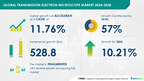
NEW YORK, Jan. 16, 2025 /PRNewswire/ — Report with market evolution powered by AI – The global transmission electron microscope market  size is estimated to grow by USD 528.8 million from 2024-2028, according to Technavio. The market is estimated to grow at a CAGR of over 11.76%  during the forecast period. Increasing focus on nanotechnology is driving market growth, with a trend towards development of new forms of transmission electron microscopes. However, high cost and heavy excise duty of transmission electron microscopes  poses a challenge. Key market players include Advantest Corp., Agilent Technologies Inc., AMETEK Inc., Angstrom Advanced Inc., Bruker Corp., Carl Zeiss Stiftung, Danaher Corp., DELONG INSTRUMENTS AS, Hirox Co. Ltd., Hitachi Ltd., IXRF Inc., JEOL Ltd, NanoScience Instruments Inc., Nikon Corp., Nion, Olympus Corp., Oxford Instruments plc, Roper Technologies Inc., Thermo Fisher Scientific Inc., and VIDEOTON HOLDING ZRt.

AI-Powered Market Evolution Insights. Our comprehensive market report ready with the latest trends, growth opportunities, and strategic analysis- View Free Sample Report PDF

Forecast period

2024-2028

Base Year

2023

Historic Data

2017 – 2021

Segment Covered

Application (Life science, Material science, Nanotechnology, Semiconductor, and Others), End-user (Industries, Academic institutes, and Others), and Geography (APAC, North America, Europe, South America, and Middle East and Africa)

Region Covered

APAC, North America, Europe, South America, and Middle East and Africa

Key companies profiled

Advantest Corp., Agilent Technologies Inc., AMETEK Inc., Angstrom Advanced Inc., Bruker Corp., Carl Zeiss Stiftung, Danaher Corp., DELONG INSTRUMENTS AS, Hirox Co. Ltd., Hitachi Ltd., IXRF Inc., JEOL Ltd, NanoScience Instruments Inc., Nikon Corp., Nion, Olympus Corp., Oxford Instruments plc, Roper Technologies Inc., Thermo Fisher Scientific Inc., and VIDEOTON HOLDING ZRt

Key Market Trends Fueling Growth

The transmission electron microscope market is experiencing significant growth due to the development of new types of transmission electron microscopes. These advanced models include reflection electron microscopes (REMs), scanning-transmission electron microscopes (STEMs), low-voltage electron microscopes (LVEMs), and cryo-EM. Reflection electron microscopes (REMs) differ from traditional transmission electron microscopes by collecting electrons that are elastically scattered from the object, rather than those that pass through it. REMs are particularly useful when surface information of the specimen is required. Scanning-transmission electron microscopes (STEMs) are increasingly adopted in research laboratories due to their ability to produce images or results directly, without the need for interpretation. STEMs come in two types: conventional transmission electron microscopes, which require additional detectors, scanning coils, and circuitry, and dedicated STEMs, which have all the circuitry embedded. Low-voltage electron microscopes (LVEMs) combine the features of transmission electron microscopes, scanning electron microscopes, and STEMs. Operating at a low voltage, LVEMs provide high contrast images, which is essential for studying biological specimens. LVEMs are available in benchtop mode and are one of the smallest multimode desktop electron microscopes. Cryo-EM uses frozen samples, gentle electron beams, and sophisticated image processing to study biomolecules without the need for crystals. Cryo-EM allows scientists to observe biomolecules as they perform their functions, making it an invaluable tool in the field of biology. Liquid-phase TEM (LP-TEM) ensures in-situ observations of materials in liquids at the highest spatial and temporal resolution in controlled environments. LP-TEM is crucial for studying fluid properties and temperature, but caution must be taken for changes induced by electron beams in pH, nucleation rate, and radiolysis. Overall, the advancements in transmission electron microscopes are driving the growth of the global transmission electron microscope market. These new forms of microscopes offer unique benefits, making them indispensable tools in various industries, including materials science, biology, and electronics. 

The Transmission Electron Microscope (TEM) market is experiencing significant growth due to its application in various industries. In life sciences, TEMs are crucial for cancer research and virology, providing 2D images of specimens at the nanoscale. In materials sciences, TEMs help analyze semiconductors and wafers, enabling the study of their 3D structure and properties. TEMs are also essential in pollution research, nanotechnology, paleontology, and palynology. Industries like automotive, aerospace, electronics, oil & gas, environmental, water treatment, hospitals, diagnostic centers, blood banks, and forensic labs rely on TEMs for their research and development. TEMs offer high throughput methods, super resolution, digitization, live-cell imaging, and expansion and multi-view microscopes. Sample preparation techniques have also advanced, making TEMs more accessible. Neutron spectroscopy, X-ray diffraction, and electron microscopy imaging are complementary techniques that enhance TEM’s capabilities. TEMs operate at the de Broglie wavelength, enabling the study of nanometers-scale objects. Overall, the TEM market is expanding, driven by its applications in various industries and advancements in technology. 

Insights on how AI is driving innovation, efficiency, and market growth- Request Sample!

Market Challenges

The Transmission Electron Microscope (TEM) market faces significant challenges due to the high initial investment cost and the dependence on government and corporate funding for research institutes. This funding can be unpredictable, leading to market volatility. Additionally, high import duties and taxes, such as customs duties, imposed by various governments can increase the final product cost. Some countries, like the US, China, Canada, India, and Brazil, levy indirect taxes at both the national and state levels, with tax rates ranging from 11% to 17%. These taxes and excise duties contribute to the overall increase in product costs, potentially hindering the growth of the global TEM market during the forecast period.The Transmission Electron Microscope (TEM) market faces several challenges in various industries. In research centers, the use of licensed closed-source software limits the flexibility and collaboration among researchers. In electronics and medicine, the need for advanced microscopes for nanotechnology, surface physics, and surface analyses is growing, requiring significant investment. For solid specimens, TEMs offer unparalleled magnification, making them essential for gemology, medical sciences, forensic sciences, and more. However, the complex electron gun, condenser system, objective lens, movable specimen stage, image-recording system, and vacuum system make TEM instruments expensive and challenging to operate. The market for TEMs is expanding in nanomaterials, energy-related materials, polymers, glassy substances, biomolecular mechanisms, viruses, macromolecular complexes, and cellular structures. Industries, including catalysis research, environmental particles, and the nanoworld, rely on TEMs for scientific research and technological innovation. The electron source and electron optics system in a vacuum environment enable the study of ultrafast processes, making TEMs indispensable tools. Environmental TEMs and beam chopper technology, such as UTEM, offer solutions for specific applications. Overall, the TEM market’s growth is driven by the need for deeper understanding and discovery in various fields.

Insights into how AI is reshaping industries and driving growth- Download a Sample Report

Segment Overview 

This transmission electron microscope market report extensively covers market segmentation by

Application 1.1 Life science1.2 Material science1.3 Nanotechnology1.4 Semiconductor1.5 OthersEnd-user 2.1 Industries2.2 Academic institutes2.3 OthersGeography 3.1 APAC3.2 North America3.3 Europe3.4 South America3.5 Middle East and AfricaCountry
China, US, Japan, South Korea, and Canada

1.1 Life science-  Transmission Electron Microscopes (TEMs) play a crucial role in the field of life sciences, particularly in microbiology, by enabling researchers to examine microorganisms and their structures at the atomic level. These advanced instruments allow scholars to study intricate details of cellular environments, contributing significantly to the understanding of cell behavior, structure, and growth. With the potential to develop new drugs and medicines, academic institutions and pharmaceutical firms invest heavily in TEM technology. For instance, the Pennsylvania State University’s acquisition of FEI Company’s Titan/Krios TEM, which operates at extremely low temperatures, enhances their research capabilities and opens new avenues for exploration. TEMs enable the creation of 3D images of biological molecules such as DNA, proteins, and viruses, including the SARS-CoV-2 virus causing COVID-19. This technology’s ability to produce high-resolution images of these structures aids in the development of new vaccines and treatments. The ongoing research on single-dose COVID-19 vaccines is expected to fuel the demand for TEMs in the global market during the forecast period.

Download complimentary Sample Report to gain insights into AI’s impact on market dynamics, emerging trends, and future opportunities- including forecast (2024-2028) and historic data (2017 – 2021) 

Research Analysis

The Transmission Electron Microscope (TEM) market encompasses a wide range of industries and applications, driven by the need for high-resolution imaging and analysis of nanoscale objects. TEM utilizes the principle of de Broglie wavelength, allowing electrons to pass through thin samples and create detailed images. Applications span various fields such as cancer research, virology, materials sciences, nanotechnology, paleontology, and palynology. Industries like life sciences, automotive, aerospace, electronics, oil & gas, environmental, water treatment, and research institutes, hospitals, diagnostic centers, blood banks, and forensic labs all benefit from TEM technology. Semiconductors and X-ray diffraction are also significant applications. TEMs, including Scanning Transmission Electron Microscopes (STEMs), are essential tools for studying nanometers-scale structures, providing valuable insights into their properties and behavior.

Market Research Overview

Transmission Electron Microscopes (TEMs) use the principle of de Broglie wavelength to generate high-resolution 2D images of specimens at the nanoscale. TEMs differ from light microscopes as they employ an electron gun and condenser system instead of light to illuminate the specimen. TEMs have significant applications in various fields such as cancer research, virology, materials sciences, pollution analysis, nanotechnology, paleontology, and palynology. They provide detailed information on the 3D structure of nanoscale objects, semiconductors, wafers, and other materials. TEMs are used extensively in the life sciences, semiconductor industry, automotive, aerospace, electronics, oil & gas, environmental, water treatment, hospitals, diagnostic centers, blood banks, forensic labs, and other industries. TEMs offer advanced features like live-cell imaging, super resolution, high throughput methods, expansion microscopes, multi-view microscopes, and integrated microscopy workflows. Sample preparation is crucial for obtaining high-quality images, and TEMs require specialized equipment and expertise. TEMs use closed-source and proprietary software, which can be expensive, while open-source software like ImageJ/Fiji, Neuronstudio, and L-measure offer cost-effective alternatives for small-scale end users. TEMs require skilled operators, including physicists, laboratory technicians, and other experts. The electron gun and objective lens focus the electron beam on the specimen, while the condenser system controls the illumination. The electron beam interacts with the specimen, producing various signals that are used to form the image. Neutron spectroscopy, X-ray diffraction, and electron microscopy imaging are complementary techniques used in conjunction with TEMs for comprehensive material analysis.

Table of Contents:

1 Executive Summary
2 Market Landscape
3 Market Sizing
4 Historic Market Size
5 Five Forces Analysis
6 Market Segmentation

ApplicationLife ScienceMaterial ScienceNanotechnologySemiconductorOthersEnd-userIndustriesAcademic InstitutesOthersGeographyAPACNorth AmericaEuropeSouth AmericaMiddle East And Africa

7 Customer Landscape
8 Geographic Landscape
9 Drivers, Challenges, and Trends
10 Company Landscape
11 Company Analysis
12 Appendix

About Technavio

Technavio is a leading global technology research and advisory company. Their research and analysis focuses on emerging market trends and provides actionable insights to help businesses identify market opportunities and develop effective strategies to optimize their market positions.

With over 500 specialized analysts, Technavio’s report library consists of more than 17,000 reports and counting, covering 800 technologies, spanning across 50 countries. Their client base consists of enterprises of all sizes, including more than 100 Fortune 500 companies. This growing client base relies on Technavio’s comprehensive coverage, extensive research, and actionable market insights to identify opportunities in existing and potential markets and assess their competitive positions within changing market scenarios.

Contacts

Technavio Research
Jesse Maida
Media & Marketing Executive
US: +1 844 364 1100
UK: +44 203 893 3200
Email: media@technavio.com
Website: www.technavio.com/

View original content to download multimedia:https://www.prnewswire.com/news-releases/transmission-electron-microscope-market-to-grow-by-usd-528-8-million-2024-2028-driven-by-focus-on-nanotechnology-with-a-report-on-how-ai-is-reshaping-the-landscape—technavio-302351400.html

SOURCE Technavio

Continue Reading

Technology

Industry Report Shows 64% of Life Sciences Leaders Taking Action to Establish AI Governance

Published

on

By

Research points to trust as the real barrier to scaling agentic AI, with 58% saying the industry still lacks clear standards for responsible AI

TORONTO and NEW YORK, Oct. 28, 2026 /PRNewswire/ — Life sciences organizations are putting governance in place to scale agentic AI across commercial, medical, and patient-facing work, according to the Responsible AI in Life Sciences (RAIL) Report 2026. The new industry research is based on roundtables and a survey of senior leaders at pharmaceutical, biotech, and medical device companies. Two-thirds (64%) surveyed say their organization has an AI governance process either fully established or in development.

The research, from ACTO, finds an industry ready to use AI but still working to trust it. Governance is the AI concern leaders cite most often. It is also the one they admit they have most neglected in practice. More than one-third still either have no defined governance or rely on a one-time IT approval.

Trust is the barrier to adoption at scale

The findings suggest trust will decide how far and how fast life sciences scales AI. Technology no longer appears to be the main obstacle. Leaders rank regulatory, legal, or compliance hesitation (21%) as the biggest internal barrier to scaling AI, while technical readiness ranks near the bottom (9%). Asked which measure matters most when judging an AI pilot, leaders put trust and adoption (24%) ahead of efficiency (23%), a signal that expectations are evolving.

Leaders trust AI more in their own hands than in their organizations’. More than two-thirds of leaders (68%) are involved in an AI project at their organization, and 69% rate their personal comfort with AI as high. But more than half (54%) remain concerned about how AI is being used in their own organizations. Fifty-eight percent say life sciences has no clear industry standard for responsible AI.

“The discussions reflected a wide range of perspectives and experiences related to AI understanding, adoption, and oversight across the industry,” said Lisa DeMarco, general counsel and chief business officer at Arctic Therapeutics and a moderator at the RAIL roundtables hosted by ACTO. “An important theme in the conversations was the need for practical guidance to help organizations assess AI trustworthiness while maintaining a focus on patient safety.”

Governance builds the foundation for trust

Leaders described governance as an ongoing operating model that continues well past initial approval. It needs named business owners, clear escalation paths, and standard operating procedures (SOPs), as well as the ability to deploy and revoke an AI agent and governance enforced at both the agent and sub-agent level. A challenge is that ownership is still unsettled. Asked who should be held ultimately accountable for the actions an AI agent takes, leaders name the end user (34%), legal and compliance (28%), the third-party AI vendor (22%), and IT (16%).

The data suggests responsibility falls to the end user because so much AI use happens outside approved systems. Nearly a quarter of organizations (23%) don’t monitor or discuss employee use of unauthorized AI agents, and roundtable leaders described employees already building their own agents with no governance in place. The gap between AI adoption and AI oversight is where trust seems to be breaking down across the industry.

Industry quickly moving from where to start to what to build next

Leaders want AI to raise performance and to be judged fairly. Four in five (79%) agree AI risk and ROI should be measured against how people do the work today, with its own error rate. Improved results and outcomes (29%) ranked as the top expected benefit, well ahead of budgetary savings (10%) and reduced risk (8%).

The leaders furthest along with AI sort each use case by its value and how hard it is to govern. Most start with easier-to-govern work such as review and approval cycles, pre-call preparation, insight logging, triage, and coaching. With two-thirds already running AI projects, attention is turning to harder work: connecting systems, supporting a full product launch, and chaining multiple agents together. An agent supporting a field rep or medical science liaison has to work across many systems and with the AI agents already built into each one. That raises new questions about what to trust and who answers for the result.

People remain the hardest part of adoption. The issue of change management was a common challenge raised at every roundtable. Asked which skill humans most need to keep, 45% chose judgment, followed by human connection (31%) and strategy (24%). The report recommends redrawing roles in detail, separating what an AI agent handles from what the human keeps.

Introducing a Common Standard for Trust: The RAIL Score

To give the industry a shared bar, the RAIL Score provides a rubric that grades any agentic AI system on six components of responsible AI, including governance, security, testing and certification, human centricity, value creation, and orchestration. Each component is scored “high” and trustworthy enough for use in life sciences, “medium” with specific gaps to close first, and “low” and not fit for use. The report also includes tools to put the score to work. These include a self-grading scorecard, a vendor-grading checklist, an AI agent job description template, and a 90-day launch checklist.

“The industry has moved past whether to use agentic AI. Leaders now want to know which systems they can trust enough to scale, and today there’s no shared bar to answer that,” said Parth Khanna, co-founder and CEO of ACTO. “Any agentic AI system has to get security and governance right. The RAIL Score gives teams a consistent way to grade systems against the standard a regulated industry demands, so trust can rest on evidence instead of vendor claims.”

Methodology

The Responsible AI in Life Sciences (RAIL) Report 2026 draws on eight in-person executive roundtables with 80 senior leaders across North America and Europe, held February through April 2026, as well as an online survey of 135 leaders at pharmaceutical, biotech, and medical device companies, fielded June 8 through July 17, 2026. Nearly all survey respondents (97%) hold director-level roles or above across commercial, medical affairs, legal and compliance, learning and development, and marketing functions.

The complimentary RAIL Report 2026 and related tools are available now at acto.com/RAIL.

To hear more about the findings, register for the upcoming webinar, “Responsible AI in Life Sciences: What Leaders Say About Scaling Agentic AI,” on Wednesday, November 4 at 11:00am Eastern.

About ACTO

ACTO helps life sciences companies bring therapies to patients after regulatory approval. Its AI-powered Field Excellence Platform and AI SuperAgents speed product launches, strengthen field execution, and deepen customer engagement for commercial and medical teams. ACTO elevates training and coaching and agentifies up to 30% of the work in customer-facing roles. That frees reps, medical science liaisons, and their leaders to focus on human connection, judgment, and strategic execution. Fourteen of the top 50 pharmaceutical companies use ACTO, along with high-growth biotechs and leading medtech organizations. ACTO is FDA 21 CFR Part 11 validated, SOC 2 Type II certified, and a Veeva Gold Product Partner. Learn more at www.acto.com.

Research Highlights
Responsible AI in Life Sciences (RAIL) Report 2026

The RAIL Report 2026 draws on eight executive roundtables with 80 senior leaders across North America and Europe and an online survey of 135 leaders at pharmaceutical, biotech, and medical device companies. Nearly all respondents (97%) are director level or above. The research examines how life sciences organizations evaluate, govern, and scale agentic AI in commercialization.

Governance Is the Defining Issue

Nearly two-thirds (64%) say their organization has an AI governance process fully established (22%) or in development (42%).More than a third (36%) have no defined governance (21%) or rely on a one-time approval gate (15%).Governance was the most-cited AI concern across the roundtables, and leaders called it the most neglected in practice.Accountability is unsettled. Leaders are split on who owns an AI agent’s actions: the end user (34%), legal and compliance (28%), the AI vendor (22%), and IT (16%).Nearly a quarter (23%) don’t monitor or discuss employee use of unauthorized AI agents. Another 37% view it as a severe security violation.

Trust May Be the Real Barrier to Scale

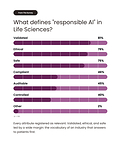
Over half (58%) say the life sciences industry lacks clear standards for responsible AI.More than half (54%) are concerned about how AI is used in their organization, even though 69% report high personal comfort with AI.Leaders define responsible AI as validated (81%), ethical (79%), and safe (75%). Fewer chose compliant (46%), auditable (45%), or controlled (40%).Four in five (79%) agree AI risk and ROI should be measured against today’s human-led baseline.Trust and adoption (24%) narrowly lead efficiency (23%), risk (21%), and ROI (18%) as the most critical measure of a pilot’s success.

From Where to Start to What to Build Next

Two-thirds (68%) are already involved in an AI project at their organization.Start now (high value, easy to govern): review and approval cycles, pre-call prep, insight logging, triage, coaching.Build next (high value, harder to govern): connecting systems, supporting a full product launch, chaining multiple agents.Defer or constrain: anything that could reach a patient or regulator without a human in between.Improved results and outcomes (29%) lead efficiency (25%) and productivity (24%) as the most important expected benefit. Budgetary savings (10%) rank far lower, and reduced risk ranks last among the listed benefits (8%).

Barriers Are Organizational

The top barriers to scaling are regulatory, legal, or compliance hesitation (21%) and a lack of comparative ROI metrics (20%). Technical readiness ranks near the bottom (9%).Leaders named three pressures driving AI adoption: more to commercialize, tighter budgets, and pressure to adopt AI even without a clear strategy.Workforce redesign is the real bottleneck to scaling. Leaders say judgment (45%), human connection (31%), and strategy (24%) are the skills humans most need to keep.

The RAIL Score

The RAIL Score grades any agentic AI system on six components: Governance, Security, Testing & Certification, Human Centricity, Value Creation, and Orchestration.Each component is scored from 1 to 3, for a total out of 18: High (16–18), Medium (12–15), or Low (below 12).Security and Governance are hard floors. A score below 3 on either caps the system at Low.

The complimentary RAIL Report 2026 and related tools are available now at acto.com/RAIL.

To hear more about the findings, register for the upcoming webinar, “Responsible AI in Life Sciences: What Leaders Say About Scaling Agentic AI,” on Wednesday, November 4 at 11:00am Eastern.

View original content to download multimedia:https://www.prnewswire.co.uk/news-releases/industry-report-shows-64-of-life-sciences-leaders-taking-action-to-establish-ai-governance-302921671.html

Continue Reading

Technology

Netrio Recognized on the CRN® AI Innovators List for 2026

Published

on

By

Company spotlighted for AI Advisory practice helping mid-market enterprises build structured, scalable AI capabilities and NetrioNow, its human-led, AI-powered service delivery platform

MCKINNEY, Texas, Oct. 28, 2026 /PRNewswire/ — Netrio, a global managed service provider (MSP) helping mid-market enterprises modernize and secure their IT environments, announced it has been named to the 2026 AI Innovators list by CRN®, a brand of The Channel Company.

CRN’s inaugural AI Innovators list celebrates North American solution providers at the forefront of the AI revolution. The companies featured on this list have recognized the vast opportunities of AI and have integrated AI technologies into cutting-edge solutions for their customers.

AI has quickly evolved from an emerging technology to a strategic business imperative. Solution providers are increasingly deploying AI solutions to help businesses improve customer experiences, enhance employee productivity, strengthen decision-making and uncover new opportunities for growth. As a result, the AI market has become a major catalyst for innovation across every sector of the IT channel. Each 2026 AI Innovator has shown dedication to building creative and unique AI solutions that deliver valuable business enhancements to customers.

“Mid-market enterprises are struggling to keep up with the rapidly changing AI landscape and are looking for a trusted advisor to help them navigate it,” said Al Calabrese, VP of AI Services at Netrio. “Being named a CRN AI Innovator affirms our commitment to being that advisor, giving our clients the strategy, platform and governance they need to turn their AI investments into measurable operational impact.”

In May 2026, Netrio launched its new AI Advisory and Transformation practice, which helps mid-market enterprises move from fragmented experimentation to AI capabilities that scale across the business. In September 2025, the company introduced NetrioNow, which fuses AI, automation and governance in one unified experience to deliver faster resolution, proactive security and executive-ready visibility.

“Our 2026 AI Innovators honorees are helping shape the next generation of business transformation through the imaginative use of artificial intelligence,” said Jennifer Follett, vice president, U.S. content and executive editor at CRN, The Channel Company. “By delivering forward-thinking solutions that create value for their customers and technology partners alike, they are pushing the industry forward and setting a high standard for innovation. We are honored to recognize their contributions.”

To view the 2026 CRN AI Innovators list, visit https://www.crn.com/rankings-and-lists/ai-innovators-2026.

About Netrio
Netrio is a full-service IT managed service provider (MSP) changing the way small- to mid-market enterprises think about technology’s role in driving innovation, efficiency and growth. We provide our customers with the skills, experience, tools, infrastructure and best practices to cost-effectively modernize their operations, capitalize on opportunity and thrive in today’s digital marketplace, while reducing costs and improving operational efficiencies from their technology investments.

Our end-to-end portfolio of services includes managed IT infrastructure, cybersecurity, cloud, connectivity and voice, and custom application development. With offices in Minnesota, New York, Texas, Belfast, Northern Ireland, and Pune, India, Netrio supports more than 1,000 customers with 500 employees across the globe. For more information, visit www.netrio.com.

About The Channel Company 
The Channel Company (TCC) is the global leader in channel growth for the world’s top technology brands. We accelerate success across strategic channels for tech vendors, solution providers and end users with premier media brands, integrated marketing and event services, strategic consulting, and exclusive market and audience insights. TCC is a portfolio company of investment funds managed by EagleTree Capital, a New York City-based private equity firm. For more information, visit thechannelco.com.

Follow The Channel Company: LinkedIn and X.

© 2026 The Channel Company, Inc. CRN is a registered trademark of The Channel Company, Inc. All rights reserved.

View original content to download multimedia:https://www.prnewswire.com/news-releases/netrio-recognized-on-the-crn-ai-innovators-list-for-2026-302921811.html

SOURCE Netrio

Continue Reading

Technology

Transportation Insight Holdings CEO Mark Vale Delivered Industry Keynote at FreightWaves F3: Future of Freight Festival

Published

on

By

Vale joined FreightWaves founder and CEO Craig Fuller to discuss The Evolving Future of Freight.

ATLANTA, Oct. 28, 2026 /PRNewswire/ — Mark Vale, CEO of Transportation Insight Holdings, LLC (TI HoldCo), delivered the industry keynote on Day 1 of FreightWaves’ F3: Future of Freight Festival. TI HoldCo, the parent company of Transportation Insight (TI) and Nolan Transportation Group (NTG), is a leading North American provider of non-asset, tech-enabled logistics and freight brokerage solutions.

Vale joined Craig Fuller, founder and CEO of FreightWaves and SONAR, for “The Evolving Future of Freight” on Tuesday, October 27, at 9:35 a.m. ET. The session took place on the General Session Stage at The Signal in Chattanooga, TN. The conversation explored where the freight market is heading and Vale shared how technology, data and hands-on expertise are coming together to help shippers make faster, better decisions across supply chain networks.

“Freight is changing faster than at any point in my career,” said Vale. “Shippers are asking for clear answers they can act on, across every mode. Together, TI and NTG offer a unique combination of brokerage scale, transportation strategy and execution expertise, supported by artificial intelligence, providing customers with the actionable insights they need to optimize operations and achieve better business outcomes.”

TI HoldCo serves more than 14,000 shippers through an extensive carrier network. In 2025, the company generated more than $5.1 billion in gross revenue.

Vale shared how TI and NTG are already putting AI to work every day, with results to show for it:

Productivity improvements up over 20% year-over-yearApproximately half of all proof-of-delivery documents collected by NTG’s AI agent, Buzz, and about 25% of loads built through automationLoad growth year-over-year trending upward in Q3 with high single digit growth in OctoberManaged services new customer wins up more than 45% year over yearTotal company Q3 2026 revenue up about 18% year-over-year, with EBITDA improvement of over 90%.EBITDA has improved for three consecutive yearsAdjusted Earnings Before Interest, Tax, Depreciation and Amortization (EBITDA) is a non-GAAP financial measure.

“Across NTG, we’ve focused AI on productivity. We use it for tracking and tracing and for scheduling, and we now book about 80% of our loads digitally. That frees our carrier sales team to focus on their relationships with carriers, and our brokers to focus on taking care of customers,” said Vale.

The keynote follows TI’s October launch of TI Infinity, a decision intelligence platform that lets shippers ask questions of their transportation data in plain language. TI Infinity helps teams spot what is changing, understand why, anticipate outcomes and choose the next best action.

“TI Infinity enables different levels within our customer organizations to become experts on freight very quickly,” said Vale. “Speed of understanding data is very important. Having a lot of data and the ability to use it is a huge competitive advantage.”

TI and NTG were also named to FreightWaves’ 2026 FreightTech 100, which recognizes the most innovative and disruptive companies in freight technology. The recognition reflects how both companies run AI as daily operating infrastructure, from Buzz in NTG’s brokerage operations to TI Infinity, powered by Beon, for TI’s managed transportation customers.

Vale also spoke about how carrier safety and vetting are changing how shippers pick their partners. “A customer came to us recently during a bid process. They used to use 30 different providers and cut it down to four. We’re one of them, and they told us it was because our vetting process gives them confidence,” said Vale. “Trust is a huge factor in supply chain resilience, and it’s becoming a competitive advantage.”

TI and NTG were headline sponsors of F3 2026. The festival ran Oct. 27-28 and brought together more than 1,000 attendees and 50-plus speakers. TI and NTG also hosted “Under the Stadium Lights: Lookout for a Good Time,” an evening reception for attendees at the Chattanooga Lookouts stadium on October 27. More information about F3 is available at live.freightwaves.com.

“I want to thank Craig and the entire FreightWaves team for having me,” said Vale. “Craig has built something rare in F3, a place where shippers, brokers and carriers come together to talk candidly about where this industry is going. It was a pleasure to join him on stage and share how TI and NTG are putting AI to work for our customers every day.”

Fuller founded FreightWaves, which delivers freight market news, data and analytics through its media properties and the SONAR platform. Before FreightWaves, he founded TransCard, a fleet payment processor that US Bank later acquired. A trucking industry veteran, he also founded and led U.S. Xpress Enterprises’ XpressDirect division.

About Transportation Insight Holdings
Transportation Insight Holdings, LLC (TI HoldCo), operating under the Beon brand, is a leading provider of non-asset, tech-enabled logistics and freight brokerage solutions in North America. It is the parent company of Transportation Insight, founded by Paul Thompson, and Nolan Transportation Group, founded by Kevin Nolan. Through TI, NTG and its proprietary Beon Digital Logistics Platform, the company serves more than 14,000 shippers through an extensive carrier network.

About Transportation Insight
Transportation Insight (TI) is a leading provider of supply chain and logistics solutions, helping North American manufacturers, retailers and distributors optimize transportation, reduce costs and improve operational efficiency for more than 25 years. Offering expertise in managed transportation, freight audit and payment, parcel optimization and data-driven analytics, TI partners with clients to streamline supply chains, enhance visibility and drive strategic growth. For more information, visit http://www.transportationinsight.com.

About Nolan Transportation Group
Nolan Transportation Group (NTG) is a leading logistics provider, offering a wide range of services including truckload brokerage, third-party logistics and specialized transportation like LTL, expedited and drayage. With an extensive network of carriers serving 14,000+ customers, NTG experts leverage the advanced technology of the Beon Digital Logistics Platform, with a customer-centric approach, to deliver efficient, scalable solutions. For more information, visit www.ntgfreight.com.

View original content to download multimedia:https://www.prnewswire.com/news-releases/transportation-insight-holdings-ceo-mark-vale-delivered-industry-keynote-at-freightwaves-f3-future-of-freight-festival-302921821.html

SOURCE Transportation Insight and Nolan Transportation Group

Continue Reading

Trending