Connect with us

Technology

Digital Transformation Market in Oil and Gas to Grow by USD 56.4 Billion (2025-2029), Driven by Investments and Partnerships, Report Highlights AI-Driven Transformation – Technavio

Published

on

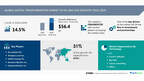
NEW YORK, Jan. 24, 2025 /PRNewswire/ — Report with the AI impact on market trends – The global digital transformation market in oil and gas industry size is estimated to grow by USD 56.4 billion from 2025-2029, according to Technavio. The market is estimated to grow at a CAGR of  14.5%  during the forecast period. Rise in investments and partnerships is driving market growth, with a trend towards use of digital twin technology. However, lack of skilled labor  poses a challenge. Key market players include Accenture PLC, Amazon.com Inc., AVEVA Group Plc, Emerson Electric Co., General Electric Co., Halliburton Co., Informatica Inc., Intel Corp., International Business Machines Corp., Microsoft Corp, NVIDIA Corp., Oracle Corp, Rockwell Automation Inc., SAP SE, Siemens AG, Sierra Wireless Inc., Tata Consultancy Services Ltd., Teradata Corp., and TIBCO Software Inc..

Key insights into market evolution with AI-powered analysis. Explore trends, segmentation, and growth drivers- View Free Sample PDF

Digital Transformation Market In Oil And Gas Industry Scope

Report Coverage

Details

Base year

2024

Historic period

2019 – 2023

Forecast period

2025-2029

Growth momentum & CAGR

Accelerate at a CAGR of 14.5%

Market growth 2025-2029

USD 56.4 billion

Market structure

Fragmented

YoY growth 2022-2023 (%)

12.7

Regional analysis

APAC, North America, Middle East and Africa, Europe, and South America

Performing market contribution

APAC at 31%

Key countries

US, China, Saudi Arabia, Russia, India, Japan, Canada, UK, Germany, and UAE

Key companies profiled

Accenture PLC, Amazon.com Inc., AVEVA Group Plc, Emerson Electric Co., General Electric Co., Halliburton Co., Informatica Inc., Intel Corp., International Business Machines Corp., Microsoft Corp, NVIDIA Corp., Oracle Corp, Rockwell Automation Inc., SAP SE, Siemens AG, Sierra Wireless Inc., Tata Consultancy Services Ltd., Teradata Corp., and TIBCO Software Inc.

Market Driver

In the Oil and Gas industry, Digital Transformation is a game-changer. Upstream, Midstream, and Downstream sectors are embracing trends like Big Data, Cloud Computing, IoT, AI, and Digital Twins to monitor critical assets and facilities. Big Data helps analyze Exploration prospects using Geoscience platforms. Cloud Computing and AI-based simulation optimize Refining processes, improving manufacturing efficiency and asset utilization. IoT sensors monitor equipment in real-time, enabling Predictive Maintenance and reducing downtime. AI and Computer Vision detect anomalies, preventing Fires and enhancing Safety. Extended Reality solutions train workers, improving Risk management and enhancing Safety. Crude oil demand and Refinery throughput are optimized using AI-based tools. Midstream and Downstream operations, including Gas Stations and Petrochemicals, benefit from Automation solutions and Turnaround planning tools. Application Performance Management ensures smooth Digitalization, while Prescriptive Maintenance minimizes downtime. Sensor systems and AI-driven solutions automate Industrial Control Systems, enhancing Automation and Optimization across Energy industries. Preventive Maintenance and Predictive analytics minimize downtime, ensuring high-performing Refineries and Petrochemical plants. 

The oil and gas industry is embracing digital transformation by integrating technologies like the digital twin to optimize energy production. A digital twin is a virtual representation of physical assets, allowing companies to compare actual and ideal conditions for enhanced safety and innovation. This technology provides disparate views of sub-surface and surface systems, enabling more efficient and cost-effective oil and gas production. By adopting digital twin technology, oil and gas companies can improve operational efficiency and foster continuous learning and innovation. 

Request Sample of our comprehensive report now to stay ahead in the AI-driven market evolution!

 Market Challenges

In the Oil and Gas Industry, Digital Transformation brings new opportunities for Upstream, Midstream, and Downstream sectors. Challenges like Big Data, Cloud Computing, IoT, AI, and Industrial Control Systems require modern solutions. Extended Reality (XR) solutions help monitor critical assets and facilities, enhancing safety and risk management. Field devices and exploration prospects benefit from Data Science and Geoscience platforms. Downstream operations, including Petrochemicals, Refining, and Gas Stations, can optimize asset utilization and manufacturing efficiency with Automation, AI-based simulation, and Prescriptive Maintenance. Preventive maintenance is crucial for equipment, reducing fires and improving turnaround planning. Computer Vision and Sensor Systems ensure refinery process efficiency and predictive analytics help manage crude oil demand, High Speed Diesel, and Refinery throughput. Digitalization drives innovation, improving safety, risk management, and operational excellence in Energy Industries.

Oil and gas producers are adopting advanced technologies, such as Artificial Intelligence (AI), Machine Learning (ML), Internet of Things (IoT) solutions, and big data analytics, to enhance their investment returns. Big data is gaining popularity due to the growing awareness of data-driven solutions. However, converting vast datasets into valuable insights necessitates both technology and analytics expertise. Identifying relevant data for storage and processing is a significant challenge for professionals. Analyzing unstructured data requires additional effort. Real-time big data analytics and cloud-based software solutions offer oil and gas companies innovative opportunities to optimize oil production processes, minimize costs and risks, ensure regulatory compliance, enhance safety, and make informed decisions.

Discover how AI is revolutionizing market trends- Get your access now!

Segment Overview 

This digital transformation market in oil and gas industry report extensively covers market segmentation by  

Technology 1.1 IoT1.2 E and P software1.3 Big data1.4 Cloud computing1.5 OthersSector 2.1 Downstream2.2 Upstream2.3 MidstreamGeography 3.1 APAC3.2 North America3.3 Middle East and Africa3.4 Europe3.5 South America

1.1 IoT-  The oil and gas industry faces economic pressure due to disparities in demand and supply, as well as volatile global energy prices. To address these challenges, companies are focusing on enhancing and extending the value of their existing assets while seeking new reserves. The implementation of Internet of Things (IoT) technology is a key strategy for transformation. In the upstream segment, IoT reduces non-productive time by enabling predictive maintenance for crucial equipment. In the midstream segment, IoT monitors pipelines for leaks and emissions, enhancing safety and reducing penalties. In the downstream segment, real-time data analysis enables distributors to predict consumer consumption, optimizing distribution. IoT is projected to increase crude output by 10-12% and profits by USD1 billion for large companies, while contributing USD816 billion to global GDP. By deploying IoT across the value chain, oil and gas organizations can make better decisions, create a safer working environment, and enhance operations.

Download a Sample of our comprehensive report today to discover how AI-driven innovations are reshaping competitive dynamics

Research Analysis

The Oil and Gas industry is undergoing a digital transformation, leveraging technologies such as Big Data, Cloud Computing, Internet of Things (IoT), Artificial Intelligence (AI), and Industrial Control Systems to optimize operations and enhance productivity. Upstream, midstream, and downstream sectors are adopting digital twins to monitor critical assets and improve exploration prospects through geoscience platforms. Extended reality solutions enable remote collaboration and training in hazardous environments. Field devices are being connected to collect real-time data for predictive maintenance and preventive measures against fires. Computer Vision is used to monitor equipment performance and automation is being driven by AI-based simulation. Digitalization is revolutionizing energy industries, from gas stations to petrochemicals, by providing real-time insights and improving operational efficiency.

Market Research Overview

The Oil and Gas Industry is undergoing a digital transformation, leveraging technologies such as Big Data, Cloud Computing, Internet of Things (IoT), Artificial Intelligence (AI), Industrial Control Systems, Extended Reality (XR), and Field Devices to optimize operations and enhance productivity. Upstream, Midstream, and Downstream sectors are embracing digitalization, with a focus on monitoring critical assets, workers, and facilities in real-time. XR solutions provide training for workers, while data science and geoscience platforms help explore new prospects and enhance exploration and production. In the Midstream and Downstream sectors, digitalization leads to improved asset utilization, manufacturing efficiency, and automation. AI-based simulation and predictive analytics optimize refining processes, while sensor systems and prescriptive maintenance minimize risks and ensure safety. Crude oil demand, High Speed Diesel, refinery throughput, and petrochemical and refining industries also benefit from digital transformation, with turnaround planning tools, application performance management, and AI-based solutions streamlining operations.

Table of Contents:

1 Executive Summary
2 Market Landscape
3 Market Sizing
4 Historic Market Size
5 Five Forces Analysis
6 Market Segmentation

TechnologyIoTE And P SoftwareBig DataCloud ComputingOthersSectorDownstreamUpstreamMidstreamGeographyAPACNorth AmericaMiddle East And AfricaEuropeSouth America

7 Customer Landscape
8 Geographic Landscape
9 Drivers, Challenges, and Trends
10 Company Landscape
11 Company Analysis
12 Appendix

About Technavio

Technavio is a leading global technology research and advisory company. Their research and analysis focuses on emerging market trends and provides actionable insights to help businesses identify market opportunities and develop effective strategies to optimize their market positions.

With over 500 specialized analysts, Technavio’s report library consists of more than 17,000 reports and counting, covering 800 technologies, spanning across 50 countries. Their client base consists of enterprises of all sizes, including more than 100 Fortune 500 companies. This growing client base relies on Technavio’s comprehensive coverage, extensive research, and actionable market insights to identify opportunities in existing and potential markets and assess their competitive positions within changing market scenarios.

Contacts

Technavio Research
Jesse Maida
Media & Marketing Executive
US: +1 844 364 1100
UK: +44 203 893 3200
Email: media@technavio.com
Website: www.technavio.com/

View original content to download multimedia:https://www.prnewswire.com/news-releases/digital-transformation-market-in-oil-and-gas-to-grow-by-usd-56-4-billion-2025-2029-driven-by-investments-and-partnerships-report-highlights-ai-driven-transformation—technavio-302358299.html

SOURCE Technavio

Continue Reading
Click to comment

Leave a Reply

Your email address will not be published. Required fields are marked *

Technology

Zifo Transforms Ontology Engineering with AI-Powered Intelligent Automation

Published

on

By

Advanced AI solution speeds up ontology creation by 80%, generating structured, interoperable knowledge models for science-driven organizations.

CAMBRIDGE, Mass. and CAMBRIDGE, England, April 30, 2026 /PRNewswire/ — Zifo, the leading global enabler of AI and data-driven enterprise informatics for science-driven organizations, has developed an Intelligent Automation solution for Ontology Engineering, which is designed to seamlessly generate structured, interoperable knowledge models while accelerating ontology creation by 80%.

Overcoming the Bottlenecks of Manual Ontology Creation

Manual ontology creation in the biopharma industry has traditionally been a time-consuming process that requires specialized expertise. Organizations frequently struggle with semantic ambiguity, complex integration challenges, and limited scalability, resulting in workflows that can take weeks to complete. Zifo’s AI-powered automation tackles these challenges head-on by eliminating 80% of the manual work through automated class generation, description creation, and precise IRI mapping.

Addressing the Complexities of Semantic Knowledge

Developing comprehensive knowledge models often demands deep domain expertise to define relationships and align terminology. Zifo’s intelligent solution overcomes this by providing an AI-guided workflow featuring an intuitive interface, meaning specialized ontology engineering knowledge is no longer required. By leveraging LLM-powered generation, the solution creates precise definitions with a deep understanding of domain-specific context, while generating standardized synonyms and establishing controlled vocabulary alignment to eliminate inconsistent terminology.

A Solution Designed for Scalable Scientific Data Modeling

The AI-powered solution addresses critical format compatibility and integration points in ontology management:

Seamless Integration: Automated mapping connects directly to established ontologies, including NCIT, CHEBI, OBI, and EFO, via BioPortal and OLS APIs.Massive Scalability: Parallel processing and batch operations empower teams to execute large-scale ontology projects without performance limitations.Automated Hierarchies: The AI autonomously generates semantic relationships and parent-child hierarchies based on domain context and predefined relation vocabularies.Format Compatibility: The solution produces direct OWL/RDF exports with proper URIs, ensuring seamless downstream integration.

Unique Features include:

Multi-Source Integration: The solution combines BioPortal, OLS, and EMBL-EBI APIs to guarantee comprehensive ontology coverage.Intelligent Ranking System: The system uses AI-powered relevance scoring and justification for precise ontology mappings.Precise IRI Mapping: It ensures that each generated class is linked to the correct IRI, directly promoting semantic web compatibility.Human-in-the-Loop Design: The solution automates repetitive tasks while maintaining vital expert oversight.End-to-End Workflow: Users are guided through a complete pipeline, from initial domain knowledge input straight to exportable OWL files.Visual Knowledge Graph: An interactive graph visualization allows for intuitive relationship exploration and validation.Multi-Format Exports: Provides seamless export options in CSV, OWL, or HTML Ontograph formats for downstream use, collaboration, and visualization.

Strategic Value Across the Scientific Chain

This solution breaks down the traditional barriers of data structuring. Built on a robust backend of Python, LangChain, and leading LLM models, alongside a frontend framework using Next.js 15 and Cytoscape.js for graph visualization, the solution is highly adaptable. Furthermore, future optimization enhancements will include provisions for uploading user-defined classes or semi-ready ontologies.

About Zifo

Zifo is the leading global enabler of AI and data-driven enterprise informatics for science-driven organizations. With expertise spanning research, development, manufacturing, and clinical domains, Zifo serves a diverse range of industries including Pharma, Biotech, Chemicals, Food and Beverage, and more. Trusted by over 190 organizations worldwide, Zifo is the partner of choice for advancing digital scientific innovation.

For more information, visit www.zifornd.comhttps://zifornd.com/practical-ai-blueprints/

Logo: https://mma.prnewswire.com/media/2731415/Zifo_Technologies_Logo.jpg


View original content:https://www.prnewswire.com/news-releases/zifo-transforms-ontology-engineering-with-ai-powered-intelligent-automation-302758975.html

SOURCE Zifo Technologies

Continue Reading

Technology

UNC-Chapel Hill establishes ‘Carolina in the Capital’ with new Washington, D.C. office

Published

on

By

CHAPEL HILL, N.C., April 30, 2026 /PRNewswire/ — The University of North Carolina at Chapel Hill has opened a new office in Washington, D.C., establishing an expanded presence for the University in the nation’s capital and creating exciting opportunities for students, faculty, staff and alumni.

Located at 101 Constitution Avenue NW, the 10,861-square-foot space – coined “Carolina in the Capital” – will support a variety of functions, including educational programming for undergraduate and graduate students, alumni relations and engagement with government partners.

As a leading R1 university, UNC-Chapel Hill annually attracts more than $1.6 billion to the state’s economy to fund research that creates a better quality of life for all its citizens. More than 60% of UNC-Chapel Hill’s total research funding comes from federal sponsors with the majority of that federal funding coming from the National Institutes of Health (NIH), which is based in the Washington area.

“Carolina in the Capital is a state-of-the-art facility that reflects our commitment to creating experiential learning opportunities for our students and faculty,” said Chancellor Lee H. Roberts. “The space is designed as an immersive learning environment where students can translate classroom knowledge into hands-on experience, which has never been more important. The facility also strengthens our ability to support engagement between our staff, alumni, policymakers and partners.”

Supporting students participating in Carolina’s Washington-based academic programs is a priority. For years, students and faculty have relied on temporary or borrowed spaces across the city. The new office provides a permanent home where students can gather, learn and build community while living and studying in Washington. A robust schedule of classes and events will fill the space throughout the year.

The Washington, D.C. region is home to the largest concentration of out-of-state Carolina alumni anywhere in the country. The new office creates a dedicated space to strengthen those connections and support networking, mentorship, professional development and community-building among D.C.-based Tar Heels.

The space will also serve as a platform to bring Carolina’s research and academic expertise into closer conversation with policymakers, industry leaders and member organizations. Carolina is the nation’s 11th largest university in the country based on research volume with primary federal funding coming from NIH and the National Science Foundation (NSF), both based in the D.C. area. Carolina is a proud member of the Association of American Universities (AAU) and the Association of Public & Land Grant Universities (APLU), which are both based in Washington.

The office is funded entirely through the UNC-Chapel Hill Foundation and does not use any state appropriations.

You can view additional photos of the space here.

Media Contact: UNC Media Relations, 919-445-8555, mediarelations@unc.edu

View original content to download multimedia:https://www.prnewswire.com/news-releases/unc-chapel-hill-establishes-carolina-in-the-capital-with-new-washington-dc-office-302758250.html

SOURCE University of North Carolina at Chapel Hill Office of Communications

Continue Reading

Technology

Investing.com Acquires Stonki to Accelerate Its Entry into the Agentic AI Era

Published

on

By

The acquisition strengthens Investing.com’s AI capabilities, advancing a next-generation research assistant that can analyze markets, generate insights, and guide investors in real time

NEW YORK, April 30, 2026 /PRNewswire/ — Investing.com, one of the world’s largest financial platforms used by more than 60 million investors each month, today announced the acquisition of Stonki, an AI-powered investing assistant designed to help traders turn ideas into structured, actionable trading plans.

The move marks a major step in the company’s evolution toward agentic AI, strengthening its ability to deliver faster, deeper, and more actionable market insights to a growing base of more than 300,000 paying subscribers across its InvestingPro suite, the company’s premium subscription offering for advanced market data, tools, and AI-driven insights.

Over the past 12 months, nearly 3 million users have used WarrenAI, Investing.com’s AI-powered financial research assistant launched last year, to perform market analysis, making AI a central entry point into the platform’s ecosystem. With the addition of Stonki, the company is moving beyond traditional AI tools toward agentic systems that can proactively guide users through the investment process.

“We’re entering the age of agentic AI, where the technology moves beyond just answering questions to actively helping investors think, analyze, and act,” said Omer Shvili, CEO of Investing.com. “Bringing Stonki.ai into the fold accelerates our goal of building an agentic platform that will serve as a 24/7 analyst for our users. We are developing this to be more than just a tool; it will be a partner that identifies opportunities, tracks unfolding situations, and surfaces trade ideas even when the user isn’t active—giving our users the kind of edge that was previously only available to professional investors.”

Founded in 2025, Stonki is developing a new category of ‘agentic’ AI for investing, enabling users to turn investment ideas into fully defined strategies with entry and exit conditions, risk management rules, and continuous monitoring.

“We started Stonki because, as investors and traders ourselves, we knew how much time and focus it takes to stay on top of the market and properly manage a day trade, a swing trade, an investment idea, or a portfolio,” said Ulas Bilgenoglu and Itay Verkh, co-founders of Stonki. “We set out to build AI that could carry part of that load by continuously monitoring the market, turning ideas into structured strategies, and helping users make better decisions with clear entry and exit conditions, disciplined risk management, and ongoing tracking. Joining Investing.com gives us the scale, data, reach, and strong AI foundation to accelerate that vision. Together, we can create an experience where AI helps users stay ahead of the market, manage risk, and act with greater confidence.”

The acquisition expands Investing.com’s AI capabilities across both technical and fundamental investing workflows. Stonki’s technology is built around persistent, real-time intelligence, continuously monitoring markets, tracking user-defined strategies, and alerting investors when conditions align, rather than relying on one-off prompts or static analysis.

For active traders, the platform is evolving into a real-time analysis engine designed to support high-frequency decision-making with precision and speed. For long-term investors, it is becoming a central hub for research, enabling users to evaluate opportunities, set personalized alerts, and monitor portfolios based on their individual investment strategies.

Users will be able to define specific conditions, such as a stock crossing a long-term moving average, and have the AI continuously monitor the market, analyze relevant signals, and surface actionable insights in real time. The system will also review portfolios on an ongoing basis, helping investors avoid potential losses and uncover new opportunities aligned with their strategy.

This latest step builds on Investing.com’s broader strategy of expanding its AI-powered suite, including WarrenAI, ProPicks AI, and its recently launched AI Chart Analysis, all aimed at delivering faster, more accurate and more actionable insights to investors.

View original content:https://www.prnewswire.com/news-releases/investingcom-acquires-stonki-to-accelerate-its-entry-into-the-agentic-ai-era-302756588.html

SOURCE Investing.com

Continue Reading

Trending