Technology
Smart Buildings Market to Grow by USD 76.8 Billion (2025-2029), Rising Demand for Automation Enhances Business Outcomes, Report on How AI is Driving Market Transformation – Technavio
Published
1 year agoon
By
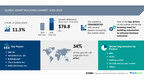
NEW YORK, Jan. 31, 2025 /PRNewswire/ — Report with the AI impact on market trends – The global smart buildings market size is estimated to grow by USD 76.8 billion from 2025-2029, according to Technavio. The market is estimated to grow at a CAGR of almost 11.3% during the forecast period. Growing need for building automation to enhance business outcomes is driving market growth, with a trend towards increasing integration of iot with building automation software. However, challenges in integrating building automation software coupled with interoperability issues poses a challenge. Key market players include ABB Ltd, Advantech Co. Ltd., BuildingLogiX, Cisco Systems Inc., Delta Electronics Inc., Emerson Electric Co., Honeywell International Inc., International Business Machines Corp., Johnson Controls, L and T Technology Services Ltd., Legrand SA, Panasonic Holdings Corp., Robert Bosch GmbH, RTX Corp., Schneider Electric SE, Siemens AG, Smarteh d.o.o., Snap One LLC, Softdel System Pte. Ltd., and Switch Automation.
Key insights into market evolution with AI-powered analysis. Explore trends, segmentation, and growth drivers- View Free Sample PDF
Smart Buildings Market Scope
Report Coverage
Details
Base year
2024
Historic period
2019 – 2023
Forecast period
2025-2029
Growth momentum & CAGR
Accelerate at a CAGR of 11.3%
Market growth 2025-2029
USD 76.8 billion
Market structure
Fragmented
YoY growth 2022-2023 (%)
9.9
Regional analysis
North America, Europe, APAC, South America, and Middle East and Africa
Performing market contribution
APAC at 34%
Key countries
US, UK, Germany, China, Japan, France, Canada, India, Brazil, and UAE
Key companies profiled
ABB Ltd, Advantech Co. Ltd., BuildingLogiX, Cisco Systems Inc., Delta Electronics Inc., Emerson Electric Co., Honeywell International Inc., International Business Machines Corp., Johnson Controls, L and T Technology Services Ltd., Legrand SA, Panasonic Holdings Corp., Robert Bosch GmbH, RTX Corp., Schneider Electric SE, Siemens AG, Smarteh d.o.o., Snap One LLC, Softdel System Pte. Ltd., and Switch Automation
Market Driver
The Smart Buildings Market is experiencing significant growth due to the integration of advanced technologies such as 5G, IoT, AI, and VR. These technologies enable building automation, energy efficiency, and resource management in both commercial and residential sectors. In commercial buildings, AI-enabled innovations like intelligent glass, smart thermostats, and energy-efficient structures reduce energy consumption and improve space utilization. In urban areas, smart cities are being developed with networked infrastructure for efficient waste management and secure environment. Home automation, including smart lighting systems and home security, is a growing trend in residential buildings. The integration of cloud computing and data analytics facilitates real-time monitoring and management of building premises. The commercial segment also benefits from AI-driven network and workforce management systems. 5G technology and IP-based solutions enhance network management, while blockchain ensures information security. Energy management, waste management, and fire safety are key concerns addressed by these technologies. Urban environments are becoming smarter with the integration of automated technologies like sensors, actuators, and microchips. The focus on environmental effects and resource management is driving the adoption of smart buildings in both residential and industrial sectors.
Non-smart buildings rely on manual control, leading to high operational costs and lengthy lead times. Traditional building automation faces limitations due to complex wired or slow wireless connectivity. The Internet of Things (IoT) integration into building automation addresses these challenges, enabling advanced IP-based internet connections. This technology allows end-users to monitor multiple building systems via a central hub, driving demand for advanced building automation. IoT adoption, fueled by increasing internet penetration, presents a significant growth opportunity for the global smart buildings market, creating a new market niche for building automation software.
Request Sample of our comprehensive report now to stay ahead in the AI-driven market evolution!
Market Challenges
The Smart Buildings Market is experiencing significant growth due to the integration of advanced technologies like 5G, IoT enabled devices, AI, and VR. Commercial and residential building owners are investing in energy-efficient structures, intelligent glass, smart thermostats, and elevators to reduce greenhouse gas emissions and improve resource management. The use of AI, sensors, actuators, and microchips enables automated technologies for space utilization, energy management, network management, workforce management, and waste management. In urban areas, smart cities are being developed with secure environments using blockchain, information security, and smart lighting systems for energy conservation. Challenges include environmental effects, security concerns, and the integration of AI, IoT, and cloud computing for efficient building operations. Smart Homes and Intelligent Security Systems, including fire safety, video surveillance, access controls, theft detection, and intrusion detection, are also gaining popularity in the residential segment. The market includes various sub-segments like heating, ventilation, air conditioning, and network systems.Building automation systems in smart buildings involve integrating various equipment and appliances to enhance energy efficiency and optimize operations. The complexity increases with larger structures, requiring specialized technical skills to manage the software. Effective communication between hardware systems is crucial for efficient operation. Interfacing software ensures compatibility and configures devices on a single platform. Integrating legacy systems with new software can pose challenges, potentially leading to faulty installations and security vulnerabilities. Professionally managing these complexities is essential for successful smart building implementation.
Discover how AI is revolutionizing market trends- Get your access now!
Segment Overview
This smart buildings market report extensively covers market segmentation by
ProductBMSHVACLighting ControlSecurity And Access ControlOthersComponentSoftwareHardwareServicesGeographyNorth AmericaEuropeAPACSouth AmericaMiddle East And Africa
1.1 BMS- The Building Management Systems (BMS) segment is the largest and leading part of the global smart buildings market. Known alternatively as Building Automation Systems (BAS), BMS are vital components of intelligent buildings, integrating various standalone control and monitoring systems for efficient control. Comprised of software, servers, sensors, and major components like HVAC, lighting, and emergency systems, BMS monitor and manage devices collectively. The cost of implementing BMS ranges from USD2.50 to USD7.0 per square foot, making ROI a significant challenge. Europe and APAC are major contributors to the BMS market’s growth due to increasing industrialization, commercialization, and energy efficiency awareness. In the commercial sector, high-end residential buildings, and services sector, BMS adoption is anticipated due to the need to connect different control systems. Technology advancements, including IoT, analytics, and cloud computing, further fuel BMS adoption for effective monitoring, controlling, and operating building facilities. These factors will significantly boost the growth of the BMS segment in the global smart buildings market.
Download a Sample of our comprehensive report today to discover how AI-driven innovations are reshaping competitive dynamics
Research Analysis
The Smart Buildings Market is experiencing significant growth due to the integration of advanced technologies such as 5G, IoT-enabled devices, AI, and VR. These technologies are transforming commercial and residential buildings into energy-efficient structures with intelligent systems for home automation and working from home. 5G technology enables real-time data transfer and communication between devices, enhancing the performance of AI-enabled innovations like energy conservation, waste management solutions, and data analytics. Cloud computing facilitates remote access and management of these systems, while smart lighting systems and intelligent security systems ensure energy efficiency and safety. Smart cities are also adopting these technologies to create interconnected infrastructure for efficient energy usage and improved living conditions. The market includes various sub-segments like smart thermostats, smart elevators, intelligent glass, and fire safety systems, all aimed at reducing greenhouse gas emissions and promoting sustainability.
Market Research Overview
The Smart Buildings Market is experiencing rapid growth due to the integration of advanced technologies such as 5G, IoT-enabled devices, AI, and VR. These technologies enable building automation, energy efficiency, and resource management in both commercial and residential buildings. In urban areas, smart buildings contribute to reducing greenhouse gas emissions and promoting sustainable urban environments. Cloud computing and data analytics play a crucial role in managing building premises, optimizing space utilization, and analyzing environmental effects. Home automation, including smart thermostats, intelligent glass, and smart elevators, enhances comfort and convenience for residents. Working from home and waste management solutions are also driving the demand for smart buildings. Energy management, network management, workforce management, and security concerns are addressed through automated technologies, sensors, actuators, and microchips. Building owners benefit from energy conservation, space utilization, and improved security. Smart cities are integrating smart buildings to create secure environments and manage urban resources efficiently. Blockchain technology ensures information security and transparency in energy trading and resource management. The market includes smart lighting systems, intelligent security systems, fire safety, video surveillance, access controls, theft detection, intrusion detection, and network systems. Heating, ventilation, and air conditioning systems are optimized for energy efficiency and occupant comfort. The Internet-of-Things (IoT) connects various building systems, enabling seamless integration and remote management.
Table of Contents:
1 Executive Summary
2 Market Landscape
3 Market Sizing
4 Historic Market Size
5 Five Forces Analysis
6 Market Segmentation
ProductBMSHVACLighting ControlSecurity And Access ControlOthersComponentSoftwareHardwareServicesGeographyNorth AmericaEuropeAPACSouth AmericaMiddle East And Africa
7 Customer Landscape
8 Geographic Landscape
9 Drivers, Challenges, and Trends
10 Company Landscape
11 Company Analysis
12 Appendix
About Technavio
Technavio is a leading global technology research and advisory company. Their research and analysis focuses on emerging market trends and provides actionable insights to help businesses identify market opportunities and develop effective strategies to optimize their market positions.
With over 500 specialized analysts, Technavio’s report library consists of more than 17,000 reports and counting, covering 800 technologies, spanning across 50 countries. Their client base consists of enterprises of all sizes, including more than 100 Fortune 500 companies. This growing client base relies on Technavio’s comprehensive coverage, extensive research, and actionable market insights to identify opportunities in existing and potential markets and assess their competitive positions within changing market scenarios.
Contacts
Technavio Research
Jesse Maida
Media & Marketing Executive
US: +1 844 364 1100
UK: +44 203 893 3200
Email: media@technavio.com
Website: www.technavio.com/
View original content to download multimedia:https://www.prnewswire.com/news-releases/smart-buildings-market-to-grow-by-usd-76-8-billion-2025-2029-rising-demand-for-automation-enhances-business-outcomes-report-on-how-ai-is-driving-market-transformation—technavio-302365296.html
SOURCE Technavio
You may like
Technology
Best AI Design Tools (2026): CapCut Named a Top Choice for Creating Images and Marketing Assets by Software Experts
Published
43 minutes agoon
July 18, 2026By
NEW YORK, July 18, 2026 /PRNewswire/ — Software Experts has recognized CapCut as a top choice among AI design tools for 2026, citing its AI Design Studio as a standout resource for creating images and marketing assets. The recognition points to the platform’s combination of automated layout generation, image editing, and campaign focused features built for marketers, e-commerce sellers, and content creators.
Best AI Design Tools
CapCut AI Design Studio – a web based design workspace that uses AI to help users create ads, product visuals, and branded content without prior design experience.
Core Capabilities of the AI Design Studio
The AI Design Studio is built around a conversational, infinite canvas that allows users to work with an AI design agent in real time. Instead of starting from a blank template, users type a prompt, upload reference images, and receive layout options generated automatically.
The latest version, Design 2.0, brings references, drafts, assets, and edits into a single workspace. Features include pencil prompting for visual editing, smart layer split for separating subjects and backgrounds, and a One More function that generates new creative directions from an existing design. Users can circle, brush, or mark up an image directly to guide how the AI adjusts a design, rather than relying only on written prompts.
An inspiration hub with built in assets and license free images is also part of the workspace, helping users start projects without sourcing outside materials. Layers for text, subjects, and backgrounds remain editable throughout the process, which allows for adjustments without regenerating an entire design from scratch.
Applications for E-Commerce and Marketing Teams
The AI Design Studio supports several common business use cases, including product content creation, trend based design remixing, and clothing visualization for fashion brands. These features are designed to reduce the time spent on repetitive production tasks, particularly for teams that need to update visuals frequently.
For e-commerce sellers, the tool can generate product main images, banners, and packaging designs from a single uploaded photo, and supports batch replacement across shared backgrounds. A seller managing multiple product lines can apply the same background and layout across different items with one click, rather than recreating each asset individually.
Fashion brands can use the AI clothing try-on feature to visualize how garments appear on different models, helping with catalog updates during seasonal campaigns such as Black Friday. Marketing and social teams can generate assets in multiple styles and resize them automatically for different platforms, which helps maintain consistency across channels without manual reformatting. The trend remixing feature also allows brands to reference the structure of a popular design while keeping the content original to their own products.
Design Automation Powered by Seedream 5.0
For marketing posters and layout heavy assets, the AI Design Studio incorporates the Seedream 5.0 model, which is ranked first on Artificial Analysis’ Text-to-Image Leaderboard. The model is used to arrange visual elements, generate multiple layout variations, and handle typesetting automatically based on uploaded product images.
This approach is intended to reduce the manual work involved in formatting marketing materials. Uploading one or more product photos allows the system to generate several layout options, positioning text, imagery, and other elements without requiring manual placement. Once a layout is generated, users can continue refining it with stickers, filters, or additional effects within the same workspace.
The process is designed to move from prompt to a finished, ready to use asset without requiring separate design software. For teams producing large volumes of seasonal or promotional content, this can reduce the number of tools involved in a single campaign.
Why AI Design Tools Matter for Small Teams
AI design tools are becoming useful because many teams need more visual content than traditional workflows can comfortably support. The Software Experts review notes that marketers, creators, and small businesses often need product images, social graphics, banners, email headers, event posters, and campaign visuals on tight timelines.
For small teams, the main advantage is not simply automation. It is the ability to get to a workable draft faster. Starting from a blank canvas can slow down campaign production, especially when a team is managing several platforms or product lines. AI-assisted design tools can generate starting points, resize assets, suggest layouts, and help keep visuals consistent across channels.
Access and Getting Started
The AI Design Studio is accessible through CapCut desktop by selecting Design Agent from the main dashboard. Users enter a text prompt describing the desired output, optionally upload reference images, and review the generated results.
A typical workflow might involve uploading a reference photo and entering a detailed prompt describing a desired style, color palette, or setting. The AI then generates initial design options based on that input. The built in editor allows for further adjustments, including color changes, auto cutout, element removal, and text overlays, before the final image is downloaded in high resolution.
Software Experts noted that the AI Design Studio is suited to a range of users, from e-commerce sellers managing large catalogs to individual creators producing social media content, as well as marketing teams handling multiple campaigns at once. The tool is offered as part of CapCut’s existing platform, with pricing details available directly through CapCut.
Readers can find the full review at Software Experts.
About CapCut
CapCut is an AI-powered photo and video editing platform designed to make high-quality video creation accessible across devices. The platform supports creators, businesses, and everyday users with tools for video editing, AI video generation, captions, templates, audio, and visual editing. CapCut is available across mobile, web, desktop, and iPad experiences, helping users create, edit, and prepare video content for social media, marketing, education, and personal projects.
About Software Experts: Software Experts delivers in-depth news on the digital tools shaping today’s consumer experience. As an affiliate, Software Experts may earn commissions from sales generated using links provided.
View original content:https://www.prnewswire.com/news-releases/best-ai-design-tools-2026-capcut-named-a-top-choice-for-creating-images-and-marketing-assets-by-software-experts-302828625.html
SOURCE SoftwareExperts.org
Technology
Best AI Design Tools (2026): CapCut Named a Top Choice for Creating Images and Marketing Assets by Software Experts
Published
43 minutes agoon
July 18, 2026By
NEW YORK, July 18, 2026 /PRNewswire/ — Software Experts has recognized CapCut as a top choice among AI design tools for 2026, citing its AI Design Studio as a standout resource for creating images and marketing assets. The recognition points to the platform’s combination of automated layout generation, image editing, and campaign focused features built for marketers, e-commerce sellers, and content creators.
Best AI Design Tools
CapCut AI Design Studio – a web based design workspace that uses AI to help users create ads, product visuals, and branded content without prior design experience.
Core Capabilities of the AI Design Studio
The AI Design Studio is built around a conversational, infinite canvas that allows users to work with an AI design agent in real time. Instead of starting from a blank template, users type a prompt, upload reference images, and receive layout options generated automatically.
The latest version, Design 2.0, brings references, drafts, assets, and edits into a single workspace. Features include pencil prompting for visual editing, smart layer split for separating subjects and backgrounds, and a One More function that generates new creative directions from an existing design. Users can circle, brush, or mark up an image directly to guide how the AI adjusts a design, rather than relying only on written prompts.
An inspiration hub with built in assets and license free images is also part of the workspace, helping users start projects without sourcing outside materials. Layers for text, subjects, and backgrounds remain editable throughout the process, which allows for adjustments without regenerating an entire design from scratch.
Applications for E-Commerce and Marketing Teams
The AI Design Studio supports several common business use cases, including product content creation, trend based design remixing, and clothing visualization for fashion brands. These features are designed to reduce the time spent on repetitive production tasks, particularly for teams that need to update visuals frequently.
For e-commerce sellers, the tool can generate product main images, banners, and packaging designs from a single uploaded photo, and supports batch replacement across shared backgrounds. A seller managing multiple product lines can apply the same background and layout across different items with one click, rather than recreating each asset individually.
Fashion brands can use the AI clothing try-on feature to visualize how garments appear on different models, helping with catalog updates during seasonal campaigns such as Black Friday. Marketing and social teams can generate assets in multiple styles and resize them automatically for different platforms, which helps maintain consistency across channels without manual reformatting. The trend remixing feature also allows brands to reference the structure of a popular design while keeping the content original to their own products.
Design Automation Powered by Seedream 5.0
For marketing posters and layout heavy assets, the AI Design Studio incorporates the Seedream 5.0 model, which is ranked first on Artificial Analysis’ Text-to-Image Leaderboard. The model is used to arrange visual elements, generate multiple layout variations, and handle typesetting automatically based on uploaded product images.
This approach is intended to reduce the manual work involved in formatting marketing materials. Uploading one or more product photos allows the system to generate several layout options, positioning text, imagery, and other elements without requiring manual placement. Once a layout is generated, users can continue refining it with stickers, filters, or additional effects within the same workspace.
The process is designed to move from prompt to a finished, ready to use asset without requiring separate design software. For teams producing large volumes of seasonal or promotional content, this can reduce the number of tools involved in a single campaign.
Why AI Design Tools Matter for Small Teams
AI design tools are becoming useful because many teams need more visual content than traditional workflows can comfortably support. The Software Experts review notes that marketers, creators, and small businesses often need product images, social graphics, banners, email headers, event posters, and campaign visuals on tight timelines.
For small teams, the main advantage is not simply automation. It is the ability to get to a workable draft faster. Starting from a blank canvas can slow down campaign production, especially when a team is managing several platforms or product lines. AI-assisted design tools can generate starting points, resize assets, suggest layouts, and help keep visuals consistent across channels.
Access and Getting Started
The AI Design Studio is accessible through CapCut desktop by selecting Design Agent from the main dashboard. Users enter a text prompt describing the desired output, optionally upload reference images, and review the generated results.
A typical workflow might involve uploading a reference photo and entering a detailed prompt describing a desired style, color palette, or setting. The AI then generates initial design options based on that input. The built in editor allows for further adjustments, including color changes, auto cutout, element removal, and text overlays, before the final image is downloaded in high resolution.
Software Experts noted that the AI Design Studio is suited to a range of users, from e-commerce sellers managing large catalogs to individual creators producing social media content, as well as marketing teams handling multiple campaigns at once. The tool is offered as part of CapCut’s existing platform, with pricing details available directly through CapCut.
Readers can find the full review at Software Experts.
About CapCut
CapCut is an AI-powered photo and video editing platform designed to make high-quality video creation accessible across devices. The platform supports creators, businesses, and everyday users with tools for video editing, AI video generation, captions, templates, audio, and visual editing. CapCut is available across mobile, web, desktop, and iPad experiences, helping users create, edit, and prepare video content for social media, marketing, education, and personal projects.
About Software Experts: Software Experts delivers in-depth news on the digital tools shaping today’s consumer experience. As an affiliate, Software Experts may earn commissions from sales generated using links provided.
View original content:https://www.prnewswire.com/news-releases/best-ai-design-tools-2026-capcut-named-a-top-choice-for-creating-images-and-marketing-assets-by-software-experts-302828625.html
SOURCE SoftwareExperts.org
Technology
Samsung Selects Chandigarh University Student as ‘Punjab AI State Topper’
Published
2 hours agoon
July 18, 2026By
CU Student Devesh Panwar Wins Rs 1 Lakh Award for Developing AI-Based Document Search System
CHANDIGARH, India, July 18, 2026 /PRNewswire/ — A Bachelor of Computer Applications (BCA) student of Chandigarh University, Devesh Panwar, has been named the “Punjab State Topper” in the Artificial Intelligence (AI) under the Samsung Innovation Campus (SIC) AI Program organised by Samsung in collaboration with Telecom Sector Skill Council (TSSC) and training partner Focal Skill Development (Focalyt) to equip Indian youth with industry-relevant in-demand skills in AI, loT, Big Data, and Coding & Programming, preparing them for future careers.
A final-year student of Bachelor of Computer Applications (BCA) at University Institute of Computing (UIC) of Chandigarh University, Devesh Panwar also won a cash award of Rs 1 lakh along with a laptop, and exclusive Samsung rewards for achieving this remarkable milestone under the Samsung Innovation Campus AI Program.
“Being named ‘AI State Topper’ was a moment of profound pride and validation for me. Hard work, intense technical training and a passion for AI culminated in the immense honor of the Punjab State Topper title. Besides getting access to state-of-the-art tools to fuel my future research and development endeavor, I gained world-class knowledge during the Samsung Innovation Campus (SIC) AI Program. It helped me in gaining hands-on experience and applied AI to solve real-world challenges, especially in aeronautical and technical domains,”
During Samsung Innovation Campus (SIC) AI Program, Devesh and his team worked on innovative AI capstone project which was presented before the jury panel as part of the final assessment.
“Our team developed the advanced AI-powered system AI Research Agent, a Retrieval-Augmented Generation (RAG) platform designed for intelligent querying of private document collections. Organizations, researchers, legal professionals, and HR teams often work with large collections of documents. Traditional search methods rely heavily on keyword matching and require significant manual effort to locate relevant information. The project was developed to address the limitations of traditional document search systems, which often struggle with contextual understanding, retrieval accuracy, learning adaptability, and response speed,” said Devesh.
“The developed system demonstrated significant improvements over traditional document retrieval approaches with faster response generation with integration of modern AI techniques, full-stack development, database systems, and intelligent automation into a single practical solution. By combining modern RAG architecture with innovative retrieval and reasoning mechanisms, this system provides a fast, intelligent, and user-friendly solution for knowledge discovery and resume evaluation. This project not only enhanced our technical expertise in Artificial Intelligence and Full-Stack Development but also strengthened our problem-solving, teamwork, and professional communication skills. It stands as a significant achievement of our Samsung Innovation Campus 2025 journey and reflects our commitment to building impactful AI solutions for real-world challenges,” he added.
Congratulating Devesh Panwar for being named “Punjab State Topper” AI under the Samsung Innovation Campus Samsung Innovation Program, Deepinder Singh Sandhu, Senior Managing Director, Chandigarh University, said, “Devesh’s achievement reflects Chandigarh University’s focus on experiential learning and industry-academia collaboration. Through the Samsung Innovation Campus AI Program, CU students gain practical exposure to AI and building solutions for real-world challenges. This accomplishment reflects not only Devesh’s commitment to excellence but also the growing culture of innovation and industry-oriented learning at Chandigarh University,”.
“Since its inception, Chandigarh University has set benchmarks for world-class education with its dynamic hands-on experiential learning model, industry-aligned programs, dynamic fraternity, state-of-the-art infrastructure facilities and impeccable placements. Samsung Innovation Program is also part of our initiatives to develop a future-ready talent pool equipped with advanced capabilities in AI, loT, Big Data, and Coding and Programming. By bridging the gap between theoretical learning and real-world application, this collaboration helps in providing CU’s computer science and computing students exposure to cutting-edge and emerging technologies. CU’s this partnership with Samsung is focused on building future-ready talent equipped with industry-relevant skills in AI and emerging technologies,” Sandhu said.
He said Chandigarh University’s Institute of Computing (UIC) prepares students for a successful career in computing, to create and disseminate computing knowledge and technology. “Chandigarh University carries a vision of crafting next-gen IT professionals who can take up industry challenges effectively and our Institute of Computing (UIC) prepares students for a successful career in computing, to create and disseminate computing knowledge and technology. UIC’s hands-on approach paves the way for a smooth transition to the workforce after graduation. Our students are equipped with the best knowledge, skills and passion to succeed in any number of computing careers. CU’s Institute of Computing renders cutting-edge education ranging from the expertise in traditional software development -to- modern computing technologies. Fully-equipped industry-sponsored labs, industry-aligned curriculum, and accreditations and validations by top companies such as Intel, Microsoft, Google Android, Red Hat etc. give our students an exclusive edge over others,” the Chandigarh University CMD said.
Sandhu said the latest edition of QS World University Rankings has yet again reaffirmed Chandigarh University global standing as a top educational institution. “Continuing its remarkable rise among the world’s leading higher education institutions, Chandigarh University (CU) has made impressive strides in the latest edition of prestigious QS World University Rankings 2027 by securing an overall world rank of 526, an increase of 49 ranks as compared to 575th rank in QS’ 2026 Rankings. This is for the fifth consecutive year that Chandigarh University’s global rankings have witnessed an impressive surge with CU’s world rank going up by an impressive 274 ranks — from the 800th rank in 2023 to 526th in 2027’s Rankings,”.
“As per the latest QS World University Rankings, with All India Rank of 13 among all universities in the country as compared to 16th rank in 2026’s rankings, Chandigarh University now ranks among the top 1% of universities in India and the top 2% of universities in the World, underscoring its growing reputation as a leading institution of higher learning, both in India and globally,” he added.
About Chandigarh University
Chandigarh University is a NAAC A+ Grade University and QS World Ranked University. This autonomous educational institution is approved by UGC and is located near Chandigarh in the state of Punjab. It is the youngest university in India and the only private university in Punjab to be honoured with A+ Grade by NAAC (National Assessment and Accreditation Council). CU offers more than 109 UG and PG programs in the field of engineering, management, pharmacy, law, architecture, journalism, animation, hotel management, commerce, and others. It has been awarded as The University with Best Placements by WCRC.
Website address: https://www.cuchd.in/
View original content to download multimedia:https://www.prnewswire.com/in/news-releases/samsung-selects-chandigarh-university-student-as-punjab-ai-state-topper-302828991.html
Best AI Design Tools (2026): CapCut Named a Top Choice for Creating Images and Marketing Assets by Software Experts
French gambling regulator orders ISPs to block Polymarket
Send Rakhi to UK swiftly with UK Gifts Portal
Whiteboard Series with NEAR | Ep: 45 Joel Thorstensson from ceramic.network
New Gooseneck Omni Antennas Offer Enhanced Signals in a Durable Package
Why You Should Build on #NEAR – Co-founder Illia Polosukhin at CV Labs
Whiteboard Series with NEAR | Ep: 45 Joel Thorstensson from ceramic.network
NEAR End of Year Town Hall 2021: The Open Web World, MetaBUILD 2 Hackathon and 2021 recap
Trending
-
Coin Market3 days agoRevolut receives in-principle approval from UAE authorities for crypto services
-
Technology2 days agoGPU.ai Named Official Title Sponsor of AGI Summit SF 2026
-
Near Videos4 days agoConfidential Intents is now generally available
-
Technology3 days agoInventHelp Inventor Develops Improved Food Delivery Bag (LBT-9719)
-
Coin Market3 days agoOstium pauses trading as security firms report multimillion-dollar oracle exploit
-
Coin Market3 days agoCrypto firms face AML risks during post-MiCA migration, says AMLA chair
-
Near Videos3 days agoThe best AI agents need your most sensitive data
-
Technology3 days agoJumpCloud Launches Workflows To Empower IT Teams With Secure And Simple Automation