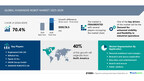
NEW YORK, Feb. 3, 2025 /PRNewswire/ — Report on how AI is redefining market landscape – The global humanoid robot market size is estimated to grow by USD 59.18 billion from 2025-2029, according to Technavio. The market is estimated to grow at a CAGR of 70.4% during the forecast period. Demand for enhanced visibility and flexibility in industrial operations is driving market growth, with a trend towards growing demand of humanoid robot owing to emergence of smart manufacturing. However, ethical issues with humanoid robots poses a challenge. Key market players include Engineered Arts Ltd., EZRobot Inc., Figure AI Inc., HAHN Group GmbH, HANSON ROBOTICS Ltd., Hasbro Inc., Honda Motor Co. Ltd., Hyundai Motor Co., Invento Research Inc., Kawada Robotics Co. Ltd., Macco Robotics, PAL Robotics, Promobot LLC, ROBOTIS Co. Ltd., Toyota Motor Corp., Trossen Robotics, UBTECH Robotics Inc., and United Robotics Group GmbH.
Key insights into market evolution with AI-powered analysis. Explore trends, segmentation, and growth drivers- View Free Sample PDF
Humanoid Robot Market Scope
Report Coverage
Details
Base year
2024
Historic period
2019 – 2023
Forecast period
2025-2029
Growth momentum & CAGR
Accelerate at a CAGR of 70.4%
Market growth 2025-2029
USD 59176.5 million
Market structure
Fragmented
YoY growth 2022-2023 (%)
50.0
Regional analysis
North America, APAC, Europe, Middle East and Africa, and South America
Performing market contribution
North America at 40%
Key countries
US, Japan, China, South Korea, Canada, Germany, UK, UAE, France, and Brazil
Key companies profiled
Engineered Arts Ltd., EZRobot Inc., Figure AI Inc., HAHN Group GmbH, HANSON ROBOTICS Ltd., Hasbro Inc., Honda Motor Co. Ltd., Hyundai Motor Co., Invento Research Inc., Kawada Robotics Co. Ltd., Macco Robotics, PAL Robotics, Promobot LLC, ROBOTIS Co. Ltd., Toyota Motor Corp., Trossen Robotics, UBTECH Robotics Inc., and United Robotics Group GmbH
Market Driver
The humanoid robot market is experiencing significant growth, driven by trends in healthcare, product launches, and the entertainment industry. Robotics research in neurosciences and cognitive sciences is leading to advancements in functionality and behavior. Investors are showing interest in robotics engineering for eldercare and mobility impairments, with applications in ultraviolet germicidal cleaning and surveillance. The media sector is exploring robotics solutions for digital transformation, while funding is being allocated for research and development in robotics, AI, and battery technologies. Automotive companies are integrating robots into their manufacturing processes due to labor shortages. Space exploration and isolation situations are driving the need for advanced robotics. Robotics industry growth is also fueled by technological advancements in hardware costs, sensors like lidar and 3d/depth cameras, and high-performance computing.
Smart manufacturing is a modern industrial approach that leverages advanced computing, analytics, and IoT-integrated technologies to optimize production processes. Objectives include flow optimization, customization, asset tracking, predictive maintenance, and real-time inventory management. The growth of automation, electrification, data integration, human-machine interaction, and connectivity has driven the adoption of smart manufacturing. In the automotive industry, IoT-enabled sensors are integrated into manufacturing, assembly line, and warehousing equipment to enhance efficiency and productivity.
Request Sample of our comprehensive report now to stay ahead in the AI-driven market evolution!
Market Challenges
The humanoid robot market is experiencing significant growth, with applications in various industries such as healthcare, entertainment, and robotics research. However, product launch faces challenges in neuroscience and functionality, requiring substantial investment from investors. In healthcare, humanoid robots offer solutions for eldercare and mobility impairments. In the entertainment industry, they provide personal assistance and behavior modeling. Robotics engineering and neurosciences are essential for developing advanced sensory abilities and artificial intelligence. The robotics industry is also exploring robotics in space exploration, neurosciences, and service duties. Isolation and mobility are key challenges, requiring advancements in hardware costs, battery technologies, and high-performance computing. The market growth is driven by technological advancements, labor shortages, and digital transformation. Funding is crucial for research and development in robotics, cognitive sciences, and AI. Investors are keen on commercial investment in areas like delivery, kiosks, and surveillance. Challenges include hardware costs, software engineering, and staffing skilled workers. Automotive companies and manufacturing firms are adopting robotics solutions for production. The robotics fund is focusing on next-generation sensors, radar, and 3D/depth cameras. Government support and research are essential for the robotics industry’s growth.The humanoid robot market faces ethical challenges that could hinder its growth. Unemployment is a significant concern as humanoid robots may replace human labor, leading to job losses. Ethical issues also include privacy concerns, inaccurate data usage, and control and use of data and systems. Accountability and liability are other concerns, as well as the potential loss of human decision-making. These factors may restrain the expansion of the global humanoid robot market during the forecast period.
Discover how AI is revolutionizing market trends- Get your access now!
Segment Overview
This humanoid robot market report extensively covers market segmentation by
ApplicationPersonal Assistance And CaregivingResearch And Space ExplorationEducation And EntertainmentSearch And RescuePublic RelationsComponentHardwareSoftwareGeographyNorth AmericaAPACEuropeMiddle East And AfricaSouth AmericaMotion TypeBipedWheel Drive
1.1 Personal assistance and caregiving- The personal assistance and caregiving segment of the global humanoid robot market is experiencing notable growth due to the increasing demand for robots that can help people with daily tasks and support their well-being. Humanoid robots are being designed to aid the elderly and disabled in performing activities of daily living, offer companionship, and provide mental health assistance. Key players in this market, such as HANSON ROBOTICS, Toyota, and PAL Robotics, are developing humanoid robots with a wide range of capabilities, from basic tasks to advanced functions like conversing and recognizing emotions. The aging population, rising demand for home care services, and technological advancements are driving market growth. Startups and smaller companies also create specialized humanoid robots for specific applications, such as autism therapy and mobility assistance. Overall, the personal assistance and caregiving segment of the global humanoid robot market is projected to expand significantly due to the increasing sophistication of robots and the growing need for caregiving services.
Download a Sample of our comprehensive report today to discover how AI-driven innovations are reshaping competitive dynamics
Research Analysis
The Humanoid Robot Market is a dynamic and innovative industry that continues to push the boundaries of technology. Robot software and cognitive science are at the heart of humanoid robot development, enabling advanced capabilities such as machine learning and AI. Robot regulation ensures safety and ethical considerations are met as these advanced machines become more integrated into society. Robotic startups and companies are driving innovation in areas like robotic healthcare, space exploration, and customer service. Robot capabilities continue to expand, with autonomous robots and robotic automation becoming increasingly common. Robot research in areas like behavior science and safety is also advancing, leading to new applications and uses. Robotic conferences and workshops provide opportunities for professionals to share knowledge and collaborate on new projects. The future of humanoid robots holds endless possibilities, from caregiving and assistance to entertainment and education. Robotic adoption is on the rise, with companies recognizing the benefits of a robotic workforce for increased efficiency and productivity. Robotic technology is constantly evolving, with new features and capabilities being developed to meet the demands of various industries. Robot security is a growing concern, with companies investing in advanced security measures to protect their robotic assets. The robot industry is poised for continued growth, with new innovations and applications emerging every day.
Market Research Overview
The humanoid robot market is experiencing significant growth due to advancements in robotics engineering, neurosciences, cognitive sciences, and artificial intelligence. Product launches in healthcare, eldercare, and mobility impairments sectors are transforming the industry, with dual-arm robots and robots with sensory abilities becoming increasingly popular. Investors are showing interest in commercial investment, funding research and development, and supporting the robotics industry’s growth. The entertainment industry and media sector are integrating humanoid robots for staff members, creating new opportunities for robotics solutions. Neuroscience and robotics research are advancing the robot’s functionality, enabling them to perform service duties in isolation, quarantine, and surveillance. The robotics industry’s technological advancements, including high-performance computing, next-generation sensors, and battery technologies, are reducing hardware costs and expanding the robot’s applications in automotive, manufacturing, and delivery industries. The robotics fund is also attracting skilled workers and government support, driving the market’s growth. The robotics market growth is also impacting the mobility, ultraviolet germicidal cleaning, and autonomous delivery sectors, with robots being used for personal assistance, education, and caregiving. Voice sensors, 3D/depth cameras, and lidar are enhancing the robot’s sensory abilities, enabling them to interact with humans more naturally. The robotics industry’s digital transformation is also impacting labor shortages in various sectors, with robots being used for staff members in luxury vehicle manufacturing and staffing kiosks. The robotics solutions are also being integrated into the education sector, providing personalized learning experiences for students. The robotics industry’s future looks bright, with advancements in robotics engineering, mechanical engineering, and electrical engineering, enabling humanoid robots to perform more complex tasks and interact more naturally with humans. The robotics industry’s growth is expected to continue, driven by the increasing demand for robots in various sectors and the ongoing technological advancements.
Table of Contents:
1 Executive Summary
2 Market Landscape
3 Market Sizing
4 Historic Market Size
5 Five Forces Analysis
6 Market Segmentation
ApplicationPersonal Assistance And CaregivingResearch And Space ExplorationEducation And EntertainmentSearch And RescuePublic RelationsComponentHardwareSoftwareGeographyNorth AmericaAPACEuropeMiddle East And AfricaSouth AmericaMotion TypeBipedWheel Drive
7 Customer Landscape
8 Geographic Landscape
9 Drivers, Challenges, and Trends
10 Company Landscape
11 Company Analysis
12 Appendix
About Technavio
Technavio is a leading global technology research and advisory company. Their research and analysis focuses on emerging market trends and provides actionable insights to help businesses identify market opportunities and develop effective strategies to optimize their market positions.
With over 500 specialized analysts, Technavio’s report library consists of more than 17,000 reports and counting, covering 800 technologies, spanning across 50 countries. Their client base consists of enterprises of all sizes, including more than 100 Fortune 500 companies. This growing client base relies on Technavio’s comprehensive coverage, extensive research, and actionable market insights to identify opportunities in existing and potential markets and assess their competitive positions within changing market scenarios.
Contacts
Technavio Research
Jesse Maida
Media & Marketing Executive
US: +1 844 364 1100
UK: +44 203 893 3200
Email: media@technavio.com
Website: www.technavio.com/
View original content to download multimedia:https://www.prnewswire.com/news-releases/humanoid-robot-market-to-grow-by-usd-59-18-billion-from-2025-2029–driven-by-demand-for-enhanced-visibility-and-flexibility-in-industrial-operations-ai-impact—technavio-302365973.html
SOURCE Technavio









 Technology4 days ago
 Technology4 days ago
 Technology4 days ago
 Technology5 days ago
 Technology5 days ago
 Technology4 days ago
 Technology4 days ago
 Technology5 days ago