Connect with us

Technology

ScaleFlux Empowers IT Transformation with Consumption-Based Solutions

Published

on

As AI adoption drives data center growth, businesses are shifting from capital-intensive infrastructure investments to consumption-based models that align IT spending with actual usage. ScaleFlux’s innovative NVMe SSD solutions empower organizations to reduce costs, improve scalability, and enhance energy efficiency, enabling them to stay competitive while addressing the demands of AI, hybrid cloud, and edge computing environments.

MILPITAS, Calif., Feb. 3, 2025 /PRNewswire-PRWeb/ — The rapid adoption of AI is driving unprecedented growth in the data center industry, with major players like Microsoft, Meta, Google, and Amazon investing $125 billion in AI-focused data centers in 2024 alone, according to a JPMorgan report. (1) These costs, covering electricity, software, and depreciation, highlight a significant gap between industry leaders and smaller companies struggling to compete in this technological revolution. To level the playing field, businesses are shifting away from hefty upfront infrastructure investments and adopting consumption-based pricing models that align IT spending with actual usage. “AI and cloud applications are reshaping industries, but operational efficiency has become non-negotiable,” explains JB Baker, VP of Products at ScaleFlux. “Consumption-based models enable businesses to scale dynamically, gain financial flexibility, and better manage operational costs while optimizing infrastructure for sustainability.”

“Consumption-based models enable businesses to scale dynamically, gain financial flexibility, and better manage operational costs while optimizing infrastructure for sustainability” — JB Baker, VP of Products at ScaleFlux

The Shift from CapEx to OpEx in IT Infrastructure
As businesses adapt to the evolving landscape of AI, cloud, and data-heavy applications, there is a significant shift in IT spending from capital expenditure (CapEx) to operational expenditure (OpEx) models. (2) Adopting consumption-based or lease models allows businesses to scale operations dynamically without the burden of massive upfront investments, making this approach more efficient and financially flexible. (3)

This shift is essential for both enterprises and small and medium-sized businesses looking to adapt to the new IT environment. Aligning IT spending with actual usage optimizes operational costs, enhances scalability, and drives efficiency. As the need for energy-efficient data management intensifies, ScaleFlux’s solutions address the challenges of limited physical space and rising energy costs.

Tackling Rising Energy Demand with Tailored Solutions
This shift also addresses rising energy costs. The global data center industry is experiencing unprecedented growth, with electricity consumption projected to more than double between 2023 and 2028, reaching 857 terawatt-hours (TWh) by 2028. (4) In 2023 alone, data centers accounted for 4.4% of total U.S. electricity consumption, a figure expected to rise to between 6.7% and 12% by 2028. (5)

Consumption-based models align IT spending with actual needs, reducing energy consumption by encouraging right-sizing, enabling dynamic scaling, and promoting the adoption of energy-efficient cloud infrastructure.

Maximizing Efficiency and Profitability with ScaleFlux’s NVMe SSD Solutions
As energy demand rises, consumption-based models are redefining how businesses optimize costs and sustainability. ScaleFlux NVMe SSD solutions empower organizations to reduce operational expenses, improve scalability, and shrink their environmental footprint, helping service providers stay competitive in an evolving market.

Key advantages of ScaleFlux NVMe SSD solutions include:

Energy Efficiency: Significantly reduces power consumption, lowering operational costs and minimizing environmental impact.Higher Density: Allows businesses to store more data in less space, optimizing data center real estate.Scalability: Supports the growing demands of AI, cloud, and data-intensive applications without compromising performance.Cost Optimization: Minimizes cooling and operational costs, maximizing profitability.Performance at Scale: Delivers high-speed performance for demanding workloads like AI and machine learning.

Supporting Hybrid Cloud and Edge Computing Strategies
ScaleFlux’s solutions are pivotal in helping businesses adopt hybrid cloud and edge computing strategies, which are essential for reducing latency, lowering energy costs, and maintaining high performance. Edge computing brings processing power closer to end-users, ensuring real-time application performance, while hybrid cloud environments enable businesses to optimize cost and performance by combining public and private cloud resources.

By 2027, 90% of organizations are expected to deploy hybrid cloud solutions, highlighting the increasing demand for flexible and efficient infrastructure. (6) In this evolving landscape, ScaleFlux’s innovative solutions empower businesses to meet rising digital demands, achieve performance goals, and balance sustainability priorities effectively.

IT Transformation with ScaleFlux Solutions
As the IT industry shifts toward an OpEx-driven economy, ScaleFlux’s innovative storage and memory solutions are helping businesses navigate this transformation. By combining high performance with both financial and energy efficiency, ScaleFlux enables organizations to scale dynamically while meeting sustainability goals.

“As the AI server market expands and industry trends evolve, we are committed to providing solutions that empower businesses to scale in a feasible way,” points out Baker. “While our NVMe SSD solutions ensure businesses can stay ahead of the curve by tackling the challenges of modern IT infrastructure, reducing costs, and minimizing their environmental footprint, we are not stopping there. We also are innovating solutions in the memory domain to streamline the entire data infrastructure.”

About ScaleFlux
In an era where data reigns supreme, ScaleFlux emerges as the vanguard of enterprise storage and memory technology, poised to redefine the landscape of the data infrastructure – from cloud to AI, enterprise, and edge computing. With a commitment to innovation, ScaleFlux introduces a revolutionary approach to storage and memory that seamlessly combines hardware and software, designed to unlock unprecedented performance, efficiency, security and scalability for data-intensive applications. As the world stands on the brink of a data explosion, ScaleFlux’s cutting-edge technology offers a beacon of hope, promising not just to manage the deluge but to transform it into actionable insights and value, heralding a new dawn for businesses and data centers worldwide. For more details, visit https://scaleflux.com/.

References

Nguyen, Britney. “How Many Billions Big Tech Spent on AI Data Centers in 2024.” Yahoo Finance, 30 Dec. 2024, finance.yahoo.com/news/many-billions-big-tech-spent-171500839.html.”Technology Budgets: Moving from Capital Expense (CAPEX) to Operational Expense (OPEX).” CoSN, cosn.org/technology-budgets-moving-from-capital-expense-capex-to-operational-expense-opex-2/.”Demystifying the Cloud Consumption Model.” Deloitte United States, 17 Apr. 2023, deloitte.com/us/en/pages/consulting/articles/cloud-consumption-model.html.”IDC Report Reveals AI-Driven Growth in Datacenter Energy Consumption, Predicts Surge in Datacenter Facility Spending amid Rising Electricity Costs.” IDC, 24 Sept. 2024, idc.com/getdoc.jsp?containerId=prUS52611224.Moss, Sebastian. “Doe: Data Centers Consumed 4.4% of US Power in 2023, Could Hit 12% by 2028.” All Content RSS, 20 Dec. 2024, datacenterdynamics.com/en/news/doe-data-centers-consumed-44-of-us-power-in-2023-could-hit-12-by-2028/.Ashare, Matt. “Global Cloud Spend to Surpass $700B in 2025 as Hybrid Adoption Spreads: Gartner.” CIO Dive, 19 Nov. 2024, ciodive.com/news/cloud-spend-growth-forecast-2025-gartner/733401/.

Media Inquiries:
Karla Jo Helms
JOTO PR™
727-777-429
jotopr.com

Media Contact

Karla Jo Helms, JOTO PR™, 727-777-4629, khelms@jotopr.com, jotopr.com

View original content to download multimedia:https://www.prweb.com/releases/scaleflux-empowers-it-transformation-with-consumption-based-solutions-302366605.html

SOURCE JOTO PR™

Continue Reading

Technology

Yann LeCun, Bob Langer, Jens Nielsen and Fabian Theis Join Cellular Intelligence Scientific Advisory Board

Published

on

By

Turing Award Laureate, Moderna Co-Founder, BioInnovation Institute CEO and Helmholtz Munich Computational Health Director to Advise on Decoding the Logic that Governs How Cells Change and Carrying That Knowledge Into Medicine

BOSTON, Sept. 21, 2026 /PRNewswire/ — Cellular Intelligence, the AI company building a universal foundation model of cell signaling, today announced that Yann LeCun, Robert “Bob” Langer, Jens Nielsen and Fabian Theis have joined its Scientific Advisory Board. Langer joins the company’s Board of Directors as an observer.

Between them, the four hold a Turing Award, more than 1,500 patents, the founding of Moderna, the leadership of the Novo Nordisk Foundation’s BioInnovation Institute and Germany’s highest research honor. Their work and expertise tie directly to the key problems Cellular Intelligence was founded to solve: learning predictive models from complex systems, and turning that understanding into therapeutic applications.

“We are bringing together people who have changed what is possible in AI, biology and medicine to tackle a shared question: can we learn the rules that govern how cells change, and use that knowledge to help patients? Yann, Bob, Jens and Fabian bring the scientific imagination and rigor this challenge demands. Their perspectives will be invaluable as we connect predictive models to experiments and, ultimately, to therapeutic development,” said Micha Breakstone, Ph.D., Co-founder and Chief Executive Officer, Cellular Intelligence.

Yann LeCun received the 2018 ACM A.M. Turing Award for foundational work in deep learning, founded Meta’s Fundamental AI Research lab (FAIR) and served as the company’s Chief AI Scientist from 2013 to 2025. He is Executive Chairman of AMI Labs, the world-model company he co-founded, and Silver Professor at New York University. His research centers on AI systems that learn how the world works and predict what happens when they act on it.

“The models that interest me learn how the world works from data and predict what happens when we act on it. Living cells present an extraordinarily rich version of that challenge. What excites me about Cellular Intelligence is the combination of new methods for large-scale cellular data collection, new phenomenological and causal models of cellular dynamics trained from this data, and a team with the ambition to connect the two. The possibility of learning principles that transfer across biological contexts is especially compelling,” said Yann LeCun, Scientific Advisory Board member.

Robert “Bob” Langer is an Institute Professor at MIT, the institution’s highest faculty rank, and the most cited engineer in history. He holds more than 1,500 issued and pending patents, and as a co-founder of Moderna and some 40 other companies, he has received the National Medal of Science, the National Medal of Technology and Innovation and the Queen Elizabeth Prize for Engineering for work that turned drug delivery and tissue engineering into medicines that reach patients.

“I have been deeply impressed by the team Cellular Intelligence has brought together. What draws me to this company is the opportunity to connect a fundamental understanding of cell behavior with the practical work of developing medicines. If we can better predict how cells respond to an intervention, we can ask more precise questions, design better experiments and open new possibilities for patients. I am excited to help the team pursue that potential,” said Robert “Bob” Langer, Scientific Advisory Board member and Board Observer.

Jens Nielsen is Chief Executive Officer of the BioInnovation Institute, the Novo Nordisk Foundation’s DKK 3 billion-plus engine for founding and scaling life-science companies in Copenhagen, and Professor of Systems Biology at Chalmers University of Technology. Author of more than 900 scientific publications and founder of several biotech companies, he was knighted by Her Majesty Queen Margrethe II of Denmark in 2019 and is a member of the U.S. National Academies of Sciences and Engineering, the Royal Swedish Academy of Sciences and the Royal Danish Academy of Sciences and Letters.

“Understanding a cell means understanding how its many systems work together. Cellular Intelligence is bringing quantitative models and carefully designed experiments to that problem at an ambitious scale. I am excited by the opportunity to help turn that understanding into more predictable cell engineering and new therapeutic possibilities,” said Jens Nielsen, Scientific Advisory Board member.

Fabian Theis is Director of the Computational Health Center at Helmholtz Munich, Scientific Director of Helmholtz AI and Professor of Mathematical Modeling of Biological Systems at the Technical University of Munich. A co-founder of the Human Cell Atlas and a member of its Board of Directors, he received the 2023 Gottfried Wilhelm Leibniz Prize, Germany’s highest research honor, for machine-learning methods that predict how cells develop and respond to drugs, and is a member of the Leopoldina, the German National Academy of Sciences, and EMBO.

“Progress in modeling cells depends on the quality of the questions our data allow us to ask. What excites me about Cellular Intelligence is its ambition to build rich experimental data and predictive models together. That combination creates an opportunity to test how well models generalize across biological contexts and to learn systematically from where they fall short,” said Fabian Theis, Scientific Advisory Board member.

The appointments follow Arjun Raj’s arrival as Chief Scientific Officer and scientific co-founder, and the company’s acquisition of STEM-PD, an investigational Parkinson’s disease cell therapy with FDA Fast Track designation, from Novo Nordisk in May 2026. Manufacturing and clinical data from the program flow back into the company’s models. The company’s investors include Khosla Ventures, the Chan Zuckerberg Initiative and Novo Nordisk.

About Cellular Intelligence

Cellular Intelligence is a clinical-stage AI company building a universal foundation model of cell signaling to understand, predict and ultimately control cellular behavior. Based in Boston, the company runs experimental biology, machine learning and therapeutic development as a single program, with regenerative medicine at its core. Learn more at www.cellularintelligence.com.

STEM-PD is an investigational therapy. Its safety and efficacy have not been established.

Media contact: Media-Relations@CellularIntelligence.com 

View original content to download multimedia:https://www.prnewswire.com/news-releases/yann-lecun-bob-langer-jens-nielsen-and-fabian-theis-join-cellular-intelligence-scientific-advisory-board-302884446.html

SOURCE Cellular Intelligence

Continue Reading

Technology

Huawei Releases an AIFW Technical White Paper to Facilitate Firewall Upgrade

Published

on

By

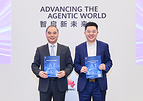
SHANGHAI, Sept. 21, 2026 /PRNewswire/ — On September 17 at HUAWEI CONNECT 2026, Huawei released the Huawei AIFW Technical White Paper during the session themed “Solidifying Network Security Foundations to Safeguard Industrial Intelligence Implementation.” The White Paper systematically presents the architectural concept and key technologies of next-generation AI firewalls (AIFW) tailored for the AI era. Richard Wu, President of the Security Product Domain of Huawei’s Data Communication Product Line, and Jeff Wang, President of Huawei Cyber Security & Privacy Dept, jointly attended the launch ceremony.

From Rule-Driven to Intent-Aware: Reshaping Security Defense Logic

As LLMs, AI agents, and compute clusters scale across industries, the cyber threat landscape is fundamentally shifting. Confronted with emerging risks like prompt injection, sensitive data leakage, and compute misuse, traditional rule-matching systems fall short due to delayed rule updates and limited semantic understanding.

According to the White Paper, AIFW integrates AI-native hardware, LLMs, and intelligence and security knowledge bases to shift defense focus from traffic protection to behavior governance. Leveraging full-spectrum awareness, semantic understanding, risk reasoning, and intent recognition, AIFW accurately pinpoints AI-specific risks such as DGA domains, prompt injection, and unauthorized content exfiltration. This marks a transition from rule-driven to intelligence-driven and from static policies to policy autonomy to protect AI computing centers, enterprise AI agents, and LLM operations.

AI-Native Hardware Foundation: Building Native Security Resilience with High Reliability

The White Paper details the AIFW’s native hardware architecture. Leveraging hardware-software synergy, performance across post-quantum cryptography, rule matching, and AI inference achieves order-of-magnitude improvements. Featuring 99.999% carrier-grade reliability, the product utilizes hardware decoupling, software isolation, and an engine-level root of trust to deliver robust survivability and rapid recovery. By preventing vulnerability exploitation and establishing native security immunity, it ensures uninterrupted core operations during extreme network attacks or failures.

Policy Autonomy and Intelligent Operations: Advancing Toward Human-Like Closed-Loop Defense

Addressing traditional security operation pain points—such as outdated rules, insufficient synergy, and complex management—AIFW achieves policy autonomy through unified security semantics and intelligent reasoning. The AIFW automatically identifies and remediates policy gaps and dynamically optimizes policies alongside service shifts. This establishes a human-like closed loop across awareness, decision-making, and response, significantly easing the operational burden on enterprises.

Moving forward, Huawei will continue collaborating with customers and partners to build an intelligent, efficient, autonomous, and trustworthy next-generation network security ecosystem.

View original content to download multimedia:https://www.prnewswire.com/in/news-releases/huawei-releases-an-aifw-technical-white-paper-to-facilitate-firewall-upgrade-302884454.html

Continue Reading

Technology

Willog Becomes First Korean Company Selected for Lloyd’s Lab Cohort 17, Gaining a Foothold in the Global Insurance Market

Published

on

By

Selected as 1 of just 10 companies out of 280 applicants worldwide, and the only Asian company in this cohortAt Lloyd’s, where the world’s insurance risk converges, alumni companies have generated more than $400 million in cumulative GWPWillog gains the opportunity to validate a diversified global revenue model spanning solution and data sales, insurance-linked commissions, and technology licensing fees

LONDON, Sept. 21, 2026 /PRNewswire/ — Willog, an AIoT-based supply chain intelligence company co-led by CEOs Bae Seong-hun and Yoon Ji-hyun, announced that it has become the first Korean company selected for Cohort 17 of Lloyd’s Lab, the global insurtech innovation program run by Lloyd’s of London.

Willog is also the only Asia-based company in this cohort. The selection stands as a major milestone towards an entry into the global insurance market as well as a formal endorsement of Willog’s business model by a leading marketplace.

Named a Top European Startup Hub by the FT: Lloyd’s Lab, Where the World’s Insurance Innovators Converge

Lloyd’s Lab is an insurtech accelerator program that Lloyd’s established in 2018, and the Financial Times has named it one of Europe’s top startup hubs.

The program supports participating companies by providing direct support and collaboration from Lloyd’s underwriters and brokers to prepare insurance products ready for market, while not taking any equity. Program alumni have raised more than $1.4 billion in funding combined and generated $426 million in gross written premium (GWP).

Willog’s Logistics AIoT Data Fills a Gap in the Global Insurance Market

Logistics data-driven insurance products already exist in the market, but most rely on data supplied by carriers or third parties. By connecting proprietary data collected in the field by its own AIoT devices directly to insurance risk assessment and pricing, Willog makes the source of the data itself the basis for trust.

Willog’s approach of applying real-time cargo condition data to underwriting was recognized as a practical solution to a problem the Lloyd’s market has long struggled with: the lack of data infrastructure specific to logistics cargo.

Solution Revenue, Data Sales, Insurance-Linked Commissions, Technology Fees: A Foothold for Diversifying Willog’s Global Revenue Model

Willog Vision, the company’s integrated supply chain solution spanning everything from data logging to claims compensation, records data across the entire logistics process in real time and detects anomalies instantly. Therefore, dramatically lowering loss ratios, while the collected data also allows for insurance claims to cover whatever losses still occur.

During the program, Willog intends to secure insurance partners and prepare to launch a dedicated insurance product optimized for logistics with AIoT data.

Yoon Ji-hyun, Co-CEO of Willog, said, “The essence of this selection is that Lloyd’s has recognized the possibility that data from the logistics field can be translated into the language of insurance underwriting. This will be the starting point of a journey in which Willog’s logistics data becomes real infrastructure that transforms the global insurance market.

View original content to download multimedia:https://www.prnewswire.com/news-releases/willog-becomes-first-korean-company-selected-for-lloyds-lab-cohort-17-gaining-a-foothold-in-the-global-insurance-market-302882768.html

SOURCE Willog

Continue Reading

Trending