Technology
Data Center Infrastructure Management (DCIM) Solutions Market to Grow by USD 13.7 Billion from 2024-2028, Driven by Energy Management & Green Initiatives, AI’s Impact – Technavio
Published
1 year agoon
By
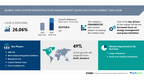
NEW YORK, Feb. 4, 2025 /PRNewswire/ — Report with the AI impact on market trends – The global data center infrastructure management (DCIM) solutions market size is estimated to grow by USD 13.7 billion from 2024-2028, according to Technavio. The market is estimated to grow at a CAGR of over 26.06% during the forecast period. Increased focus on energy management and green initiatives is driving market growth, with a trend towards high adoption of iot, in-built sensors, and edge computing. However, investments in initial infrastructure and related requirements poses a challenge. Key market players include ABB, Cisco Systems, Inc., Device42, Inc., Eaton, FNT GmbH, Huawei Technologies Co., Ltd, IBM, Schneider Electric, Siemens, Sunbird Inc., BGIS Global Integrated Solutions, Broadcom Inc., Carrier Global Corp., CommScope Holding Co. Inc., Legrand SA, Modius Inc., Panduit Corp., Rackwise Inc., RF Code Inc., Unisys Corp.
Key insights into market evolution with AI-powered analysis. Explore trends, segmentation, and growth drivers- View Free Sample PDF
Data Center Infrastructure Management (Dcim) Solutions Market Scope
Report Coverage
Details
Base year
2023
Historic period
2018 – 2022
Forecast period
2024-2028
Growth momentum & CAGR
Accelerate at a CAGR of 26.06%
Market growth 2024-2028
USD 13718.4 million
Market structure
Fragmented
YoY growth 2022-2023 (%)
20.31
Regional analysis
North America, APAC, Europe, Middle East and Africa, and South America
Performing market contribution
North America at 49%
Key countries
US, China, UK, India, and Germany
Key companies profiled
ABB, Cisco Systems, Inc., Device42, Inc., Eaton, FNT GmbH, Huawei Technologies Co., Ltd, IBM, Schneider Electric, Siemens, Sunbird Inc., BGIS Global Integrated Solutions, Broadcom Inc., Carrier Global Corp., CommScope Holding Co. Inc., Legrand SA, Modius Inc., Panduit Corp., Rackwise Inc., RF Code Inc., Unisys Corp.
Market Driver
Data Center Infrastructure Management (DCIM) solutions have become essential for organizations looking to optimize their data center infrastructure. Next-generation DCIM offerings focus on energy efficiency, monitoring systems, and optimization initiatives. Disparate applications, IT assets, and physical systems require holistic visibility for successful implementation. DCIM providers offer asset management, real-time energy usage, environmental sensors, and cooling statistics. Power efficiency and resource utilization are critical for infrastructure optimization. Modernization of IT and facility operators’ decision-making processes is crucial. Challenges include data accuracy, manual data entry, and transcription errors. Rackwise, Hyperview, Sunbird Software, and Nlyte Software are leading DCIM providers. Functional domains include equipment, cooling systems like chillers and cooling towers, and power management. Investments in data centers are increasing due to economic growth, healthcare, telecommunications, and development. Energy efficiency and green initiatives are essential as data volumes grow with internet-enabled devices, cloud services, and IoT technology. Construction, site selection, permitting, and facility upkeep are major considerations. Operational expenses, including power consumption, airflow, temperature, and humidity, impact investments. Infrastructure availability is crucial for IT workloads, air-cooling methods, and smart cities. Policymakers focus on fiber networks, cloud and data, API integration, and social distancing rules. Edge computing, telecom operators, and edge technologies are emerging trends. Wireless medical, hyperlocal storage, and processing capacity are important for medium-sized data. Legacy systems and new deployments require careful planning for highly populated areas with limited space and high rack density.
The Internet of Things (IoT) has led to a significant increase in data traffic, particularly mobile data, driving the demand for cloud applications. IoT deployments generate vast amounts of data from remote assets, which are integrated into existing infrastructure systems. DCIM solutions can monitor thermal, power, and cooling, and network management for these large data volumes through sensors in the data center. With the growing scale of IoT and sensors, data centers and DCIM software are evolving to accommodate changing IT infrastructure needs. Vendors must upgrade their DCIM solutions to meet enterprise requirements by enhancing monitoring capabilities.
Request Sample of our comprehensive report now to stay ahead in the AI-driven market evolution!
Market Challenges
Data Center Infrastructure Management (DCIM) solutions have become essential for organizations managing IT and facility operations in data centers. However, implementing DCIM offerings comes with challenges. Disparate applications, manual data entry, and transcription errors can impact data accuracy. Next-generation DCIM solutions aim to address these challenges with real-time energy monitoring, environmental sensors, and meters for power usage and cooling statistics. Data center operators face complexities in managing IT assets, cooling systems like chillers and cooling towers, and power efficiency. DCIM solutions provide holistic visibility into infrastructure optimization initiatives, including resource utilization and infrastructure availability. However, successful implementation requires overcoming challenges such as infrastructure modernization, decision-making processes, and integration with IT systems and equipment. Major countries in healthcare, telecommunications, and development sectors are investing in data centers for economic growth and internet-enabled devices. DCIM providers offer functional domains like asset management, power efficiency, and cooling optimization. Challenges include infrastructure availability, airflow, power consumption, temperature, and humidity. DCIM solutions cater to on-premises environments, public clouds, and edge data centers. Service providers offer cloud management, BI and analytics, and API integration for large enterprises, small and medium businesses, and even remote schools. Infection risk, social distancing rules, and limited space are new challenges, driving the adoption of hybrid approaches and edge computing. AFCOM estimates that IT workloads will continue to grow, requiring aircooling methods and smart cities’ policymakers to consider fiber networks and cloud and data co-location providers. Capital investments and operational expenses are significant, making it crucial for organizations to choose the right DCIM solution.DCIM solutions involve significant investments with expenses that surpass license costs. Pricing schemes for these solutions vary, often based on the number of racks, area, or servers used. Enterprise decision-making on DCIM investments is meticulous due to the high costs and slow return on investment. The choice between on-premises CAPEX implementation and turnkey solutions is crucial. Government regulations and the shift towards OPEX investments are driving market growth. Enterprises must carefully consider the total cost of ownership before investing in DCIM solutions.
Discover how AI is revolutionizing market trends- Get your access now!
Segment Overview
This data center infrastructure management (dcim) solutions market report extensively covers market segmentation by
End-userLarge EnterprisesSmall And Medium EnterprisesApplicationAsset And Capacity ManagementEnergy ManagementPower And Cooling ManagementNetwork ManagementGeographyNorth AmericaAPACEuropeMiddle East And AfricaSouth AmericaDeploymentOn-premisesCloud
1.1 Large enterprises- Large enterprises, including ABB, BGIS, and FNT, are driving the growth of the global DCIM solutions market due to the increasing demand for effective data center management and the need to reduce operating costs. With vast amounts of data to manage, large businesses require a solid and scalable infrastructure to optimize their data centers, increase operational efficiency, and improve overall performance. DCIM solutions enable real-time monitoring, advanced analytics, and automation, helping large enterprises proactively identify and address security threats. For instance, Google and IBM Turbonomic are utilizing DCIM solutions to reduce energy costs, enhance cooling effectiveness, and boost operational efficiency in their data centers. As data center complexity increases and the demand for infrastructure management solutions grows, it is anticipated that large enterprises will continue to adopt DCIM solutions, thereby fueling market expansion during the forecast period.
Download a Sample of our comprehensive report today to discover how AI-driven innovations are reshaping competitive dynamics
Research Analysis
Data Center Infrastructure Management (DCIM) solutions are essential for optimizing the energy efficiency and operations of data centers. DCIM offerings provide holistic visibility into the physical environment and critical infrastructure, including power and cooling systems, rack layouts, and IT equipment. These solutions help facility operators manage disparate monitoring systems and supplementary applications, ensuring data accuracy and reducing the need for manual data entry and transcription. With the increasing focus on modernization and new technologies, DCIM solutions are becoming a key initiative for IT administrators seeking to improve infrastructure availability and decision-making processes. Rackwise, Hyperview, Sunbird Software, and Nlyte Software are among the DCIM vendors offering on-premises solutions to address the unique challenges of managing data centers. By automating configuration management and providing real-time insights, DCIM solutions enable facility operators to optimize their data centers for energy efficiency and uptime.
Market Research Overview
Data Center Infrastructure Management (DCIM) solutions have become essential for organizations seeking to optimize their data center infrastructure for energy efficiency and resource utilization. Next generation DCIM offerings provide holistic visibility into the physical and IT environments, enabling operators to make informed decisions about infrastructure availability and utilization. Disparate applications, IT assets, and equipment such as chillers, cooling towers, and power meters require accurate data for effective optimization initiatives. Real-time energy and environmental sensors, meters, and cooling statistics help monitor power efficiency and computing resources. Modernization of data centers is a key focus for many organizations, with IT and facility operators looking to supplementary new technologies to improve infrastructure optimization. DCIM solutions offer functional domains for configuration management, resource utilization, and infrastructure optimization. Successful implementation of DCIM solutions requires careful planning and execution, with considerations for IT workloads, airflow, power consumption, temperature, and humidity. Challenges such as infection risk, construction, social distancing rules, limited space, and high rack density can impact the implementation process. Major countries in healthcare, telecommunications, development, and economic growth sectors are investing in data centers to support the increasing use of internet-enabled devices, green initiatives, and cloud computing. The data center segment includes on-premises, cloud and edge deployments, public clouds, and cloud management. API integration, data volumes, and big data are driving the need for advanced DCIM solutions. Compass Datacenters, Compass Quantum, Rackwise, Hyperview, Sunbird Software, and Nlyte Software are among the providers offering IT asset management, error rate reduction, and manual data entry automation. The hybrid approach to DCIM solutions combines Software as a Service (SaaS), IT asset management, and physical environment management. Infrastructure availability, cooling methods, smart cities, policymakers, fiber networks, and cloud and data management are all critical functional domains for DCIM solutions. In conclusion, DCIM solutions offer organizations the ability to optimize their data center infrastructure for energy efficiency, resource utilization, and infrastructure availability. The challenges of implementing DCIM solutions require careful planning, execution, and consideration of functional domains and infrastructure complexities. DCIM providers offer a range of solutions to meet the needs of organizations of all sizes, from large enterprises to small and medium-sized businesses.
Table of Contents:
1 Executive Summary
2 Market Landscape
3 Market Sizing
4 Historic Market Size
5 Five Forces Analysis
6 Market Segmentation
End-userLarge EnterprisesSmall And Medium EnterprisesApplicationAsset And Capacity ManagementEnergy ManagementPower And Cooling ManagementNetwork ManagementGeographyNorth AmericaAPACEuropeMiddle East And AfricaSouth AmericaDeploymentOn-premisesCloud
7 Customer Landscape
8 Geographic Landscape
9 Drivers, Challenges, and Trends
10 Company Landscape
11 Company Analysis
12 Appendix
About Technavio
Technavio is a leading global technology research and advisory company. Their research and analysis focuses on emerging market trends and provides actionable insights to help businesses identify market opportunities and develop effective strategies to optimize their market positions.
With over 500 specialized analysts, Technavio’s report library consists of more than 17,000 reports and counting, covering 800 technologies, spanning across 50 countries. Their client base consists of enterprises of all sizes, including more than 100 Fortune 500 companies. This growing client base relies on Technavio’s comprehensive coverage, extensive research, and actionable market insights to identify opportunities in existing and potential markets and assess their competitive positions within changing market scenarios.
Contacts
Technavio Research
Jesse Maida
Media & Marketing Executive
US: +1 844 364 1100
UK: +44 203 893 3200
Email: media@technavio.com
Website: www.technavio.com/
View original content to download multimedia:https://www.prnewswire.com/news-releases/data-center-infrastructure-management-dcim-solutions-market-to-grow-by-usd-13-7-billion-from-2024-2028–driven-by-energy-management–green-initiatives-ais-impact—technavio-302366938.html
SOURCE Technavio
You may like
Technology
Former MLB Players Lead Ember Sports Mobile App, Bringing Pro-Level Training to Athletes Everywhere
Published
28 minutes agoon
April 21, 2026By
The MLB veterans say platform is a “game changer” for athletes at every level
HUNTSVILLE, Ala., April 21, 2026 /PRNewswire/ — Sports technology company Ember Sports is bringing professional-level baseball and softball training tools to athletes nationwide through a new mobile app developed in collaboration with former Major League Baseball players and coaches Brady Clark and Damon Mashore. Designed to make advanced player development more accessible, the platform delivers real-time performance insights using a mobile device, eliminating the need for costly hardware or exclusive facility-based systems.
Clark and Mashore, former MLB outfielders with a combined 18 seasons in the major leagues, now serve in leadership roles at Ember, helping guide the platform’s development and real-world application. Clark is the company’s Chief Operating Officer, while Mashore serves as Chief Integration Officer. Their involvement reflects a broader shift toward making the types of training tools once reserved for professional athletes available to players at every level.
Leveraging built-in iOS video capture, Ember’s mobile app provides immediate, actionable feedback through tools such as its Hitting and Pitching Analyzers. Athletes can review performance using video replay, telestration and side-by-side comparisons, allowing for deeper analysis of swing mechanics, pitch execution and overall performance.
The platform also introduces virtual reality capabilities designed to enhance training in ways that are difficult to replicate in traditional environments. A key feature is Ember’s ability to teach pitch tunneling, an advanced skill in which multiple pitches follow the same initial path before breaking differently, making them more difficult for batters to recognize and hit.
“Teaching hitters how to see the ball the way MLB players do has always been one of the hardest things to train,” Mashore said. “With Ember’s technology, we’re able to simulate that in a meaningful way. That’s a big step forward.”
With more than 25 million baseball and softball athletes across the United States, access to advanced training tools has often been limited by cost and availability. Ember aims to expand that access with a subscription starting at $12.99 per month, delivering data and insights traditionally available only at the professional level.
“This is truly disruptive technology because of how easy it is to use and the low-cost barrier,” said Clark. “It opens the door for more players at every level. From the conversations Damon and I have had across our baseball network, the reaction is usually, ‘I can’t believe you guys can do this.’ Especially with VR, no one has been able to teach how we ‘see’ the ball.”
By removing the need for specialized equipment and training facilities, Ember is expanding access to high-level development tools once reserved for the big leagues. Its virtual reality platform places athletes in customizable environments that simulate live pitching with adjustable speed, movement and location, helping improve pitch recognition, timing and decision-making.
“You’re either on the forefront of technology or you’re behind the game,” Mashore added. “Being able to deliver this level of insight to players outside of the professional level at such an affordable cost is simply a game changer.”
With leadership rooted in decades of professional playing and coaching experience, Ember Sports is entering the market with strong credibility and a focus on accessibility, aiming to bring professional-grade training within reach for the next generation of baseball and softball athletes.
To learn more about Ember Sports, visit EmberSports.com.
About Ember Sports
Ember Sports is a sports technology company redefining baseball and softball training through accessible and affordable data-driven performance tools. Available on iOS and VR platforms, Ember’s Hitting Analyzer, Pitching Analyzer and immersive VR experiences deliver real-time metrics, video capture and advanced pitch recognition training, all without the need for expensive hardware. By removing traditional costs and facility barriers, Ember is driving the future of training for the next generation of athletes.
Contact:
Katie Schmidt
Public Relations Manager
InnoVision Marketing Group
PR@InnoVisionMarketingGroup.com
View original content to download multimedia:https://www.prnewswire.com/news-releases/former-mlb-players-lead-ember-sports-mobile-app-bringing-pro-level-training-to-athletes-everywhere-302748130.html
SOURCE Ember Sports
Technology
AtkinsRéalis to acquire Australia-based Engineering Consultancy WGA
Published
28 minutes agoon
April 21, 2026By
MONTREAL, April 21, 2026 /CNW/ – AtkinsRéalis Group Inc. (TSX: ATRL), a world-class engineering services and nuclear company with offices around the world, announced today that it has entered into a scheme implementation deed to acquire Wallbridge Gilbert Aztec (WGA), a leading Australian and New Zealand engineering and project management consultancy firm.
The proposed acquisition represents a significant step in AtkinsRéalis’ ambition to build a national platform with strong local presence in key states and markets across Australia and to capitalize on Australia’s significant investment programs in infrastructure and other high growth client end-markets, such as Defence and Power & Renewables. The addition of WGA’s 800 professionals strengthens AtkinsRéalis’ delivery capacity and sector depth in priority infrastructure markets, including transportation, water, power and renewables, ports and marine, defence-related infrastructure, resources and industrial. Founded in 1976, WGA delivers long-term infrastructure programmes, supported by deep regional capability and strong client relationships across both countries.
“This transaction reflects our continued investment in the AMEA region, in line with our ‘Delivering Excellence, Driving Growth’ strategy,” said Ian L. Edwards, President and Chief Executive Officer of AtkinsRéalis. “Australia is a priority market for us, where we are rapidly building scale and capability. WGA has deep regional expertise, strong client relationships and highly regarded capability across sectors that are closely aligned with our own. By bringing our teams together, we would be well positioned to deliver integrated solutions and better outcomes for our clients, while creating new opportunities for our people.”
The acquisition would reinforce AtkinsRéalis’ strategy of combining global capability with local proximity. WGA would gain access to AtkinsRéalis’ global systems, digital capabilities and technical excellence. This approach would support continuity for clients and employees, while creating expanded opportunities for collaboration, career development and technical growth.
“Joining AtkinsRéalis would mark a significant next step for WGA,” said Ben Stapleton, Joint Managing Director of WGA. “For more than 40 years, we’ve delivered practical, high-quality engineering solutions by being regionally embedded, backing our people, and building trusted, long-term partnerships with our clients. Becoming part of AtkinsRéalis would enable us to build on these strengths by connecting our team to broader technical expertise, global opportunities and investment, supporting and accelerating the next phase of our growth across Australia and New Zealand. Importantly, we can do this while staying true to what makes WGA unique, with strong alignment across our cultures and strategic priorities.”
The proposed transaction will be implemented by way of a scheme of arrangement under Part 5.1 of the Australian Corporations Act and is subject to customary closing conditions, including WGA shareholders’ approval, and the receipt of necessary regulatory and court approvals.
About AtkinsRéalis
Created by the integration of long-standing organizations dating back to 1911, AtkinsRéalis is a world-leading engineering services and nuclear company dedicated to engineering a better future for our planet and its people. We create sustainable solutions that connect people, data and technology to transform the world’s infrastructure and energy systems. We deploy global capabilities locally to our clients and deliver unique end-to-end services across the whole life cycle of an asset including consulting, advisory & environmental services, intelligent networks & cybersecurity, design & engineering, procurement, project & construction management, operations & maintenance, decommissioning and capital. The breadth and depth of our capabilities are delivered to clients in strategic sectors such as Engineering Services, Nuclear and Capital. News and information are available at www.atkinsrealis.com or follow us on LinkedIn.
About WGA
Wallbridge Gilbert Aztec (WGA) is a multi‑disciplinary engineering and project management consultancy with more than 40 years of experience delivering complex infrastructure across Australia and New Zealand. Employee‑owned and regionally embedded, WGA employs over 800 people operating from offices across South Australia, Western Australia, Victoria, Queensland, New South Wales, the Northern Territory and New Zealand.
WGA supports clients across the full project lifecycle through engineering, project management and advisory services, with established capability in transport, water, power and renewables, ports and marine, defence‑related infrastructure, buildings, resources and industrial, urban development and sport and recreation sectors. Known for strong local leadership, long‑term client relationships and practical, buildable solutions, WGA operates with a delivery model aligned to how and where infrastructure is delivered. Learn more at wga.com.au.
Forward-Looking Statements
References in this press release to the “Company”, “AtkinsRéalis”, “we”, us” and “our” mean, as the context may require, AtkinsRéalis Group Inc. or all or some of its subsidiaries or joint arrangements or associates. Statements made in this press release that describe the Company’s expectations or strategies, including with respect to the acquisition of WGA (the “Transaction”), constitute “forward-looking statements” and can be identified by the use of the conditional or forward-looking terminology such as “estimates”, “expects”, “forecasts”, “intends”, “may”, “objective”, “plans”, “projects”, “should”, “will”, “likely”, or other variations thereon. Forward-looking statements also include any other statements that do not refer to historical facts. The Company cautions that, by their nature, forward-looking statements involve risks and uncertainties, and that its actual actions or results could differ materially from those expressed or implied in such forward-looking statements. Forward-looking statements are presented for the purpose of assisting investors and others in understanding certain key elements of the Company’s current objectives, strategic priorities, expectations and plans, and in obtaining a better understanding of the Company’s business and anticipated operating environment. Readers are cautioned that such information may not be appropriate for other purposes. Forward-looking statements made in this press release are based on a number of assumptions believed by the Company to be reasonable as at the date hereof and are subject to important risks and uncertainties, including the satisfaction of all closing conditions (which includes obtaining WGA shareholders’ approval), the receipt of necessary regulatory and court approvals, and the successful completion of the Transaction; management’s estimates and expectations in relation to future economic and business conditions and other factors in relation to the Transaction and resulting impact on growth and accretion in various financial metrics; and the absence of significant undisclosed costs or liabilities associated with the Transaction.
The forward-looking statements herein reflect the Company’s expectations as at the date of this press release and are subject to change after this date. The Company does not undertake to update publicly or to revise any such forward-looking statements whether as a result of new information, future events or otherwise, unless required by applicable legislation or regulation. The forward-looking information and statements contained herein are expressly qualified in their entirety by this cautionary statement.
SOURCE AtkinsRéalis
Technology
Rockwell Automation to Demonstrate Cloud‑Connected Factory Design and Industrial Operations with AWS at Hannover Messe 2026
Published
28 minutes agoon
April 21, 2026By
DUSSELDORF, Germany, April 21, 2026 /PRNewswire/ — Rockwell Automation, Inc. (NYSE: ROK), the world’s largest company dedicated to industrial automation and digital transformation, will demonstrate new approaches to factory design and industrial operations at Hannover Messe 2026, highlighting how cloud‑connected data, digital twins, autonomous systems and industrial AI can work together to support more flexible, resilient manufacturing. The joint demonstrations will run 20-24 April at the Amazon Web Services (AWS) booth in Hall 15, Stand D76.
The presentations combine Rockwell’s industrial automation, factory design software and autonomous mobile robots (AMRs) with AWS cloud and analytics capabilities, illustrating how manufacturers can connect physical operations with cloud‑based intelligence to gain deeper visibility and drive continuous optimization.
As part of the demonstration, Amazon’s Global Engineering Services team will show how it uses Rockwell’s Emulate3D™ dynamic digital twin software to create digital twins of fulfillment and industrial environments. Digital twin models enable teams to evaluate layouts and operational sequences early in the design phase, including physics-based simulation that connects to programmable logic controllers (PLCs), to complete testing and commissioning activities more efficiently. The digital twin is used pre-launch to test designs without physical hardware and discover errors before commissioning and then again post-launch to validate performance.
“Manufacturers are being asked to operate with greater agility while managing increased complexity across production and logistics,” said Felix Tang, senior manager strategic partnerships, Rockwell Automation. “By combining our industrial automation and domain expertise with AWS, we’re showing how manufacturers can connect data from machines, robots and material flow into a shared foundation that supports smarter decision‑making at scale.”
In collaboration with Amazon and AWS, Rockwell will show how digital twin environments can be deployed using a cloud-based architecture on AWS. The approach reflects how manufacturers can use cloud infrastructure to support distributed factory design and commissioning activities.
The companies will also show autonomous operations enabled by mobile robots. Industrial operations have traditionally relied on fragmented data from production equipment, material handling systems and enterprise applications. This lack of integration makes it difficult to understand how decisions in one area, such as logistics or workforce deployment, impact overall performance.
At Hannover Messe, Rockwell and AWS will show how these challenges can be addressed through a connected, cloud‑based scenario, using a simplified production logistics workflow to represent real‑world operations. While AMRs from OTTO, a Rockwell Automation company, manage material movement, a humanoid robot will demonstrate human‑centric tasks such as handling materials and engaging with visitors. Together, these systems generate operational data that can be aggregated through Rockwell software and securely connected to AWS, enabling insights beyond the factory floor across production, logistics and workforce activities.
The display highlights a shared data foundation, where data from autonomous systems is captured once and reused across monitoring, analytics and optimization workflows. By combining autonomous robotics, industrial software and cloud‑based analytics and AI, the demonstration shows how manufacturers can remove silos and shift from reactive to more adaptive, data‑driven operations.
In addition to existing offerings, Rockwell plans to make selected industrial software applications available through AWS Marketplace, including:
Emulate3D – Software used to develop digital twins for virtual factory design and commissioning activitiesOTTO Fleet Manager – Software used to manage and monitor autonomous mobile robot fleetsFactoryTalk Optix – A visualization and integration platform supporting HMI, IIoT and edge‑based applications
Attendees interested in seeing these innovative solutions from Rockwell and AWS can register for a free ticket to Hannover Messe.
About Rockwell Automation
Rockwell Automation, Inc. (NYSE: ROK), is a global leader in industrial automation and digital transformation. We connect the imaginations of people with the potential of technology to expand what is humanly possible, making the world more productive and more sustainable. Headquartered in Milwaukee, Wisconsin, Rockwell Automation employs approximately 26,000 problem solvers dedicated to our customers in more than 100 countries as of fiscal year end 2025. To learn more about how we are bringing Connected Enterprise to life across industrial enterprises, visit www.rockwellautomation.com.
Logo – https://mma.prnewswire.com/media/1981317/Rockwell_Automation_Logo.jpg
View original content:https://www.prnewswire.co.uk/news-releases/rockwell-automation-to-demonstrate-cloudconnected-factory-design-and-industrial-operations-with-aws-at-hannover-messe-2026-302747440.html
Former MLB Players Lead Ember Sports Mobile App, Bringing Pro-Level Training to Athletes Everywhere
AtkinsRéalis to acquire Australia-based Engineering Consultancy WGA
Rockwell Automation to Demonstrate Cloud‑Connected Factory Design and Industrial Operations with AWS at Hannover Messe 2026
Whiteboard Series with NEAR | Ep: 45 Joel Thorstensson from ceramic.network
Send Rakhi to UK swiftly with UK Gifts Portal
New Gooseneck Omni Antennas Offer Enhanced Signals in a Durable Package
Why You Should Build on #NEAR – Co-founder Illia Polosukhin at CV Labs
Whiteboard Series with NEAR | Ep: 45 Joel Thorstensson from ceramic.network
NEAR End of Year Town Hall 2021: The Open Web World, MetaBUILD 2 Hackathon and 2021 recap
Trending
-
Technology3 days agoInterfaith America Works to Promote Free, Fair and Peaceful Elections
-
Coin Market3 days agoFrench finance minister backs euro-pegged stablecoins to compete with US
-
Technology2 days agoHarmonic Enables DIRECTV to Reimagine Nationwide DTH Service
-
Near Videos4 days agoWe Have Only Scratched The Surface Of The Agentic Future
-
Coin Market3 days agoSingapore Gulf Bank adds stablecoin mint and redeem for 24/7 settlement
-
Near Videos4 days agoAnthropic Cuts Off OpenClaw Subscribers | GPT-Image-2 Leaked | Drift $285M Hack Explained
-
Near Videos4 days agoNEAR Intern Demos the Future of Private Trading
-
Technology3 days agoDynamite Integrates Biometric Cryptography and AI into its Wallet Product