Connect with us

Technology

Nicolas S. Piuzzi, MD, Presented Kappa Delta Young Investigator Award for Research on Employing Data Analytics to Improve Patient Outcomes

Published

on

ROSEMONT, Ill., Feb. 7, 2025 /PRNewswire/ — Nicolas S. Piuzzi, MD, was recognized as the 2025 Kappa Delta Young Investigator Award winner for research showing how leveraging advanced analytics with personalized outcome prediction tools can optimize the outcomes and satisfaction of total hip and knee arthroplasty (THA, TKA) for patients. Utilizing patient-reported outcomes measures (PROMs) can help clinicians identify risk factors and predict outcomes more accurately, allowing for tailored interventions at the patient level. The award recognizes outstanding clinical research related to musculoskeletal disease or injury by investigators under 40 years old or no more than seven years beyond training.

To read more about the award, please click here.

Each year, approximately 790,000 TKAs and 544,000 THAs are performed in the U.S., numbers that are expected to grow due to an aging population.[i] PROMs have become an increasingly important measure for total joint arthroplasty (TJA) as health care systems shift toward a value-based model, especially in light of the fact that the Centers for Medicare & Medicaid Services (CMS) implemented guidelines for 2025 that will require hospitals to submit pre- and postoperative PROMs data for THA and TKA to receive full CMS reimbursement. PROMs provide insights into patients’ perspectives on their pain, function and quality of life before and after surgery.

Even with successful surgical outcomes following THA and TKA, 10 to 20% of patients report persistent pain, functional limitations or unmet expectations one year following surgery.[ii] Dr. Piuzzi and his colleagues from Cleveland Clinic Adult Reconstruction Research (CCARR) from the Department of Orthopaedic Surgery, Cleveland Clinic, theorized that incorporating data analytics and PROMs could help practitioners identify patients who may be at a higher risk for poor outcomes, potentially closing the gap between surgical outcomes and patient satisfaction.

“Musculoskeletal conditions, such as osteoarthritis, represent the leading cause of disability and impose a growing economic and health burden on our society,[iii]” said Dr. Piuzzi, associate staff and director of research, Cleveland Clinic Adult Reconstruction Research Department of Orthopaedic Surgery, and Cleveland Clinic Musculoskeletal Research Center co-director. “Despite affecting over one-third of the U.S. population and accounting for hundreds of billions in annual health-care costs, these conditions remain underfunded in research, highlighting an urgent need for action to advance innovative treatments and improve patient outcomes. Specifically, hip and knee arthroplasties can be very costly for our healthcare system and patients. While these procedures have been performed successfully for many years, we asked ourselves how we could incorporate the same level of data that other industries use to give patients a detailed assessment of what they can expect with joint replacement and to determine which risk factors need to be included in the modeling.”

Creating a Comprehensive Data Collection System
In 2015, the Cleveland Clinic developed the Orthopaedic Minimal Data Set Episode of Care database as a comprehensive PROMs data collection platform specifically for TJA.[iv] Patient demographics, general health PROMs, joint-specific PROMs, and disease severity and treatment details are captured from patients and surgeons at specific points in time following surgery. Integrating PROMs collection into the routine clinical workflow achieved a high baseline completion rate (>97%) for TJA procedures. Passive and active follow-up methods, including automated email reminders, text messages and electronic health record messages, are used to ensure patients are reached. If patients do not respond, telephone calls and personalized mailed letters are sent. A study published by the research team shows passive measures captured one-year PROMs for 38% of the THA cohort and 40% of the TKA cohort.[v] A significant portion of patients ― 40% for THA and 41% for TKA ― required more active follow-up to complete their postoperative PROMs. The study showed the need for a multimodal approach to patient follow-up to collect PROMs data.

Preoperative PROMs Phenotypes Lead to Individualized Approach
Using preoperative PROMs phenotypes that incorporate pain, function and mental health provides for a more accurate representation of each patient’s unique needs and risk factors, allowing surgeons to individualize the approach and better predict outcomes after TJA.

In a study of 4,034 primary THA patients, Dr. Piuzzi and the research team defined eight distinct phenotypes based on combinations of above or below median scores for Hip Disability and Osteoarthritis Outcome Score (HOOS) pain, HOOS-Physical Function Shortform (HOOS-PS), and Veterans RAND 12 Item Health Survey-Mental Health Summary Measure (VR-12 MCS), which is a self-administered health survey that captures physical and mental health aspects.[vi] The study found that phenotypes characterized by lower-than-median VR-12 MCS scores were significantly associated with increased dissatisfaction at one year, regardless of pain or function scores. Patients with the phenotype representing below-median scores across all three PROMs had the highest odds of dissatisfaction compared to the reference phenotype.

By identifying patients with high-risk phenotypes, clinicians can develop targeted interventions to optimize patients’ preoperative condition and manage expectations.

“The variation between the different phenotypes is a 9 to 10% risk of failure to a 25% risk of failure related to patient satisfaction and perception of improvement,” said Dr. Piuzzi. “This gives practitioners a very powerful tool to counsel patients and address some of the risk factors for each patient. If you have a patient in the high-risk group who is having mental health issues or poor function, clinicians need to set expectations and address some of the issues to mitigate risk factors. It is very applicable as it is readily available to everyone, but we need to ensure the data is collected, analyzed and implemented.”

Developing a Predictive Model
With value-based health care becoming more important, there is a need for a data-driven, standardized approach to guide the shared decision-making process in TJA. Integrating PROMs and relevant patient characteristics into a comprehensive predictive model allows for the development of a personalized outcome prediction tool that can estimate the likelihood of improved pain, function and quality of life after surgery for individuals.

The Cleveland Clinic research team built a tool for TKA that incorporated separate models for predicting length of stay; 90-day readmission; and one-year improvements in Knee Injury and Osteoarthritis Outcome Score (function and quality of life sub-scores). These models include a range of patient factors ― demographics, comorbidities, baseline PROMs and laboratory values ― and allow the predictive tool to consider modifiable risk factors. The personalized outcome prediction tool demonstrated high accuracy in predicting outcomes for new patients. This demonstrates the potential for using data-driven models to provide patients and surgeons with individualized estimates of expected outcomes based on preoperative characteristics and PROMs.

About the Kappa Delta Awards
The Kappa Delta Awards, the first of which was established by the Kappa Delta Sorority and awarded in 1950, are presented by the AAOS to persons who have performed research in orthopaedic surgery that is of high significance and impact. The sorority would later add two more awards, valued at $20,000 each. Two awards are named for the sorority national past presidents who were instrumental in the creation of the awards: Elizabeth Winston Lanier and Ann Doner Vaughn. The third is known as the Young Investigator Award.

For more information, please visit aaos.org/kappadelta. Learn more about the Kappa Delta Foundation, here.

About the AAOS
With more than 39,000 members, the American Academy of Orthopaedic Surgeons is the world’s largest medical association of musculoskeletal specialists. The AAOS is the trusted leader in advancing musculoskeletal health. It provides the highest quality, most comprehensive education to help orthopaedic surgeons and allied health professionals at every career level to best treat patients in their daily practices. The AAOS is the source for information on bone and joint conditions, treatments and related musculoskeletal health care issues; and it leads the health care discussion on advancing quality.

Follow the AAOS on Facebook, X, LinkedIn and Instagram.

________________________________________
i American College of Rheumatology. Joint Replacement Surgery. Published February 2024. Accessed Dec. 18, 2024. https://rheumatology.org/patients/joint-replacement-surgery
ii Orr MN, Klika AK, Emara AK, et al. 2022. Dissatisfaction After Total Hip Arthroplasty Associated with Preoperative Patient-Reported Outcome Phenotypes. J. Arthroplasty 37(7S):S498–S509.
iii McConaghy K, Klika AK, Apte SS, Erdemir A, Derwin K, Piuzzi NS. A Call to Action for Musculoskeletal Research Funding: The Growing Economic and Disease Burden of Musculoskeletal Conditions in the United States Is Not Reflected in Musculoskeletal Research Funding. J Bone Joint Surg Am. 2023 Mar 15;105(6):492-498.
iv OME Cleveland Clinic Orthopaedics. Implementing a Scientifically Valid, Cost-Effective, and Scalable Data Collection System at Point of Care: The Cleveland Clinic OME Cohort. J Bone Joint Surg Am. 2019 Mar 6;101(5):458-464.
v Rullán PJ, Pasqualini I, Zhang C, et al. 2024. How to Raise the Bar in the Capture of Patient-Reported Outcome Measures in Total Joint Arthroplasty: Results from Active and Passive Follow-up Measures. J. Bone Joint Surg. Am. 106(10):879–890.
 vi Emara AK, Orr MN, Klika AK, et al. 2022. When is Surgery Performed? Trends, Demographic Associations, and Phenotypical Characterization of Baseline Patient-Reported Outcomes Before Total Hip Arthroplasty. J. Arthroplasty 37(6):1083–1091.e3.

View original content to download multimedia:https://www.prnewswire.com/news-releases/nicolas-s-piuzzi-md-presented-kappa-delta-young-investigator-award-for-research-on-employing-data-analytics-to-improve-patient-outcomes-302370799.html

SOURCE American Academy of Orthopaedic Surgeons

Continue Reading

Technology

Alethios Unveils a Comprehensive Decentralized Data Collection Suite for Human Health Research

Published

on

By

Live, no-code integrations let researchers combine participant-reported outcomes, wearables and sensors, AI-powered digital biomarkers, and at-home lab tests in a single study at a fraction of the cost of traditional research.

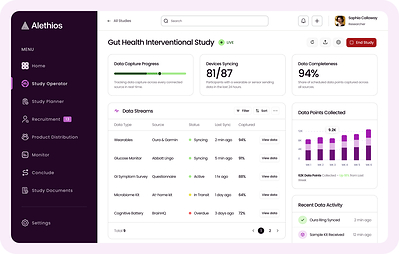
SAN FRANCISCO, Oct. 22, 2026 /PRNewswire/ — Alethios, the software platform delivering research infrastructure for human health, today launched a comprehensive suite of decentralized data collection tools. Researchers can now combine participant-reported outcomes, wearable and sensor data, digital biomarkers, and at-home biomarker testing in a single study, without writing code, managing multiple vendors, or requiring clinic visits.

Alethios powers studies across nutraceuticals, functional foods, academia, consumer health, medical devices, biotech, and the life sciences. Study designs range from consumer perception studies to pivotal, randomized, double-blind, placebo-controlled trials all run on the same software platform. Customers  including Givaudan, Thorne, PLT Health Solutions, Applied Food Sciences, Hofseth BioCare, Helaina, Samphire Neuroscience, and Sonoran University use the platform to generate rigorous evidence from participants’ homes. The new integrations build on the company’s founding belief that rigorous, multimodal research should be within reach for teams of every size and budget, across the human health ecosystem.

The suite spans four layers of data, each available as a no-code integration within the Alethios Study Planner and Study Operator:

Reported data: participant-submitted photo, video, audio, and text, plus a library of clinically validated instruments, both publicly available and licensed.Generated health data: personal wearables and health platforms including Apple Watch, Google Health, Garmin, Oura, Whoop, and Fitbit, and sensors including Abbott’s continuous glucose monitors and Withings and InBody bioimpedance scales.Digital biomarkers: validated cognitive batteries powered by BrainHQ, skin health selfies for dermatology and cosmetic studies powered by Haut.ai, and 3D body composition scans powered by Prism Labs.At-home biomarker testing: dried blood spot cards, Tasso blood collection devices, and at-home microbiome kits. Standard panels, including male and female hormones, cardiovascular, metabolic, inflammation, vitamin D, and hydration, run through Choose Health. Next-generation tests include epigenetic clocks from Muhdo and TruDiagnostic, and gut and vaginal microbiome sequencing from GutID and other shotgun metagenomic sequencing partners.

Adding a data type takes a few clicks. In the Study Planner, researchers select the data types their study needs and place each one on the participant schedule. For at-home kits, Alethios can handle ordering, shipping, and unique ID verification to keep every sample matched with the right participant, and results flow back into the platform. Once a study is live, the Study Operator brings every data stream into one real-time monitoring dashboard.

Compliant Data Collection by Default

Every integration runs on the platform’s existing infrastructure, where validation and data integrity assurances are built in and each one is designed to encourage participant adherence without compromising data quality. Researchers can:

Schedule each integration on the study timeline, so every data point is accurately time-stamped.Tie completion and compliance to milestone-based tracking and compensation, for example releasing a $50 gift card once a participant’s kit is accessioned at the lab.Monitor adherence across multiple data types in real-time from the Study Operator, so missed wearable syncs, late surveys, or unreturned kits are caught before they turn into missing data.

Every data point is cleaned and aligned to its participant automatically, so research teams receive one analysis-ready dataset rather than stitching together exports from multiple vendors.

“We built Alethios for researchers across human health,” said Zeenia Framroze, Founder and CEO of Alethios. “There are so many new ways to collect data at home, and we want to give research teams the best of them, wherever they sit. Whether someone is designing a claims substantiation study for a supplement or running post-marketing surveillance for a drug, we want to make it easy to collect robust subjective and objective data from Alethiad participants around the nation. The better and more accessible data collection is, the more we move the needle on our understanding of all of human health.”

A Home for Next-Generation Health Measurement

“So many novel devices and at-home tests are being developed today,” said Gurpreet Atwal, CTO of Alethios. “We want Alethios to be the tool scientists and innovators use to rapidly develop and validate new methods of data collection, and the home for the newest, best-in-class technologies for measuring human health. With rapid recruitment through the Alethiad Participant Community, those technologies can be tested with diverse, representative participants from day one.”

Companies developing novel devices, tests, or digital biomarkers can apply to integrate with Alethios here.

About Alethios

Alethios is a software platform delivering research infrastructure for human health. Its AI-powered, full-stack software delivers the capabilities of a study team without the overhead. The platform unifies protocol design, IRB coordination, recruitment, participant management, multimodal data collection, and reporting for decentralized clinical trials. Principal investigators, sponsors, and CROs rely on Alethios to generate rigorous real-world evidence across human health industries, setting up a study in minutes with plans starting at $100 per month. Through the Study Planner, Study Operator, and the Alethiad Participant Community, research teams can use the software in a self-service, hybrid, or fully turn-key model, at a fraction of the cost of traditional research.Alethios is a 2026 Nutra Healthspan Innovator Award winner, a 2026 Vitafoods Europe Startup Challenge finalist, and a 2025 NutraIngredients-USA Startup Award finalist. Get started at Alethios.com.

View original content to download multimedia:https://www.prnewswire.com/news-releases/alethios-unveils-a-comprehensive-decentralized-data-collection-suite-for-human-health-research-302916518.html

SOURCE Alethios, Inc.

Continue Reading

Technology

7 out of 10 Individuals Hit by Data Breaches Via Third Party, Kroll Finds

Published

on

By

Breaches at technology and insurance firms affected the most individuals
in Kroll cases, highlighting the wider damage a single incident can cause

NEW YORK, Oct. 22, 2026 /PRNewswire/ — Kroll, the leading independent provider of financial and risk advisory solutions, today revealed that two-thirds of organizations surveyed (69%) suffered a data breach in the past year. More than a third (34%) were breached more than once, according to its 2026 annual Data Breach Outlook.

Further analysis showed that financial services accounted for the largest share of organizations breached in Kroll’s cases, at 20%, but a single breach at a technology provider can expose data belonging to customers of hundreds of businesses that use its services.

Of the incidents handled by Kroll in the twelve months between June 2025 and June 2026, 69% of affected individuals were impacted by a third-party breach. 79% of those individuals were affected by a breach from the technology sector, which is significantly higher compared to the finance (9%), insurance (6%) or healthcare (5%) sectors.

Breaches at technology firms accounted for the largest number of affected individuals, followed by insurers, despite ranking seventh and ninth respectively for the total number of organizations breached.

Data and Trends from the Kroll Data Breach Outlook 2026

Repeated breaches are common. Of the 250 leaders surveyed by Kroll, 69% said their organization had suffered a breach in the previous 12 months, while 34% reported experiencing more than one.IT teams are far more concerned about third parties than senior leaders. More than half (54%) of IT and technology leaders identified vendor and third-party breaches as their biggest compliance risk, compared with 40% of C-suite executives and 30% of risk and compliance leaders.Third-party relationships complicate the response. Dependence on vendors was among the top four challenges leaders faced when making breach-response decisions, cited by 41% of respondents.A small number of breaches can have a wide impact. Technology ranked seventh for the number of organizations breached but first for the total number of individuals affected. Insurance ranked ninth for the number of organizations breached but second for the total number of individuals affected.

Denyl Green, Global Head of Breach Notification at Kroll says, “Kroll handles thousands of incidents every year. Across most of the major incidents we handled over the past year, a vendor, software supplier or service provider was the link between the initial breach and the organizations affected. One incident can reach businesses and individuals who have never dealt directly with the company where the compromise began.”

“As AI agents are given more access to systems and sensitive data, breach risk rises across both human on non-human identities. Data and identity governance are becoming even more complex, and we expect AI to feature more prominently in Kroll’s Data Breach Outlook next year, both as a tool used by attackers and as a source of exposure for businesses adopting it.”

“When a supplier is breached, every client needs to determine whose data was affected and whether customers and regulators need to be notified. The businesses that respond most effectively have already mapped their third-party relationships and the subsequent domino effect, with an agreed plan in place before an incident happens. That preparation can reduce both the complexity and the cost of managing a breach, as well as give greater peace of mind.”

Katherine Keefe, Global Cyber Insurance Industry Lead at Kroll says, “Kroll’s breach data shows a single supplier breach can trigger dozens or even hundreds of cyber insurance claims from businesses whose only connection is that they use the same provider. These scenarios exponentially increase potential cyber insurance losses compared to breaches affecting a single business.”

“Cyber underwriters are already responding, not only by more closely scrutinizing how businesses manage their suppliers, but also by identifying potential single points of failure which may be caused by vendors and suppliers serving wide swaths of industry. Cyber insurance claims teams managing aggregated losses are also impacted and require efficient incident response and breach notification best practices when multiple policyholders are affected by the same event.”

“Cyber insurers now know that identifying dependencies on common vendors is critical to assessing and minimizing the risk that one breach will impact many policyholders.”

Kroll’s Cyber and Data Resilience (CDR) practice guides organizations through cyber crises, from incident response and cyber risk strategy to process and software controls and managed security operations. Within CDR, the Data Breach team handles some of the largest and most complex notification programs in the world. Often serving as part of a broader cyber incident response, Kroll’s data breach notification services help organizations rapidly navigate multi-jurisdictional requirements, including call center and credit monitoring services, to meet regulatory obligations and protect their reputation. Learn more: https://www.kroll.com/en/services/cyber/breach-notification.

About the Data Breach Outlook 2026 report

The Data Breach Outlook 2026, launched in October 2026, draws on two sources: an analysis of data breach incidents handled by Kroll’s Cyber and Data Resilience practice between June 2025 and June 2026, and a companion survey of 250 risk and compliance leaders and C-suite executives and board members, conducted by Kroll in 2026, examining how organizations experience and respond to breach events, including the role of vendor and third-party relationships.

About Kroll

As the leading independent provider of financial and risk advisory solutions, Kroll leverages our unique insights, data and technology to help clients stay ahead of complex valuation demands. Kroll’s team of more than 6,500 professionals worldwide continues the firm’s nearly 100-year history of trusted expertise spanning risk, governance, transactions and valuation. Our advanced solutions and intelligence provide clients the foresight they need to create an enduring competitive advantage. At Kroll, our values define who we are and how we partner with clients and communities. Learn more at kroll.com.

View original content to download multimedia:https://www.prnewswire.com/news-releases/7-out-of-10-individuals-hit-by-data-breaches-via-third-party-kroll-finds-302916280.html

SOURCE Kroll Associates

Continue Reading

Technology

Innodisk Launches All-in-One GMSL2™ Camera Starter Kit to Accelerate Edge AI Vision Deployment

Published

on

By

TAIPEI, Oct. 22, 2026 /PRNewswire/ — Innodisk, a leading global AI solution provider, today announced the Innodisk GMSL2™ Camera Starter Kit, an all-in-one vision solution that bundles four 3MP GMSL2™ camera modules, a capture card, FAKRA cables, and other necessary accessories.

A milestone in Innodisk’s edge AI vision strategy, the kit lets customers set up a multi-camera system and begin validation right out of the box, shortening the path from proof of concept (PoC) to deployment. Full camera source code is included, giving customers flexibility throughout development and maintenance.

As AI vision moves toward multi-camera perception in robotics and intelligent vehicles, integrating cameras, capture cards, drivers, and host platforms has become increasingly complex, often taking six months or more before validation. The starter kit’s pre-integrated hardware and software driver enable system integrators to speed up time-to-market.

All-in-One Multi-Camera Integration for Faster Setup and Validation

GMSL2™ is a high-speed video transmission technology that originated in automotive applications and offers long-distance connectivity. Unlike plug-and-play USB cameras, it requires a dedicated capture card and platform-specific drivers. The starter kit includes four 3MP fixed-focus GMSL2™ camera modules, a capture card, four FAKRA cables, a power adapter, power cords, and a quick start guide. It also provides camera source code for the widely adopted NVIDIA Jetson Orin Nano Super Developer Kit, so users can bypass component sourcing, system-level integration, driver debugging, and tuning.

“The biggest challenge in a multi-camera AI vision project is often not the AI application itself, but the camera integration and system tuning that come before it,” said CK Hsu, Senior Manager of the Camera Product Business Department at Innodisk. “With the GMSL2™ Camera Starter Kit, Innodisk takes on the complexity of early-stage integration so customers can focus on development and move into PoC sooner.”

Source Code Included for Seamless Customization

With the camera source code in hand, engineering teams can independently adapt the software driver to their own requirements and use the kit as a working foundation for further development. Innodisk also provides comprehensive customization services from hardware fine-tuning to application deployment, helping customers move smoothly into design-in and mass production.

Expanding GMSL2™ Portfolio for Diverse Edge AI Scenarios

The kit supports edge AI scenarios including blind spot detection and advanced driver assistance systems (ADAS) for heavy-duty vehicles, object recognition and environmental perception for humanoid robots and AMRs.

View original content to download multimedia:https://www.prnewswire.com/apac/news-releases/innodisk-launches-all-in-one-gmsl2-camera-starter-kit-to-accelerate-edge-ai-vision-deployment-302916771.html

SOURCE Innodisk Corporation

Continue Reading

Trending