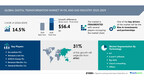
NEW YORK, Feb. 7, 2025 /PRNewswire/ — Report with the AI impact on market trends – The global digital transformation market in oil and gas industry size is estimated to grow by USD 56.4 billion from 2025-2029, according to Technavio. The market is estimated to grow at a CAGR of 14.5% during the forecast period. Rise in investments and partnerships is driving market growth, with a trend towards use of digital twin technology. However, lack of skilled labor poses a challenge. Key market players include Accenture PLC, Amazon.com Inc., AVEVA Group Plc, Emerson Electric Co., General Electric Co., Halliburton Co., Informatica Inc., Intel Corp., International Business Machines Corp., Microsoft Corp, NVIDIA Corp., Oracle Corp, Rockwell Automation Inc., SAP SE, Siemens AG, Sierra Wireless Inc., Tata Consultancy Services Ltd., Teradata Corp., and TIBCO Software Inc..
AI-Powered Market Evolution Insights. Our comprehensive market report ready with the latest trends, growth opportunities, and strategic analysis- View Free Sample Report PDF
Forecast period
2025-2029
Base Year
2024
Historic Data
2019 – 2023
Segment Covered
Technology (IoT, E and P software, Big data, Cloud computing, and Others), Sector (Downstream, Upstream, and Midstream), and Geography (APAC, North America, Middle East and Africa, Europe, and South America)
Region Covered
APAC, North America, Middle East and Africa, Europe, and South America
Key companies profiled
Accenture PLC, Amazon.com Inc., AVEVA Group Plc, Emerson Electric Co., General Electric Co., Halliburton Co., Informatica Inc., Intel Corp., International Business Machines Corp., Microsoft Corp, NVIDIA Corp., Oracle Corp, Rockwell Automation Inc., SAP SE, Siemens AG, Sierra Wireless Inc., Tata Consultancy Services Ltd., Teradata Corp., and TIBCO Software Inc.
Key Market Trends Fueling Growth
The Oil and Gas industry is undergoing a significant digital transformation. Trends like Big Data, Cloud Computing, IoT, AI, and Digital twins are revolutionizing Upstream, Midstream, and Downstream operations. In Exploration, Geoscience platforms use Data Science to analyze drilling prospects. In Refining, AI-based simulation and Prescriptive Maintenance optimize refinery throughput and manufacturing efficiency. Industrial Control Systems are being automated for better asset utilization and risk management. Extended Reality solutions monitor critical assets and facilities, enhancing safety and preventing fires. Field Devices and Sensor Systems use Predictive Analytics for preventive maintenance. Crude oil demand and refinery processes are monitored in real-time for optimal performance. Computer Vision and Turnaround planning tools ensure manufacturing efficiency and safety. Energy industries are embracing Digitalization, from Gas Stations to Petrochemicals, for improved risk management and operational excellence.
The oil and gas industry is embracing digital transformation by integrating technologies like the digital twin. This innovation allows companies to create virtual models of their products, enabling comparison of actual and ideal conditions. By adopting digital twin technology, oil and gas firms can enhance safety, foster learning, and innovate production processes. Digital technology facilitates disparate views of sub-surface and surface systems, contributing to cost savings in energy production.
Insights on how AI is driving innovation, efficiency, and market growth- Request Sample!
Market Challenges
The Oil and Gas industry is undergoing a significant digital transformation. Challenges such as Big Data, Cloud Computing, Internet of Things (IoT), Artificial Intelligence (AI), and Industrial Control Systems (ICS) are driving this change. Upstream, midstream, and downstream sectors are adopting digital solutions to monitor critical assets, optimize operations, and improve safety. Extended reality solutions are used to train workers and maintain facilities. Digital twins help explore new prospects in exploration and geoscience. Crude oil demand, High Speed Diesel, and refinery throughput are monitored using AI-based simulation and predictive analytics. Preventive maintenance is automated using prescriptive maintenance and sensor systems. Downstream operations, including petrochemicals, refining, and manufacturing efficiency, are improved using automation solutions and turnaround planning tools. Computer Vision is used for risk assessment and safety. The energy industries are digitalizing to monitor equipment performance, optimize energy usage, and manage application performance. IoT sensors are used to monitor critical assets, and AI is used for predictive maintenance and risk assessment. Extended reality solutions are used for training workers and maintaining facilities. Critical assets, including facilities and gas stations, are monitored using digitalization. AI and machine learning are used for optimization, automation, and risk assessment. Digitalization also helps in real-time monitoring of refining processes and preventive maintenance. The digital transformation in the Oil and Gas industry is essential for improving efficiency, reducing costs, and enhancing safety. It involves the adoption of various technologies such as Big Data, Cloud Computing, IoT, AI, and Extended Reality. The challenges include ensuring cybersecurity, integrating legacy systems, and training workers on new technologies. Despite these challenges, the benefits of digital transformation in the Oil and Gas industry are significant.Oil and gas producers are implementing advanced technologies, such as Artificial Intelligence (AI), Machine Learning (ML), Internet of Things (IoT) solutions, and big data analytics, to boost their return on investments. Big data has gained popularity due to the growing awareness of data-driven solutions. However, transforming massive datasets into valuable insights using big data analytics solutions necessitates technological expertise and analytics capabilities. Identifying the pertinent data for storage and processing is a significant challenge for professionals in data management. Moreover, analyzing unstructured data requires additional effort. Real-time analytics using big data and cloud-based software solutions offer oil and gas companies innovative opportunities to enhance oil production process efficiency, minimize costs and risks, ensure regulatory compliance, enhance safety, and make informed decisions.
Insights into how AI is reshaping industries and driving growth- Download a Sample Report
Segment Overview
This digital transformation market in oil and gas industry report extensively covers market segmentation by
TechnologyIoTE And P SoftwareBig DataCloud ComputingOthersSectorDownstreamUpstreamMidstreamGeographyAPACNorth AmericaMiddle East And AfricaEuropeSouth America
1.1 IoT- The oil and gas industry faces economic pressures from disparities in demand and supply, as well as volatile global energy prices. To address these challenges, companies are focusing on enhancing and extending the value of their existing assets while seeking new reserves. The implementation of Internet of Things (IoT) technology is a key strategy for transformation. In the upstream segment, IoT reduces non-productive time by enabling predictive maintenance of crucial equipment. In the midstream segment, IoT connects pipeline networks, monitors leaks and emissions, and optimizes emergency shutdown systems. In the downstream segment, real-time data analysis enables accurate consumer consumption predictions. IoT solutions in oil and gas are projected to increase crude output, profits, and global GDP. By deploying IoT devices across the value chain, organizations can make better decisions, create a safer working environment, and optimize operations. These benefits will drive the growth of the global digital transformation market in oil and gas industry.
Download complimentary Sample Report to gain insights into AI’s impact on market dynamics, emerging trends, and future opportunities- including forecast (2025-2029) and historic data (2019 – 2023)
Research Analysis
The Digital Transformation Market in the Oil and Gas Industry is experiencing significant growth as companies seek to optimize operations, enhance safety, and improve efficiency. The integration of technologies like Big Data, Cloud Computing, Internet of Things (IoT), Artificial Intelligence (AI), and Industrial Control Systems (ICS) is revolutionizing the sector. Upstream, midstream, and downstream processes are being digitized, with a focus on monitoring critical assets and exploration prospects using data science and geoscience platforms. Extended Reality (XR) solutions are being used to train personnel and simulate complex processes, while AI-based simulation and automation are streamlining workflows. Field devices and gas stations are being connected to the cloud for real-time monitoring and preventive maintenance. Computer Vision is being used to detect anomalies and prevent fires. Digitalization is transforming energy industries, from automating processes to optimizing petrochemicals production.
Market Research Overview
The Digital Transformation Market in the Oil and Gas Industry is witnessing significant growth due to the integration of advanced technologies such as Big Data, Cloud Computing, Internet of Things (IoT), Artificial Intelligence (AI), Industrial Control Systems, Extended Reality (XR), and Field Devices. These technologies are revolutionizing Upstream, Midstream, and Downstream operations in the Energy Industries. Big Data and Data Science are used for Exploration Prospects and Geoscience Platforms to enhance Crude Oil Demand and High Speed Diesel production. Cloud Computing and AI-based Simulation optimize Refining Processes and improve Asset Utilization and Manufacturing Efficiency. IoT Sensor Systems monitor equipment performance, preventive maintenance, and detect potential Fires. XR solutions provide Workers with training experiences and facilitate Remote Operations. Automation and Optimization tools reduce Risk and improve Safety in critical assets and facilities. Predictive Analytics and Prescriptive Maintenance enable Preventive measures, while Computer Vision and AI enhance Turnaround Planning and Application Performance Management. The Digitalization of Downstream operations, including Petrochemicals and Refining, leads to increased Refinery Throughput and improved Crude Oil Demand forecasting.
Table of Contents:
1 Executive Summary
2 Market Landscape
3 Market Sizing
4 Historic Market Size
5 Five Forces Analysis
6 Market Segmentation
TechnologyIoTE And P SoftwareBig DataCloud ComputingOthersSectorDownstreamUpstreamMidstreamGeographyAPACNorth AmericaMiddle East And AfricaEuropeSouth America
7 Customer Landscape
8 Geographic Landscape
9 Drivers, Challenges, and Trends
10 Company Landscape
11 Company Analysis
12 Appendix
About Technavio
Technavio is a leading global technology research and advisory company. Their research and analysis focuses on emerging market trends and provides actionable insights to help businesses identify market opportunities and develop effective strategies to optimize their market positions.
With over 500 specialized analysts, Technavio’s report library consists of more than 17,000 reports and counting, covering 800 technologies, spanning across 50 countries. Their client base consists of enterprises of all sizes, including more than 100 Fortune 500 companies. This growing client base relies on Technavio’s comprehensive coverage, extensive research, and actionable market insights to identify opportunities in existing and potential markets and assess their competitive positions within changing market scenarios.
Contacts
Technavio Research
Jesse Maida
Media & Marketing Executive
US: +1 844 364 1100
UK: +44 203 893 3200
Email: media@technavio.com
Website: www.technavio.com/
View original content to download multimedia:https://www.prnewswire.com/news-releases/digital-transformation-market-in-oil-and-gas-industry-set-to-grow-by-usd-56-4-billion-from-2025-2029–driven-by-investments-with-ai-driving-market-transformation—technavio-302370791.html
SOURCE Infiniti Research, Inc.









 Technology4 days ago


 Coin Market5 days ago

 Near Videos4 days ago

 Technology3 days ago

 Technology5 days ago


 Technology5 days ago