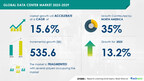
NEW YORK, Feb. 11, 2025 /PRNewswire/ — Report on how AI is redefining market landscape – The global data center market size is estimated to grow by USD 535.6 billion from 2025-2029, according to Technavio. The market is estimated to grow at a CAGR of 15.6% during the forecast period. Rise in adoption of multi-cloud and network upgrades is driving market growth, with a trend towards implementation of ai in data centers. However, cybersecurity issues poses a challenge. Key market players include 365 Data Centers, Amazon.com Inc., Apple Inc., China Telecom Corp. Ltd., Cisco Systems Inc., CyrusOne LLC, Cyxtera Technologies Inc., Digital Realty Trust Inc., Equinix Inc., Google LLC, Hewlett Packard Enterprise Co., Intel Corp., International Business Machines Corp., KDDI Corp., Microsoft Corp., Nippon Telegraph and Telephone Corp., Oracle Corp., Salesforce Inc., SAP SE, and Verizon Communications Inc..
Key insights into market evolution with AI-powered analysis. Explore trends, segmentation, and growth drivers- View Free Sample PDF
Data Center Market Scope
Report Coverage
Details
Base year
2024
Historic period
2019 – 2023
Forecast period
2025-2029
Growth momentum & CAGR
Accelerate at a CAGR of 15.6%
Market growth 2025-2029
USD 535.6 billion
Market structure
Fragmented
YoY growth 2022-2023 (%)
13.2
Regional analysis
North America, APAC, Europe, South America, and Middle East and Africa
Performing market contribution
North America at 35%
Key countries
US, China, UK, Canada, Japan, Germany, India, France, Italy, and Brazil
Key companies profiled
365 Data Centers, Amazon.com Inc., Apple Inc., China Telecom Corp. Ltd., Cisco Systems Inc., CyrusOne LLC, Cyxtera Technologies Inc., Digital Realty Trust Inc., Equinix Inc., Google LLC, Hewlett Packard Enterprise Co., Intel Corp., International Business Machines Corp., KDDI Corp., Microsoft Corp., Nippon Telegraph and Telephone Corp., Oracle Corp., Salesforce Inc., SAP SE, and Verizon Communications Inc.
Market Driver
Data Centers are at the heart of the digital economy, powering IT infrastructure for businesses, individuals, and government organizations. Trends like Artificial Intelligence, Machine Learning, IoT, and Cloud Computing are driving the need for more data processing power and real-time data analysis. Green Data Centers are becoming essential as businesses seek to reduce their carbon footprint and save costs. The Department of Energy and Enterprise Engineering Solutions are leading the charge towards energy-efficient and sustainable data center designs. Cloud computing and Edge Computing offer cost savings, scalability, and flexibility for businesses. Real-time data processing is crucial for industries like autonomous vehicles and smart cities. Decentralized Data Centers and local special circumstances are becoming more common due to data sovereignty regulations and macroeconomic factors. The digitalization of industries like online retail, e-commerce, and personalized data storage require massive data center workloads and application performance. Hardware-related expenses, data security, and backups are top concerns for customers. Internet bandwidth, managed hosting, and colocation are popular solutions for businesses seeking to optimize their IT infrastructure. Big data and data analytics are key drivers of growth, with hyper-scale platforms and colocation data centers leading the way. Business leaders must stay competitive by adapting to these trends and investing in the right data center solutions. Cloud technology, data center systems, and data security are critical areas of focus. The exponential trend of digitization, driven by the S-curve function and internet penetration, will continue to shape the data center market.
Data centers are enhancing energy efficiency through the implementation of Artificial Intelligence (AI). AI technology optimizes server, power, and cooling system performance, enabling quicker decisions and improved efficiency. Data center service providers utilize AI in automation software to reduce human intervention and promote energy-efficient operations. AI also facilitates effective cooling control, adjusting cooling processes and maximizing power usage in data centers. By implementing AI, data centers aim to boost performance, minimize downtime, and reduce human errors.
Request Sample of our comprehensive report now to stay ahead in the AI-driven market evolution!
Market Challenges
Data Centers face numerous challenges in today’s digital world. Artificial Intelligence and Machine Learning require massive computing power, driving the need for advanced IT infrastructure. The Internet of Things (IoT) and Cloud Computing increase data volumes, demanding scalability and flexibility. Green Data Centers address energy efficiency concerns, while Department of Energy grants support innovation. Enterprise Engineering Solutions and Software Testing Help ensure system reliability. Businesses and individuals generate vast amounts of data, driving the need for cost savings and real-time processing. Digitalization, IoT devices, and autonomous vehicles create latency issues. Decentralized Data Centers address local special circumstances and data sovereignty regulations. Macroeconomic factors, such as exchange rates and business leaders’ decisions, impact data center investments. Cloud technology, data center systems, and colocation offer solutions for B2B enterprises, while hardware-related expenses and data security concerns persist. National statistical offices track the level of digitization, and trends show an exponential increase. Big data and data analytics require specialized regions and hyper-scale platforms. Managed hosting, colocation, and public cloud offer options for application performance, storage requirements, and mobile data use. Data security, backups, and Internet bandwidth remain critical concerns. Online retail, e-commerce, and personalized data storing and analyzing drive cloud data storage demand. Application performance, storage requirements, and lost data are key concerns. The digital economy, internet penetration, and mobile usage continue to grow, increasing the importance of data centers. Cloud technology, data center workloads, and application performance are essential for business success. Competitors in various industries rely on data centers for their digital transformation.Enterprises heavily rely on data for generating revenue through trend analysis and informed decision-making. However, securing sensitive data, such as customer information, is a significant challenge. The increasing adoption of cloud services and IoT solutions heightens the risk of cyberattacks. Cybercriminals can exploit IT security vulnerabilities to gain unauthorized access to enterprise servers, potentially compromising valuable data and causing business disruption. This threat is particularly concerning for small enterprises, as a successful attack could lead to devastating consequences. It is crucial for businesses to prioritize data security measures to protect their digital assets and mitigate the risks associated with the evolving cyber threat landscape.
Discover how AI is revolutionizing market trends- Get your access now!
Segment Overview
This data center market report extensively covers market segmentation by
ComponentIT InfrastructurePower ManagementMechanical ConstructionGeneral ConstructionSecurity SolutionsEnd-userBFSIEnergyITOthersGeographyNorth AmericaAPACEuropeSouth AmericaMiddle East And AfricaDesignTraditionalContainerizedModular
1.1 IT infrastructure- The data center IT infrastructure market consists of server infrastructure, storage infrastructure, software-defined data centers (SDDC), network infrastructure, converged infrastructure, backup and recovery software, automation software, and data center infrastructure management (DCIM) solutions. The increasing demand for computing power and storage to support data traffic growth is driving the market. Enterprises are shifting from on-premises to cloud-based data centers, and hyperscale data centers (HDCs) are investing heavily, increasing the demand for servers, storage infrastructure, and other IT equipment. Server infrastructure processes data, runs applications, and stores data. Enterprises aim to shift investments from capital expenditure (CAPEX) to operational expenditure (OPEX) and consolidate, virtualize, and containerize computing needs. Rack servers are the most widely used due to their suitability for enterprises with fixed requirements. The server infrastructure segment is growing due to green, colocation, and HDC expansions and technology refresh cycles. Storage infrastructure includes direct-attached storage (DAS), network-attached storage (NAS), and storage area networks (SAN). The exponential growth in data drives the demand for storage infrastructure. Social media applications and IoT deployment are significant contributors to data volume growth. NVMe SSDs and high-speed networks like LTE and 5G are also driving the segment. SDDCs are virtualized data centers managed through software. They offer cost savings, efficiency, control, and flexibility. Software-defined computing, networking, and storage are SDDC components. The adoption of cloud solutions is driving the SDDC segment’s growth. Network infrastructure includes Ethernet switches, routers, application delivery controllers (ADCs), and SD-WAN appliances. Virtualization is a key factor driving the sale of data center Ethernet switches. High-capacity switches are needed to handle east-west and north-south traffic. Cloud service providers demand higher capacity switches. Converged infrastructure combines multiple IT components into a single integrated computing package. It reduces data center footprint, management complexity, and costs. Hyper-converged infrastructure (HCI) is gaining popularity due to its scalability and cost savings. Data center automation software enables centralized access to data center resources and automates routine tasks. It offers features like scheduling, monitoring, patching, updating, reporting, and compliance. Cloud-based data center automation software is driving adoption due to its low upfront cost. Data center backup and recovery software enables periodic backup and instantaneous recovery of data. Enterprises are adopting online backup solutions and cloud backup services due to the advantages associated with cloud storage. DCIM solutions facilitate data center administration with an overall integrated view for asset and capacity management, energy management, power and cooling, and network management. Enterprises, colocation providers, and hyperscalers focus on energy efficiency and green data centers, driving the DCIM solutions segment.
Download a Sample of our comprehensive report today to discover how AI-driven innovations are reshaping competitive dynamics
Research Analysis
The Data Center market is experiencing significant growth due to the increasing demand for IT infrastructure to support Artificial Intelligence (AI) and Machine Learning (ML) applications, Internet of Things (IoT) devices, and the digitalization of businesses and individual lives. Cloud computing and edge computing are driving this trend, allowing for cost savings, scalability, and flexibility. Real-time data processing is crucial for online retail and e-commerce businesses, making data centers an essential component of their operations. Data center systems enable businesses to store, analyze, and manage their data center workloads efficiently. However, the risk of lost data and the need for speed and security are major concerns. Cloud technology continues to disrupt the traditional on-premises infrastructure, offering benefits such as cost savings, scalability, and real-time data processing. AI and ML are also being integrated into data center management to optimize performance and reduce energy consumption.
Market Research Overview
The Data Center market is experiencing significant growth as businesses and individuals increasingly rely on IT infrastructure for digitalization. Artificial Intelligence and Machine Learning are driving the demand for real-time data processing and analysis in Cloud computing and Edge computing. The Internet of Things (IoT) is generating massive amounts of data, requiring Decentralized Data Centers for local processing and storage. Green Data Centers are becoming essential to reduce energy consumption and costs. Macroeconomic factors, digital economy, and internet penetration are key drivers, with B2B enterprises and national statistical offices leading the way. Hardware-related expenses, data security, and data sovereignty regulations are major concerns. The market is showing an exponential trend, with the S-curve function indicating continued growth. Cost savings, scalability, and flexibility are key benefits. Applications include autonomous vehicles, smart cities, and e-commerce. Data center workloads require application performance, storage requirements, and mobile data use considerations. Data security, backups, and internet bandwidth are critical components. Managed hosting, colocation, and public cloud solutions are available for various business needs. Hyper scale platforms and colocation data centers are popular choices for big data and data analytics. Amazon Web Services and other cloud technology providers offer intelligent buildings and specialized regions to meet diverse customer needs.
Table of Contents:
1 Executive Summary
2 Market Landscape
3 Market Sizing
4 Historic Market Size
5 Five Forces Analysis
6 Market Segmentation
ComponentIT InfrastructurePower ManagementMechanical ConstructionGeneral ConstructionSecurity SolutionsEnd-userBFSIEnergyITOthersGeographyNorth AmericaAPACEuropeSouth AmericaMiddle East And AfricaDesignTraditionalContainerizedModular
7 Customer Landscape
8 Geographic Landscape
9 Drivers, Challenges, and Trends
10 Company Landscape
11 Company Analysis
12 Appendix
About Technavio
Technavio is a leading global technology research and advisory company. Their research and analysis focuses on emerging market trends and provides actionable insights to help businesses identify market opportunities and develop effective strategies to optimize their market positions.
With over 500 specialized analysts, Technavio’s report library consists of more than 17,000 reports and counting, covering 800 technologies, spanning across 50 countries. Their client base consists of enterprises of all sizes, including more than 100 Fortune 500 companies. This growing client base relies on Technavio’s comprehensive coverage, extensive research, and actionable market insights to identify opportunities in existing and potential markets and assess their competitive positions within changing market scenarios.
Contacts
Technavio Research
Jesse Maida
Media & Marketing Executive
US: +1 844 364 1100
UK: +44 203 893 3200
Email: media@technavio.com
Website: www.technavio.com/
View original content to download multimedia:https://www.prnewswire.com/news-releases/data-center-market-to-grow-by-usd-535-6-billion-2025-2029-driven-by-multi-cloud-adoption–network-upgrades-with-ai-impacting-market-trends—technavio-302372300.html
SOURCE Technavio










 Technology5 days ago
 Technology5 days ago
 Technology5 days ago
 Coin Market5 days ago
 Technology4 days ago
 Technology2 days ago
 Technology5 days ago