Connect with us

Technology

Bandwidth Releases 2025 State of Messaging Report: RCS, Deliverability and Consumer Trust Take Center Stage

Published

on

Report is a must-read playbook for enterprises to maximize engagement, improve deliverability and future-proof their business text messaging strategies

RALEIGH, N.C., Feb. 25, 2025 /PRNewswire/ — Bandwidth Inc. (NASDAQ: BAND), a leading global enterprise cloud communications company, today announced the release of its highly anticipated 2025 State of Messaging Report, which reveals the key trends shaping business messaging for enterprises worldwide.

As businesses navigate rising consumer expectations, evolving industry requirements and the emergence of next-gen messaging channels, Bandwidth’s new report provides critical insights to maximize engagement, improve deliverability and future-proof messaging strategies.

“Messaging remains one of the most powerful channels for enterprise communications, but the landscape is shifting rapidly,” said Tim Sherwood, Senior Vice President of Messaging and Mobility at Bandwidth. “With Apple’s adoption of RCS, along with global regulatory complexity and rising concerns over security and fraud, enterprises must evolve their approach to business messaging. Our latest report provides the knowledge and tools business senders need to adapt in this dynamic space and optimize their messaging investments to drive better consumer engagement.”

Key findings from the report include:

1. RCS will drive the next evolution of business messaging. With RCS (Rich Communication Services) now enabled on Apple devices, businesses are preparing for a more interactive, secure and engaging messaging experience. According to the report:

66 percent of businesses plan to increase their use of messaging once RCS is widely available.41 percent plan to use RCS for marketing campaigns, while 25 percent will leverage it for customer support.

2. Verified sending is a game-changer for building consumer trust. Consumers are increasingly skeptical of links sent via SMS due to phishing and fraud concerns. According to the report:

Branded messaging and verified sender status, features enabled by RCS, are becoming essential for enterprises to build trust and engagement.Verified messages allow businesses to use custom branding, rich media and interactive features directly within the native messaging app–improving response rates and consumer confidence.

3. Messaging rules and requirements are driving up costs. The report provides a best practices framework for navigating industry requirements and developing a strategy for long-term success. According to the report:

Businesses that fail to comply with registration requirements risk lower deliverability, increased costs and potential messaging disruptions.25 percent of businesses reported paying more due to recent changes in messaging rules and requirements.

4. Deliverability is the No. 1 factor when choosing a messaging provider. According to the report:

60 percent of businesses ranked message deliverability as the most important factor in selecting a messaging partner—above cost, features and capacity.

To improve message success rates, Bandwidth has invested in new tools and innovations, including:

Advanced Number Intelligence to monitor and maintain campaign list data,Real-time Traffic Monitoring and Alerting to help businesses maintain high deliverability, andMessage Registration Center to help business senders easily register campaigns and simplify compliance with carrier requirements.

Bandwidth’s 2025 State of Messaging Report is a must-read playbook for enterprises, SaaS platforms and marketers navigating the rapid evolution of business messaging. To download the full report and explore in-depth insights, visit here.

About Bandwidth Inc.
Bandwidth (NASDAQ: BAND) is a global cloud communications software company that helps enterprises deliver exceptional experiences through voice calling, text messaging and emergency services. Our solutions and our Communications Cloud, covering 65+ countries and over 90 percent of global GDP, are trusted by all the leaders in unified communications and cloud contact centers–including Amazon Web Services (AWS), Cisco, Google, Microsoft, RingCentral, Zoom, Genesys and Five9–as well as Global 2000 enterprises and SaaS builders like Docusign, Uber and Yosi Health. As a founder of the cloud communications revolution, we are the first and only global Communications Platform-as-a-Service (CPaaS) to offer a unique combination of composable APIs, AI capabilities, owner-operated network and broad regulatory experience. Our award-winning support teams help businesses around the world solve complex communications challenges every day. For more information, visit Bandwidth.com.


View original content to download multimedia:https://www.prnewswire.com/news-releases/bandwidth-releases-2025-state-of-messaging-report-rcs-deliverability-and-consumer-trust-take-center-stage-302383975.html

SOURCE Bandwidth Inc.

Continue Reading
Click to comment

Leave a Reply

Your email address will not be published. Required fields are marked *

Technology

Hisense Celebrates Earth Day: The Quiet Green Shift Happening Inside Households Through Smarter Appliances

Published

on

By

DUBAI, UAE, April 22, 2026 /PRNewswire/ — There’s something futuristic about a refrigerator that thinks for itself. Not in a science-fiction, take-over-the-world kind of way, but in the everyday miracle of a 620-litre side-by-side unit deciding, on its own, that 3am is the perfect time to run its compressor at minimal power because nobody’s opening the door anyway.

This is the green revolution that nobody talks about at climate summits. While world leaders debate carbon credits and industrial emissions, a quieter transformation is unfolding in kitchens, utility rooms, and living spaces across the UAE and beyond. It happens every time a washing machine calculates the precise amount of water needed for that half-load of towels, or when an air conditioner’s inverter technology throttles down instead of cycling on and off like an energy-guzzling metronome.

Earth Day, falling on 22 April this year, typically conjures images of tree-planting ceremonies and beach clean-ups. Worthy endeavours, certainly. But the environmental impact of what sits in your home, running twenty-four hours a day, seven days a week, fifty-two weeks a year, rarely gets the attention it deserves.

On average, washing machines use 19 gallons of water per load, and the average household runs between 5 and 6 loads per week. Based on those figures, most washers use up to 5,605 gallons of water annually . Swap that for a modern front-load unit with AI wash programs, like Hisense’s models, and that figure can drop by up to 50 percent. Multiply this across the roughly 500,000 households in Dubai alone, and we’re suddenly talking about water savings that would make a desalination plant executive weep with joy.

The same logic applies to electricity consumption, a particularly pressing concern in a region where summer temperatures regularly exceed 45°C and air conditioning is a necessity. The difference between a conventional split AC unit and one equipped with inverter technology isn’t marginal, it’s substantial enough to show up on utility bills within the first month of operation.

Intelligence as an Environmental Strategy

What makes the current generation of home appliances genuinely different isn’t just improved efficiency ratings or eco-labelling. It’s the integration of AI into the very fabric of how these machines operate.

Hisense, a brand that has positioned itself at this intersection of technology and sustainability, describes its approach as a “dual-track strategy of intelligence plus green development.” Its ConnectLife ecosystem, available on select refrigerators, washing machines, dishwashers, and air conditioners, monitors energy consumption in real-time, learns household patterns, and makes AI-driven recommendations that, over time, compound into meaningful resource savings.

A Hisense 14-place setting dishwasher with auto-wash technology, for instance, doesn’t simply run the same cycle regardless of load. It assesses soil levels and adjusts water temperature and duration accordingly. A half-load mode means running appliances at appropriate capacity rather than wasting resources on unnecessary full cycles.

Multi-airflow cooling systems that reduce temperature fluctuation and preserve food longer. No-frost technology that eliminates the energy waste of ice buildup. Inverter compressors that modulate power consumption rather than running at full throttle constantly. These technologies have existed in various forms for years. What’s changed is their integration into accessible price points and mainstream product lines, making efficient living achievable for households beyond the ultra-premium market.

The Gulf region presents a fascinating case study for domestic sustainability. Per capita energy consumption ranks among the highest globally, driven by climate control requirements, water desalination dependencies, and historically subsidised utility costs. Yet the UAE has simultaneously positioned itself as a regional leader in renewable energy investment and sustainability commitments.

This creates a unique environment where smart appliance adoption carries amplified significance. A 1.5-ton inverter split AC running across a typical Abu Dhabi summer doesn’t just save its owner money, it reduces the load on an electrical grid increasingly powered by solar and nuclear generation. The connection between individual choices and collective outcomes becomes tangible in ways that might seem abstract in milder climates.

The rise of connected appliances adds another dimension. Remote diagnostics can extend product lifespans by identifying minor issues before they become terminal failures. Software updates can improve efficiency algorithms years after purchase. Energy monitoring creates accountability loops that encourage conscious consumption patterns.

Steam wash functions on modern washing machines reduce the need for hot-water cycles while improving allergen removal. Anti-bacterial filters in air conditioning units address both health and environmental concerns simultaneously. These convergences suggest that the old tension between convenience and conscience may be resolving itself through engineering rather than requiring consumers to choose sides.

The Household as Climate Actor

There’s something democratic about domestic sustainability. Industrial emissions reductions require policy negotiations, capital investments, and coordination across complex stakeholder ecosystems. Choosing a more efficient refrigerator requires a trip to the appliance store and perhaps a slightly higher upfront cost that will recoup itself over the product’s operational lifetime.

This isn’t to diminish the necessity of systemic change, individual action cannot substitute for structural transformation. But the two approaches complement rather than compete. Households equipped with intelligent appliances consume fewer resources, place less strain on infrastructure, and model consumption patterns that cascade through communities.

The quiet green shift happening inside households won’t make headlines the way renewable energy megaprojects or electric vehicle adoption rates do. But every time that dishwasher calculates optimal water usage, every time that inverter compressor modulates instead of cycles, every time that smart refrigerator adjusts its cooling schedule based on door-opening patterns, something meaningful happens. Millions of these moments, aggregated across millions of households, compound into impact that rivals any single infrastructure project.

Photo – https://mma.prnewswire.com/media/2963033/Hisense_Earth_Day.jpg


View original content:https://www.prnewswire.co.uk/news-releases/hisense-celebrates-earth-day-the-quiet-green-shift-happening-inside-households-through-smarter-appliances-302750078.html

Continue Reading

Technology

Dreame Nebula NEXT Auto expands academic collaboration to accelerate AI-driven automotive innovation

Published

on

By

UC Berkeley engagement underscores long-term investment in autonomous systems, engineering depth and intelligent vehicle development

BERKELEY, Calif., April 22, 2026 /PRNewswire/ — Dreame Nebula NEXT Auto has deepened its engagement with leading academic institutions, including the University of California, Berkeley, as it accelerates development of AI-defined vehicles and next-generation autonomous systems. The collaboration signals a long-term commitment to advancing core technologies that will shape the future of intelligent automotive motion.

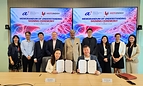
The engagement brought Nebula NEXT engineers and leadership together with Berkeley researchers specialising in autonomous control systems, AI and intelligent transportation. The sessions focused on translating advanced research into real-world vehicle systems, with particular emphasis on safety, control and full-stack AI integration.

Jake Ma, Executive of Dreame Nebula NEXT Auto, said: “We aren’t building a car. We are building a new brain for the physical world. To us, the car is the only physical mothership capable of carrying the extreme compute required by large AI models today.”

The visit forms part of a broader strategy to anchor Nebula NEXT’s development in deep technical collaboration. By working closely with academic experts, the company is strengthening its approach to autonomous driving, vehicle intelligence and system-level engineering.

Nebula NEXT builds on Dreame Technology’s foundation in precision engineering and AI-driven innovation. This heritage underpins a shift from software-defined vehicles to AI-defined vehicles, where intelligence is embedded across the entire system, from perception and decision-making to chassis and powertrain control.

The company’s technical direction centres on integrating AI into the core dynamics of how vehicles operate. This includes continuous learning systems, multi-agent architectures and high-performance computing platforms designed to support real-time decision-making in complex driving environments.

Nebula NEXT first drew global attention at CES 2026 with the debut of the Nebula NEXT 01, a four-door electric hyper-sedan concept. The vehicle delivers 1.8-second acceleration from 0 to 100 km/h, more than 2,000 horsepower and a lightweight structure built from proprietary Blue Carbon Fiber.

Momentum continued with a high-profile appearance during the Super Bowl LVIII broadcast, extending the brand’s reach across North America and reinforcing its position as an emerging force in automotive technology.

Alongside performance, the company continues to prioritise foundational innovation. Its architecture combines AI-native operating systems, zonal electrical design and high-density computing platforms to enable scalable, intelligent vehicle systems.

Nebula NEXT is now entering a phase focused on system execution, engineering depth and scalable technology development. The company will present further advances at an upcoming Silicon Valley event on 27 April 2026, where it will unveil new products and core technologies.

By combining global market momentum, academic collaboration and a focus on engineering fundamentals, Dreame Nebula NEXT is positioning itself at the centre of the transition to AI-defined mobility.

Media contact:
Li Tong, Dreame Nebula Next Auto PR head, litong2@dreame.tech
Website: https://www.dreametech.com

Photo – https://mma.prnewswire.com/media/2962967/Image_1.jpg
Photo – https://mma.prnewswire.com/media/2962968/Image_3.jpg
Photo – https://mma.prnewswire.com/media/2962966/Image_4.jpg

View original content:https://www.prnewswire.co.uk/news-releases/dreame-nebula-next-auto-expands-academic-collaboration-to-accelerate-ai-driven-automotive-innovation-302750079.html

Continue Reading

Technology

Sucden Financial Enables Client Trading in Shanghai Nickel Futures

Published

on

By

LONDON, April 22, 2026 /PRNewswire/ — Sucden Financial, the multi-asset execution, clearing and liquidity provider, announces that clients can now trade nickel futures and options on the Shanghai Futures Exchange (SHFE), following today’s opening of the contract to international participants.

Sucden Financial offers access to SHFE through its Overseas Intermediary status and established Chinese banking relationships. Clients can manage exposure across SHFE, the London Metal Exchange (LME) and more than 20 other global commodities markets through a single account.

In addition to SHFE nickel contracts, Sucden Financial’s clients can access the following Chinese exchanges: the Shanghai International Energy Exchange, the Dalian Commodity Exchange and the Zhengzhou Commodity Exchange.

Lucy Wainman, Head of Sales (China) at Sucden Financial, said:

“We are pleased to offer clients the opportunity to trade Shanghai nickel futures and options contracts, further broadening our access to Chinese markets. This milestone reflects the hard work of our team and the long-standing relationships we have built in China. We would like to thank SHFE and Chinese regulators for their support and constructive engagement.”

Marc Bailey, CEO of Sucden Financial, said:

“Expanding our global exchange coverage to include access to onshore mainland Chinese markets supports our organic growth strategy. By adding access to SHFE, we provide clients with an extended global reach through a single account. Continued investment in technology underpins our long-term commitment to our clients, enabling them to respond quickly to changing market dynamics and capture emerging opportunities.”

About Sucden Financial

With a history and heritage in commodity futures and options trading, Sucden Financial has evolved and diversified to become a leading global multi-asset execution, clearing and liquidity provider across FX, fixed income, and commodities.

Sucden Financial has a proven track record of over 50 years in financial markets. Since its foundation in 1973, it has been supported by its parent, Sucden, one of the world’s leading soft commodity trading groups, while remaining fully independent in its day-to-day trading operations.

Sucden Financial Limited is authorised and regulated by the Financial Conduct Authority.

linkedin.com/company/sucden-financial/
x.com/SucdenFinancial
sucdenfinancial.com

Logo : https://mma.prnewswire.com/media/2508678/5928643/Sucden_Financial_Logo.jpg

View original content to download multimedia:https://www.prnewswire.co.uk/news-releases/sucden-financial-enables-client-trading-in-shanghai-nickel-futures-302748869.html

Continue Reading

Trending