Connect with us

Technology

New Report Offers Valuable Insights into Gen Z’s Employment Struggles

Published

on

Insights from the 2025 McKinsey American Opportunity Survey show Gen Z is eager to get ahead.

ROCKVILLE, Md., April 2, 2025 /PRNewswire/ — Today, Goodwill Industries International released Closing the Opportunity Gap, a report drawing on insights from the latest McKinsey American Opportunity Survey, a study of almost 10,000 Americans spotlighting their views on the current and future state of economic opportunity. The report points to the pressing need to close the opportunity divide, upskill and reskill the labor force, and provide access to vital career navigation and job placement services.

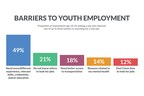
The latest McKinsey American Opportunity Survey reveals a troubling trend among America’s young workers, ages 18-24: their unemployment share is more than 2.5 times higher than the general population and nearly 50% of this group cited a lack of skills and experience as their main barriers to employment. (Note: Survey respondents self-reported their employment status.)

The McKinsey American Opportunity Survey also found that Gen Z workers feel pessimistic about the economy and their long-term prospects. Nearly half (45%) are concerned about job stability and feel less financially secure, while almost one-third (31%) doubt they will ever retire. Also, 70% believe they will never own a home.

Still, this cohort (ages 18-24) is highly motivated to pursue a range of educational pathways to get jobs, according to the survey. In fact, they are 1.5 times more likely than individuals between the ages of 25-54 to seek out education and training opportunities, motivated by the possibility of increasing their incomes. Many, however, do not know what types of education or training to pursue or how to get support.

A lack of relevant experience is the biggest barrier to finding a new job for youth respondents across gender, and women cited it more frequently than men. Young women also disproportionately named other barriers, such as not knowing where to look for jobs, the need to manage childcare, and physical health barriers. Young men noted accessibility barriers more often than young women, including issues with transportation and a lack of financial resources, internet access and housing options. Both young men and women attributed mental health and access to financial support as barriers more frequently than other age groups with older Americans pointing to lack of time as a barrier to training.

“The biggest roadblock for today’s youth in landing good jobs isn’t a lack of ambition—it’s the lack of skills, credentials and experience needed to make them appealing to employers,” said Steve Preston, president and CEO, of Goodwill Industries International. “To give people a fair shot at the American Dream, there is a critical need to provide skills training and career navigation, especially to young people who will help shape and power the future workforce.”

The McKinsey American Opportunity Survey also revealed growing unemployment shares for people who have been justice-impacted, actually two times more likely to be unemployed than the general population, due to accessibility barriers including technology, transportation and stable housing.

Justice-involved individuals tend to disproportionately face accessibility barriers. Compared to the general population, justice-impacted respondents cited these barriers:

Access to internet ~2.7x more than othersAccess to transportation ~2.3x more than othersAccess to housing 2x more than othersAccess to childcare ~1.6x more than othersAccess to financial support ~1.2x more than others

“Investing in overlooked job seekers, such as young people without college degrees and justice-impacted individuals, will help close talent gaps across many of our most vital sectors and help businesses to better thrive and prosper over the long term,” added Preston.

The need to provide career coaching and navigation to young people at the beginning of their career journeys is key to breaking the low-wage work cycle. According to the Brookings Institute, over the course of a 10-year span, only 43% of workers in low-wage occupations left their jobs, and their chances of advancing decreased each year. By their tenth year, the chance of leaving low-wage work is only one percent.

Goodwill, the largest nonprofit provider of job training and career placement services in North America, is uniquely positioned to help close the opportunity gap for all workers. The Goodwill Opportunity Accelerator® is a proven workforce development framework that equips job seekers with the resources needed to pursue and advance their careers by connecting individuals to career pathways, job training, certifications, apprenticeships and mentorships for continued career growth.

The Opportunity Accelerator takes a comprehensive, whole-person approach to workforce development, consisting of a set of standardized actions that local Goodwill organizations conduct with and on behalf of job seekers: assessing their needs and interests, developing a personalized plan, addressing barriers to training and advancement, equipping them with appropriate skills, launching them in the job-search process, connecting them with potential employers and evaluating the success of their search and performance in their new job.

Each of the Goodwill network’s 153 local nonprofit organizations provide job training and support services based on community needs. Every single day, Goodwill helps more than 350 people find jobs.

Goodwill would like to thank those whose input has helped to inform Closing the Opportunity Gap, including McKinsey & Company, who provided an analytical fact base on the McKinsey American Opportunity Survey.

ABOUT GOODWILL INDUSTRIES INTERNATIONAL
Goodwill works to enhance the dignity and quality of life of individuals and families by strengthening communities, building bridges to opportunity and helping people in need reach their potential through learning and the Power of Work®.

For more than 120 years, Goodwill organizations across North America have helped people find jobs, support their families and feel the satisfaction that comes from working. There are 153 local Goodwill organizations that assist people through a variety of employment placement services, job training programs and other community-based services. Thousands of people receive employment and other human services through Goodwill, and, in 2023, the organization helped more than 1.7 million people build skills, access resources and advance their careers.

Goodwill sells donated items in more than 3,300 outlets and retail stores in the U.S. and Canada as well as through online marketplaces. The revenue creates training programs and job placements to help people find work or advance their careers.

For more information or to find a Goodwill location near you, visit goodwill.org. Follow us on X/Twitter: @GoodwillIntl and Facebook, Instagram, TikTok and YouTube: @GoodwillIntl.

About McKinsey
McKinsey is a global management consulting firm committed to helping organizations accelerate sustainable and inclusive growth. We work with clients across the private, public, and social sectors to solve complex problems and create positive change for all their stakeholders. We combine bold strategies and transformative technologies to help organizations innovate more sustainably, achieve lasting gains in performance, and build workforces that will thrive for this generation and the next.

To download the report and graphics, click here.

View original content to download multimedia:https://www.prnewswire.com/news-releases/new-report-offers-valuable-insights-into-gen-zs-employment-struggles-302418947.html

SOURCE Goodwill Industries International

Continue Reading
Click to comment

Leave a Reply

Your email address will not be published. Required fields are marked *

Technology

Wistron Celebrates Grand Opening of First U.S. Smart Factory Marking Milestone in Global Smart Manufacturing Strategy

Published

on

By

FORT WORTH, Texas, July 21, 2026 /PRNewswire/ — Wistron Corporation (“Wistron”) celebrated the grand opening of its D1 AI smart facility in Fort Worth, Texas, the site where the first NVIDIA GB300 Grace Blackwell Ultra Superchip was built and mass-produced in the United States. The US$ 700 million facility, spanning approximately 324,000 square foot, was officially unveiled during a ceremony led by Wistron Chairman Simon Lin and NVIDIA Founder and CEO Jensen Huang. Jessica Rogers, Director of the Economic Development Department for the City of Fort Worth, and Alexander Tah-ray Yui, Taiwan’s Representative to the United States, were among the government officials and business leaders who attended, marking a milestone in the expansion of Wistron’s global footprint and advanced manufacturing capabilities.

This is a key hub in Wistron’s global AI infrastructure manufacturing network. The facility runs on NVIDIA accelerated computing and integrates NVIDIA’s Nemotron and Cosmos open frontier models and Omniverse and Metropolis libraries, using digital twin technology to optimize factory design, production workflows, and operational efficiency. It is Wistron’s first U.S.-based manufacturing facility, established to serve customers locally and produce NVIDIA’s most advanced and cutting-edge products. Wistron Chairman Simon Lin said “The operation here is not typical manufacturing. It is new, very comprehensive, and high-tech. Right now we produce the NVIDIA GB300 Grace Blackwell Ultra Superchip, and beyond, we are also going to produce the NVIDIA Vera Rubin Superchip here. In the next couple of years, this location will be one of the most important, as we build AI infrastructure here in the United States. I think this is the reason we say that there will be the next chapter, and we are going to empower AI from Texas.”

Responding to Customer Needs: Texas, the Newest Global Manufacturing Hub
At this pivotal moment for global AI infrastructure, Wistron is drawing on decades of global manufacturing experience to expand its footprint in Texas, a state with a well-established ecosystem for logistics, talent recruitment, and advanced manufacturing. The new D1 facility produces the NVIDIA GB300 Grace Blackwell Ultra Superchip and soon, the NVIDIA Vera Rubin Superchip — critical to powering the next generation of AI computing. The new Fort Worth facility strengthens a critical upstream layer of the AI infrastructure supply chain by expanding domestic capacity to assemble and test NVIDIA AI systems. These servers can be integrated into NVIDIA DSX infrastructure, with DSX providing the common architecture and technologies needed to deploy and operate energy-efficient AI factories at scale.

One-Stop Operational Ecosystem Strengthens U.S. AI Supply Chain Resilience
Behind every breakthrough in AI computing lies the manufacturing capability to scale it. Wistron is expanding its AI server production capabilities from Taiwan to the United States, guided by a vision of precision, efficiency, and sustainability. This reflects a broader industry shift: AI leadership is determined not only by technological breakthroughs, but also by the operational capability to transform innovation into high-volume production with consistent quality, supply chain resilience, and predictable delivery. By establishing AI infrastructure manufacturing capacity in the United States, Wistron is building a one-stop operational ecosystem spanning manufacturing and after-sales service — shortening delivery timelines and customer support cycles, strengthening supply chain resilience, and laying the foundation for long-term competitive advantage as AI infrastructure continues to scale.

Partnering with NVIDIA to Pioneer a New Model for Smart Manufacturing and Energy Optimization
As the era of physical AI begins, Wistron is extending its smart manufacturing capabilities to the United States, creating a new model for AI infrastructure production built on digital manufacturing, energy optimization, and local operations. Jensen Huang said: “The largest infrastructure buildout in history is underway. Demand for AI factories—the engine of this next industrial revolution—is incredible, and they must be produced everywhere. Together, NVIDIA and Wistron are restoring US advanced manufacturing capacity in Texas, creating skilled jobs and strengthening America’s AI supply chain.” As demand for advanced manufacturing grows in Texas, smarter planning of production loads and energy use will give the plant greater control and flexibility over its electricity needs.

Turning Global Experience into Scalable AI Infrastructure
Simon Lin stressed that the speed the AI era demands comes with its own responsibility. “In the AI era, the pressure of speed is also a form of responsibility,” Lin said. “We don’t just need to build fast; we need to build right.”

The Fort Worth plant will serve as the core engine of Wistron’s U.S. manufacturing operations, the company said, connecting its global production network with ecosystem partners as it scales advanced AI manufacturing. Wistron said that the investment reflects efforts to deepen its technical capabilities, strengthen the resilience and efficiency of global supply chains, and support the next phase of AI infrastructure development.

About Wistron:
Wistron Corporation is a leading global technology service provider delivering advanced ICT products, AI infrastructure, and manufacturing solutions to technology brands worldwide. With more than 63,000 employees across North America, Europe, and Asia, Wistron continues to expand its AI, cloud, and advanced manufacturing capabilities to support the next generation of intelligent computing. For more information about Wistron, please visit the official website at www.wistron.com. Additional information about the event is available on the event website.

Media Contact:
Joyce WL Chou
joyce_wl_chou@wistron.com

View original content to download multimedia:https://www.prnewswire.com/news-releases/wistron-celebrates-grand-opening-of-first-us-smart-factory-marking-milestone-in-global-smart-manufacturing-strategy-302831439.html

SOURCE Wistron Corporation

Continue Reading

Technology

NSG Bio Accelerates Breakthrough Biotech Innovation in Singapore

Published

on

By

New initiative under NSG Bio Tomorrow will support promising startups developing next-generation approaches in respiratory and neonatal care

SINGAPORE, July 22, 2026 /PRNewswire/ — The NSG Bio Tomorrow initiative aims at supporting emerging life sciences startups working on complex challenges in respiratory and neonatal care.

Launched through the support of Chiesi Group, The Impulse initiative will provide a selected startup with one year of NSG Bio membership and access to a dedicated laboratory bench at NSG Bio Singapore. The initiative is designed to help early-stage biotech companies move from promising science toward stronger proof-of-concept work in a fully equipped research environment.

The initiative comes at a time when the biotech industry is increasingly looking for faster, more connected ways to move high-potential science from the lab toward real-world patient impact. For startups, access to infrastructure is only one part of the challenge. Equally important are the right networks, industry visibility, technical environment, and opportunities to engage with partners who understand the path from early discovery to clinical relevance.

The programme will focus on startups developing innovative biotechnological solutions with potential relevance to chronic respiratory diseases and neonatal conditions. Areas of interest include cell therapies, gene therapies, gene-editing technologies, regenerative tissue engineering, engineered or programmable living systems, lung-targeted delivery platforms, preventive approaches, and small-molecule-based approaches.

The selected startup will gain access to NSG Bio’s laboratory infrastructure, shared workspaces, meeting facilities, and wider community of biotech entrepreneurs, researchers, scientific leaders, and industry partners. The support is intended to help the company advance key research milestones while becoming part of Singapore’s growing life-science innovation ecosystem.

For NSG Bio, the initiative is part of NSG Bio Tomorrow, its ecosystem-building arm created to expand the company’s role beyond facilities and real estate. While NSG Bio is known for providing high-quality laboratory and office infrastructure for biotech companies, NSG Bio Tomorrow focuses on building the programmes, partnerships, and opportunities that help startups grow.

“Biotech companies need more than lab space. They need access, momentum, and the right ecosystem around them,” said Hasyim Sim, Co-Founder and Chief Operating Officer, NSG Bio. “Through NSG Bio Tomorrow, we are building initiatives that help promising startups connect with partners, unlock opportunities, and move their science forward. This initiative reflects exactly the kind of role we want to play in the biotech ecosystem.”

“Chiesi is committed to supporting innovation that can make a meaningful difference for patients, and we work with entrepreneurs, researchers and partners to advance meaningful ideas,” said Fabrizio Conicella, Vice President, Center of Open Innovation & Competence at Chiesi Group. “By supporting this NSG Bio Tomorrow initiative, we want to create an opportunity for early-stage innovators to access the infrastructure and ecosystem support needed to develop impactful science in respiratory and neonatal care.”

NSG Bio Tomorrow programme also reinforces Singapore’s position as a growing hub for biotech innovation in Asia, where startups, research institutions, investors, and industry partners are increasingly coming together to support the next generation of healthcare companies.

Applications open on 22 July 2026 at 09:00 a.m. SGT. Finalists will be invited to present at a virtual pitch event, after which the selected startup will be announced.

About NSG Bio

NSG Bio is Singapore’s leading provider of BSL-2 certified co-working laboratory and office spaces, supporting life-science companies from early research through growth. Through its facilities, community, and ecosystem initiatives, NSG Bio enables biotech innovators to accelerate research, access networks, and build companies that address critical healthcare challenges.

About NSG Bio Tomorrow

NSG Bio Tomorrow is NSG Bio’s ecosystem-building arm, created to support the next generation of biotech innovation through partnerships, programmes, community initiatives, and opportunities that extend beyond physical laboratory infrastructure. Its mission is to strengthen the biotech industry by connecting startups with the resources, expertise, and networks they need to thrive.

About Chiesi Group 

Chiesi is a research-oriented international biopharmaceutical group that develops and markets innovative therapeutic solutions in respiratory health, rare diseases, and specialty care. The company’s mission is to improve people’s quality of life and act responsibly towards both the community and the environment. As a certified B Corp since 2019, Chiesi is part of a global community of businesses that meet high standards of social and environmental impact. 

With 90 years of experience, Chiesi is headquartered in Parma (Italy), with 31 affiliates worldwide, and counts more than 7,900 employees. The Group’s research and development centre in Parma works alongside 6 other important R&D hubs in France, the US, Canada, China, the UK, and Sweden. For further information please visit https://www.chiesi.com/en/home 

Media Contact
Giridharan
Laboratory Manager
NSG Bio
giridharan@nsgbio.com
87797175

View original content to download multimedia:https://www.prnewswire.com/apac/news-releases/nsg-bio-accelerates-breakthrough-biotech-innovation-in-singapore-302830494.html

SOURCE NSG Bio

Continue Reading

Technology

House Judiciary Committee Passes Bill that Would Prevent Future Immigration Crises: Swift Action Needed by Full House, Says FAIR

Published

on

By

WASHINGTON, July 21, 2026 /PRNewswire/ — Today, the House Judiciary Committee passed an updated version of H.R. 2, the landmark border security bill from last congressional session. The bill now awaits consideration by the full House of Representatives. The Federation for American Immigration Reform (FAIR) urges Speaker Mike Johnson to schedule a final floor vote as soon as possible.

The Secure Border Act systematically closes the loopholes that allowed the Biden administration to unleash the largest and most damaging wave of illegal immigration in American history. Enactment of this legislation would prevent future anti-borders administrations from shirking their responsibilities to secure our borders and enforce our immigration laws; asserting unlimited discretion to parole inadmissible aliens to enter the country; or releasing millions of illegal aliens into the country, rather than detaining them or returning them to the country from which they entered.

“We congratulate the Judiciary Committee for its swift action on this critical legislation,” said Dale Wilcox, executive director and general counsel of FAIR. “Ending border chaos and rampant illegal immigration was a key reason that Republicans regained control of the White House and both chambers of Congress in the last election. The clock is ticking on the 119th Congress, and Republicans only have a short time to deliver on the promises they made to voters in 2024, before the midterms.

“Right now, our immigration laws are being enforced in the interests of the American people. As the last administration demonstrated, enforcement of those laws is not guaranteed unless Congress acts to prevent similar abuse in the future. Now is the time for decisive action in the House, where this bill can be passed with a simple majority vote, and an opportunity for Senate Majority Leader John Thune to put every member of that body on record before voters go to the polls in the fall,” Wilcox concluded.

Hayley Hill, hhill@fairus.org 202-328-7004

View original content to download multimedia:https://www.prnewswire.com/news-releases/house-judiciary-committee-passes-bill-that-would-prevent-future-immigration-crises-swift-action-needed-by-full-house-says-fair-302831443.html

SOURCE Federation for American Immigration Reform (FAIR)

Continue Reading

Trending