Connect with us

Technology

HUYA Inc. Files 2024 Annual Report on Form 20-F

Published

on

GUANGZHOU, China, April 17, 2025 /PRNewswire/ — HUYA Inc. (“Huya” or the “Company”) (NYSE: HUYA), a leading game live streaming platform in China, today announced it filed its annual report on Form 20-F for the fiscal year ended December 31, 2024 with the U.S. Securities and Exchange Commission (the “SEC”) on April 17, 2025. The annual report on Form 20-F can be accessed on the SEC’s website at https://www.sec.gov and on the Company’s investor relations website at https://ir.huya.com. 

The Company will provide a hard copy of the annual report, free of charge, to its shareholders and ADS holders upon request. Requests should be directed to the Company’s Investor Relations Department at HUYA Inc., Building A3, E-Park, 280 Hanxi Road, Panyu District, Guangzhou 511446, the People’s Republic of China.

About HUYA Inc.

HUYA Inc. is a leading game live streaming platform in China. As a technology-driven company, Huya offers rich and dynamic content across games, e-sports, and other entertainment genres where it has cultivated a large, highly engaged, interactive, immersive community of game enthusiasts. Building on its success in game live streaming and through close collaboration with game companies, e-sports tournament organizers, broadcasters and talent agencies, Huya is expanding its presence in the game industry, both domestically and internationally. By providing more innovative game-related services, the Company is committed to meeting the evolving needs of game enthusiasts, content creators, and industry partners.

For more information, please visit https://ir.huya.com.

For investor and media inquiries, please contact:

In China:

HUYA Inc.
Investor Relations
Tel: +86-20-2290-7829
E-mail: ir@huya.com 

Piacente Financial Communications
Jenny Cai
Tel: +86-10-6508-0677
E-mail: huya@tpg-ir.com 

In the United States:

Piacente Financial Communications
Brandi Piacente
Tel: +1-212-481-2050
E-mail: huya@tpg-ir.com 

View original content:https://www.prnewswire.com/news-releases/huya-inc-files-2024-annual-report-on-form-20-f-302431440.html

SOURCE HUYA Inc.

Continue Reading

Technology

More Than Half of Organizations Using AI Agents Run Them Across Multiple Platforms, Nudge Security Research Finds

Published

on

By

Second edition of “AI Adoption in Practice” report shows AI risk now lives on the Workforce Edge, where employees choose, connect, and use technology, as agents and AI integrations reach company data outside traditional security controls

AUSTIN, Texas, Nov. 17, 2026 /PRNewswire/ — Nudge Security, the leading innovator in SaaS and AI security governance, today announced its research report, AI Adoption in Practice 2026: Beyond the Approved List, which provides insights into what AI adoption in the workforce looks like in practice. Based on anonymized and aggregated telemetry from Nudge Security customer environments, the report found that AI agents are already running inside the business platforms employees use every day, and that AI tools connect directly to company data in ways traditional security controls don’t see.

“The platforms your teams use every day are becoming agent platforms, whether or not anyone decided they should be. The project tracker, the CRM, the chat tool: each one now lets an employee build something that acts on their behalf, with their access, continuously. The question for security teams is no longer whether that’s allowed. It’s whether they know it’s happening,” says Nudge Security Cofounder and CTO Jaime Blasco. “We expect this to get harder, not easier. Every platform your teams use is adding agent-building features, and each one makes it simpler to hand an agent a person’s access. That means the gap between what an organization’s identity provider knows about and what’s actually acting on its data is going to keep widening.”

Key findings include:

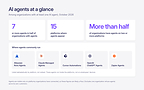
Many agents run on employees’ identities. Among organizations using AI agents, half run seven or more, and more than 4 in 10 run more than 10. They’re spread across business platforms like project management, CRM, and automation tools. Agents built inside these platforms often act through the employee who created them, with that person’s access to company data.AI connects directly to the most sensitive systems. 74% of organizations have at least one Anthropic integration and 67% have an OpenAI integration. These reach email, code, chat, and documents, and they move data without passing any inspection point.Core AI models are treated like a commodity. At least 91% of organizations have both OpenAI and Anthropic. Anthropic’s adoption rose from 77.8% in January to 94.5%.AI adoption extends well beyond the big two. Twelve different AI tools now each appear in more than half of organizations, up from five in January. Counting every AI tool in each environment, half of organizations have had 27 or more show up as of October 2026.AI in the browser sees what employees see. Among organizations with at least one AI browser extension, 67% have Grammarly and 65% have Claude. Both can read the content of the pages employees open.Company data flows into AI as part of everyday work. 18% of observed prompts include pasted content or an uploaded file, compared with 17% in the first report. Prompts are also reaching more AI tools: OpenAI still receives more than half of all observed prompts, but its share fell from 67% to 55% as more prompts go to other tools.

The report is based on anonymized and aggregated telemetry collected across Nudge Security customer environments. Rather than relying on surveys or self-reported usage, it reflects direct observation of AI tools, integrations, browser extensions, agents, and how employees interact with AI. Adoption, integration, and browser extension data is as of September 2026, and agent data is as of October 2026. The dataset includes organizations in Nudge Security’s first report, AI Adoption in Practice: What Enterprise Usage Data Reveals About Risk and Governance, as well as customers who have joined since.

What Security Leaders Can Do Now
Visibility alone will not reduce AI risk, so the report recommends focusing on where exposure is actually growing.

First, inventory agents where they are built in the business platforms teams already use, and identify who created each one and whose access it runs on.Second, treat OAuth grants as a first-class risk by reviewing which AI tools employees have connected to, what each grant can read, and revoking any that are no longer needed.Third, stop relying on the approved list as the main control and shift attention from which tools are present to what they are connected to.Fourth, review AI browser extensions that can read page content and set clear expectations for which are appropriate for sensitive work.Fifth and final, bring the workforce into the decision. Employees often know why they connected a tool, so ask, guide, and reserve the strictest response for the decisions that carry the most risk.

Download the full report: https://www.nudgesecurity.com/content/ai-adoption-in-practice-nov-2026.

About Nudge Security
Nudge Security is the AI and SaaS security platform for the Workforce Edge. Every day, employees sign up for apps, connect AI tools, and grant access to company data on their own. Together, those decisions create the Workforce Edge: an attack surface security teams own, even when they can’t see it. Nudge finds those apps, accounts, and connections from the first signup and prioritizes them by risk, with AI agents taking repetitive review work off the team’s plate. Then it goes straight to the employee behind the decision—to ask why, guide the next step, or fix the issue—and steps in directly when the risk is real. Security and IT teams govern the workforce’s technology without blocking productivity. Nudge Security was founded in 2021 by Russell Spitler and Jaime Blasco and is backed by Ballistic Ventures, Forgepoint Capital, Cerberus Ventures, and Squadra Ventures.

Media Contact:
Danielle Ostrovsky
Hi-Touch PR
Ostrovsky@Hi-TouchPR.com

View original content to download multimedia:https://www.prnewswire.com/news-releases/more-than-half-of-organizations-using-ai-agents-run-them-across-multiple-platforms-nudge-security-research-finds-302940529.html

SOURCE Nudge Security

Continue Reading

Technology

Humanix Launches Complete Call Context to Expose Voice-Based Social Engineering at the Service Desk

Published

on

By

Micro-agents counter the surge in voice attacks by corroborating callers’ claims with systems of record

SAN FRANCISCO, Nov. 17, 2026 /PRNewswire/ — Humanix, the company behind the Human Threat Detection and Response platform for social engineering, today launched Complete Call Context to accelerate detection of voice-based attacks against the service desk. Micro-agents now correlate every call with identity records and ticketing data alongside an organization’s established procedures. Security teams get the full context behind each password reset, MFA change, or other sensitive request. Any conflict between that evidence and the call triggers an alert.

Complete Call Context arrives as voice phishing, or “vishing,” continues to surge. Mandiant reports in M-Trends 2026 that vishing now ranks as the second most common initial infection vector. CrowdStrike found that intrusions using the tactic doubled in the first half of 2026. The SEC has also made the threat an examination priority for 2027.

Many of these vishing attacks target the service desk. An attacker calling the service desk attempts to steal credentials by hijacking a normal password reset or MFA change. These increasingly sophisticated attacks rely on impersonation, urgency, or pressure to skip verification in order to bypass controls. The resulting account change appears routine in identity logs because the call itself leaves few forensic traces. Security analysts rarely see that conversation next to identity provider (IdP) records and IT service management (ITSM) tickets, as these records usually sit in separate systems under IT ownership.

“Correlate suspicious communications and impersonation reports with account recovery events, new devices, privilege changes, and financial transactions to improve threat detection,” Gartner® advises CISOs.¹ Humanix correlates each service desk call with the account recovery activity in systems of record. Security teams can then confirm whether a password reset or MFA change matches what the caller claimed.

“AI-assisted attackers can now go from a single phone call to a full compromise in minutes,” said Keith Stewart, founder and CEO of Humanix. “Controls that only engage after the call can’t keep up. Humanix analyzes the call as it happens, at the first step of the attack. Complete Call Context carries that view into the systems of record to catch those attackers at the point of insertion.”

Complete Call Context follows each request from the call to the record

Humanix continuously monitors calls to the service desk for indicators of social engineering, including impersonation of trusted people, manipulation through urgency or authority, and violations of required procedures. Those procedures come directly from each organization. The newly released Complete Call Context creates a micro-agent to analyze each sensitive request, such as an MFA reset. Each micro-agent analyzes the particulars of an individual service request to identify points of context required by the appropriate company procedure. The micro-agent then correlates specific call behaviors with relevant IdP and ITSM records, providing high-fidelity analysis of the complete context of a call. Any contradiction or missing evidence produces an alert with a severity rating and a plain-language explanation.

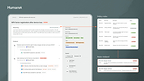
For example, a caller asks the IT help desk to reset an employee’s MFA. The caller claims to manage the employee, requesting to reset MFA on their behalf. However, identity systems list a different person as the employee’s manager. The caller cites a ticket number, but the ITSM system has no record of that ticket. The caller indicates the employee had previously verified their identity, but the identity provider shows no record of that verification. Complete Call Context raises an alert that ties these discrepancies to the procedures the call violated.

Security teams act on corroborated evidence

With Humanix, analysts no longer need to reconstruct a voice attack from scattered records. Every alert brings together the call, the account change, and the evidence behind each finding. Containing a compromise while it still affects one account is far easier than recovering from follow-on activity.

Complete Call Context is available now to Humanix customers.

¹ Gartner Press Release, “Gartner Survey Finds 41% of CISOs Reported At Least One Social Engineering Incident Involving a Deepfake in the Past 12 Months,” September 22, 2026. https://www.gartner.com/en/newsroom/press-releases/2026-09-22-gartner-survey-finds-41-percent-of-cisos-reported-at-least-one-social-engineering-incident-involving-a-deepfake-in-the-past-12-months

GARTNER is a registered trademark and service mark of Gartner, Inc. and/or its affiliates in the U.S. and internationally and is used herein with permission. All rights reserved.

About Humanix

Humanix stops social engineering attacks. The Humanix Human Threat Detection and Response platform uses conversational AI to continuously monitor for these attacks on your people across the communication channels where they occur. By detecting social engineering as it happens, Humanix equips you to respond before an attempted attack becomes a breach. The company is backed by Acrew Capital, Boldstart Ventures, and Evolution Equity Partners and was named a 2026 RSAC Innovation Sandbox Top 10 finalist. For more information, visit humanix.ai.

Media Contact:
Michelle Kearney
Hi-Touch PR
443-857-9468
kearney@hi-touchpr.com

View original content to download multimedia:https://www.prnewswire.com/news-releases/humanix-launches-complete-call-context-to-expose-voice-based-social-engineering-at-the-service-desk-302939112.html

SOURCE Humanix.ai

Continue Reading

Technology

PagBank Maintains Consistent Performance in 3Q26, with Net Income of R$ 611 Million

Published

on

By

Banking operations gain prominence in results; 
Growth in credit origination and improved efficiency are key highlights of the period.

SÃO PAULO, Nov. 17, 2026 /PRNewswire/ — PagBank (NYSE: PAGS), one of Brazil’s largest digital banks and an expert in serving Brazilian customers, closed the third quarter of 2026 (3Q26) with adjusted net income of R$ 611 million, up 7% from the same period last year. The results consolidate the positive trajectory observed in previous quarters, supported by disciplined execution of the company’s strategy, effective cost control, and expansion across different business lines.

“We delivered solid profitability growth this quarter, reflecting the strength of our financial structure and our ability to execute our strategy with discipline. We remain focused on earnings quality and efficient capital allocation, seeking to balance growth with long-term financial performance,” says Gustavo Sechin, CFO of PagBank.

During the period, net revenue totaled R$ 5.1 billion. Excluding transaction costs, net revenue amounted to R$ 3.4 billion, driven in particular by Banking, which generated net revenue of R$ 891 million, a 20% year-over-year increase. As a result, Banking now accounts for 26% of total net revenue and 32% of gross profit, underscoring the growing contribution of credit operations to the Company’s results.

In Banking, cash-in reached R$ 92 billion, up 15.6% per active customer compared to the same period last year. Acquiring total payment volume (TPV) reached R$ 131.4 billion in the quarter, with average volume per customer increasing 3.5% year over year. The deposit base reached R$ 43 billion, up 8.4% over the past 12 months. These results demonstrate increased customer engagement with the platform and growing adoption of the financial solutions offered by PagBank.

The loan portfolio closed the quarter at R$ 5.2 billion, up 25.2% from 3Q25, driven mainly by working capital loans, which grew 171% over the past 12 months. PagBank continues to expand its presence across other credit products, including Crédito Trabalhador (“Worker’s Credit”) and Pix Crédito, while also growing its credit card customer base.

Profitability remained one of the quarter’s highlights, with return on average equity (ROAE) at 16.2%, up 70 basis points, underscoring the bank’s ability to generate earnings while maintaining a solid balance sheet. As a subsequent event, in October, demonstrating the Company’s financial strength, PagBank issued R$ 2.0 billion in securitized debentures, reinforcing its strategy of diversifying funding sources, strengthening liquidity, and improving the efficiency of its financial cost management.

“We closed the quarter with 33.6 million customers, underscoring the important role PagBank has come to play in the financial lives of millions of Brazilians. Our focus is to deepen these relationships even further by expanding access to solutions that meet the diverse needs of each customer segment. We remain committed to delivering an increasingly comprehensive experience by bringing banking services, payments, and credit together on a single platform,” says Carlos Mauad, CEO of PagBank.

To access PagBank’s 3Q26 financial statements, click here.

Forward Looking Statements
This market communication contains forward-looking statements within the meaning attributed to the term by the U.S. Private Securities Litigation Reform Act of 1995, Section 27A of the Securities Act of 1933, as amended, and Section 21E of the Exchange Act. Statements regarding facts that are not historical, including those statements related to the company’s expectations, are forward-looking statements. Words such as “expects,” “anticipates,” “should,” “believes,” “intends,” variations of these terms or their negative form, as well as similar expressions, are intended to identify such forward-looking statements. Such statements reflect the company management’s current perspectives and are subject to various risks and uncertainties. These statements are based on many assumptions and factors, including economic and market conditions, industry conditions and operational factors. Any change in these assumptions or factors may cause results to differ substantially from the company’s current expectations.

About PagBank
PagBank promotes innovative solutions in financial services and payment methods, automating the process of buying, selling, and transferring to promote the business of any person or company simply and securely. PagBank, a company of the UOL Group – Brazil’s leading internet company – acts as an issuer and acquirer, offering digital accounts and complete solutions for online and in-person payments (via mobile and POS devices). PagBank also offers a wide variety of payment methods, including credit and prepaid cards, bank transfers, boleto payments, and account balances. The institution’s solidity is recognized with top-rated certifications (AAA / triple A) awarded by three leading global evaluators, attesting to one of the highest levels of reliability in the market—a differentiating factor that reinforces its security, robust governance, and consistent ability to meet financial obligations. PagBank (PagSeguro Internet Instituição de Pagamento S.A.) is regulated by the Central Bank of Brazil as a payment institution, issuer of electronic money, issuer of post-paid instruments, and acquirer, with partnerships with the leading card brands. Its parent company, PagSeguro Digital Ltd., is publicly traded on the New York Stock Exchange (NYSE: PAGS) and is regulated by the Securities and Exchange Commission (SEC). The distribution of mutual funds is carried out by BancoSeguro S.A., which is authorized by the Central Bank of Brazil and the Securities and Exchange Commission, and is affiliated with ANBIMA.

View original content to download multimedia:https://www.prnewswire.co.uk/news-releases/pagbank-maintains-consistent-performance-in-3q26-with-net-income-of-r-611-million-302941065.html

Continue Reading

Trending