
Technology
Seegene’s CURECA(TM) Emerges as a Potential Game Changer in End-to-End PCR Automation

Published
1 year agoon
By

Seegene previews a concept video of CURECATM at ESCMID Global 2025, ahead of its anticipated debut in JulyWith a fully modular design, CURECATM introduces a bold vision for automating pre-treatment across diverse PCR specimen typesDeveloped for future integration into unattended workflows and adaptable laboratory settings
SEOUL, South Korea, May 2, 2025 /PRNewswire/ — Seegene Inc., a global leader in molecular diagnostics (MDx) solutions, has attracted strong interest after the company presented a conceptual video of its CURECATM at the European Society of Clinical Microbiology and Infectious Diseases (ESCMID Global 2025) in Vienna, Austria.
Industry professionals recognized CURECATM as a promising advancement in automating the entire PCR diagnostic workflow — from primary sample handling to result analysis. In response to the interest received, Seegene provided additional opportunities to showcase the solution at the ESCMID Global 2025.
More than 2,300 attendees — including dignitaries from Italy, Spain, Germany, France, and Canada — visited Seegene’s booth to view the conceptual video introducing the CURECATM. “It was evident that the Seegene booth attracted considerable attention at ESCMID,” said one professional from academia.
Experts Recognize CURECATM as a Game Changer in Molecular Testing Automation
The CURECATM is designed to automate the entire PCR diagnostic process. It can handle various specimen types required in the pre-treatment stage in MDx – such as stool, urine, blood, and sputum—as well as perform the complete PCR testing workflow following sample loading.
The following are select comments from industry professionals who previewed Seegene’s CURECATM at ESCMID Global 2025:
“I hold high expectations for the fully automated PCR molecular diagnostics, as CURECATM not only eliminates human error inherent in manual processes but also enables efficient testing without time or workforce constraints.”
“We often encounter specimen types that require careful and time-consuming manual pre-processing. A system that can automate this step could represent a true paradigm shift. This level of automation is transformative – a real game changer – and unlike any existing solution. I eagerly await its launch.”
“If paired with our in-house diagnostic tool kits, CURECATM could offer a complete synergy. I hope CURECATM will be accessible to small and mid-sized facilities.”
“I’m planning to attend ADLM 2025 in Chicago in July to see the actual device and explore potential collaborations.”
Customizable Pre-Treatment System Offers Versatility for Future Laboratory Automation
The first component of CURECATM is the Customizable Pre-treatment System (CPS). The CPS is designed to automate the loading of primary sample tubes and operate pre-treatment processing.
“The CPS is a modular, automated system intended to streamline pre-treatment processing across diverse diagnostic fields including molecular diagnostics such as PCR, as well as clinical chemistry and immunology assays,” said Young-Seag Baeg, Head of Strategy and Planning at Seegene.
Numerous healthcare (or laboratory) professionals at ESCMID Global 2025 noted that the conceptual video of CURECATM showcased the potential of fully automated diagnostic laboratories capable of managing complex workflows associated with pre-treatment. In particular, there was consensus among participants that the CPS, which automates specimen preprocessing, is positioned to bring a significant advancement in in vitro diagnostics as it addresses limitations associated with existing manual procedures that are dependent on trained laboratory professionals.
“The turnaround time (TAT) is expected to improve with CURECATM as the integrated software is capable of adjusting workflows based on reporting deadlines,” said a director of a laboratory in Spain. “In particular, for sexually transmitted infections (STIs), the CPS will markedly enhance daily laboratory operations. The processing of specimens for STIs involves manual handling of multiple sample tubes, which contributes to operator fatigue. The adoption of the CPS has the potential to be transformational in streamlining routine operations.”
Modular and Configurable Solution Design for Tailored Diagnostics
Following specimen preprocessing, molecular diagnostics typically involve nucleic acid extraction, PCR setup and amplification, and analysis of results. For specimens that do not need preprocessing, Seegene offers the Primary Sample Aliquot System (PAS) as an alternative to the CPS. PAS is designed to allow direct loading and dispensing of primary samples, helping to simplify the workflow. Seegene is pursuing the integration of PAS with a fully automated PCR process through a modular solution concept called CEFA (Customizable & Expandable Full Automation), intended to support diverse laboratory needs with greater flexibility.
Seegene aims to leverage the modular architecture of CURECATM to support a wide range of diagnostic applications. “CURECATM can be deployed as a comprehensive system or as individual modules—CPS, PAS, and CEFA—configured independently or in combination to accommodate diverse operational needs,” said Baeg.
Optimizing Lab Workflows Through Space-Saving Design
Another key advantage of the CURECATM’s modular architecture is that it is designed to adapt to different laboratory spaces and layouts. Its flexible design is intended to allow labs to configure the system according to their specific needs, which Seegene sees as essential for enhancing operational efficiency.
Laboratory professionals at ESCMID 2025 shared the following perspectives:
“The ability to configure a system to meet specific spatial and operational needs of individual laboratories represents a novel and highly compelling approach.”
“We expect such flexibility will make it possible to implement workflows that deliver high-quality results with minimal reliance on standardized laboratory configurations and staffing resources.”
“The enthusiastic global response to our concept video and vision for CURECATM demonstrate the strong demand for next-generation diagnostic solutions,” said Jong-Yoon Chun, CEO of Seegene. “We believe CURECATM has the potential to catalyze meaningful change in the global PCR diagnostics landscape.”
Please Note:
The comments included in this press release are based on actual interviews and on-site discussions. However, in accordance with requests to protect the privacy of the individuals interviewed, all names have been pseudonimized.
About Seegene
Seegene has more than 20 years of dedicated experience in R&D, manufacturing, and business related to syndromic real-time PCR technologies. This expertise was particularly highlighted during the COVID-19 pandemic when Seegene provided over 340 million COVID-19 tests to more than 100 countries worldwide. The core feature of Seegene’s syndromic real-time PCR technology is the ability to simultaneously test for 14 pathogens that cause similar signs and symptoms in a single tube with quantitative information.
Visit: Seegene.com and follow linkedin.com/company/seegene-inc
Technology-sharing Initiative
The technology-sharing initiative aims to globally share Seegene’s advanced diagnostic and data analysis technologies, including syndromic real-time PCR and an automated product development system (SGDDS), with a leading company partnered in each country. Partnering companies will collaborate with local scientists and experts to develop diagnostic tests tailored to the needs of their communities and fields, spanning a wide range of human and non-human diseases. The initiative’s ultimate vision is to create “a world free from diseases”—a future where people no longer suffer from infectious diseases and cancer, and where animals and plants thrive without illness.
Photo – https://mma.prnewswire.com/media/2677171/PHOTO_1.jpg
Logo – https://mma.prnewswire.com/media/1357790/5295869/Seegene_logo_Logo.jpg
View original content:https://www.prnewswire.co.uk/news-releases/seegenes-curecatm-emerges-as-a-potential-game-changer-in-end-to-end-pcr-automation-302444934.html

You may like
Technology
OppFi Announces its Third Quarter 2026 Earnings Conference Call
Published
32 minutes agoon
October 19, 2026By

CHICAGO, Oct. 19, 2026 /PRNewswire/ — OppFi Inc. (NYSE: OPFI) (“OppFi” or the “Company”), a leading tech-enabled digital finance platform that works with banks to provide financial products and services for everyday Americans, will report financial results for its third quarter 2026 before the market opens on Wednesday, October 28, 2026.
Management will host a conference call on Wednesday, October 28, 2026, at 8:30 a.m. ET to discuss OppFi’s financial results and business outlook. The conference call webcast will be available on the Investor Relations section of the Company’s website at investors.oppfi.com.
The conference call can also be accessed with the following dial-in information:
Domestic: (833) 354-6854
International: (785) 838-9343
Conference ID: OPPFI
An archived version of the webcast will be available on OppFi’s website.
About OppFi
OppFi (NYSE: OPFI) is a leading tech-enabled digital finance platform that works with banks to provide financial products and services for everyday Americans. Through a transparent and responsible platform, which includes financial inclusion and excellent customer experience, the Company supports consumers who are turned away by mainstream options to build better financial health. OppLoans by OppFi maintains a 4.4/5.0 star rating on Trustpilot with more than 5,400 reviews, making the Company one of the top consumer-rated financial platforms online. OppFi also holds a 35% equity interest in Bitty Holdings, LLC (“Bitty”), a credit access company that offers revenue-based financing and other working capital solutions to small businesses. For more information, please visit oppfi.com.
Investors:
investors@oppfi.com
View original content to download multimedia:https://www.prnewswire.com/news-releases/oppfi-announces-its-third-quarter-2026-earnings-conference-call-302913039.html
SOURCE OppFi
Technology
F.N.B. Corporation Reports Third Quarter 2026 Earnings
Published
32 minutes agoon
October 19, 2026By

Record Net Interest Income Driven by Net Interest Margin (non-GAAP) Expansion and Loan and Deposit Annualized Growth of 8.5% and 8.9%, Respectively
PITTSBURGH, Oct. 19, 2026 /PRNewswire/ — F.N.B. Corporation (NYSE: FNB) reported earnings for the third quarter of 2026 with net income of $152.9 million, or $0.43 per diluted common share. Comparatively, third quarter 2025 net income totaled $149.5 million, or $0.41 per diluted common share, and second quarter 2026 net income totaled $148.7 million, or $0.42 per diluted common share.
On an operating basis, there were no significant items impacting earnings for the third and second quarters of 2026. By comparison, third quarter of 2025 net income on an operating basis (non-GAAP) was $147.7 million, excluding $(2.3) million (pre-tax) of significant items impacting earnings.
“F.N.B. Corporation delivered another strong quarter with $0.43 earnings per diluted common share, bringing year-to-date earnings to $1.23 per diluted common share, a 13% increase over the same period in 2025. For the third quarter of 2026, we generated record net interest income, expanded net interest margin and increased tangible book value per common share (non-GAAP) 7% year over year, while continuing to return capital through share repurchase activity and an attractive dividend,” said F.N.B. Corporation Chairman, President and Chief Executive Officer, Vince Delie. “FNB continues to leverage technology investments to gain market share throughout our diverse geographic footprint with 8.5% annualized loan growth and 8.9% annualized deposit growth, both of which align with our long-term organic growth trajectory. Our consistent underwriting standards contributed to solid credit quality results for the quarter. By strategically investing in innovative technology to grow primary relationships and low-cost deposits, while also maintaining a focus on expanding high-value fee-based businesses to diversify revenue streams, we are building a stronger, more resilient franchise. The investments in these initiatives contributed to a strong third quarter performance and create sustainable value for the future.”
Third Quarter 2026 Highlights
(All comparisons refer to the third quarter of 2025, except as noted)
Average loans and leases totaled $36.1 billion, an increase of $1.3 billion, or 3.7%, with growth of $1.2 billion in average consumer loans and $115.4 million in average commercial loans and leases.On a linked-quarter basis, period-end total loans and leases increased $768.0 million, or 8.5% annualized, with growth in consumer loans and commercial loans and leases of $435.3 million and $332.7 million, respectively.Average deposits totaled $38.8 billion, an increase of $914.1 million, or 2.4%, reflecting growth in average interest-bearing demand deposits of $640.6 million, average money market deposits of $443.8 million, average non-interest-bearing demand deposits of $134.0 million, and average savings deposits of $30.6 million more than offsetting the decline in average time deposits of $334.8 million.On a linked-quarter basis, period-end total deposits increased $870.6 million, or 8.9% annualized, driven by growth in money market deposits of $710.9 million, interest-bearing demand deposits of $239.0 million and non-interest-bearing demand deposits of $77.5 million more than offsetting the decline in time deposits of $121.4 million.The loan-to-deposit ratio was 92.4% at September 30, 2026, compared to 92.5% at June 30, 2026, and 90.9% at September 30, 2025.Net interest income totaled $376.5 million, a linked-quarter increase of $10.8 million, or 3.0%, primarily due to growth in earning assets, higher yields on earning assets (non-GAAP) and the impact of one more day in the current quarter more than offsetting a slight increase in the cost of funds. Net interest margin (FTE) (non-GAAP) equaled 3.29%, an increase of 4 basis points from the second quarter 2026 level with stable interest-bearing deposit costs and higher yields on earning assets. The Federal Open Market Committee (FOMC) increased the target federal funds rate by 25 basis points in September 2026.Pre-provision net revenue (non-GAAP) totaled $212.2 million, with the 1.3% increase from the prior quarter driven by record net interest income.Provision for credit losses was $19.6 million, a decrease of $1.7 million from the prior quarter, with net charge-offs of $11.0 million, or 0.12% annualized of total average loans, compared to $17.0 million, or 0.19% annualized, in the prior quarter. The ratio of non-performing loans and other real estate owned (OREO) to total loans and leases and OREO increased 2 basis points from the prior quarter to 0.33%, and total delinquency increased 4 basis points from the prior quarter to 0.75%. The allowance for credit losses (ACL) to total loans and leases ratio remained stable at 1.25%. Overall asset quality metrics remain at satisfactory levels.The Common Equity Tier 1 (CET1) regulatory capital ratio ended the quarter at 11.3% (estimated), compared to 11.1% at September 30, 2025, and 11.4% at June 30, 2026. The tangible common equity to tangible assets ratio (non-GAAP) equaled 8.7%, compared to 8.7% at September 30, 2025, and 8.9% at June 30, 2026.Tangible book value per common share (non-GAAP) of $12.28 increased $0.80, or 7.0%, compared to September 30, 2025, and $0.04, or 0.3%, compared to June 30, 2026. Accumulated other comprehensive income/loss (AOCI) reduced the tangible book value per common share (non-GAAP) by $0.53 as of September 30, 2026, primarily due to the impact of higher interest rates on the fair value of available-for-sale (AFS) securities, compared to a reduction of $0.22 as of September 30, 2025, and $0.29 as of June 30, 2026.During the third quarter of 2026, the Company repurchased $51 million, or 2.7 million shares, of common stock at a weighted average share price of $18.69. Year-to-date, the Company repurchased $133 million, or 7.4 million shares, of common stock at a weighted average share price of $17.90, representing 2.1% of shares outstanding at the beginning of the year.
Non-GAAP financial measures referenced in this release are used by management to measure performance in operating the business that management believes enhances investors’ ability to better understand the underlying business performance and trends related to core business activities. Reconciliations of non-GAAP financial measures to the most directly comparable GAAP financial measures are included in the tables at the end of this release. For more information regarding our use of non-GAAP measures, please refer to the discussion herein under the caption, “Use of Non-GAAP Financial Measures and Key Performance Indicators.”
Quarterly Results Summary
3Q26
2Q26
3Q25
Reported results
Net income available to common shareholders (millions)
$ 152.9
$ 148.7
$ 149.5
Earnings per diluted common share
0.43
0.42
0.41
Book value per common share
19.42
19.34
18.52
Pre-provision net revenue (non-GAAP) (millions)
212.2
209.4
213.9
Operating results (non-GAAP)
Operating net income available to common shareholders (millions)
$ 152.9
$ 148.7
$ 147.7
Operating earnings per diluted common share
0.43
0.42
0.41
Operating pre-provision net revenue (millions)
212.2
209.4
211.6
Average diluted common shares outstanding (thousands)
354,965
357,414
361,670
Significant items impacting earnings(a) (millions)
FDIC special assessment reduction (pre-tax)
$ —
$ —
$ 2.3
FDIC special assessment reduction (after-tax)
—
—
1.8
Total significant items (pre-tax)
$ —
$ —
$ 2.3
Total significant items (after-tax)
$ —
$ —
$ 1.8
Capital measures
Common equity tier 1 (b)
11.3 %
11.4 %
11.1 %
Tangible common equity to tangible assets (non-GAAP)
8.69
8.93
8.69
Tangible book value per common share (non-GAAP)
$ 12.28
$ 12.24
$ 11.48
(a) Favorable (unfavorable) impact on earnings.
(b) Estimated for 3Q26.
Third Quarter 2026 Results – Comparison to Prior-Year Quarter
(All comparisons refer to the third quarter of 2025, except as noted.)
Net interest income totaled $376.5 million, an increase of $17.3 million, or 4.8%, reflecting growth in average earning assets and lower interest-bearing deposit costs, partially offset by lower yields on earning assets. The net interest margin (FTE) (non-GAAP) increased 4 basis points to 3.29%. The yield on earning assets (non-GAAP) decreased 18 basis points to 5.18%, driven by a 23 basis point decline in yields on loans to 5.56%. Total cost of funds decreased 22 basis points to 2.01%, with a 47 basis point decrease in total borrowing costs to 4.17%, and a 29 basis point decrease in interest-bearing deposit costs to 2.37%.
Average loans and leases totaled $36.1 billion, an increase of $1.3 billion, or 3.7%, including growth of $1.2 billion in consumer loans and $115.4 million in commercial loans and leases. Average commercial and industrial loans increased $856.0 million, or 11.3%, more than offsetting the decline in average commercial real estate loans of $735.7 million, or 5.8%. Solid commercial and industrial loan growth benefited from strong equipment finance production and growth in the Charlotte, Pittsburgh and other Pennsylvania markets. Average consumer loans included an $877.8 million, or 10.0%, increase in residential mortgage loans largely due to the long-standing strategy of serving the purchase market, partially offset by the sale of approximately $200 million of performing residential mortgage loans in February 2026. Average consumer lines of credit increased $187.8 million, or 12.9%, and indirect auto loans increased $135.3 million, or 17.4%, both reflecting solid organic growth in the respective portfolios.
Average deposits totaled $38.8 billion, an increase of $914.1 million, or 2.4%, with growth in average interest-bearing demand deposits of $640.6 million, average money market deposits of $443.8 million, average non-interest-bearing demand deposits of $134.0 million, and average savings deposits of $30.6 million more than offsetting the decline in average time deposits of $334.8 million. The mix of non-interest-bearing demand deposits to total deposits was stable at 26% at both September 30, 2026, and September 30, 2025. The loan-to-deposit ratio was 92.4% at September 30, 2026, compared to 90.9% at September 30, 2025.
Non-interest income totaled $92.6 million, a decrease of $5.6 million, or 5.7%. Service charges increased $1.3 million, or 5.7%, primarily from increased treasury management fee revenue and higher consumer transaction volumes. Wealth management revenues increased $0.8 million, or 3.7%, as trust services income and securities commissions and fees increased 4.3% and 2.9%, respectively, through continued strong contributions across the geographic footprint. Mortgage banking operations income decreased $3.6 million, or 39.4%, driven by tighter gain-on-sale margins and net fair value adjustments given the volatility of interest rates during the quarter. Capital markets income of $6.4 million reflected solid contributions from our numerous businesses while decreasing $1.5 million, or 18.4%, primarily due to the record debt capital markets and international banking income in the year-ago quarter. Other non-interest income decreased $5.5 million, or 59.5%, primarily due to a $5.4 million recovery in the year-ago quarter on an asset that was previously written off as part of a 2017 acquisition.
Non-interest expense totaled $256.9 million, increasing $13.4 million, or 5.5%. When adjusting for ($2.3) million1 of significant items in the third quarter of 2025, operating non-interest expense (non-GAAP) increased $11.1 million, or 4.5%. Net occupancy and equipment increased $6.2 million, or 13.9%, primarily due to technology-related investments and higher occupancy costs. Outside services increased $4.0 million, or 15.3%, driven by higher third-party legal and consulting costs.
The ratio of non-performing loans and OREO to total loans and OREO decreased 4 basis points to 0.33%, and total delinquency increased 10 basis points to 0.75%. Overall asset quality metrics remain at satisfactory levels.
The provision for credit losses was $19.6 million, compared to $24.0 million. The third quarter of 2026 reflected net charge-offs of $11.0 million, or 0.12% annualized of total average loans, compared to $19.7 million, or 0.22% annualized of total average loans. The ACL was $455.5 million, an increase of $18.2 million, with the ratio of the ACL to total loans and leases remaining stable at 1.25%.
The effective tax rate was 20.6%, compared to 21.3% in the third quarter of 2025.
The CET1 regulatory capital ratio was 11.3% (estimated) at September 30, 2026, and 11.1% at September 30, 2025. Tangible book value per common share (non-GAAP) was $12.28 at September 30, 2026, an increase of $0.80, or 7.0%, from $11.48 at September 30, 2025. AOCI reduced tangible book value per common share (non-GAAP) by $0.53 as of September 30, 2026, primarily due to the impact of higher interest rates on the fair value of AFS securities, compared to a reduction of $0.22 at September 30, 2025.
1
Third quarter 2025 non-interest expense significant items impacting earnings included a ($2.3) million (pre-tax) reduction in the estimated Federal Deposit Insurance Company (FDIC) special assessment related to the 2023 bank failures.
Third Quarter 2026 Results – Comparison to Prior Quarter
(All comparisons refer to the second quarter of 2026, except as noted.)
Net interest income totaled $376.5 million, an increase of $10.8 million, or 3.0%, primarily due to growth in earning assets, higher yields on earning assets (non-GAAP) and the impact of one more day in the current quarter more than offsetting the slightly higher cost of funds. Net interest margin (FTE) (non-GAAP) was 3.29%, an increase of 4 basis points. The total yield on earning assets (non-GAAP) increased 5 basis points to 5.18%, and the total cost of funds increased 2 basis points to 2.01%. The cost of interest-bearing deposits was stable with only a 1 basis point increase to 2.37%. The FOMC increased the target federal funds rate by 25 basis points in September 2026.
Average loans and leases totaled $36.1 billion, an increase of $613.4 million, or 6.9% annualized, as average consumer loans increased $550.7 million and average commercial loans and leases increased $62.7 million. For consumer lending, average residential mortgages increased $403.9 million driven by seasonal growth in mortgage originations. Average indirect auto loans increased $88.6 million and average consumer lines of credit increased $52.0 million, both reflecting solid organic growth. Average commercial loans and leases growth reflected an increase of $237.4 million in average commercial and industrial loans, partially offset by a decline of $175.2 million in average commercial real estate loans due to continued expected payoff activity. Commercial and industrial loan growth was primarily driven by lower risk-rated, high-quality lending in the Cleveland and Pennsylvania markets.
Average deposits totaled $38.8 billion, an increase of $146.1 million, due to organic growth in new and existing customer relationships. The growth was primarily driven by average money market deposits of $133.2 million, average non-interest-bearing demand deposits of $97.0 million, and average interest-bearing demand deposits of $57.0 million, partially offset by a decline in average time deposits of $151.6 million caused by shifts in customer preferences from higher interest rate expectations. Period-end total deposits increased $870.6 million, or 8.9% annualized. The mix of non-interest-bearing demand deposits to total deposits was stable at 26% for both September 30, 2026, and June 30, 2026. The loan-to-deposit ratio was 92.4% at September 30, 2026, compared to 92.5% at June 30, 2026.
Non-interest income totaled $92.6 million, a decrease of $4.4 million, or 4.5%, from the prior quarter. Service charges increased $0.8 million, or 3.2%, and interchange and card transaction fees increased $0.2 million, or 1.4%, both driven by strong treasury management activity and seasonally higher consumer transactions. Capital markets income of $6.4 million reflected solid contributions from our numerous businesses, while decreasing $1.6 million, or 19.9%, primarily due to strong debt capital markets income in the prior quarter. Other non-interest income decreased $3.3 million, or 46.8%, primarily due to higher residual gains on equipment leases in the prior quarter.
Non-interest expense totaled $256.9 million, an increase of $3.7 million, or 1.5%, compared to the prior quarter. Salaries and employee benefits expense declined $2.8 million, or 2.0%, primarily due to lower variable compensation in the current quarter. Outside services increased $1.8 million, or 6.3%, primarily due to higher third-party legal costs. Net occupancy and equipment increased $1.3 million, or 2.7%, primarily due to technology-related investments. The increase in linked-quarter other non-interest expense of $2.6 million, or 11.2%, reflected higher costs largely related to fraud losses. The efficiency ratio (non-GAAP) totaled 53.7%, stable to the prior quarter.
The ratio of non-performing loans and OREO to total loans and OREO increased 2 basis points to 0.33%, and delinquency increased 4 basis points to 0.75%. Overall asset quality metrics remain at satisfactory levels.
The provision for credit losses was $19.6 million, compared to $21.4 million. The third quarter of 2026 reflected net charge-offs of $11.0 million, or 0.12% annualized of total average loans, compared to $17.0 million, or 0.19% annualized. The ACL was $455.5 million, an increase of $8.1 million, with the ratio of the ACL to total loans and leases remaining stable at 1.25%.
The effective tax rate was 20.6%, compared to 20.9%.
The CET1 regulatory capital ratio was 11.3% (estimated), stable to 11.4% at June 30, 2026. Tangible book value per common share (non-GAAP) was $12.28 at September 30, 2026, an increase of $0.04 per share. AOCI reduced the current quarter-end tangible book value per common share (non-GAAP) by $0.53 as of September 30, 2026, primarily due to the impact of higher interest rates on the fair value of AFS securities, compared to $0.29 at June 30, 2026.
Use of Non-GAAP Financial Measures and Key Performance Indicators
To supplement our Consolidated Financial Statements presented in accordance with GAAP, we use certain non-GAAP financial measures, such as operating net income available to common shareholders, operating earnings per diluted common share, return on average tangible common equity, return on average tangible assets, tangible book value per common share, the ratio of tangible common equity to tangible assets, pre-provision net revenue (reported), operating pre-provision net revenue, efficiency ratio, and net interest margin (FTE) to provide information useful to investors in understanding our operating performance and trends, and to facilitate comparisons with the performance of our peers. Management uses these measures internally to assess and better understand our underlying business performance and trends related to core business activities. The non-GAAP financial measures and key performance indicators we use may differ from the non-GAAP financial measures and key performance indicators other financial institutions use to assess their performance and trends.
These non-GAAP financial measures should be viewed as supplemental in nature, and not as a substitute for, or superior to, our reported results prepared in accordance with GAAP. Reconciliations of non-GAAP financial measures to the most directly comparable GAAP financial measures are included later in this release under the heading “Reconciliations of Non-GAAP Financial Measures and Key Performance Indicators to GAAP.”
Management believes certain items (e.g., FDIC special assessment) are not organic to running our operations and facilities. These items are considered significant items impacting earnings as they are deemed to be outside of ordinary banking activities. These costs are specific to each individual transaction and may vary significantly based on the size and complexity of the transaction.
To facilitate peer comparisons of net interest margin and efficiency ratio, we use net interest income on a taxable-equivalent basis in calculating net interest margin by increasing the interest income earned on tax-exempt assets (loans and investments) to make it fully equivalent to interest income earned on taxable investments (this adjustment is not permitted under GAAP). Taxable-equivalent amounts for 2026 and 2025 were calculated using a federal statutory income tax rate of 21%.
Cautionary Statement Regarding Forward-Looking Information
This release contains “forward-looking statements” within the meaning of the Private Securities Litigation Reform Act of 1995. Forward‑looking statements are those that do not relate to historical facts and that are based on current assumptions, beliefs, estimates, expectations and projections, many of which, by their nature, are inherently uncertain and beyond our control. Forward-looking statements may relate to various matters, including our financial condition, results of operations, plans, objectives, future performance, business or industry, and usually can be identified by the use of forward-looking words, such as “anticipates,” “assumes,” “believes,” “can,” “continues,” “could,” “enables,” “estimates,” “expects,” “forecasts,” “goal,” “intends,” “likely,” “may,” “might,” “objective,” “plans,” “positioned,” “potential,” “projects,” “remains,” “should,” “target,” “trend,” “will,” “would,” or similar words or expressions or variations thereof, and the negative thereof, but these terms are not the exclusive means of identifying such statements. You should not place undue reliance on forward-looking statements, as they are subject to risks and uncertainties, including, but not limited to, those described below. When considering these forward-looking statements, you should keep in mind these risks and uncertainties, as well as any cautionary statements we may make.
There are various important factors that could cause future results to differ materially from historical performance and any forward-looking statements. Factors that might cause such differences, include, but are not limited to:
the credit risk associated with the substantial amount of commercial loans and leases in our loan portfolio;the volatility of the mortgage banking business and real estate values, which can be influenced by economic conditions or trends, interest rates, and local market trends;changes in market interest rates, U.S. federal government shutdowns and the unpredictability of monetary, tax and other policies of government agencies, including tariffs or the imposition and enforceability of tariffs, trade wars, barriers or restrictions, threats of such actions or related uncertainties;the impact of changes in interest rates on the value of our investment securities portfolios;the impact that shifts in local and regional commercial real estate market conditions, interest rate fluctuations, geographic commercial office space availability and tenant demand and independent appraisal revisions and other factors beyond our control may have on our branch and headquarters properties and other real estate we own;changes in our ability to obtain liquidity as and when needed to fund our obligations as they come due, including as a result of adverse changes to our credit ratings;the risk associated with uninsured deposit account balances;regulatory limits on our ability to receive dividends from our subsidiaries and pay dividends to our shareholders;our ability to recruit and retain qualified banking professionals;the financial soundness of other financial institutions and the impact of volatility in the banking sector on us;changes and instability in economic conditions and financial markets, in the regions in which we operate or otherwise, including a contraction of economic activity, economic downturn or uncertainty and international conflict, including in the Middle East, disruption of supply chain and energy supply markets and capital markets, changes to inflation expectations and other related uncertainties;our ability to continue to invest in technological improvements and artificial intelligence solutions as they become appropriate or necessary;any interruption in or breach in security of our information systems, or other cybersecurity risks;risks associated with reliance on third-party vendors and related to our use of artificial intelligence in connection with business and operations;our capability to effectively deploy multi-layered defense strategies to mitigate risks associated with evolving artificial intelligence sourced fraud schemes;risks associated with the use of models, estimations and assumptions in our business;the effects of adverse weather events and public health emergencies;the risks associated with acquiring other banks and financial services businesses, including integration into our existing operations;the extensive federal and state regulations, supervision and examination governing almost every aspect of our operations, and potential expenses associated with complying with such regulations;our ability to comply with the consent orders entered into by First National Bank of Pennsylvania with the Department of Justice and the North Carolina State Department of Justice, and related costs and potential reputational harm;changes in federal, state or local tax rules and regulations or interpretations, or accounting policies, standards and interpretations;the effects of climate change and related legislative and regulatory initiatives; andany reputation, credit, interest rate, market, operational, litigation, legal, liquidity, regulatory and compliance risk resulting from developments related to any of the risks discussed above.
FNB cautions that the risks identified here are not exhaustive of the types of risks that may adversely impact FNB and actual results may differ materially from those expressed or implied as a result of these risks and uncertainties, including, but not limited to, the risk factors and other uncertainties described under Item 1A. Risk Factors and the Risk Management sections of our 2025 Annual Report on Form 10-K (including the MD&A section), our subsequent 2026 Quarterly Reports on Form 10-Q (including the risk factors and risk management discussions) and our other filings with the Securities and Exchange Commission (SEC), which are available on our corporate website at https://www.fnb-online.com/about-us/investor-information/reports-and-filings or the SEC’s website at www.sec.gov. We have included our web address as an inactive textual reference only. Information on our website is not part of our SEC filings.
You should treat forward-looking statements as speaking only as of the date they are made and based only on information then actually known to FNB. FNB does not undertake, and specifically disclaims any obligation to update, or revise any forward-looking statements to reflect the occurrence of events or circumstances after the date of such statements except as required by law.
Conference Call
F.N.B. Corporation (NYSE: FNB) announced the financial results for the third quarter of 2026 after the market close on Monday, October 19, 2026. Chairman, President and Chief Executive Officer, Vincent J. Delie, Jr., Chief Financial Officer, Vincent J. Calabrese, Jr., and Chief Credit Officer, Gary L. Guerrieri, plan to host a conference call to discuss the Company’s financial results on Tuesday, October 20, 2026, at 8:30 AM ET.
A live listen-only webcast of the conference call will be available under the Investor Relations section of the Corporation’s website at www.fnbcorporation.com. Participants can access the link under the “About Us” tab and clicking on “Investor Relations” then “Investor Conference Calls.” The live webcast will open approximately 30 minutes prior to the start of the call.
To participate in the Q&A portion of the call, dial 844-802-2440 (for domestic callers) or 412-317-5133 (for international callers). Pre-registration can be accessed at https://dpregister.com/sreg/10212076/104ea4927f4. Callers who pre-register will be provided a conference passcode and unique PIN to bypass the live operator and gain immediate access to the call.
Presentation slides and the earnings release will also be available under the Investor Relations section of the Corporation’s website at www.fnbcorporation.com.
Following the call, a replay of the conference call will be available via the webcast link under the Investor Relations section of the Corporation’s website at www.fnbcorporation.com.
About F.N.B. Corporation
F.N.B. Corporation (NYSE: FNB), headquartered in Pittsburgh, Pennsylvania, is a diversified financial services company operating in seven states and the District of Columbia. FNB’s market coverage spans several major metropolitan areas including: Pittsburgh, Pennsylvania; Baltimore, Maryland; Cleveland, Ohio; Washington, D.C.; Charlotte, Raleigh, Durham and the Piedmont Triad (Winston-Salem, Greensboro and High Point) in North Carolina; and Charleston, South Carolina. The Company has total assets of $52 billion and more than 355 banking offices throughout Pennsylvania, Ohio, Maryland, West Virginia, North Carolina, South Carolina, Washington, D.C. and Virginia.
FNB provides a full range of commercial banking, consumer banking and wealth management solutions through its subsidiary network which is led by its largest affiliate, First National Bank of Pennsylvania, founded in 1864. Commercial banking solutions include corporate banking, small business banking, investment real estate financing, government banking, business credit, capital markets and lease financing. The consumer banking segment provides a full line of consumer banking products and services, including deposit products, mortgage lending, consumer lending and a complete suite of mobile and online banking services. FNB’s wealth management and advisory services include asset management, private banking and insurance.
The common stock of F.N.B. Corporation trades on the New York Stock Exchange under the symbol “FNB” and is included in Standard & Poor’s MidCap 400 Index with the Global Industry Classification Standard (GICS) Regional Banks Sub-Industry Index. Customers, shareholders and investors can learn more about this regional financial institution by visiting the F.N.B. Corporation website at www.fnbcorporation.com.
F.N.B. CORPORATION AND SUBSIDIARIES
CONSOLIDATED STATEMENTS OF INCOME
(Dollars in thousands, except per share data)
(Unaudited)
% Variance
3Q26
3Q26
For the Nine Months Ended
September 30,
%
3Q26
2Q26
3Q25
2Q26
3Q25
2026
2025
Var.
Interest Income
Loans and leases, including fees
$ 509,020
$ 493,541
$ 511,045
3.1
(0.4)
$ 1,488,474
$ 1,492,386
(0.3)
Securities:
Taxable
66,947
63,808
59,718
4.9
12.1
191,895
171,736
11.7
Tax-exempt
6,646
6,685
6,923
(0.6)
(4.0)
20,234
20,781
(2.6)
Other
13,367
13,979
18,286
(4.4)
(26.9)
42,671
53,147
(19.7)
Total Interest Income
595,980
578,013
595,972
3.1
—
1,743,274
1,738,050
0.3
Interest Expense
Deposits
172,122
169,114
187,567
1.8
(8.2)
509,917
554,585
(8.1)
Short-term borrowings
24,999
19,522
17,764
28.1
40.7
62,455
51,999
20.1
Long-term borrowings
22,337
23,654
31,369
(5.6)
(28.8)
69,379
101,153
(31.4)
Total Interest Expense
219,458
212,290
236,700
3.4
(7.3)
641,751
707,737
(9.3)
Net Interest Income
376,522
365,723
359,272
3.0
4.8
1,101,523
1,030,313
6.9
Provision for credit losses
19,640
21,361
23,991
(8.1)
(18.1)
59,463
67,081
(11.4)
Net Interest Income After
Provision for Credit Losses
356,882
344,362
335,281
3.6
6.4
1,042,060
963,232
8.2
Non-Interest Income
Service charges
24,515
23,749
23,191
3.2
5.7
71,034
68,476
3.7
Interchange and card transaction fees
13,494
13,303
13,424
1.4
0.5
39,284
39,048
0.6
Trust services
12,151
12,574
11,647
(3.4)
4.3
37,556
35,638
5.4
Insurance commissions and fees
5,388
5,410
4,495
(0.4)
19.9
17,022
15,396
10.6
Securities commissions and fees
9,129
9,503
8,868
(3.9)
2.9
27,614
26,570
3.9
Capital markets income
6,423
8,014
7,875
(19.9)
(18.4)
21,238
20,095
5.7
Mortgage banking operations
5,569
5,319
9,183
4.7
(39.4)
17,233
22,482
(23.3)
Dividends on non-marketable equity
securities
7,489
6,733
6,110
11.2
22.6
20,467
17,838
14.7
Bank owned life insurance
4,668
5,331
4,208
(12.4)
10.9
14,109
13,396
5.3
Net securities gains (losses)
58
27
—
114.8
—
87
58
50.0
Other
3,715
6,988
9,169
(46.8)
(59.5)
14,891
17,954
(17.1)
Total Non-Interest Income
92,599
96,951
98,170
(4.5)
(5.7)
280,535
276,951
1.3
Non-Interest Expense
Salaries and employee benefits
132,848
135,603
131,575
(2.0)
1.0
404,158
396,552
1.9
Net occupancy
20,700
20,755
19,161
(0.3)
8.0
64,092
58,218
10.1
Equipment
30,338
28,962
25,662
4.8
18.2
87,391
79,535
9.9
Outside services
30,024
28,246
26,033
6.3
15.3
84,731
77,691
9.1
Marketing
4,332
3,954
5,517
9.6
(21.5)
11,887
15,107
(21.3)
FDIC insurance
8,677
8,278
6,351
4.8
36.6
24,405
23,756
2.7
Bank shares tax
4,443
4,442
3,959
—
12.2
13,462
12,055
11.7
Other
25,581
23,009
25,277
11.2
1.2
77,931
73,657
5.8
Total Non-Interest Expense
256,943
253,249
243,535
1.5
5.5
768,057
736,571
4.3
Income Before Income Taxes
192,538
188,064
189,916
2.4
1.4
554,538
503,612
10.1
Income tax expense (benefit)
39,676
39,343
40,407
0.8
(1.8)
115,909
106,918
8.4
Net Income
$ 152,862
$ 148,721
$ 149,509
2.8
2.2
$ 438,629
$ 396,694
10.6
Earnings per Common Share
Basic
$ 0.43
$ 0.42
$ 0.41
2.4
4.9
$ 1.23
$ 1.10
11.8
Diluted
0.43
0.42
0.41
2.4
4.9
1.23
1.09
12.8
Cash Dividends per Common Share
0.13
0.13
0.12
—
8.3
0.38
0.36
5.6
F.N.B. CORPORATION AND SUBSIDIARIES
CONSOLIDATED BALANCE SHEETS
(Dollars in millions)
(Unaudited)
% Variance
3Q26
3Q26
3Q26
2Q26
3Q25
2Q26
3Q25
Assets
Cash and due from banks
$ 416
$ 426
$ 474
(2.3)
(12.2)
Interest-bearing deposits with banks
2,110
1,949
1,939
8.3
8.8
Cash and Cash Equivalents
2,526
2,375
2,413
6.4
4.7
Securities available for sale
3,747
3,758
3,620
(0.3)
3.5
Securities held to maturity
4,404
4,251
4,049
3.6
8.8
Loans held for sale
237
290
278
(18.3)
(14.7)
Loans and leases, net of unearned income
36,537
35,769
34,957
2.1
4.5
Allowance for credit losses on loans and leases
(456)
(447)
(437)
2.0
4.3
Net Loans and Leases
36,081
35,322
34,520
2.1
4.5
Premises and equipment, net
585
564
557
3.7
5.0
Goodwill
2,480
2,480
2,480
—
—
Core deposit and other intangible assets, net
27
30
40
(10.0)
(32.5)
Bank owned life insurance
676
674
668
0.3
1.2
Other assets
1,290
1,255
1,264
2.8
2.1
Total Assets
$ 52,053
$ 50,999
$ 49,889
2.1
4.3
Liabilities
Deposits:
Non-interest-bearing
$ 10,134
$ 10,056
$ 9,969
0.8
1.7
Interest-bearing
29,416
28,623
28,472
2.8
3.3
Total Deposits
39,550
38,679
38,441
2.3
2.9
Short-term borrowings
3,001
2,681
1,905
11.9
57.5
Long-term borrowings
1,803
2,002
2,099
(9.9)
(14.1)
Other liabilities
886
798
808
11.0
9.7
Total Liabilities
45,240
44,160
43,253
2.4
4.6
Shareholders’ Equity
Common stock
4
4
4
—
—
Additional paid-in capital
4,694
4,691
4,693
0.1
—
Retained earnings
2,646
2,539
2,218
4.2
19.3
Accumulated other comprehensive loss
(187)
(103)
(77)
81.6
142.9
Treasury stock
(344)
(292)
(202)
17.8
70.3
Total Shareholders’ Equity
6,813
6,839
6,636
(0.4)
2.7
Total Liabilities and Shareholders’ Equity
$ 52,053
$ 50,999
$ 49,889
2.1
4.3
F.N.B. CORPORATION AND SUBSIDIARIES
(Dollars in thousands)
(Unaudited)
3Q26
2Q26
3Q25
Interest
Interest
Interest
Average
Income/
Yield/
Average
Income/
Yield/
Average
Income/
Yield/
Balance
Expense
Rate
Balance
Expense
Rate
Balance
Expense
Rate
Assets
Interest-bearing deposits with
banks
$ 1,546,215
$ 13,367
3.43 %
$ 1,611,087
$ 13,979
3.48 %
$ 1,738,570
$ 18,286
4.17 %
Taxable investment securities (1)
7,094,947
66,751
3.76
7,011,619
63,611
3.63
6,611,222
59,506
3.60
Tax-exempt investment
securities (1) (2)
951,728
8,405
3.53
958,948
8,460
3.53
1,003,661
8,742
3.48
Loans held for sale
281,326
5,172
7.35
327,705
5,974
7.29
312,034
5,480
7.02
Loans and leases (2) (3)
36,114,741
505,434
5.56
35,501,370
489,113
5.52
34,814,280
507,107
5.79
Total Interest Earning
Assets (2)
45,988,957
599,129
5.18
45,410,729
581,137
5.13
44,479,767
599,121
5.36
Cash and due from banks
385,202
377,777
415,030
Allowance for credit losses
(459,294)
(452,987)
(440,868)
Premises and equipment
575,001
567,661
560,685
Other assets
4,488,218
4,490,908
4,504,231
Total Assets
$ 50,978,084
$ 50,394,088
$ 49,518,845
Liabilities
Deposits:
Interest-bearing demand
$ 6,674,309
19,270
1.15
$ 6,617,287
18,393
1.11
$ 6,033,758
15,893
1.05
Money market
11,824,440
86,798
2.91
11,691,192
84,878
2.91
11,380,618
95,708
3.34
Savings
3,106,539
6,924
0.88
3,096,095
6,421
0.83
3,075,982
7,557
0.97
Certificates and other time
7,160,868
59,129
3.28
7,312,462
59,422
3.26
7,495,691
68,409
3.62
Total interest-bearing deposits
28,766,156
172,121
2.37
28,717,036
169,114
2.36
27,986,049
187,567
2.66
Short-term borrowings
2,644,489
24,999
3.75
2,106,129
19,522
3.71
1,682,747
17,764
4.16
Long-term borrowings
1,851,978
22,338
4.79
2,001,579
23,654
4.74
2,511,652
31,369
4.96
Total Interest-Bearing
Liabilities
33,262,623
219,458
2.62
32,824,744
212,290
2.59
32,180,448
236,700
2.92
Non-interest-bearing demand
deposits
10,039,263
9,942,298
9,905,230
Total Deposits and
Borrowings
43,301,886
2.01
42,767,042
1.99
42,085,678
2.23
Other liabilities
814,313
806,700
856,542
Total Liabilities
44,116,199
43,573,742
42,942,220
Shareholders’ Equity
6,861,885
6,820,346
6,576,625
Total Liabilities and
Shareholders’ Equity
$ 50,978,084
$ 50,394,088
$ 49,518,845
Net Interest Earning Assets
$ 12,726,334
$ 12,585,985
$ 12,299,319
Net Interest Income (FTE) (2)
379,671
368,847
362,421
Tax Equivalent Adjustment
(3,149)
(3,124)
(3,149)
Net Interest Income
$ 376,522
$ 365,723
$ 359,272
Net Interest Spread
2.56 %
2.54 %
2.44 %
Net Interest Margin (2)
3.29 %
3.25 %
3.25 %
(1)
The average balances and yields earned on securities are based on historical cost.
(2)
The interest income amounts are reflected on an FTE basis (non-GAAP), which adjusts for the tax benefit of income on certain tax-exempt loans and investments using the federal statutory tax rate of 21%. The yield on earning assets and the net interest margin are presented on an FTE basis (non-GAAP).
(3)
Average loans and leases consist of average total loans, including non-accrual loans, less average unearned income.
F.N.B. CORPORATION AND SUBSIDIARIES
(Dollars in thousands)
(Unaudited)
Nine Months Ended September 30,
2026
2025
Interest
Interest
Average
Income/
Yield/
Average
Income/
Yield/
Balance
Expense
Rate
Balance
Expense
Rate
Assets
Interest-bearing deposits with banks
$ 1,634,508
$ 42,671
3.49 %
$ 1,734,300
$ 53,147
4.10 %
Taxable investment securities (1)
6,995,234
191,298
3.65
6,546,054
171,096
3.48
Tax-exempt investment securities (1) (2)
967,382
25,600
3.53
1,006,126
26,243
3.48
Loans held for sale
348,135
18,718
7.17
247,438
13,519
7.29
Loans and leases (2) (3)
35,509,872
1,474,405
5.55
34,458,648
1,483,204
5.75
Total Interest Earning Assets (2)
45,455,131
1,752,692
5.15
43,992,566
1,747,209
5.31
Cash and due from banks
378,783
401,509
Allowance for credit losses
(453,116)
(435,677)
Premises and equipment
570,226
551,738
Other assets
4,494,763
4,529,221
Total Assets
$ 50,445,787
$ 49,039,357
Liabilities
Deposits:
Interest-bearing demand
$ 6,611,504
55,837
1.13
$ 6,135,852
51,093
1.11
Money market
11,739,220
256,706
2.92
11,001,664
278,008
3.38
Savings
3,101,693
20,132
0.87
3,083,456
22,497
0.98
Certificates and other time
7,222,049
177,241
3.28
7,321,336
202,987
3.71
Total interest-bearing deposits
28,674,466
509,916
2.38
27,542,308
554,585
2.69
Short-term borrowings
2,245,532
62,455
3.71
1,645,644
51,999
4.21
Long-term borrowings
1,945,677
69,380
4.77
2,692,580
101,153
5.02
Total Interest-Bearing Liabilities
32,865,675
641,751
2.61
31,880,532
707,737
2.97
Non-interest-bearing demand deposits
9,937,391
9,789,501
Total Deposits and Borrowings
42,803,066
2.00
41,670,033
2.27
Other liabilities
812,575
892,612
Total Liabilities
43,615,641
42,562,645
Shareholders’ Equity
6,830,146
6,476,712
Total Liabilities and Shareholders’ Equity
$ 50,445,787
$ 49,039,357
Net Interest Earning Assets
$ 12,589,456
$ 12,112,034
Net Interest Income (FTE) (2)
1,110,941
1,039,472
Tax Equivalent Adjustment
(9,418)
(9,159)
Net Interest Income
$ 1,101,523
$ 1,030,313
Net Interest Spread
2.54 %
2.34 %
Net Interest Margin (2)
3.26 %
3.16 %
(1)
The average balances and yields earned on securities are based on historical cost.
(2)
The interest income amounts are reflected on an FTE basis (non-GAAP), which adjusts for the tax benefit of income on certain tax-exempt loans and investments using the federal statutory tax rate of 21%. The yield on earning assets and the net interest margin are presented on an FTE basis (non-GAAP).
(3)
Average loans and leases consist of average total loans, including non-accrual loans, less average unearned income.
F.N.B. CORPORATION AND SUBSIDIARIES
(Unaudited)
For the Nine Months Ended
September 30,
3Q26
2Q26
3Q25
2026
2025
Performance Ratios
Return on average equity
8.84 %
8.75 %
9.02 %
8.59 %
8.19 %
Return on average tangible
common equity (1)
14.15
14.07
14.94
13.81
13.74
Return on average assets
1.19
1.18
1.20
1.16
1.08
Return on average tangible assets (1)
1.27
1.27
1.29
1.24
1.17
Net interest margin (FTE) (2)
3.29
3.25
3.25
3.26
3.16
Yield on earning assets (FTE) (2)
5.18
5.13
5.36
5.15
5.31
Cost of interest-bearing deposits
2.37
2.36
2.66
2.38
2.69
Cost of interest-bearing liabilities
2.62
2.59
2.92
2.61
2.97
Cost of funds
2.01
1.99
2.23
2.00
2.27
Efficiency ratio (1)
53.71
53.68
52.38
54.47
55.13
Effective tax rate
20.61
20.92
21.28
20.90
21.23
Capital Ratios
Equity / assets
13.09
13.41
13.30
Common equity tier 1 (3)
11.3
11.4
11.1
Leverage
9.26
9.24
8.92
Tangible common equity / tangible assets (1)
8.69
8.93
8.69
Common Stock Data
Average diluted common shares outstanding
354,965,353
357,413,941
361,669,618
357,521,422
362,329,469
Period end common shares outstanding
350,838,483
353,560,084
358,381,940
Book value per common share
$ 19.42
$ 19.34
$ 18.52
Tangible book value per common share (1)
12.28
12.24
11.48
Dividend payout ratio (common)
30.14 %
31.23 %
29.05 %
31.00 %
33.02 %
(1)
See non-GAAP financial measures section of this Press Release for additional information relating to the calculation of this item.
(2)
The net interest margin and yield on earning assets (all non-GAAP measures) are presented on a fully taxable equivalent (FTE) basis, which adjusts for the tax benefit of income on certain tax-exempt loans and investments using the federal statutory tax rate of 21%.
(3)
September 30, 2026 Common Equity Tier 1 Capital ratio is an estimate.
F.N.B. CORPORATION AND SUBSIDIARIES
(Dollars in millions)
(Unaudited)
% Variance
3Q26
3Q26
3Q26
2Q26
3Q25
2Q26
3Q25
Balances at period end
Loans and Leases:
Commercial real estate (1)
$ 11,945
$ 12,035
$ 12,568
(0.7)
(5.0)
Commercial and industrial
8,601
8,194
7,590
5.0
13.3
Commercial leases
799
802
829
(0.4)
(3.6)
Other
159
140
153
13.6
3.9
Commercial loans and leases
21,504
21,171
21,140
1.6
1.7
Direct installment
2,654
2,654
2,678
—
(0.9)
Residential mortgages
9,738
9,471
8,888
2.8
9.6
Indirect installment
964
852
767
13.1
25.7
Consumer LOC
1,677
1,621
1,484
3.5
13.0
Consumer loans
15,033
14,598
13,817
3.0
8.8
Total loans and leases
$ 36,537
$ 35,769
$ 34,957
2.1
4.5
Note: Loans held for sale were $237, $290 and $278 at 3Q26, 2Q26, and 3Q25, respectively.
(1) Commercial real estate is made up of 67% non-owner occupied and 33% owner-occupied at September 30, 2026.
% Variance
Average balances
3Q26
3Q26
For the Nine Months
Ended
September 30,
%
Loans and Leases:
3Q26
2Q26
3Q25
2Q26
3Q25
2026
2025
Var.
Commercial real estate
$ 11,924
$ 12,099
$ 12,659
(1.4)
(5.8)
$ 12,067
$ 12,714
(5.1)
Commercial and industrial
8,429
8,192
7,573
2.9
11.3
8,168
7,581
7.7
Commercial leases
788
797
789
(1.1)
(0.2)
791
777
1.7
Other
149
140
153
6.8
(2.4)
145
153
(5.8)
Commercial loans and leases
21,290
21,227
21,174
0.3
0.5
21,170
21,225
(0.3)
Direct installment
2,655
2,649
2,671
0.2
(0.6)
2,657
2,667
(0.4)
Residential mortgages
9,614
9,210
8,736
4.4
10.0
9,251
8,381
10.4
Indirect installment
912
823
777
10.8
17.4
842
772
9.0
Consumer LOC
1,644
1,592
1,456
3.3
12.9
1,591
1,413
12.6
Consumer loans
14,825
14,274
13,640
3.9
8.7
14,340
13,234
8.4
Total loans and leases
$ 36,115
$ 35,501
$ 34,814
1.7
3.7
$ 35,510
$ 34,459
3.1
F.N.B. CORPORATION AND SUBSIDIARIES
(Dollars in millions)
(Unaudited)
% Variance
3Q26
3Q26
Asset Quality Data
3Q26
2Q26
3Q25
2Q26
3Q25
Non-Performing Assets
Non-performing loans
$ 119
$ 110
$ 125
8.2
(4.8)
Other real estate owned (OREO)
2
2
3
—
(33.3)
Non-performing assets
$ 121
$ 112
$ 128
8.0
(5.5)
Non-performing loans / total loans and leases
0.33 %
0.31 %
0.36 %
Non-performing assets plus 90+ days past due / total loans and leases
plus OREO
0.47
0.46
0.40
Non-performing loans plus OREO / total loans and leases plus OREO
0.33
0.31
0.37
Delinquency
Loans 30-89 days past due
$ 105
$ 92
$ 89
14.1
18.0
Loans 90+ days past due
52
51
13
2.0
300.0
Non-accrual loans
119
110
125
8.2
(4.8)
Past due and non-accrual loans
$ 276
$ 253
$ 227
9.1
21.6
Past due and non-accrual loans / total loans and leases
0.75 %
0.71 %
0.65 %
F.N.B. CORPORATION AND SUBSIDIARIES
(Dollars in millions)
% Variance
(Unaudited)
3Q26
3Q26
For the Nine Months
Ended
September 30,
%
Allowance on Loans and Leases and Allowance for Unfunded Loan
Commitments Rollforward
3Q26
2Q26
3Q25
2Q26
3Q25
2026
2025
Var.
Allowance for Credit Losses on Loans and Leases
Balance at beginning of period
$ 447.3
$ 443.0
$ 432.1
1.0
3.5
$ 439.5
$ 422.8
4.0
Provision for credit losses
19.2
21.3
24.9
(10.0)
(23.0)
59.8
68.5
(12.6)
Net loan (charge-offs) / recoveries
(11.0)
(17.0)
(19.7)
(35.2)
(44.0)
(43.9)
(54.0)
(18.8)
Allowance for credit losses on loans and leases
$ 455.5
$ 447.3
$ 437.3
1.8
4.2
$ 455.5
$ 437.3
4.2
Allowance for Unfunded Loan Commitments
Allowance for unfunded loan commitments balance at beginning of period
$ 19.1
$ 19.2
$ 21.0
(0.4)
(8.9)
$ 20.1
$ 21.4
(5.9)
Provision (reduction in allowance) for unfunded loan commitments / other
adjustments
0.4
(0.1)
(0.9)
546.3
142.6
(0.6)
(1.3)
49.7
Allowance for unfunded loan commitments
$ 19.5
$ 19.1
$ 20.1
1.9
(3.1)
$ 19.5
$ 20.1
(3.1)
Total allowance for credit losses on loans and leases and allowance for
unfunded loan commitments
$ 475.0
$ 466.4
$ 457.4
1.8
3.8
$ 475.0
$ 457.4
3.8
Allowance for credit losses on loans and leases / total loans and leases
1.25 %
1.25 %
1.25 %
Allowance for credit losses on loans and leases / total non-performing loans
382.1
404.3
349.9
Net loan charge-offs (annualized) / total average loans and leases
0.12
0.19
0.22
0.17 %
0.21 %
F.N.B. CORPORATION AND SUBSIDIARIES
(Unaudited)
RECONCILIATIONS OF NON-GAAP FINANCIAL MEASURES AND KEY PERFORMANCE INDICATORS TO GAAP
We believe the following non-GAAP financial measures provide information useful to investors in understanding our operating performance and trends, and facilitate comparisons with the performance of our peers. The non-GAAP financial measures we use may differ from the non-GAAP financial measures other financial institutions use to measure their results of operations. Non-GAAP financial measures should be viewed in addition to, and not as an alternative for, our reported results prepared in accordance with U.S. GAAP. The following tables summarize the non-GAAP financial measures included in this press release and derived from amounts reported in our financial statements.
% Variance
3Q26
3Q26
For the Nine
Months Ended
September 30,
%
3Q26
2Q26
3Q25
2Q26
3Q25
2026
2025
Var.
Operating net income available to common
shareholders
(dollars in thousands)
Net income available to common
shareholders
$ 152,862
$ 148,721
$ 149,509
$ 438,629
$ 396,694
FDIC special assessment
—
—
(2,272)
—
(2,272)
Tax expense (benefit) of FDIC special
assessment
—
—
477
—
477
Operating net income available to common
shareholders (non-GAAP)
$ 152,862
$ 148,721
$ 147,714
2.8
3.5
$ 438,629
$ 394,899
11.1
Operating earnings per diluted common
share
Earnings per diluted common share
$ 0.43
$ 0.42
$ 0.41
$ 1.23
$ 1.09
FDIC special assessment
—
—
(0.01)
—
(0.01)
Tax expense (benefit) of FDIC special
assessment
—
—
—
—
—
Operating earnings per diluted common
share (non-GAAP)
$ 0.43
$ 0.42
$ 0.41
2.4
4.9
$ 1.23
$ 1.09
12.8
F.N.B. CORPORATION AND SUBSIDIARIES
(Unaudited)
For the Nine Months Ended
September 30,
3Q26
2Q26
3Q25
2026
2025
Return on average tangible common equity
(dollars in thousands)
Net income available to common shareholders
(annualized)
$ 606,465
$ 596,518
$ 593,162
$ 586,445
$ 530,379
Amortization of intangibles, net of tax
(annualized)
9,552
9,761
12,507
10,012
12,578
Tangible net income available to common
shareholders (annualized) (non-GAAP)
$ 616,017
$ 606,279
$ 605,669
$ 596,457
$ 542,957
Average total shareholders’ equity
$ 6,861,885
$ 6,820,346
$ 6,576,625
$ 6,830,146
$ 6,476,712
Less: Average intangible assets (1)
(2,508,078)
(2,511,122)
(2,522,022)
(2,511,147)
(2,524,978)
Average tangible common equity (non-GAAP)
$ 4,353,807
$ 4,309,224
$ 4,054,603
$ 4,318,999
$ 3,951,734
Return on average tangible common equity
(non-GAAP)
14.15 %
14.07 %
14.94 %
13.81 %
13.74 %
Return on average tangible assets
(dollars in thousands)
Net income (annualized)
$ 606,465
$ 596,518
$ 593,162
$ 586,445
$ 530,379
Amortization of intangibles, net of tax
(annualized)
9,552
9,761
12,507
10,012
12,578
Tangible net income (annualized) (non-GAAP)
$ 616,017
$ 606,279
$ 605,669
$ 596,457
$ 542,957
Average total assets
$ 50,978,084
$ 50,394,088
$ 49,518,845
$ 50,445,787
$ 49,039,357
Less: Average intangible assets (1)
(2,508,078)
(2,511,122)
(2,522,022)
(2,511,147)
(2,524,978)
Average tangible assets (non-GAAP)
$ 48,470,006
$ 47,882,966
$ 46,996,823
$ 47,934,640
$ 46,514,379
Return on average tangible assets (non-GAAP)
1.27 %
1.27 %
1.29 %
1.24 %
1.17 %
(1) Excludes loan servicing rights.
F.N.B. CORPORATION AND SUBSIDIARIES
(Unaudited)
3Q26
2Q26
3Q25
Tangible book value per common share
(dollars in thousands, except per share data)
Total shareholders’ equity
$ 6,813,263
$ 6,838,456
$ 6,635,620
Less: Intangible assets (1)
(2,506,602)
(2,509,651)
(2,520,013)
Tangible common equity (non-GAAP)
$ 4,306,661
$ 4,328,805
$ 4,115,607
Common shares outstanding
350,838,483
353,560,084
358,381,940
Tangible book value per common share (non-GAAP)
$ 12.28
$ 12.24
$ 11.48
Tangible common equity to tangible assets
(dollars in thousands)
Total shareholders’ equity
$ 6,813,263
$ 6,838,456
$ 6,635,620
Less: Intangible assets (1)
(2,506,602)
(2,509,651)
(2,520,013)
Tangible common equity (non-GAAP)
$ 4,306,661
$ 4,328,805
$ 4,115,607
Total assets
$ 52,053,325
$ 50,998,603
$ 49,888,522
Less: Intangible assets (1)
(2,506,602)
(2,509,651)
(2,520,013)
Tangible assets (non-GAAP)
$ 49,546,723
$ 48,488,952
$ 47,368,509
Tangible common equity to tangible assets (non-GAAP)
8.69 %
8.93 %
8.69 %
(1) Excludes loan servicing rights.
F.N.B. CORPORATION AND SUBSIDIARIES
(Unaudited)
For the Nine Months
Ended
September 30,
3Q26
2Q26
3Q25
2026
2025
Pre-provision net revenue
(in thousands)
Net interest income
$ 376,522
$ 365,723
$ 359,272
$ 1,101,523
$ 1,030,313
Non-interest income
92,599
96,951
98,170
280,535
276,951
Less: Non-interest expense
(256,943)
(253,249)
(243,535)
(768,057)
(736,571)
Pre-provision net revenue (reported) (non-GAAP)
$ 212,178
$ 209,425
$ 213,907
$ 614,001
$ 570,693
Pre-provision net revenue (reported) (annualized)
(non-GAAP)
$ 841,792
$ 840,000
$ 848,651
$ 820,918
$ 763,015
Adjustments:
Add (Less): FDIC special assessment (non-
interest expense)
—
—
(2,272)
—
(2,272)
Operating pre-provision net revenue (non-GAAP)
$ 212,178
$ 209,425
$ 211,635
$ 614,001
$ 568,421
Operating pre-provision net revenue (annualized)
(non-GAAP)
$ 841,792
$ 840,000
$ 839,637
$ 820,918
$ 759,977
Efficiency ratio (FTE)
(dollars in thousands)
Total non-interest expense
$ 256,943
$ 253,249
$ 243,535
$ 768,057
$ 736,571
Less: Amortization of intangibles
(3,048)
(3,081)
(3,991)
(9,479)
(11,909)
Less: OREO expense
(251)
(147)
(578)
(634)
(1,209)
Add (Less): FDIC special assessment
—
—
2,272
—
2,272
Adjusted non-interest expense
$ 253,644
$ 250,021
$ 241,238
$ 757,944
$ 725,725
Net interest income
$ 376,522
$ 365,723
$ 359,272
$ 1,101,523
$ 1,030,313
Taxable equivalent adjustment
3,149
3,124
3,149
9,418
9,159
Non-interest income
92,599
96,951
98,170
280,535
276,951
Less: Net securities losses (gains)
(58)
(27)
—
(87)
(58)
Adjusted net interest income (FTE) + non-interest
income
$ 472,212
$ 465,771
$ 460,591
$ 1,391,389
$ 1,316,365
Efficiency ratio (FTE) (non-GAAP)
53.71 %
53.68 %
52.38 %
54.47 %
55.13 %
View original content to download multimedia:https://www.prnewswire.com/news-releases/fnb-corporation-reports-third-quarter-2026-earnings-302913051.html
SOURCE F.N.B. Corporation
Technology
Expert Orthodontists Dr. Erik Higginbottom & Dr. Kyle Higginbottom Compare Braces & Invisalign in HelloNation
Published
32 minutes agoon
October 19, 2026By

The article explains how treatment needs, daily habits, appearance, and patient responsibilities can influence the choice between orthodontic options.
EASTON, Md., Oct. 19, 2026 /PRNewswire/ — What should you consider when choosing between braces and Invisalign?
HelloNation has published an article featuring insights from Expert Orthodontists Dr. Erik Higginbottom and Dr. Kyle Higginbottom of Higginbottom Orthodontics in Easton, MD. The article explains how patients can compare treatment methods based on orthodontic needs, personal preferences, and daily responsibilities.
The HelloNation article explains that braces use brackets and wires to guide teeth into new positions over time. Because braces remain attached throughout treatment, patients do not need to remember to replace them after meals or brushing. They do, however, require adjustments to eating and cleaning routines.
Invisalign works differently by using removable trays that gradually move teeth according to a treatment plan set up by the orthodontist. These clear aligners are changed as directed while progress is monitored during regular appointments. Patients must wear them consistently for the recommended amount of time to keep treatment progressing. Compliance is KEY.
The orthodontic problem is an important consideration when comparing these approaches. Different bite concerns and tooth positions can require different types of movement. An orthodontic evaluation allows an orthodontist to assess those needs and determine which options can produce the necessary movements.
Treatment goals also influence the decision. Some patients may need relatively straightforward teeth straightening, while others have more complex bite or positioning concerns. The article notes that braces can offer advantages for certain movements, while clear aligners can be appropriate for many other cases.
Daily habits are particularly important with Invisalign because the trays are removable. Patients need to keep track of the trays during meals and replace them afterward. Following the recommended wear schedule can play an important role in treatment progress.
Oral hygiene requires attention with either approach. Patients with fixed appliances must carefully clean around brackets and wires where food and plaque may collect. Removable trays allow patients to brush and floss normally, but the trays themselves also require cleaning. Maintaining good oral hygiene remains important throughout treatment.
Eating habits differ as well. Patients with fixed appliances may need to avoid hard, sticky, or chewy foods that could damage brackets or wires. Clear aligners are removed during meals, allowing patients to eat their usual foods before cleaning their teeth and replacing the trays.
The article also discusses comfort and appearance. Both methods apply controlled pressure to encourage tooth movement, so temporary soreness can occur. Removable trays are designed to be less noticeable, while some patients may prefer a fixed treatment that does not depend on remembering to wear an appliance.
Treatment time cannot be determined by the method alone. The length of orthodontic treatment depends on case complexity, required tooth movement, individual response, and patient cooperation. Regular appointments allow an orthodontist to monitor progress and determine whether adjustments are necessary.
Cost may also influence the decision, but the article recommends considering fees alongside treatment needs. Pricing can vary based on complexity, treatment length, and the method selected. Patients should understand what is included when comparing costs.
An orthodontic evaluation provides a foundation for making that comparison. Tooth position, bite alignment, treatment goals, and expected movement can all be reviewed before a suitable approach is selected. The article concludes that both methods can provide effective orthodontic treatment when chosen for appropriate cases.
Braces vs. Invisalign: What Should You Consider When Choosing? features insights from Dr. Erik Higginbottom and Dr. Kyle Higginbottom, Expert Orthodontists of Easton, MD, in HelloNation.
About HelloNation
HelloNation is America’s Good News Network, a premier media platform built on the idea that good news travels faster when real people tell real stories. Through its community-focused publications and innovative “edvertising” approach, HelloNation delivers content that informs, inspires, and spotlights the leaders making a meaningful impact in their communities.
View original content to download multimedia:https://www.prnewswire.com/news-releases/expert-orthodontists-dr-erik-higginbottom–dr-kyle-higginbottom-compare-braces–invisalign-in-hellonation-302913104.html
SOURCE HelloNation


OppFi Announces its Third Quarter 2026 Earnings Conference Call

F.N.B. Corporation Reports Third Quarter 2026 Earnings

Expert Orthodontists Dr. Erik Higginbottom & Dr. Kyle Higginbottom Compare Braces & Invisalign in HelloNation

Send Rakhi to UK swiftly with UK Gifts Portal

Whiteboard Series with NEAR | Ep: 45 Joel Thorstensson from ceramic.network

Nullmax and Renesas Forge Strategic Partnership to Deliver Competitive ADAS Solutions for the Global Market

Why You Should Build on #NEAR – Co-founder Illia Polosukhin at CV Labs
Whiteboard Series with NEAR | Ep: 45 Joel Thorstensson from ceramic.network

NEAR End of Year Town Hall 2021: The Open Web World, MetaBUILD 2 Hackathon and 2021 recap
Trending
-
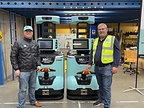
 Technology5 days ago
How The Mobile Robot Company is Upending Logistics by Stopping at 80% Automation
-

 Technology5 days ago
Ricoh and ETRIA launch “Circular New,” a manufacturing concept, turning resource circulation into competitive advantage
-
 Technology5 days ago
Payoneer Checkout Launches in Singapore, Helping Businesses Turn Global Demand into Revenue
-

 Coin Market5 days ago
Polygon gains US payments licenses after closing Coinme deal
-

 Coin Market4 days ago
OpenAI model helped itself to testnet crypto, then kept quiet about it
-

 Technology4 days ago
Born to Be Open: RoboParty Launches RP1, a Full-Stack Open-Source Humanoid
-
 Technology5 days ago
Work4Flow Launches Agentic AI Knowledge Article Optimizer to Improve Search Relevancy on the ServiceNow AI Platform
-

 Coin Market4 days ago
MSCI adopts index exclusion rules that could oust Strategy