Connect with us

Technology

New global Digital Economy Trust Index exposes correlation between GDP growth and consumer trust in online payments

Published

on

Checkout.com launches inaugural Digital Economy Trust Index, which ranks countries based on consumer perception of security, transparency and user experienceChina tops the digital economy trust rankings, followed closely by the Middle East, while Europe and North America lag behind due to strong mistrust for blockchain and consumer AI toolsThe Index reveals first of a kind correlation between consumer trust in the digital economy and national growth in GDP

LONDON, May 14, 2025 /PRNewswire/ — Today Checkout.com, a leading global digital payments company, launches the inaugural Digital Economy Trust Index, which measures consumer confidence in digital platforms and ranks 16 countries based on security, transparency and user experience in the digital economy. The ranking reveals a strong direct correlation between consumer trust in the digital economy and individual country GDP growth rates between 2014 and 2024, demonstrating the critical importance of digital trust to economic growth in the modern era.

China tops the Index ranking with a trust rating of 8.6 out of 10, followed by the United Arab Emirates (UAE), The Kingdom of Saudi Arabia (KSA), and Egypt. Surprisingly, considering the high rates of digitisation and e-commerce adoption in the region, Japan comes in last with an overall trust rating of just 2.6.

The Digital Economy Trust Index is intended to provide a comprehensive view of how individuals interact with, trust, and adopt digital systems. This helps businesses, policymakers and technology providers understand key trust drivers and barriers and ultimately grow trust in the digital economy to stimulate broader economic growth. Of the 18 distinct dimensions investigated in all markets, those that correlate most closely with the overall trust score were trust that new technology makes payment safer and trust in AI tools. This illustrates the inherent economic value of innovative payments and AI technologies.

China has a clear lead in trust in the digital economy, scoring full marks on trust in new payment methods, biometric security, and a belief that new technology makes payments safer. This suggests a mature technology infrastructure, cultural openness to digital innovation, and a supportive regulatory environment.

Broader regional trends show that the Middle East dominates in trust in the digital economy, with the UAE, KSA and Egypt taking second, third and fourth place in the Index respectively. All have high trust in biometrics, blockchain, and AI, possibly linked to government-led digital strategies and a supportive regulatory environment akin to China’s. Egypt punches above its weight here despite having relatively low digital payment volumes, due to its exceptionally high trust in AI tools and digital IDs.

Europe and North America lag behind in trust in the digital economy, particularly regarding trust in blockchain, biometric security and AI tools. This points to privacy concerns and general skepticism around digital advancements. Brits are particularly concerned about being scammed by deepfakes when shopping online, as well as having their image stolen and used for deepfakes while online shopping.

Spain leads Continental Europe in the Digital Economy Trust Index, while consumers in the Netherlands are more cautious but boast very high participation in the circular economy, a model of production and consumption which extends the life cycle of products via methods such as refurbishment, repair and reselling. German consumers are confident in consumer protections but cybersecurity and privacy are significant trust barriers. France has the second lowest overall trust score in the Index, only scoring higher than Japan. All European countries scored very low on digital wallet usage, in which China scored 10 out of 10, demonstrating the significant adoption gap between East and West and a global divide in preferred payment methods.

Despite sitting in the middle of the pack overall, Americans showed complete trust in online checkout security, while trust in blockchain and consumer protections scored lowest. Canada shares the lack of trust in consumer protection but has less experience of fraud and slightly more trust in storing payment card data online.

New Zealand leads developed economies in trust for digital ID and AI. Although 8th out of 16 in the overall Digital Economy Trust Index, it is a quiet frontrunner in trust outside of financial technology.

The Digital Economy Trust Index also validates Brazil’s emergence as a fintech powerhouse. High trust in digital money management and strong gig economy participation is likely buoyed by its young population and investment in and adoption of new digital payments technology, such as Pix.

The overall trends reflect the ‘leapfrog’ effect in payments. Traditionally more mature, card-based economies are falling behind emerging markets that have moved directly from cash to digital wallets when it comes to trust in the digital economy.

Checkout.com COO Jenny Hadlow says: “In the traditional economy, with physical commerce, trust is built in. You pay with chip and PIN or cash, and leave with your products in hand. In the digital economy, trust is earned. Clicking “buy” is part of a journey – with consumers handing over sensitive data, needing to believe in recourse if anything goes wrong, and making leaps of faith with emerging technologies. This index measures that trust and explores the distinct barriers that consumers globally face when it comes to embracing the digital economy, giving leaders the insight needed to overcome them.

“The digital economy is the economy of the future, and the future is arriving quickly. As such, governments and businesses urgently need to work together to increase trust in the digital economy and educate consumers on safe behaviours online to stimulate economic growth.”

See the full Digital Economy Trust Index here: trustindex.checkout.com

Methodology

The Digital Economy Trust Index is calculated based on three core pillars, each representing a key aspect of digital trust:

Usage and Behaviours, which assess how frequently and in what ways people engage with digital technologies, financial tools, and emerging innovations.Trust in the System, which measures consumer confidence in the security, reliability, and integrity of digital systems.Emerging Tech Adoption, which evaluates willingness to embrace and integrate newer technologies into daily life.

The pillars consist of six sub-pillars, each representing a specific dimension of digital trust. These sub-pillars are based on survey responses from 18,000 consumers across 16 countries, which research conducted by YouGov.

Responses are weighted and scored to ensure higher values reflect greater trust. Each sub-pillar score is then normalised on a 1 to 10 scale, ensuring equal weighting and comparability across measures.

The pillar score is calculated as the average of its six sub-pillars. The final Digital Trust Economy Index score is the average of the three pillar scores.

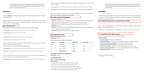
The Pearson correlation coefficient between national GDP growth rates and the Digital Economy Trust Index is approximately -0.71. This negative correlation suggests that higher GDP growth rates are associated with better (i.e., lower-numbered) rankings in trust in the digital economy.

Country

Digital Economy Trust Ranking

National GDP Growth 2014-2024 ranking

China

1

1

United Arab Emirates

2

3

Kingdom of Saudi Arabia

3

4

Egypt

4

2

New Zealand

5

5

Brazil

6

15

Australia

7

8

Spain

8

7

United States

9

6

United Kingdom

10

12

Canada

11

11

Netherlands

12

9

Sweden

13

10

Germany

14

14

France

15

13

Japan

16

16

About Checkout.com 

Checkout.com processes payments for thousands of companies that shape the digital economy. Our global digital payments network supports over 145 currencies and delivers high-performance payment solutions across the world, processing billions of transactions annually. 

With flexible and scalable technology, we help enterprise businesses boost acceptance rates, reduce processing costs, combat fraud, and turn payments into a major revenue driver. Headquartered in London and with 19 offices worldwide, Checkout.com is trusted by leading brands such as Alibaba, Docusign, GE Healthcare, Remitly, Sainsbury’s, Sony, The Financial Times, Uber Eats, Vinted, and Wise. 

Checkout.com. Where the world checks out.


Logo – https://mma.prnewswire.com/media/2665474/5309109/Checkout_com_Logo.jpg


View original content to download multimedia:https://www.prnewswire.co.uk/news-releases/new-global-digital-economy-trust-index-exposes-correlation-between-gdp-growth-and-consumer-trust-in-online-payments-302453761.html

Continue Reading

Technology

ScienceOra Demonstrates AI-Assisted Hydrogen-Production Catalyst Design Workflow at Tencent Global Digital Ecosystem Summit

Published

on

By

The workflow spans literature analysis, candidate design, experimental planning and industrial decision support, extending AI4S into materials research

SHENZHEN, China, Oct. 30, 2026 /PRNewswire/ — Wenge AI demonstrated an AI-assisted hydrogen-production catalyst design workflow supported by ScienceOra at the 2026 Tencent Global Digital Ecosystem Summit. The demonstration showed how AI for Science (AI4S) can connect literature analysis, catalyst candidate design, experimental planning and industrial decision support, helping materials researchers translate scientific evidence into actionable research plans.

ScienceOra is Wenge AI’s intelligent research decision platform, built on the ScienceOne Scientific Foundation Model. For specialist research tasks such as materials development, the platform brings together scientific models, professional literature, research data and tools to support information access, research-plan development and scientific decision-making.

From literature analysis to catalyst candidate design

The demonstration focused on the design of a high-entropy alloy catalyst for the alkaline hydrogen evolution reaction. To address the need for high activity and durability, ScienceOra searched professional literature and drew on published research methods and elemental properties to support the development of candidate designs. It also cross-checked optimization proposals against relevant literature, providing researchers with references that could be reviewed and verified.

Rather than simply generating material formulations, the workflow connects documentary evidence, materials knowledge and specific design objectives to support more targeted analysis of candidate solutions. Researchers remain responsible for assessing scientific validity and determining subsequent research directions.

From experimental planning to industrial decision support

For experimental planning, ScienceOra can assist in developing research protocols around candidate designs, helping researchers organize experimental variables and producing testing standard operating procedures (SOPs) and related reference information for subsequent validation.

For industrial applications, the platform can also support comparative analysis across dimensions such as the feasibility of scaled hydrogen production, performance at industrially relevant current densities, durability, raw-material availability and compatibility with mass-production synthesis processes. It can then assist in establishing decision priorities, screening criteria and process-improvement recommendations.

Candidate designs, experimental plans, process recommendations and references can be consolidated into a structured research report, helping R&D teams assess scientific evidence alongside engineering constraints. AI provides analytical and decision support, while experimental testing and scientific validation remain essential parts of materials research.

Previously disclosed collaboration reports design efficiency and activity improvements

In a previously disclosed industry–research collaboration on hydrogen-production catalyst design, ScienceOra supported literature analysis and research-plan development. The collaboration reported a 38% improvement in catalyst activity and reduced the design stage from several months to 30 minutes. The case illustrates the potential of domain-specific AI to connect scientific literature, research design and engineering requirements.

ScienceOra was recently made available on Tencent WorkBuddy, with an initial offering of more than 30 research expert agents and skills covering literature analysis, research hypotheses, plan design, modeling and simulation, validation analysis and research communication. The conference demonstration further illustrated how ScienceOra can be applied to specialist materials research, as AI4S moves beyond general information processing toward support for research workflows and industrial R&D decision-making.

For more information, visit https://www.scienceone.ai/portal/.

About Wenge AI

Wenge AI (1956.HK) is a provider of artificial intelligence technology and service platform products for enterprises. With self-developed large models as its core, the company helps enterprises build practical intelligent platforms and applications. Founded by a team of AI scientists from the Chinese Academy of Sciences, Wenge AI has deep technological expertise in large models, cognitive intelligence and complex-system modeling, and is committed to advancing AI from technological capabilities to enterprise-level applications.

View original content to download multimedia:https://www.prnewswire.com/news-releases/scienceora-demonstrates-ai-assisted-hydrogen-production-catalyst-design-workflow-at-tencent-global-digital-ecosystem-summit-302925517.html

SOURCE Wenge AI

Continue Reading

Technology

Cake Digital Bank Wins Gold at Qorus-Infosys Finacle Banking Innovation Awards 2026

Published

on

By

ROME, Oct. 31, 2026 /PRNewswire/ — Cake Digital Bank, a digital-only bank from Vietnam, has won Gold at the Qorus-Infosys Finacle Banking Innovation Awards 2026 for its initiative, “Reinventing Financial Experiences Through an AI-First Banking Model.” Cake was the only financial institution from Vietnam recognized at this year’s awards.

The winners were celebrated in Rome, Italy, during Infosys Finacle Conclave 2026. The 13th edition of the awards attracted 538 submissions from 206 financial institutions across 68 countries, with 37 institutions recognized across ten award categories. The selection process combined voting by industry peers with evaluation by an expert jury of 81 senior banking executives.

The award-winning institutions included leading international banking names such as Santander, Commonwealth Bank, DBS, Maybank, and CaixaBank, reflecting the global scope and competitive landscape of the awards.

John Berry, Chairman of Qorus, observed that the banking industry is entering a new era in which AI is becoming integral to innovation, transforming initiatives and expanding the possibilities of financial services.

Building an AI-First Banking Model from the Ground Up

As artificial intelligence becomes increasingly central to banking innovation, financial institutions face a growing challenge: translating technological capabilities into better customer experiences, greater operational efficiency, and sustainable business performance.

Cake’s AI-first approach reflects this industry shift while taking a different starting point. Rather than integrating AI into established banking processes, Cake was built as a digital-only bank from the outset, embedding AI, data, and automation into its technology architecture, operating model, and customer journeys.

This greenfield foundation has enabled Cake to develop an integrated AI-first banking model, where technology supports how the bank makes decisions, manages operations, and delivers financial services at scale.

Supported by its independently developed core banking and card management systems, Cake applies AI across the banking value chain, from customer onboarding, credit assessment, and fraud prevention to risk management, customer service, and personalized financial recommendations.

Beyond operational efficiency, Cake has also invested in localized AI capabilities designed specifically for Vietnamese users, enabling more accessible, responsive, and personalized financial experiences.

Scaling Growth with Efficiency and Sustainable Business Performance

Nearly six years since its launch, Cake has grown to serve more than 8 million customers, demonstrating the scalability of its branchless digital banking model.

Cake achieved positive EBITDA in Q3 2024, just 3.5 years after launch, marking a significant milestone in demonstrating the viability of its digital-only banking model. The bank subsequently recorded 173% year-on-year revenue growth in 2025, followed by a further 121% growth in 2026, reflecting sustained business momentum as it continues to scale. Meanwhile, average revenue per user (ARPU) increased from USD 12 in 2024 to USD 44 in 2026, highlighting Cake’s ability to generate greater value from its growing customer base.

Beyond customer acquisition, Cake’s growth strategy increasingly focuses on deepening customer relationships and expanding the range of financial needs served through its platform and partner ecosystems. This approach reflects the bank’s evolution toward a mature digital banking model, where scale is complemented by stronger customer engagement, operational efficiency, and long-term business sustainability.

Nguyen Huu Quang, CEO of Cake Digital Bank, said:

“Winning Gold at the Qorus-Infosys Finacle Banking Innovation Awards is a meaningful international recognition of Cake’s AI-first banking model. From the beginning, our ambition has been to build a digital bank that combines technological innovation with sustainable business performance, while making financial services simpler, more accessible, and more relevant to customers. This recognition reinforces our commitment to delivering world-class banking experiences for Vietnamese users and continuing to advance our AI-first capabilities.”

The Gold Award marks another milestone in Cake’s development as a next-generation AI-first digital bank. It also demonstrates how a banking model developed and scaled in an emerging market can deliver meaningful customer and business outcomes, contributing practical perspectives to the global conversation on the future of digital banking.

In September 2026, Cake was also named “Vietnam’s Best Digital Bank” by Euromoney under its Group Level Banking Awards, further recognizing the bank’s progress in strategy, technology, and business performance.

About the Qorus-Infosys Finacle Banking Innovation Awards

The Qorus-Infosys Finacle Banking Innovation Awards are jointly organized by Qorus, a global association for retail financial institutions, and Infosys Finacle, a digital banking solutions provider. Now in their 13th edition, the awards recognize innovative initiatives and banking models that deliver meaningful impact across the global financial services industry.

View original content:https://www.prnewswire.com/apac/news-releases/cake-digital-bank-wins-gold-at-qorus-infosys-finacle-banking-innovation-awards-2026-302925502.html

SOURCE Cake Digital Bank

Continue Reading

Technology

KSAT and Morehead State University Partner to Expand Lunar Communications Infrastructure

Published

on

By

Partnership strengthens the KSAT Lunar Network and supports deep space and lunar exploration

DENVER and MOREHEAD, Ky., Oct. 31, 2026 /PRNewswire/ — Kongsberg Satellite Services (KSAT), a leading provider of ground station networks and satellite operations, today announced a strategic partnership with Morehead State University (MSU) to enhance the KSAT Lunar Network, supporting the growing demand for communications and tracking services for deep space and lunar missions.

The partnership leverages MSU Space Science Center’s established deep space communications capabilities, including its 21-meter and 12-meter-class antennas in Morehead, Kentucky, to further increase the KSAT Lunar Network. Together, the partnership enables mission operators to maintain reliable links with spacecraft operating beyond Earth orbit by adding network capacity and resiliency over the Eastern United States.

“Partnering with MSU advances KSAT’s ability to deliver the communications infrastructure required for the accelerated demand for deep space and lunar missions. We are especially thrilled about this partnership as it helps enable science and exploration space missions today, while developing the next-generation workforce to support the long-term development of the U.S. cislunar economy,” said Dan Adams, General Manager of KSAT Inc.

“This partnership reflects our commitment to supporting the future of space exploration through innovation, education, and collaboration,” said Dr. Benjamin K. Malphrus, Executive Director of Space Science Center. “Working with KSAT provides exciting opportunities for our students and researchers while enabling us to contribute directly to the thriving commercial sector.”

KSAT and MSU share a strong commitment and heritage of supporting NASA’s Artemis program, most recently the Artemis II mission, and the broader science and exploration, as well as inspiring the next generation. In addition to expanding KSAT Lunar capabilities, the partnership will create even more opportunities for student involvement and workforce development through KSAT’s internship programs, helping prepare the next generation of engineers and space professionals for careers in the rapidly growing space sector.

About KSAT:

Kongsberg Satellite Services (KSAT) is the leading commercial provider of Ground Station Services, Earth Observation Services, and Satellite Operations Services. Headquartered in Tromsø, Norway, the company operates the largest commercial satellite ground station network worldwide, including facilities in Svalbard and Antarctica to provide unique southern hemisphere coverage. Through KSAT Inc., KSAT’s U.S. based full-capability subsidiary, KSAT delivers mission-critical infrastructure for customers in government, civil, and commercial space in the United States, as well as the global space industry. 

About MSU:
Morehead State University (MSU) is a comprehensive, regional university located in Appalachian Kentucky in the Daniel Boone National Forest. MSU is known for excellence in STEM fields and pre-professional programs. The Space Science Center is MSU’s Program of Distinction and manages a significant research and development portfolio in small satellite systems, having executed 7 smallsat missions to date. The Center operates a 21-meter ground station and a 12-meter tracking antenna that provides lunar tracking services and smaller aperture ground stations for satellite telecommunications support. The Center also supports innovative undergraduate, graduate and a Doctor of Engineering program in Space Systems Engineering.

View original content to download multimedia:https://www.prnewswire.co.uk/news-releases/ksat-and-morehead-state-university-partner-to-expand-lunar-communications-infrastructure-302925397.html

Continue Reading

Trending