Connect with us

Technology

KIST Accelerates U.S. Expansion of Quantum Deep-Tech Startups Through SelectUSA 2026

Published

on

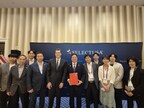
SEOUL, South Korea, May 5, 2026 /PRNewswire/ — The Korea Institute of Science and Technology (KIST) President Oh Sang-rok announced that it will participate in the SelectUSA Investment Summit 2026 as part of a Korean delegation, together with quantum technology startups supported by the Ministry of SMEs and Startups under the Deeptech Project (DIPS).

The initiative, supported by South Korea’s Ministry of SMEs and Startups (MSS), is part of the government’s “Deeptech Incubator Project for Startups” (DIPS) initiative, which aims to nurture globally competitive deep-tech ventures.

KIST, which serves as the lead institution for the quantum technology sector under the program, said it will oversee the global commercialization efforts of participating firms. In particular, the “Global Bridge Program,” jointly developed with the U.S. Embassy in Korea in September 2025, is an official program designed to generate tangible overseas expansion outcomes by linking investment attraction with local market entry through diplomatic channels.

Organized by the U.S. Department of Commerce, the SelectUSA Investment Summit is the largest investment promotion event in the US, connecting international startups with venture capital firms, corporate investors and state-level economic development agencies.

It serves as an execution-oriented platform that extends to investment, corporate establishment, site selection, and tax incentives, and is considered a key entry gateway for deep-tech companies, including those in quantum technology.

KIST said participation in the summit is particularly significant for deep-tech sectors such as quantum technology, where access to the US innovation ecosystem is seen as key to growth.

The program is conducted in two stages. From April 30 to May 1, companies took part in a spin-off program hosted by the State of Maryland, which included visits to research institutions and tours of the regional quantum technology ecosystem.

During this period, the delegation also conducted localized activities with the Maryland state government and its economic development agencies, focusing on investment attraction, corporate collaboration, and joint R&D. In addition, on May 5, the delegation held discussions with U.S. Department of Commerce Deputy Secretary William Kimmitt on potential areas of cooperation.

The delegation will also meet officials from Fairfax County Government to explore collaboration and investment opportunities.

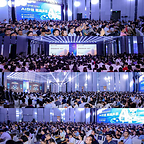
The main summit, currently ongoing from May 3 to May 6, features exhibitions, pitching sessions and meetings with US state representatives, with participating firms expected to engage in discussions on investment and market entry.

The delegation is structured to encompass the entire quantum industry rather than a single technology domain.

The Korean delegation comprises five startups, alongside Kyung Hee University Department of Future Science & Technology Commercialization Policy and Entrepreneurship, with approximately 20 participants forming an integrated ecosystem that combines research institutes, academia, and startups, enabling a full-cycle support system from technology validation to commercialization and global expansion.

One of the firms, OptiQ-Labs, was selected for an official pitching session on May 4, where it presented its laser-based optical modules designed for ion-trap quantum computing systems.

This highly competitive program selects only around 100 companies from more than 20,000 applicants worldwide. If selected as the winner of the pitching session, the company will receive follow-up meetings with U.S. state governments and economic development agencies, access to global investor networks, support for local entity establishment, and connections to site selection and tax incentive programs.

Other participating companies include QUAD, which develops single-photon detection technology; SLEEX, focused on underwater sensing; Elixir (StatUp AI), which works on quantum-classical hybrid algorithms for healthcare; and SQK (QMEDIC), specializing in physics-based imaging solutions.

KIST Project Director, Kang Sunjoon, said, “This program represents a critical milestone for Korean quantum startups to directly connect with global investors and industry ecosystems. Via the DIPS program, we are actively promoting the global commercialization of quantum technologies.”

Through its participation in SelectUSA, KIST has established a package-type global expansion model that integrates technology validation, investment attraction, and U.S. market entry.

The summit serves as a turning point for South Korea’s quantum sector, enabling startups to move into the next phase of validation, investment, and overseas expansion.

For more information, visit https://eng.kist.re.kr/.

About KIST 

KIST was established in 1966 as the first government-funded research institute in South Korea. KIST now strives to solve national and social challenges and secure growth engines through leading and innovative research.

About Participating Quantum Startups

QUAD, led by Chief Executive Officer, Oh Byung-doo, develops quantum sensing technologies based on superconducting nanowire single-photon detectors (SNSPDs), offering high sensitivity and precision with applications spanning quantum communication, quantum computing, semiconductor inspection, and defense.

SLEEX is developing an advanced perception technology that combines quantum LiDAR and electric field sensing to overcome limitations of existing underwater sensors, particularly by eliminating blind zones within the 0–2 meter range, with strong potential in autonomous navigation, maritime security, and defense, with Lee Jeho at the helm as Chief Executive Officer.  (https://www.thesleex.com)

Elixir, headed by Chief Executive Officer Jang Jung-kwon, develops a drug discovery and biomarker analysis platform based on quantum-classical hybrid algorithms, targeting the precision medicine market through the integration of bioinformatics and quantum machine learning. (statupai.com)

SQK develops medical imaging AI based on quantum-physics constraints, addressing the hallucination issues of conventional AI by ensuring physical consistency in CT and MRI reconstruction. Under the leadership of Chief Executive Officer Kim Yoon-hak, SQK is improving reliability and reducing the need for re-scans in clinical settings. (www.sqkcloud.com)

View original content to download multimedia:https://www.prnewswire.com/news-releases/kist-accelerates-us-expansion-of-quantum-deep-tech-startups-through-selectusa-2026-302763636.html

SOURCE The Korea Institute of Science and Technology (KIST)

Continue Reading
Click to comment

Leave a Reply

Your email address will not be published. Required fields are marked *

Technology

Pope Leo XIV embraces paediatric patients at CNAO in Pavia

Published

on

By

PAVIA, Italy, June 20, 2026 /PRNewswire/ — The National Center for Oncological Hadrontherapy (CNAO) served as the first stop today during Pope Leo XIV’s pastoral visit to the city of Pavia. His choice to begin his journey at this center reflects a profound commitment to fostering meaningful dialogue between advanced scientific progress and the alleviation of human suffering.

CNAO President Gianluca Vago and General Manager Sandro Rossi received His Holiness, illustrating the center’s distinctive capabilities. CNAO stands out as a unique reality in Italy, remaining one of the very few facilities worldwide capable of delivering hadrontherapy using both protons and carbon ions. The technological core of the facility is its synchrotron, a subatomic particle accelerator that generates ultra-high-precision beams to treat complex, inoperable and radioresistant tumours. This cutting-edge technology allows for the targeted eradication of diseased cells while meticulously preserving surrounding healthy tissues, drastically improving patients’ survival and quality of life.

Furthermore, CNAO is expanding its capabilities as a premier multi-center utilizing new ion species, like Helium, later Oxygen and Neon. Soon, treatments will incorporate the Leo Cancer Care upright positioning and imaging system. The immediate future also includes beginning therapies with a Hitachi dedicated proton accelerator and gantry and a BNCT system for metastatic diseases, equipped with an electrostatic accelerator produced by TAE Life Science. With these new technologies, CNAO will become one of the most technologically advanced center in the world.

To date, over six thousand individuals, including approximately three hundred children and adolescents, have benefited from these life-saving treatments.

During his visit, the Pope engaged with CNAO’s Board of Directors, a collaborative body uniting national universities, clinical institutions, and research centers. He also extended his heartfelt greetings to the two hundred employees of the center. These doctors, physicists, engineers, and researchers tirelessly operate the advanced technologies in the service of oncology patients.

The emotional pinnacle of the day was the Holy Father’s private gathering with a delegation of young children who underwent treatment. The paediatric patients and their families shared a deeply touching moment of closeness, receiving the Pope’s comforting embrace.

“The visit of Pope Leo XIV honours us and represents a moment of extraordinary human value”, stated CNAO President Gianluca Vago. “In his encyclical Magnifica Humanitas, the Holy Father emphasizes the necessity of a science that constantly safeguards the centrality of the person and directs technology toward the common good. In a time marked by global tensions, CNAO testifies daily how the incredible power of the atom can be used not to destroy, but to heal. The particle beams we utilize against disease are, symbolically, Rays of Hope, sharing and supporting the IAEA project bearing this name. The embrace the Holy Father reserved for our children reminds us that scientific research finds its most authentic purpose when it encounters listening, compassion, and hope”.

Photo – https://mma.prnewswire.com/media/2997869/Papa_al_Cnao_crediti_Andrea_Perotti.jpg
Logo – https://mma.prnewswire.com/media/2997643/CNAO_Logo.jpg


View original content:https://www.prnewswire.co.uk/news-releases/pope-leo-xiv-embraces-paediatric-patients-at-cnao-in-pavia-302805799.html

Continue Reading

Technology

HelloNation Article Examines Full Coverage Auto Insurance With Insurance Expert Ben Buenzow

Published

on

By

The article explains what full coverage auto insurance typically includes, what it excludes, and how coverage limits affect Iowa drivers.

URBANDALE, Iowa, June 20, 2026 /PRNewswire/ — What does full coverage auto insurance actually include for drivers in Iowa? That question is answered in a HelloNation article featuring insights from Insurance Expert Ben Buenzow of Buenzow Insurance Group in Urbandale, Iowa.

The HelloNation article explains that full coverage auto insurance is a commonly used phrase that many drivers misunderstand. While the term suggests broad protection, it usually refers to a combination of liability coverage, collision coverage, and comprehensive coverage within an insurance policy. Understanding what these components cover helps drivers avoid gaps in protection and unexpected costs after an accident.

Liability coverage forms the legal foundation of auto insurance in Iowa. The article explains that liability coverage pays for injuries or property damage that a driver causes to others in an accident. State law requires Iowa drivers to carry minimum liability limits, and full coverage auto insurance policies include at least those required limits. However, liability coverage does not pay for damage to the driver’s own vehicle, which is why additional protection is often necessary.

Collision coverage is the part of a policy that helps pay for damage to the driver’s own vehicle after an accident. The HelloNation article notes that collision coverage applies when a vehicle hits another car, a guardrail, or a stationary object. In most cases, the insurer pays the actual cash value of the vehicle or the repair cost minus the policy’s deductible. Insurance Expert Ben Buenzow is featured in the article as a source of insights on how deductibles influence both insurance premiums and out-of-pocket costs during a claim.

Comprehensive coverage addresses a different type of risk. According to the article, comprehensive coverage protects against damage caused by events other than collisions. This includes hail, theft, vandalism, fire, falling objects, or animal-related incidents. For Iowa drivers, weather-related risks such as hailstorms can make comprehensive coverage an important part of a full coverage auto insurance policy.

The HelloNation article also explains that deductibles apply to both collision coverage and comprehensive coverage. The deductible is the amount the policyholder must pay before insurance coverage begins. Drivers can often choose higher or lower deductibles depending on their financial preferences. Higher deductibles typically reduce premium costs but increase the amount paid out of pocket if damage occurs.

Another important takeaway from the article is what full coverage auto insurance does not automatically include. Standard policies usually do not provide roadside assistance, rental reimbursement, or gap coverage unless these features are added separately. The article explains that roadside assistance covers towing or emergency services, while rental reimbursement helps cover the cost of a temporary vehicle during repairs.

Gap coverage is another optional feature highlighted in the article. It is often recommended for drivers who finance or lease newer vehicles. Gap coverage pays the difference between the remaining loan balance and the vehicle’s actual cash value if it is declared a total loss after an accident.

The article also discusses the importance of understanding coverage limits within an insurance policy. Coverage limits determine the maximum amount an insurer will pay for a covered loss. If damage or liability exceeds those limits, the driver may be responsible for the remaining costs. Reviewing coverage limits carefully helps drivers ensure their policy reflects both the value of their vehicle and their financial risk.

Insurance Expert Ben Buenzow is again referenced in the article as part of a broader discussion about how drivers can make informed decisions about Iowa car insurance. The article encourages drivers to evaluate deductibles, coverage limits, and optional protections based on their individual needs.

The HelloNation article concludes by emphasizing that drivers should periodically review their insurance policy. Changes in vehicle value, financial circumstances, and driving habits can all affect the appropriate level of coverage. Understanding the components of full coverage auto insurance helps drivers maintain adequate protection and prepare for unexpected events on the road.

Iowa Auto Insurance: What Full Coverage Includes and Excludes features insights from Ben Buenzow, Insurance Expert of Urbandale, Iowa, in HelloNation.

About HelloNation
HelloNation is America’s Good News Network, a premier media platform built on the idea that good news travels faster when real people tell real stories. Through its community-focused publications and innovative “edvertising” approach, HelloNation delivers content that informs, inspires, and spotlights the leaders making a meaningful impact in their communities.

View original content to download multimedia:https://www.prnewswire.com/news-releases/hellonation-article-examines-full-coverage-auto-insurance-with-insurance-expert-ben-buenzow-302805432.html

SOURCE HelloNation

Continue Reading

Technology

HelloNation Clarifies Ohio Waiver Waiting List Classifications For Adults With Disabilities, Featuring Home Healthcare Expert Kellan Roberts Of Canton, Ohio

Published

on

By

The article explains immediate need and current need categories and how families can navigate Medicaid waiver programs.

CANTON, Ohio, June 20, 2026 /PRNewswire/ — What should families of developmental disabilities know about the Ohio waiver waiting list and how immediate need and current need classifications affect access to services? HelloNation provides guidance in an article featuring insights from Home Healthcare Expert Kellan Roberts of R House Home Health Care Services in Canton, Ohio.

The HelloNation article explains that the Ohio waiver waiting list exists because demand for Medicaid waiver programs often exceeds available funding. To manage this gap, counties use service prioritization categories to determine who receives services first. Understanding how these classifications work helps families plan more effectively and reduce uncertainty.

According to the article, immediate need generally refers to adults with developmental disabilities who cannot safely remain at home without prompt services. This may include individuals who have lost caregiver support or experienced a sudden health crisis. In contrast, the current need applies to individuals who require support but whose living situations remain stable enough to wait for waiver programs to become available.

The article emphasizes that documentation plays a critical role in determining placement on the Ohio waiver waiting list. Families must provide medical records, assessments, and supporting information that clearly demonstrate the level of need. Counties review this documentation carefully and may conduct interviews or home visits to confirm circumstances before assigning a classification.

Accurate and updated records are described as essential for proper service prioritization. Needs can change over time, and families are encouraged to notify county offices if circumstances worsen. A person initially categorized under current need may later qualify as immediate need if conditions shift. Staying engaged ensures that updated information is considered during periodic reviews.

While waiting for Medicaid waiver programs to begin, families may need to explore temporary supports. The article notes that personal care services, homemaker assistance, and community programs can help adults with disabilities maintain daily routines and independent living during the waiting period. These interim solutions provide structure and stability while long-term services are pending.

Family planning is highlighted as an important part of navigating the process. Understanding how waiver programs operate, what services they provide, and how classifications are reviewed allows families to make informed decisions. Planning ahead also reduces stress and prepares adults with disabilities for a smoother transition once services are approved.

The article further explains that service prioritization is not static. Counties regularly reassess waiting lists and adjust classifications based on updated information or changes in resources. Families benefit from understanding review timelines and maintaining open communication with county representatives.

Medicaid waiver programs offer a range of supports, including personal care, homemaker services, transportation, and community engagement. The HelloNation article advises families to consider how these services align with long-term goals related to independence, skill development, and community participation. Preparing in advance allows adults with disabilities to transition into services more efficiently when their turn arrives.

Ultimately, the article presents the Ohio waiver waiting list as a system that requires preparation, patience, and active participation. By understanding immediate need and current need classifications, maintaining proper documentation, and staying involved throughout the review process, families can better advocate for timely care and ensure continued safety and stability.

Immediate vs Current Need: How to Navigate the Ohio Waiver Waiting List features insights from Kellan Roberts, Home Healthcare Expert of Canton, Ohio, in HelloNation.

About HelloNation
HelloNation is America’s Good News Network, a premier media platform built on the idea that good news travels faster when real people tell real stories. Through its community-focused publications and innovative “edvertising” approach, HelloNation delivers content that informs, inspires, and spotlights the leaders making a meaningful impact in their communities.

View original content to download multimedia:https://www.prnewswire.com/news-releases/hellonation-clarifies-ohio-waiver-waiting-list-classifications-for-adults-with-disabilities-featuring-home-healthcare-expert-kellan-roberts-of-canton-ohio-302805455.html

SOURCE HelloNation

Continue Reading

Trending