Connect with us

Technology

The King’s Foundation and FormationQ Launch “Harmonious Urban Growth” Programme to Help Cities Plan Sustainable Expansion Using Quantum Optimisation

Published

on

LONDON and AUSTIN, Texas, May 11, 2026 /PRNewswire/ — The King’s Foundation and FormationQ today announced a new partnership to showcase how towns and cities across the Commonwealth can grow sustainably using quantum technology.

The partnership, entitled Harmonious Urban Growth: A Health-Optimised Expansion Framework Using Quantum Methods, is a three-year programme designed to help cities grow sustainably while improving the health of people and the planet. The initiative will incorporate advanced computational modelling, including quantum optimisation enabled by trapped-ion systems from IonQ, to explore new methods for planning complex urban systems and sustainable town planning.

Today, around 1.3 billion people live in unplanned settlements, and that number is expected to grow by well over one billion more in the next 30 years. When urban expansion occurs without planning frameworks, infrastructure and public services can struggle to keep up with population growth, creating long-term challenges for mobility, public health, and environmental resilience. Early planning helps cities become more livable, walkable and sustainable. In many of the places growing most rapidly, professional planning resources are limited, yet the need to organise urban expansion has never been greater.

The Harmonious Urban Growth programme builds on The King’s Foundation’s Rapid Planning Toolkit, a practical methodology developed with Commonwealth partners following the Declaration on Sustainable Urbanisation (CHOGM 2022). The Toolkit enables mayors, planning authorities and built-environment professionals to establish clear frameworks guiding responsible expansion before informal settlement patterns become difficult to reverse.

The Toolkit was piloted in Bo, Sierra Leone, where it helped local authorities and community stakeholders avoid development in flood-prone wetlands while identifying walkable areas and infrastructure corridors for future expansion.

The three-year programme will be supported by UK urban planning consultants Space Syntax, who will bring their knowledge on cities, mapping, and data to the initiative. Working alongside The King’s Foundation and FormationQ, they will apply digital modelling techniques to the toolkit process, harnessing the power of IonQ’s quantum technologies to develop new platforms that can support our understanding of the complexity of cities.

Ben Bolgar, Executive Director for Projects at The King’s Foundation, said:

“We are excited to partner with FormationQ to explore how our Rapid Planning Toolkit can help communities grow sustainably across the world. We hope that the work of the Projects Team at The King’s Foundation will impact more communities positively as a result.”

Through the partnership, FormationQ will contribute advanced computational and optimisation capabilities, leveraging the IonQ quantum platform, to allow planners to explore large numbers of potential spatial configurations across interconnected systems including water networks, ecological corridors, transportation infrastructure, neighbourhood centres and block structures.

Urban planning across these layers involves complex combinatorial decisions. Advanced optimisation techniques, including quantum approaches, can help analyse these interactions more efficiently and generate alternative spatial frameworks that balance walkability, environmental resilience, infrastructure efficiency and economic accessibility.

Nada Hosking, Founder and CEO of FormationQ, said:

“Rapid urbanisation is one of the most complex systems challenges of the 21st century. Cities must balance environmental resilience, infrastructure capacity, economic opportunity and human wellbeing simultaneously. Advances in computational modelling, including quantum optimisation techniques, offer new ways to explore these complex interactions and support better planning decisions.”

The computational modelling informs a participatory planning process in which planners, local authorities and community representatives review spatial options and shape a preferred framework. Proposed plans can then be tested directly on site, with streets, squares and public spaces physically marked on the ground and digitally mapped to guide early development.

By combining quantum computing, participatory planning and field testing, the Harmonious Urban Growth programme aims to create a scalable framework for guiding sustainable city expansion in rapidly urbanising regions. The collaboration between The King’s Foundation and FormationQ reflects a shared commitment to supporting resilient communities and responsible stewardship of the built environment.

Notes to Editors

About The King’s Foundation

The King’s Foundation was founded by King CHarles III and was first formed in 1990. The charity’s core mission is to build sustainable communities and transform lives.

Inspired by the values of His Majesty, the Foundation builds and supports communities where people, places and the planet can coexist in harmony. The Foundation’s Projects Team works both domestically and internationally across stakeholder and community engagement, masterplanning, and community regeneration. Over 35 years, the team has developed plans for hundreds of thousands of homes in walkable communities and revitalised a range of historic buildings. In addition to its UK presence, the Foundation delivers projects in over a dozen sites worldwide.

The King’s Foundation is headquartered at its flagship regeneration project, Dumfries House in Ayrshire, Scotland, and acts as custodian of other historic Royal sites including Highgrove Gardens and The Castle of Mey. The charity also manages educational programmes and cultural events in London at The King’s School for Traditional Arts, The Garrison Chapel and Trinity Buoy Wharf.

For more information, please visit www.kings-foundation.org / or email media@kings-foundation.org.

About FormationQ

FormationQ is the enablement layer for global quantum adoption. The company builds the institutional pathways and collaborative structures that allow quantum technologies to move from frontier research into real-world use. Working with leading institutions and technology partners, FormationQ operates and supports programmes that advance talent development, application formation, and ecosystem coordination in ways that can be governed, trusted, and sustained over time.

About IonQ

IonQ, Inc. [NYSE: IONQ] is the world’s leading quantum platform and merchant supplier – delivering integrated quantum solutions across computing, networking, sensing, and security. IonQ’s newest generation of quantum computers, the IonQ Tempo, is the latest in a line of cutting-edge systems that have been helping customers and partners including Amazon Web Services, NVIDIA, and Astrazeneca achieve 20x performance results and accelerate innovation in drug discovery, materials science, financial modeling, logistics, cybersecurity, and defense. In 2025, the company achieved 99.99% two-qubit gate fidelity, setting a world record in quantum computing performance.

Headquartered in College Park, Maryland, IonQ has operations in California, Colorado, Massachusetts, Tennessee, Washington, Italy, South Korea, Sweden, Switzerland, Canada, and the United Kingdom. Our quantum computing services are available through all major cloud providers, while we also meet the needs of networking and sensing customers across land, sea, air, and space. IonQ is making quantum platforms more accessible and impactful than ever before. Learn more at IonQ.com.

FormationQ Media Contacts
formationq@edelman.com

Matthew Strebe
FormationQ
matthew.strebe@formationq.com

View original content to download multimedia:https://www.prnewswire.com/news-releases/the-kings-foundation-and-formationq-launch-harmonious-urban-growth-programme-to-help-cities-plan-sustainable-expansion-using-quantum-optimisation-302767462.html

SOURCE FormationQ

Continue Reading

Technology

IQuest Research Releases IQuest-Q1 Technical Report, Detailing Training from Scratch and Results Across 30 Benchmarks

Published

on

By

BEIJING, Oct. 23, 2026 /PRNewswire/ — IQuest Research has published IQuest-Q1: Advancing Foundation Capabilities for Agentic CLI Systems, detailing the model’s architecture, complete training pipeline, results across 30 benchmarks, and role in iterative model development.

IQuest-Q1 is an open-source agentic foundation model optimized for command-line interface (CLI) interaction, software engineering, and complex multi-step tasks. Its sparse Mixture-of-Experts architecture comprises 320 billion total parameters, with 15 billion activated per token.

A Complete Training Pipeline, Beginning with Pre-Training

Developed from scratch, IQuest-Q1 progresses through pre-training, mid-training, and post-training. Pre-training and mid-training together cover approximately 29 trillion tokens, with context length progressively extended to 512K.

The architecture incorporates Stable SplitNorm, the Muon optimizer, and μP parameterization. In controlled experiments using identical training data, it required approximately 52% of the compute needed by a Qwen3-30B-A3B-style MoE baseline to reach the same training loss, corresponding to 1.93× scaling efficiency. The report also introduces Critical Model Size (CMS) to examine scaling limits under training-stability and optimization-efficiency constraints.

Post-training combines supervised fine-tuning, domain-specific reinforcement learning, Multi-Teacher On-Policy Distillation (MOPD), and model merging. Training spans multiple agent harnesses and versions, including Claude Code and Codex, to strengthen performance across different execution environments.

The report also describes Recursive Multi-Token Prediction, which adapts an MTP layer into a reusable drafter for speculative decoding, extending the drafting horizon within a fixed parameter budget.

Evaluations Across Coding and Agentic Workflows

The 30-benchmark evaluation suite covers software engineering, terminal operation, tool use, professional workflows, search, and reasoning. IQuest-Q1 scores 52.7 on AutomationBench, 51.8 on τ³-Banking, 74.1 on SkillsBench, 78.4 on MCP-Atlas, and 75.0 on Toolathlon-Verified.

The report also evaluates sustained interaction through Claw-Eval and IQuest-CLIBench, the team’s internal assessment combining user simulation, execution traces, and environment-state checks.

Full results, comparison baselines, and evaluation configurations are disclosed in the report.

Environment Integrity and Reward Hacking Mitigation

The team constructed more than one million executable, containerized task instances, retaining valid and complete trajectories for mid-training. Post-training environments use task-specific verifiers to ground learning in execution outcomes.

Environment preparation, execution-time checks, and trajectory auditing help mitigate reward hacking, including attempts to access hidden tests or leaked solutions. Confirmed cheating trajectories are excluded from training.

The report also documents model-assisted research under human supervision. In one experiment, an IQuest-Q1-based agent traced 6,054 tool calls to investigate 35 errors, identified training-data inconsistencies, and implemented a reviewed data-cleaning and augmentation plan. Validated methods and research assets will support subsequent model development.

Project resources are available through:

Technical Report: https://arxiv.org/pdf/2610.30949Blog: iquestlab.github.ioHugging Face: IQuestLab/IQuest-Q1GitHub: IQuestLab/IQuest-Q1

CONTACT: IQuest Research
research@iquestlab.com

View original content:https://www.prnewswire.com/news-releases/iquest-research-releases-iquest-q1-technical-report-detailing-training-from-scratch-and-results-across-30-benchmarks-302917967.html

SOURCE IQuest Research

Continue Reading

Technology

HoneyNaps Selected for 2026 Eurostars International R&D Project

Published

on

By

Korean-Swedish consortium brings together Yonsei University, Dankook University, Uppsala University and Xantage AB Project to develop a non-invasive platform for neurological monitoring Skin-mounted sensors aim to track changes in intracranial pressure continuously, alongside sleep signal analysis

BOSTON, Oct. 23, 2026 /PRNewswire/ — HoneyNaps, a South Korean sleep medicine AI company, announced today that it has been selected for a 2026 Eurostars international R&D project supported in Korea by the Ministry of Trade, Industry and Resources and the Korea Institute for Advancement of Technology (KIAT).

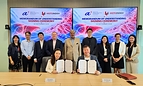
Eurostars is a multilateral R&D funding programme operated by the Eureka Network and co-funded by the European Union. The selected project, titled “Development of a Spectroscopic Electromagnetic Sensing and Artificial Intelligence Platform for Non-Invasive Neurological Monitoring, “will bring together HoneyNaps, Yonsei University, Dankook University, Sweden’s Uppsala University and Xantage AB.

The consortium will develop and validate an integrated platform to monitor changes in intracranial pressure (ICP) and sleep status non-invasively. The project combines the expertise of participating institutions in South Korea and Sweden across sensor technology, artificial intelligence and clinical platforms.

The project aims to develop an integrated platform at Technology Readiness Level 6 (TRL 6), combining a compact chip-scale vector network analyzer (VNA), SansEC microwave resonant sensors, physics-informed AI and wireless polysomnography (PSG) signal analysis. The platform is intended to continuously estimate changes in ICP and automatically analyze sleep stages and events. The project will also establish the technical and documentation framework needed to prepare for submission under the European Union Medical Device Regulation (MDR).

As part of the project, HoneyNaps will work on the wireless collection and analysis of electroencephalogram (EEG), electrooculogram (EOG), electromyogram (EMG), electrocardiogram (ECG), oxygen saturation (SpO₂) and respiratory signals. The goal is to combine the clinical information provided by laboratory-based PSG with the convenience of home-based testing, enabling automated analysis of sleep stages and key sleep events.

“By combining electromagnetic sensing with sleep biosignal analysis, this project will evaluate the potential of non-invasive neurological monitoring,” said Sean Ha (Taekyoung Ha), President of HoneyNaps USA. “Together with our partners in South Korea and Sweden, we will validate the sensors, AI and platform in stages and build a foundation for clinical use and global market entry.”

For further information, please contact:
HoneyNaps USA, Inc.
Christine Kwon / Managing Director
Email: sleep@honeynaps.com
Address: 14th Floor, One Broadway, Cambridge, MA 02142, USA
Website: www.honeynaps.com

View original content to download multimedia:https://www.prnewswire.com/news-releases/honeynaps-selected-for-2026-eurostars-international-rd-project-302917794.html

SOURCE HoneyNaps

Continue Reading

Technology

Hyperscale Data Reaffirms 2027 Guidance of $300 Million to $350 Million in Revenue and $60 Million to $80 Million in Adjusted EBITDA

Published

on

By

Initial Michigan AI compute capacity expected to be energized and begin revenue-generating activities in December 2026; operating momentum and expanding blockchain and digital asset initiatives support outlook

LAS VEGAS, Oct. 23, 2026 /PRNewswire/ — Hyperscale Data, Inc. (NYSE American: GPUS), an artificial intelligence (“AI”) data center company (“Hyperscale Data” or the “Company”), today reaffirmed its preliminary consolidated financial guidance for the year ending December 31, 2027, of $300 million to $350 million in revenue and $60 million to $80 million in Adjusted EBITDA.

The outlook reflects management’s current expectations for three principal operating platforms: data center, AI infrastructure and robotics; lending, financial services and digital assets; and portfolio companies operated through the Company’s hybrid private equity platform, where the latter two are housed within Ault Capital Group, Inc. (“ACG”), a direct wholly owned subsidiary of the Company.

The Company expects the first phase of AI compute capacity at its Michigan campus to be energized in December 2026, with revenue-generating activities expected to commence in connection with that milestone. This initial deployment represents an important step in the Company’s transition toward a larger AI infrastructure business, with additional growth anticipated as capacity is developed and customer deployments progress.

“We are seeing encouraging progress across our businesses as we prepare to begin revenue-generating AI operations at our Michigan campus,” said William B. Horne, Chief Executive Officer of Hyperscale Data. “Our operating forecasts support our reaffirmed 2027 guidance. We remain focused on delivering contracted capacity, securing the resources needed for development and meeting the milestones that support our outlook.”

The Company previously announced preliminary consolidated revenue of approximately $40 million for the third quarter ended September 30, 2026, an increase of approximately 64% compared to $24.3 million for the third quarter of 2025. The increase reflected stronger contributions from crane operations, defense, lending and trading, and other revenue, including software supporting blockchain network operations. Defense revenue reflected the inclusion of Gresham Worldwide, Inc. following its reconsolidation. These increases were partially offset by lower Bitcoin mining revenue.

The preliminary third-quarter revenue figures have not been audited or reviewed by the Company’s independent auditor and remain subject to completion of quarter-end financial closing procedures and review. Actual results may differ materially from the estimate, which does not present a complete assessment of the Company’s third-quarter financial results.

“We believe the Company’s current market valuation does not reflect the progress across our businesses or the value of the platform we have assembled,” said Milton “Todd” Ault III, Executive Chairman of Hyperscale Data. “Alongside the Michigan AI data center, we see significant opportunity in tokenization and our broader blockchain and digital asset activities. We believe growth in these activities can contribute meaningfully to revenue and improve our profitability profile as we execute our operating plans.”

The preliminary guidance reflects management’s current expectations regarding future business performance, including anticipated customer deployments, financing activities, digital asset initiatives and the performance of its portfolio businesses. Actual results may differ materially.

Adjusted EBITDA is a non-GAAP financial measure. The Company is unable to reconcile projected Adjusted EBITDA quantitatively to GAAP net income or loss without unreasonable effort because certain necessary components cannot currently be reasonably estimated. These include future interest expense, income taxes, depreciation and amortization, stock-based compensation, impairment charges, acquisition-related expenses and changes in the fair value of financial instruments. These items are expected to be material to future GAAP results.

For more information on Hyperscale Data and its subsidiaries, Hyperscale Data recommends that stockholders, investors and any other interested parties read Hyperscale Data’s public filings and press releases available under the Investor Relations section at hyperscaledata.com or available at www.sec.gov.

About Hyperscale Data, Inc.

Through its wholly owned subsidiary Sentinum, Inc., Hyperscale Data owns and operates a data center at which it offers colocation and hosting services for the emerging AI ecosystems and other industries. Another of Hyperscale Data’s wholly owned subsidiaries, ACG, is a hybrid private equity firm and operating company that acquires, finances, builds and actively manages businesses across financial services, digital assets, industrial services, hospitality, defense technologies and other sectors.

Hyperscale Data currently expects the divestiture of ACG (the “Divestiture”) to occur in 2027. Upon the occurrence of the Divestiture, the Company would be an owner and operator of data centers to support high-performance computing services, as well as a holder of the digital assets and the third wholly owned subsidiary of the Company, Omnipresent Robotics, LLC. Until the Divestiture occurs, the Company will continue to provide, through ACG and its wholly and majority-owned subsidiaries and strategic investments, mission-critical products that support a diverse range of industries, including an AI software platform, equipment rental services, defense/aerospace, industrial, automotive and hotel operations. In addition, ACG is actively engaged in private credit and structured finance through Ault Lending, LLC, a licensed lending subsidiary. Hyperscale Data’s headquarters are located at 11411 Southern Highlands Parkway, Suite 190, Las Vegas, NV 89141.

On December 23, 2024, the Company issued one million (1,000,000) shares of a newly designated Series F Exchangeable Preferred Stock (the “Series F Preferred Stock”) to all common stockholders and holders of the Series C Preferred Stock on an as-converted basis. The Divestiture will occur through the voluntary exchange of the Series F Preferred Stock for shares of Class A Common Stock and Class B Common Stock of ACG (collectively, the “ACG Shares”). The Company reminds its stockholders that only those holders of the Series F Preferred Stock who agree to surrender such shares, and do not properly withdraw such surrender, in the exchange offer through which the Divestiture will occur, will be entitled to receive the ACG Shares and consequently be shareholders of ACG upon the occurrence of the Divestiture.

Forward-Looking Statements

This press release contains “forward-looking statements” within the meaning of Section 27A of the Securities Act of 1933, as amended, and Section 21E of the Securities Exchange Act of 1934, as amended. These forward-looking statements generally include statements that are predictive in nature and depend upon or refer to future events or conditions, and include words such as “believes,” “plans,” “anticipates,” “projects,” “estimates,” “expects,” “intends,” “strategy,” “future,” “opportunity,” “may,” “will,” “should,” “could,” “potential,” or similar expressions. Statements that are not historical facts are forward-looking statements. Forward-looking statements are based on current beliefs and assumptions that are subject to risks and uncertainties.

Forward-looking statements speak only as of the date they are made, and the Company undertakes no obligation to update any of them publicly in light of new information or future events. Actual results could differ materially from those contained in any forward-looking statement as a result of various factors. More information, including potential risk factors, that could affect the Company’s business and financial results are included in the Company’s filings with the U.S. Securities and Exchange Commission, including, but not limited to, the Company’s Forms 10-K, 10-Q and 8-K. All filings are available at www.sec.gov and on the Company’s website at hyperscaledata.com.


View original content to download multimedia:https://www.prnewswire.com/news-releases/hyperscale-data-reaffirms-2027-guidance-of-300-million-to-350-million-in-revenue-and-60-million-to-80-million-in-adjusted-ebitda-302917679.html

SOURCE Hyperscale Data Inc.

Continue Reading

Trending