Connect with us

Technology

A New Lease of Life: Stories of Hope, Survivorship and Second Chances with Apollo Hospitals

Published

on

Cancer changes lives long before it changes medical reports.

NEW DELHI , June 8, 2026 /PRNewswire/ — It disrupts routines, alters plans, and tests families in ways they never imagined. It brings uncertainty, fear and difficult questions about the future. Yet for a growing number of cancer survivors, it is also becoming the beginning of a new chapter that is defined not by disease, but by resilience, hope and a renewed appreciation for life.

A 68-year-old Bengaluru resident never imagined that what seemed like fatigue and occasional digestive discomfort would lead to a diagnosis of advanced stomach cancer. When investigations revealed a large tumour in his stomach that had already spread to his liver, the prognosis was daunting. Alongside the cancer, obesity and other medical conditions made treatment even more complex. For him and his family, the diagnosis was overwhelming. The future suddenly felt uncertain. A multidisciplinary team led by Dr Poonam Maurya, Senior Consultant Medical Oncologist, Apollo Hospitals, Jayanagar, Bengaluru, developed a personalised treatment strategy designed not only to fight the disease but also to safely navigate the risks posed by his condition. Step by step, treatment progressed. What followed was a journey of courage, perseverance and trust. Today, more than two and a half years later, he remains cancer-free.

His story is a reminder that survivorship is not merely about completing treatment. It is about reclaiming life, rediscovering confidence, and finding joy in ordinary moments that once seemed uncertain.

For some families, survivorship begins even before cancer develops.

Raigad-based Shweta Harpude knows how the shadow cancer can cast across generations. Her mother succumbed to cervical cancer, while her sister was diagnosed with breast cancer. Having witnessed the disease touch multiple members of her family, she sought answers that could help protect the next generation. During her treatment for a BRCA1 gene mutation at Apollo Hospitals Navi Mumbai, doctors recognised the significance of her family history and advised genetic testing for her daughter, who was in her early thirties. The results revealed that she too carried the BRCA mutation.

What could have become another tragic chapter instead became an opportunity for prevention. Armed with knowledge, Shweta’s daughter now undergoes regular screening and monitoring, significantly improving the chances of detecting disease at its earliest and most treatable stage.

“These cases reinforce that cancer is not always sporadic. In many families, it runs in the genes. Early identification through genetic counselling and screening can save lives by enabling prevention and timely treatment,” says Dr Jyoti Bajpai, Lead, Medical Oncology, Apollo Hospitals Navi Mumbai.

Stories like these are becoming increasingly important as cancer continues to emerge as one of India’s most significant public health challenges. More than 15 lakh new cancer cases were reported in 2024, according to ICMR-NCRP estimates, and the numbers continue to rise.

Yet alongside this challenge, there is reason for optimism.

Advances in precision medicine, genomics, immunotherapy, robotics and radiation technology are transforming outcomes across cancer care. More patients are living longer, recovering faster and returning to meaningful lives after treatment.

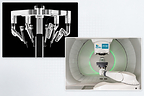
Seventy-two-year-old Hira Nand Khurana from Delhi represents this new era of survivorship. A patient living with diabetes and history of cardiac bypass surgery, he was diagnosed with an aggressive bladder cancer. The diagnosis was particularly concerning because of his age, underlying health conditions and the complexity of the tumour. Using the advanced da Vinci Xi robotic surgical system, a team led by Dr Harshit Garg, Senior Consultant Uro-Oncologist and Robotic Surgeon at Indraprastha Apollo Hospitals, performed a complex radical cystectomy through minimally invasive surgery. The recovery surprised even his family. He was able to climb stairs by the third day after surgery and was discharged on the fourth day.

For many cancer patients, these milestones may appear small. Yet they represent something profound – the return of independence, confidence and normalcy.

“For decades, cancer treatment relied on a limited set of tools that often-affected healthy cells alongside cancerous ones. Today, we are entering an era of precision where treatment is increasingly personalised, targeted and less disruptive to patients’ lives,” says Dr Harshit Garg.

The future of cancer care is no longer measured only by survival rates. It is increasingly measured by how well patients live after treatment, how quickly they recover, how fully they return to their families, and how confidently they embrace life again.

The stories of these survivors remind us that while cancer may alter the course of life, it does not have to define it. Behind every diagnosis is a person, a family and a future worth fighting for.

For every survivor, the journey is different. Yet they share a common truth: cancer may have been part of their story, but it did not become the ending.

About Apollo Hospitals

Apollo revolutionised healthcare when Dr. Prathap Reddy opened the first hospital in Chennai in 1983. Today, Apollo is the world’s largest integrated healthcare platform with over 10,400 beds across 76 hospitals, 6,600+ pharmacies, 264 clinics, 2,182 diagnostic centres, and 800+ telemedicine centres. It is one of the world’s leading cardiac centers, having performed over 3,00,000 angioplasties and 2,00,000 surgeries. Apollo continues to invest in research and innovation to bring the most cutting-edge technologies, equipment, and treatment protocols to ensure patients have access to the best care in the world. Apollo’s 1,20,000 family members are dedicated to delivering exceptional care and leaving the world better than we found it.


View original content to download multimedia:https://www.prnewswire.com/in/news-releases/a-new-lease-of-life-stories-of-hope-survivorship-and-second-chances-with-apollo-hospitals-302793689.html

Continue Reading
Click to comment

Leave a Reply

Your email address will not be published. Required fields are marked *

Technology

TARS Brings Real-Life Embodied AI to ICRA 2026 Robotics Conference

Published

on

By

TARS DexHand Signals a New Era of Hand-Brain Integration

VIENNA, June 8, 2026 /PRNewswire/ — TARS capped a landmark appearance at ICRA 2026, IEEE’s leading international robotics conference, with the international debut of its DexHand platform, drawing significant attention among industrialists and academics.

Dr. Ding, TARS’ chief scientist and co-founder, delivered the keynote address in the plenary session.

TARS’ DexHand demonstration showcased all 26 English alphabet sign-language gestures and invited to engage in real-time mirror-control interaction, thus offering live proof of the system’s biomimetic fidelity and low-latency responsiveness.

At the heart of DexHand is a 21-DoF architecture modelled 1:1 on human metacarpal and phalangeal topology. Unlike conventional parallel-joint designs that introduce kinematic distortion during complex movements, DexHand replicates the spatial convergence of the thumb’s CMC and MCP joints, eliminating the motion blind spots. Its self-developed joints integrate high-precision reducers, reducing backlash to an extremely small range and delivering silky-smooth micro-manipulation.

This biomimetic structure also solves one of embodied AI’s most pressing bottlenecks: the gap between simulation and reality. TARS’ SenseHub captures data from real human motion and map it, thus improving data utilization without any loss.

DexHand’s fingertips integrate ultra-high-resolution miniature camera modules capable of capturing microscopic textures as fine as 0.05mm at over 240Hz. Its AWE 3.0 embodied foundation model, enables the robot to understand physical properties such as hardness, roughness, and slip risk, and to predict occurrence rather than merely reacting after the fact.

On the manufacturing side, DexHand’s rigid quasi-direct-drive design, using just three motor types and reducer types, is purpose-built for automated assembly lines.

“IEEE’s ICRA 2026 was the ideal stage to showcase TARS’ embodied AI solutions in practice,” said TARS’ chief scientist and co-founder Dr. Ding. “TARS’ DexHand is the optimized interface between human intelligence and robotic action.”

About TARS: TARS is a leading embodied AI company building general-purpose robots for real industrial environments. Its AWE 3.0 foundation model and DexHand platform represent a new generation of physical AI built from first principles.

Press contact: TarsPR@tars-ai.com

Photo – https://mma.prnewswire.com/media/2994436/TARS_1.jpg
Logo – https://mma.prnewswire.com/media/2994437/TARS_Logo.jpg

View original content to download multimedia:https://www.prnewswire.com/news-releases/tars-brings-real-life-embodied-ai-to-icra-2026-robotics-conference-302790438.html

SOURCE TARS

Continue Reading

Technology

LG Teams with NVIDIA to Shape the Future with M.A.P. (Mobility / AI Infra / Physical AI)

Published

on

By

SEOUL, South Korea, June 8, 2026 /PRNewswire/ — LG and NVIDIA are expanding their strategic collaboration across industries, Physical AI, AI Infra and mobility jointly drawing the future map of industry.

LG and NVIDIA held a Top Management Meeting in Yeouido, Seoul, attended by Kwang Mo Koo, Chairman and CEO of LG Corp., Jensen Huang, CEO of NVIDIA, and other top executives.

The meetings, attended by Kwang Mo Koo, NVIDIA CEO Jensen Huang, and heads of major companies, expand the scope of mid- to long-term strategic cooperation leading industrial innovation in the AI era.

The expanded collaboration combines NVIDIA’s cutting-edge AI technologies with LG’s manufacturing and infrastructure capabilities to implement AI most quickly and comprehensively in customers’ daily lives and industrial sites. The collaboration between LG, which possesses decades of manufacturing innovation know-how and vast life data assets accumulated through customer touchpoints around the world, and NVIDIA, is expected to accelerate global AI innovation across both industry and daily life.

Kwang Mo Koo, Chairman and CEO of LG Corp., said, “Together with NVIDIA CEO Jensen Huang, we had a very in-depth and inspiring discussion on strategic cooperation that will transform future industries,” adding, “The blueprint for the AI ecosystem envisioned by NVIDIA aligns with LG’s future direction of creating meaningful changes in customers’ daily lives and global industrial sites. With today’s meeting as a starting point, we will further solidify our partnership by combining the unique capabilities of both companies.”

“Korea is extraordinary at manufacturing, mechatronics and AI, and the fusion of these strengths will make robotics and physical AI a major growth sector for the country,” said Jensen Huang, founder and CEO of NVIDIA. “With NVIDIA DSX and physical AI platforms, LG can extend its leadership from homes and vehicles to factories and AI infrastructure, creating new growth opportunities across the intelligent systems that will shape daily life and industry.”

1. Cooperation in Physical AI and Robotics

The two companies will pursue a win-win strategy in the field of Physical AI, spanning manufacturing to robotics, by maximizing synergies based on each company’s core capabilities.

LG has accumulated production technology data and know-how from global manufacturing sites, while NVIDIA provides NVIDIA Isaac, Omniverse and Cosmos AI and simulation technologies.

By combining these strengths, the two companies plan to enhance AI-driven manufacturing competitiveness, build an autonomous manufacturing ecosystem in which the entire process from raw material procurement to production, logistics, and customer delivery is connected in real time through data and AI, and establish it as a new global smart factory standard.

The two companies will also pursue development of NVIDIA’s next-generation robot foundation model GR00T, further strengthening cooperation in robotics.

LG and NVIDIA will advance robot development capabilities and performance through strategic cooperation across the entire robotics field, from data collection and generation, simulation, training, and actions, in a wide range of robots including humanoids and logistics robots.

LG Innotek will serve as the eyes and ears of robots based on its world-class optical technologies, and will develop high-performance sensing modules and optical components optimized for NVIDIA AI infrastructure.

Furthermore, LG CNS is building an ecosystem that enables anyone to easily adopt AI robots in manufacturing and logistics sites. By integrating NVIDIA’s robotics technologies, including NVIDIA Isaac open robotics frameworks, Cosmos open world models and Isaac GR00T open robotic foundation models, into its industrial robot platform, “PhysicalWorks,” the company is accelerating the AI transformation of logistics and manufacturing floors.

2. Cooperation in AI Factories

The two companies will also expand cooperation in the field of next-generation AI Infra (AIDC), which will support the AI era.

LG Electronics will further enhance its AI Infra capabilities by collaborating with NVIDIA on cooling solutions for AI Infra thermal management, including coolant distribution units (CDUs) and cold plates, as well as on prefabricated modular design technologies aligned with NVIDIA’s DSX reference design.

LG Energy Solution will develop 800V direct current (DC)-based data center power solutions with NVIDIA to deliver power efficiently for next-generation AI factories. Through this, the company aims to improve the energy efficiency of AI data centers and take the lead in the next-generation data center energy market.

LG CNS plans to build next-generation AI data centers with improved scalability and energy efficiency by adopting the NVIDIA DSX AI factory reference design, while LG Uplus plans to build a large-scale AI Infra utilizing NVIDIA Rubin GPUs.

3. Cooperation in Mobility

Together with NVIDIA, LG will accelerate the realization of safer and more intelligent autonomous driving and SDVs.

LG Electronics will advance mobility AI systems, including next-generation advanced driver assistance systems (ADAS), by integrating its proprietary in-vehicle infotainment (IVI) capabilities with NVIDIA’s autonomous driving platform NVIDIA DRIVE Hyperion.

LG Innotek will expand development of core automotive components optimized for the NVIDIA DRIVE Hyperion architecture, including communication modules, sensing solutions, and automotive lighting systems.

Strengthening Technology Alliance to Expand the EXAONE Ecosystem

LG and NVIDIA will also strengthen their technology alliance to enhance Korea’s AI competitiveness.

LG AI Research plans to improve training efficiency and inference performance in the development of EXAONE by utilizing NVIDIA Blackwell GPUs, along with its AI development platform, NVIDIA Nemotron, NVIDIA NeMo, and inference performance enhancement software, NVIDIA TensorRT-LLM.

LG also plans to expand its adoption of NVIDIA-powered AI agents across the LG Group, including LG’s enterprise AI agent service ChatEXAONE, thereby cooperating to accelerate enterprise AI transformation.

About LG

LG is a technology innovator and global leader in consumer electronics, advanced materials, and automotive components. Founded in 1947, LG was a driving force behind South Korea’s modernization. The company produced South Korea’s first radio and television sets and today is a global leader in organic light-emitting displays (OLED), electric car batteries, and advanced industrial plastics. The LG group of companies operates in more than 60 countries that together generate USD 140 billion in annual revenue. LG Corporation (LG Corp.) is the holding company for industry-leading LG subsidiaries, such as LG Electronics, LG Display, LG Energy Solution, LG Chem, to name a few. For more information about the LG group of companies, visit lgcorp.com.

View original content to download multimedia:https://www.prnewswire.com/news-releases/lg-teams-with-nvidia-to-shape-the-future-with-map-mobility–ai-infra–physical-ai-302793797.html

SOURCE LG

Continue Reading

Technology

PATEO Teams Up with Xunce Technology and Saimo Technology to Define a New Paradigm for In-Vehicle AI Value Exchange

Published

on

By

SHANGHAI, June 8, 2026 /PRNewswire/ — On June 8, PATEO (02889.HK) disclosed a voluntary announcement, announcing that it has signed a tripartite strategic cooperation framework agreement with Xunce Technology and Saimo Technology. The three parties will integrate their core capabilities in in-vehicle terminals, simulation testing, data settlement, and AI large models to jointly develop a physical AI world model based on tokens. Furthermore, they will expand the token-based world model alliance to build a closed-loop industrial system encompassing “edge-side hardware + simulation testing + data infrastructure + token settlement + commercial operations.”

Confronting In-Vehicle AI Commercial Closed-Loop Challenges through Tripartite Collaboration

Currently, the integration of AI large models into vehicles has become a defining trend in the intelligent vehicle industry; however, how AI services in in-vehicle scenarios can achieve a sustainable commercial closed-loop remains in an exploratory stage for the industry as a whole. This cooperation is precisely aimed at solving this proposition.

This time, the three parties will carry out full-chain cooperation around the in-vehicle token economy: from co-building edge-side token infrastructure, extending token pricing models to in-vehicle scenarios, to building a unified token settlement and clearing center, promoting deep integration with operating systems, and jointly developing TokenOS and a physical AI world model. The jointly developed technical modules are uniformly named “PATEO-Xunce-Saimo TokenOS Enhancement Modules,” with relevant brands, intellectual property rights, and commercial rights and interests jointly owned, operated, and shared by the three parties.

From a technical perspective, the capabilities of the three cooperating parties are highly complementary. As an AI solution provider featuring “software, hardware, chip, and cloud integration,” PATEO will contribute in-vehicle terminals, cockpit systems, and edge-cloud synergy capabilities; as a real-time data infrastructure service provider, Xunce Technology, leveraging its full-chain AI data infrastructure capabilities and relying on the TokenOS operating system, will provide core services that integrate token value measurement, dynamic settlement, and standardized billing; Saimo Technology possesses a vast amount of high-value scenario data, a full-stack simulation testing toolchain, and national-level testing site resources, and will provide a simulation validation environment for model training and the implementation of algorithm verification.

In addition, the three parties have also jointly built the first full-stack value closed-loop alliance within the NVIDIA ecosystem: PATEO is responsible for in-vehicle computing power support and world model deployment based on the NVIDIA computing platform; Xunce Technology enables GPU computing power and AI service token measurement as well as full-chain value circulation; Saimo Technology provides simulation compliance validation. This layout completely connects the chain from the computing foundation and simulation validation to token settlement and commercial monetization.

Building TokenOS Enhancement Modules to Reshape Underlying Value Exchange Infrastructure

This agreement specifies nine cooperation directions, which revolve around the full-chain value exchange and commercial closed-loop of the in-vehicle token economy, and ultimately converge on the “PATEO-Xunce-Saimo TokenOS Enhancement Modules”—an edge-side token economy infrastructure oriented to in-vehicle scenarios.

The core breakthrough of this system lies in breaking the traditional hardware-based one-time buyout profit model, replacing it with a brand-new business paradigm characterized by token-based, pay-per-actual-usage billing and multi-party revenue distribution, thereby building a token value circulation system, activating the asset value of in-vehicle data, technology, scenarios, and the like, pioneering brand-new profit channels, and optimizing the overall income structure.

This transformation is not happening in isolation. According to the policy signal from the National Data Administration in March 2026, which officially designated tokens as “ciyuan” (word elements), the token economy has escalated from a technical concept into the national strategic vision. As the token economy continues to be implemented, a trillion-level emerging service market is taking shape at an accelerated pace. The three parties joining forces at this moment to lay out the in-vehicle token economy perfectly coincides with the industry’s turning point from technical verification to large-scale commercial use.

PATEO has previously launched a forward-looking layout around the “token economy model.” The company formerly entered into a deep partnership with NVIDIA to deploy the AI Box based on the NVIDIA DRIVE AGX Thor accelerated computing platform, exploring innovative business modes such as computing power charging and in-vehicle token billing. This deep cooperation with Xunce Technology and Saimo Technology is precisely the continuation and upgrade of the aforementioned strategy, which will further open up the full-chain closed-loop.

This cooperation is a key layout for the company to implement its “software, hardware, chip, and cloud” integration strategy. The company is advancing with full force the joint research and development of the in-vehicle physical AI world model, while partnering with various parties to expand the token-based world model alliance to gather industrial power, thereby co-building a technological ecosystem. Relying on the full layout of optical interconnection, AI computing power, intelligent applications, and value settlement, the company’s comprehensive competitiveness will be further enhanced, laying a solid foundation for its medium- and long-term development.

View original content to download multimedia:https://www.prnewswire.com/news-releases/pateo-teams-up-with-xunce-technology-and-saimo-technology-to-define-a-new-paradigm-for-in-vehicle-ai-value-exchange-302793798.html

SOURCE PATEO

Continue Reading

Trending