On the heels of the G7 Summit, a study of more than 83,000 adults across six of the seven countries – United States, United Kingdom, France, Germany, Italy, and Canada – reveals strong support for climate solutions across the ideological spectrumBut message matters: “net zero” was the single least popular climate term testedNew climate communications playbook shows how countries can broaden support by focusing on pollution, health, household costs, energy independence, and protecting families
NEW YORK, June 18, 2026 /PRNewswire/ — Potential Energy Coalition, with financial support from The Rockefeller Foundation, today released Fixing Climate Communications, a new evidence-based playbook for communicating about climate more effectively across leading democracies. Drawing on research with more than 83,000 adults across the United States, the United Kingdom, France, Germany, Italy, and Canada, the study identifies the messages that broaden support across ideological divides and the language that can undermine it, offering practical guidance at a time when many institutions are embracing a growing trend of climate hushing. Shared concerns – pollution, health, affordability, energy security, and protecting future generations – increased support by more than 10 percentage points across six of the Group of Seven (G7) countries, and by contrast, messages emphasizing bans, mandates, disruption, or “net zero” consistently underperformed.
How to drive support for action on climate change? Emphasize the material impact it has on the people and places we love
“The climate crisis is already making it harder for people around the world to feed their families, get and work jobs, and pursue lives of dignity. Meeting this challenge with the urgency it demands requires speaking about it in ways that resonate and motivate. This research shows how data-driven communication can shape a better conversation about how to tackle the climate crisis and build a safer and more prosperous future,” said Dr. Rajiv J. Shah, President, The Rockefeller Foundation.
According to the World Bank, an additional 14.5–15.6 million people could die in low- and middle-income countries from climate-related causes by 2050 if the current trajectory continues. Globally, extreme heat kills an average of one person every minute, and workers around the world lost 640 billion hours of potential work – almost double what was typical in the 1990s – per last year’s Lancet Countdown Report.
Despite the stakes for humanity’s well-being, there has been a broad, persistent retreat in public language about climate. Recent GlobeScan research underscores the rise of climate hushing: across 31 markets, the share of consumers seeing sustainability messaging fell from 49% in 2023 to 36% in 2025, while trust in those messages dropped from 79% to 65%. Global news coverage of climate change fell 38% by the end of 2025 from the peak in 2021, and mentions of climate and ESG issues on S&P 500 earnings calls have dropped by roughly three-quarters during this period.
“Climate is a winning issue when communicated effectively. Climate hushing is short-sighted and ineffective; the data refutes the growing conventional wisdom that leaders should avoid talking about climate and rely only on a side door of clean energy or economic benefits. This is not about whether to talk about climate, but how – moving beyond narrow, easily politicized frames and connecting instead to the real material costs, impacts, and everyday concerns that can significantly expand public support,” said John Marshall, Executive Chair at Potential Energy Coalition.
Key Findings:
The research finds that climate solutions continue to command broad, cross-ideological support across all six countries, and that how the issue is communicated matters.
The findings are based on two rounds of international research conducted by Potential Energy Coalition, commissioned by The Rockefeller Foundation, with fieldwork by Echelon Insights and Merlin Strategy, as well as six years of Potential Energy Coalition’s historical data. From September through December 2025, 83,971 adults across various age groups, genders, regions, education levels, ethnicities, and political perspectives were surveyed across the United States, the United Kingdom, France, Germany, Italy, and Canada. The research identifies three evidence-based principles for more effective climate communication – and the data shows they work. After exposure to a single effective message built on these principles, support increased by at least 9 points in every country tested:
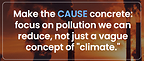
Lead with everyday consequences. Underlining real human impacts – from extreme weather to rising household costs – is the single most effective way to drive prioritization of climate as an issue and make it feel personally relevant.Make the cause concrete. Reminding people the root cause of climate change is simply “pollution” that we can reduce makes the problem feel 10-20% more solvable while reducing polarization.Frame energy as additive, not restrictive. The strongest energy messages emphasize what clean energy delivers – local availability, low cost, and a path to energy independence. Messages focused on bans and mandates consistently underperformed, reducing support for climate action across countries and audiences.
Additional findings include, but are not limited to:
Support for climate action is very high and opposition is low. Roughly two-thirds of the global population supports immediate government action on climate change – the same number as three years ago. Climate action has more than five supporters for every opponent globally.Pro-climate messages win, not just persuade. Pitted directly against the strongest opposition message, pro-climate messages prevailed 57% of the time across the six countries.Fairness is key. Audiences responded to messages highlighting how ordinary households increasingly bear the costs of pollution and climate damage through higher insurance premiums, energy bills, and living costs.Climate hushing doesn’t make sense – the best messages address it directly. Support increased across every country, political group, and policy tested, and the gain on the right was more than twice as large as among left-leaning audiences (+10 vs. +4 points), moving them from 61% to 71%.Messages about consequences are the strongest. Fighting the conventional wisdom that you should go through the “side door” – messages about climate consequences are about twice as effective as “jobs and innovation” messages at driving support for climate action, clean energy buildout, and the reduction of fossil fuel pollution.Clean energy messages work well, but the framing matters. This topic performed most strongly when framed around energy independence, domestic resilience, and reducing exposure to volatile global energy markets, rather than emissions targets alone.Net zero is the least pressing priority. “Achieving net zero” ranks last among nine environmental priorities in every single country surveyed, well behind simpler frames like acting on climate change, protecting nature, or reducing air pollution.Low support for “Green Jobs” and economic growth. These two areas consistently ranked among the weakest-performing climate messages tested over six years of Potential Energy Coalition’s historical data.
Country Breakdown:
Representing more than 40% of global gross domestic product (GDP) combined:
United States: 88% saying climate change is real and happening, 69% supporting immediate government action, and 72% supporting immediate action to build more clean energy. Concern about climate change has remained remarkably stable despite shifting political priorities, with 64% of Americans worried today compared with 65% in 2023. The United States has the widest partisan divide of any country tested – a 39-point gap – yet conservative audiences remain meaningfully persuadable, with almost every message producing statistically significant movement among right-leaning Americans. On messaging, ‘Impact of Overheating Planet’ was the strongest persuader, producing a 9-point increase in support, while ‘Energy Innovation’ failed to register any statistically significant increase in support.United Kingdom: Ahead of London Climate Action Week #LCAW, 90% saying climate change is real and happening, 90% saying climate change is real and happening, 72% supporting immediate government action, and 78% supporting immediate action to build more clean energy. Right-leaning UK adults support climate action at 77% – 23 points higher than their American counterparts – and among young conservatives aged 18–49, 72% support climate action and 74% support clean energy expansion. ‘Health Risks’ and ‘Protecting Nature’ tied as the top persuaders, each producing a 9-point increase in support, while ‘Promoting Unity’ was the only message in the entire study to produce a decrease in support. In head-to-head competition, ‘Clean Energy Protects Our Energy Future’ led at 56% – the only country where an energy security frame outperformed the generational legacy frame.France: 89% saying climate change is real and happening, 71% supporting immediate government action, and 64% supporting immediate action to build more clean energy. France is the least polarized country in the study, with a Left-Right gap of just 5 points, and produced the highest increase in support of any country. ‘Health Risks’ generated a 15-point increase in support overall and a remarkable 21-point increase among left-leaning respondents – the single highest message increase in support for any ideological group in the entire study.Germany: 85% saying climate change is real and happening, 62% supporting immediate government action, and 62% supporting immediate action to expand clean energy. ‘Impact of Overheating Planet’ produced an 11.4-point increase in support and ‘Unfair Costs’ a 10-point increase, both above global averages. Only 45% of Germans believe climate change is solvable – the lowest score of any country tested – and German Center respondents showed a 17-point increase in support for cutting fossil fuel pollution from ‘Health Risks.’Italy: 83% of Italians worried about climate change – the highest worry figure of any country tested – 90% saying climate change is real and happening, 77% supporting immediate government action, and 78% supporting immediate action to expand clean energy. Italy’s right-leaning baseline support for climate action stands at 74% – higher than the US country average – reflecting one of the smallest partisan gaps in the study. It is the only country where economic and anti-corporate frames outperform health and overheating-planet ones: ‘Anti-Corporate Greed’ produced a remarkable 20-point increase in support among right-leaning respondents on cutting fossil fuel pollution – the single highest right-leaning message response in the entire study – and every message beats the opposition in head-to-head competition.Canada: 78% of Canadians worried about climate change, 90% saying climate change is real and happening, 69% supporting immediate government action, and 74% supporting immediate action to build more clean energy. Despite a Left-Right gap of 32 points – wide, but 18 percentage points narrower than the United States – right-leaning Canadian adults show a 16-point increase in support on cutting fossil fuel pollution from a single effective message, among the highest right-leaning responses in the study. ‘Protect What You Love for Future Generations’ achieved the highest single-message win rate of any country at 62%, and every message cleared 50% in head-to-head competition.
With plans to expand the current study to Argentina, Brazil, Chile, China, Colombia, India, Indonesia, Mexico, Nigeria, South Africa, and Türkiye in the coming months, Fixing Climate Communications is the latest research to be commissioned by The Rockefeller Foundation’s Build the Shared Future Initiative, through which the 113-year-old philanthropic organization aims to inspire and inform global cooperation and international development work that matches the challenges of the 21st century, including efforts to align with governments around the world – with a focus on Sub-Saharan Africa – to identify country-led solutions to maximize every dollar of remaining aid and to stimulate new investments.
Statements of Support:
“What this research makes clear is that to connect with the public on climate issues it is vital to ‘talk human’, using language which resonates with people’s lived experience. But at a time when the cost-of-living continues to be a top issue for many families, an expansion in clean energy needs to be accompanied by lower household energy bills to demonstrate the tangible financial benefits of voters backing clean energy.” ― Lord Alok Sharma, COP26 President and Co-chair of The Rockefeller Foundation Climate and Development Advisory Council”The lesson from this research is simple: if you want to broaden support for climate solutions, you have to broaden the way you talk about them. The public responds far more strongly to messages about family, health, pollution, and energy security than to narrow, technical terms like ‘net zero’ or ‘decarbonization.'” ― Patrick Ruffini, Founding Partner, Echelon Insights”At a time when too many leaders are going quiet on climate, this work shows a better way forward. Support for climate action remains strong when it is connected to what people care about most: their health, jobs, security, and their children’s future. Climate action is not about sacrifice; it is about opportunity. It is the freedom to breathe clean air, access affordable energy, live in safer communities, and build a more secure future. By focusing on what people gain, leaders can rebuild trust, bring humanity back into business, and demonstrate that a Net Positive economy expands freedom, security, and dignity for all.” ― Paul Polman, Business Leader, Investor, and Philanthropist”Climate change is ultimately a human story. People engage when the impacts of climate change on their health, livelihoods, families, and neighbourhoods are made evident, not when it is presented as a distant disconnected challenge. Our work at CEEW has shown that storytelling and culturally relevant creative expression can bridge complex evidence and lived experience – making climate action feel urgent, local, and possible. Climate communication must connect with people’s daily lives and aspirations, demonstrating that evidence-based solutions can strengthen resilience, bolster energy security, and create shared prosperity.” ― Dr. Arunabha Ghosh, Founder-CEO, Council on Energy, Environment and Water (CEEW), and member of The Rockefeller Foundation Climate and Development Advisory Council
For additional information and to download the report and its country-by-country appendix, please visit: https://potentialenergycoalition.org/fixingclimatecomms/.
Note to Editors:
About the Research
Fixing Climate Communications is based on two rounds of international research conducted by the Potential Energy Coalition in partnership with The Rockefeller Foundation, with fieldwork by Echelon Insights and Merlin Strategy between September and December 2025.
Round 1 — Qualitative Research (September 2025)
Moderated online focus groups were conducted with 133 participants across the United States, the United Kingdom, Germany, and Canada. Participants who believe climate change is happening but are only somewhat worried about it were screened to understand how less climate-engaged but potentially persuadable audiences respond to alternative climate messaging. The research explored participants’ broader national mood, core personal priorities, climate concern, perceived barriers to action, and reactions to specific climate messages and messengers.
Round 2 — Quantitative Research (November–December 2025)
Two large-scale quantitative studies were conducted across all six countries:
National Survey (~42,000 respondents, ~7,500 per country, ~4,000 in Canada): Measured the climate landscape, baseline attitudes, issue priority rankings, and how climate compares to adjacent energy, pollution, nature, and cost-of-living frames. Each country sample was weighted by age, gender, education, past vote, and region to ensure nationally representative results.
Randomized Controlled Trial (RCT) Message Test (~41,100 respondents, ~6,500 per country, ~8,500 in the US): Tested 11 climate narratives against a control group to identify which most effectively moved public opinion. The 11 narratives tested were:
‘Impact of Overheating Planet’ — focuses on the direct physical consequences of a warming world on people’s daily lives’Health Risks’ — connects fossil fuel pollution to concrete health harms including respiratory illness and disease’Unfair Costs’ — highlights how ordinary households bear a disproportionate financial burden from pollution and climate damage’Protecting Nature’ — frames climate action around preserving the natural world for future generations’Impact of Climate Change’ — centers the broader systemic consequences of climate change on communities and economies’Anti-Corporate Greed’ — positions fossil fuel companies as profiting at the public’s expense’Preparation and Resilience’ — emphasizes practical readiness and building communities that can withstand climate impacts’Lower Energy Cost’ — focuses on clean energy as a path to cheaper, more stable energy bills’Creating Clean Jobs’ — frames the clean energy transition as an economic and employment opportunity’Energy Innovation’ — positions climate action as a matter of national competitiveness and global standing’Promoting Unity’ — frames climate action as a shared challenge that can bring people together across divides
Head-to-head competitive test reflects how often each of the following eight pro-climate messages are favored over the strongest opposition message – ‘Climate limitations means families pay higher bills’ – when respondents chose between pro- and anti-climate messages simultaneously:
‘Protect What You Love for Future Generations”Clean Energy Protects Our Energy Future”Embrace All Clean Energy Options”Clean Energy Makes Us Energy Independent”Clean Energy Is Cheap Energy”Clean Energy Serves People, Not Companies”Fossil Fuels Are Making Us Sick”Climate Action Protects Our Infrastructure’
In total, the research captures the views of 83,971 people worldwide.
About Potential Energy Coalition:
Potential Energy Coalition is a 501(c)(3) purpose-built communications capability that significantly accelerates climate progress through narrative shifts and proven marketing strategies. We carry out climate change campaigns at the moments that matter most, powered by data-driven insights on the best way to frame key issues. Potential Energy leverages in-depth nonpartisan research, world-class marketing experience, and evidence-based educational campaign tactics to cultivate public will for clean energy and climate solutions. More at https://potentialenergycoalition.org/.
About The Rockefeller Foundation:
Investing $30 billion over the last 113 years to promote the well-being of humanity, The Rockefeller Foundation is a pioneering philanthropy built on unlikely partnerships and innovative solutions that deliver measurable results for people in the United States and around the world, including in association with RF Catalytic Capital Inc (RFCC). We leverage scientific breakthroughs, artificial intelligence, and new technologies to make big bets across energy, food, health, and finance. For more information, follow us on LinkedIn @the-rockefeller-foundation, X @RockefellerFdn, Instagram @rockefellerfdn, and YouTube @rockefellerfound, and sign up for our newsletter at www.rockefellerfoundation.org/subscribe.
View original content to download multimedia:https://www.prnewswire.com/news-releases/new-potential-energy-rockefeller-foundation-study-climate-support-strong-across-leading-democracies-but-words-matter-302803884.html
SOURCE The Rockefeller Foundation









 Technology5 days ago
 Technology5 days ago
 Technology5 days ago
 Technology4 days ago
 Coin Market4 days ago
 Coin Market4 days ago
 Technology4 days ago