Connect with us

Technology

Nearly $3M to accelerate Québec’s energy transition – INRS and UQTR strengthen their joint research unit to develop more efficient, safer, and more sustainable batteries

Published

on

TROIS-RIVIÈRES, QC, June 19, 2026 /CNW/ – Québec is accelerating its energy transition. With a total investment of $2.88 million, the Institut national de la recherche scientifique (INRS) and the Université du Québec à Trois–Rivières (UQTR) are combining their expertise to build new battery value chain capabilities vital to our energy sovereignty.

Creating closer ties between research and industry to accelerate innovation in the energy sector is the core mission of the new INRS–UQTR Joint Research Unit (UMR) in Materials and Technologies for Energy Transition.

The announcement was made today at UQTR at a press conference attended by Sébastien Charles, UQTR Vice–Rector for Research; Annick Girard, INRS Associate Scientific Director; regional elected officials; as well as various UMR partners and members from industry and the research community.

From lithium to power grids: solutions for the entire energy chain

The work by the INRS-UQTR UMR team, co-directed by INRS professor François Allard, spans the full spectrum of energy technologies and enjoys the support of the Natural Sciences and Engineering Research Council of Canada (NSERC), Québec’s Ministère de l’Économie, de l’Innovation et de l’Énergie (MEIE) through the Consortium de recherche et d’innovation en transformation métallique (CRITM), and partners such as Hydro–Québec, Mitacs, and Arkema Canada Inc.,

The teams are tackling key challenges in lithium extraction and recycling, next–generation battery development, and the integration of these technologies into electrical grids, with the goal of improving system performance, securing critical resources, and reducing environmental impact.

Alongside François Allard, two projects are co–led within the UMR by UQTR researchers. Professor Samaneh Shahgaldi, Canada Research Chair in Lignin–Based Fuel Cells and member of UQTR’s Hydrogen Research Institute (IRH), brings her expertise in polymer materials and electrolytes to the development of high–performance all–solid–state lithium–metal batteries. Professor Kodjo Agbossou, Director of UQTR’s School of Engineering and holder of the Hydro–Québec Research Chair in Transactional Management of Residential Power and Energy Demand, contributes his recognized expertise in the integration of electricity-production, storage, and management systems to research on solid oxide fuel cells for grid applications.

A first Canada Research Chair

The UMR has reached a major milestone with the awarding of its first Canada Research Chair in New Energy Materials to INRS professor Karin Kleiner, a member of the INRS–UQTR UMR. This Tier 2 Chair, granted to emerging researchers poised to become leaders in their field, is funded by NSERC in the amount of $600,000 over five years.

This Chair will enable Professor Kleiner to develop next–generation energy materials incorporating Canadian minerals (iron, nickel and lithium) that are high–performing and essential to advancing energy storage and conversion technologies and reducing greenhouse gas emissions.

Strategic advantages for Québec

With this first Chair and by major new high-impact projects, INRS and UQTR are strengthening their leadership in energy technologies. Together, they are helping position Québec at the heart of the battery sector–a strategic industry for the province’s technological and energy sovereignty–while generating significant benefits for research, the economy, and regional development.

Funded Projects

Innovative Processes for Lithium Extraction and Li–ion Battery Recycling NSERC Alliance – $1,165,812 including $278,361 (including FIR) from CRITM supported by MEIE (François Allard, Louis–César Pasquier – INRS)

Stabilizing Lithium Metal with Polymer Electrolytes for High–Performance All–Solid–State Batteries NSERC Alliance – $690,000 (François Allard – INRS, Samaneh Shahgaldi – UQTR)

Multiscale Simulation of Solid Oxide Fuel Cells for Power Grid Applications NSERC Alliance, Mitacs, Hydro–Québec – $445,000 (François Allard – INRS, Kodjo Agbossou – UQTR)

“UQTR and INRS play leading roles in developing solutions that will accelerate our energy transition. We are pleased to provide support through CRITM for the innovative work they are carrying out to develop new lithium extraction and battery recycling processes. It is with collaborative research projects like these that we will achieve our carbon–neutrality goals.”

Daniel Bernard, Minister for the Economy and for Small and Medium Enterprises of Québec

“The INRS–UQTR Joint Research Unit perfectly illustrates what is possible when governments, universities, and industry combine their strengths and expertise. Driving this success are highly talented researchers who are advancing knowledge and developing the energy solutions of tomorrow. Thanks to their hard work, Canada is strengthening its leadership in innovation, accelerating the transition to a more sustainable economy, and generating concrete benefits for communities. The Government of Canada is proud to support this research, which positions Trois–Rivières as a centre of excellence in energy–transition technologies and shines a spotlight on Mauricie, Québec, and the entire country.”

— Caroline Desrochers, Member of Parliament for Trois–Rivières and Parliamentary Secretary to the Minister of Housing and Infrastructure

“This strategic investment demonstrates just how essential collaborative research is to the energy transition. By bringing together complementary expertise within this Joint Research Unit led by INRS, we are developing concrete solutions with UQTR that will meet tomorrow’s energy needs and generate significant benefits for Québec and Canada »

Luc-Alain Giraldeau, Chief Executive Officer, INRS

The INRS–UQTR Joint Research Unit is a real stimulus for our community: it is adding capabilities, attracting key research chairs, and sparking projects that otherwise could never have emerged. The funding announced today–three NSERC Alliance projects and a first Canada Research Chair–confirms the value and importance of this model. UQTR is proud to contribute to it alongside INRS and committed industry partners and glad to leverage its recognized expertise in energy materials and electrical systems integration.”

Sébastien Charles, Vice–Rector for Research, UQTR

“These projects will spark key advances in the development of safer, higher–performance, and more durable batteries while improving our understanding of materials, critical–mineral processing methods, and next–generation energy systems. For example, they will lead to innovations in lithium extraction and recycling processes–an essential challenge–by making them more efficient and better adapted to Canadian industrial realities.”

François Allard, INRS Professor and Co–director of the INRS–UQTR Joint Research Unit

“This chair represents a unique opportunity to advance the development of next–generation energy materials. By pushing current boundaries, we aim to improve performance, extend lifespan, and design solutions that rely on a more efficient use of scarce natural resources. Our ambition is to contribute to technologies that are more sustainable, more efficient, and better suited to today’s energy and environmental challenges.”

Karin Kleiner, INRS Professor, Member of the INRS–UQTR Joint Research Unit, and Canada Research Chair in Next–Generation Energy Materials

“Canada has everything it needs to be a leader in clean–energy technologies: critical minerals, scientific expertise, and an industrial ecosystem ready to innovate. At the INRS–UQTR Joint Research Unit, we are combining our strengths and building a rare capability in Quebec–the ability to cover the entire energy–materials cycle, from the laboratory to production lines. My work fully aligns with this mission: designing devices that combine lower cost, better performance, and greater durability, the three essential prerequisites to a true energy transition.”

Samaneh Shahgaldi, Associate UQTR Professor, Member of the INRS–UQTR Joint Research Unit, and Canada Research Chair in Proton Exchange Membrane Fuel Cells and Electrolyzers

For more: Filière batterie : innovation et durabilité | INRS (in French)

About INRS
The Institut national de la recherche scientifique (INRS) is an academic institution dedicated exclusively to graduate research and training in strategic sectors in Québec. Since 1969, as per its mission, it has actively contributed to Québec’s economic, social, and cultural development. INRS ranks first in Québec in research intensity. It is made up of five interdisciplinary research and training centres–in Quebec City, Montreal, Laval, and Varennes, and Charlevoix–that focus their efforts on strategic sectors: water, earth, and environment (Eau Terre Environnement Research Centre); energy, materials, and telecommunications (Énergie Matériaux Télécommunications Research Centre); urbanization, culture, and society (Urbanisation Culture Société Research Centre); health and biotechnology (Armand-Frappier Santé Biotechnologie Research Centre); and Ruralités durables (a centre currently under development). Its comprises a community of nearly 1,500 students, postdoctoral fellows, faculty members, and staff.

About UQTR

Founded in 1969, the Université du Québec à Trois-Rivières (UQTR) is recognized for its academic excellence and its contribution to regional development. With a diverse range of study programs and a dynamic community of 15,000 students, its mission revolves around teaching and training, research and community service, with a firm commitment to contributing to the scientific and social development of Quebec and its regions.

SOURCE Institut national de la recherche scientifique (INRS)

Continue Reading

Technology

WuXi Biologics Receives Double Honors at 2026 HERA for ESG Reporting and Environmental Excellence

Published

on

By

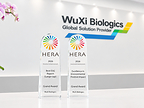
HONG KONG, Nov. 3, 2026 /PRNewswire/ — WuXi Biologics (2269.HK), a leading global Contract Research, Development and Manufacturing Organization (CRDMO), today announced it received two Grand Awards at the ninth Hong Kong ESG Reporting Awards (HERA), winning Best ESG Report (Large-Cap) and Excellence in Environmental Positive Impact.

HERA celebrates excellence in sustainability reporting and ESG practices, with award categories spanning ESG governance, environmental and social impact, carbon neutrality, and workplace well-being. The program is independently judged by a panel drawn from academia, finance, sustainability advisory and regulatory backgrounds, promoting transparency, accountability and stakeholder trust.

Selected from 120 entries, WuXi Biologics was the only pharmaceutical company to receive a Grand Award this year. Its two honors recognize WuXi Biologics’ continual efforts to advance transparent, high-quality ESG disclosure and deliver measurable environmental progress across its global operations.

Dr. Chris Chen, CEO of WuXi Biologics and Chairman of its ESG Committee, commented, “We are delighted to receive two HERA awards, which reflect our ongoing conviction that transparent ESG disclosure and strong environmental performance are integral to business resilience and long-term success. WuXi Biologics will continue to advance our ESG governance and Green CRDMO strategy, working with global partners to drive sustainable development across the value chain.”

Through its Green CRDMO solutions, the Company continues to embed sustainability principles throughout its biologics research, development, manufacturing, and operations. In 2025, WuXi Biologics’ near-term, long-term and net-zero greenhouse gas emissions reduction targets were validated by the Science Based Targets initiative (SBTi), covering Scope 1, 2 and 3 emissions and aligned with a 1.5°C pathway. Another honor WuXi Biologics recently received was being named to the 2026 Forbes China ESG 50 list for achievements in sustainable development, Green CRDMO solutions, and ESG digital innovation.

About WuXi Biologics

WuXi Biologics (stock code: 2269.HK) is a leading global Contract Research, Development and Manufacturing Organization (CRDMO) offering end-to-end solutions that enable partners to discover, develop and manufacture biologics – from concept to commercialization – for the benefit of patients worldwide*.

With over 14,000 employees in China, the United States, Ireland, Germany, and Singapore, including experts and scientists in biologics R&D and manufacturing, technology innovation, and operational excellence, WuXi Biologics leverages its technologies and expertise to deliver efficient, cost-effective, and scalable biologics solutions tailored to meet clients’ needs. By embedding digital capability and infrastructure across the full biopharmaceutical value chain, the company turns data, computation, and prediction into transparent client experience, faster development, intelligent operations, and more efficient manufacturing. As of June 30, 2026, WuXi Biologics is supporting 1064 integrated client projects, including 78 in Phase III and 28 in commercial manufacturing, with complex modalities representing more than half of the entire project portfolio.

WuXi Biologics regards sustainability as the cornerstone of long-term business growth. The company continuously drives technology innovations to offer advanced end-to-end Green CRDMO solutions for its global partners while demonstrating exemplary Environmental, Social and Governance (ESG) practices. Committed to creating shared value, it collaborates with all stakeholders to foster positive social and environmental impacts, and promote responsible practices that empower the entire value chain.

For more information about WuXi Biologics, please visit: www.wuxibiologics.com.

*The winner of the “2026 Biologics CDMO of the Year” (Large CDMOs) (Life Science Connect / Outsourced Pharma)

*The winner of the “2026 Best Contract Development & Manufacturing Organization Award” (ABEA)

Contacts

ESG
esg@wuxibiologics.com

Media
PR@wuxibiologics.com

View original content to download multimedia:https://www.prnewswire.com/news-releases/wuxi-biologics-receives-double-honors-at-2026-hera-for-esg-reporting-and-environmental-excellence-302928803.html

SOURCE WuXi Biologics

Continue Reading

Technology

Only 54% of Consumers Trust That Black Friday Discounts Are Lower Than Normal as Promotion Fatigue Grows

Published

on

By

BCG’s Annual Black Friday Survey Finds 1 in 5 Consumers Actively Distrust Advertised Discounts22% Plan to Spend Less or Skip Year-End Sales EventsRetailer Reputation and Transparent Pricing Rank Among the Highest Factors for Building Consumer Trust; Influencer Recommendations Rank LastUse of Social Media as a Shopping Inspiration Source Falls 9 Points to 46%, While AI Rises Across All Surveyed Countries

BOSTON, Nov. 4, 2026 /PRNewswire/ — Only 54% of consumers trust that advertised Black Friday prices are genuinely lower than usual, and one in five actively distrust them, according to a new survey from Boston Consulting Group (BCG).

Promotion fatigue is also growing, with 22% of consumers planning to spend less or skip year-end sales events because they believe discounts are available all the time.

Despite growing skepticism around promotions, consumers haven’t raised the bar for what constitutes a good deal. The expected minimum discount for a good deal eased to about 30% (versus 32% in 2025).

These are among the findings of BCG’s sixth annual Black Friday Consumer Study, based on a survey of 10,220 consumers across ten countries. The report, titled For Year-End Sales Events, Trust Is the New Currency, examines shopping expectations and behaviors ahead of Singles’ Day, Black Friday, and Cyber Monday.

“Shoppers no longer take Black Friday discounts at face value. Nearly half are unconvinced that prices are actually lower,” said Nate Shenck, a BCG managing director and senior partner, and coauthor of the report. “Retailers can’t discount their way past that. The question this season is how to earn shoppers’ trust.”

Credibility and Proof Build Trust, Persuasion Does Not

BCG determined the factors that build consumer trust using a net trust score (calculated as the share of consumers who say a factor increases their trust in a deal, minus the share who say it decreases it):

Retailer reputation and money-back guarantees ranked highest, each with a net trust score of 65%Verified purchase reviews also ranked among the top trust builders (59%), followed by clear comparisons between regular and discounted prices (58%)At the bottom of the ranking, real-time scarcity messages scored just 8%, AI-generated review summaries 4%, and influencer recommendations only 3%

AI Is Displacing Social Media as an Inspiration Channel

Social media as an inspiration source for consumers declined nine percentage points to 46%, falling in every market surveyed, whereas AI as an inspiration source increased across all ten markets.

Planned AI usage reached 56% of shoppers this year, up eight points from 2025. Around 86% of users find it helpful, and 78% say it raises their likelihood of completing a purchase.

Consumers trust AI most for comparing prices across retailers (39%) and comparing product features (37%). Transactional tasks, such as filling in checkout details, are still developing as a common use case.

“Shoppers facing promotion fatigue are turning to AI to do the work of finding and comparing deals. AI is already beginning to replace influencers as a go-to source for inspiration,” said Jessica Distler, a BCG managing director and partner, and coauthor of the report. “That means retailers need to think as carefully about how their offers are found and verified as they do about the discounts themselves.”

Download the report here:
https://www.bcg.com/publications/2026/trust-matters-year-end-sales-events

Media Contact:
Kendall Kosten
kosten.kendall@bcg.com 

About Boston Consulting Group
Boston Consulting Group bridges the gap between ambition and outcomes for the world’s leading companies and organizations. We are built for this era of unprecedented change — bringing strategic clarity rooted in over 60 years of deep domain knowledge, combined with applied AI shaped by our practitioners. BCG works shoulder-to-shoulder with CEOs across industries and geographies to deliver transformative impact at scale: stronger returns, transferred capabilities, and change that sticks. For more information, visit bcg.com.

View original content to download multimedia:https://www.prnewswire.com/news-releases/only-54-of-consumers-trust-that-black-friday-discounts-are-lower-than-normal-as-promotion-fatigue-grows-302928764.html

SOURCE Boston Consulting Group (BCG)

Continue Reading

Technology

Most Robots Still Aren’t Insured. YAS and Robolist Are Changing That.

Published

on

By

YAS and Robolist.ai partner to bring a free Risk Score and a path to insurance to robotics companies, giving firms, investors, and buyers a safer, more transparent foundation for an industry entering mass production

HONG KONG, Nov. 4, 2026 /PRNewswire/ — Artificial intelligence’s next phase is getting a body. Humanoid robot shipments are up sharply in 2026, with global shipments reaching roughly 30,000 units in the first half of the year alone, nearly 300% higher than a year earlier. But humanoids are only the headline category. Robolist.ai (“Robolist”), an independent market intelligence layer for robotics used by investors worldwide, tracks more than 4,200 robots from over 1,300 manufacturers across categories including industrial arms, warehouse AMRs, cobots, commercial cleaning, delivery, hospitality, and home robots, and growth is accelerating across nearly all of them.

Across every one of those categories, most of what is shipping today carries no insurance. YAS, a data risk intelligence platform that helps insurers underwrite EV, robotaxi, and now robotics risk, today announced a strategic partnership with Robolist to close that gap — starting with a free Risk Score for the companies Robolist already ranks, and a path to coverage for those who want one.

Putting safety first, for an industry still finding its footing

Robotics is moving from pilots to mass production, and that shift changes who is exposed and what’s at stake. YAS and Robolist both see the same underlying problem: an industry growing faster than the risk infrastructure built to support it. Pairing YAS’s risk intelligence with Robolist’s independent market data gives the industry one more layer of transparency, a shared, safety-first foundation that the companies believe is necessary for robotics to grow into a trusted, durable category rather than a fast-moving one with uneven guardrails.

What it means for robotics firms

Every manufacturer listed on Robolist is already independently ranked. Starting with this partnership, any of them can also request a free Risk Score, built with YAS, covering their systems across whichever category they operate in, not just humanoid. A strong, transparent risk profile is becoming a competitive advantage in its own right, a signal to enterprise buyers and partners that a company takes safety seriously. There is no cost to check it and no obligation attached.

What it means for investors

Robolist’s independent data has always given investors a clear picture of what a company has actually raised and shipped. Adding YAS’s Risk Score introduces a second, forward-looking signal: a working estimate of operational risk exposure, sitting alongside funding and deployment evidence. Together, the two offer a more complete basis for diligence, and support the kind of informed, patient capital that helps the category grow in a healthy, sustainable way rather than on hype alone.

What it means for buyers

Enterprises deciding whether to deploy a robot fleet have historically had almost no independent way to compare risk across vendors. The Risk Score gives buyers a transparent reference point alongside Robolist’s existing rankings, and a direct route to insurance for the deployments they choose to move forward with, so adoption decisions can be made with more confidence and less guesswork.

Status

The partnership is in its exploratory phase under a signed Memorandum of Understanding, beginning with Hong Kong, with other markets under consideration as it develops. The Risk Score is an indicative analytical tool, not a safety certification or a guarantee of coverage; insurance, where available, is issued by licensed carriers.

Quotes

“Robotics is scaling faster than the risk infrastructure around it. You can’t insure what you can’t measure — so we start by measuring. A free Risk Score, built on live operating data, gives every robotics company a transparent read on their exposure and, when they want it, a path to coverage. That’s how a fast-moving category becomes a durable one.”— Andy Ann, Founder, YAS

“We built Robolist as an independent market intelligence layer for robotics. Partnering with YAS deepens that layer. There’s a lot of natural overlap between what we do. Robotics insurance is a long-term project that benefits everyone in the industry, and it matters more now that the category is moving into mass production. Part of that is simply caring about what happens to the people and businesses actually using these machines.” — Matthew Cheung, Co-founder, Robolist.ai

About YAS

YAS is a Hong Kong-based risk intelligence platform for the machine economy, turning live operating data from vehicles, fleets, and robots into real-time risk scores used by licensed insurers to underwrite fairer, faster coverage. YAS works with insurance carrier partners across robotics and humanoids, EV and commercial fleets, with autonomous vehicles next.

About Robolist.ai

Robolist.ai is an independent market intelligence layer for robotics, used by investors to track what manufacturers actually raise, ship, and deploy. Robolist tracks more than 4,200 robots from over 1,300 manufacturers across categories from humanoids and industrial arms to cleaning, delivery, and home robots.

Learn more

Manufacturers can claim their profile and request a free Risk Score, and investors and buyers can explore the data, at robolist.ai. To learn more about YAS’s risk intelligence platform, visit yas.io.

View original content to download multimedia:https://www.prnewswire.com/apac/news-releases/most-robots-still-arent-insured-yas-and-robolist-are-changing-that-302928742.html

SOURCE YAS

Continue Reading

Trending