Connect with us

Technology

HashMicro Advances Manufacturers with AI-Native Capabilities Through HashMicro X

Published

on

KUALA LUMPUR, Malaysia, July 10, 2026 /PRNewswire/ — HashMicro today announced the expansion of its manufacturing solution with HashMicro X, introducing AI-native capabilities that enable manufacturers to operate more intelligently, make faster decisions, and automate complex processes across the production lifecycle.

As manufacturers face rising production costs, supply chain volatility, labor shortages, and increasing customer demands, technology is evolving beyond traditional digitalization. While conventional manufacturing software has helped standardize operations and centralize data, most systems still rely on users to interpret information, identify problems, and determine the next course of action.

HashMicro X represents the next evolution of enterprise manufacturing software. Built with AI at its core, the platform goes beyond recording transactions and generating reports by providing intelligent recommendations and automating execution. The result is software that not only manages operations but actively helps optimize them.

Built into every stage of the manufacturing workflow, HashMicro X helps manufacturers move from reacting to problems to anticipating them. Production planners can generate optimized schedules based on machine capacity, material availability, and deadlines. Procurement teams receive early warnings of shortages with recommended actions, while quality managers can identify recurring defects, uncover root causes, and reduce waste through AI-driven analysis.

“Manufacturers generate enormous amounts of operational data every day, but data alone doesn’t improve productivity,” said Syifa, VP of Strategic Communications at HashMicro. “Businesses need AI that understands the context behind every order, machine, and production line, then recommends the next best action or takes routine actions automatically. That’s the difference between software that records work and software that helps run the business.”

Unlike traditional systems that primarily capture transactions and produce reports, HashMicro X acts as an intelligent operational layer embedded across the business. It detects anomalies, recommends corrective actions, and automates workflows across production, inventory, procurement, maintenance, and quality control. By turning intelligence into immediate action, manufacturers can respond faster to disruptions, improve resource utilization, and keep production running efficiently.

The AI-native capabilities are seamlessly integrated into HashMicro’s enterprise software suite, allowing manufacturers to adopt advanced AI without disrupting existing processes while maintaining enterprise-grade security, scalability, and governance.

About HashMicro
HashMicro is a leading provider of AI-powered enterprise software in the Asia-Pacific region, serving mid-sized and large organizations across industries. Its integrated platform helps companies manage finance, procurement, inventory, manufacturing, sales, customer relationships, human resources, and other core functions through a unified system trusted by businesses.


View original content to download multimedia:https://www.prnewswire.com/apac/news-releases/hashmicro-advances-manufacturers-with-ai-native-capabilities-through-hashmicro-x-302821957.html

SOURCE HashMicro

Continue Reading

Technology

Jindal Global University Expands Agreement with D2L to Accelerate Learning Innovation and Help Scale Growth

Published

on

By

An Institute of Eminence in India renews D2L Brightspace for 10-years to deliver personalised experiences and help scale growth to reach 30,000+ learners

NEW DELHI, Sept. 23, 2026 /PRNewswire/ — D2L, a global leader in learning technology, today announced that Jindal Global University (JGU), one of India’s premier Institutions of Eminence, has renewed and expanded its agreement with D2L for the next 10 years. Under the expanded agreement, JGU will extend its use of D2L Brightspace beyond online courses to support learning across all online and in-person programmes for more than 16,000 learners and over 1,100 faculty members.

The expansion will support JGU’s Vision 2030 by creating a more connected, learner-centric and outcome-driven learning ecosystem. As the university enters its next phase of growth, D2L Brightspace will serve as its core learning platform, bringing in-person and online learning onto a unified solution.

“Jindal Global University’s decision to adopt D2L Brightspace across its online and campus learning programmes reflect the growing role of technology in shaping the future of higher education in India,” said Lee Poteck, Chief Revenue Officer, D2L. “The partnership brings together JGU’s ambition for globally scalable, learner-centric education with D2L’s expertise in creating engaging and outcome-driven learning experiences. We are proud to deepen our partnership with JGU and support its impressive Vision 2030 journey.”

D2L and JGU have worked together for the past year, initially supporting the university’s online learning programmes. Over the next 10 years, D2L will help JGU establish a long-term digital foundation across the university as they scale for global growth to try and reach more than 30,000 learners by 2036 and support a more unified experience for learners and educators.

“As JGU continues to scale as an Institution of Eminence, consistency and rigour across our online and in-person programmes are central to how we think about growth,” said Professor Padmanabha Ramanujam, Dean, Office of Academic Governance at JGU. “Extending D2L Brightspace university-wide gives us a reliable platform to uphold our academic standards, track learning outcomes, and ensure every student receives an equally high-quality education, regardless of the mode of study. In an era increasingly shaped by AI, this partnership strengthens our ability to build stronger teaching and learning outcomes and forms the foundation for our ambitions ahead.”

In addition to D2L Brightspace, JGU will leverage several D2L solutions including D2L Creator+ and D2L Performance+ to advance its online and blended learning strategy. These tools will support richer course creation, personalized learning, data-driven insights and more effective engagement with learners. Together, JGU will deliver a more seamless experience for students and educators while supporting greater flexibility, engagement and scale.

About Jindal Global University

O.P. Jindal Global University (JGU) is a non-profit, multi-disciplinary, research-oriented university founded in 2009, with 16,000+ students, 1,100+ full-time faculty, and 2,900+ administrative staff across twelve schools spanning Law, Business & Management, International Affairs, Public Policy, Liberal Arts & Humanities, and more. Recognised as an Institution of Eminence by the Ministry of Education, Government of India in 2020, JGU brings together faculty from 50+ countries and students from 160+ countries, with collaborations spanning 600+ institutions in 80+ countries.

JGU was ranked Number 1 in the world and awarded ‘Gold’ by the Times Higher Education (THE) Online Learning Rankings 2024, and has been ranked India’s Number 1 Private University for three consecutive years by the QS World University Rankings 2023. The Jindal Global Law School has held its No. 1 rank in India for seven consecutive years and is ranked among the Top 35 globally for Law by the QS World University Rankings by Subject 2026. The Jindal Global Business School (JGBS) featured for the first time in the QS Global MBA Rankings 2027, ranking among the Top 200 Business Schools in the World (171-180 globally, 23rd in Asia, and Number 1 Private Business School in India), and earned AACSB International Accreditation in 2025 — a distinction held by only 6% of business schools worldwide.

About D2L

D2L is transforming the way the world learns, helping learners achieve more than they dreamed possible. Working closely with customers all over the world, D2L is on a mission to make learning more inspiring, engaging, and human. Find out how D2L helps transform lives and delivers outstanding learning outcomes in K-12, higher education and businesses.

D2L Media Contact
PR@D2L.com
X:@D2L
© 2026 D2L Corporation.

The D2L family of companies includes D2L Inc., D2L Corporation, D2L Ltd, D2L Australia Pty Ltd, D2L Europe Ltd, D2L Asia Pte Ltd, D2L India Pvt Ltd, D2L Brasil Soluções de Tecnologia para Educação Ltda and D2L Sistemas de Aprendizaje Innovadores, S. D2 R.L de C.V., and H5P Group AS.

All D2L and H5P marks are owned by the D2L group of companies. Please visit D2L.com/trademarks for a list of D2L marks. All other trademarks are the property of their respective owners.

View original content:https://www.prnewswire.com/in/news-releases/jindal-global-university-expands-agreement-with-d2l-to-accelerate-learning-innovation-and-help-scale-growth-302888156.html

Continue Reading

Technology

Agoda Releases AI Developer Report 2026: Agentic AI Adoption Outpaces Enterprise Readiness Across Southeast Asia and India

Published

on

By

53% of surveyed developers now have AI agents in production or broad use, but only 38% consider their codebase ready for full autonomy.Cost is now the top barrier to broader AI adoption, cited by 28% of developers as the primary obstacle to wider AI agent use.70% expect AI agents to handle most development work within three years, though 79% still require human approval for production deployment.

SINGAPORE, Sept. 24, 2026 /PRNewswire/ — Digital travel platform Agoda has released a new study showing that software developers across Southeast Asia and India are rapidly transitioning from using AI assistants for individual tasks to deploying autonomous AI agents across the software-development lifecycle.

The Agoda AI Developer Report 2026 explores how this transition is reshaping the way developers work, how organizations manage costs, and where human accountability sits.

Drawing on extensive input from the developer community across Indonesia, Malaysia, Thailand, the Philippines, Singapore, Vietnam, and India, the report examines the opportunities and challenges shaping AI’s next phase across these markets.

AI is delivering more value, but developers still verify the output

Developers are experiencing greater productivity gains from AI. More than half (55%) now save at least seven hours each week, compared with 18% in 2025. Reported code usability has also improved, with 62% saying AI-generated code is usable often or almost always without major changes.

AI is also being used more broadly across development work, including code review, architecture, debugging, learning, and documentation. Yet human judgment remains essential: 86% of respondents still review or validate AI-generated outputs always or most of the time.

Agents are arriving fast, but cost is holding back wider adoption

More than half (53%) of respondents say AI agents are already used in selected production workflows or broadly across their organization. However, only 38% describe their codebase as mostly or fully ready for a fully autonomous agent.

Cost is the primary barrier to wider adoption, cited by 28% of respondents, ahead of integration complexity (24%) and lack of governance (19%). The report finds that AI costs extend beyond model calls to include the work needed to design, integrate, review, and validate agents. Four in five respondents said they are currently working under some degree of AI usage limits, such as token quotas, usage caps, or budget restrictions.

Autonomy is growing, while accountability remains human

Developers are open to granting AI agents more autonomy for lower-risk, reversible work such as documentation. But as work moves closer to production, the demand for human oversight rises: 79% report requiring human approval for production deployment.

AI is also changing the developer’s role. System architecture and design, AI literacy, and agent orchestration are emerging as future skills. The transition is uneven, however: 49% of junior developers report feeling less secure about their future career prospects, compared with 17% of CTO and VP Engineering respondents.

Idan Zalzberg, Chief Technology Officer at Agoda, shared, “Artificial intelligence is reshaping how developers across Southeast Asia and India build, learn, and collaborate. What began as a way to speed up individual tasks is becoming a broader change in how software is built. Across industries, developers are seeing stronger productivity gains and are beginning to use agents across more of the development lifecycle. But greater capability brings new responsibilities. The real cost is not simply the model call. It is the work required to make AI trustworthy in production. The organizations that will excel in this next phase will be the ones that manage cost carefully, build the right safeguards, and keep human judgment where it matters most.”

The study was commissioned by Agoda and conducted in partnership with Macramé Consulting. As a digital travel and technology company in the region, Agoda is committed to supporting local technology talent, fostering innovation, and sharing insights that help developers and organizations build responsible AI practices.

Agoda’s commitment to innovation extends beyond AI, offering over 6 million holiday properties, more than 130,000 flight routes, and over 300,000 activities, all of which can be combined in the same booking. 

For more information and to download the free report, visit apacdeveloperreport.com

View original content to download multimedia:https://www.prnewswire.com/apac/news-releases/agoda-releases-ai-developer-report-2026-agentic-ai-adoption-outpaces-enterprise-readiness-across-southeast-asia-and-india-302888472.html

SOURCE Agoda

Continue Reading

Technology

M31 and Ambiq Collaborate on TSMC N12e® Foundation IP to Address Demanding SoC Power and Area Targets

Published

on

By

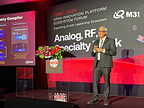
HSINCHU, Sept. 23, 2026 /PRNewswire/ — M31 Technology (M31), a global silicon intellectual property (IP) provider, and Ambiq, a technology leader in ultra-low power semiconductor solutions for edge AI, today announced a joint ultra-low-power Foundation IP solution on the TSMC N12e® process at TSMC 2026 North America Open Innovation Platform® (OIP) Ecosystem Forum. The solution brings together an optimized SPSRAM memory compiler and an ultra-low-leakage standard-cell library for Ambiq’s platforms, to help SoC designers meet increasingly stringent power and area budgets for AIoT, wearables, and other always-on edge applications.

As SoC designs incorporate more always-on capability and embedded intelligence, power targets continue to tighten while die-size constraints and tape-out schedules remain unforgiving. Built on TSMC N12e®, this solution focuses on design-ready Foundation IP that improves energy efficiency while delivering the high performance required for complex AIoT and edge computing workloads.

The Foundation IP includes a TSMC N12e® ULL (Ultra Low Leakage) SPSRAM memory compiler designed to deliver high density and high performance with extremely low leakage and optimized area, while incorporating essential low-power features such as redundancy, power gating, and BIST. The compiler supports both high-performance and ultra-low-power operation within the same physical memory footprint, enabled by deep co-optimization across circuit design and layout implementation. In low-power mode, its dual-rail architecture achieves close to 500 MHz at near-threshold periphery voltage, while keeping VCCA retention leakage within 1.05-1.1x of the total bit-cell retention leakage. Initial instances have demonstrated strong PPA gains, and full compiler development is ongoing.

Complementing the memory compiler is the TSMC N12e® standard-cell library from M31, developed to support Ambiq’s platforms and achieving approximately 50% leakage power savings through design-level collaboration with Ambiq, combining Ambiq’s cascade-style approach with M31’s circuit and layout innovations.

Designed to empower next-generation always-on sensing and edge intelligence applications, these Foundation IP deliverables support faster time-to-market and shorter design cycles, maximize energy efficiency through ultra-low-leakage design, and improve cost efficiency by helping reduce die size and minimizing redesign effort.

“Energy efficiency must be a focus starting from the foundation of a system-on-chip, especially as edge devices take on increasingly sophisticated AI workloads,” said Scott Hanson, CTO and Founder of Ambiq. “Our collaboration with M31 brought together complementary low-power design expertise and contributed important building blocks to our next-generation flagship platform in the TSMC N12e® technology node.”

“Designers are being asked to hit unprecedented energy and area targets while still delivering meaningful compute and responsiveness,” said Jayanta Lahiri, VP at M31. “By combining our high-efficiency memory compiler with standard-cell foundations co-optimized with Ambiq on TSMC N12e® to support Ambiq’s platforms, we’re enabling customers to achieve aggressive PPA goals with a practical and implementation-friendly Foundation IP solution.”

Looking ahead, M31 will continue expanding its low-power IP portfolio on advanced process nodes while working closely with ecosystem partners to advance high-performance, low-leakage solutions for next-generation Edge AI applications.

View original content to download multimedia:https://www.prnewswire.com/news-releases/m31-and-ambiq-collaborate-on-tsmc-n12e-foundation-ip-to-address-demanding-soc-power-and-area-targets-302888508.html

SOURCE M31 Technology Corporation (M31)

Continue Reading

Trending