Technology
Hydraulic Elevators Market to Reach US$31.7 Bn by 2033, Expands Amid Retrofit Demand, Accessibility Needs, and Urban Construction Growth | Persistence Market Research
Published
5 months agoon
By
LONDON, July 14, 2026 /PRNewswire/ — The global hydraulic elevators market is likely to be valued at US$21.8 billion in 2026 and is projected to reach US$31.7 billion by 2033, expanding at a CAGR of 5.5% between 2026 and 2033. This growth is being supported by steady demand in low- and mid-rise construction, rising retrofit and modernization activity in aging building stock, and tighter accessibility and safety regulations across major economies. As urban development continues and building owners prioritize barrier-free mobility, hydraulic elevators are gaining traction as a practical solution for both new installations and upgrades.
Key Highlights
The global hydraulic elevators market is projected to grow from US$21.8 billion in 2026 to US$31.7 billion by 2033, registering a CAGR of 5.5%.North America is expected to lead the market with an anticipated 39.7% share, supported by strong retrofit demand and stringent accessibility regulations.Asia Pacific is projected to be the fastest-growing regional market, driven by rapid urbanization and expanding low- and mid-rise construction activity.Hole-less hydraulic elevators dominate the product landscape with an anticipated 41.2% market share, owing to easier installation and retrofit suitability.The 1000–2000 kg capacity segment leads with an estimated 36.8% share, reflecting widespread adoption across residential and small commercial buildings.Leading manufacturers are prioritizing digital monitoring, modernization services, energy-efficient technologies, and lifecycle maintenance solutions to strengthen their competitive position.
𝐆𝐞𝐭 𝐅𝐫𝐞𝐞 𝐒𝐚𝐦𝐩𝐥𝐞 𝐍𝐨𝐰: https://www.persistencemarketresearch.com/samples/36627
Aging Population and Accessibility-Driven Demand
One of the most important forces shaping the hydraulic elevators market is the rising need for accessible vertical mobility in response to demographic change. The global population aged 60 years and above is expanding rapidly, and this trend is increasing demand for barrier-free infrastructure in homes, healthcare facilities, assisted living centers, and public buildings. Hydraulic elevators are well suited to this environment because they can be installed with relatively limited structural modification, making them an efficient option for retrofit projects and aging-in-place applications.
This demand is especially visible in residential buildings and institutional settings where accessibility is no longer optional but increasingly expected. Many existing buildings were not originally designed with step-free mobility in mind, creating a large retrofit opportunity for elevator manufacturers and service providers. Hydraulic systems offer a balance of affordability, installation flexibility, and reliable performance, which makes them especially attractive for projects where full-scale structural redesign is impractical. As aging populations continue to expand in North America, Europe, and parts of Asia Pacific, accessibility-driven demand is expected to remain a long-term growth anchor for the market.
Regulatory Expansion and Building Compliance Requirements
Stricter building codes and accessibility mandates are also supporting hydraulic elevator adoption. Across major economies, governments and regulatory bodies are enforcing higher standards for public access, building safety, and inclusive infrastructure. These requirements are prompting building owners to install new elevator systems or modernize existing ones to remain compliant. In low-rise and select mid-rise structures, hydraulic elevators often present the most cost-effective route to meet these obligations without extensive redesign.
Compliance-driven demand is particularly strong in healthcare, education, retail, and residential applications, where accessibility standards are tightly linked to occupancy and licensing requirements. Building owners are increasingly prioritizing systems that can deliver reliability, safety, and code compliance while minimizing disruption during installation. Hydraulic elevators benefit from this shift because their simpler architecture and adaptable configuration make them suitable for phased upgrades and modernization programs. As standards continue to evolve, regulatory pressure will remain a key catalyst for installations and retrofits across mature and emerging markets alike.
Key Highlight: KONE Shareholders Approve US$34 Billion Acquisition of TK Elevator in 2026
A standout development for the elevator industry was the approval by KONE’s shareholders of the company’s planned US$34 billion acquisition of TK Elevator (TKE) in June 2026. The transaction, first announced in April 2026, is expected to create the world’s largest elevator company, surpassing Otis, while significantly strengthening KONE’s presence in the Americas.The acquisition received shareholder approval with 74% of voting power pre-committed in support of the deal. KONE’s management stated that the next phase involves regulatory filings across multiple jurisdictions and preparation of integration plans. The transaction is expected to face antitrust scrutiny and is estimated to require 12 to 18 months to complete, subject to regulatory approvals.
The cash-and-shares transaction was valued at €29.4 billion (approximately US$34.2 billion), including debt. Under the agreement, KONE will pay €5 billion in cash, issue 270 million new Class B shares, and assume €9.2 billion in TK Elevator’s net interest-bearing debt. KONE also indicated that certain divestments may be required in specific geographies to satisfy regulatory authorities. Upon completion, Advent International and Cinven are expected to receive equity stakes and board representation in KONE.
Segmentation Insights: Hole-less Hydraulic Elevators Lead While Roped Hydraulic Elevators Drive the Fastest Future Growth
Hole-less hydraulic elevators are expected to dominate the market with an anticipated 41.2% share, supported by their simple installation process, lower excavation requirements, and strong suitability for low-rise buildings and retrofit projects where structural modifications are limited. Their ability to reduce construction time and civil engineering costs continues to make them the preferred choice across residential, healthcare, and commercial applications. Meanwhile, roped hydraulic elevators are projected to be the fastest-growing product segment, driven by rising demand for compact, energy-efficient, and aesthetically integrated elevator systems in premium residential developments, luxury villas, and boutique commercial buildings. Ongoing product innovations focused on smoother ride quality, space optimization, and customizable designs are further accelerating adoption, enabling manufacturers to address evolving architectural requirements while strengthening their presence in high-value urban construction and modernization projects.
𝐑𝐞𝐪𝐮𝐞𝐬𝐭 𝐅𝐨𝐫 𝐂𝐮𝐬𝐭𝐨𝐦𝐢𝐳𝐚𝐭𝐢𝐨𝐧: https://www.persistencemarketresearch.com/request-customization/36627
Regional Insights: North America Leads While Asia Pacific Records the Fastest Market Growth
North America is expected to lead the hydraulic elevators market with an anticipated share of approximately 39.7%, supported by strong retrofit activity, strict accessibility regulations, and a mature service ecosystem. The United States remains the largest contributor, driven by compliance with ADA-related accessibility expectations and established safety standards. A significant portion of the installed elevator base in the region is aging, creating consistent demand for modernization in residential, healthcare, and institutional buildings. Canada is also contributing to regional growth through aging demographics and accessibility-focused housing demand.
Europe follows with steady demand anchored in building refurbishment and compliance-driven modernization. Much of the region’s building stock was developed decades ago, and owners are now investing in upgrades to meet newer safety, accessibility, and energy-efficiency requirements. Key markets such as Germany, the U.K., France, and Spain continue to generate healthy demand across residential and commercial applications. Manufacturers are responding with connected services, predictive maintenance capabilities, and lifecycle optimization programs. Investment activity remains concentrated in dense urban centers, where retrofitting older buildings is more practical than large-scale redevelopment.
Asia Pacific is expected to be the fastest-growing region in the hydraulic elevators market, supported by rapid urbanization, expanding low- and mid-rise construction, and rising demand for economical mobility solutions. China, India, Japan, and South Korea are among the most important markets in the region. In India, affordable housing and compact urban development are creating opportunities for cost-effective hydraulic systems, while China continues to drive large-scale construction demand. Japan and South Korea contribute through advanced manufacturing capabilities and innovation in elevator systems. Across Southeast Asia, infrastructure expansion and mixed-use development are adding further momentum.
Key Players and Business Strategies
Leading players in the hydraulic elevators market include Otis Worldwide Corporation, Schindler Group, KONE Corporation, TK Elevator, and Mitsubishi Electric Corporation.
Otis Worldwide Corporation continues to focus on modernization programs, digital monitoring, and service-led revenue expansion, especially in North America and Europe.Schindler Group and KONE Corporation are strengthening their connected service offerings, emphasizing predictive maintenance and lifecycle efficiency.TK Elevator is expanding its modernization portfolio and targeting retrofit opportunities in aging urban infrastructure.Savaria Corporation is leveraging demand for residential accessibility solutions, particularly in home elevator applications.Mitsubishi Electric Corporation, Hitachi Ltd., Hyundai Elevator Co., Ltd., and Fujitec Co., Ltd. are investing in product innovation, smart controls, and regional expansion to support growth in Asia Pacific.
Overall, competitive strategy in the hydraulic elevators market is centered on modernization, digital integration, energy efficiency, and customized solutions. Companies that can combine equipment sales with long-term service, maintenance, and upgrade offerings are likely to strengthen their market position and capture recurring revenue opportunities over the forecast period.
𝐁𝐮𝐲 𝐍𝐨𝐰: https://www.persistencemarketresearch.com/checkout/36627
Market Segmentation
By Product Type
Hole-lessRopedHoled
By Capacity
1000-2000 kg4000-8000 kgUp to 1000 kgOver 8000 kg
By Application
ResidentialCommercialIndustrialInstitutional
By Speed
1-2 m/sOver 3 m/sUp to 1 m/s2-3 m/s
𝐑𝐞𝐥𝐚𝐭𝐞𝐝 Construction & Engineering Market Reports:
Low Voltage Insulator Market by Product Type (Ceramic Insulators, Glass Insulators, Polymer Insulators, Composite Insulators), Voltage Rating (Up to 1 kV, 1 kV to 3 kV, 3 kV to 6 kV, 6 kV to 10 kV), Application (Overhead Lines, Others), and Regional Analysis for 2026 – 2033
Horizontal Belt Filters Market by Product Type (50-100 sqm Belt Size, Above 100 sqm Belt Size, Others), Application (Mineral Processing, Chemical Processing, Others), End-use Industry, and Regional Analysis for 2026 – 2033
Vortex Flowmeter Market by Product Type (Inline, Massflow, Insertion Vortex Flowmeter), Application (Liquids, Gases, Steam, Corrosive Fluids and Slurries), End-user (Oil and Gas, Power, Chemical and Petrochemical), and Regional Analysis, 2026 – 2033
Spray Washer Market by Product Type (Pressure Washers, Ultrasonic Washers), Technology (Electric Washers, Gas-Powered Washers), Application (Industrial Cleaning, Others), End-user (Automotive Industry), and Regional Analysis, 2026 – 2033
Metal Screw Fasteners Market by Material (Carbon Steel, Stainless Steel, Others), Screw Type (Machine Screws, Self-Tapping Screws, Others), End-user, and Regional Analysis for 2026 – 2033
Synthetic Aperture Radar (SAR) Market by Platform (Airborne SAR, Spaceborne SAR, Ground-Based SAR), Frequency Band (X-Band, C-Band, L-Band, S-Band, K/Ku/Ka-Band, Others), Mode of Operation (Single Polarization, Dual Polarization, Quad Polarization), Application, and Regional Analysis, 2026 – 2033
Metal Fabrication Equipment Market by Equipment Type/Process (Machining, Cutting, Welding and Joining Equipment), by Material Type (Steel, Aluminum, Copper), by End-user Industry (Automotive, Construction), and Regional Analysis, 2026 – 2033
Airfield Fencing Market by Product Type (Chain Link Fencing, Welded Wire Fencing, Electric Fencing, Geosynthetic Fencing, Others), Material Type (Steel, Aluminum, PVC, Composite, Others), Application (Commercial Airports, Military Airfields, Private Airstrips), and Regional Analysis for 2026-2033
Zero Turn Mowers Market by Cutting Width (50-60 inches, More than 60 inches, Others), Application (Commercial, Residential, Others), Power Source, and Regional Analysis for 2026 – 2033
Hank Reeling Machine Market by Automation Level (Automatic Hank Reeling Machines, Fully Automated/Smart Hank Reeling Machines, Others), Application (Cotton Yarn Production, Others), End-user, Enterprise Size, and Regional Analysis for 2026 – 2033
Contact
Ankush Nikam
Persistence Market Research
Second Floor, 150 Fleet Street, London, EC4A 2DQ
+44 203-837-5656
United Kingdom
USA Phone – +1 646-878-6329
Email: sales@persistencemarketresearch.com
View original content to download multimedia:https://www.prnewswire.co.uk/news-releases/hydraulic-elevators-market-to-reach-us31-7-bn-by-2033–expands-amid-retrofit-demand-accessibility-needs-and-urban-construction-growth–persistence-market-research-302825171.html
You may like
Technology
Universiti Teknologi Malaysia and UNESCO-ICHEI Partner on Responsible AI for Southeast Asian Universities
Published
44 minutes agoon
November 29, 2026By
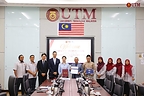
KUALA LUMPUR, Malaysia, Nov. 29, 2026 /PRNewswire/ — Universities across Southeast Asia are joining forces to shape how artificial intelligence (AI) is used in higher education. Universiti Teknologi Malaysia (UTM), one of the founding members of a new regional task force, is partnering with the International Centre for Higher Education Innovation under the auspices of UNESCO (UNESCO-ICHEI) on AI governance, teaching innovation and joint research.
The partnership follows a visit by UNESCO-ICHEI’s leadership to UTM’s Kuala Lumpur campus on 27 November 2026. During the visit, UTM and UNESCO-ICHEI signed a Letter of Intent (LoI) setting out the areas of collaboration.
“Southeast Asia’s universities are adopting AI at very different speeds, and no single institution can work out the rules alone. This task force gives the region a way to share what works and to make sure AI in higher education is responsible and inclusive,” said Dato’ Professor Ts. Dr. Mohd Shafry Mohd Rahim, Vice-Chancellor of UTM.
The task force belongs to the International Institute of Online Education (IIOE) Southeast Asia Regional Centre, set up by the Southeast Asian Ministers of Education Organization (SEAMEO) Secretariat and UNESCO-ICHEI and hosted by the SEAMEO Secretariat. It brings universities together to shape how the region uses AI and digital tools in teaching, learning and management.
Interest was strong: the competitive selection drew 78 universities from ten Southeast Asian countries. UTM’s appointment as a Founding University Member was announced on 5 October 2026, endorsed by Malaysia’s Ministry of Education, and runs for an initial two years.
As a next step, UTM and UNESCO-ICHEI will develop joint collaboration and future actions on AI and digital transformation in higher education.
“The response from universities across Southeast Asia shows a clear commitment to working together on AI. UTM brings strong expertise in AI and digital learning, and we look forward to working with UTM and other task force members to support higher education transformation across the region,” said Ms. Bi Xiaohan, Deputy Director of UNESCO-ICHEI.
The task force is already active. Its first programme, the Korea–Southeast Asia University Leadership and Student Transformation Programme and the 4th Gumi Education Forum, brought university leaders and students to Gumi, Republic of Korea, from 4 to 13 November 2026. UTM was represented by Associate Professor Dr. Noorminshah A.Iahad, Head of Learning Innovation Division, Center for Advancement of Digital and Flexible Learning (CDex) and undergraduate student Tey Xin Yi, Bachelor of Computer Science (Bioinformatics) from the Faculty of Computing.
The partnership covers three areas: AI in university operations, and responsible AI governance, staff training, teaching innovation and flexible study pathways, and joint research, knowledge sharing and regional partnerships.
The collaboration supports the UN Sustainable Development Goals on Quality Education (SDG 4) and Partnerships for the Goals (SDG 17).
The UNESCO-ICHEI delegation was led by Ms. Bi Xiaohan, Deputy Director. She was joined by Mr. Sit Fung, Assistant Director and Chief of the Global Partnership and Programme Office, and Mr. Zhang Boyi, Programme Officer.
They were received by Vice-Chancellor Dato’ Professor Ts. Dr. Mohd Shafry Mohd Rahim, Deputy Vice-Chancellor (Research and Innovation) Professor Ts. Dr. Ali Selamat, Head of Campus Professor Dr. Fauziah binti Sh. Ahmad, and Professor Ts. Dr. Mohd Naz’ri Mahrin, Dean of the Faculty of Artificial Intelligence.
About Universiti Teknologi Malaysia (UTM)
Universiti Teknologi Malaysia (UTM) is a premier public research university specialising in engineering, science and technology, ranked 25th in the QS World University Rankings: Asia 2027. Tracing its roots to a technical school founded in Kuala Lumpur in 1904, UTM has campuses in Johor Bahru, Kuala Lumpur and Pagoh. With recognised strengths in sustainability and artificial intelligence, UTM works alongside industry, government and international partners to develop talent and research, innovating sustainable solutions to global challenges.
View original content to download multimedia:https://www.prnewswire.com/apac/news-releases/universiti-teknologi-malaysia-and-unesco-ichei-partner-on-responsible-ai-for-southeast-asian-universities-302952029.html
SOURCE Universiti Teknologi Malaysia
Technology
Refocusing a Community Moving Toward Reproducible Research
Published
11 hours agoon
November 28, 2026By
Follow #MRITogether’s Hackathon November 30th to December 4th 2026
BOULDER, Colo., Nov. 28, 2026 /PRNewswire/ — MRI Together, a global community advancing open-source solutions to MRI, announces a new hackathon format for 2026 – from November 30th to December 4th, 2026. This year, the consortia are bringing the community together around a shared practical challenge: building a fully open-source, end-to-end MRI pipeline for prenatal imaging—from sequence programming to image analysis. With organizers from 5 continents, this global effort provides the community with a unique opportunity to collaborate across disciplines and time zones. Whether you are an MR physicist, software developer, clinician, or student, together we will tackle current challenges of prenatal MR imaging and demonstrate how open science can accelerate reproducible research.
Each day of the hackathon focuses on one stage of the pipeline and pairs short expert talks with a hands-on session. Live sessions will be streamed at youtube.com/@mritogether. Please visit the MRITogether website and follow the ESMRMB social media on LinkedIn to stay tuned.
Full Program can be found here. News from the Hackathon and results can be found here. To join the MRI Together Community and participate in future events, email us at mritogether@esmrmb.org
About MRITogether: We are a team of MRI scientists from different corners of the MRI world with a passion for open, reproducible and inclusive science. With support and endorsement from ESMRMB this global workshop aims to bring MRI enthusiasts together. Whether you’re a MR scientist, scientific software developer, medical doctor, researcher in basic science, or data scientist, there’s something for you here. If you are passionate about Open Science, join us!
About CaliberMRI: CaliberMRI is on a mission to improve the standard of care through advancing quantitative MRI (qMRI), data quality, and standardization. CaliberMRI produces integrated hardware/software phantom platforms to ensure quantitative MRI measurements are accurate, repeatable and reproducible. CaliberMRI’s products, developed in collaboration with NIST, RSNA, and ISMRM, are cited in more than 300 papers and abstracts. Based in Boulder, Colorado, the company works with researchers, hospitals, and clinicians around the world. For more information, visit https://qmri.com and follow us on LinkedIn.
Contact:
Callie Weiant, President
sales@qmri.com
View original content to download multimedia:https://www.prnewswire.com/news-releases/refocusing-a-community-moving-toward-reproducible-research-302952036.html
SOURCE CaliberMRI, Inc.
Technology
Beyond the Market Volatility: Why Longbridge Group CEO and Co-Founder Nowa Zhu Believes the Next Wave of AI Demand Is So Difficult to Predict
Published
13 hours agoon
November 28, 2026By
HONG KONG and SINGAPORE, Nov. 28, 2026 /PRNewswire/ — Nowa Zhu, Group CEO and Co-Founder of Longbridge, Nowa Zhu, shares his perspective on a turbulent week for AI-related stocks, and why the biggest uncertainty surrounding artificial intelligence may not be its current valuations, but how quickly and widely the next wave of AI adoption will unfold.
What a week it has been for global financial markets.
After a turbulent period that saw AI-related stocks suffer sharp declines, Wall Street ended the Thanksgiving-shortened trading week on a surprisingly strong note. The Nasdaq Composite gained approximately 6.7% over the week, as investors navigated dramatic swings in some of the world’s most closely watched technology companies.
The week began with a remarkable rebound in Nvidia following the return of co-founder Jensen Huang as chief executive. But the optimism was soon tested by renewed concerns over AI valuations, the sustainability of infrastructure spending, stronger-than-expected inflation data and the prospect of fresh US tariffs. Anthropic, the company behind the Claude AI models, also experienced considerable volatility following its highly anticipated IPO, before recovering above its initial offering price during Friday’s shortened trading session.
The contrasting market movements illustrate how quickly investor sentiment can shift. Within days, the narrative surrounding AI swung between fears of a bubble, renewed confidence in the sector’s potential and concerns about whether future commercial returns can justify today’s valuations.
Yet beyond these sharp market movements lies a more fundamental question: How can markets accurately value a technology whose capabilities are advancing at extraordinary speed, but whose future demand, adoption and commercial potential remain so difficult to predict?
Beyond macroeconomic and geopolitical factors, I believe this uncertainty is at the heart of the market’s differing views on AI. And to understand why, we must first recognise something fundamental about the technology itself: AI progress is neither slow nor necessarily linear.
AI is advancing faster than expectations can keep up
Consider how dramatically the conversation around artificial intelligence has changed in just a few years.
Not long ago, public attention centred largely on generative AI’s ability to produce text, images and answers to questions. Today, AI-powered coding assistants are reshaping software development, while AI agents capable of performing multi-step tasks have become a major focus of the technology industry.
The concept of an AI agent was once unfamiliar to most people outside specialist technology circles. Today, agentic AI is increasingly prominent in discussions about how businesses might automate workflows, conduct research and interact with software.
This evolution illustrates something fundamental: AI development does not necessarily follow a smooth, linear trajectory.
Instead, progress can occur in waves of rapid breakthroughs, followed by periods of consolidation as businesses experiment, infrastructure catches up and practical applications mature. Another technological advance may then unlock an entirely new wave of capabilities and demand.
What appears to be a plateau may simply be a period between major leaps, although the timing and magnitude of future advances remain uncertain. This makes AI difficult to assess using conventional assumptions about predictable, steady growth.
Where will the next wave of AI demand emerge?
Software development and general-purpose AI agents offer increasingly visible examples of AI’s practical applications. But beyond these areas, the next major wave of demand remains difficult to predict.
Will it emerge from healthcare, scientific research, manufacturing, financial services or education? Could entirely new applications develop that we have yet to imagine?
Identifying potential industries is only part of the challenge. Equally important is understanding the speed and depth of adoption. How quickly will businesses integrate AI into everyday operations? How extensively will it become embedded in consumer products and services? And when will experimentation translate into widespread commercial deployment?
AI coding tools, for example, have evolved from experimental applications into increasingly capable assistants used in software development. Similar advances elsewhere could create new sources of demand, but their commercial viability, adoption timelines and eventual scale remain uncertain.
The challenge is not simply understanding what AI can do today, but anticipating what it may become capable of tomorrow, and how quickly those capabilities could translate into real economic demand.
Why AI’s non-linear growth complicates valuations
This uncertainty extends across the entire AI value chain.
Demand for AI applications influences spending on models and computing services, which in turn affects cloud infrastructure, data centres, semiconductors and energy requirements.
Companies such as Nvidia, Anthropic, CoreWeave and Oracle occupy different positions within this ecosystem. Their business models differ, but their prospects are influenced, to varying degrees, by expectations surrounding AI adoption.
These relationships, however, are neither immediate nor necessarily proportional. A technological breakthrough may stimulate experimentation without generating substantial near-term revenue. Conversely, an application that achieves widespread adoption could eventually create additional demand across multiple layers of the AI supply chain.
There is also uncertainty about where economic value will ultimately be captured. Greater AI adoption does not guarantee that every company supporting the technology will benefit equally.
This helps explain why AI-related valuations can be particularly sensitive to changing expectations. Investors are attempting to assess not only future earnings, but also the scale, timing and distribution of demand that has yet to fully materialise.
Markets are not simply debating whether AI has a future. They are debating how large that future could become, how quickly it might arrive and how much of its potential is already reflected in today’s prices.
The AI paradox: Using AI to understand an uncertain future
There is an interesting paradox in this debate. Even as investors struggle to quantify AI’s long-term economic potential, the technology itself is becoming increasingly capable of helping people research and understand complex financial markets.
Understanding AI’s development requires examining interconnected factors, including technological breakthroughs, enterprise adoption, infrastructure spending, financial performance and macroeconomic conditions.
Traditionally, investigating these relationships involves navigating financial statements, market data, company announcements and research reports across multiple platforms. While information is increasingly accessible, connecting these developments and understanding their implications remains challenging.
This is where AI-native financial technology can make a meaningful difference.
At Longbridge Group, this philosophy underpins our development of Longbridge AI and our vision of an AI-native, agentic brokerage. Rather than treating AI as an additional feature, we are embedding it into our technology infrastructure to make financial information and market research more accessible through natural-language interactions.
With Longbridge AI’s Scheduled Tasks, users can establish recurring research and information-monitoring workflows, helping them follow market developments over time rather than relying solely on isolated snapshots.
Our approach extends beyond AI-powered research. We introduced Singapore’s first broker-integrated Dividend Hub, bringing historical dividend tracking, projected income, payout schedules and income goal monitoring into a dedicated experience. Although separate from Longbridge AI, it reflects the same philosophy of making complex financial information easier to navigate and understand.
These capabilities serve different purposes but share a common objective: making sophisticated financial information more accessible while keeping investors firmly in control of their decisions.
Understanding uncertainty, not predicting the future
Better intelligence, however, does not mean greater certainty.
AI can process vast amounts of information, identify patterns and explain complex relationships, but it cannot reliably predict market movements, determine when the next technological breakthrough will occur or identify which industries will experience the strongest adoption. Its outputs can also be incomplete or inaccurate, making human judgement essential.
The recent volatility surrounding Nvidia, Anthropic and the broader AI sector illustrates how quickly expectations can change, even as technological development follows its own trajectory.
The next transformative application may emerge sooner than expected or take far longer to achieve widespread adoption. Periods of rapid innovation may be followed by consolidation before another breakthrough changes the industry’s direction.
For investors, the challenge is not simply predicting the next breakthrough, but understanding how emerging capabilities, changing demand and commercial realities interact.
The real promise of AI in investing is not that it will predict the future. It is that it can help more people make sense of an increasingly complex present.
In an industry where the next wave of transformation remains difficult to anticipate, the ability to continuously question, investigate and understand change may become increasingly valuable.
Disclaimer: The views expressed are those of the author and are intended for general informational and educational purposes only. This article does not constitute financial or investment advice, a personal recommendation, or an offer or solicitation to buy, sell or hold any securities or financial products. Investing involves risks, including the possible loss of capital. AI-generated information may contain inaccuracies or omissions and should be independently verified.
Dividend Hub first-mover claim: Based on Longbridge’s review of 20 in-scope MAS-licensed retail-facing brokerages, using hands-on app testing and official sources as of 25 September 2026. The claim refers to a native, centralised in-app feature combining historical dividend tracking, forward income projections and income goal-setting with progress tracking.
View original content to download multimedia:https://www.prnewswire.com/apac/news-releases/beyond-the-market-volatility-why-longbridge-group-ceo-and-co-founder-nowa-zhu-believes-the-next-wave-of-ai-demand-is-so-difficult-to-predict-302952030.html
SOURCE Longbridge Group
Universiti Teknologi Malaysia and UNESCO-ICHEI Partner on Responsible AI for Southeast Asian Universities
Refocusing a Community Moving Toward Reproducible Research
Justin Sun calls for Trump family-linked WLFI token to be delisted
Send Rakhi to UK swiftly with UK Gifts Portal
Whiteboard Series with NEAR | Ep: 45 Joel Thorstensson from ceramic.network
Nullmax and Renesas Forge Strategic Partnership to Deliver Competitive ADAS Solutions for the Global Market
Why You Should Build on #NEAR – Co-founder Illia Polosukhin at CV Labs
Whiteboard Series with NEAR | Ep: 45 Joel Thorstensson from ceramic.network
NEAR End of Year Town Hall 2021: The Open Web World, MetaBUILD 2 Hackathon and 2021 recap
Trending
-
Technology5 days agoMemTensor Releases and Open-Sources MemT-1.0-Pro, a 554B Memory-Native Model
-
Coin Market4 days agoUSDT buyers face 22% VAT when Moscow Exchange opens crypto trading
-
Coin Market5 days agoGrayscale calls Bitcoin ‘oversold’ at $62K but warns of AI risks
-
Technology5 days agoUP Fintech: Q3 Net Income Rises 16.4% QoQ, Client Assets Reach Record US$64.8 Billion
-
Coin Market5 days agoWhy 42 Macro says it’s waiting to buy the Bitcoin dip
-
Technology4 days agoData Centre Market to Reach USD 284.27 Billion by 2035 | Global Growth Insights
-
Coin Market4 days agoSwiss central bank, UBS and SIX study ledger for tokenized settlement
-
Coin Market4 days agoSky lender proposes buyback of up to $50M to fund stUSDS withdrawals