Connect with us

Technology

As AI Agents Scale, Enterprises Demand Execution Control — Devenex Takes Control

Published

on

LAS VEGAS, July 14, 2026 /PRNewswire/ — • Inside the world’s largest organisations, AI agents are no longer experimental. They are executing in production — modifying financial records, triggering payments, approving workflows, and acting with the full operational authority of the enterprises that deployed them. By every credible estimate, the volume and consequence of these actions will increase by an order of magnitude within 24 months.

Yet no infrastructure layer exists to govern what these agents actually do. No systematic policy enforcement before action. No immutable audit trail after. No deterministic control between an agent’s intent and its real-world consequence. The most consequential technology shift in enterprise history is unfolding without an accountability layer.

Today, that changes. Devenex — the Execution Control Plane for AI agents — launches at Google Cloud Next 2026, introducing enterprise-grade governance infrastructure that sits between agent intent and real-world execution. Every action is policy-evaluated, explicitly authorised, identity-bound, and recorded as audit-grade evidence — before it takes effect, giving new life to enterprise AI initiatives.

Devenex is not a monitoring tool. It is not a workflow engine. It is the control plane that ensures no AI-initiated action executes without governance — giving CIOs, CTOs, CROs and enterprise security leaders the confidence to deploy agents at scale without sacrificing accountability.

THE STRUCTURAL GAP

Analyst consensus has converged on a single conclusion: enterprise AI execution capability is outpacing the controls designed to keep it accountable.

Gartner projects that by 2028, a third of enterprise software will incorporate agentic AI — up from less than one percent in 2024. McKinsey identifies governance and risk as the primary barriers to scaling enterprise AI, ahead of model quality or talent. Deloitte’s 2026 enterprise survey finds that 80 percent of leaders piloting AI agents cite security and compliance as the leading obstacle — up from 68 percent a year earlier.

The pattern is consistent across every credible source: enterprises are deploying agents faster than they can govern them. An AI agent that modifies a customer record, approves a discount, or initiates a wire transfer without a governing policy layer is not automation. It is an unmanaged compliance event, a latent security exposure, and a board-level liability.

Devenex addresses this gap at the infrastructure level — not as a feature bolted onto existing tools, but as a purpose-built control plane designed for governed enterprise execution from the ground up.

THE EXECUTION CONTROL PLANE

Devenex operates as the authorisation and governance layer between enterprise decision-making — whether initiated by humans, AI agents, or automated systems — and the execution of actions across enterprise systems of record.

Every action processed through Devenex produces four structured artifacts:

Intent Record. 

Execution Plan. 

Governed Execution. 

Execution Evidence. 

This model ensures that enterprises maintain full traceability from intent to outcome — satisfying EU AI Act, SOC 2, ISO 42001, and sector-specific regulatory requirements.

ENTERPRISE CAPABILITIES

Pre-Execution Policy Enforcement.  Every agent action is evaluated against organizational policy before execution. Nothing executes unchecked. Enterprises gain control over what agents are permitted to do — reducing compliance risk and eliminating ungoverned action.

Dynamic Human-in-the-Loop Governance.  High-consequence actions are routed to designated reviewers without halting low-risk automation. Approval workflows are configurable at the agent, action, or policy level — ensuring human oversight where it matters without creating operational bottlenecks.

Immutable Audit Infrastructure.  Every governed execution is recorded to an append-only ledger. Enterprises gain continuous compliance evidence without manual reporting.

Unified Observability Across Agents.  Live and retrospective visibility into agent activity, policy adherence, and anomaly patterns. Security, compliance, and operations teams share a single authoritative view of enterprise execution.

BUILT FOR ENTERPRISE REALITY

Devenex delivers flexible deployment models—SaaS, hybrid, and self-deployed—enabling organizations to adopt at their own pace.

Engineered to be framework-agnostic and cloud-native, Devenex integrates seamlessly across diverse enterprise environments. The platform does not replace existing systems of record, integration platforms, or identity providers. It governs execution across them.

LEADERSHIP

“For four decades, Abacus has earned the trust of enterprises navigating their most consequential technology transitions. Devenex represents the next chapter — purpose-built infrastructure for a world where AI agents execute with the authority of the organisations that deploy them. Governance at this layer is not optional. It is a precondition for enterprise AI at scale.”

— Aly Kuly Khan
Co-Founder & Chairman, Devenex

“For four decades, we’ve built the layers enterprises run on — systems of record, integration, workflow automation, API and iPaaS governance. Each wave solved the problem the previous one created. Today, AI agents are executing actions on architecture that was never designed to govern them. This isn’t an AI problem. It’s an architectural gap — and it’s the one our experience has prepared us to solve. Enterprises cannot answer four questions about any agentic action: who authorized it, what policy governed it, why it executed as it did, and whether they can prove it after the fact. In regulated environments, these aren’t edge cases — they’re the baseline. Devenex is the execution control plane that answers all four, by design, at execution time.”

— Shoaib A. Khan
Co-Founder & CEO, Devenex

AVAILABILITY & ENGAGEMENT

Devenex is available immediately, with deployment support from Abacus teams across the globe.

Enterprise pilot programmes are open to qualified organisations seeking to bring governed execution to production AI workloads.

Learn more at www.devenex.com

THE ROAD AHEAD

Enterprise AI is entering its execution era. The question is no longer whether agents can act — it is whether they can act accountably. The organisations that solve this first will scale AI faster, operate with greater confidence, and carry less risk than those that treat governance as a downstream problem.

Devenex exists to make governed execution the default operating model of the enterprise. Not as an aspiration. As infrastructure.

About DevenEx

Devenex is the Execution Control Plane for AI agents — enterprise infrastructure that governs every action across systems with policy enforcement, explicit authorisation, and audit-grade evidence. Built for the agentic era, Devenex sits between intent and execution so that no enterprise action moves forward ungoverned. Devenex is built by the team behind Abacus, bringing four decades of enterprise trust to AI execution governance.

About Abacus

Abacus is a global professional services leader in technology, outsourcing, and people solutions. With nearly 40 years of experience, 5,000+ professionals across four continents, and 1,500+ enterprise clients, Abacus designs bespoke solutions that enable organisations to create the future of business and embrace change for sustainable growth.

Media Contact

Devenex
www.devenex.com
Shoaib Khan
shoaib.khan@abacuscambridge.com
+1 (347) 701-4221

View original content to download multimedia:https://www.prnewswire.co.uk/news-releases/as-ai-agents-scale-enterprises-demand-execution-control–devenex-takes-control-302825507.html

Continue Reading

Technology

Tripo AI Releases Latest Model Tripo P2.0, Advancing AI 3D Generation with Production-Ready Assets

Published

on

By

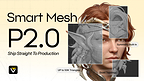
SAN FRANCISCO, Sept. 21, 2026 /PRNewswire/ — Tripo AI unveiled Tripo P2.0, its latest 3D-native foundation model enabling high-fidelity 3D assets generation with quad topology, marking a major breakthrough in generative 3D.

As an upgrade from Tripo Smart Mesh P1.0, P2.0 brings native quad mesh generation, a first for the AI 3D industry, representing a major advance in AI-powered 3D content creation. The model allows 3D creators to move AI-generated 3D content seamlessly into production, addressing one of the longstanding challenges in AI 3D generation.

Following the release of P2.0 Preview in August, the official launch of P2.0 added two new features: multiple versions generation per prompt and Mesh Edit. The model makes it easier than ever for creators to edit, rig, animate and integrate AI generated characters and props into production pipelines.

“Topology has been the wall between AI-generated 3D and real production: game and film pipelines are built on quad meshes, and until now AI got there only through slow, unstable retopology. P2.0 can quickly generate quad-dominant meshes natively, with clean part separation and the edge flow an artist would lay out manually. Production-ready is today’s bar; the longer-term goal for Tripo is to build models that understand, generate and interact with 3D environments,” says Dr. Yanpei Cao, Chief Scientist of Tripo AI.

The model supports both triangle- and quad-based 3D assets generation, offering up to 50,000 faces for triangle topology and up to 25,000 faces for quad topology. With one single prompt, P2.0 allows generation of a maximum of four versions of the same asset with different face counts, giving creators greater flexibility to produce assets with varying levels of complexity and details.

The newly added Mesh Edit feature gives creators direct control over the result. They can select and regenerate any region of a mesh without altering the rest of the asset. Instead of regenerating the whole asset and hoping for a better outcome, creators can refine the asset more precisely, step by step.

The model offers front, back, left and right views of the generated assets, allowing them to closely match users’ intentions.

P2.0 also supports Smart UV which enables creators to unwrap 3D assets into a 2D layout with a single click, making it easier for texturing and further editing.

Designed for games and interactive experiences, Smart Mesh P2.0 helps 3D artists, technical artists and game developers create assets ready for production. It is particularly well suited to generating game characters, hard surface objects such as vehicles, props and buildings, as well as creating 3D assets at scale.

About Tripo AI

Tripo AI is a global leader in the development of 3D-native foundation models and world models. Founded in 2023 by leading scientists in AI and computer graphics, the company has developed a comprehensive end-to-end product ecosystem, built around its proprietary 3D-native foundation models and world models. With Tripo Studio and Tripo API, Tripo AI has transformed 3D generation. Powered by a world-class AI 3D research team, the company is advancing AI toward understanding, generating, and interacting with 3D environments.

Tripo AI’s models and products have been widely adopted by individual users and enterprises globally, serving industries including intelligent manufacturing, virtual reality, interactive entertainment, and embodied AI, empowering enterprises to unlock new productivity and scale applications of generative 3D.

View original content to download multimedia:https://www.prnewswire.com/news-releases/tripo-ai-releases-latest-model-tripo-p2-0–advancing-ai-3d-generation-with-production-ready-assets-302885481.html

SOURCE Tripo AI

Continue Reading

Technology

Xinhua Silk Road: Chinese solutions for meteorological early-warning help more countries tackle climate challenges

Published

on

By

BEIJING, Sept. 21, 2026 /CNW/ — For millennia, as her believers believe, the traditional Chinese sea goddess Mazu has been blessing safe voyages. Now, Chinese meteorological early-warning solutions named after her are helping more countries prevent meteorological disasters.

“MAZU”, released by the China Meteorological Administration at the 2025 World Artificial Intelligence Conference (WAIC), is a set of China’s homegrown AI-enabled meteorological solutions featuring universal multi-hazard early warning, alerting and zero-gap coverage.

Supporting cloud-based trials in more than 40 countries, “MAZU” has been applied in countries including Pakistan, Ethiopia, the Solomon Islands, Jordan, Sri Lanka, Mongolia and Djibouti, rapidly expanding its global presence.

As the first set of solutions under the UN Early Warnings for All initiative, “MAZU” integrates AI-based meteorological early-warning models, Fengyun meteorological satellite data, multi-source monitoring products and cloud computing power.

In May this year, “MAZU” was recommended by the World Meteorological Organization at the 11th Multi-Stakeholder Forum on Science, Technology and Innovation for the Sustainable Development Goals held at UN headquarters in New York.

Unsurprisingly, “MAZU” caters to the demand for both menu-style solution offerings and highly flexible customized solutions to help relevant countries prevent meteorological disasters caused by climate change.

In Pakistan, where monsoons and rainstorms usually cause torrential floods, an early-warning system co-developed by China and Pakistan was formally embedded in relevant platforms of Pakistan’s meteorological authority.

In Ethiopia, Chinese experts leveraged the integration of data from China’s Fengyun meteorological satellites and local meteorological stations to help local weather forecasters generate high-precision nowcasts via the Fenglei and Fengqing AI models.

In Sri Lanka, the meteorological bureau of southeast China’s Fujian Province is assisting the country in achieving high spatiotemporal resolution precipitation and temperature forecasting.

Apart from the application cases of “MAZU”, nearly 1,000 people from more than 100 developing countries and regions have come to China to receive technology training focused on early warning.

As China is a crucial partner of the Early Warnings for All initiative, its platforms, satellites and AI models have helped dozens of countries enhance their early-warning capacities, noted UN Secretary-General Antonio Guterres at the 2026 WAIC.

Such a mode of cooperation, involving technology transfer, joint R&D and local capacity building to help developing countries better protect their people, is exactly what the world needs now, added Guterres.

Original link: https://en.imsilkroad.com/p/352292.html

View original content to download multimedia:https://www.prnewswire.com/news-releases/xinhua-silk-road-chinese-solutions-for-meteorological-early-warning-help-more-countries-tackle-climate-challenges-302885494.html

SOURCE Xinhua Silk Road

Continue Reading

Technology

Xinhua Silk Road: “My City, My Home” global visual submission campaign kicks off in Fuzhou for World Cities Day

Published

on

By

BEIJING, Sept. 21, 2026 /PRNewswire/ — A global call for “My City, My Home” visual submission campaign for the upcoming World Cities Day has officially kicked off in Fuzhou, southeast China’s Fujian Province, inviting people around the world to submit photos and short videos to share stories of urban development.

World Cities Day, celebrated annually on October 31 since 2014, is the first UN-designated international day dedicated to cities. Fuzhou will host the Global Observance of World Cities Day 2026.

As part of the Observance, the “My City, My Home” campaign aims to enhance the global influence of World Cities Day, encourage greater public participation, and promote the concept of sustainable urban development through a campaign open to everyone.

According to the announcement for the campaign, individuals, families, communities, schools, social organizations and other groups are all welcome to participate. The submissions should closely reflect the annual theme of this year’s World Cities Day — Regenerating the City: Adequate Housing for All.

Participants should form a square frame with the thumbs and index fingers of both hands to frame scenes that showcase the livability and renewal of their cities, and then take photos or short videos. This signature gesture symbolizes houses that shelter people, evokes the outline of early walled cities, and represents a perspective through which to capture the beauty of cities.

Participants are encouraged to start their videos with opening lines such as “This is my city”. They are also encouraged to include in their photos and videos an introduction to the city and the filming location, the reasons why the selected scene reflects urban regeneration or livability, and personal stories related to the city.

The submission period runs from the date of publication until 11:59 p.m. on October 14 (Beijing Time). Photos and videos may be submitted via Douyin or to the designated email address Mycitymyhome@outlook.com .

Photos and videos may be submitted in either 9:16 vertical or 16:9 horizontal format. Each video should be at least 5 seconds long.

Outstanding submissions will be selected for inclusion in the official campaign video, which will be presented at the opening ceremony of the Global Observance of World Cities Day 2026 in Fuzhou on October 31.

Original link: https://en.imsilkroad.com/p/352298.html

View original content to download multimedia:https://www.prnewswire.com/news-releases/xinhua-silk-road-my-city-my-home-global-visual-submission-campaign-kicks-off-in-fuzhou-for-world-cities-day-302885518.html

SOURCE Xinhua Silk Road

Continue Reading

Trending