Connect with us

Technology

From Busan to Lombok, Malaysians Look Beyond the Usual Regional Escapes This Summer: Agoda

Published

on

Agoda search data shows rising interest in alternative city breaks, second-city destinations and nearby regional escapes

SINGAPORE, July 16, 2026 /PRNewswire/ — Digital travel platform Agoda has revealed that Malaysian travelers are widening their holiday consideration set, with accommodation search data showing rising interest in alternative Asian city breaks, second-city destinations and regional escapes beyond the usual favorites.

Based on Agoda accommodation searches made between 1 January and 31 May 2026 for stays between 20 June and 31 August 2026, Malaysian travelers demonstrated stronger interest in destinations such as Busan, Fukuoka, Sapporo, Batam Island, Lombok, Surabaya and Ho Chi Minh City, while some traditionally popular regional destinations are seeing flatter year-on-year search growth.

The data suggests that while familiar destinations remain part of the travel picture, Malaysians are increasingly exploring different ways to experience popular countries and regions. Instead of only looking at major capitals, classic routes or well-known island getaways, travelers are showing interest in second cities, alternative island escapes and nearby destinations that offer a fresh take on regional travel.

Japan offers one of the clearest examples of this shift. While Tokyo continues to see accommodation searches increase 24% year-on-year, interest is rising even faster in other Japanese destinations, with Fukuoka up 91% and Sapporo up 63%. This suggests Malaysian travelers are broadening their travel plans within Japan and exploring a wider mix of destinations beyond the country’s most established tourism routes.

A similar pattern can be seen for travel interest to South Korea. While Seoul saw a 7% increase in accommodation searches, Busan saw searches increase 104% year-on-year. Known for its coastline, seafood, markets and more relaxed pace, Busan’s strong growth suggests that Malaysian travelers are increasingly open to exploring South Korea beyond the capital.

Indonesia also recorded strong search growth across several destinations. Jakarta was up 71%, Batam Island rose 69%, Surabaya grew 45%, Lombok increased 39%, Medan rose 34% and Yogyakarta grew 26%. The growth across these destinations points to a broader appetite for nearby regional escapes, from city breaks and cultural trips to alternative island getaways.

Other Asian destinations also saw positive search growth from Malaysian travelers, including Ho Chi Minh City, up 49%, Shenzhen, up 45%, Manila, up 36%, and Da Nang, up 34%. Together, these findings suggest that regional travel remains firmly on Malaysians’ radar, with search interest spreading across a wider mix of Asian city breaks and nearby escapes.

Fabian Teja, Country Director Malaysia and Brunei at Agoda, said, “The surge in searches for places like Busan, Fukuoka and Lombok tells us that Malaysian travelers are making more deliberate choices, moving past travel hotspots to find better value and newer experiences within the same regions they already love. Agoda’s breadth of accommodation options and great deals makes planning and decisions seamless, whether a traveler is deciding between Seoul and Busan or Tokyo and Sapporo.”

With over 6 million holiday properties, more than 130,000 flight routes and over 300,000 activities, Agoda offers travelers access to a wide range of options for every travel style and budget. Travelers can find the best deals on Agoda’s mobile app or visit Agoda.com to plan their next holiday.

View original content to download multimedia:https://www.prnewswire.com/apac/news-releases/from-busan-to-lombok-malaysians-look-beyond-the-usual-regional-escapes-this-summer-agoda-302827323.html

SOURCE Agoda

Continue Reading

Technology

‘Kung fu tea’: US journalist Douglas’ journey into the art of Wuyi rock tea

Published

on

By

BEIJING, Oct. 8, 2026 /PRNewswire/ — A news report from chinadaily.com.cn:

Three hundred years ago, a British man stole the seeds of Wuyi rock tea to plant them elsewhere. Three centuries later, US journalist Douglas travels to Xiamei village at the foot of Wuyi Mountain in Fujian province to learn the age-old craft.

After the entire experience, he understands why people call it “kung fu tea”. For him, picking tea requires “eagle claw skills” and shaking the leaves demands “tai chi hands”. Every step is filled with a sense of mastery and dedication.

Why did Douglas travel all the way to Xiamei village to learn the art of tea-making? What are his insights on the 13,000 km Tea Road? Watch the video to find out.

View original content to download multimedia:https://www.prnewswire.com/news-releases/kung-fu-tea-us-journalist-douglas-journey-into-the-art-of-wuyi-rock-tea-302903196.html

SOURCE chinadaily.com.cn

Continue Reading

Technology

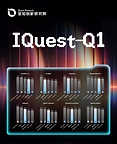
IQuest-Q1 Draws Early Developer Attention Across Coding and Agentic Workflows

Published

on

By

BEIJING, Oct. 8, 2026 /PRNewswire/ — IQuest-Q1 has drawn early praise from developers and industry watchers since launch, particularly for its performance on coding, software engineering, interactive application generation, and long-horizon agentic workloads.

The model weights and technical materials are publicly available:

GitHub — GitHub – IQuestLab/IQuest-Q1Hugging Face — https://huggingface.co/IQuestLab/IQuest-Q1Blog — https://iquestlab.github.io/

IQuest-Q1 is trained for the work developers actually do: navigating a repository, driving a terminal, calling tools, holding a long context in mind, and finishing multi-step tasks without losing the thread. Reasoning, tool use, long-context understanding, and multi-step execution were part of the training objective from the start — not adapted afterward.

Early external discussion has begun to explore IQuest-Q1’s capabilities. One highlighted its evaluation across application building, 3D spatial generation, code diagnosis and repair, and complex tool-assisted workflows, while another publicly shared use case described turning a written product brief into an interactive SaaS analytics dashboard. A third-party technical overview examined the sparse Mixture-of-Experts architecture, integration with Claude Code and Codex CLI, and the infrastructure requirements of self-hosting a 320B-parameter model.

These early observations align with IQuest Research’s official demonstrations, which show IQuest-Q1 working across interactive application generation, code debugging, and multi-step tool use.

One-shot interactive applications

From a natural-language prompt, IQuest-Q1 emits runnable interactive apps in a single pass.

An FPS game. In one generation, the model produces the 3D scene, character movement, health, scoring, mode switching, and an in-game shop for resources and gear — code, file layout, interaction logic, and visuals in the same pass.

A racing game. Continuous scene extension — track geometry, foreground/background transitions — is where one-shot generations usually fall apart. IQuest-Q1 handles this class of spatially continuous, interaction-heavy app without special prompting.

Debugging a real RL run

IQuest-Q1 will also drop into an existing codebase and training stack and fix what’s actually wrong.

An RL run went off the rails. Starting from the training curves, the model pulled logs and execution traces, reasoned back through likely causes, and localized the bug in code. After the patch and a restart, it read the new metrics and confirmed recovery.

The root cause: a stray space had been inserted into the training trajectory. Removed, metrics came back up.

Multi-step work in a real environment

Given a workspace with heterogeneous information and tools, IQuest-Q1 runs multi-step tasks — reading, calling tools, and correcting itself as new information lands. In office settings it works across chat, cloud docs, spreadsheets, and comment threads, pulling context together into analysis, drafts, and revisions that are ready to hand off.

Architecture

The architecture and training approach behind these capabilities are outlined below.

Decoder-only Transformer with a sparse Mixture-of-Experts feed-forward. ~320B total parameters, ~15B active per token.

Training runs in three stages — pre-training, mid-training, post-training — bringing up code fluency first, then extending into longer, harder tasks.

Post-training focuses on software engineering, long-horizon agentic tasks, and general reasoning, using supervised fine-tuning and reinforcement learning. On top of that, Multi-Teacher On-Policy Distillation (MOPD) consolidates strengths from several teachers on the student’s own on-policy rollouts, so the student picks up capability without inheriting any one teacher’s bias profile.

Validated updates, datasets, and workflows feed into the next iteration. Pipelines, training configs, eval harnesses, and tooling are versioned and reused — capability work and infrastructure work compound instead of getting rebuilt each cycle.

Evaluations

IQuest-Q1 posts balanced results across benchmarks covering code, software engineering, terminal use, tool use, and agentic tasks:

NL2Repo — repository-level code generationCyberGym — cybersecurityTerminal-Bench 2.1 — terminal operationDeepSWE v1.1 — long-horizon codingJobBench — professional office workflows

Full numbers, baselines, and evaluation setup are in the technical report.

IQuest-Q1 was developed by IQuest Research. Developers and research teams interested in participating in upcoming early-access testing programs can apply for trial access via email: research@iquestlab.com 

CONTACT: 
IQuest Research
research@iquestlab.com 

View original content to download multimedia:https://www.prnewswire.com/news-releases/iquest-q1-draws-early-developer-attention-across-coding-and-agentic-workflows-302903211.html

SOURCE IQuest Research

Continue Reading

Technology

INFiLED Launches NX Series for Stage Productions

Published

on

By

SHENZHEN, China, Oct. 9, 2026 /PRNewswire/ — INFiLED, launched the NX Series in early October, a heavy-duty rental LED solution for stage productions. Developed for live events, touring productions, outdoor festivals and temporary indoor or outdoor installations, NX Series is designed for projects where LED systems must hold large structures, shift between stage forms and keep onsite work moving under tight schedules.

Recent INFiLED rental projects place the release in a real production context. Shenzhen Happy Valley‘s outdoor summer festival stage showed the scale of a layered five-screen rental layout, while UMK2026‘s live stage production reflected the precision required for large-format screens and overhead LED elements. Together, they point to stage environments where larger visual surfaces, dimensional design and tighter onsite schedules now converge.

NX is introduced for this kind of stage work, where creative direction and technical execution need to stay aligned from load-in to show time. The platform brings structural capacity, multi-form configuration, rental-ready protection, faster service and stable visual performance into the same system.

Larger Stages Ask More of the System

Large stage displays now do more than fill a background. They shape the scene, define depth and often become part of the performance architecture. Before content appears on screen, the LED structure has already passed through transport, lifting, alignment, rehearsal and operation.

NX is specified for stacking and hanging up to 20 m, with optional wind-resistant braces and locks for demanding sites. That capacity matters for large suspended or stacked LED structures, especially in outdoor environments where structural planning carries the whole production.

The cabinet design follows the same logic. A dual-layer magnesium cabinet keeps panels lighter in handling while retaining the rigidity needed for alignment, with cabinet weights of 6.8 kg and 10.9 kg across its two cabinet options. Top quick locks and bottom alignment pins support faster connection and more consistent geometry as the screen grows.

Creative Forms Need Repeatable Mechanics

Stage design rarely stays within a flat rectangle. Productions move between curves, staggered layers, stepped contours, wraparound corners and compact scenic structures. In rental work, those forms need to return accurately across different venues, crews and schedules.

NX supports flat displays, curved layouts, staggered and stepped surfaces, and heart-shaped creative forms. With NX Edge, the system forms 90° curved transitions for wraparound content. In selected configurations, NX also works with MC Series for right-angle and cube structures, and with Xmk3 Series for larger curved forms.

For precision curves, NX offers a –10° to +15° range in 2.5° steps. The degree-based adjustment gives designers room to shape the stage while giving technicians a clear mechanical reference during installation and repeat use.

Onsite Workflow Shapes the Final Image

A strong stage image depends on work the audience never sees. Load-in, locking, alignment, cabling, service and rehearsal all influence whether the screen stays on schedule and performs cleanly when the show begins.

NX addresses those pressure points through several rental-focused details:

Top quick locks and bottom alignment pins support faster assembly and consistent screen geometry.The unified integrated PDU centralizes power and signal distribution, reducing cabling complexity across the system.Optional clip-on masks for outdoor configurations reduce disassembly steps during onsite service.Outdoor versions feature full encapsulation and IP65-rated protection for exposed environments.

Visual performance remains part of the same production path. Outdoor stages need brightness that stays clear in stronger ambient light, so NX reaches up to 5,000 nits outdoors. A 7,680 Hz refresh rate supports smoother motion and camera capture, while 16-bit grayscale and a 10,000:1 contrast ratio preserve tonal control, depth and clarity for stage content.

NX Series expands INFiLED’s rental LED portfolio with a heavier-duty option for stage production applications where scale, form and timing carry equal weight. For INFiLED, whose work spans rental, fixed-installation and commercial display environments, the release adds another layer to its engineering focus – LED systems shaped around the conditions of real projects, not only around the appearance of the screen.

For stage teams, that focus matters most when the technology fades into the work. The structure holds, the workflow keeps moving and the image reaches the audience as intended.

Website: www.infiled.com
Contact: info@infiled.com

SOURCE INFiLED

Continue Reading

Trending