Connect with us

Technology

AI Agents Do Not Need Their Own Identity System. WinMagic Says One Architecture Can Cover All

Published

on

With machine identities already outnumbering humans 82 to 1, WinMagic argues AI agents should be verified through a common trust architecture spanning users, devices, workloads, and machines.

TORONTO, July 28, 2026 /PRNewswire/ — Cybersecurity teams are preparing for AI agents by adding new credentials, policies, and controls to identity environments already divided across users, devices, service accounts, and cloud workloads. A 2025 survey found 82 machine identities for every human identity and that 70% of respondents considered identity silos a root cause of cybersecurity risk. Thi Nguyen-Huu, President and CEO of WinMagic, a cybersecurity innovator known for endpoint-based authentication and encryption, says the work on AI agents’ identity is necessary but it should not become another identity silo. The architecture that covers AI agents can cover users, devices, service accounts, and workloads.

What each of them needs is a trusted witness at the point of access that can confirm who is acting, on what platform, and under what conditions. “Identity is what you verify before you give access,” said Nguyen-Huu. “Online, it cannot be the user alone. It has to be the actor, on a platform, under a defined set of conditions. Once you define identity that way, there is no reason to build a new architecture for a new actor.”

Identity Has Outgrown the Human User
CyberArk reports that 42% of machine identities have privileged or sensitive access, even though 88% of surveyed organizations define a privileged user only as a human identity. AI agents expose that fragmentation. They can access data, call application programming interfaces, use enterprise tools, and act on behalf of people or other systems. The National Institute of Standards and Technology’s National Cybersecurity Center of Excellence is exploring standards-based approaches to identify, manage, and authorize software and AI agents, as well as audit the actions they take. Its February 2026 concept paper proposes extending identity standards that already exist rather than building new infrastructure. WinMagic agrees with that direction.

“Adding a specialized control for every environment can look like progress”, Nguyen-Huu said. “But it creates more policies and exceptions to manage.”

Authorization Is Not the Same as Identity
Tokens were designed to carry authorization, meaning what an actor is allowed to do. Because tokens accompany every request, they gradually became a stand-in for identity, even though they were never designed for that purpose. Nguyen-Huu argues that identity should be verified in the communication channel at the moment of access. The verifier can then assess who is authorized, whether the approved actor is participating now, and if the platform and security conditions still hold.

One Architecture Does Not Mean One-Size-Fits-All
The architecture does not require every environment to use the same credential, policy, or set of security conditions. Organizations decide which signals matter for each use case and apply a consistent method for deciding whether access should continue.

In connected environments, the endpoint evaluates local conditions while external systems provide additional authorization and risk signals. In disconnected or air-gapped environments, the endpoint assumes more of that responsibility because outside services may be unavailable. If required conditions change, the Live Key, protected in device hardware, is no longer available for the next connection.

“A unified architecture does not mean every environment works the same way,” Nguyen-Huu points out. “The conditions change; the principle does not. Access continues only while the conditions that justified it still hold. Until now, the only way to approximate that was a timer, which is a guess about the future.”

Every Authorized User Already Has a Trusted Witness
For human-operated devices, the trusted witness is the endpoint. It can distinguish between an authorized user on an approved device, an unauthorized actor, and a legitimate person without permission, allowing access decisions without repeated password prompts or portable tokens. Unlike the physical world, where continuous observation is impossible, every online interaction already passes through a device capable of providing that verification.

MagicEndpoint applies that model alongside existing identity and access management systems. Mutual Transport Layer Security allows machines to prove possession of cryptographic keys during a connection, making AI agents a natural fit. WinMagic extends the same machine-to-machine architecture to people by allowing the endpoint to hold the key and vouch for the verified user.

The missing ingredient is not cryptography or hardware. It is a practical way to continuously verify people without repeatedly interrupting them. By shifting that responsibility to the endpoint, a mechanism originally designed for machines can also support human identity.

“We keep building new identity systems every time a new actor appears,” Nguyen-Huu said. “The witness we need is already at the source. The endpoint is already there when the actor acts on the platform.. We do not need another identity silo. We need one architecture, and an endpoint allowed to vouch.”

About WinMagic

WinMagic’s mission is to secure the digital world through high standards and strong ethics. For nearly three decades, the organization has led innovation in encryption and endpoint security. Today, WinMagic is advancing a new paradigm for online access—anchoring the endpoint as the foundation of trust. By letting endpoints speak for users, WinMagic turns cumbersome logins into seamless, automated exchanges. What was once user-to-machine communication now becomes a machine-to-machine relationship, governed by policy and anchored in cryptography. This evolution eliminates friction, reduces risk, and lays the groundwork for the Secure Internet—where security is continuous, effortless, and requires no user action. Learn more at https://winmagic.com.

References:

CyberArk. (2025, April 23). Machine identities outnumber humans by more than 80 to 1: New report exposes the exponential threats of fragmented identity security. cyberark.com/press/machine-identities-outnumber-humans-by-more-than-80-to-1-new-report-exposes-the-exponential-threats-of-fragmented-identity-security/National Cybersecurity Center of Excellence. (2026, February 5). Accelerating the adoption of software and AI agent identity and authorization [Concept paper]. National Institute of Standards and Technology. nccoe.nist.gov/sites/default/files/2026-02/accelerating-the-adoption-of-software-and-ai-agent-identity-and-authorization-concept-paper.pdfNguyen-Huu, T., Nikitin, S., & O’Leary, J. (2026, July 6). Condition-bounded credentials for workload and agent identity: Non-exfiltratable keys and validity by presence (Internet-Draft No. draft-winmagic-wimse-condition-bounded-credentials-01). Work in Progress. Internet Engineering Task Force. datatracker.ietf.org/doc/draft-winmagic-wimse-condition-bounded-credentials/WinMagic. (n.d.). MagicEndpoint: One device login. Continuous security for everything. Retrieved July 21, 2026, from winmagic.com/en/magicendpoint/

Media Inquiries:
Karla Jo Helms
JOTO PR™
727-777-4629
jotopr.com

View original content to download multimedia:https://www.prnewswire.com/news-releases/ai-agents-do-not-need-their-own-identity-system-winmagic-says-one-architecture-can-cover-all-302836466.html

SOURCE WInMagic

Continue Reading

Technology

AmeriTrust Solutions Expands Point-of-Care Medicaid Application Support to All 50 States

Published

on

By

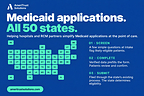
Available today, the platform gives hospitals and RCM partners a practical way to help eligible patients pursue coverage without a major IT project.

WASHINGTON, Oct. 22, 2026 /PRNewswire/ — AmeriTrust Solutions today announced that its Medicaid application platform is available across all 50 U.S. states. As hospitals and revenue cycle management (RCM) partners prepare for Medicaid changes under H.R.1, the platform gives them a practical way to help eligible patients pursue coverage and address uncompensated care at the point of care.

The platform addresses a source of uncompensated care that begins before billing: patients who may qualify for Medicaid but never complete an application. By simplifying the process when the need for coverage is immediate, AmeriTrust Solutions helps patients overcome application barriers and gives hospitals a path to reimbursement for care that might otherwise be written off.

The scale of the problem is substantial: U.S. community hospitals provided $42.7 billion in uncompensated care in 2020, according to the American Hospital Association.

Uninsured encounters are often written off as uncompensated care, even when patients may qualify for Medicaid. Long applications, confusing questions and information patients struggle to gather can stand between them and coverage, leaving hospitals without payment for care that could otherwise qualify for reimbursement.

“Hospitals already know what uncompensated care is costing them,” said Peter Justen, founder and CEO of AmeriTrust Solutions. “They need a practical way to help eligible patients get covered and create a path to payment for the care they provide. That starts with an application patients can actually finish.”

AmeriTrust Solutions uses verified third-party data to prefill available information and plain-language questions to guide patients through what remains. Patients review and certify their information before submission through the state’s existing process. The state makes every eligibility decision.

Available today, the platform is designed for straightforward deployment alongside existing hospital workflows, without a major IT project or replacement of state eligibility systems. Hospitals can begin submitting applications as soon as the platform is live, creating the potential for Medicaid reimbursement within weeks, depending on state eligibility decisions and claims processing. Hospitals can offer the experience under their own brand, giving existing teams a straightforward way to help patients complete applications at intake or the bedside.

RCM partners can add this capability to their hospital offering without developing Medicaid application technology internally. That gives them another way to support hospital clients serving uninsured and self-pay patients, with a focus on helping more applications reach submission.

As healthcare organizations evaluate AI and other new technologies, AmeriTrust Solutions puts the emphasis on a clear, guided application process and the value it can deliver. The platform uses verified information, relevant questions and applicant review to make a complex administrative task more manageable.

“The questions hospital leaders are asking are straightforward: What will this do for us, and how soon can we put it to work?” Justen said. “Our focus is helping patients complete applications now, so hospitals can begin addressing the coverage gaps that contribute to uncompensated care.”

Hospitals and RCM partners can learn more about the platform and discuss deployment at ameritrustsolutions.com/.

About AmeriTrust Solutions
AmeriTrust Solutions helps hospitals and RCM partners reduce uncompensated care by simplifying Medicaid applications at the point of care. Verified data prefill and guided questions help patients complete more accurate applications for submission through existing state eligibility processes. By reducing administrative burden and helping eligible patients access coverage, the company creates a clearer path to reimbursement—supporting rural hospital financial stability and helping preserve local access to care. Visit https://ameritrustsolutions.com/

Media contact
Tina Burgess
AmeriTrust Solutions
(202) 770-0272
pr@ameritrustsolutions.com

View original content to download multimedia:https://www.prnewswire.com/news-releases/ameritrust-solutions-expands-point-of-care-medicaid-application-support-to-all-50-states-302917246.html

SOURCE AmeriTrust Solutions

Continue Reading

Technology

University of Phoenix highlights career-focused, transfer credit-friendly degree programs

Published

on

By

University data highlights affordability as students apply transfer credits toward business, management, healthcare, technology and other career-focused degree programs while reducing education costs

PHOENIX, Oct. 22, 2026 /PRNewswire/ — University of Phoenix is recognizing National Transfer Student Week by highlighting the degree programs receiving the highest volumes of transfer credits, demonstrating how adult learners are benefiting from affordability, transparency and certainty as they apply previously earned academic credit toward career-focused degrees. Many of these programs align with occupational fields projected for growth by the U.S. Bureau of Labor Statistics, underscoring how students are building on prior academic achievements while pursuing educational pathways connected to workforce needs.

According to University transfer-credit data for the past year, students applied more than 525,000 accepted transfer credits to the Bachelor of Science in Management program and more than 275,000 accepted transfer credits to the Bachelor of Science in Business program. University data also shows associate and bachelor students saved an average of more than $12,010 through transferred credits, excluding military students, underscoring the role transfer pathways can play in making higher education more affordable.

“Transfer credit can help students do more than save time and money,” said Devin Andrews, vice president, Office of Admissions and Evaluations. “It can help them continue making progress toward degrees that align with their professional goals. By recognizing eligible transfer credit, we help students build on what they have already accomplished and focus on the education and skills needed for the next phase of their careers.”

As University of Phoenix celebrates its 50th anniversary in 2026, the institution is reflecting five decades of helping working adults build on previous academic achievement and professional experience rather than start over. Today, transfer-credit pathways remain an important part of that mission, helping eligible students reduce costs while pursuing degrees aligned with career goals.

Students apply transfer credits across career-focused degree programs

University transfer-credit data shows students are applying significant volumes of transfer credit toward degree programs aligned with business, management, healthcare, public service and technology careers.

Programs receiving the highest volumes of accepted transfer credits include:

Bachelor of Science in Management: 525,085 accepted transfer credits and 447,622 applied transfer credits.Bachelor of Science in Business: 275,745 accepted transfer credits and 243,281 applied transfer credits.Bachelor of Science in Health Administration: 165,159 accepted transfer credits.Bachelor of Science in Criminal Justice Administration: 159,810 accepted transfer credits and 139,898 applied transfer credits.Bachelor of Science in Information Technology: 140,604 accepted transfer credits.Bachelor of Science in Social Work: 135,583 accepted transfer credits.

These programs represent areas where students are frequently building on previously earned academic credits as they continue toward degree completion and career goals.

University of Phoenix transfer student Joshua Barron decided to earn his degree while working full time and raising his child. “I have always had a goal of earning my bachelor’s degree,” said Barron, who came to the University with previous college credit. “I transferred credits from another college and used self-paced provider options to accelerate my progress. What started as a goal became a clear path toward achieving the degree I wanted for my future.”

Affordable degree pathways align with growing workforce needs

Several of the University’s most popular transfer-friendly programs align with occupations projected by the U.S. Bureau of Labor Statistics (BLS) to experience faster-than-average employment growth through 2034. Management occupations, Healthcare occupations, and Information Technology occupations all fall into high-growth categories according to BLS projections.

Learn more about transfer-credit opportunities

Students interested in learning how previously earned credits may apply toward a degree program can learn more here.

About University of Phoenix

University of Phoenix is Built for Real Life. 50 Years Strong. The University innovates to help working adults enhance their careers and develop skills in a rapidly changing world through flexible online learning, relevant courses, academic AI pillars, and skills-mapped curriculum for associate, bachelor’s and master’s degree programs. Active students and alumni have access to Career Services for Life® resources including career guidance and tools. For more information, visit phoenix.edu.

View original content to download multimedia:https://www.prnewswire.com/news-releases/university-of-phoenix-highlights-career-focused-transfer-credit-friendly-degree-programs-302917249.html

SOURCE University of Phoenix

Continue Reading

Technology

/C O R R E C T I O N – Verisave/

Published

on

By

In the news release, Verisave appoints Payments Veteran Chris Lefebvre as Chief Executive Officer to Drive Product Development and Growth, issued 22-Oct-2026 by Verisave over PR Newswire, we are advised by the company that changes have been made. The complete, corrected release follows, with additional details at the end:

Verisave appoints Payments Veteran Chris Lefebvre as Chief Executive Officer to Drive Product Development and Growth

SALT LAKE CITY, Oct. 22, 2026 /PRNewswire/ — Verisave, a leading provider of payments optimization solutions, today announced the appointment of Chris Lefebvre as Chief Executive Officer, effective October 1, 2026. Lefebvre, who joins from Fiserv, succeeds Jeremy Layton, who will transition into the role of Founder and Chief Commercial Officer to ensure strategic continuity.

Lefebvre brings more than 30 years of executive leadership across payments, financial services and technology, with a track record of guiding companies through growth, transformation and successful exits. He led financial services for a major retailer and was selected to serve on the Merchant Advisory Board for the card networks. As COO of BankServ, he led the company’s national expansion and its successful exit. Lefebvre has since held C-suite roles at eCommerce sales and marketing companies, after which he founded CRC, a management and strategy consulting firm serving regulated companies in healthcare, energy and financial services. Most recently, he served as Global Head of Relationship Management for Grocery, Petroleum, and Technology at Fiserv, and was instrumental in reshaping their client engagement strategy.

“I am extremely proud of the work Verisave has done over the years,” said Jeremy Layton, Verisave Founder and Chief Commercial Officer. “I am confident in our ability to continue bringing solutions and transparency to an industry that is largely unregulated and highly complex. Our clients increasingly need better solutions to control costs and manage their payments proactively. Chris brings deep payments expertise and a track record of building products and solutions around this need.”

“Verisave has built something rare: a trusted platform that delivers real and measurable value for its clients,” said Chris Lefebvre. “What drew me to the role is how much opportunity lies ahead, both in deepening our core solutions and expanding our reach across the broader financial ecosystem. I’m energized by the prospect of working with such a talented team as we look to accelerate Verisave’s growth and bring even greater value to our clients.”

About Verisave
Verisave is a payments optimization and consultancy firm, specializing in merchant account, payments stack, processing fee, and interchange fee solutions. Verisave identifies wasted spend and inefficiencies within the payments operations and merchant account settings, bringing significant direct and operational cost savings to clients. Headquartered in Salt Lake City, the company is backed by Ceto Capital. Learn more at verisave.com

Media Contact:
Samuel Barber
sam@pitchr.ai

Correction: A headshot of Chris Lefebvre has been added.

View original content to download multimedia:https://www.prnewswire.com/news-releases/verisave-appoints-payments-veteran-chris-lefebvre-as-chief-executive-officer-to-drive-product-development-and-growth-302917253.html

SOURCE Verisave

Continue Reading

Trending