Technology
Glass Ceramics Market Strengthens with Advanced Materials Demand across Appliances | CAGR 4.6% | Persistence Market Research
Published
3 months agoon
By
LONDON, July 29, 2026 /PRNewswire/ — The global glass ceramics market is growing steadily, expected to be valued at around US$1,753.2 million in 2026 and projected to reach US$2,401.9 million by 2033, with a CAGR of 4.6% in the coming years. This expansion is driven by rising adoption across household appliances, healthcare, aerospace, and electronics industries. Glass ceramics have become indispensable where conventional materials cannot deliver the required thermal shock resistance, dimensional stability, and durability.
Growing Adoption of Energy Efficient Induction Cooktops Fuels Market Expansion
The worldwide transition toward energy-efficient cooking appliances is becoming one of the strongest growth drivers for the glass ceramics market. Governments and consumers are increasingly favoring induction cooking technologies because of their superior energy efficiency, improved safety, and reduced emissions compared to conventional gas cooking systems. Glass ceramic panels manufactured primarily from Lithium Aluminosilicate (LAS) compositions serve as the essential cooking surface for induction and radiant cooktops due to their exceptional resistance to thermal shock and mechanical stress.
International energy efficiency initiatives and appliance regulations are encouraging this shift. Induction cooktops operate at significantly higher energy efficiency than traditional gas stoves, prompting appliance manufacturers to expand production of premium induction cooking products. Europe continues leading this transition, while China and North America are witnessing rapid growth in household adoption.
Manufacturers are simultaneously introducing larger cooking surfaces, improved scratch resistance, and aesthetically enhanced glass ceramic panels that combine durability with premium kitchen designs. Beyond residential kitchens, commercial food service operators are increasingly installing induction cooking systems to improve workplace safety and reduce operating costs.
Access Free Sample: https://www.persistencemarketresearch.com/samples/37016
Expanding Aerospace, Healthcare, and Electronics Applications Strengthen Industry Demand
The increasing use of advanced materials across aerospace, healthcare, and electronics industries represents another major driver for the glass ceramics market. Glass ceramics offer an exceptional combination of near-zero thermal expansion, dimensional stability, optical performance, and biocompatibility, making them suitable for highly specialized applications where conventional materials often fall short.
Aerospace manufacturers increasingly specify glass ceramics for infrared windows, radomes, precision optical assemblies, and high-temperature observation systems capable of operating under extreme thermal conditions. Modern defense platforms, satellite systems, and advanced aircraft programs continue creating demand for high-performance glass ceramic components.
Healthcare has emerged as one of the fastest-growing application areas. Lithium disilicate and leucite-reinforced glass ceramics are becoming preferred materials for dental crowns, veneers, and bridges because they combine excellent aesthetics with superior mechanical strength. Growing adoption of CAD/CAM digital dentistry allows clinics to manufacture customized restorations with greater precision and shorter treatment times.
The electronics sector is creating additional opportunities as 5G infrastructure deployment and semiconductor manufacturing require materials with low dielectric loss, dimensional stability, and reliable hermetic sealing performance. Manufacturers continue investing in specialized glass ceramic formulations capable of meeting increasingly stringent technical requirements across telecommunications and precision electronics.
Key Highlight: SCHOTT Launches Pilot Projects for a More Circular Glass Ceramics Value Chain in 2024
A standout development in the glass ceramics market was SCHOTT’s launch of pilot projects focused on creating a more circular economy for glass ceramics and specialty glass. The initiative aims to establish a closed-loop recycling system by recovering end-of-life CERAN® glass-ceramic cooktops and reusing the material in the production of new products. This effort supports SCHOTT’s broader sustainability strategy and promotes resource conservation across the glass ceramics value chain.As part of the initiative, SCHOTT is collaborating with partners across the value chain to collect, process, and recycle used glass-ceramic cooktops. The company is evaluating technical processes for recovering valuable raw materials while ensuring that recycled material meets the stringent quality requirements for manufacturing new CERAN® glass-ceramic products. These pilot projects are intended to advance circular material use and reduce reliance on virgin raw materials.
SCHOTT also highlights the sustainability credentials of CERAN®, which is manufactured without the use of toxic heavy metals such as arsenic and antimony. The company’s ongoing efforts to improve material circularity, combined with its environmentally responsible production practices, reinforce its commitment to reducing the environmental footprint of glass ceramics while supporting the long-term sustainability of the industry.
Request Customization: https://www.persistencemarketresearch.com/request-customization/37016
Segmentation Insights: Lithium Aluminosilicate (LAS) Glass Ceramics Lead the Market Through Superior Thermal Performance
Lithium Aluminosilicate (LAS) glass ceramics remain the leading material type, accounting for approximately 52% of the market revenue. Their market leadership is supported by an unmatched combination of near-zero thermal expansion, excellent thermal shock resistance, and high mechanical durability, making them the preferred material for induction and radiant cooktop panels, the industry’s largest end-use application. Leading manufacturers, including SCHOTT AG and Eurokera, continue investing in advanced crystallization technologies and composition refinement to enhance product performance and manufacturing efficiency. Ongoing innovation in premium induction cooking appliances, coupled with growing global demand for energy-efficient kitchen solutions, continues to reinforce LAS glass ceramics as the benchmark material across the household appliance industry.
Regional Insights: Europe Leads Global Glass Ceramics Market While Asia Pacific Records the Fastest Growth
Europe holds the largest share of the glass ceramics market, accounting for approximately 34% of global revenue, supported by its strong appliance manufacturing ecosystem, high induction cooking penetration, and the presence of industry leaders such as SCHOTT AG and Eurokera. Germany, France, and other Western European countries continue driving both production and consumption through advanced manufacturing capabilities and stringent energy efficiency regulations.
Asia Pacific is the fastest-growing regional market. China dominates regional production through its extensive household appliance manufacturing base, while Japan maintains leadership in advanced glass ceramics for precision optics, semiconductor equipment, and electronic components. India is emerging rapidly as induction cooktop adoption increases alongside expanding middle-class consumer demand and investments in modern healthcare infrastructure.
North America maintains steady demand through aerospace, defense, medical technology, and premium household appliance applications. Latin America and the Middle East continue offering emerging opportunities as industrial modernization, healthcare investments, and consumer appliance penetration steadily improve. Regional manufacturing strategies increasingly emphasize localized production, advanced material innovation, and closer collaboration with appliance and electronics OEMs.
Key Highlights
The global glass ceramics market is projected to grow from US$ 1,753.2 Mn in 2026 to US$ 2,401.9 Mn by 2033, registering a CAGR of 4.6%.Europe leads the market with approximately 34% revenue share, while Asia Pacific is the fastest-growing region with a CAGR exceeding 5.8% through 2033.Lithium Aluminosilicate (LAS) glass ceramics dominate the material type segment, accounting for approximately 52% of global market revenue.Household appliances remain the leading application segment with approximately 46% market share, driven by strong demand for induction and radiant cooktop panels.Rising adoption of energy-efficient induction cooking, expanding healthcare and dental applications, and increasing use in electronics and aerospace continue to support long-term market growth.
Buy the Full Report Now: https://www.persistencemarketresearch.com/checkout/37016
Key Players and Business Strategies
Leading players include SCHOTT AG, Corning Incorporated, Nippon Electric Glass Co., Ltd., AGC Inc., and Eurokera.
SCHOTT AG continues expanding its CERAN® product portfolio while investing heavily in sustainable glass ceramic manufacturing technologies and advanced induction cooktop applications.Corning Incorporated focuses on advanced specialty glass technologies and high-performance material innovation, supporting premium industrial, healthcare, and consumer applications.Nippon Electric Glass Co., Ltd. strengthens its position through continuous investment in precision glass ceramics for electronics, semiconductor equipment, and optical applications.AGC Inc. continues expanding research into high-value specialty glass ceramic materials serving automotive, healthcare, and advanced industrial markets.
Market Segmentation
By Material Type
Lithium Aluminosilicate (LAS)Zinc Aluminosilicate (ZAS)Magnesium Aluminosilicate (MAS)Others
By Application
Household AppliancesBuilding & ConstructionElectrical & ElectronicsHealthcare & MedicalIndustrial EquipmentAerospace & DéfenseOthersBy RegionNorth AmericaEuropeEast AsiaSouth Asia and OceaniaLatin AmericaMiddle East and Africa
Get More Insights — Related Advanced Materials Market Reports:
Pottery Ceramics Market by Product Type (Tableware, Artware), Material Type (Earthenware, Stoneware), End-use, Distribution Channel, and Regional Analysis for 2025 – 2032
Fire Resistant Glass Market by Product Type (Wired Glass, Ceramic Glass, Tempered Fire-Resistant Glass, Laminated Fire-Resistant Glass, Gel-Filled Fire-Resistant Glass), by Fire Rating (E-Class, EW-Class, EI-Class), by Application (Doors, Windows, Partitions, Walls/Facades, Skylights), End-User (Residential, Commercial, Healthcare, Transportation), and Regional Analysis, 2026 – 2033
Microspheres Market by Form (Solid, Hollow, Porous), Material Type (Glass, Polymer, Ceramic, Carbon, Silica), Application (Construction Composites, Healthcare and Biotechnology, Paints and Coatings, Cosmetics and Personal Care, Oil and Gas), and Regional Analysis, 2026 – 2033
Automatic Stencil Cleaner Market by Cleaning Technology (Ultrasonic, Pneumatic), System Type (1 Tank System, 2 Tank System), Tank Capacity (Up to 60 Litres, 60–90 Litres, More than 90 Litres), Industry (Electronics, Automotive, Others), and Regional Analysis, 2026–2033
Shotcrete/Sprayed Concrete Market by Process Type (Wet-Mix Shotcrete, Dry-Mix Shotcrete), System Type (Robotic Spraying System, Manual Spraying System), Reinforcement Type (Steel Fiber Reinforced, Synthetic Fiber Reinforced, Non-Fiber Reinforced Shotcrete), End-user (Underground Construction, Protective Coatings, Civil Constructions, Repair Works, Mining, Others), Regional Analysis, 2026 – 2033
Lithium Hydroxide Market by Application (EV Batteries, Energy Storage Systems, Lubricating Grease, Purification, Other), Industry (Automotive, Consumer Electronics, Energy Storage, Other), and Regional Analysis for 2026 – 2033
Architectural Membrane Market by Product Type (ETFE Sheeting, Polyester Fabric, Others), End-use Areas (Exteriors, Lightframe, Others), Applications (Commercial Construction, Roads and Public Construction, Others), and Regional Analysis for 2026 – 2033
Geogrids Market by Product Type (Uniaxial, Biaxial, Multiaxial), Material (HDPE, PP, Polyester), Application (Road Construction, Railroad, Soil Reinforcement, Others), and Regional Analysis, 2026 – 2033
About Persistence Market Research:
At Persistence Market Research, we are pioneers in Market Research and Consulting, bringing you the most dynamic insights into market trends, consumer behaviours, and competitive intelligence! For over a decade, we’ve been at the forefront of delivering game-changing analytics and research that drive businesses toward growth.
Our extensive market report database is a go-to resource for Fortune 500 companies, savvy business investors, media and entertainment channels, and academic institutions, empowering them to navigate the global and regional business landscape with confidence. With thousands of statistics and in-depth analyses covering over 20 diverse industries across 25 major countries, we provide the insights you need to succeed in today’s competitive environment.
Contact
Ankush Nikam
Persistence Market Research
Second Floor, 150 Fleet Street, London, EC4A 2DQ
+44 203-837-5656
United Kingdom
USA Phone – +1 646-878-6329
Email: sales@persistencemarketresearch.com
View original content to download multimedia:https://www.prnewswire.co.uk/news-releases/glass-ceramics-market-strengthens-with-advanced-materials-demand-across-appliances–cagr-4-6–persistence-market-research-302838088.html
You may like
Technology
Unity: The Convergence of the Three Main Red Army Forces
Published
38 minutes agoon
October 21, 2026By
BEIJING, Oct. 21, 2026 /PRNewswire/ — An interview from China.org.cn with Wang Xiaohui and David Ferguson on the Long March:
Wang Xiaohui:
We have all been through something similar — a group of people disagreeing with one another, with each side holding sound reasons to believe their own judgment is correct.
In such moments, should they part ways, or find another path forward together?
David Ferguson:
The word “unity” is often understood as a strategy. People unite when they face a common enemy, and when that enemy disappears, the cooperation ends with it. But I’ve always wondered if there is a different kind of unity — one not forged by a common enemy, but by a common destination. A unity that isn’t temporary, that doesn’t fall apart the moment circumstances change. I wanted to find out.
Wang Xiaohui:
An arduous expedition like the Long March posed unparalleled trials for any military unit.
Bitter cold on snow-capped mountains, hidden mire across marshlands, and dangers lurking every step of the way; food and warm clothes were constantly scarce, while enemies and artillery fire were relentless. Even so, through the Long March, these poorly equipped and raggedly dressed Red Army troops remained tightly bonded as one.
This bond was not coerced by harsh military discipline, but arose spontaneously from every soldier’s heart. Before they even set off, shared ideals and conviction had already taken deep root within every soldier, steeling their resolve to follow the Communist Party of China without hesitation. Along the trail, officers and soldiers of the Red Army ate from the same pots and wore uniforms made from the same coarse cloth. High-ranking commanders like Zhu De and Peng Dehuai covered most of the journey on foot alongside their troops, leaving their horses to the ill and wounded, while splitting their last rations with soldiers. Amid food shortages, even when columns in the front discovered edible greens, they would never dig them all up; instead, they sent words to rear units so that all troops could share.
The Red Army’s unity took root in shared ideals, flourished under equal treatment for all, and was forged through countless moments of entrusting each other with their lives. It also became the unshakable foundation that carried them through every ordeal.
In the late autumn of 1936, the Loess Plateau in northwestern China witnessed two hopeful rendezvous, marking the Long March’s triumphant close. First in Huining, soldiers of the First and Fourth Front Armies embraced in a long-awaited reunion. Just over 10 days later, at Jiangtaibu, the waiting First Front Army finally greeted the travel-worn soldiers of the Second Front Army.
Many of these soldiers had never met before, yet they greeted one another like long-lost brothers, eyes brimming with tears as they clasped hands. Officers and soldiers of the First Front Army sent whatever supplies they had saved up to their brother troops. Three battle-hardened columns merged into a mighty iron stream across the plateau. Just one month later, they fought in coordinated formation to secure triumph in the battle of Shanchengbao, putting a glorious full stop to the Long March.
When scattered sparks merge, inherent unity surges into a mighty force, powerful enough to rewrite an army’s fate and shift the course of a nation’s history.
At the time, Japanese invaders advanced deeper into China, occupying more and more territory, yet the civil war persisted. The CPC clearly understood that brutal conflict among the Chinese would only play to the invaders’ hands, and only national unity could safeguard the motherland. The CPC publicly called for an end to the civil war and joint resistance against Japanese invaders, officially proposed to build the national united front against Japanese aggression, and even took the initiative to halt military operations and withdraw troops as a gesture of goodwill — when the survival of a nation hung by a thread, they chose to unite all Chinese people.
The two KMT officers, Zhang Xueliang and Yang Hucheng, who were stationed in the northwest, witnessed the nation’s peril and were touched by the CPC’s advocacy of a united resistance. Resolved to collaborate with the CPC to fend off Japanese aggression, Zhang and Yang repeatedly pleaded with Chiang Kai-shek to shift focus to national defense, but to no avail. Ultimately, they detained Chiang by force, which later became known as the Xi’an Incident.
When word spread of Chiang’s detention, many assumed the CPC would demand a public trial, given years of bitter partisan strife. Instead, Zhou Enlai personally traveled to Xi’an with the CPC delegation to mediate, laying out the stakes for all parties concerned: executing Chiang would only result in a much larger-scale civil war, handing the Japanese aggressors golden opportunities to advance further into China. The only path to a promising future for the Chinese nation lay in a peaceful settlement that would compel Chiang to join the resistance against Japanese aggression.
Setting aside partisan divisions and prioritizing the supreme interests of the nation — this was the answer delivered by the CPC. At last, the Xi’an Incident was settled in peace, bringing an end to a decade of war. Since then, the Chinese nation finally stood united in fighting back against foreign invasion.
Nearly a century has passed, yet the spirit of unity forged on the Long March has never faded.
In September 1949, the First Plenary Session of the Chinese People’s Political Consultative Conference (CPPCC) was convened, officially instituting the system of multiparty cooperation and political consultation under the leadership of the Communist Party of China. The spirit of solidarity tempered amid the Long March was thereafter embedded in the very fabric of China’s governance system, with unity becoming one of its enduring tenets.
From the early reconstruction years since the founding of the People’s Republic of China in 1949, through the era of reform and opening up since 1978, to today’s march toward China’s modernization, each successive trial has burnished this core spirit of unity. In the fight against absolute poverty, the whole nation pulled together as a single force: the more developed eastern regions lent robust support to underdeveloped western regions, officials devoted themselves to working at grassroots communities, and local residents worked hard and strove for self-improvement. Together, hundreds of millions of Chinese worked to eradicate absolute poverty nationwide. When earthquakes and floods struck, rescue teams rushed to disaster zones from every corner of the country, while relief supplies and charitable donations poured in ceaselessly.
From the helping hands extended between soldiers along the Long March to the nationwide solidarity repeatedly demonstrated today, the essence of unity has never changed. It was the key that carried the Red Army through seemingly impossible odds, and it endures as China’s bedrock strength that propels China forward to this day.
David Ferguson:
After hearing the stories of the reunion of the three main forces of the Red Army and the Xi’an Incident, I found my answer.
The Long March showed me that unity is a condition for survival — not in the sense of “I need you for now, so let’s work together.” Rather, it was “We believe in a common cause, so we must stand together.” That kind of unity does not dissolve when the danger is gone, because it is rooted not in fear, but in conviction.
Whether I look at stories of the Long March or at China’s development today, what strikes me is not simply unity itself. What gives unity its power is the shared ideal that enables people to stand together, and the common mission that at critical moments, enables them to rise above the interests of the individual, of groups, and even of political parties.
Wang Xiaohui:
From the arduous trails of the Long March to the contemporary journey of national rejuvenation, when a group of people or a whole nation stand united around common ideals, they will always arrive at the future they hoped for, no matter how lengthy and winding the road ahead is.
China Mosaic
http://www.china.org.cn/video/node_7230027.htm
Unity: The Convergence of the Three Main Red Army Forces
http://www.china.org.cn/2026-10/20/content_118741729.shtml
View original content to download multimedia:https://www.prnewswire.com/news-releases/unity-the-convergence-of-the-three-main-red-army-forces-302914999.html
SOURCE China.org.cn
Technology
KingClean Debuts at the 140th Canton Fair with One-Stop ODM Solutions for Global Brands
Published
38 minutes agoon
October 21, 2026By
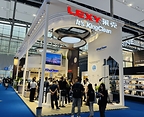
GUANGZHOU, China, Oct. 21, 2026 /PRNewswire/ — KingClean, a global leader in home appliances and cleaning solutions, showcased its latest smart home product line at the 140th Canton Fair, which includes cleaning appliances, kitchen and coffee equipment, drinking equipment, personal care and air comfort products. During the exhibition, KingClean held in-depth discussions with global channel partners at Booths E30–36 and F13–19, Hall 2.2, Zone A.
KingClean showcased over 40 innovative products. The cleaning appliances exhibition area covers cordless stick vacuum cleaners with docking stations, upright 3-in-1 wet-and-dry vacuum cleaner with steam, spot cleaner with steam, cordless mattress cleaners and canister. The kitchen appliance exhibition area showcases products such as cooking robot, commercial blenders, and fully automatic coffee machines. The water & beverage solutions area presents desktop intelligent water purifiers with functions of water purification, sparkling water, ice making, and tea brewing. In addition, KingClean balances personal care with environmental comfort, showcasing water-ion turbofan hair dryers, desktop air purifiers, and smart air circulation fans.
The collaboration between high-performance cleaning equipment and intelligent base stations is the key direction of this exhibition. The exhibits include cordless vacuum cleaners equipped with high-power motors, dust‑cup or dust‑bag docking stations, charging and automatic cleaning functions, as well as floor cleaning vacuum cleaners that integrate functions of steam cleaning, automatic water refilling, and hot air drying. Multiple reference models intuitively demonstrate how the same technology platform can flexibly adapt to different power levels, structural schemes, and accessory configurations.
KingClean also showcased a series of home fully automatic coffee machines, smoothies and ice-making equipment, as well as desktop intelligent beverage purifiers that supported flexible combinations of sparkling water, ice water, tea brewing, and coffee related modules in the beverage area. These exhibits could be further customized based on the customer’s beverage menus, usage frequency, and after-sales mode.
“We connect globally through innovative products, focusing on smart solutions that improve life and strengthen our leadership in the smart home industry” said Nate Yang, Senior Marketing Director at KingClean Electric Co., Ltd.
About KingClean
KingClean was founded in 1994 and is headquartered in Suzhou, China. The company specializes in high-end smart home appliances and mechatronic products, with motor as our core technology.
For more information, visit http://www.kingclean.com.
View original content to download multimedia:https://www.prnewswire.com/news-releases/kingclean-debuts-at-the-140th-canton-fair-with-one-stop-odm-solutions-for-global-brands-302914851.html
SOURCE KingClean
Technology
Husqvarna Group: INTERIM REPORT JANUARY – SEPTEMBER 2026
Published
38 minutes agoon
October 21, 2026By
STOCKHOLM, Oct. 21, 2026 /PRNewswire/ —
Consistent strategy execution in a continued challenging market
Third quarter 2026
Net sales decreased organically by 5%.Net sales decreased by 2% to SEK 9,012m (9,204), and included a positive impact of 3% from changes in exchange rates.Operating income amounted to SEK -334m (141) and the operating margin was -3.7% (1.5).Items affecting comparability (IAC) amounted to SEK -88m. These were primarily related to the execution of cost-saving initiatives.Excluding IAC, operating income amounted to SEK -246m (140), and the operating margin was -2.7% (1.5).Earnings per share (EPS) after dilution amounted to SEK -0.70 (-0.02) and EPS excluding IAC and after dilution amounted to SEK -0.58 (-0.02).Free operating cash flow was SEK 2,422m (2,423).Net debt was SEK 9.4bn (9.9).
January – September 2026
Net sales decreased organically by 2%.Net sales decreased by 5% to SEK 37,356m (39,184), and included an impact of -3% from changes in exchange rates.Operating income amounted to SEK 2,977m (3,735) and the operating margin was 8.0% (9.5).Items affecting comparability (IAC) amounted to SEK -445m. These were primarily related to the execution of cost-saving initiatives.Excluding IAC, operating income amounted to SEK 3,421m (3,742), and the operating margin was 9.2% (9.5).IEEPA-related tariff refunds of SEK 240m were recognized in COGS during the second quarter.Earnings per share (EPS) after dilution amounted to SEK 3.14 (4.43) and EPS excluding IAC and after dilution amounted to SEK 3.74 (4.44).Free operating cash flow was SEK 4,891m (4,743).
CEO Comment
We are making solid progress on our strategic priorities. Our cost savings program remains on track, recent product launches are receiving encouraging customer feedback, and we are broadening our presence across sales channels. Although these measures have not yet fully offset current market headwinds, they reinforce our confidence in the Group’s long-term competitiveness and prospects.
Financial performance summary
Net sales were SEK 9,012m (9,204), representing an organic decline of 5% in the quarter, primarily driven by continued weakness in Europe. Organic sales in the Husqvarna Forest & Garden Division declined by 10%, sales in the Husqvarna Construction Division were unchanged, while the Gardena Division delivered solid organic growth of 8%. Performance in the Husqvarna Forest & Garden Division was significantly affected by the widespread drought across large parts of Europe and continued weak consumer demand in key markets, including Germany and France. In contrast, strong growth in the Gardena Division’s Watering business highlighted the resilience of our diversified portfolio, gaining market shares in key markets, and the Husqvarna Construction Division has continued good momentum in its aftermarket business. I am also encouraged by continued growth across all three divisions in North America.
Operating income excluding IAC was SEK -246m (140), corresponding to a margin of -2.7% (1.5). The result reflected lower volumes in the Husqvarna Forest & Garden Division, an unfavorable product mix, inventory reductions and cost increases on raw materials and logistics costs. Free operating cash flow was stable at SEK 2,422m (2,423), as lower operating income was offset by changes in working capital, primarily driven by reduced inventories. We further strengthened the balance sheet, reducing net debt to SEK 9.4bn (9.9).
Executing on cost savings while navigating cost headwinds
Our transformative cost savings program remains on track to deliver SEK 3bn in gross savings by the end of 2028. Year-to-date savings reached approximately SEK 935m, including around SEK 305m in the third quarter, driven mainly by sourcing activities and personnel reductions. However, lower volumes, inventory reductions and cost headwinds continue to weigh on profitability. We are responding with targeted price increases, supply chain actions and product cost optimization, which will partly offset these pressures, although near-term headwinds are expected to remain.
We are advancing our asset-light strategy through further outsourcing initiatives. We will transfer production of selected Husqvarna-branded battery handheld products from Europe to Asia, using both our own facilities and external partners to enhance efficiency and competitiveness.
In addition, the ongoing discontinuation of the stone diamond tool business in the Construction Division, the phase-out of our Brastad component factory in the Husqvarna Forest & Garden Division and relocation of selected activities within Gardena’s European manufacturing network are progressing according to plan.
Unlocking the next phase of robotics growth
Our robotic lawn mowing business faced a difficult quarter, with adverse weather, competitive headwinds, and elevated channel partner inventories in Europe constraining demand for Husqvarna- and Gardena-branded products. Although recent performance has fallen short of expectations, we remain the clear market leader and we are confident in our strategy and longer-term development.
The strategic review of the Powered Garden BPU in the Gardena Division is ongoing and we aim to provide an update in the beginning of next year. Our priorities in the Husqvarna Forest & Garden Residential Robotics BPU include expanding our retail footprint and product range across price points and channels, strengthening the robotics organization and development model.
During the quarter, the US became the largest market in terms of sales for our Professional Robotics BPU, driven mainly by continued growth in the golf segment. Upcoming product launches and broader US distribution are expected to further strengthen our competitive position next season. We are also encouraged to be the first robotics company to receive conditional approval from the Federal Communications Commission (FCC) for foreign-produced advanced robotic devices in the US market.
Building a stronger, more competitive Husqvarna Group
We are accelerating change across the Group to create a leaner, more agile and asset-light organization. By challenging established ways of working, simplifying operations and acting decisively, we are strengthening competitiveness and profitability in the longer-term. Significant work remains, but I am confident we are moving in the right direction.
When consumer sentiment recovers, particularly in Europe, we will be well positioned to capture growth and improve earnings.
Glen Instone, CEO
Webcast presentation and telephone conference
A webcast presentation of the Q3 report hosted by Glen Instone, CEO and Patrik Johnson, CFO will be held at 9:00 CEST on Oct 21, 2026.
To view the presentation, please use this link.
The dial-in to the telephone conference (to ask questions):
+46 (0) 8 505 100 31 (Sweden) or +44 203 059 58 63 (UK)
Contact
Emelie Alm, Vice President, Investor Relations
+46 70 514 64 14
Husqvarna AB (publ), P.O. Box 7454, SE-103 92 Stockholm
Hälsingegatan 49, +46 8 738 90 00, www.husqvarnagroup.com
Reg. Nr: 556000-5331
(NASDAQ STOCKHOLM: HUSQ-A) (NASDAQ STOCKHOLM: HUSQ-B)
This report contains insider information that Husqvarna AB is required to disclose under the EU Market Abuse Regulation. The information was submitted for publication, through the contact person set out above, at 07:00 CEST on Oct 21, 2026.
Factors affecting forward-looking statements
This report contains some forward-looking statements. These statements are subject to risks and uncertainties that may give rise to major deviations in the result due to several aspects. These aspects include, among other things: consumer demand and market conditions in the geographical areas and lines of business in which Husqvarna operates, the effects of currency fluctuations, downward pressure on prices due to competition, success in developing new products, outcome of product responsibility litigation and progress in terms of reaching the goals set for productivity and efficient use of capital.
This information was brought to you by Cision http://news.cision.com
https://news.cision.com/husqvarna-group/r/interim-report-january—september-2026,c4412543
The following files are available for download:
https://mb.cision.com/Main/996/4412543/4328797.pdf
Interim report Q3 2026 Husqvarna Group
View original content:https://www.prnewswire.com/news-releases/husqvarna-group-interim-report-january–september-2026-302915009.html
SOURCE Husqvarna Group
Unity: The Convergence of the Three Main Red Army Forces
KingClean Debuts at the 140th Canton Fair with One-Stop ODM Solutions for Global Brands
Husqvarna Group: INTERIM REPORT JANUARY – SEPTEMBER 2026
Send Rakhi to UK swiftly with UK Gifts Portal
Whiteboard Series with NEAR | Ep: 45 Joel Thorstensson from ceramic.network
Nullmax and Renesas Forge Strategic Partnership to Deliver Competitive ADAS Solutions for the Global Market
Why You Should Build on #NEAR – Co-founder Illia Polosukhin at CV Labs
Whiteboard Series with NEAR | Ep: 45 Joel Thorstensson from ceramic.network
NEAR End of Year Town Hall 2021: The Open Web World, MetaBUILD 2 Hackathon and 2021 recap
Trending
-
Technology4 days agoHighland and Bath Counties, Virginia Go Live on a Shared Caliber Hosted CAD Environment
-
Technology4 days agoJinkoSolar Unveils Tiger Neo 5.0 All-Black Residential Solar Module with 25.52% Efficiency
-
Coin Market5 days agoBitcoin price steadies around $82K after Fed’s Warsh avoids rate-hike hints
-
Near Videos4 days agoWhat if you could build a skyscraper with one prompt?
-
Technology5 days ago
/R E P E A T — Media Advisory – Minister Hodgson to deliver remarks and participate in fireside chat/
-
Technology5 days agoFrost & Sullivan: Netradyne Receives the 2026 Global Commercial Vehicle Video Telematics Product Leadership Recognition for Excellence in AI-Driven Fleet Safety and Operational Intelligence
-
Technology5 days agoFIRST LOOK: NINTENDO’S FIRST-EVER STORE-WITHIN-A-STORE EXPERIENCE IN NORTH AMERICA ARRIVES IN TORONTO
-
Technology3 days agoBioethanol from human hair – Indian start-up’s solution to rising prices of grains and sugar