Connect with us

Technology

RyboDyn Unveils a Hidden Human Proteome and a New Universe of Actionable Cancer Targets

Published

on

Powered by RyboCypher™, its proprietary AI-assisted proteogenomics platform, RyboDyn introduces proteins science didn’t know existed—and reveals cYBX1, a cryptic isoform of the well-known cancer driver YBX1. 

SAN DIEGO, Aug. 12, 2026 /PRNewswire/ — RyboDyn, Inc. today released a preprint “Discovery and Targeting of a Cryptic Human Proteome“, mapping an entire layer of human biology that the field has systematically missed, and showing it is dense with the tumor-specific targets cancer drug developers have run short of. Concretely, this cryptic human proteome comprises tens of thousands of peptides (the detectable fragments of the larger full-length cryptic proteins they come from) encoded by regions of the human transcriptome that reference annotations have never captured. Applied across cancer cell lines, patient tumors, and matched healthy tissue, RyboCypher™, the company’s proprietary AI-assisted multi-omics target discovery platform, resolved approximately 8.3 million “dark” RNA isoforms, more than 97% of which are absent from existing databases. Armed with the novel reference transcriptome, RyboDyn searched against roughly half a billion mass spectra drawn from 2,229 patient samples, and empirically confirmed ~80,000 cryptic peptides including ~10,000 that are prevalent in cancer. These datasets were used to establish CypherAtlas™, a database of dark RNAs, their cryptic encoded proteins and associated patient data. Benchmarked directly against the microprotein and peptidein catalogs published in Nature in May 2026 by the TransCODE Consortium — a major international effort spanning GENCODE, PeptideAtlas, and the Human Proteome Organization — CypherAtlas expands the catalogued human proteome by a wide margin. 

The real bottleneck in pharma is new biology

Cancer devastates lives in every form, yet making drugs is no longer the constraint. Molecular design is faster and better resourced than ever, with AI accelerating it further. The limiting factor now is biology itself, the supply of new therapeutic axes worth targeting. When new cancer biology is discovered, it leads to a new wave of blockbuster drugs (e.g. HER2, PD-1/PD-L1). Of the roughly 13,600 drug-target pairs in the global preclinical and clinical pipeline, a quarter of these converge on just 38 biological targets according to a 2025 analysis by L.E.K. Consulting. The rate at which genuinely novel targets enter the pipeline has fallen from around 100 per year a decade ago, to roughly 30 in 2024. The result is a field of highly duplicative programs, all competing over the same well-characterized target proteins. This approach persists while the biology unique to malignant cells may go entirely untouched. Not because the biology isn’t there, but because the tools that are used to infer proteins are anchored to well-annotated RNA. Therefore, the hidden proteins were systematically missed, and completely excluded as potential targets of disease.

What RyboCypher returned is not a handful of curiosities. These cryptic peptides map to exactly the protein classes drug hunters have pursued for decades: deubiquitinases, E3 ligases, and transcription factors from cellular proteomics; cell adhesion molecules, transporters, and receptors from membrane proteomics. These protein classes are now surfacing in cryptic, tumor-restricted form for the first time.

“Oncology is overdue for another checkpoint-inhibitor moment,” said Corey Dambacher, Ph.D., President and co-founder of RyboDyn and senior author of the study. “That doesn’t come from finding a different way to go after the same three dozen targets. We can really only accomplish that by discovering new biology, and RyboCypher is built to find it.”

Biology that today’s AI could not have predicted

To test whether these were plausible proteins rather than statistical noise, RyboDyn scored thousands of high-confidence predictions against the ESM-2 protein language model. The cryptic sequences registered markedly elevated pseudo-perplexity — a measure of how unexpected a sequence is to a model — with the signal concentrated almost entirely in the novel regions absent from every reference annotation. When those same sequences were run through ESMFold2, structure prediction largely returned confidently folded models.

“These proteins were, in the most literal sense, perplexing to the best protein language models available,” said Imad Ajjawi, Ph.D., CEO and Co-Founder of RyboDyn. “AI could not have guessed this biology existed, not because the models are weak, but because this entire layer is absent from the training data. We’re the only ones generating it. Yet the sequences are nowhere near random, as proteins they’re statistically novel, but structurally sound. When we fold them we get well-organized domains that are structurally conserved in nature. That’s why we’re building DarkCypher™ on our own data. As it sees more of these examples, it becomes attuned to and eventually predictive of a layer of biology no existing model can reach.”

Patient-first discovery, from the very first experiment

The company’s approach inverts drug discovery’s conventional workflow: instead of starting in a petri dish and ending with the patient, it starts with the patient. Every cryptic target in CypherAtlas arrives already annotated with indication, patient prevalence, expression, and survival association, so target selection and patient stratification happen in the same step, before a single antibody is engineered. 

Two routes to tumor cell death

The most immediate path to actionable therapeutic targets starts with what the tumor displays on its surface, where an antibody has a distinct molecular handle to latch onto and selectivity is built into the sequence itself. Two routes follow: (1) cryptic membrane proteins with exposed extracellular domains, directly accessible to conventional antibodies, ADCs, T-cell engagers, and radioligands; and (2) cryptic intracellular proteins presented as peptide-MHC (pMHC) complexes, addressable by T-cell receptor mimic (TCRm) antibodies. Depending on the selection criteria, the framework yields an estimated 1–5 high-value druggable targets per indication across both routes.

RyboDyn’s top-ranked cell-surface candidate is upregulated roughly 7.5-fold in ~80% of the lung squamous cell carcinoma patients assessed (a cohort of over 100), with significant tumor upregulation also seen in clear cell renal cell carcinoma (ccRCC) and pancreatic ductal adenocarcinoma (PDAC). That candidate survived a deliberately strict triaging criterion. Of the 18,372 cryptic peptides CypherAtlas identified in membrane proteomics preparations, each was scored on a composite of tumor-versus-healthy expression, transmembrane topology, and subcellular localization — and to advance, the detected peptide had to sit within genuinely non-canonical protein sequence while its cryptic full-length protein carried a cryptic extracellular or membrane-exposed domain. 

First disclosure: cryptic YBX1

RyboDyn’s CypherAtlas contains over 12,000 cryptic pMHC species, of which over 8,000 were only observed in cancer samples, now the largest cancer-associated pMHC database in the world. RyboDyn discloses cryptic YBX1 (cYBX1), a previously unreported cancer-associated protein expressed from the YBX1 locus. Canonical YBX1 has long been recognized as a major oncogenic regulator and has proven stubbornly difficult to drug directly. cYBX1 bears no significant homology to the human proteome yet contains a high level of sequence homology to proteins expressed by distant organisms from the same locus, especially across the evolutionarily conserved DNA-binding domain. This cryptic open reading frame (ORF) gives rise to a tumor-restricted pMHC, representing an entirely new therapeutic handle on a well-known oncogenic locus. TCR-mimic antibodies raised against this cryptic pMHC bind with high affinity and exquisite specificity, discriminating the target from its most closely related sequences. A single antibody recognized the target across three closely related HLA-A*02 isoforms, raising the addressable population to over 45% of Western Europeans and North Americans. Formatted as an antibody-drug conjugate, the lead produced selective tumor cell killing in vitro. 

“This work establishes the principles and validates the concepts RyboDyn is pursuing. It provides strong support for the company’s approaches,” said Gordon B. Mills, M.D., Ph.D., a world-renowned precision oncologist and Director of the SMMART trials in the Knight Cancer Institute at Oregon Health and Science University. 

The preprint, “Discovery and Targeting of a Cryptic Human Proteome,” is available at https://www.biorxiv.org/content/10.64898/2026.08.05.743124v1.

About RyboDyn

RyboDyn is decoding the unexplored dark proteome to enable a new generation of first-in-class antibody therapeutics for cancer and other diseases with high unmet need. At the core of the company’s platform is RyboCypher™, its proprietary AI-assisted proteogenomics platform, which powers CypherAtlas™, a continuously expanding database of dark RNAs, their cryptic encoded proteins, and associated patient data. The company is developing DarkCypher™, a multimodal foundation model trained on CypherAtlas to map the dark proteome and uncover novel disease-specific therapeutic targets. Based at Lilly Gateway Labs in San Diego, RyboDyn has proprietary intellectual property exclusively licensed from the Oregon Health & Science University Knight Cancer Institute. The company is also a member of Lilly’s AI TuneLabs consortium and NVIDIA Inception, and has publicly disclosed a strategic collaboration with Moffitt Cancer Center. 

Media Contact

Andy Bass
VP, Corporate Strategy
info@rybodyn.com

View original content to download multimedia:https://www.prnewswire.com/news-releases/rybodyn-unveils-a-hidden-human-proteome-and-a-new-universe-of-actionable-cancer-targets-302849263.html

SOURCE RyboDyn

Continue Reading
Click to comment

Leave a Reply

Your email address will not be published. Required fields are marked *

Technology

PVFARM Commercially Launches Energy Storage Design Platform RE STACK

Published

on

By

Integration into the PVFARM workflow streamlines renewable energy project design while unlocking new energy storage market opportunities

NEWPORT BEACH, Calif., Aug. 12, 2026 /PRNewswire/ — Today, PVFARM launched the commercial version of its platform for utility-scale battery energy storage (BESS) layout exploration, RE STACK. Together with PVFARM, RE STACK forms an expanding suite of tools for utility-scale renewable energy design that enable teams to explore a wide range of layout options before progressing into detailed engineering.

RE STACK enables engineers to configure utility-scale BESS projects from manufacturer specifications and rapidly explore site layouts, road concepts, and medium-voltage collection topologies before detailed engineering begins.

Key features include

Battery recommendationEquipment configurationBESS layout generationRoad strategy planningMedium-voltage collection topology planning

Collaboration with over 80 companies during RE STACK and RE PILOT’s beta testing directly shaped the platforms’ capabilities. Throughout the beta testing process, participants provided feedback on critical design considerations, ranging from equipment selection to power conversion system (PCS) architecture, augmentation planning, fire safety access, and site topology. Beyond ensuring that the platforms solve real-world project challenges, this extensive collaboration also provided the insight needed to shape RE STACK and RE PILOT so they could deliver intuitive, informed decision-making while reflecting the latest technology and market dynamics.

“A lot of software takes forever to make even small changes, but RE STACK stands out from the competition. At Sun2O, we’ve received a lot of value and saved a lot of time from the platform. RE STACK is a highly useful tool for evaluating our sites, understanding the challenges we face, and being able to leverage PVFARM’s existing grading capabilities alongside it,” said Vatan Kumar, Vice President, Development Engineering at Sun2O. “Overall, PVFARM’s drive to capture all the detailed project inputs and challenge the norm is what impresses me most about RE STACK.”

“The future of engineering isn’t just designing faster. It’s exploring more before you design,” said Maksim Markevich, Chief Technology Officer of PVFARM. “With RE STACK and RE PILOT, we’re giving engineering teams the ability to evaluate far more possibilities before committing to detailed engineering. The result is better-informed decisions, greater confidence, and a workflow that keeps pace with the growing complexity of utility-scale renewable energy projects.”

The International Energy Agency has called energy storage the “fastest-growing power technology today,” and the response to RE STACK’s beta test program underscores that: 45 organizations enrolled in under a month. Yet, BESS projects often need repeated manual layout concepts before a workable site plan emerges. Stuck between increasing design work and widening applications, developer and EPC teams can rely on RE STACK to generate, evaluate, and compare alternatives earlier by generating BESS layouts automatically, exploring thousands of layout alternatives, testing different road configurations, and MV collection strategies.

About RE STACK

RE STACK enables battery developers and EPCs to start evaluating BESS layouts without the manual concept grind. Users can generate layouts and compare alternatives while the design is still flexible. This helps teams understand how much equipment can fit, how layouts perform under different assumptions, how roads affect site utilization, and how MV collection choices influence the arrangement.

Unlike traditional design methods that make equipment determinations from desired storage capacity, RE STACK answers key questions in the layout stage of BESS design. Learn more at restack.pvfarm.io.

About PVFARM

Launched by a team of builders, PhDs, engineers, and software experts, PVFARM is building the decision intelligence layer for utility-scale solar. The platform brings layout, electrical, structural, civil and financial workflows into one connected design system, helping project teams align around the same numbers, constraints, and tradeoffs early enough to shape outcomes earlier. With more than half of top U.S. utility-scale EPCs using PVFARM as part of their core workflow, PVFARM is helping drive the solar industry make better decisions – from first layout through long-term performance.

Learn more at pvfarm.io or www.linkedin.com/company/pv-farm.

Media Contact
PVFARM
media@pvfarm.io
1-949-804-9647

FAQ

Who uses RE STACK?RE STACK is designed for utility-scale renewable energy developers, engineering firms, independent power producers (IPPs), and engineering, procurement, and construction (EPC) contractors responsible for planning, designing, and optimizing solar + storage and battery energy storage projects.How does RE STACK improve battery energy storage system (BESS) design?RE STACK replaces manual concept development with automated layout generation and comparison. Users can configure manufacturer-specific battery containers, PCS equipment, transformers, spacing requirements, roads, and medium-voltage collection strategies to rapidly evaluate how different design choices affect land utilization and project configuration before committing engineering-intensive resources.How is RE STACK different from traditional BESS design software?Traditional workflows often rely on manually creating a small number of layout concepts after major equipment decisions have already been made. RE STACK allows engineers to explore numerous feasible layouts earlier in project development, helping teams understand the design implications of equipment selection, site constraints, road placement, and electrical topology before detailed engineering begins.Can RE STACK work with different battery manufacturers and equipment vendors?Yes, RE STACK allows users to configure layouts using manufacturer-specific battery containers, power conversion systems (PCS), transformers, equipment dimensions, and spacing requirements. This allows engineering teams to compare different equipment configurations and evaluate their impact on project layouts.Can RE STACK export layouts for engineering workflows?Yes, RE STACK supports importing project boundaries using KMZ and DXF files and can export layouts to DXF for continued engineering work as well as PDF summaries for project review and collaboration.Why are early-stage layout decisions important for utility-scale solar and battery storage projects?Early layout decisions influence land utilization, constructability, equipment quantities, electrical design, project economics, and long-term performance. Evaluating more layout alternatives before detailed engineering helps teams identify better-performing projects while reducing redesign work later in development.

View original content to download multimedia:https://www.prnewswire.com/news-releases/pvfarm-commercially-launches-energy-storage-design-platform-re-stack-302849141.html

SOURCE PVFARM

Continue Reading

Technology

Advance America Introduces Program to Reward Word-of-Mouth Referrals

Published

on

By

The new Refer It Forward program pays participants $50 for every successful referral

GREENVILLE, S.C., Aug. 12, 2026 /PRNewswire/ — Advance America, a leading provider of consumer financial services, has launched its new Refer It Forward program. For every referred friend who becomes a new Advance America customer, the referrer earns $50. No guessing; just one flat reward.

The program kicked off in May and arrives at a moment when many U.S. households are navigating rising costs and stagnant wages. With that kind of financial pressure, people are looking for practical ways to support the friends and family they care about. Refer It Forward makes that possible while rewarding them for it.

“Word of mouth has always been one of our most powerful connections to the communities we serve,” said Laura McCutcheon, Vice President of Marketing at Advance America. “Refer It Forward is our way of recognizing that and giving back to the people who help spread the word.”

How it works

Participating is simple:

Refer a friend using a personalized referral linkEarn $50 when that friend becomes a new Advance America customer and their loan is fundedChoose your reward: a Visa prepaid card or a retail gift card

A practical way to help and earn

For many Advance America customers, the referral program isn’t just about earning — it’s about being there for someone who needs a hand. Whether it’s a friend facing an unexpected expense or a family member who needs fast access to funds, a simple referral can make a real difference. With a flat $50 reward, customers always know exactly what they’ll earn.

“We wanted to create something that felt real and achievable — not a program with so many conditions that it loses its appeal,” added McCutcheon. “Fifty dollars for helping a friend is something we can all get behind.”

About Advance America

Advance America is a licensed and regulated lender providing convenient loan options online and in store at 700+ locations across 23 states.  

Since 1997, we’ve helped millions of families navigate life’s financial moments. We believe borrowing money should be simple, fast, and free from judgment — with clear terms and real human support when it matters most.

Making it work looks different for everyone. For us, it means backing you up with simple, honest money solutions that keep you moving forward.

Media Contact: mediarequest@teampurpose.com

View original content to download multimedia:https://www.prnewswire.com/news-releases/advance-america-introduces-program-to-reward-word-of-mouth-referrals-302845280.html

SOURCE Advance America

Continue Reading

Technology

Strativera Now Credentialed Across Both Major CRM Ecosystems as Salesforce Listing Goes Live

Published

on

By

The Cherry Hill agency pairs a new Salesforce AppExchange consulting listing with HubSpot Solutions Partner status and Google Partner standing, each independently verifiable.

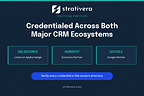
CHERRY HILL, N.J., Aug. 12, 2026 /PRNewswire/ — Strativera, a digital marketing and revenue operations agency serving mid-market and private-equity-backed companies, today announced its Salesforce consulting practice is live on Salesforce AppExchange, giving the firm credentialed standing across both dominant CRM ecosystems.

The listing, Strativera Revenue Operations and Salesforce Consulting, appears in AppExchange’s Salesforce Consultants directory and covers org audits and cleanup, Sales Cloud implementation, lead lifecycle design, CRM migrations, and executive dashboards connecting campaigns to closed revenue. It joins the firm’s HubSpot Solutions Partner listing, which carries its own public 5.0 rating, and its standing in Google’s Partners directory.

“Most agencies pick a CRM camp because credentialing across ecosystems is expensive and slow,” said Janae Tanner, Co-Founder and Vice President of Growth and Client Success at Strativera. “We did it deliberately. A client’s CRM decision should follow their sales process, not whichever logo their agency happens to carry. Now we can give an honest answer in either direction, and every credential behind that answer sits in the issuer’s own directory rather than on our website.”

All three are publicly verifiable. The Google Partners listing is at https://appexchange.salesforce.com/appxListingDetail?listingId=2767129d-ff82-4774-871e-136a99f7ca04, and the HubSpot Solutions Partner listing at ecosystem.hubspot.com/marketplace/solutions/strativera.

The firm’s client ratings stand at 5.0 across Google, Clutch and GoodFirms, spanning 24 Clutch reviews and 8 GoodFirms reviews. Strativera has also joined the Clutch Guarantee, backing new engagements originating through Clutch with a 14-day, no-questions-asked money-back commitment.

“Buyers should be able to check everything an agency says about itself, and with us they can,” Tanner said. “The credentials live in the issuers’ directories. The reviews live on platforms we do not control. And new Clutch engagements now carry a 14-day guarantee. Verification is the standard our clients’ buyers hold them to, so it is the standard we hold ourselves to.”

Founded in June 2025, Strativera has grown to four offices, with headquarters in Cherry Hill Township, New Jersey, and locations in Manahawkin, New Jersey, Tampa, Florida, and Las Vegas, Nevada. The firm reports more than $104 million in client-attributed revenue growth and an average 28 percent reduction in customer acquisition cost across engagements spanning more than 17 industries.

About Strativera

Strativera is a digital marketing and revenue operations agency located at 7 Cooper Landing Rd, Cherry Hill Township, NJ 08002. Built for growth-stage, mid-market and private-equity-backed companies, Strativera connects strategy, campaigns, CRM and reporting into one revenue system delivered by senior operators rather than junior teams. Learn more at strativera.com.

Media Contact
Janae Tanner, Co-Founder and VP of Growth and Client Success
Strativera
(856) 380-0416
420580@email4pr.com 

View original content to download multimedia:https://www.prnewswire.com/news-releases/strativera-now-credentialed-across-both-major-crm-ecosystems-as-salesforce-listing-goes-live-302849155.html

SOURCE Strativera

Continue Reading

Trending