Connect with us

Technology

6 Greenberg Traurig Intellectual Property Attorneys Listed in 2026 IAM Strategy 300

Published

on

BOSTON, Aug. 12, 2026 /PRNewswire/ — Six Intellectual Property & Technology attorneys from global law firm Greenberg Traurig, LLP‘s Boston office are recognized in the 2026 Intellectual Asset Management (IAM) Strategy 300 – The World’s Leading IP Strategists.

According to the publication, the IAM Strategy 300 identifies individuals “leading the way in developing and implementing strategies that maximize the value of IP portfolios.” The guide lists individuals from various entities, including service providers, corporations, research institutions, and universities. Honorees are identified through confidential online nominations and extensive research involving interviews and email exchanges with senior members of the global intellectual property (IP) community.

The following Greenberg Traurig shareholders were selected:

David J. Dykeman, Greenberg Traurig global Life Sciences & Medical Technology Group co-chair, is a registered patent attorney with over 25 years of experience in patent and IP law. His practice focuses on securing worldwide IP protection and related business strategy for high-tech clients, with particular experience in life sciences, medical devices, robotics, materials, and information technology.

Roman Fayerberg is a registered patent attorney with broad experience helping clients strategically protect and leverage their innovations globally. He works with clients to develop and manage worldwide patent portfolios and counsels clients regarding freedom to operate, patent landscape, and patent infringement and validity matters. He also conducts and defends patent due diligence investigations in connection with venture capital investments, mergers and acquisitions, and licensing opportunities.

Prashant Girinath, Ph.D., has designed and implemented IP strategy for companies through all stages of growth, from startups to venture-backed and public companies. He has obtained thousands of patents for companies and aggressively developed complex IP portfolios with dominant patent positions that have helped facilitate significant partnering outcomes, especially in the life sciences.

David S. Harburger, Ph.D., helps life sciences clients align their IP strategy with their business goals. He advises on patent preparation and prosecution, patent portfolio management, freedom-to-operate analysis, invalidity and non-infringement opinions, IP due diligence, and the coordination of IP and clinical strategy. He has deep familiarity with patent law issues specific to life-sciences-based technologies, including biochemistry, bioenergy systems, cell signaling, diagnostics, genetics, immunology, microbiome, nanoparticle carriers, nucleic acids, synthetic biology, and therapeutics. Harburger works closely with clients from early formation through growth and exit, establishing robust patent estates necessary for forging commercial partnerships.

Chinh H. Pham, Venture Capital & Emerging Technology Practice co-chair, focuses his practice on the creation, implementation, and protection of IP rights for technology and life sciences clients, ranging from venture-backed companies to multinational corporations. In that capacity, he works with clients to leverage their key innovations for strategic commercial and business opportunities. Pham also serves as a mentor to entrepreneurs and early-stage ventures.

Andrew (A.J.) Tibbetts provides business-oriented IP legal counseling for software, artificial intelligence, and electronics-based technologies. His strategic approach incorporates open-source practices and trade secret policies alongside patents, and he advises clients on licensing, enforcement, diligence, and defense against infringement accusations. His patents have directly led to clients closing funding rounds, and software patents he wrote for clients have survived Patent Trial and Appeal Board invalidity challenges and been enforced against competitors. He co-authored influential amicus briefs cited favorably by the U.S. Supreme Court and Federal Circuit Court of Appeals relating to patentability of software.

“This recognition reflects the exceptional depth and breadth of our IP team,” Greenberg Traurig Boston office Co-Managing Shareholders Dykeman and Terence P. McCourt said in a joint statement. “Our attorneys combine technical knowledge, legal insight, and a strong understanding of clients’ business objectives to develop IP strategies that protect innovation, support growth, and create long-term value. We are proud of the team’s continued leadership and impact across industries and technologies.”

About Greenberg Traurig’s Intellectual Property & Technology Practice: With more than 260 intellectual property attorneys and patent agents in the United States, Asia, and Europe, Greenberg Traurig provides a broad range of patent, trademark, and copyright protection and strategic counseling. Greenberg Traurig was named a “National Tier 1” Law Firm for IP Litigation, Patent Law and Litigation, Copyright Law, Technology Law, Information Technology, and Trademark Law by U.S. News and Best Lawyers’ 2026 “Best Law Firms.” In the 2024 report, Greenberg Traurig was named Law Firm of the Year for Information Technology Law. In addition, Greenberg Traurig was named a Law Firm of the Year for Trademark Law in the 2020 and 2022 editions of “Best Law Firms.” The BTI Consulting Group named Greenberg Traurig’s IP Litigation Practice a “Litigation Standout” in its “BTI Litigation Outlook,” 2024-2026.

About Greenberg Traurig: Greenberg Traurig, LLP maintains a global presence with roughly 3,200 attorneys operating out of 51 offices throughout the United States, Europe, the Middle East, Latin America, and Asia. This expansive international reach and diverse expertise allow the firm to provide sophisticated, multidisciplinary legal solutions worldwide. Consistently honored for excellence, Greenberg Traurig was recognized by general counsel as a 2025 BTI “Best of the Best Recommended Law Firm” and holds prominent positions in the Am Law Global 100, NLJ 500, and Law360 400 rankings. The firm is further distinguished by its commitment to pro bono service, charitable contributions, and a culture of innovation. Web: www.gtlaw.com.

View original content to download multimedia:https://www.prnewswire.com/news-releases/6-greenberg-traurig-intellectual-property-attorneys-listed-in-2026-iam-strategy-300-302850000.html

SOURCE Greenberg Traurig, LLP

Continue Reading

Technology

MemTensor Releases and Open-Sources MemT-1.0-Pro, a 554B Memory-Native Model

Published

on

By

SAN FRANCISCO, Nov. 23, 2026 /PRNewswire/ — MemTensor today released and open-sourced MemT-1.0-Pro, a memory-native model jointly developed with NVIDIA.

Built on NVIDIA Nemotron 3 Ultra and trained using NVIDIA’s Megatron-Core and Megatron Bridge distributed training infrastructure, MemT-1.0-Pro extends MemTensor’s memory-native approach to 554 billion total parameters, with 59 billion active parameters. Following Nano and Flash, the release advances this exploration on a new backbone and at a larger model scale.

MemT-1.0-Pro integrates memory into model computation, making the storage, updating and retrieval of historical information capabilities that can be learned through training.

The collaboration with NVIDIA included model adaptation, operator optimization, training-method discussions and experimental review.

Extending MemTensor’s Memory-Native Approach to Nemotron

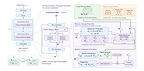
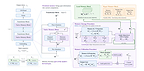
MemT-1.0-Pro uses NVIDIA-Nemotron-3-Ultra-550B-A55B-BF16 as its backbone. Its architecture combines dynamic local memory, which stores information acquired during interaction, with trainable hyper-memory components that learn how to write and read that information.

During online interaction, the backbone and trained memory-processing weights remain fixed. The model accesses historical information through dynamic memory states, without requiring the original historical text to remain in the query context. After each completed interaction, a storage procedure updates those states using a stabilized token-level mechanism based on Gated DeltaNet-2.

Continued pre-training establishes language modeling capabilities that use native memory. Post-training then uses distillation from a full-context teacher to improve memory-based responses.

Measurable Progress in Long-History Memory

In the technical report, MemT-1.0-Pro scores 41.80 on BEAM-1M, compared with 37.04 for MemT-1.0-Flash, an improvement of 4.76 points. On MemoryAgentBench, its score rises to 23.87 from 17.36, a gain of 6.51 points.

BEAM-1M evaluates ten long-history memory abilities, including information extraction, contradiction resolution, updating, preference following and temporal reasoning. MemoryAgentBench evaluates retrieval, test-time learning, long-range understanding and selective forgetting.

Pro also achieves an average score of 53.08 across 11 memory benchmarks, the highest among the parametric-memory methods evaluated in the report.

These results demonstrate progress within the MemT family, although Flash and Pro use different backbones and configurations, and improvements vary across benchmarks. Strong textual-memory systems remain ahead on some evaluations.

Toward Agents That Can Use Their Experience

For agents supporting extended workflows, useful memory involves more than recalling isolated facts. Following an ongoing project or service request may require retaining earlier requirements, recognizing updated decisions and applying information accumulated across multiple interactions.

These needs motivate MemTensor’s exploration of native memory for persistent agent workflows. Further application testing will be needed to establish how the benchmark gains translate into end-to-end task performance.

Fixed-size memory introduces trade-offs between preserving earlier details and incorporating new information. Improving memory fidelity, selective retention and query-dependent readout remains central to further research.

Developers and researchers are welcome to explore MemT-1.0-Pro on Hugging Face.

View original content to download multimedia:https://www.prnewswire.com/news-releases/memtensor-releases-and-open-sources-memt-1-0-pro-a-554b-memory-native-model-302948905.html

SOURCE MemTensor

Continue Reading

Technology

Statement from Minister Joly on her meeting with telecommunications CEOs

Published

on

By

OTTAWA, ON, Nov. 23, 2026 /CNW/ — The Honourable Mélanie Joly, Minister of Industry and Minister responsible for Canada Economic Development for Quebec Regions, made the following statement:

“Today, I joined the CEOs of TELUS, Bell, Rogers, Eastlink, Cogeco, SaskTel and Quebecor from Canada’s telecommunications sector to discuss the future of the industry and the work we must do together to deliver better outcomes for Canadians.

“Canadians deserve reliable, secure and affordable connectivity, no matter where they live. They also deserve to have real choice, strong competition and confidence that their data is safe and protected.

“Telecommunications infrastructure is no longer only an economic asset. It is critical to Canada’s security, sovereignty and resilience.

“As artificial intelligence, satellite communications and other emerging technologies transform the global economy, we must invest in the next generation of telecommunications infrastructure to drive innovation, strengthen the resilience of our networks and ensure that Canada remains competitive in a rapidly changing world.

“Our government will continue to collaborate with industry, workers, communities, Indigenous partners and like-minded allies to build a communications ecosystem that is more affordable, more innovative and more secure–one that is controlled in Canada, creates opportunities in Canada and works for Canadians.

“That is our ambition: an affordable, connected and sovereign Canada, from sea to space.”

Stay connected

Find more services and information on the Innovation, Science and Economic Development Canada website.

Follow Innovation, Science and Economic Development Canada on social media.

X (Twitter): @ISED_CA | Facebook: Canadian Innovation | Instagram: @cdninnovation | LinkedIn: Innovation, Science and Economic Development Canada

SOURCE Innovation, Science and Economic Development Canada

Continue Reading

Trending